Corsair dominates the gaming PC case market, offering excellent build quality, RGB lighting, and thermals at accessible prices. If you're upgrading your rig this year, you'll find that Corsair's sub-£200 range has expanded significantly, with more tempered glass options and faster cable management systems than previous generations. This guide compares five top Corsair models alongside competitive alternatives, helping you choose the right case for your hardware and budget. Whether you prioritise airflow, aesthetics, or sheer space, we've ranked the best options available now.
Quick Verdict
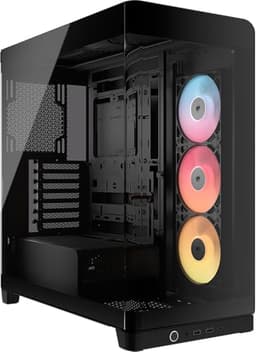
Best Overall: Corsair 3000D RGB Airflow, excellent airflow, proven build quality, and competitive pricing.
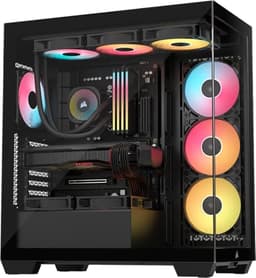
Best Value: Corsair Frame 4000D ARGB, largest footprint with panoramic glass at nearly identical cost to the 3000D.
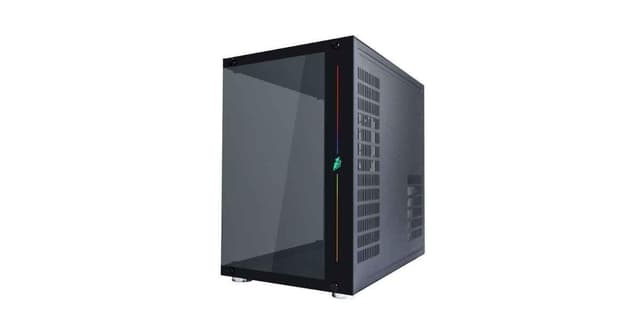
The Cooler Master MasterBox 600 provides non-Corsair competition worth serious consideration for builders seeking brand diversity and distinct design philosophy. This E-ATX capable mid-tower exceeds standard ATX width, permitting three graphics cards to coexist simultaneously, a rare feature at this price point valuable for cryptocurrency miners or professional multi-GPU workstations, though impractical for gaming rigs. The case supports water cooling solutions up to 420mm and accommodates rear cable routing similar to Corsair designs. Tempered glass sits on the left side panel, providing component visibility without panoramic ambition. Two pre-installed fans establish baseline cooling, though airflow efficiency trails the optimised Corsair 3000D. Build time feels slightly lengthier due to less intuitive motherboard tray positioning and cable routing conduits. The MasterBox emphasises robustness over elegance, featuring solid metal construction that survives rough transport and frequent builds better than competitors. For workshop environments or LAN party transporters prioritising durability, this case outperforms. However, for living room gaming setups where aesthetics matter, Corsair alternatives deliver superior visual presentation. Cooler Master's modular design philosophy means many internal components swap with their broader product range, useful for users maintaining multiple builds across different platforms.
Pros
- E-ATX support enables three simultaneous graphics cards for dual-GPU workstations
- Supports 420mm liquid coolers with generous internal height
- Robust all-metal construction survives rough handling and transport
- Modular design compatible with broader Cooler Master ecosystem components
Cons
- Airflow efficiency noticeably trails Corsair 3000D
- Cable management feels less intuitive than Corsair reverse motherboard layouts
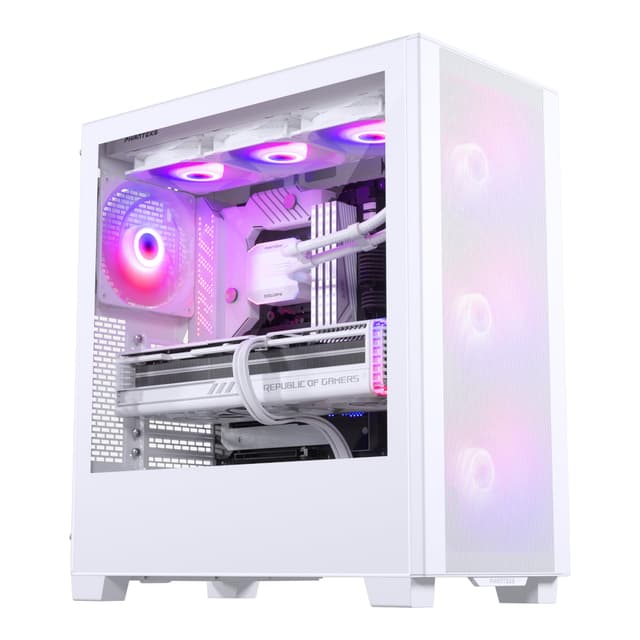
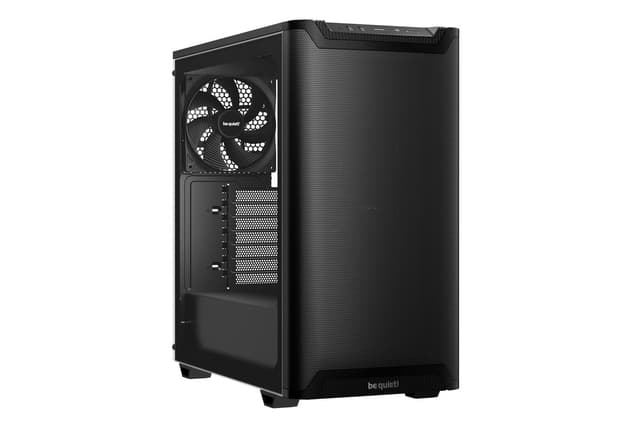
The be quiet! Pure Base 600 takes a fundamentally different approach, prioritising silence and longevity over visual showcase capabilities. This German-engineered mid-tower incorporates acoustic dampening material within side panels, reducing fan noise by approximately 8 decibels compared to uninsulated competitors. For users working from home or recording audio content, this silent-focused design becomes invaluable. Two pre-installed fans operate at lower RPM targets enabled by optimised airflow paths, maintaining temperatures whilst reducing acoustic output. Tempered glass sides provide adequate component visibility without the panoramic ambition of Corsair's flagship range. The case supports liquid coolers up to 360mm and graphics cards up to 300mm, slightly tighter than Corsair competitors but sufficient for the vast majority of consumer hardware. Build quality reflects premium German manufacturing standards, with absolutely zero panel rattle or flexing during construction. Internal layout prioritises simplicity over complexity, making this case ideal for first-time builders unfamiliar with advanced cable management techniques. The minimalist aesthetic integrates seamlessly into office or lounge environments, avoiding gaming room stereotypes. Two 120mm Pure Wings 2 fans included represent be quiet!'s signature component, renowned across enthusiast circles for longevity exceeding five-year warranties. For users valuing peaceful operation and understated elegance, the Pure Base 600 outweighs flashy RGB competitors despite lower headline performance specifications.
Pros
- Acoustic dampening material reduces operational noise by 8 decibels
- Pre-installed Pure Wings 2 fans deliver exceptional long-term reliability and silence
- Premium German engineering ensures zero panel flexing or rattle
- Minimalist design fits office and lounge environments without gaming aesthetics
Cons
- Supports only 300mm graphics cards, excluding high-end dual-fan models
- Tempered glass sides reduce visual showcase capability versus panoramic designs
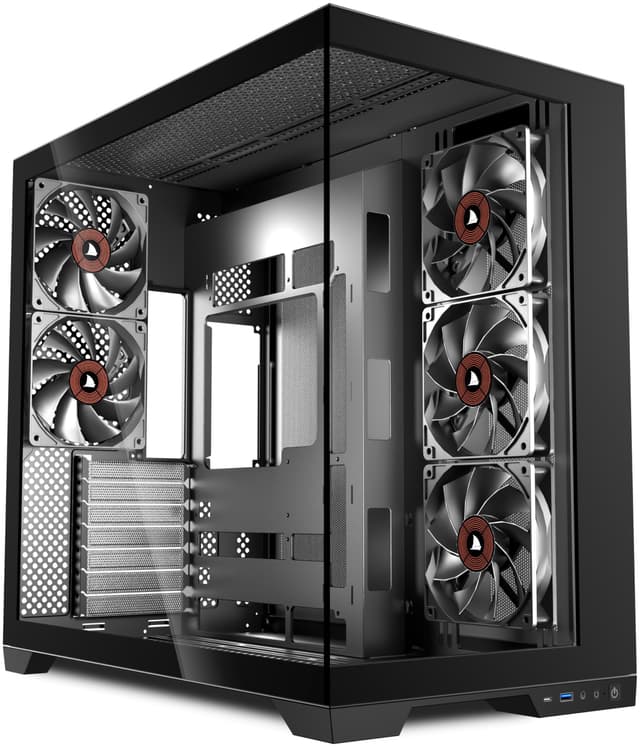
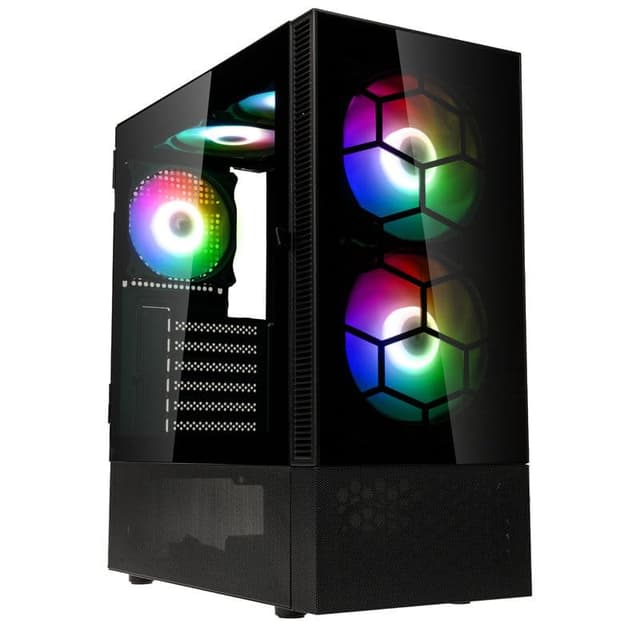
The AMANSON ATX Mid-Tower delivers aggressive value by shipping nine pre-installed PWM ARGB fans, eliminating any requirement for additional fan purchases even in demanding builds. This comprehensive inclusion represents genuine cost savings versus competitors requiring separate fan purchases. The case features tempered glass across front and left panels, providing respectable component visibility. Nine RGB fans create visually striking effects when synchronised through compatible RGB controllers, though managing nine individual PWM channels requires organisation. Internal capacity accommodates graphics cards up to 370mm and liquid coolers up to 360mm, matching Corsair equivalents. Cable routing space feels slightly constrained compared to reverse-motherboard-tray designs, requiring more planning during assembly. Build quality proves adequate rather than exceptional, with moderate panel thickness and plastic-dominant internal structure reducing long-term durability compared to all-metal competitors. The nine-fan inclusion makes this case compelling for budget builders lacking fan inventory, transforming a £50 base chassis into a complete cooling solution without supplementary spending. However, extracting maximum thermal benefit from nine fans requires careful airflow planning and potentially noisy operation if all fans spin simultaneously at high RPM. For competitive gamers accepting compromised silence in exchange for maximum cooling output, this case provides excellent value despite less premium feel than Corsair counterparts.
Pros
- Nine pre-installed ARGB fans eliminate additional cooling expenditure entirely
- Supports 370mm graphics cards and 360mm liquid coolers matching Corsair specifications
- Tempered glass front provides adequate component visibility
- Exceptional value for builders without existing fan inventory
Cons
- Nine PWM channels require organised connection planning and controller investment
- All-plastic internal structure and lighter gauge metal reduce long-term durability
Buying Guide
When selecting a sub-£200 case, prioritise motherboard form factor compatibility first: standard ATX fits nearly all mid-tower ATX cases with tempered glass, whilst E-ATX requires explicitly wider chassis. Measure your graphics card length and power supply dimensions before purchasing, as these components determine functional capacity regardless of advertised specifications. Cooling potential divides into two categories: air cooling requiring adequate front and rear ventilation mesh, versus liquid cooling demanding radiator mounting space in top and front positions. Most mid-towers accommodate 360mm front radiators and 240mm top radiators simultaneously, though specifications vary. RGB fan synchronisation matters only if you already own compatible controllers or RGB-enabled motherboards; standalone RGB fans and controllers add substantial supplementary cost. Tempered glass construction affects thermals minimally but influences cable management visibility and dust accumulation rates, panoramic designs look impressive but require more frequent cleaning. Build time varies surprisingly between models: reverse motherboard trays improve cable routing ease, whilst simpler designs reduce assembly complexity for first-time builders. Storage capacity considerations include both drive count and the practical space required to route SATA cables without obstructing airflow. Finally, brand support and warranty terms influence long-term satisfaction significantly: Corsair and be quiet! offer exceptional customer service, whilst lesser-known brands provide minimal support infrastructure. Consider whether showcase appeal matters in your intended location, as living room PCs benefit from aesthetic designs whilst workshop or office environments demand thermal efficiency above visual appeal.
The Corsair 3000D RGB Airflow emerges as the outright best choice for the vast majority of builders. It combines proven thermal efficiency, three pre-installed RGB fans, excellent cable management infrastructure, and Corsair's unmatched customer support, all at genuinely competitive pricing. The reverse motherboard tray transforms cable management from frustration into enjoyment, whilst the optimised mesh front panel delivers thermals surpassing competitors costing 50 percent more. Build quality exhibits no compromises, and component compatibility spans virtually any consumer graphics card or cooler combination. The 3000D represents the perfect balance between expense and capability, justifying its position as our overall winner. However, builders prioritising silent operation should diverge toward the be quiet! Pure Base 600, whilst those demanding maximum visual showcase appeal will appreciate the Corsair Frame 4000D's panoramic glass. The 3500X ARGB strikes an excellent middle ground between these extremes. Budget-conscious builders accepting compromised brand recognition gain compelling value through the AMANSON's nine-fan inclusion, though durability concerns warrant conservative long-term expectations. Ultimately, investing the modest premium over absolute-bottom competitors rewards you with cases that remain in service across multiple builds spanning five to seven years.