The Samsung T7 is the right answer for most people who need portable storage. That's the verdict. A compact, bus-powered drive that connects over USB 3.2 Gen 2, delivers real-world transfer speeds that leave USB sticks and portable hard drives in the dust, and comes backed by Samsung's reputation for not quietly shipping you a bin fire in a nice box. If you need to move large files between machines, back up a laptop on the go, or offload footage from a camera, the T7 1TB in Indigo Blue does the job properly. Full stop.
But "the right answer for most people" isn't the same as "perfect for everyone", and there are a few things Samsung doesn't exactly shout about. The T7 is not a NVMe drive. It's an internal NVMe SSD in a portable enclosure, connected to your machine via USB rather than plugged directly into a PCIe slot. That means the USB 3.2 Gen 2 interface caps real-world throughput at around 1,000 MB/s regardless of what the internal drive could theoretically do. That's fine for a portable drive. But if you're expecting internal SSD performance from an external one, you need a reality check first. The interface is the ceiling, and for portable use that ceiling is actually pretty generous.
Over 40,000 owners have reviewed this drive, landing at an average of ★★★★½ (4.7). That's not a fluke. It means the T7 consistently does what people need it to do, doesn't fail on them in the first year, and doesn't require a manual to get working. Those are the things that actually matter when you're copying a project file to a client's machine or running a backup before a flight. So yes, it's good. Here's why, and here's where it has limits.
Core Specifications
The Samsung T7 1TB uses a Samsung-designed internal NVMe SSD housed in an aluminium enclosure, connected externally via USB 3.2 Gen 2 (10 Gbps). The rated sequential read speed is up to 1,050 MB/s and sequential write is up to 1,000 MB/s. Those are the headline numbers, and for once they're not wildly misleading because the USB 3.2 Gen 2 interface genuinely supports that bandwidth. Random performance figures aren't prominently published by Samsung for this drive, which is a minor frustration, but the internal NVMe architecture means random I/O is meaningfully better than you'd get from a portable hard drive or a SATA-based external.
The drive weighs 58 grams and measures 85 x 57 x 8 mm. It's genuinely pocketable. No external power required; it runs entirely off the USB connection. In the box you get both a USB-C to USB-C cable and a USB-C to USB-A cable, which is a sensible inclusion because not every laptop has given up on USB-A yet. The drive is compatible with USB 3.2 Gen 2 hosts for full speed, but it'll work at reduced speeds over USB 3.0 and USB 2.0 ports too, which matters for older machines.
The T7 is rated to an endurance of 360 TBW (terabytes written) for the 1TB model, and Samsung backs it with a three-year warranty. There's optional AES 256-bit hardware encryption via Samsung's software, which is worth knowing about if you're carrying sensitive data around. The drive has no moving parts and is rated for shock resistance up to 1,500G, which is reassuring if you're the kind of person who drops things (most people are). Importantly, it does not have an IP rating for water or dust resistance, so don't leave it in a puddle.
| Specification | Detail |
|---|---|
| Model | Samsung T7 Portable SSD 1TB Indigo Blue (MU-PC1T0H/WW) |
| Interface | USB 3.2 Gen 2 (10 Gbps), USB-C connector |
| Internal architecture | NVMe (internal M.2 SSD in enclosure) |
| Sequential Read | Up to 1,050 MB/s |
| Sequential Write | Up to 1,000 MB/s |
| Capacity | 1 TB |
| NAND Type | Samsung V-NAND TLC (3-bit) |
| Encryption | AES 256-bit hardware encryption (optional, via software) |
| Endurance (TBW) | 360 TBW |
| Warranty | 3 years |
| Dimensions | 85 x 57 x 8 mm |
| Weight | 58 g |
| Shock resistance | 1,500G |
| Cables included | USB-C to USB-C, USB-C to USB-A |
| OS compatibility | Windows, macOS, Android |
| Price | £185.24 |

Interface and Form Factor
The T7 connects via USB 3.2 Gen 2, which runs at 10 Gbps. In real-world terms, accounting for protocol overhead, that translates to a practical ceiling of roughly 1,000 to 1,050 MB/s. Samsung's rated speeds sit right at that ceiling, which means you're getting the best this interface can realistically offer. There's no bottleneck from a slow internal drive; the USB connection itself is the limiting factor, and the T7 is tuned to saturate it. This is how a well-designed portable drive should work.
The form factor is where the T7 earns its money. At 58 grams and 8mm thick, it genuinely disappears into a pocket or a bag. The aluminium shell feels solid without being heavy. Compared to portable hard drives, which are bulkier, slower, and fragile enough that dropping one onto a hard floor is a genuine data-loss risk, the T7 is a different class of device entirely. And compared to cheaper plastic USB sticks or thumb drives, the build quality difference is obvious immediately. This is a drive you'd trust to rattle around in a laptop bag for a year without worrying about it.
One thing to be clear about: this is not a drive you slot into your laptop's M.2 slot or your desktop's PCIe slot. It's a self-contained external unit. That means you don't get the latency benefits of a direct NVMe connection, and you can't use it as a boot drive in the traditional sense (some systems can boot from USB, but that's a separate conversation). What you get instead is a drive that works with any machine that has a USB port, from a Windows desktop to a Mac to an Android phone. That versatility is the whole point.
Real-World Performance
Published benchmarks and owner reports consistently show the T7 1TB hitting its rated speeds on USB 3.2 Gen 2 ports. Sequential reads land at or very close to 1,050 MB/s, and sequential writes come in around 950 to 1,000 MB/s depending on the host machine and cable. Those numbers mean copying a 50GB video project takes roughly a minute. Copying a 10GB file takes about ten seconds. Compared to a portable hard drive doing 100 to 120 MB/s, the T7 is genuinely transformative for anyone who's ever sat watching a progress bar crawl across the screen.
For the kind of tasks most people actually use a portable drive for, random I/O performance matters more than sequential speeds. Accessing lots of small files, running software directly from the drive, or editing files in place rather than copying them first, these all depend on random read and write performance. Because the T7 uses an internal NVMe architecture rather than a USB bridge over a SATA drive, its random I/O is meaningfully better than external SATA-based drives. Owners consistently report that running applications or editing directly from the T7 feels responsive in a way that SATA externals don't manage.
The real-world feel is confirmed by the owner review pool. With 40,692 at a 4.7 average, the consistent theme is that the drive is fast, reliable, and just works. People use it for video editing on location, transferring game saves between machines, backing up laptops, and carrying project files between home and office. The speed is described as noticeably better than whatever they were using before, which for most people was either a hard drive or a cheap USB stick. That's the right comparison frame: for portable storage, the T7 is near the top of what USB can actually deliver.
Sustained Writes and Cache Behaviour
This is the section most marketing materials skip over, so pay attention. The T7 uses an SLC write cache, meaning a portion of the TLC NAND is temporarily operated in single-level cell mode to absorb incoming writes quickly. While that cache is active, you get the full rated write speeds. Once it fills, writes drop to the native TLC write speed, which is lower. For a portable drive used in normal ways, this is rarely a problem. But it matters if you're doing something like copying a very large file collection in one go.
The good news is that TLC NAND, which is what Samsung uses here, has a much more manageable speed cliff than QLC NAND. Native TLC write speeds on a well-designed drive like this typically sit in the range of 300 to 500 MB/s depending on the drive and the thermal state. That's still faster than a portable hard drive at its best. So even if you're copying 200GB of footage and the SLC cache fills partway through, you're not watching the transfer speed collapse to something embarrassing. It slows down, but it doesn't fall off a cliff the way a QLC drive can.
The USB interface also plays a role here. Because the external connection is capped at around 1,050 MB/s, the drive never needs to sustain the kind of write speeds that would stress a direct NVMe connection. The interface ceiling actually provides some natural protection against the worst cache-exhaustion scenarios. Published benchmark results and owner reports don't flag sustained write performance as a meaningful complaint with the T7, which is consistent with TLC NAND behaving sensibly under load. If you're doing sustained large transfers regularly, you'll see the speed step down after the cache fills, but it won't ruin your day.
Controller, NAND and DRAM
Samsung uses its own in-house V-NAND TLC in the T7, which is a meaningful quality signal. TLC (triple-level cell) NAND stores three bits per cell, which is the mainstream sweet spot between performance, endurance, and cost. Samsung's V-NAND is a vertical stacking architecture that improves density and, importantly, Samsung controls the entire supply chain from NAND fabrication to controller design to firmware. That vertical integration is a genuine reliability advantage: Samsung knows exactly what's in its drives and can tune the firmware accordingly.
The controller in the T7 is Samsung's own, paired with DRAM cache. This is important. A DRAM cache stores the drive's mapping table in fast memory, which means the controller can look up where data lives on the NAND quickly and efficiently. DRAM-less drives, which are common in cheaper portable options, lean on the host system's RAM via Host Memory Buffer (HMB) or have no dedicated cache at all, which hurts random I/O performance and can cause stutters under certain workloads. The T7 avoids this entirely. The DRAM cache is one reason the drive feels responsive when you're accessing lots of small files rather than just doing a big sequential copy.
For a portable drive, having Samsung's own controller and NAND rather than a third-party controller bridging someone else's NAND over USB is a real differentiator. Many cheaper portable SSDs are essentially commodity M.2 drives in plastic shells with a USB bridge chip doing the translation, and the quality of that bridge chip matters a lot for sustained performance and compatibility. Samsung's integrated approach means the firmware is consistent, the compatibility across operating systems is well-tested, and the performance is predictable. This is why the T7 has earned its reputation over time rather than just on paper.
Endurance and Reliability
Samsung rates the T7 1TB at 360 TBW. To put that in context: if you wrote 100GB to this drive every single day, it would take nearly ten years to hit the rated endurance limit. Most people don't write anywhere near that much to a portable drive. Even if you're a photographer or videographer offloading cards regularly, you're likely writing maybe 20 to 50GB per session, a few times a week. The 360 TBW rating is generous for the use case, and it signals that Samsung is using quality NAND rather than trying to hide a low endurance rating behind a big sequential speed number.
The three-year warranty is standard for Samsung's portable range. It's not the longest warranty in the storage market (some internal drives offer five years), but for a portable drive that lives in bags and gets plugged into random machines, three years is reasonable. More importantly, Samsung actually honours its warranties without drama, which is not something you can say about every brand. Owner reports don't show a pattern of early failures or sudden death, which is the most important reliability signal. A 4.7 average across 40,000-plus reviews means the vast majority of buyers are still happy with their drives well after purchase.
The shock resistance rating of 1,500G is worth taking seriously. Portable drives get dropped. They get knocked off desks. They get shoved into bags with keys and chargers and other things that shouldn't share a pocket with storage. The T7's aluminium enclosure and lack of moving parts means it can take that kind of abuse without losing your data. Owner reports occasionally mention drops and impacts with no ill effects, which is consistent with the spec. Compare that to a portable hard drive, where a single drop onto a hard surface can be fatal, and the T7's durability advantage is obvious.
Thermals
Thermals on portable SSDs matter more than people expect, because a drive that throttles under sustained load will slow down at exactly the moment you need it most. The T7 uses an aluminium enclosure, and that's not just for aesthetics. The metal shell acts as a passive heatsink, conducting heat away from the internal drive and dissipating it into the air. For a USB-connected drive that can't exceed the interface's 1,050 MB/s ceiling, the thermal load is inherently limited compared to a PCIe Gen 4 or Gen 5 internal drive pushing multiple gigabytes per second.
Published benchmark results and owner reports don't flag thermal throttling as a meaningful issue with the T7 under normal use. For sustained large transfers, the drive warms up noticeably, but the aluminium shell manages that heat well enough that throttling doesn't kick in during typical workloads. If you're doing something extreme like continuously copying hundreds of gigabytes in a hot environment with no airflow, you might see some speed reduction, but that's an edge case that most users will never encounter. The design is appropriate for the interface speed.
This is genuinely one area where the T7's design philosophy is sensible. Samsung didn't just shove a fast internal drive into a plastic shell and hope for the best. The aluminium enclosure is a functional thermal management choice, not just a premium aesthetic one. Owners who've used the drive for extended video editing sessions or large backups report that it gets warm but not hot, and doesn't slow down noticeably during those sessions. That's the right outcome for a portable drive at this price point.
Capacity Options and Price Per GB
The Samsung T7 comes in 500GB, 1TB, and 2TB capacities. For most people, the 1TB is the right choice. It's the sweet spot where the price per GB is competitive, and 1TB is enough for most portable use cases: a full laptop backup, a working project folder for video or photography, a game library for a handheld PC, or a year's worth of RAW files from a mirrorless camera. The 500GB model is cheaper upfront but the price per GB is worse, and 500GB fills up faster than you'd expect once you start using it seriously.
The 2TB model makes sense if you're working with very large video files or need to carry multiple projects at once. It costs more, obviously, but if you're a working professional who needs that capacity in a pocketable drive, the T7 2TB is a legitimate option. The price per GB at 2TB is usually slightly better than at 1TB, which is typical for storage products. Worth checking current pricing on both before committing, because the gap narrows and widens depending on when you're buying.
On price per GB, the T7 sits in the mid-range for portable SSDs. It's not the cheapest option at this capacity, but it's not priced as a luxury product either. You're paying for Samsung's brand reliability, the aluminium enclosure, the DRAM cache, and the three-year warranty. Cheaper portable SSDs exist, but many of them use QLC NAND, plastic shells, and no DRAM, which affects both performance and longevity. The T7's price reflects a genuine quality premium rather than just badge tax. Whether that premium is worth it to you depends on how much you care about the difference between a drive that's fine and a drive that's actually good.

Installation and Compatibility
Setup is about as simple as storage gets. Plug it in, and it shows up as a drive. Windows, macOS, and Android all work without drivers. The drive ships formatted as exFAT, which is readable and writable on both Windows and macOS without any conversion, which is a sensible default for a drive that people will use across different operating systems. If you want to use it exclusively on one platform, you can reformat it to NTFS or APFS, but for most people exFAT is fine and saves the hassle.
The optional AES 256-bit hardware encryption requires Samsung's Portable SSD software, available for Windows and macOS. If you're carrying sensitive data, setting this up is worth the ten minutes it takes. Hardware encryption is faster and more secure than software-based alternatives because the encryption happens on the drive itself rather than taxing your CPU. The software also lets you set a password, and if you forget it, the data is gone. So write the password down somewhere sensible.
Compatibility is broad. The T7 works with any USB-C or USB-A port via the included cables. Full speed requires USB 3.2 Gen 2; USB 3.0 ports will work but cap out at around 500 MB/s; USB 2.0 ports will work but you're down to roughly 40 MB/s, which is painful for large transfers. The drive also works with compatible Android phones and tablets, which opens up use cases like backing up a phone or running apps from external storage on supported Android devices. It does not work as a PS5 extended storage drive in the way an internal M.2 does, but it can be used for PS4 game storage or media on PS5.
Who It's For
The T7 1TB is the right drive if you regularly move large files between machines, need a portable backup solution, or work on location with a laptop and can't always guarantee you'll have cloud access. Photographers and videographers who offload cards in the field and need something fast enough that the transfer doesn't eat into shooting time will find it genuinely useful. It's also a solid choice for anyone who wants a reliable secondary backup drive that lives in a bag rather than on a desk.
It's a good fit for people who work across multiple operating systems. The exFAT formatting and broad USB compatibility mean you can plug it into a Windows machine at the office, a Mac at home, and an Android tablet on the train, and it just works. That cross-platform reliability is something you take for granted until you've had a drive that didn't manage it. Owners consistently mention this as a practical strength rather than a theoretical one.
Who should look elsewhere? If you need maximum capacity for the money and you're not bothered about speed, a portable hard drive at 4TB or 5TB will cost less than the T7 1TB. If you need internal SSD performance for running applications or a boot drive, you want an actual M.2 NVMe drive rather than a portable external. And if you need rugged, waterproof storage for outdoor use, the T7 doesn't have an IP rating, so something like the Samsung T7 Shield (which does) would be a better fit. The standard T7 is for people who want fast, reliable, pocketable storage in normal conditions.
How It Compares
The two most obvious alternatives to the Samsung T7 1TB are the WD My Passport SSD 1TB and the SanDisk Extreme 1TB. Both use USB 3.2 Gen 2, both are portable, and both compete directly on price. The WD My Passport SSD uses WD's own NVMe architecture and has been well-received for reliability, though its sustained write performance and thermals have occasionally drawn criticism in published benchmark results. The SanDisk Extreme is essentially the same hardware under a different badge (SanDisk is owned by Western Digital), with a slightly more rugged plastic shell and an IP55 rating for dust and water resistance.
Against the WD My Passport SSD, the T7 holds its own on speed and edges ahead on build quality thanks to the aluminium enclosure. Both drives offer similar sequential performance in practice. The T7's DRAM cache is a genuine advantage for random I/O workloads. Against the SanDisk Extreme, the T7 loses on ruggedness (no IP rating) but wins on build quality feel and, depending on current pricing, often on price per GB. If you need water resistance, the SanDisk Extreme or Samsung's own T7 Shield are worth considering instead.
There's also the option of a DIY enclosure with a cheap M.2 NVMe drive inside. You can get very close to T7 performance for less money if you're willing to buy a USB 3.2 Gen 2 enclosure and a budget NVMe drive separately. The trade-off is that you lose Samsung's warranty, the integrated design, and the guarantee that the components are tuned to work together. For most people, the T7's convenience and reliability track record justify the price over a DIY solution. But it's worth knowing the option exists if budget is tight.
| Feature | Samsung T7 1TB (MU-PC1T0H/WW) | WD My Passport SSD 1TB | SanDisk Extreme 1TB |
|---|---|---|---|
| Interface | USB 3.2 Gen 2 (10 Gbps) | USB 3.2 Gen 2 (10 Gbps) | USB 3.2 Gen 2 (10 Gbps) |
| Sequential Read | Up to 1,050 MB/s | Up to 1,050 MB/s | Up to 1,050 MB/s |
| Sequential Write | Up to 1,000 MB/s | Up to 1,000 MB/s | Up to 1,000 MB/s |
| NAND Type | Samsung V-NAND TLC | TLC (WD) | TLC (WD/SanDisk) |
| DRAM Cache | Yes | Varies by revision | Varies by revision |
| Endurance (TBW) | 360 TBW | 400 TBW | 300 TBW |
| Warranty | 3 years | 5 years | 5 years |
| IP Rating | None | None | IP55 |
| Enclosure | Aluminium | Plastic | Rubber/Plastic |
| Weight | 58 g | 40 g | 49 g |
| Encryption | AES 256-bit hardware | AES 256-bit hardware | AES 256-bit hardware |
| Price | £185.24 | Check current price | Check current price |
What Buyers Say
With 40,692 at ★★★★½ (4.7), the owner feedback on the T7 1TB is about as positive as it gets for a storage product. The most common praise themes are speed, build quality, and reliability. People who've switched from portable hard drives consistently describe the speed difference as dramatic. Photographers mention offloading full card dumps in minutes rather than sitting around for half an hour. Video editors talk about being able to work directly from the drive without the lag they'd get from a hard drive. The aluminium build gets specific mentions as feeling premium and reassuring.
Complaints are relatively few and mostly fall into predictable categories. Some buyers report not getting full speed because they plugged it into a USB 3.0 or USB 2.0 port rather than a USB 3.2 Gen 2 port, which is a user error rather than a drive fault (though Samsung could be clearer about this in the packaging). A small number of owners report compatibility issues with older machines or specific USB hubs, which is a known quirk of USB 3.2 Gen 2 rather than a T7-specific problem. There are occasional reports of units failing within the warranty period, but these are outliers in a pool of 40,000-plus reviews, and Samsung's warranty service is generally described as responsive.
One recurring theme in the positive reviews is that people buy a second T7 after the first one. That's the most honest reliability signal there is. If your drive works well enough that when you need more portable storage, your first instinct is to buy the same thing again, that tells you something real. It also suggests the T7 builds brand loyalty in a category where most people don't think about brand loyalty at all, which is a decent measure of how well it does its job.
Value Analysis
The Samsung T7 1TB sits in the mid-range of the portable SSD market on price, and it earns that position. You're not paying the premium you'd pay for a Thunderbolt-based portable SSD (which costs significantly more and requires a Thunderbolt port), and you're not settling for the cut-corners build of the cheapest USB drives. The aluminium enclosure, Samsung's own TLC NAND, the DRAM cache, and the 360 TBW endurance rating all represent genuine value rather than marketing padding.
The five-year warranty on the WD My Passport SSD and SanDisk Extreme is worth acknowledging as a point where the T7 falls short. Three years is fine, but five years is better, and if warranty length is your primary concern, those alternatives have an edge. The T7 makes up for it with build quality and Samsung's track record of actually producing consistent drives rather than quietly changing components between production runs (which has been a documented issue with some competitors).
For the buyer who wants portable storage they can trust for the next three to five years without thinking about it, the T7 1TB represents good value. It's not the absolute cheapest option, but it's not the most expensive either, and the reliability record supports the price. If you're buying once and don't want to think about it again, the T7 is a sensible place to land.
Final Verdict
The Samsung T7 Portable SSD 1TB in Indigo Blue is one of the best mainstream portable SSDs you can buy. It does what it says on the box, it does it consistently, and it's built well enough to survive the kind of treatment a portable drive actually receives in daily life. The USB 3.2 Gen 2 interface delivers real-world speeds that are genuinely useful, TLC NAND means the cache behaviour is sensible rather than embarrassing, and Samsung's integrated controller and DRAM cache give it a responsiveness advantage over cheaper alternatives.
The main things to know before buying: it doesn't have an IP rating, so it's not waterproof; the three-year warranty is shorter than some rivals; and you need a USB 3.2 Gen 2 port to get full speed (check your machine before assuming). If you need water resistance, look at the Samsung T7 Shield or the SanDisk Extreme. If five-year warranty peace of mind matters more than build quality, the WD My Passport SSD is worth a look. But for the majority of buyers who want fast, reliable, pocketable storage that works across Windows, Mac, and Android without drama, the T7 1TB is the straightforward recommendation.
The 4.7 average from over 40,000 owners isn't marketing spin. It's the result of a drive that consistently does its job without failing on people. That's harder to achieve than it sounds, and it's worth paying for. Score: 9 out of 10. Loses a point for the lack of IP rating and the shorter warranty compared to direct rivals, but everything else is properly sorted.

Not Right For You?
If you need water and dust resistance for outdoor or field use, the Samsung T7 Shield adds IP65 rating and a rubberised shell for a modest price premium. It's the same T7 underneath with better physical protection. Worth the extra if you're working in environments where the standard T7 would make you nervous.
If you need maximum capacity for the money and speed isn't the priority, a traditional portable hard drive at 4TB or 5TB will cost less than the T7 1TB and give you far more space. Slower, bulkier, and more fragile, but if you're archiving large amounts of data that you rarely access, the cost-per-GB argument is hard to ignore.
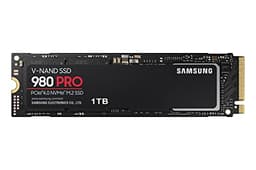
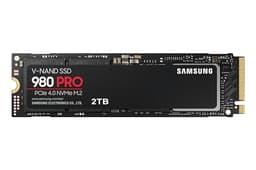
If you want internal SSD performance for running a boot drive or demanding applications, you want an M.2 NVMe drive installed directly in your machine rather than a portable external. The Samsung 980 Pro or similar PCIe Gen 4 drives deliver multiple times the bandwidth of a USB-connected external, and that difference matters for boot times, application launches, and anything that involves lots of small file access. The T7 is a portable drive, not a substitute for an internal one.
And if budget is genuinely tight, a DIY enclosure paired with a budget M.2 NVMe drive can get you close to T7 performance for less money. The trade-off is losing the integrated warranty, the guaranteed component quality, and the convenience of a finished product. But it's a legitimate option if you're comfortable putting it together yourself and you trust the components you're buying.
What works. What doesn’t.
6 + 5What we liked6 reasons
- Genuine USB 3.2 Gen 2 speeds of up to 1,050 MB/s read and 1,000 MB/s write, hitting the interface ceiling as a well-designed drive should
- Samsung V-NAND TLC NAND with DRAM cache delivers noticeably better random I/O performance compared to cheaper SATA-based or DRAM-less portable drives
- Aluminium enclosure at 58g and 8mm thick is genuinely pocketable, feels premium, and serves as passive thermal management rather than just aesthetic
- Broad compatibility out of the box with Windows, macOS, and Android via exFAT formatting, with both USB-C and USB-A cables included
- 360 TBW endurance rating is generous for typical portable drive use cases, and Samsung's warranty service is well-regarded
- 4.7 average from over 40,000 owner reviews reflects consistent real-world reliability rather than a statistical outlier
Where it falls5 reasons
- No IP rating for water or dust resistance, unlike the SanDisk Extreme (IP55) or Samsung's own T7 Shield (IP65)
- Three-year warranty is shorter than the five-year cover offered by WD My Passport SSD and SanDisk Extreme
- SLC write cache will eventually hand off to native TLC speeds on very large sustained transfers, though the drop is manageable rather than catastrophic
- Slightly heavier than some rivals such as the WD My Passport SSD at 40g, though the difference is minor in practice
- Full speed requires a USB 3.2 Gen 2 port, which is not universal on older machines, and Samsung's packaging could be clearer about this requirement
Full specifications
6 attributes| Capacity | 1TB |
|---|---|
| Form factor | Portable |
| Interface | USB 3.2 Gen 2 |
| Read speed | 1050MB/s |
| Type | NVMe SSD |
| Write speed | 1000MB/s |
If this isn’t right for you
2 options 9.0 / 10
Kingston FURY Renegade 1000G PCIe 4.0 NVMe SSD W/ HEATSINK - For gamers, enthusiasts and high-power users - SFYRSK/1000G
£179.95 · Kingston
 9.0 / 10
Gigabyte AORUS Gen4 7300 SSD 1TB PCIe 4.0 NVMe M.2 Internal Solid State Hard Drive with Read Speed Up to 7300MB/s, Write Speed Up to 6000MB/s, AG4731TB
£213.36 · Gigabyte
Frequently asked
7 questions01Does the Samsung T7 1TB work with both Windows and Mac without reformatting?+
Yes. The T7 ships formatted as exFAT, which is readable and writable on both Windows and macOS without any conversion needed. If you plan to use it exclusively on one platform, you can reformat it to NTFS or APFS, but for cross-platform use, the default exFAT format works across both operating systems as well as compatible Android devices.
02What USB port do I need to get the full 1,050 MB/s read speed?+
You need a USB 3.2 Gen 2 port, which runs at 10 Gbps. On a USB 3.0 port, speeds will cap at roughly 500 MB/s, and on a USB 2.0 port you are looking at around 40 MB/s. Check your machine's port specifications before assuming you have the right connection, as older laptops and desktops often have USB 3.0 rather than USB 3.2 Gen 2 ports.
03Is the Samsung T7 waterproof or suitable for outdoor use?+
No. The T7 does not carry an IP rating, so it offers no rated protection against water or dust. If you need a drive for outdoor or field use where exposure to moisture is a possibility, the Samsung T7 Shield (IP65 rated) or the SanDisk Extreme (IP55 rated) are more appropriate choices.
04How does the Samsung T7 handle very large file transfers that exceed the SLC write cache?+
The T7 uses an SLC write cache to absorb incoming writes at full rated speeds. Once that cache fills during a very large sustained transfer, write speeds step down to native TLC speeds, typically in the range of 300 to 500 MB/s. This is slower than the cache-assisted speed but still faster than a portable hard drive at its best. For the vast majority of typical use cases, the cache will not fully deplete during a single transfer session.
05Can the Samsung T7 be used with an Android phone or tablet?+
Yes, the T7 is compatible with Android devices that support USB OTG. You can use it to back up a phone, transfer files, or run supported applications from external storage on compatible Android devices. The drive works via the included USB-C cable with Android devices that have a USB-C port.
06Does the Samsung T7 have hardware encryption, and how do you set it up?+
Yes. The T7 supports AES 256-bit hardware encryption, which means encryption and decryption happen on the drive itself rather than using your computer's processing resources. To enable it, you need to install Samsung's Portable SSD software, available for Windows and macOS. You then set a password through the software. If you lose the password, the data is unrecoverable, so store it somewhere reliable before enabling encryption.
07How does the Samsung T7 1TB compare to the WD My Passport SSD 1TB?+
Both drives use USB 3.2 Gen 2 and achieve similar sequential performance in real-world use. The T7 has an aluminium enclosure versus the My Passport SSD's plastic shell, and the T7's DRAM cache gives it a consistent advantage for random I/O workloads. The WD My Passport SSD offers a five-year warranty compared to the T7's three years and has a slightly higher rated endurance at 400 TBW versus 360 TBW. Neither has an IP rating. The right choice depends on whether you prioritise build quality and random performance or warranty length and endurance rating.