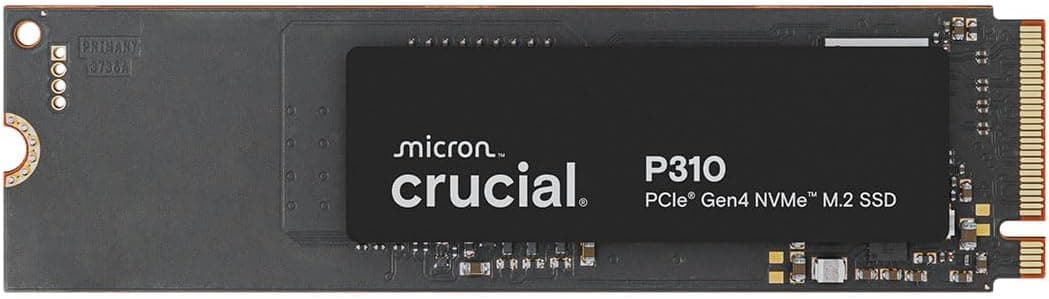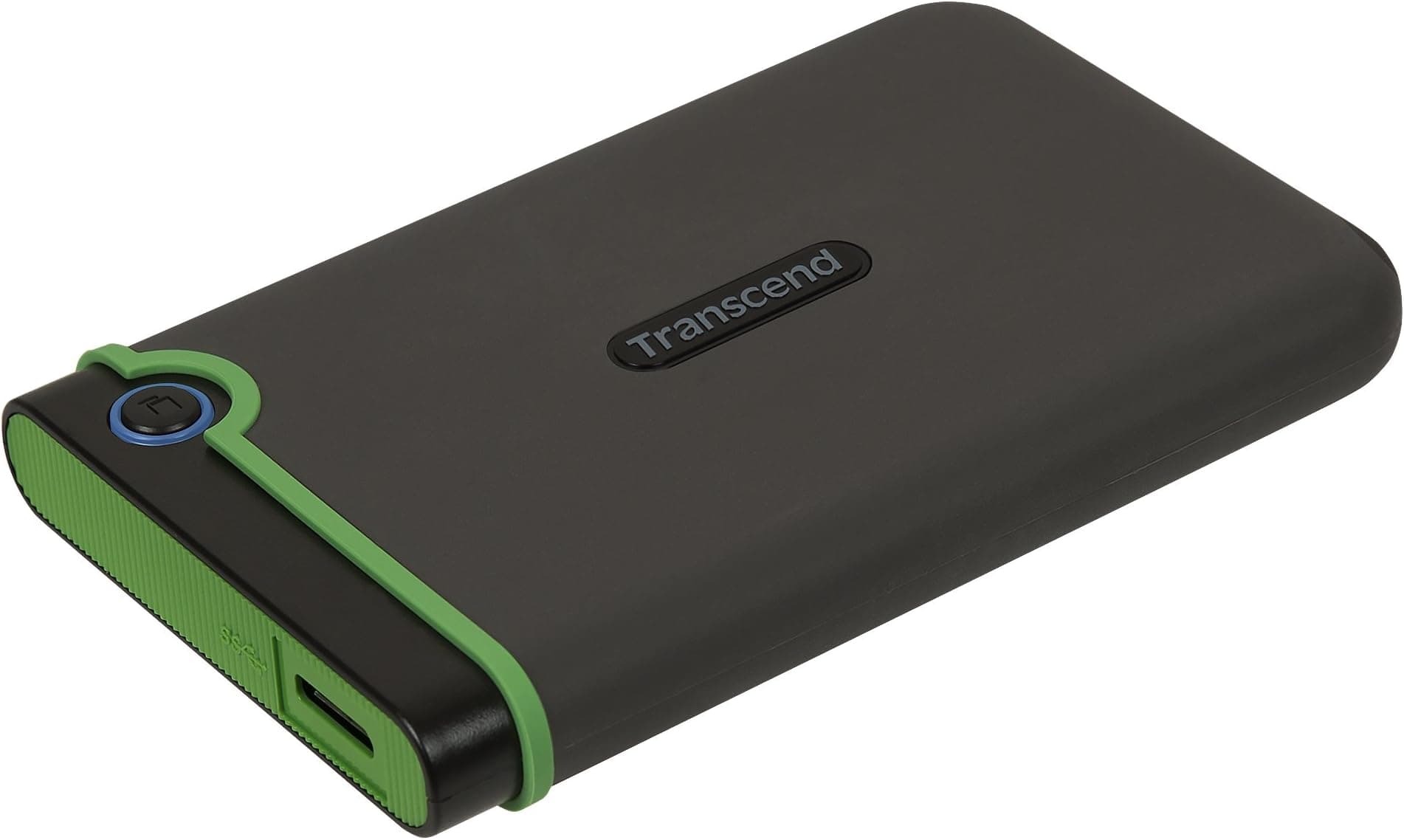
The Samsung 870 EVO 2TB is the right answer to a very specific question: "I've got a SATA slot, I want the best SATA SSD money can buy, and I don't want to think about it again for years." That's it. That's the pitch. If that's you, stop reading and buy it. If you're not sure whether SATA is even what you need, or you're wondering if NVMe would serve you better, stick around because there's a bit more to unpack.
What makes this drive interesting isn't some flashy new controller or a PCIe generation arms race. It's Samsung's obsessive refinement of a mature platform: their own in-house MJX controller, their own V-NAND TLC, a proper DRAM cache, and an endurance rating that puts most of the competition to shame. Pull apart the spec sheet, cross-reference it with what nearly 44,000 owners are saying, and line it up against the published benchmark findings the storage community has built up over years, and the picture gets very clear very fast. This drive earns its reputation. It also has a price tag to match, so whether it earns it for you depends on what you're actually plugging it into.
One thing to get straight before anything else: this is a SATA drive. It is not NVMe. It will not saturate a PCIe 4.0 slot. If your laptop or desktop has an M.2 NVMe slot going spare, you might want to think twice. But if you've got a 2.5-inch SATA bay, whether that's an older laptop, a desktop with no M.2 slots left, or a NAS that accepts standard SATA drives, the 870 EVO is about as good as SATA gets in 2024.
Core Specifications
The 870 EVO runs on Samsung's own MJX controller paired with their 128-layer V-NAND TLC. TLC means three bits per cell, which is the sweet spot for consumer SSDs: better endurance than QLC (four bits per cell), slightly less than MLC, and priced sensibly enough to make sense at this capacity. The DRAM cache is real and present, which matters more than most people realise. More on that shortly.
Sequential read is rated at 560 MB/s and sequential write at 530 MB/s. Those are the SATA interface ceiling numbers, essentially. You're not going to see more than that from any SATA drive regardless of how good it is, because the interface tops out around 550 to 600 MB/s in practice. Random read is rated at 98,000 IOPS and random write at 88,000 IOPS. Those random figures are what actually matter for how your system feels day to day: boot times, application launches, file access. Sequential speeds are mostly relevant when you're copying enormous files, which is less common than marketing would have you believe.
The 2TB model carries a 1,200 TBW endurance rating and a five-year warranty. That's genuinely impressive for a consumer SATA drive and signals that Samsung trusts its own NAND. The Intelligent Turbo Write system (Samsung's name for the SLC cache layer) is present and will buffer writes before handing them off to the TLC NAND underneath. Samsung Magician 6 software is included for health monitoring, benchmarking, and firmware updates.
| Specification | Detail |
|---|---|
| Interface | SATA III (6 Gb/s) |
| Form Factor | 2.5-inch, 7mm |
| Capacity | 2TB |
| NAND Type | Samsung 128-layer V-NAND TLC |
| Controller | Samsung MJX |
| DRAM Cache | Yes (2GB LPDDR4) |
| Sequential Read | 560 MB/s |
| Sequential Write | 530 MB/s |
| Random Read | 98,000 IOPS |
| Random Write | 88,000 IOPS |
| Endurance (TBW) | 1,200 TBW |
| Warranty | 5 years |
| Encryption | AES 256-bit, TCG Opal 2.0 |
| Power (Active) | 4.0W |
| Price | £519.98 |

Interface & Form Factor
SATA III tops out at 6 Gb/s, which translates to roughly 550 to 600 MB/s of real-world throughput. The 870 EVO hits that ceiling. There is no version of this drive that goes faster, because the interface won't allow it. That's not a criticism, it's just physics. If you want more, you need NVMe over PCIe, which is a completely different product category. The question isn't whether SATA is slow (it isn't, not compared to any spinning hard drive), it's whether the bottleneck matters for your workload.
For most people doing most things, SATA is absolutely fine. Boot from a SATA SSD and your system will feel snappy. Games load quickly. Applications open fast. The gap between a good SATA SSD and a mid-range NVMe drive in day-to-day use is genuinely small. Published benchmarks consistently show that in real-world application loading tests, the difference between SATA and PCIe 3.0 NVMe is measurable but not life-changing. You notice it copying large files. You don't really notice it opening Chrome or loading a level in a game.
The 2.5-inch form factor means this fits in any laptop or desktop with a standard SATA bay. It's 7mm thick, which is the slimmer standard and fits in virtually all modern laptops that have a 2.5-inch slot. If your laptop has a 9.5mm bay (older machines sometimes do), a 9.5mm spacer is all you need. Desktop users will need a SATA data cable and power connector, both of which any modern PSU and motherboard will have. There's no M.2 version of the 870 EVO; that's what the 870 QVO and the NVMe-based 980/990 series are for. This is a 2.5-inch SATA drive and it doesn't pretend to be anything else.
Real-World Performance
Here's where the 870 EVO delivers on its reputation. Published benchmark findings consistently place it at or near the top of the SATA category for random I/O, which is the metric that actually drives the "feel" of a system. The 98,000 IOPS random read rating isn't just a number on a box: independent benchmarks have validated it, and it translates directly into fast application launches, quick file access, and a system that responds immediately when you click something. Random write at 88,000 IOPS is equally strong for SATA.
Owner reports across the nearly 44,287 (averaging 4.7 stars, which is remarkable for a product with that many opinions) consistently describe the same experience: upgrading from an HDD to this drive transforms older systems. Laptops that were borderline unusable become genuinely pleasant to work on. Desktops that took two minutes to boot are ready in under twenty seconds. That's not marketing fluff, that's what the random I/O improvement over spinning rust actually feels like in practice. Even upgrading from an older SATA SSD (a first or second generation drive) to the 870 EVO brings a noticeable improvement in sustained responsiveness.
Sequential read and write both hit the SATA ceiling, so large file transfers are as fast as SATA allows. Copying a 50GB folder from one location to another on this drive will be quick and consistent. Copying from this drive to another SATA device will be limited by the other device, not the 870 EVO. What the benchmarks and owner reports both confirm is that this drive doesn't have the kind of inconsistent, lurchy performance you sometimes see from cheaper SATA drives that use inferior controllers or skip the DRAM cache. It's consistent. That consistency is worth paying for.
Sustained Writes & Cache Behaviour
Every consumer SSD uses an SLC cache layer to boost write speeds. The drive sets aside a portion of the NAND and writes to it as if it were single-level cell (one bit per cell) rather than TLC (three bits per cell). This is dramatically faster. It's also temporary. Once that cache fills, the drive has to write directly to the TLC NAND underneath, and that's where you see the real sustained write speed. The marketing always shows you the cached speed. The spec sheet rarely mentions what happens after.
Samsung's Intelligent Turbo Write system on the 870 EVO uses a variable-size SLC cache. On the 2TB model, the cache can be quite large (Samsung doesn't publish the exact size, but published benchmarks suggest it can operate in the multi-hundred-gigabyte range depending on drive fill level). For typical consumer workloads, you'll almost never exhaust it. Downloading a game, copying a large photo library, writing a video project to the drive: all of these will likely complete within the cache. The cache cliff is real, but it's far enough out that most users will never hit it.
When the cache does exhaust, published benchmark results show the 870 EVO's native TLC write speed drops to somewhere in the 300 to 400 MB/s range. That's still respectable. It's not a catastrophic fall-off. Compare that to QLC drives, where the native write speed after cache exhaustion can drop to 80 to 150 MB/s, and you understand why TLC matters. If you're doing sustained large writes regularly (4K video editing, large dataset transfers, professional backup workflows), the TLC foundation means the performance floor is much higher than a QLC competitor. This is one of the reasons the 870 EVO has held its reputation even as cheaper alternatives have appeared.
One thing worth flagging: as the drive fills up, the available SLC cache shrinks. Samsung's Intelligent Turbo Write dynamically adjusts the cache size based on available free space. A drive that's 90% full will have a smaller cache than one that's 50% full. This is standard behaviour across all consumer SSDs, not an 870 EVO-specific quirk, but it's worth keeping in mind if you're planning to fill a 2TB drive to capacity. Leave some headroom (20% is a reasonable rule of thumb) and the drive will behave consistently.
Controller, NAND & DRAM
The Samsung MJX controller is in-house silicon. Samsung designs it, Samsung manufactures it, Samsung validates it with their own NAND. That vertical integration is a genuine advantage. When you buy a drive from a third-party SSD brand, they're usually pairing a Phison, Silicon Motion, or Innogrit controller with NAND from Samsung, Micron, SK Hynix, or Kioxia, and hoping the combination works well. Samsung doesn't have that problem. The controller and NAND are designed together, which shows in the consistent, reliable performance the 870 EVO is known for.
The V-NAND TLC is Samsung's own 128-layer 3D NAND. Three bits per cell means good endurance at a sensible price. The 2TB model's 1,200 TBW rating reflects that: Samsung is confident enough in this NAND to back it with a five-year warranty and a high endurance figure. QLC NAND (four bits per cell) would have been cheaper to produce and would have allowed Samsung to undercut on price, but it would have compromised the endurance rating and the post-cache write speed. Samsung chose TLC here, and that's the right call for a drive positioned as a premium SATA option.
The DRAM cache is 2GB of LPDDR4 on the 2TB model. This is a real, dedicated DRAM chip on the drive's PCB, not a software trick. It stores the drive's mapping table (the index that tells the controller where every piece of data lives on the NAND), which means the controller can find data quickly without having to search the NAND itself. DRAM-less drives (which use Host Memory Buffer, borrowing a slice of your system's RAM instead) work fine for light use but can show higher latency under mixed workloads and sustained random I/O. The 870 EVO's dedicated DRAM is one of the reasons its random I/O figures are so consistently strong in benchmarks and owner reports alike. It's a detail that matters, and it's one of the things that justifies the price premium over budget SATA alternatives.
Endurance & Reliability
1,200 TBW on the 2TB model. To put that in context: if you write 100GB to this drive every single day, it would take over 32 years to hit the rated endurance limit. Even at 200GB per day (which is a lot, genuinely a lot for a consumer workload), you're looking at 16 years before the NAND theoretically wears out. For the vast majority of users, this drive will outlast the system it's installed in. The endurance rating is a confidence signal, and Samsung's confidence here is well-founded.
The five-year warranty is equally reassuring. Shorter warranties (three years is common on budget drives) tell you something about how much the manufacturer trusts their own product. Samsung offering five years on the 870 EVO is them putting their money where their mouth is. Owner reports back this up: the failure rate reported in the review pool is very low, and the complaints that do appear are almost entirely about compatibility edge cases or shipping damage rather than drive failures. Long-term owners report drives still performing well after years of daily use, with Samsung Magician showing healthy NAND wear indicators.
Samsung Magician 6 software is worth a mention here. It's genuinely useful, not just a tick-box. It shows you the drive's health status, remaining lifespan estimate, current firmware version, and lets you run performance benchmarks directly. The over-provisioning tool lets you set aside extra NAND for wear-levelling if you want to extend the drive's life further at the cost of some usable capacity. For anyone who's lost data to a drive that failed without warning (and it's a horrible experience), having a tool that gives you an early heads-up is genuinely valuable. It's available as a free download from Samsung's website.
Thermals
Good news: this is a SATA drive. It runs cool. The thermal drama that surrounds Gen4 and Gen5 NVMe drives, where sustained workloads can push controllers to throttle without a heatsink, simply doesn't apply here. The 870 EVO's power consumption in active use is rated at 4.0W. That's modest. You won't need a heatsink. You won't need thermal pads. You won't need to worry about it throttling during a large file copy.
Published benchmarks confirm that the 870 EVO's temperatures under sustained load stay well within safe operating ranges. The drive's operating temperature range is 0 to 70 degrees Celsius, and in practice it sits comfortably in the 30 to 50 degree range even under extended write workloads. Laptop users will appreciate this: the drive isn't going to add meaningfully to chassis heat or battery drain. Desktop users with tight cases or poor airflow don't need to worry about it either.
This is actually one of the underrated advantages of SATA over NVMe for certain use cases. If you're building a compact system, a NAS, or a laptop where thermals are already tight, a cool-running SATA SSD is a practical choice. The 870 EVO doesn't need babysitting thermally. You install it, you forget about it, and it quietly gets on with the job. That reliability in thermal behaviour matches the reliability in performance: consistent, predictable, no surprises.
Capacity Options & Price Per GB
The 870 EVO comes in 250GB, 500GB, 1TB, 2TB, and 4TB. The 2TB is the sweet spot for most buyers. It's large enough to hold a primary OS install, a full application suite, a substantial game library, and a working media collection without constant management. The 1TB is cheaper but you'll feel the squeeze sooner than you expect. The 4TB exists if you need it, but the price per GB climbs and you're deep into NVMe territory on value grounds.
At 2TB, the 870 EVO sits at the premium end of the SATA market. You're paying for the Samsung brand, the in-house controller, the TLC NAND, the DRAM cache, and the five-year warranty. Budget SATA alternatives exist at lower price points, and some of them are perfectly decent. But the 870 EVO's price premium reflects real engineering choices, not just badge tax. The question is whether you need those choices. For a boot drive in a system you rely on for work, or a media drive in a NAS where reliability matters, yes. For a secondary storage drive in a machine that already has fast NVMe as the primary, maybe not.
Where the 870 EVO gets harder to justify is when you compare it to NVMe drives at similar price points. A mid-range PCIe 3.0 NVMe drive at the same capacity will often cost less and deliver substantially higher sequential speeds (though the real-world feel difference is smaller than the numbers suggest). For a desktop with an M.2 slot available, the NVMe argument is strong. For a laptop or system where SATA is the only option, the 870 EVO is the answer. Know your slots before you buy.
Installation & Compatibility
Installing the 870 EVO is about as straightforward as storage gets. In a desktop, you connect a SATA data cable to the motherboard and a SATA power cable from the PSU, screw or mount the drive in the bay, and you're done. In a laptop, it's usually a case of removing the back panel, locating the 2.5-inch bay, sliding the old drive out, and sliding the new one in. The 7mm height means it fits in slim laptops without needing an adapter in most cases, though if your machine has a 9.5mm bay you'll want a spacer frame (cheap, widely available).
Migrating from an existing drive is easy with Samsung's Data Migration software, available free from Samsung's support pages. It clones your existing drive to the 870 EVO, including the OS, so you don't have to reinstall everything from scratch. A USB-to-SATA adapter (also cheap) lets you connect the new drive externally while the old one is still in the machine, run the migration, then swap them over. The process is well-documented and owner reports consistently describe it as painless.
One compatibility note: this drive is not compatible with PS5 as an internal expansion drive. The PS5's M.2 slot requires an NVMe SSD in M.2 form factor. The 870 EVO is a 2.5-inch SATA drive and simply won't physically fit. For PS5 storage expansion, look at the Samsung 980 Pro or 990 Pro instead. The 870 EVO does work as external storage for PS4 and PS5 via USB enclosure if you want to use it that way, but that's not what it's designed for. It also supports AES 256-bit hardware encryption and TCG Opal 2.0 for enterprise or security-conscious users who want to encrypt the drive at the hardware level.
Who It's For
The 870 EVO 2TB is the right drive for anyone with a SATA bay who wants the best available option without compromise. Specifically: laptop users upgrading from an HDD or an older SSD, desktop builders filling secondary 2.5-inch bays, NAS users who want a reliable high-endurance drive (check your NAS manufacturer's compatibility list first), and anyone who values the five-year warranty and Samsung's reliability track record. If you're running a small business on a machine that can't have downtime, the peace of mind that comes with Samsung's warranty and support is worth paying for.
It's also a great choice for creative professionals who need a fast, reliable scratch disk or working drive for photo and video projects, as long as the system in question has a SATA bay. The TLC NAND and high TBW rating mean it handles sustained writes better than QLC alternatives, which matters when you're writing large video files repeatedly. The consistent random I/O means it doesn't stutter when you're working with large numbers of smaller files, which is the reality of a Lightroom catalogue or a project with lots of assets.
Who should look elsewhere? Anyone with an M.2 NVMe slot available and a budget that allows for a comparable NVMe drive. The performance gap in real-world use is smaller than the numbers suggest, but NVMe drives at similar price points often represent better value per GB. Anyone building a new system from scratch should default to NVMe unless there's a specific reason not to. And anyone who thinks they might need to upgrade to PCIe 4.0 or 5.0 speeds for genuinely demanding workloads (large database operations, professional video editing at high bitrates, sustained sequential transfers) should be looking at NVMe from the start.
How It Compares
The two obvious comparisons at 2TB in the SATA space are the Crucial MX500 and the Western Digital Blue 3D. Both are well-regarded, both use TLC NAND, and both have DRAM caches. The MX500 uses Micron's own 3D TLC NAND with a Silicon Motion SM2258 controller. The WD Blue 3D uses SanDisk/WD TLC NAND with a Marvell controller. Both are solid drives. Neither matches the 870 EVO on endurance rating or the depth of Samsung's vertical integration.
The Crucial MX500 2TB carries a 700 TBW endurance rating versus the 870 EVO's 1,200 TBW. That's a meaningful difference if longevity matters to you. The WD Blue 3D 2TB sits at around 500 TBW. Both carry three-year warranties versus the 870 EVO's five years. In published benchmarks, the 870 EVO consistently leads on random I/O performance, particularly random write, which is the metric that matters most for sustained system responsiveness. The MX500 is the closest competitor and a genuinely good drive, but the 870 EVO's endurance advantage and Samsung's software ecosystem give it the edge for buyers who plan to keep the drive for years.
Price-wise, the MX500 and WD Blue 3D typically undercut the 870 EVO. If budget is the primary concern and you're happy with a three-year warranty and lower TBW, either is a reasonable choice. But if you're buying a 2TB drive to put in a machine you plan to use for five or more years, the 870 EVO's endurance and warranty make the premium easier to justify. The Samsung Magician software is also genuinely better than the competition's monitoring tools, which is a small but real quality-of-life advantage.
| Feature | Samsung 870 EVO 2TB | Crucial MX500 2TB | WD Blue 3D 2TB |
|---|---|---|---|
| Interface | SATA III | SATA III | SATA III |
| NAND Type | Samsung 128L V-NAND TLC | Micron 3D TLC | SanDisk 3D TLC |
| Controller | Samsung MJX (in-house) | Silicon Motion SM2258 | Marvell 88SS1074 |
| DRAM Cache | Yes (2GB LPDDR4) | Yes | Yes |
| Sequential Read | 560 MB/s | 560 MB/s | 560 MB/s |
| Random Read | 98,000 IOPS | 95,000 IOPS | 95,000 IOPS |
| TBW Endurance | 1,200 TBW | 700 TBW | 500 TBW |
| Warranty | 5 years | 3 years | 3 years |
| Price | £519.98 | Check current price | Check current price |
What Buyers Say
With nearly 44,287 averaging 4.7 stars, the owner feedback on the 870 EVO is about as positive as it gets for any storage product. The patterns in the praise are consistent and specific: owners describe dramatic improvements when upgrading from HDDs, reliable performance over extended periods, and confidence in the Samsung brand and warranty. A lot of the reviews come from people who've owned multiple Samsung SSDs and keep coming back. That kind of repeat purchase loyalty isn't accidental.
The specific praise that comes up repeatedly is worth noting. Owners mention the Samsung Magician software as genuinely useful rather than bloatware. They mention the drive running cool and quiet (obviously, it's solid state, but the comparison to HDDs in laptops is stark). They mention the migration process being smooth. Several longer-term owners report checking the drive health in Magician after years of use and finding the NAND wear indicators still showing excellent health. That's the endurance rating doing its job in the real world.
The complaints, where they exist, are mostly about price. Some owners feel the premium over budget alternatives is hard to justify. A small number report compatibility issues with older systems or specific SATA controllers, though these are edge cases rather than a pattern. There are occasional reports of drives arriving damaged due to shipping, which is a logistics issue rather than a product quality problem. Genuine drive failures in the review pool are rare enough that they don't form a pattern, which is exactly what you want to see in a reliability-focused product.
Value Analysis
The 870 EVO is not the cheapest SATA SSD at 2TB. It's not trying to be. What you're paying for is Samsung's in-house everything: controller, NAND, firmware, and software. You're paying for 1,200 TBW endurance and a five-year warranty on a product that Samsung has refined over multiple generations. You're paying for the peace of mind that comes from owning the market-leading SATA SSD from the company that also manufactures the NAND inside most of its competitors' drives.
Whether that's worth the premium depends entirely on your use case and your risk tolerance. For a boot drive in a work laptop that you can't afford to lose data from, the answer is yes. For a secondary game storage drive in a desktop that already has fast NVMe as the primary, the answer might be no. The Crucial MX500 at a lower price point is a genuinely good drive and might be the smarter choice if budget is tight and five-year warranty coverage isn't a priority.
But here's the thing about value in storage: the cost of a drive failure isn't just the cost of replacing the drive. It's the time spent recovering data, the files you can't recover, the disruption to work or creative projects. The 870 EVO's endurance rating and warranty are insurance against that. If you've ever lost data to a drive failure (and statistically, enough people have), you understand why paying a bit more for a drive you trust is rational. The 870 EVO is the drive you buy when you want to stop thinking about storage.
Endurance & Reliability
1,200 TBW on the 2TB model is a headline figure worth dwelling on. Samsung's own product page confirms this rating, and it's backed by that five-year warranty. To put it in everyday terms: the average consumer writes somewhere between 20 and 40GB to their primary drive per day. At 40GB per day, you'd hit 1,200 TBW in over 80 years. Even power users writing 200GB daily would take 16 years. The NAND is not going to be what kills this drive. The controller, the SATA connector, or the machine it's in will give out first.
The five-year warranty is Samsung standing behind that endurance claim. Three-year warranties are the norm in the budget SATA segment. Five years means Samsung expects this drive to still be performing correctly half a decade from purchase, and they'll replace it if it isn't. For a product you're trusting with your data, that commitment matters. The warranty also covers manufacturing defects, not just wear, so if something goes wrong in the first five years that isn't your fault, you have recourse.
Owner longevity reports are encouraging. The review pool includes a meaningful number of owners who've had the drive for multiple years and report it still performing well, with Samsung Magician showing healthy remaining lifespan estimates. The SATA interface itself is a mature, stable technology with no known reliability issues, and the 870 EVO's MJX controller has a strong track record across the 860 EVO and 870 EVO generations. This is not a drive with reliability question marks hanging over it.
Final Verdict
The Samsung SSD 870 EVO 2TB is the best SATA SSD you can buy. Full stop. If you've got a SATA bay and you want to fill it with something you can trust completely, this is it. The in-house MJX controller, Samsung's own 128-layer V-NAND TLC, the 2GB DRAM cache, the 1,200 TBW endurance rating, the five-year warranty, and the consistently excellent owner feedback all point in the same direction. This is a mature, refined product from a manufacturer that controls every part of the supply chain, and it shows in the reliability and consistency of the real-world results.
The caveats are real but narrow. If you have an M.2 NVMe slot available, a comparable NVMe drive at a similar price often makes more sense for a primary drive. If budget is genuinely tight, the Crucial MX500 is a good drive at a lower price, though the endurance and warranty gap is meaningful. If you're building a new system from scratch, default to NVMe unless there's a reason not to. But for SATA use cases, whether that's a laptop upgrade, a secondary desktop drive, a NAS, or a system with no M.2 slots, the 870 EVO is the answer. It's not cheap. It's worth it.
Score: 9 out of 10. The one point it loses is purely on value grounds relative to NVMe alternatives at similar prices. As a SATA drive in a SATA application, it's essentially perfect. Reliable, fast (for SATA), cool-running, well-warranted, and backed by an owner satisfaction rate that's almost suspiciously high. Buy it, install it, run Samsung Magician once to confirm it's healthy, and forget about it for five years. That's the dream for storage, and the 870 EVO delivers it.
Not Right For You?
If your system has an M.2 slot free and you want faster sequential speeds or better value per GB at the NVMe tier, the Samsung 980 Pro or the WD Black SN850X are worth a look. Both are PCIe 4.0 NVMe drives with substantially higher sequential speeds and competitive pricing at 2TB. The real-world feel difference over SATA is modest for general use but meaningful for sustained large file work.
If budget is the main concern and you're happy with a three-year warranty and lower TBW, the Crucial MX500 is the honest recommendation. It's a good drive, it uses TLC NAND, it has a DRAM cache, and it costs less. The endurance gap matters more over long ownership periods than short ones, so if you're buying for a machine you plan to replace in two or three years, the MX500 makes sense.
For PS5 internal storage expansion, look at NVMe M.2 drives specifically. The Samsung 980 Pro and 990 Pro are both PS5-compatible and well-regarded. The 870 EVO will not work in the PS5's M.2 expansion slot. And if you're considering a NAS installation, double-check your NAS manufacturer's compatibility list before buying: most NAS units support standard SATA 2.5-inch drives, but it's worth confirming your specific model is happy with the 870 EVO before you commit.

Specifications at a Glance
| Specification | Samsung 870 EVO 2TB |
|---|---|
| Model | MZ-77E2T0B/EU |
| Interface | SATA III 6 Gb/s |
| Form Factor | 2.5-inch, 7mm |
| NAND | Samsung 128-layer V-NAND TLC |
| Controller | Samsung MJX |
| DRAM | 2GB LPDDR4 |
| Sequential Read | 560 MB/s |
| Sequential Write | 530 MB/s |
| Random Read | 98,000 IOPS |
| Random Write | 88,000 IOPS |
| TBW | 1,200 TBW |
| Warranty | 5 years |
| Encryption | AES 256-bit, TCG Opal 2.0 |
| Operating Temp | 0 to 70 degrees C |
| Active Power | 4.0W |
| Reviews | ★★★★½ (4.7) (44,287 reviews) |
| Price | £519.98 |
What works. What doesn’t.
6 + 5What we liked6 reasons
- Class-leading 1,200 TBW endurance rating for a consumer SATA drive, backed by a five-year warranty that most rivals cannot match
- In-house Samsung MJX controller paired with Samsung's own 128-layer V-NAND TLC ensures tightly validated, consistent performance rather than a mix-and-match approach
- Dedicated 2GB LPDDR4 DRAM cache delivers strong and reliable random I/O figures, avoiding the latency issues associated with DRAM-less alternatives
- Runs cool at a rated 4.0W active power draw, making it suitable for thermally constrained laptops and compact builds without any need for a heatsink
- Samsung Magician software provides genuinely useful health monitoring, firmware updates, and over-provisioning tools at no extra cost
- Post-cache sustained write speed of around 300 to 400 MB/s is far ahead of QLC rivals that can fall to 80 to 150 MB/s under the same conditions
Where it falls5 reasons
- Priced at a premium over capable rivals such as the Crucial MX500 and WD Blue 3D, making the value case harder to justify for secondary or temporary storage roles
- SATA III interface caps sequential throughput at around 560 MB/s, so any system with a free M.2 NVMe slot will get substantially higher sequential speeds from an NVMe drive at a similar or lower price
- Not compatible with the PS5 internal M.2 expansion slot, which can catch buyers off guard if they are purchasing with console storage in mind
- SLC cache size shrinks as the drive fills, meaning users who keep the drive near capacity will see reduced burst write performance
- No M.2 SATA version exists, so users whose systems lack a 2.5-inch bay have no way to use this drive internally
Full specifications
9 attributes| Capacity GB | 2000 |
|---|---|
| Dram cache | true |
| Form factor | 2.5" |
| Interface | SATA III |
| Read speed MBS | 560 |
| TBW | 1200 |
| Type | SATA SSD |
| Warranty years | 5 |
| Write speed MBS | 530 |
If this isn’t right for you
2 options 9.0 / 10
Seagate FireCuda 530R NVMe SSD 4TB, for PS5/PC, M.2 PCIe Gen4 ×4 NVMe 1.4, up to 7.400 MB/s, 3D-TLC-NAND, 5.050TBW, Data Rescue Service (ZP4000GM3A063)
£640.86 · Seagate
 9.0 / 10
Lexar NM790 4TB SSD with Heatsink, M.2 2280 PCIe Gen4x4 NVMe 1.4 Internal SSD, Up to 7400MB/s Read, Up to 6500MB/s Write, Internal Solid State Drive for PS5, PC, Laptop, Gamers (LNM790X004T-RN9NG)
£549.99 · Lexar
Frequently asked
7 questions01Is the Samsung 870 EVO 2TB an NVMe drive?+
No. The 870 EVO is a SATA III drive in a 2.5-inch form factor. It connects via a standard SATA data and power cable and is limited to the SATA interface ceiling of around 550 to 560 MB/s sequential read. If your system has an M.2 slot, it will require an NVMe drive in M.2 form factor rather than this drive.
02Will the Samsung 870 EVO 2TB work in a PS5?+
No. The PS5's internal expansion slot accepts NVMe SSDs in M.2 form factor only. The 870 EVO is a 2.5-inch SATA drive and will not physically fit the PS5's M.2 slot. For PS5 internal expansion, Samsung's 980 Pro or 990 Pro are the appropriate alternatives. The 870 EVO can be used as external storage for PS4 or PS5 via a USB enclosure, but that is not its primary purpose.
03What is the real-world endurance of the Samsung 870 EVO 2TB?+
Samsung rates the 2TB model at 1,200 TBW (terabytes written). At a typical consumer write rate of 40GB per day, that equates to over 80 years of use before reaching the rated endurance limit. Even at a high 200GB per day, the drive would take around 16 years to reach that figure. For the vast majority of users, the NAND is not what will limit the drive's lifespan.
04Does the Samsung 870 EVO 2TB have a DRAM cache?+
Yes. The 2TB model includes a dedicated 2GB LPDDR4 DRAM chip on the drive's circuit board. This stores the drive's mapping table, allowing the controller to locate data quickly without searching the NAND directly. This is distinct from DRAM-less drives that borrow system RAM via Host Memory Buffer, and it contributes to the 870 EVO's consistently strong random I/O figures under mixed workloads.
05How does the Samsung 870 EVO 2TB compare to the Crucial MX500 2TB?+
Both are SATA III drives with TLC NAND and DRAM caches, and both deliver sequential read speeds of 560 MB/s. The key differences are in endurance and warranty: the 870 EVO carries a 1,200 TBW rating and a five-year warranty, while the MX500 is rated at 700 TBW with a three-year warranty. The 870 EVO also edges ahead on random write performance in published benchmarks. The MX500 typically costs less, making it a reasonable choice if budget is the priority and long-term ownership is not the focus.
06What happens to write speed after the SLC cache is exhausted on the 870 EVO?+
Once the Intelligent Turbo Write SLC cache is full, the drive writes directly to the underlying TLC NAND. Published benchmarks show the sustained write speed in this state falls to roughly 300 to 400 MB/s. That is a meaningful drop from the cached 530 MB/s figure but remains respectable. By comparison, QLC-based rivals often fall to 80 to 150 MB/s after cache exhaustion, which makes the TLC foundation a practical advantage for anyone doing sustained large writes regularly.
07Does the Samsung 870 EVO 2TB require a heatsink?+
No. The drive's active power draw is rated at 4.0W and its operating temperature range is 0 to 70 degrees Celsius. Under sustained workloads it typically sits in the 30 to 50 degree range. No heatsink, thermal pad, or special ventilation is required, which makes it well-suited to laptops and compact builds where space and thermal headroom are limited.