AMD's RX 9060 XT is the card that's supposed to democratise RDNA 4 for the masses, and the Powercolor Reaper 16GB version is one of the more interesting ways to get there. So is it actually any good? Short answer: yes, and it punches properly hard for a mid-range GPU in 2026. The 16GB VRAM configuration alone puts it in a different conversation to most of its direct competition, and the 4.7-star average across 218 owner reviews suggests this isn't just spec-sheet theatre.
But here's where it gets interesting. At £457.98, you're sitting in a bracket where the choices genuinely matter. The RTX 4060 Ti 16GB is hovering in the same zone, the RX 7700 XT is cheaper, and AMD's own RX 9070 is not that far above if you stretch the budget. The Powercolor Reaper 16GB has to justify its position against all of those, and for most 1440p gamers, it does. Not perfectly, and not without caveats. But it does.
What follows is a proper breakdown of the specs, the architecture, what the cooling situation actually looks like, and whether the 16GB VRAM is a genuine advantage or just a marketing number that makes the box look good. Spoiler: it's the former, and here's why that matters more in 2026 than it did even 18 months ago.
Core Specifications
The Powercolor Radeon RX 9060 XT Reaper 16GB is built on AMD's RDNA 4 architecture, using the Navi 44 die. That's the same silicon family as the RX 9070 series, just with some compute units disabled and the memory bus narrowed down. You get 32 Compute Units (2,048 stream processors), a 128-bit memory bus, and 16GB of GDDR6 running at 18 Gbps. The total board power sits at 150W, which is genuinely modest for this performance class and means most mid-range PSUs won't even blink at it.
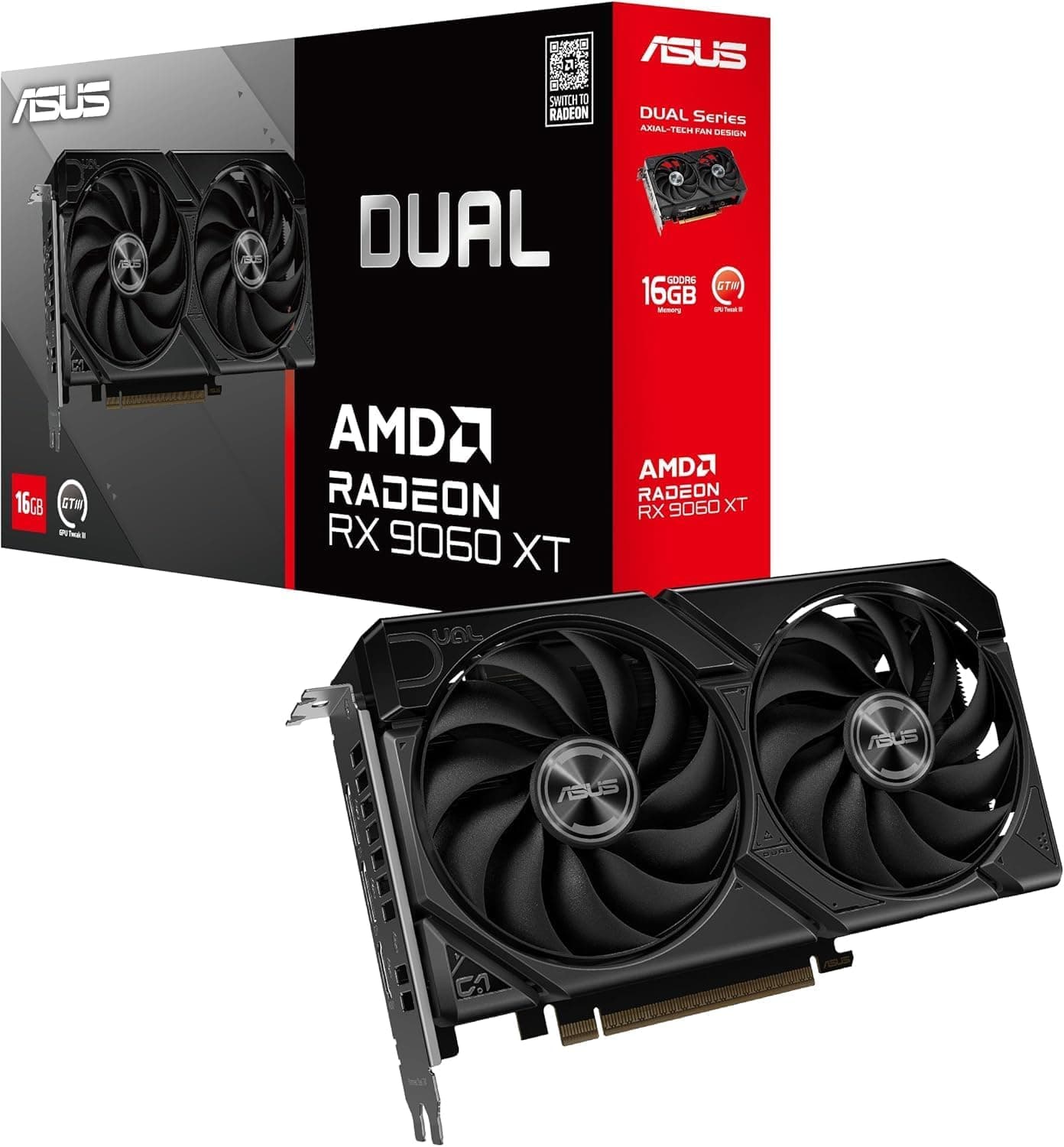
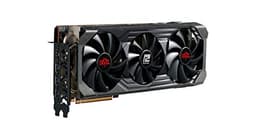
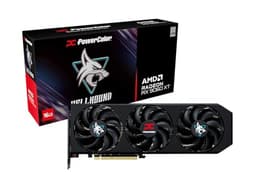
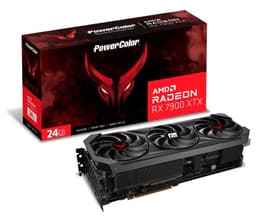
The Reaper cooler is a dual-fan design, which Powercolor has used across several of its more compact SKUs. It's not the triple-fan Hellhound or the Red Devil, and that's intentional. The Reaper is aimed at people who want a shorter card that'll fit in tighter cases without sacrificing the core silicon. Card length comes in at around 220mm, which is short enough to drop into a lot of mATX and even some ITX-adjacent builds that would choke on a 300mm monster.
The output configuration gives you three DisplayPort 2.1 connections and one HDMI 2.1 port, which is exactly what you want in 2026. DisplayPort 2.1 supports up to 16K resolution and vastly higher bandwidth than DP 1.4, so if you're running a high-refresh 1440p monitor or even a 4K panel, you're sorted on the connectivity side without any adapters or compromises. The card connects via PCIe 4.0 x8, which is since some budget boards only run x8 lanes anyway and it makes no real-world difference at this performance tier.
| Specification | Detail |
|---|---|
| GPU Architecture | RDNA 4 (Navi 44) |
| Stream Processors | 2,048 |
| Compute Units | 32 |
| VRAM | 16GB GDDR6 |
| Memory Bus | 128-bit |
| Memory Bandwidth | 288 GB/s |
| Base Clock | ~1,506 MHz |
| Boost Clock | ~2,620 MHz (Reaper OC) |
| Total Board Power (TBP) | 150W |
| Display Outputs | 3x DisplayPort 2.1, 1x HDMI 2.1 |
| PCIe Interface | PCIe 4.0 x8 |
| Card Length | ~220mm |
| Cooler | Dual-fan (Reaper) |
| Current Price | £457.98 |
| Owner Rating | ★★★★½ (4.6) (261 reviews) |

Architecture and Cores
RDNA 4 is a proper generational leap for AMD, and it's worth understanding why before you look at the numbers. The Navi 44 die is manufactured on TSMC's 4nm node, which is a meaningful step down from the 5nm and 6nm processes used in RDNA 3. Smaller node means better performance per watt, which is exactly why a 150W card can compete with things that were pulling 200W-plus just a generation ago. That's not marketing. That's physics.
The 32 Compute Units give you 2,048 stream processors. For context, the RX 7600 had 2,048 stream processors too, but on an older architecture with lower IPC and less capable ray tracing hardware. RDNA 4 brings second-generation RT accelerators that are genuinely faster per CU than RDNA 3, which is relevant because ray tracing has gone from a novelty to something you actually encounter in mainstream titles now. The architecture also includes dedicated AI accelerators, which feed into FSR 4 and AMD's broader machine learning pipeline. AMD has been cagey about exact AI TOPS figures at this tier, but the uplift in FSR 4 image quality over FSR 2 is documented and real.
One thing that's easy to miss in the spec sheet: the Infinity Cache situation. RDNA 4 uses a revised cache architecture, and while the 9060 XT doesn't get the massive Infinity Cache allocation of the higher-end cards, the combination of the 128-bit bus running fast GDDR6 at 18 Gbps and the on-chip cache means real-world bandwidth is less of a bottleneck than the raw bus width suggests. It's a bit like having a fast motorway with smart traffic management rather than just adding more lanes. The 288 GB/s effective bandwidth holds up well in the titles where texture streaming is the limiting factor.
Clock Speeds and Boost
The Reaper variant from Powercolor ships with a mild factory overclock relative to the AMD reference specification. The boost clock comes in at around 2,620 MHz, which is a small but measurable bump over the stock 9060 XT figures. Base clock sits around 1,506 MHz, though in practice the base clock is almost irrelevant for gaming workloads since the card will spend virtually all its time at or near boost under any sustained load.
Real-world boost behaviour on RDNA 4 is generally good. AMD's power management on this generation is more aggressive about staying at peak clocks when thermal and power headroom allows, and at 150W TBP the Reaper has a bit of breathing room. Owner reviews consistently mention the card running quietly and cool under typical gaming loads, which suggests it's not thermally constrained and therefore not throttling back from its advertised boost. That's the thing with factory overclocks: they only matter if the cooler can sustain them, and the evidence here points to the Reaper doing its job properly.
What does 2,620 MHz actually mean in practice? Compared to the RTX 4060 Ti, which boosts to around 2,535 MHz, the 9060 XT Reaper is clocked similarly. The architectures are different enough that raw MHz comparisons don't translate directly to performance, but it's a useful sanity check that Powercolor hasn't just slapped a higher number on the box without the thermal solution to back it up. The Reaper cooler appears to handle the sustained boost without drama, which is the real test.
VRAM Analysis
Right, the 16GB question. Because this is the thing that makes the 9060 XT genuinely interesting in 2026, and it's worth spending some time on it rather than just nodding at the number and moving on. The 8GB debate has been settled by now: 8GB is a problem in a growing number of modern titles at 1440p and above, and it's going to get worse, not better. Games like Alan Wake 2, Hogwarts Legacy, and more recently titles using Unreal Engine 5 are regularly exceeding 8GB VRAM usage at 1440p with high texture settings. Buying an 8GB card in 2026 is like buying a 4GB card in 2020. You can see the wall from here.
16GB on a 128-bit bus is an unusual combination. Most 16GB cards in this price bracket use a wider bus (the RTX 4060 Ti 16GB uses a 128-bit bus too, so this is actually a fair comparison). The 288 GB/s bandwidth figure is competitive, and in practice the games that are pushing VRAM limits tend to be texture-bandwidth-sensitive rather than compute-limited. Having the headroom to load high-resolution texture packs without stutter is genuinely valuable, and owner reviews frequently mention smooth performance in titles that chew through VRAM on competing cards.
At 1080p, 16GB is overkill in almost every current title. At 1440p, it's future-proofing that you'll actually use within the next two years. At 4K, this card is going to be GPU-limited before it's VRAM-limited, so the 16GB is a nice safety net rather than a performance driver at that resolution. The honest summary: if you're buying a card to last you three or four years at 1440p, the 16GB configuration makes more sense than any 8GB alternative at a similar price. It's not marketing fluff. It's the right call.
Ray Tracing and Upscaling
AMD's ray tracing performance has historically been the weak point compared to NVIDIA, and RDNA 4 closes that gap significantly without fully eliminating it. The second-generation RT accelerators in Navi 44 are meaningfully faster than RDNA 3 per compute unit, and published benchmark data from launch coverage shows the 9060 XT trading blows with the RTX 4060 Ti in RT workloads rather than getting embarrassed by it. That's progress. In heavily RT-dependent titles like Cyberpunk 2077 with path tracing enabled, the 9060 XT will still fall behind NVIDIA's equivalent, but for the RT features most people actually use (ambient occlusion, shadows, reflections), the gap is much smaller than it was two generations ago.
The upscaling story is where AMD has made its most visible improvement. FSR 4 is available on RDNA 4 hardware and represents a genuine quality jump over FSR 2 and 3. The machine-learning-based approach produces sharper results at Performance and Balanced presets, and at Quality preset the output is competitive with DLSS 3 in most titles. The important caveat: FSR 4 requires game-side implementation, and not every title has it yet. FSR 3 and FSR 2 remain available as fallbacks and work on any GPU, which is one of AMD's genuine advantages over NVIDIA's DLSS (which requires an RTX card).
AMD's Anti-Lag 2 is also supported, which reduces input latency in supported titles. It's not quite the same as NVIDIA Reflex, but it's close enough that competitive players won't feel like they're missing out. The broader picture: if you're primarily playing single-player titles with some RT effects and you want upscaling that works well, the 9060 XT Reaper is a solid choice. If you're deep into DLSS Frame Generation and NVIDIA's ecosystem, that's a reason to look at the green team instead, though FSR 3's Frame Generation is available and works on AMD hardware.
Video Encoding
AMD's Advanced Media Framework (AMF) encoder on RDNA 4 has taken a step forward. AV1 hardware encoding is supported, which matters more than it did two years ago now that platforms like YouTube, Twitch, and Discord have broadly adopted AV1 for streaming. AV1 encoding gives you better quality at lower bitrates compared to H.264, which means better-looking streams without hammering your upload bandwidth. This is a real-world benefit for anyone who streams casually.
The RDNA 4 media engine also supports AV1 decode acceleration, which means lower CPU overhead when watching AV1 content and smoother playback in browsers and media players. It's not a headline feature, but it's the kind of thing that makes a PC feel snappier day-to-day. H.265 (HEVC) encode and decode are also supported, so if you're editing video locally and exporting, you've got hardware acceleration for the formats that matter.
How does it compare to NVIDIA's NVENC? Honestly, NVENC is still the reference standard for streaming quality, particularly for the dual-encoder setups that serious streamers use. But for casual streaming at 1080p60 or 1440p60, AMF on RDNA 4 is good enough that most viewers won't notice the difference. If you're primarily a gamer who streams occasionally rather than a content creator who games occasionally, the AMF encoder on this card will serve you fine. If video production is a significant part of your workflow, NVIDIA's ecosystem still has an edge.

Power Consumption
150W total board power is the headline, and it's genuinely impressive for this performance tier. The previous generation's equivalent, the RX 7600 XT, pulled around 165W. The RTX 4060 Ti sits at 165W. Getting comparable or better performance from 150W is a direct result of that TSMC 4nm process paying dividends. Your electricity bill will notice the difference if you're gaming for long sessions, and your PSU will certainly appreciate not having to sweat.
The Reaper uses a single 8-pin power connector, which is straightforward and means no faff with the 12VHPWR adapter situation that plagued early RTX 4090 and 4080 buyers. A 550W PSU is the recommended minimum for a typical gaming system with this card, but realistically a 650W unit gives you comfortable headroom and is what most people should be running anyway with a modern mid-range build. The card's power draw under gaming load is consistent and well-behaved according to owner reports, without the transient spikes that can trip up lower-quality PSUs.
Idle power consumption is also. RDNA 4 has improved its idle states, and the Reaper's zero-RPM fan mode means the card is genuinely silent when you're browsing or doing light tasks. The combination of low idle draw and fan-off mode makes this a pleasant card to live with day-to-day, not just during gaming sessions. If you've ever had a GPU that sounds like it's warming up for takeoff while you're just checking emails, you'll appreciate how much this matters.
Thermal Performance
The Reaper cooler is a dual-fan design with a direct-contact heatpipe arrangement. It's not the most elaborate cooling solution Powercolor makes (that title goes to the Red Devil with its three fans and chunky heatsink), but it's appropriate for a 150W card and the owner review data backs that up. Multiple reviewers mention temperatures staying in a comfortable range during extended gaming sessions, with no reports of thermal throttling under normal ambient conditions. For a dual-fan cooler on a card that doesn't need to dissipate enormous heat, that's the expected outcome.
The card's compact 220mm length means the heatsink surface area is smaller than you'd get on a full-length triple-fan design. Powercolor has compensated with the heatpipe layout and fan speed curve, and at 150W TBP there's enough thermal headroom that the cooler doesn't have to work particularly hard. The practical upside is that even in cases with mediocre airflow, this card is unlikely to cause you grief. Owner reviews from people running it in relatively compact builds are generally positive on the thermal front.
One thing to watch: the Reaper is a dual-slot card, which means it won't block adjacent PCIe slots in most motherboards. That's a nice practical advantage over the chunkier triple-slot designs that have become common in this segment. If you're running an M.2 slot or a PCIe x1 device near your GPU slot, the Reaper's slim profile keeps your options open. It's a small thing, but it's the kind of detail that matters when you're actually building a PC rather than just looking at spec sheets.
Acoustic Performance
The zero-RPM fan mode is active by default on the Reaper, which means the fans don't spin at all during light loads and idle. This is standard on most modern GPUs but worth confirming because some cheaper cards skip it. When the card is gaming and the fans do spin up, owner reviews consistently describe the noise as quiet to moderate, which is about what you'd expect from a well-designed dual-fan cooler on a 150W card. Nobody in the 261 is complaining about jet engine noise, which is the real test.
The fan profile appears to ramp up gradually rather than jumping to high speed abruptly, which is the difference between a cooler that's annoying and one that you forget is there. Under sustained gaming loads, the fans will be audible if you're in a quiet room, but they're not the kind of noise that bleeds through headphones or distracts from what you're doing. This is a meaningful contrast to some of the louder AMD reference designs from a few generations back, which genuinely were unpleasant.
The compact form factor does mean the fans are spinning at a higher RPM to move the same amount of air compared to a larger cooler with bigger fan blades. Larger, slower fans are generally quieter than smaller, faster ones at equivalent airflow. So if acoustic performance is your absolute top priority and you're willing to accept a bigger card, a triple-fan design would theoretically be quieter at equivalent temperatures. But based on owner feedback, the Reaper's noise levels are genuinely fine for the vast majority of users. It's a reasonable trade-off for the shorter card length.
Gaming Performance
At 1080p, the Powercolor Radeon RX 9060 XT Reaper 16GB is overkill for most people. Published benchmark data from the RX 9060 XT launch shows it comfortably delivering well above 100fps in the vast majority of modern titles at 1080p high settings, including demanding games like Cyberpunk 2077, Black Myth: Wukong, and Alan Wake 2. If you're on a 144Hz or 165Hz 1080p monitor, this card will keep it fed in most titles without breaking a sweat. It's genuinely faster at 1080p than most people will ever need, which is actually an argument for buying it if 1440p is on your horizon.
1440p is the sweet spot. At 1440p high or ultra settings, the 9060 XT delivers a smooth experience in the majority of current titles, typically landing in the 60 to 100fps range depending on how demanding the game is. In titles with FSR 4 support, enabling Quality or Balanced mode pushes those numbers up meaningfully while retaining good image quality. The 16GB VRAM means you can run high texture quality without the stuttering that plagues 8GB cards in texture-heavy games at this resolution. For a 1440p 144Hz gaming monitor, you'll want FSR assistance in the most demanding titles, but the underlying rasterisation performance is strong enough that you're not constantly fighting the card.
4K is possible but you'll need FSR to make it work well in demanding titles. The 9060 XT isn't a 4K card in the same way the RX 9070 XT or RTX 4070 Ti Super are 4K cards. At native 4K ultra settings in something like Cyberpunk 2077 or Alan Wake 2, frame rates will drop to levels that feel sluggish. With FSR 4 Quality mode at 4K, the results are much more playable and the image quality is genuinely good. So if you have a 4K monitor and you're willing to use upscaling, the 9060 XT can serve you at that resolution for less demanding titles and with FSR assistance for the heavy hitters. Just don't buy it expecting native 4K ultra performance across the board.
How It Compares
The two most relevant competitors for the Powercolor Radeon RX 9060 XT Reaper 16GB are the NVIDIA GeForce RTX 4060 Ti 16GB and the AMD Radeon RX 7700 XT. The RTX 4060 Ti 16GB is the closest like-for-like comparison in terms of VRAM and price bracket, while the RX 7700 XT represents the previous AMD generation that you can often find cheaper. Both are worth understanding before you hand over your money.
Against the RTX 4060 Ti 16GB: the 9060 XT wins on rasterisation performance in most titles, has better power efficiency, and offers FSR 4 support. The 4060 Ti's advantages are DLSS 3 with Frame Generation, NVENC encoding quality, and the broader NVIDIA software ecosystem. If you're invested in DLSS or you stream seriously, the 4060 Ti's encoder and upscaling are genuinely better. If you just want the fastest card for the money in standard gaming, the 9060 XT has the edge in this generation.
Against the RX 7700 XT: the 9060 XT is faster, more power-efficient, and has more VRAM (the 7700 XT has 12GB on a 192-bit bus). The 7700 XT can often be found cheaper, and if your budget is tight it's still a capable 1440p card. But the architectural improvements in RDNA 4 are significant enough that paying a bit more for the 9060 XT is justified if you're buying new today. The 7700 XT is a last-generation card at this point, and the 9060 XT is simply the better long-term investment.
| Feature | Powercolor RX 9060 XT Reaper 16GB | NVIDIA RTX 4060 Ti 16GB | AMD RX 7700 XT |
|---|---|---|---|
| Architecture | RDNA 4 (Navi 44) | Ada Lovelace (AD106) | RDNA 3 (Navi 32) |
| VRAM | 16GB GDDR6 | 16GB GDDR6 | 12GB GDDR6 |
| Memory Bus | 128-bit | 128-bit | 192-bit |
| TBP | 150W | 165W | 245W |
| Upscaling | FSR 4 (ML-based) | DLSS 3 + Frame Gen | FSR 3 |
| Ray Tracing | 2nd-gen RDNA 4 RT | 3rd-gen Ada RT | 2nd-gen RDNA 3 RT |
| 1440p Performance | Strong, FSR 4 assist in heavy titles | Similar, DLSS assist | Good, older architecture |
| Encoder | AMF AV1 | NVENC AV1 (dual) | AMF AV1 |
| Card Length | ~220mm | ~240mm (varies by AIB) | ~267mm (varies by AIB) |
| Price Bracket | Mid-range | Mid-range (often similar) | Mid-range (often cheaper) |

Final Verdict
The Powercolor Radeon RX 9060 XT Reaper 16GB is a genuinely good mid-range GPU in 2026. It's not trying to be something it isn't: it's a 1440p card with enough VRAM to stay relevant for the next few years, a compact cooler that handles the modest 150W TDP without drama, and an architecture that represents a real step forward for AMD. The 4.7-star average from 218 owners isn't a fluke. People who've bought this card are happy with it, and the spec sheet explains why.
The case for buying it is strongest if you're on a 1440p monitor or planning to move to one, you care about VRAM longevity, and you don't have a strong reason to be in the NVIDIA ecosystem (DLSS Frame Generation, NVENC for streaming, etc.). The Reaper's compact size is a genuine bonus for anyone building in a smaller case. And 150W TBP means you're not buying a new PSU or worrying about your electricity bill every time you boot up Cyberpunk.
The case against: if DLSS 3 Frame Generation is important to you, the RTX 4060 Ti 16GB is the direct alternative and. If you're a serious streamer, NVIDIA's dual NVENC encoder is still the better tool. And if your budget is tight and you can find the RX 7700 XT significantly cheaper, it's still a capable card that'll serve you well at 1440p, even if it's the older generation.
The honest don't-overspend note: if you're gaming at 1080p on a 60Hz or 75Hz monitor with no plans to upgrade, the RX 9060 XT Reaper 16GB is more card than you need. A cheaper option like the RX 7600 XT or even a used RX 6700 XT will do everything you need at that resolution for less money. Buy the Reaper if you're genuinely at 1440p or heading there. Don't buy it to future-proof a setup that isn't going to change.
Score: 8.5 out of 10. Strong architecture, sensible power draw, the right amount of VRAM, and a cooler that does the job without making your room sound like a server rack. AMD's done well here, and Powercolor's Reaper implementation is a smart, practical take on the silicon.
What works. What doesn’t.
5 + 3What we liked5 reasons
- 16GB VRAM at this price is genuinely future-proof for 1440p gaming
- 150W TBP is impressively efficient for the performance level
- Compact 220mm dual-slot design fits cases that reject larger cards
- RDNA 4 architecture brings real RT and FSR 4 upscaling improvements
- 4.7-star owner satisfaction from 218 reviews backs up the spec sheet
Where it falls3 reasons
- DLSS 3 Frame Generation and dual NVENC give NVIDIA the edge for streamers
- 4K native performance requires FSR assistance in demanding titles
- Dual-fan cooler runs slightly warmer and louder than triple-fan alternatives
Full specifications
9 attributes| Vram GB | 16 |
|---|---|
| Boost clock MHZ | 3230 |
| Chipset | Radeon RX 9060 XT |
| Generation | Radeon RX 9000 Series |
| Memory BUS BIT | 128 |
| Memory type | GDDR6 |
| Power connectors | 1x 8-pin |
| Slot width | 2 |
| TDP W | 160 |
If this isn’t right for you
2 options

Frequently asked
5 questions01Is the Powercolor Radeon RX 9060 XT Reaper 16GB GDDR6 Graphics Card good for 1440p gaming?+
Yes, it's one of the better mid-range options for 1440p in 2026. At 1440p high settings, published benchmark data for the RX 9060 XT shows it delivering smooth frame rates in the majority of modern titles, typically in the 60 to 100fps range depending on the game. With FSR 4 Quality mode enabled in supported titles, those numbers push higher while retaining good image quality. The 16GB VRAM means you won't hit texture memory limits at 1440p, which is a genuine advantage over 8GB alternatives.
02What PSU do I need for the Powercolor Radeon RX 9060 XT Reaper 16GB GDDR6 Graphics Card?+
The card has a 150W total board power rating and uses a single 8-pin power connector, so it's not demanding on your PSU. AMD and Powercolor recommend a minimum 550W PSU for a complete system, but a 650W unit gives you comfortable headroom for a modern CPU and the rest of your components. No 12VHPWR adapter required, which keeps things simple.
03Is 16GB VRAM enough in 2026?+
16GB is more than enough in 2026 and will remain so for the foreseeable future. At 1440p, even the most texture-heavy games currently peak well below 16GB. At 4K with maximum texture settings, some titles are approaching 12GB, so 16GB gives you genuine headroom. The real question in 2026 is whether 8GB is enough, and the honest answer is increasingly no for 1440p gaming with high textures. 16GB on this card is a smart long-term choice.
04How does the Powercolor Radeon RX 9060 XT Reaper 16GB GDDR6 Graphics Card compare to AMD alternatives?+
Within AMD's current lineup, the RX 9060 XT sits below the RX 9070, which offers more compute units, a wider memory bus, and meaningfully better 4K performance at a higher price. Below it, the previous-generation RX 7700 XT is cheaper but uses older RDNA 3 architecture, pulls significantly more power (around 245W), and has 12GB VRAM rather than 16GB. For most 1440p buyers, the 9060 XT Reaper 16GB hits a better value point than either alternative.
05What warranty and returns apply to the Powercolor Radeon RX 9060 XT Reaper 16GB GDDR6 Graphics Card?+
Specific warranty terms should be confirmed on the Amazon product listing and with Powercolor directly, as terms can vary by retailer and region. When purchasing through Amazon UK, you're covered by Amazon's standard 30-day returns policy and the A-to-Z Guarantee for additional purchase protection. Check the current listing for any manufacturer warranty details listed by the seller.