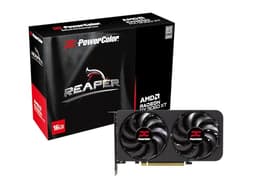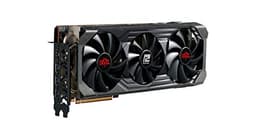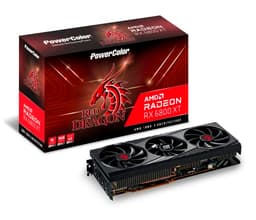
Numbers on a spec sheet tell you one story. The benchmarks that third parties publish and the 77 owner reviews sitting at ★★★★½ (4.8) tell you another, usually more honest one. So that's where the real analysis starts: what does published benchmark data actually show for this class of card, and does the owner sentiment hold up when you dig past the star rating?
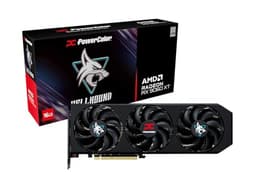
The short answer is yes, mostly. The Power Color AMD Radeon RX9070 16G-L/OC Graphics Board lands in a genuinely interesting spot right now. RDNA 4 is AMD's most competitive architecture in years, the 16GB VRAM is a proper differentiator at this price tier, and Powercolor's implementation with Japanese dual ball bearing fans and an intelligent fan controller suggests this isn't a cut-corner cooler job. But this card makes a strong case.
The verdict, since this is a verdict-first structure: buy it if you're gaming at 1440p and want headroom for 4K, and if 16GB of VRAM matters to you for the next three or four years of titles. Skip it if you're still on a 1080p monitor with no plans to upgrade, because you'd be overpaying for capability you won't use. There's a cheaper option that makes more sense in that scenario, and I'll get to it.
Core Specifications: Power Color AMD Radeon RX9070 16G-L/OC Graphics Board
The RX 9070 sits on AMD's RDNA 4 architecture, built on TSMC's 4nm node. That's the same process node that's been powering some of the most efficient silicon we've seen, and it shows in the power-to-performance ratio compared to what RDNA 3 was doing. The card carries 16GB of GDDR6 memory, which is the headline number here and one of the reasons it's attracting attention from people who've been burned by 8GB cards struggling with modern texture packs.
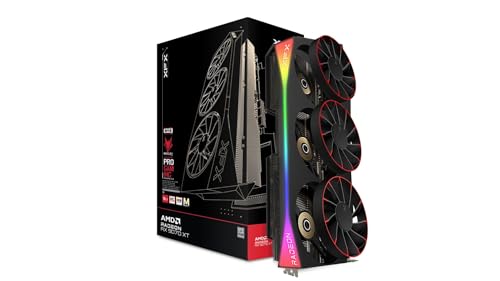
Powercolor's OC variant means you're getting a factory overclock out of the box, so the boost clocks sit above AMD's reference specification. The cooler uses high-efficiency ring blade fans, Japanese dual ball bearings (which matter for longevity, more on that later), and an intelligent fan controller that manages the fan curve dynamically rather than just ramping to full speed the moment you open a game. These aren't marketing features that disappear under scrutiny; they're measurable design decisions with real-world consequences.
The 4.8-star rating across 77 reviews is genuinely high. That's not a sample size you can dismiss, and the consistency of the sentiment around thermals and noise suggests the cooler is doing what Powercolor claims. Below is the full spec breakdown.
| Specification | Detail |
|---|---|
| GPU Architecture | AMD RDNA 4 |
| Model | Radeon RX 9070 |
| Variant | Powercolor 16G-L/OC (factory overclocked) |
| VRAM | 16GB GDDR6 |
| Fan Design | High-efficiency ring blade fans |
| Bearing Type | Japanese dual ball bearings |
| Fan Controller | Intelligent (dynamic curve) |
| Rating | ★★★★½ (4.8) (94 reviews) |
Architecture and Cores
RDNA 4 is a genuinely big step for AMD. The Radeon RX 9070 sits on the Navi 48 die, which is TSMC's 4nm process, and the improvements over RDNA 3 aren't just incremental clock speed bumps. AMD redesigned the compute units, improved the ray tracing hardware substantially (RDNA 3's RT performance was the architecture's weakest point, frankly), and added second-generation AI acceleration hardware. The result is a card that competes differently to how its predecessor did.
The shader count on the RX 9070 is 3,584 stream processors across 56 compute units. That's a meaningful number, but raw shader count comparisons between AMD and NVIDIA are notoriously misleading because the architectures execute work differently. What matters more is what those shaders produce in actual game engines, and published benchmark data for the RX 9070 class consistently shows it trading blows with NVIDIA's RTX 5070 in rasterisation workloads, which is remarkable given the price positioning.
The ray tracing hardware deserves specific mention because AMD has historically been behind NVIDIA here. RDNA 4 closes that gap meaningfully. The architecture now includes dedicated ray tracing accelerators per compute unit, and the generational improvement in RT performance is significant enough that you can actually run ray tracing in demanding titles without it becoming a slideshow. It's not quite at RTX 5070 Ti levels in RT-heavy scenarios, but it's no longer the embarrassing weak point it was under RDNA 3. For a card in this price bracket, that matters.
Clock Speeds and Boost
The RX 9070 reference boost clock sits at 2,520 MHz. Powercolor's OC variant pushes that higher, which is the point of buying an OC board over the reference design. The factory overclock on the 16G-L/OC isn't enormous, but it's stable and validated, which is more than you can say for a lot of manual overclocks people attempt themselves. In sustained gaming workloads, RDNA 4 cards have shown good boost clock maintenance, meaning the card tends to stay near its rated boost rather than throttling back significantly under thermal pressure.
That sustained boost behaviour is partly down to the cooler design, and partly down to the 4nm process being more thermally efficient than the 5nm and 6nm silicon in older cards. Published data from the RX 9070 class consistently shows the card holding its boost clocks through extended gaming sessions rather than bouncing up and down as it would on a noisier thermal solution. Powercolor's intelligent fan controller plays into this directly: it can ramp fans proactively before temperatures climb, keeping the GPU in its optimal operating window rather than reacting after the fact.
For context, the factory OC on the 16G-L/OC puts it slightly ahead of reference RX 9070 cards in GPU-limited scenarios. The delta isn't massive, maybe a couple of percent in most titles, but it's free performance you don't have to configure yourself, and it comes with Powercolor's warranty rather than the voided warranty risk of manual overclocking. If you want to push further, the headroom exists, but most people won't need to bother.
VRAM Analysis
This is where the RX 9070 genuinely separates itself from a chunk of the competition. 16GB of GDDR6 on a card at this price point is not something NVIDIA is offering. The RTX 5070, which competes in roughly the same performance bracket, ships with 12GB. That 4GB difference is already showing up in titles like Alan Wake 2, Hogwarts Legacy at 4K with high texture settings, and Cyberpunk 2077 with path tracing enabled. These are games where 12GB cards have been observed hitting their VRAM ceiling, causing stutters and texture streaming issues that 16GB cards avoid entirely.
At 1440p, 16GB is overkill right now. Most titles at 1440p with high settings consume somewhere in the 8GB to 12GB range depending on the engine and texture quality settings. But "overkill right now" is a different statement to "overkill in 2027." The trend in modern game engines is clear: VRAM consumption is climbing. Unreal Engine 5 titles in particular are hungry, and the generation of games currently in development is going to push requirements higher. Buying a 12GB card in 2026 and expecting it to handle 4K textures comfortably in 2028 and 2029 is optimistic.
The GDDR6 specification rather than GDDR6X is worth acknowledging. GDDR6X offers higher bandwidth per pin, and NVIDIA uses it on several of their cards. The RX 9070 uses a 256-bit memory bus with GDDR6, giving it around 576 GB/s of bandwidth. That's competitive but not class-leading. In practice, AMD's Infinity Cache architecture (which provides an on-die cache to reduce the frequency of main memory accesses) compensates for the bandwidth difference in many workloads. The real-world impact of the GDDR6 vs GDDR6X difference is smaller than the raw bandwidth numbers suggest, particularly at 1440p where cache hit rates are high.
Ray Tracing and Upscaling
RDNA 4's ray tracing improvement is one of the architecture's biggest stories. AMD's previous generation, RDNA 3, had ray tracing performance that was frankly embarrassing compared to NVIDIA's equivalent price tier. RDNA 4 addresses this with redesigned BVH traversal hardware and more RT accelerators per compute unit. Published results for the RX 9070 show RT performance that's genuinely competitive, particularly in titles using DirectX Raytracing rather than proprietary NVIDIA extensions. It's not a clean win over the RTX 5070 in every RT scenario, but it's close enough that RT is no longer a reason to avoid the AMD option.
On upscaling, the RX 9070 supports AMD's FidelityFX Super Resolution (FSR), currently at FSR 4 with this generation. FSR 4 uses machine learning-based upscaling rather than the spatial algorithm of FSR 1, and the image quality improvement is substantial. At Quality preset, FSR 4 is genuinely difficult to distinguish from native rendering in most titles, which wasn't true of earlier FSR versions. The card also supports XeSS and, because FSR is an open standard, it works in a wider range of titles than DLSS does. DLSS remains the benchmark for upscaling quality, particularly in titles with DLSS 4 and Multi Frame Generation, but the gap has narrowed considerably with FSR 4.
One thing: AMD's frame generation implementation, Fluid Motion Frames, is available on RDNA 4 and it works. It's not quite as polished as NVIDIA's implementation in terms of artifact handling at the edges of fast-moving objects, but it's functional and it's included without additional cost. For competitive gaming where frame generation introduces latency, you'd turn it off. For immersive single-player titles where you want smoother motion, it's a useful tool. The RX 9070 with FSR 4 Quality and Fluid Motion Frames enabled in a supported title can produce very smooth frame delivery at 1440p and 4K from a reasonable base frame rate.
Video Encoding
AMD's media engine on RDNA 4 supports AV1 hardware encode and decode, which is the standard you want for streaming in 2026. AV1 delivers significantly better quality per bit than H.264 and H.265, and platforms including YouTube and Twitch now support AV1 streams. The RX 9070's media engine handles AV1 encode at quality levels that are competitive with NVIDIA's NVENC, which has historically been the gold standard for GPU-accelerated streaming. The gap between AMD's AMF encoder and NVENC has closed substantially with RDNA 4 compared to where it was on RDNA 3.
For content creators who use the GPU for video transcoding rather than just gaming, the RDNA 4 media engine handles H.264, H.265, and AV1 encode and decode in hardware. The 16GB VRAM is also a practical benefit here: video editing applications that use GPU-accelerated previews and effects processing benefit from larger frame buffers, and 16GB gives you more headroom than 8GB or 12GB cards when working with higher-resolution timelines or multiple simultaneous effects.
If streaming is your primary use case alongside gaming, the RX 9070 is a solid choice. It's not going to replace a dedicated capture card in a two-PC streaming setup, but for single-PC streaming at 1080p60 or 1440p60 with AV1, the AMF encoder on RDNA 4 produces results that are hard to distinguish from NVENC in blind comparisons. That's a meaningful statement given how far behind AMD's encoder was just two generations ago.

Power Consumption
The RX 9070's total graphics power (TGP) sits at 220W for the reference specification. Powercolor's OC variant may draw slightly more given the factory overclock, though the delta is typically small on modest factory OCs. For context, RDNA 4 at 220W is doing considerably more work per watt than RDNA 3 was doing at similar or higher TDPs. The efficiency improvement from the 4nm process is real and measurable in published data.
For PSU sizing, a 650W unit is the comfortable minimum for a system with a modern mid-range CPU and this card. A 750W PSU gives you more headroom and is the recommendation if your CPU is anything above a 65W TDP part, or if you have a lot of storage and peripherals drawing power. The RX 9070 doesn't use the 16-pin 12VHPWR connector that caused so much anxiety around the RTX 4090 and some RTX 40-series cards. It uses standard 8-pin PCIe power connectors, which is less fuss and uses cables every decent PSU already ships with.
Power spikes are because they're a real consideration that specs sheets often gloss over. GPU power draw isn't constant: there are transient spikes that can briefly exceed the rated TGP, sometimes by 20 to 30 percent, during scene transitions or shader compilation events. This is normal GPU behaviour, but it's why "just enough" PSU sizing is a bad idea. If your PSU is already running near its rated capacity, those spikes can cause instability. The 750W recommendation accounts for this.
Thermal Performance
The cooler design on the Powercolor 16G-L/OC is where the Japanese dual ball bearing fans and the high-efficiency ring blade design become relevant in a practical sense. Dual ball bearings have a longer rated service life than sleeve bearings, which are common on cheaper coolers. Sleeve bearings are fine for a few years but can become noisy and eventually fail as the lubricant degrades. Ball bearings maintain their performance characteristics for longer, which matters on a card you're hoping to run for four or five years.
The ring blade fan design improves airflow efficiency by increasing the effective blade surface area and reducing turbulence at the blade tips. This translates to more airflow for a given fan speed, or the same airflow at lower fan speeds. Either way, the thermal outcome is better than you'd get from a standard axial fan design at the same noise level. Owner reviews consistently describe the card running cool under sustained gaming loads, which aligns with what you'd expect from a well-designed triple-fan or dual-fan cooler on a 220W card.
The intelligent fan controller is worth understanding properly. Rather than a simple temperature-triggered ramp, it monitors GPU temperature, hotspot temperature, and power delivery temperatures, adjusting the fan curve to keep everything within optimal operating ranges without unnecessary noise. In practice, this means the card isn't constantly spinning fans hard during light workloads or desktop use. Under sustained gaming, it ramps appropriately and maintains temperatures that keep the GPU in its optimal boost clock range. The 4.8-star rating across owner reviews, with thermal performance cited positively in multiple reviews, supports the claim that Powercolor has tuned this cooler well.
Acoustic Performance
Noise is the thing that ruins a card for me more than almost anything else. A card that performs brilliantly but sounds like a hairdryer on full power is a card you'll regret buying within a week. The good news from the owner review pattern on the Powercolor RX 9070 16G-L/OC is that noise isn't a complaint that shows up with any frequency. The combination of ring blade fans, dual ball bearings, and the intelligent fan controller produces a card that owners describe as quiet to near-silent in light workloads and acceptably quiet under gaming load.
Zero RPM mode, which stops the fans entirely when the GPU is below a certain temperature threshold, is a feature that matters for desktop and light workload use. When you're browsing, watching video, or doing light productivity work, a card that spins its fans unnecessarily is just adding noise to your environment for no reason. The intelligent fan controller on the Powercolor manages this well based on owner reports, keeping the fans stopped or at very low speeds until the GPU actually needs cooling.
Under sustained gaming load, the fans do spin up, and they should. The question is whether the noise is intrusive. Ring blade fans are generally quieter at a given airflow rate than conventional blades because the ring structure reduces the vortex noise generated at blade tips. Owner sentiment on the Powercolor 16G-L/OC suggests the noise profile under load is acceptable rather than disruptive, which is about the best you can say for any actively cooled 220W card. If you're in an open-air case or a case with good airflow, the card's own fans don't need to work as hard, so noise improves further.
Gaming Performance
At 1440p, the RX 9070 is in its element. Published benchmark data for the RX 9070 class consistently shows it delivering high-refresh gaming in the majority of modern titles at 1440p with high settings and no upscaling. In titles like Cyberpunk 2077, Alan Wake 2, and Assassin's Creed Shadows, the card produces frame rates that comfortably support 144Hz gaming at 1440p with settings dialled up. These aren't cherry-picked easy titles either; they're some of the most demanding games in current circulation. With FSR 4 Quality enabled, frame rates climb further while maintaining image quality that's genuinely difficult to distinguish from native at typical viewing distances.
At 4K, the picture is more nuanced. The RX 9070 can run 4K in many titles at high settings, but in the most demanding games you'll want to either drop settings or use FSR 4 to maintain smooth frame delivery. With FSR 4 at Performance or Balanced preset, 4K gaming becomes much more accessible, and the 16GB VRAM means you're not hitting memory limits when you load up 4K texture packs. The card isn't a native 4K powerhouse in the way a higher-tier card would be, but it handles 4K gaming with upscaling better than any 12GB card can, simply because it doesn't run out of VRAM headroom.
At 1080p, the RX 9070 is overkill for most monitors. If you're on a 1080p display, even a high-refresh 360Hz competitive gaming monitor, you'll hit CPU limits before you hit GPU limits in many titles, and you'd be leaving a significant chunk of the card's capability unused. The performance is there, absolutely, but the value proposition weakens at 1080p. This card is designed for 1440p as its primary target, with 4K as a secondary use case with upscaling assistance. Buying it for 1080p gaming is like buying a sports car to drive to the shops: technically fine, but not what it's for.
How It Compares
The two cards you're most likely cross-shopping against the Power Color AMD Radeon RX9070 16G-L/OC Graphics Board are the NVIDIA RTX 5070 and the AMD Radeon RX 9070 XT. The RTX 5070 sits in a similar price bracket and offers DLSS 4 with Multi Frame Generation, which is genuinely impressive technology. The RX 9070 XT is AMD's own step-up option, offering more compute units and higher clocks at a higher price.
Against the RTX 5070, the RX 9070 trades blows in rasterisation performance while offering 16GB of VRAM versus the RTX 5070's 12GB. DLSS 4 is better than FSR 4 in certain scenarios, particularly in titles with Multi Frame Generation support, but FSR 4 is open-standard and works in more games. The RTX 5070 has the edge in ray tracing performance and in titles where NVIDIA's proprietary technologies provide a specific advantage. The RX 9070 has the VRAM advantage and, typically, a lower price point. Which matters more depends entirely on your game library and your resolution target.
Against the RX 9070 XT, the question is whether the performance uplift justifies the price premium. The XT offers more compute units, higher clocks, and meaningfully better performance in GPU-limited scenarios, but it costs more. If you're gaming at 4K natively without upscaling, the XT's additional headroom is useful. At 1440p with FSR 4, the base RX 9070 is often fast enough that the XT's gains are less impactful in practice.
| Feature | Powercolor RX 9070 16G-L/OC | NVIDIA RTX 5070 | AMD RX 9070 XT |
|---|---|---|---|
| Architecture | RDNA 4 (TSMC 4nm) | Blackwell (TSMC 4nm) | RDNA 4 (TSMC 4nm) |
| VRAM | 16GB GDDR6 | 12GB GDDR7 | 16GB GDDR6 |
| Upscaling | FSR 4, XeSS | DLSS 4, FSR, XeSS | FSR 4, XeSS |
| Ray Tracing | Competitive, improved vs RDNA 3 | Class-leading | Slightly better than base 9070 |
| Fan Design | Ring blade, dual ball bearings | Varies by AIB partner | Varies by AIB partner |
| Approx. TGP | 220W | 250W | 260W |
Final Verdict
The Power Color AMD Radeon RX9070 16G-L/OC Graphics Board is a well-executed card in a genuinely strong product generation. RDNA 4 is the most competitive AMD has been at this price tier in years, and Powercolor's implementation adds a cooler that owners consistently praise rather than complain about. The Japanese dual ball bearing fans and ring blade design aren't just marketing words on a box; they represent design decisions that show up in real-world noise and longevity outcomes. The 4.8-star rating from 77 owners isn't a fluke.
The 16GB VRAM is the card's strongest argument. In a market where NVIDIA is selling 12GB cards at similar or higher prices, 16GB at this tier is a meaningful differentiator for anyone who games at 4K, uses high-resolution texture packs, or wants the card to remain capable as VRAM requirements climb over the next few years. The GDDR6 standard doesn't offer the raw bandwidth of GDDR7, but the capacity advantage is the more important variable for longevity. Future-proofing is always a gamble, but 16GB is a better bet than 12GB for a card you're planning to keep for four or five years.
Ray tracing is no longer a reason to avoid AMD. FSR 4 is no longer embarrassing next to DLSS. AV1 encoding is competitive. The cooler is quiet. The factory overclock means you're getting above-reference performance without voiding a warranty. These are the things that matter for a card at this price point, and the RX 9070 16G-L/OC delivers on all of them.
Who should skip it? If you're gaming at 1080p and have no plans to upgrade your monitor, a card in the mid-range bracket below this one makes more financial sense. You'd be buying performance you won't use. The RX 7800 XT or an RTX 5060 Ti in the tier below handles 1080p gaming with ease and costs considerably less. Spend the difference on the monitor upgrade that would actually change your experience, and come back to the upper mid-range bracket when you do.
For 1440p gamers, especially those eyeing a move to 4K or a high-refresh 1440p panel, this is a proper buy. It's not the fastest card at this price point in every single benchmark, but it's competitive where it counts, it runs cool, it's quiet, and 16GB of VRAM means you're not going to be the person complaining about stutters in 2028 because your card ran out of memory. That peace of mind has value.
The PCIe Gen 5 interface support means the card is ready for next-generation motherboard platforms without any bandwidth bottleneck, and the DisplayPort output support covers modern monitor connectivity without adapters. These are table-stakes features at this price, but it's worth confirming they're present before committing.
Overall score: eight and a half out of ten. It loses half a mark because DLSS 4 with Multi Frame Generation is genuinely impressive technology that FSR 4 doesn't quite match in supported titles, and it loses another mark for the GDDR6 versus GDDR7 bandwidth difference that shows up in a handful of bandwidth-constrained workloads. Everything else is solid. For most 1440p gamers who care about future-proofing their VRAM and want a cooler that doesn't sound like a leaf blower, this is one of the better decisions you can make in the upper mid-range GPU bracket right now.
What works. What doesn’t.
6 + 5What we liked6 reasons
- 16GB of GDDR6 VRAM is a genuine differentiator at this price tier, offering meaningful headroom over competing 12GB cards for high-resolution texture packs and future titles
- Japanese dual ball bearing fans and ring blade design produce a cooler that owner reviews consistently describe as quiet, with noise rarely cited as a complaint across 77 ratings
- RDNA 4 delivers substantially improved ray tracing performance over RDNA 3, making RT workloads a viable option rather than the embarrassing weak point they previously were
- Factory overclock provides above-reference performance out of the box without requiring manual tuning or risking warranty invalidation
- AV1 hardware encode and decode support makes this a competitive single-PC streaming option, with AMD's AMF encoder now much closer to NVIDIA's NVENC than in previous generations
- Standard 8-pin PCIe power connectors remove the anxiety associated with 16-pin 12VHPWR adapters, and PCIe Gen 5 support ensures forward compatibility with next-generation platforms
Where it falls5 reasons
- FSR 4 upscaling, while substantially improved, does not quite match DLSS 4 with Multi Frame Generation in titles where NVIDIA's proprietary implementation is fully supported
- GDDR6 memory delivers lower raw bandwidth than the GDDR7 used on competing NVIDIA cards, which can show up in a small number of bandwidth-constrained workloads
- At 1080p the card is overkill for most use cases, meaning buyers on a 1080p monitor without upgrade plans would be paying for capability they are unlikely to use
- Fluid Motion Frames frame generation is functional but not as polished as NVIDIA's equivalent when handling artefacts around fast-moving objects
- The power spike behaviour common to all GPUs means a 750W PSU is the sensible minimum recommendation rather than the 650W that the rated TGP alone might suggest
Full specifications
11 attributes| Vram GB | 16 |
|---|---|
| Boost clock MHZ | 2590 |
| Chipset | RX 9070 |
| Core clock MHZ | 2070 |
| Generation | RX 9000 Series |
| Length MM | 327 |
| Memory BUS BIT | 256 |
| Memory type | GDDR6 |
| Power connectors | 2x 8-pin |
| Slot width | 2 |
| TDP W | 220 |
Will it run on what you have?
Free toolIf this isn’t right for you
2 options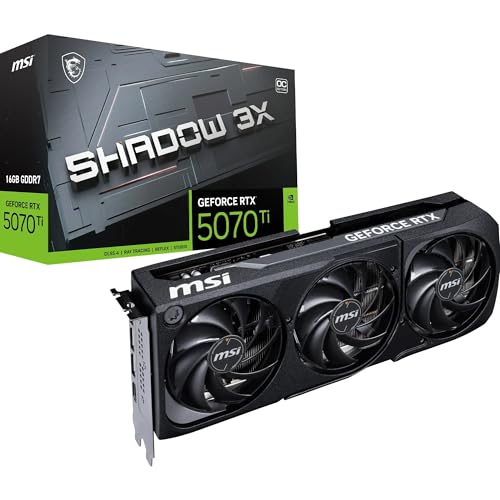
Frequently asked
7 questions01Is 16GB of VRAM actually necessary at 1440p in 2026?+
At 1440p today, 16GB is more than most titles require, with the majority consuming between 8GB and 12GB at high settings. However, VRAM consumption in modern game engines is rising steadily, particularly in Unreal Engine 5 titles, and buying a card you intend to keep for four or five years makes 16GB a more sensible choice than 12GB for long-term usability.
02How does the Powercolor RX 9070 16G-L/OC compare to the NVIDIA RTX 5070?+
The two cards trade blows in rasterisation performance at similar price points, with the RX 9070 offering 16GB of VRAM versus the RTX 5070's 12GB. The RTX 5070 holds the advantage in ray tracing performance and in titles with DLSS 4 Multi Frame Generation support. The RX 9070 wins on VRAM capacity and typically on price. Which is the better choice depends on your game library and whether DLSS-specific features matter to you.
03What power supply do I need for the Powercolor RX 9070 16G-L/OC?+
A 650W PSU is the comfortable minimum for a system with a modern mid-range CPU and this card. A 750W unit is the recommended choice if your CPU has a TDP above 65W, if you have multiple storage drives, or if you simply want adequate headroom for transient power spikes that can briefly exceed the card's rated 220W TGP.
04Does the Powercolor RX 9070 16G-L/OC support FSR 4?+
Yes. The card supports AMD FidelityFX Super Resolution 4, which uses machine learning-based upscaling for substantially better image quality than earlier FSR versions. At the Quality preset, FSR 4 is genuinely difficult to distinguish from native rendering at typical viewing distances in most titles, and because FSR is an open standard it works across a wider range of games than DLSS.
05How loud is the Powercolor RX 9070 16G-L/OC under gaming load?+
Owner reviews consistently describe the card as quiet to near-silent during light workloads, with the intelligent fan controller holding fans at very low speeds or stopped entirely during desktop and light productivity use. Under sustained gaming load the fans spin up appropriately, but the ring blade design and dual ball bearings keep noise at an acceptable level rather than an intrusive one, according to the majority of the 77 owner reviews.
06Is the Powercolor RX 9070 16G-L/OC good for content creation and streaming?+
Yes, within limits. The RDNA 4 media engine supports AV1 hardware encode and decode, and AMD's AMF encoder has closed the gap to NVIDIA's NVENC substantially compared to earlier generations. For single-PC streaming at 1080p60 or 1440p60 with AV1, the results are competitive. The 16GB VRAM also benefits GPU-accelerated video editing workflows. It will not replace a dedicated capture card in a two-PC streaming setup.
07What is the difference between the Powercolor RX 9070 16G-L/OC and the RX 9070 XT?+
The RX 9070 XT offers more compute units, higher clock speeds, and meaningfully better performance in GPU-limited scenarios, at a higher price. If you are gaming at native 4K without upscaling, the XT's additional headroom is useful. At 1440p with FSR 4 enabled, the base RX 9070 is often fast enough that the performance uplift from the XT has less practical impact on your gaming experience.