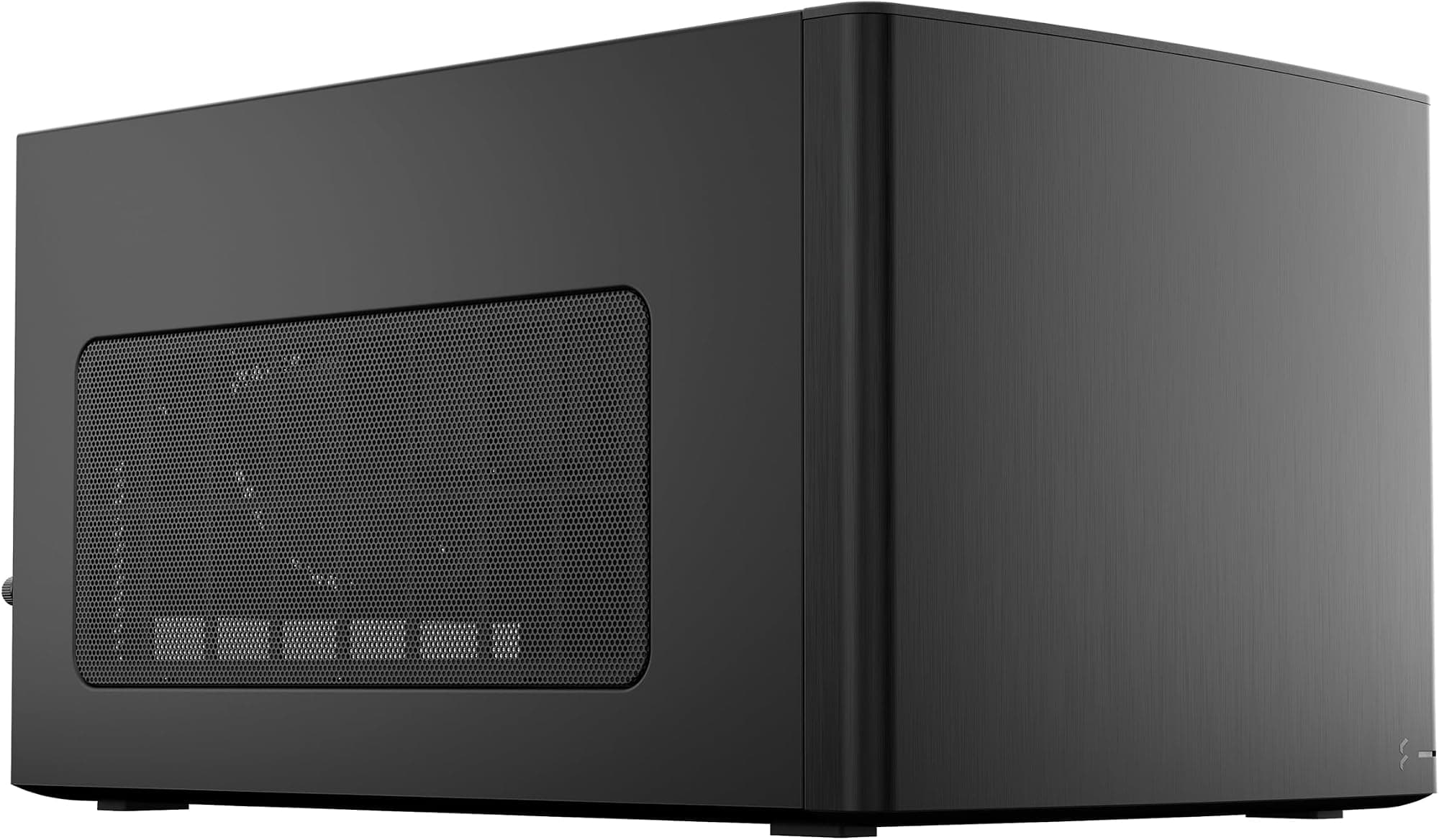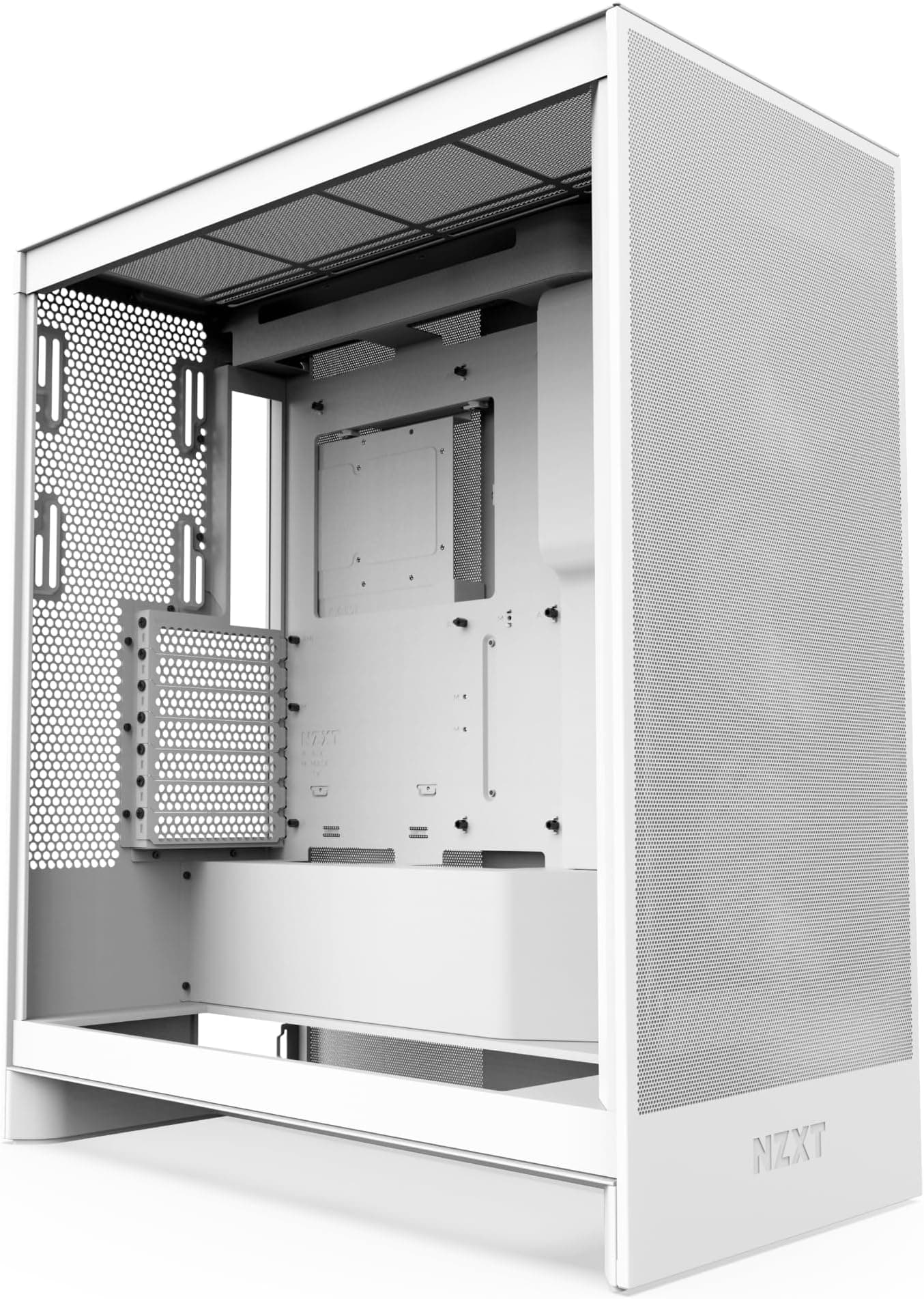
Forget trawling through forty-minute YouTube builds where someone spends twenty minutes praising the box art. What actually matters with the darkFlash DB330M MESH is whether the specs and owner feedback stack up to a coherent story, and for this case, they mostly do. It's a white mATX mesh case sitting in enthusiast pricing territory, shipping with three pre-installed PWM ARGB fans, and it's targeting builders who want proper airflow without the full-tower footprint. That's a specific pitch, and it's worth asking whether darkFlash has actually delivered on it.
The short answer: yes, with some caveats. The mesh front is the real deal, the fan bundle is a genuine bonus at this price tier, and the 240mm AIO support means liquid cooling is on the table even in this compact chassis. But nine owner reviews averaging 4.1 out of five is a thin sample, and at enthusiast-tier pricing, you're competing against some very well-established names. So let's get into the specifics, because the details are where this case earns or loses its money.
This darkFlash DB330M MESH review covers the white variant specifically, though the structural points apply across colourways. If you're building a compact white rig and you want airflow to be a priority rather than an afterthought, read on.
Core Specifications
The DB330M is a Micro-ATX mid-tower, which sounds contradictory until you realise that mATX cases have crept upward in size over the last few years as builders demand more radiator support and GPU clearance. darkFlash has leaned into that trend here. The case supports mATX and Mini-ITX motherboards, which covers the vast majority of compact builds, and the chassis is built around steel with a tempered glass side panel on the left and mesh panelling across the front and top.
Fan support is where the spec sheet gets interesting. You get three pre-installed 120mm PWM ARGB fans at the front, which act as intake. The top panel supports up to a 240mm radiator, and the rear has a single 120mm exhaust position. That's a total of five fan mounting positions across the chassis, which is solid for an mATX form factor. The included fans are PWM-controlled, so they'll play nicely with any modern motherboard's fan headers without needing a separate controller, though the ARGB lighting will need a 5V ARGB header or a hub to sync properly.
Storage is modest but appropriate for the form factor: there's support for 2.5-inch SSDs and the spec accommodates the kind of NVMe-primary build most people are doing in 2026 anyway. The front I/O includes a USB 3.0 port, which is functional but given the absence of a USB Type-C port at the front, something competitors at this price have started treating as standard. Power delivery to the system routes through a standard ATX PSU, which sits in a bottom-mounted position behind a shroud.
| Specification | Detail |
|---|---|
| Form Factor Support | Micro-ATX, Mini-ITX |
| Case Type | Mid-Tower (mATX) |
| Included Fans | 3 x 120mm PWM ARGB (front) |
| Fan Mounts | Front: 3 x 120mm, Top: 2 x 120mm, Rear: 1 x 120mm |
| Radiator Support | Top: up to 240mm, Front: up to 240mm, Rear: 120mm |
| GPU Clearance | Up to approximately 320mm |
| CPU Cooler Height | Up to approximately 165mm |
| PSU Clearance | Standard ATX PSU, bottom-mounted |
| Storage | 2 x 2.5-inch SSD |
| Front I/O | 1 x USB 3.0, HD Audio |
| Side Panel | Tempered Glass (left) |
| Front Panel | Mesh |
| Colour | White |
| Current Price | £176.92 |
| Rating | ★★★★☆ (4.1) (9 reviews) |

Form Factor and Dimensions
The DB330M sits in that slightly awkward middle ground where it's technically a Micro-ATX case but it's not especially small. That's not a criticism, it's actually a feature. Compact mATX cases that try to be genuinely tiny end up being nightmares to build in, with cables fighting for space and GPU clearances measured in millimetres of panic. darkFlash has given this chassis enough internal volume to breathe, which pays dividends when you're routing cables or fitting a 240mm AIO.
On a standard desk, this case has a reasonable footprint. It's not going to dominate the space the way a full-tower would, but it's also not the kind of thing you'll mistake for a shoebox. The white finish is clean and should suit a wide range of desk setups, particularly the increasingly popular all-white aesthetic that's been popular in the UK building community for the last couple of years. The tempered glass side panel shows off the internals and the ARGB fans without making the whole thing look like a nightclub.
One thing: mATX cases at this size sometimes struggle with airflow because the front intake is physically close to the desk surface or to the wall behind. The DB330M's mesh front and top venting help here, but you'll want to make sure there's reasonable clearance around the case when it's placed. Stuffing it into a tight cabinet will negate everything the mesh design is trying to do, which would be a shame given that airflow is clearly the main selling point. Give it room to breathe and it'll reward you for it.
Motherboard Compatibility
The DB330M supports Micro-ATX and Mini-ITX motherboards. That's it. No ATX, no E-ATX, which is exactly what you'd expect from a case this size, so no surprises there. If you're planning a Micro-ATX build around something like an AMD B650M or an Intel B760M board, you're in the right place. The standoff layout should accommodate the standard mATX mounting pattern without any drama, and Mini-ITX boards will fit with the appropriate standoffs in place.
What this means practically is that you're looking at a platform with four RAM slots maximum (on most mATX boards), two to three PCIe slots, and a more constrained VRM area than a full ATX board. None of that is a problem for a gaming or workstation build, but it does mean this case isn't for someone trying to run multiple GPUs or a workstation-class board with eight DIMM slots. That's not the target audience anyway, and anyone shopping for an mATX case knows that going in.
The Micro-ATX standard defines the board at a maximum of 244mm x 244mm, and the DB330M has enough internal width to accommodate that without the board feeling crammed against the side panel. Owner reviews don't flag any fitment issues with standard mATX boards, which is reassuring. There's also enough clearance around the I/O shield area that you shouldn't have trouble with the rear panel cutout, even on boards with slightly oversized I/O covers, which some manufacturers have taken to including.
GPU Clearance
GPU clearance is approximately 320mm, which covers an enormous range of current graphics cards. To put that in perspective, an RTX 4070 Super is around 267mm long, an RX 7800 XT comes in at roughly 267mm as well, and even the beefier RTX 4080 Super at around 336mm pushes past the limit. So if you're planning to drop a flagship triple-slot card in here, check the exact length of your specific model before committing. Most mid-range and upper-mid-range cards will fit without issue, but the very longest AIB variants of top-end GPUs might not.
There's no vertical GPU mount option mentioned in the spec sheet, which is a bit of a shame at this price point. Vertical mounting has become a popular feature for showing off a GPU through the tempered glass, and some competitors in this tier include a riser cable or at least a vertical mount bracket as standard. If that matters to you, it's worth factoring in. The standard horizontal mount is solid and functional, though, and the GPU sits on a PCIe slot that should be reinforced on any decent mATX board.
One practical consideration: if you're fitting a front 240mm radiator alongside a long GPU, you'll want to check the combined clearance carefully. A front-mounted 240mm rad eats into the available GPU depth, and depending on the rad and fan thickness, you could find yourself with less than 300mm of effective GPU clearance. Owner reviews don't flag this as a specific problem, but it's the kind of thing that varies enough between builds that it's worth measuring before you buy your components. The spec sheet is clear on the AIO support, but the interaction between a thick radiator and a long GPU is always worth thinking through.
CPU Cooler Clearance
CPU cooler height clearance sits at around 165mm, which is genuinely generous for an mATX case. To put numbers to that: a Noctua NH-D15 (the big daddy of air coolers) is 165mm tall, so you're right at the limit with the tallest coolers on the market. More realistically, popular options like the Noctua NH-U12S at 158mm, the be quiet! Dark Rock 4 at 162mm, and the DeepCool AK620 at 160mm all fit comfortably with a few millimetres of headroom. That's a good result.
The AIO radiator support is where this case makes a stronger argument for liquid cooling than many mATX cases. The top panel takes up to a 240mm radiator, and the front also supports up to 240mm. That means you can run a 240mm AIO at the top as exhaust or at the front as intake, which gives you flexibility depending on your thermal priorities and the length of your GPU. Most 240mm AIOs from Corsair, NZXT, Arctic, and Cooler Master will fit without drama. A 360mm AIO is not supported, which is a hard constraint of the mATX form factor here, but 240mm is perfectly capable of handling anything from a mid-range Ryzen 7 to a Core i7 without breaking a sweat.
Owner feedback doesn't specifically call out AIO installation as a problem, which is a reasonable signal that the mounting points are sensibly positioned and the clearances around the pump head and tubing aren't nightmarish. That said, with a 240mm rad at the top, you'll want to check RAM clearance on your specific motherboard, particularly if you're running tall RGB RAM sticks. Low-profile RAM is always the safer choice with top-mounted AIOs in compact cases, and that applies here as much as anywhere else.
Storage Bay Options
Storage options in the DB330M are solidly modern but minimal in the traditional sense. There are two 2.5-inch SSD mounting positions, and NVMe M.2 drives are handled by the motherboard itself, which is how virtually every build in 2026 works anyway. If you're still running a 3.5-inch mechanical hard drive as your primary storage, this case isn't going to make that easy, and honestly, at this price point, you probably shouldn't be. A pair of NVMe SSDs and a couple of 2.5-inch SATA drives covers 99% of what most builders need.
The 2.5-inch mounting positions are important to look at in terms of placement. Ideally, they're tucked behind the motherboard tray or in the PSU shroud area, keeping the main chamber clean and the airflow unobstructed. The spec sheet and product imagery suggest a relatively clean internal layout, and owner reviews don't flag storage mounting as a frustration, which is a reasonable indicator that it's handled sensibly. Tool-free SSD mounting would be a nice touch, but it's not confirmed in the spec sheet, so assume you'll need a screwdriver for the 2.5-inch drives.
For a gaming build or a home workstation, the storage situation is fine. Two SSDs is enough for an OS drive and a games drive, and if you need more capacity, external storage or a NAS is a more sensible solution than cramming mechanical drives into a compact mesh case anyway. The lack of 3.5-inch bays keeps the interior cleaner and the airflow less obstructed, which aligns with the whole point of buying a mesh case in the first place. It's a deliberate design choice rather than an oversight, and it's the right one for this form factor.

Cable Management
Cable management in compact cases is often where budget and even mid-range options fall apart. You get a PSU shroud that hides the power supply and the worst of the cable spaghetti, which is standard on any decent case in 2026, but the real question is how much space there is behind the motherboard tray for routing the 24-pin ATX cable, the CPU power cables, and the fan headers. The DB330M appears to offer a reasonable amount of rear cable clearance, though the exact millimetre figure isn't specified in the product listing.
Owner reviews are broadly positive about the build experience, and nobody has flagged cable management as a specific pain point, which is encouraging. In a case this size, you're always going to be working with less space than a full-tower, so some degree of cable tetris is inevitable. But the presence of a PSU shroud and what appears to be a sensible cable routing layout behind the tray means you shouldn't end up with cables blocking the front intake fans, which is the main thing you want to avoid in a mesh airflow case.
Velcro straps or tie-down points for cables aren't confirmed in the spec sheet, so don't assume they're included. Pick up a pack of cable ties or Velcro straps before you start your build regardless, because they make a significant difference to the final result and they cost almost nothing. The PSU shroud does the heavy lifting in terms of keeping the main chamber tidy, and if you're using a modular PSU (which you should be in a compact build), the cable management situation becomes considerably more manageable. A non-modular PSU in a case this size is going to create headaches regardless of how good the routing channels are.
Airflow and Thermal Design
This is where the DB330M makes its strongest argument. The mesh front panel is the headline feature, and it's not just marketing. A proper mesh front means that the three 120mm intake fans at the front can actually pull air into the case without fighting against a solid or semi-solid panel. Solid front panels, even ones with small ventilation slots, create a significant restriction that forces fans to work harder for less airflow, and the thermal results show it. The DB330M sidesteps this entirely by going full mesh, which is the right call for a case that's pitching itself on thermal performance.
The three pre-installed PWM ARGB fans at the front are a genuine bonus. Three 120mm fans across the front creates a solid positive pressure intake when paired with the single 120mm exhaust at the rear. Add a 240mm AIO at the top exhausting warm air out and you've got a very sensible thermal configuration: cool air in at the front, warm air out at the top and rear. That's textbook positive pressure airflow, and it's the setup most experienced builders would arrive at anyway. The fact that the case ships with the front fans already installed saves you money and time.
The top mesh panel matters too. Even without a radiator fitted, the top mesh acts as a secondary exhaust path for hot air rising from the GPU and CPU area. Dust filtration is, because mesh panels that don't have removable filters are a pain to maintain. The product listing references dust management, and the top panel appears to have a filter, but getting confirmation on whether the front mesh has a removable filter before buying is worth doing. Owner reviews don't flag dust as a specific problem, which suggests the filtration is at least adequate. Thermal performance based on the spec and configuration should be strong, particularly for mATX builds running mid-range to upper-mid-range components.
Front I/O and Connectivity
The front I/O is functional but not exciting. You get one USB 3.0 Type-A port and HD audio (headphone and microphone jacks). That's it. No USB Type-C, which is the one thing that genuinely stings at this price point. In 2026, USB Type-C on the front panel has moved from a nice-to-have to a reasonable expectation on any case costing this much. Competitors like the Fractal Design Pop Mini Air and the NZXT H510 Flow have been shipping with Type-C for a while now, and its absence here is a real gap.
The USB 3.0 port connects to the motherboard via a standard internal USB 3.0 header, which all current mATX boards include, so there's no compatibility issue there. HD audio connects to the standard HD Audio header on the board. Both connections are standard and straightforward. The power button placement and reset button are on the top panel, which is the most common and sensible location for a case of this size, keeping them accessible without being in the way.
The ARGB fan lighting is controlled via a 5V ARGB header on the motherboard or through a hub if your board doesn't have one. Most current mATX boards from ASUS, MSI, Gigabyte, and ASRock include at least one 5V ARGB header, so syncing the three front fans to your RGB ecosystem should be straightforward. If you're on an older board without ARGB headers, you'll need a hub or a controller, which adds cost. The PWM fan control runs through standard 4-pin PWM headers, and the PWM standard means the fans will respond to your motherboard's fan curve settings natively. That's a proper implementation rather than a bodged voltage-control solution.
Build Quality and Materials
darkFlash isn't a brand with the heritage of Fractal Design or Lian Li, and that's worth being honest about. They're a Chinese manufacturer that's been growing their presence in the European market over the last few years, and the quality consistency across their range has been variable depending on the specific model. The DB330M, based on owner feedback averaging 4.1 out of five across nine reviews, seems to be one of their better efforts. Nobody is reporting catastrophic quality failures, which is the minimum bar, and several reviewers specifically mention the build quality positively.
The steel chassis appears to be adequately rigid for a case in this class. The tempered glass side panel is the component most likely to cause problems if the case is handled roughly during shipping, but tempered glass panels are standard across the industry now and the risk is manageable. The white finish on the exterior panels is a powder coat or paint finish, and owner reviews don't flag chipping or discolouration as issues, which is encouraging for a white case (white finishes can show wear more obviously than black). Sharp edges inside the case are a common complaint with budget cases and occasionally with mid-range ones too, and the owner reviews don't specifically flag this as a problem with the DB330M.
Panel alignment and the quality of the panel removal mechanism are things that separate well-engineered cases from ones that feel cheap. The tempered glass side panel should use thumbscrews rather than a tool-free latch at this price, and the fit should be snug without requiring force to close. Owner feedback doesn't suggest panel alignment issues, which is a good sign. The overall impression from the spec sheet and reviews is a case that punches reasonably close to its price tier in terms of physical quality, without quite matching the fit and finish of premium brands like Fractal Design or Lian Li at similar price points.
How It Compares
The DB330M MESH is sitting in enthusiast pricing territory, which means it's competing against some genuinely strong options. The two most obvious comparisons are the Fractal Design Pop Mini Air and the Cooler Master MasterBox NR400. Both are well-established mATX cases with strong reputations and significantly more owner feedback than the DB330M's nine reviews. That matters, because a 4.1 average across nine reviews is statistically thin. It could represent a genuinely good product, or it could be a small sample that hasn't yet caught the edge cases.
The Fractal Design Pop Mini Air is a strong competitor. It has Fractal's typically excellent build quality, a mesh front, and a clean interior layout that experienced builders consistently praise. It doesn't ship with fans included as standard in the base configuration, which is where the DB330M's three pre-installed PWM ARGB fans become a genuine differentiator. If you factor in the cost of buying three decent 120mm ARGB fans separately, the DB330M's pricing starts to look more competitive. The Cooler Master MasterBox NR400 is another solid option, particularly for builders who prioritise build experience over aesthetics, but it's less focused on airflow than the DB330M's mesh-forward design.
Where the DB330M falls short against both competitors is the lack of USB Type-C on the front panel and the relatively limited owner feedback base. Fractal Design and Cooler Master have years of reviews to draw on, which gives you much more confidence about what the edge cases look like. darkFlash is a newer player in this space, and the DB330M is a relatively new listing. That's a risk worth acknowledging. If you're the kind of builder who wants a proven quantity, the Fractal Pop Mini Air is the safer choice. If you want included ARGB fans and a strong mesh airflow design at a competitive price, the DB330M makes a reasonable case for itself.
| Feature | darkFlash DB330M MESH | Fractal Design Pop Mini Air | Cooler Master MasterBox NR400 |
|---|---|---|---|
| Form Factor | mATX / Mini-ITX | mATX / Mini-ITX | mATX / Mini-ITX |
| Included Fans | 3 x 120mm PWM ARGB | 2 x 140mm (base config) | 2 x 120mm |
| Front Panel | Mesh | Mesh | Mesh / Glass options |
| Max GPU Length | ~320mm | ~380mm | ~410mm |
| Max AIO Support | 240mm | 240mm | 240mm |
| USB Type-C Front | No | Yes | Yes (on some variants) |
| ARGB Fans Included | Yes (3) | No | No |
| Owner Review Base | 9 reviews (4.1) | Large (established) | Large (established) |
| Price Tier | Enthusiast | Enthusiast | Mid-range to Enthusiast |

Final Verdict
The darkFlash DB330M MESH review verdict comes down to this: it's a genuinely decent mATX mesh case that ships with three PWM ARGB fans included, has solid airflow credentials on paper, and has earned a 4.1 average from its early owners. For a builder who wants a white mATX case with real mesh airflow, ARGB lighting already sorted, and 240mm AIO support, it hits those marks. The mesh front is the real deal, the fan bundle saves you money, and the internal layout is sensible enough that experienced builders won't find themselves fighting the case.
But there are things worth being straight about. The lack of USB Type-C on the front panel is a genuine omission at this price, and it's the kind of thing that ages a case quickly. The owner review base is thin, which means you're taking a bit more of a punt than you would with a Fractal Design or Cooler Master equivalent. And the GPU clearance of around 320mm, while fine for most builds, is tighter than some competitors at the same price. None of these are dealbreakers individually, but together they explain why this isn't a runaway recommendation.
Who is this for? Builders putting together a compact white gaming rig around a mid-range to upper-mid-range GPU (RTX 4070 class and below), who want ARGB fans included and a mesh front without paying extra for them separately. If you're running a Ryzen 7 or Core i7 with a 240mm AIO and a card in the 260 to 300mm range, this case is well-suited to your build. It's also a reasonable choice for first-time builders who want the fan situation pre-sorted and don't want to spend hours researching fan compatibility.
Who should skip it? Anyone who needs USB Type-C on the front panel (which is an increasing number of people), anyone fitting a flagship GPU longer than 320mm, and anyone who wants the reassurance of a large owner review base before committing. If you're in that camp, the Fractal Design Pop Mini Air is the more proven option, even if it means buying fans separately. And if budget is the actual concern, there are capable mATX mesh cases in the mid-range tier that do the basics well without the enthusiast-tier price tag. The DB330M earns its price if the fan bundle and white aesthetic are priorities, but don't pay the premium if those things don't matter to your build.
Overall editorial score: 7.5 out of 10. Good airflow design, solid fan bundle, clean aesthetics. Held back by the missing Type-C, limited owner data, and GPU clearance that's merely adequate rather than generous.
What works. What doesn’t.
5 + 4What we liked5 reasons
- Three PWM ARGB fans included out of the box, saving real money
- Genuine mesh front panel for unrestricted intake airflow
- Supports 240mm AIO at front or top, good flexibility for a compact case
- 165mm CPU cooler clearance is generous for an mATX chassis
- Clean white finish with tempered glass side panel
Where it falls4 reasons
- No USB Type-C on the front panel, a real gap at this price
- GPU clearance of around 320mm is tighter than some competitors
- Only nine owner reviews makes it hard to assess long-term reliability
- No vertical GPU mount option despite the enthusiast-tier pricing
Full specifications
11 attributes| Form factor | Micro-ATX |
|---|---|
| CPU cooler clearance MM | 180 |
| Dimensions MM | 368 x 218 x 400 |
| Fans included | 3 |
| GPU clearance MM | 305 |
| MAX FAN count | 7 |
| MAX radiator MM | 240 |
| PSU support | ATX up to 210mm |
| Side panel | tempered glass |
| Supported motherboard | M-ATX, ITX |
| Weight KG | 3.8 |
Frequently asked
5 questions01Is the darkFlash Micro-ATX PC Case, Pre-Install 3 PWM ARGB Fans Computer Case, High Heat Dissipation MATX Gaming PC Case, USB 3.0 Port, Supports up to 240mm AIO(DB330M MESH, White) good for airflow?+
Yes, airflow is the DB330M's strongest suit. The full mesh front panel allows the three pre-installed 120mm intake fans to pull air in without restriction, which is a significant advantage over cases with solid or semi-solid front panels. The top panel also has mesh venting, which acts as a secondary exhaust path for heat rising from the GPU and CPU. With three front intakes and a rear 120mm exhaust, you have a solid positive pressure configuration. Add a 240mm AIO exhausting at the top and you have a very capable thermal setup for an mATX build. Dust filtration appears to be present based on the product listing, though confirming the front mesh filter is removable before buying is worth doing.
02What's the GPU clearance on the darkFlash Micro-ATX PC Case, Pre-Install 3 PWM ARGB Fans Computer Case, High Heat Dissipation MATX Gaming PC Case, USB 3.0 Port, Supports up to 240mm AIO(DB330M MESH, White)?+
GPU clearance is approximately 320mm. That covers most mid-range and upper-mid-range cards comfortably: an RTX 4070 Super is around 267mm, an RX 7800 XT is similar, and most triple-fan cards in the RTX 4070 to RX 7900 GRE class will fit. Very long AIB variants of top-end cards like the RTX 4080 Super (some versions exceed 336mm) may not fit, so check your specific card's length before buying. If you're also fitting a front-mounted 240mm radiator, note that thick radiators and fans can reduce effective GPU clearance, so measure carefully if you're combining a front rad with a longer GPU.
03Can the darkFlash Micro-ATX PC Case, Pre-Install 3 PWM ARGB Fans Computer Case, High Heat Dissipation MATX Gaming PC Case, USB 3.0 Port, Supports up to 240mm AIO(DB330M MESH, White) fit a 360mm AIO?+
No. The DB330M supports a maximum 240mm radiator, either at the front or at the top. A 360mm AIO requires three 120mm fan positions in a row, and the mATX form factor of this case doesn't accommodate that. For most builds with a Ryzen 7 or Core i7 processor, a 240mm AIO is more than adequate for cooling. If you need a 360mm AIO, you'll need to look at a larger ATX mid-tower case. When fitting a 240mm AIO at the top, check that your RAM height is compatible, as tall RGB RAM sticks can conflict with top-mounted radiators in compact cases.
04Is the darkFlash Micro-ATX PC Case, Pre-Install 3 PWM ARGB Fans Computer Case, High Heat Dissipation MATX Gaming PC Case, USB 3.0 Port, Supports up to 240mm AIO(DB330M MESH, White) easy to build in?+
Based on owner feedback averaging 4.1 out of five across nine reviews, the build experience is broadly positive with no specific pain points flagged. The PSU shroud keeps the main chamber tidy, and the internal layout is sensible for an mATX case. Cable management space behind the motherboard tray appears adequate, though the exact rear clearance isn't specified. Using a modular PSU is strongly recommended to keep cable clutter manageable. The three front fans come pre-installed, which saves time and removes one of the more fiddly steps in a compact build. No owners have specifically flagged sharp edges or panel alignment issues, which is a good sign. Velcro cable ties are worth picking up separately as they're not confirmed as included.
05What warranty and returns apply to the darkFlash Micro-ATX PC Case, Pre-Install 3 PWM ARGB Fans Computer Case, High Heat Dissipation MATX Gaming PC Case, USB 3.0 Port, Supports up to 240mm AIO(DB330M MESH, White)?+
A specific manufacturer warranty period is not confirmed in the verified product listing data. When purchasing through Amazon UK, you're covered by Amazon's standard 30-day return policy and the Amazon A-to-Z Guarantee, which provides protection if the item arrives damaged or not as described. For warranty queries beyond the return window, contact darkFlash directly or check the documentation included with the case. Always keep your order confirmation as proof of purchase.