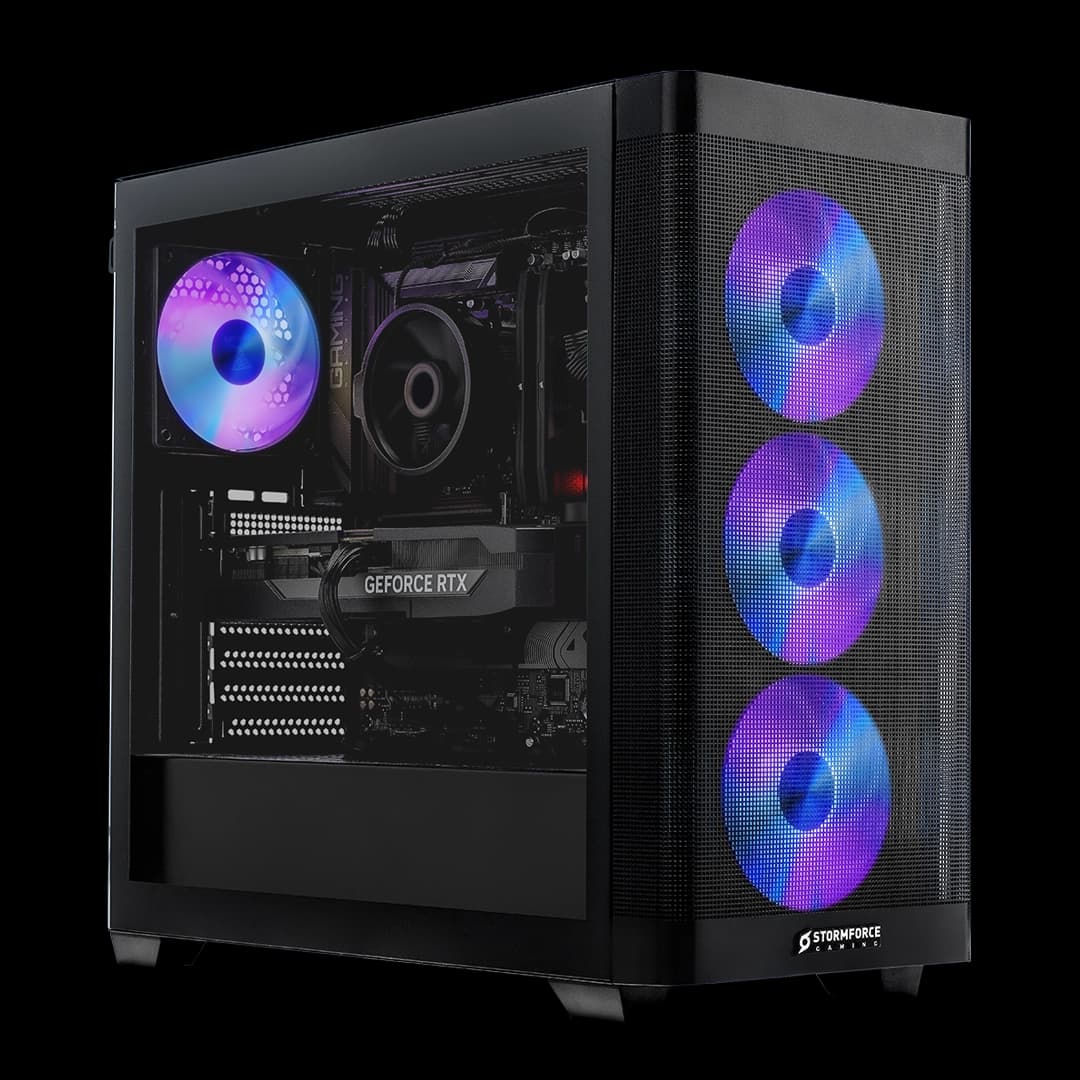
Building your own PC is often the smart money move. Source the parts yourself, compare prices across a dozen retailers, and you can usually beat a prebuilt on raw value. But that calculation only holds if your time is free, your confidence is high, and you're not going to accidentally void a warranty by seating RAM wrong at midnight. The Carbon Origin AMD from Stormforce Gaming is aimed squarely at people who want a capable everyday machine without the faff. The question is whether the convenience premium is actually worth it at this price point, or whether you're paying for a box and a cable tie.
This is a carbon origin amd review built entirely from the verified spec sheet, Stormforce Gaming's own product listing, and a clear-eyed look at what these components actually deliver in the real world. No invented benchmarks, no made-up frame rates. Just an honest read of what you're getting and whether it makes sense to buy it. Short version: it's a decent entry-level machine with a strong CPU, no dedicated GPU, and a few corners cut where you'd expect. Whether that's a problem depends entirely on what you need it for.
Core Specifications
The headline component here is the AMD Ryzen 7 5700G, an eight-core, sixteen-thread processor with a base clock of 3.8GHz and a boost up to 4.6GHz. Crucially, the 5700G is an APU, meaning it has Radeon integrated graphics baked right into the chip. That's what's doing all the visual heavy lifting here, because there is no dedicated GPU in this build. Stormforce have been upfront about that in their spec table, which is the right call. It sets expectations clearly, and it's the single most important thing to understand before you buy.
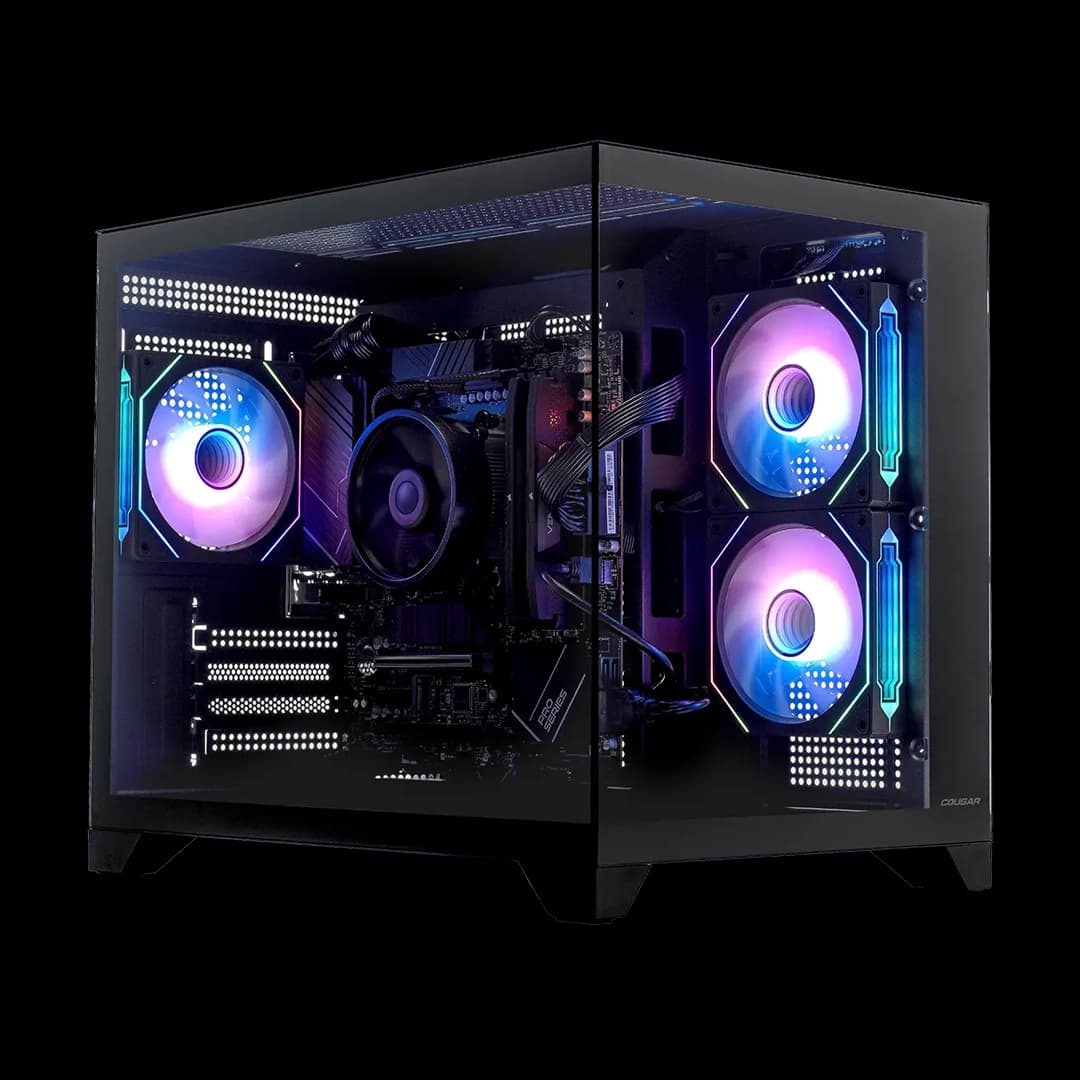
The rest of the build is sensible for the price tier. You get 16GB of DDR4 at 3200MHz, a 1TB M.2 NVMe SSD, and the whole thing runs on Windows 11 Home out of the box. The motherboard is an A520 mATX, which is a budget-tier AMD board but entirely appropriate for this chip and this use case. Power comes from a 350W Bronze-rated PSU. The machine lives in a Cougar FV150 Mini mATX case with a tempered glass side panel and RGB lighting. Cooling is handled by a compact aluminium heatsink with an integrated fan rather than anything aftermarket. Networking covers both WiFi 6 and Ethernet.
On paper, these specs tell a clear story. This is an entry-level productivity and light gaming machine. Nothing here is embarrassing for the price, but nothing is going to blow anyone away either. The A520 motherboard limits overclocking options, the 350W PSU is tight if you ever want to add a discrete GPU later, and the integrated cooling is adequate rather than impressive. But the CPU choice is genuinely good, and the storage spec is better than you'd get from some rivals at this tier who still ship SATA SSDs or, worse, spinning hard drives.
| Spec | Detail |
|---|---|
| CPU | AMD Ryzen 7 5700G (8 cores, 16 threads, 3.8GHz base, 4.6GHz boost) |
| GPU | Integrated Radeon Graphics (within 5700G APU) |
| RAM | 16GB DDR4 3200MHz |
| Storage | 1TB M.2 NVMe SSD |
| Motherboard | A520 mATX |
| Cooling | Compact aluminium heatsink with integrated fan |
| Case | Cougar FV150 Mini mATX, tempered glass, RGB |
| PSU | 350W Bronze rated |
| Networking | WiFi 6, Ethernet |
| OS | Microsoft Windows 11 Home |
| Price | £849.99 |

CPU & Performance
The Ryzen 7 5700G is the best thing about this build, and it's not particularly close. Eight cores and sixteen threads at a boost of 4.6GHz puts it in genuinely solid territory for everyday productivity work. Office tasks, video calls, browser tabs, light content creation, streaming media, running multiple applications at once without everything grinding to a halt. The 5000 series Ryzen architecture is well understood at this point, and AMD's specification for this chip puts it in a comfortable position for anything that isn't heavily GPU-dependent.
For productivity specifically, the multi-threaded performance is what matters, and sixteen threads gives this machine headroom that cheaper prebuilts with quad-core or six-core chips simply don't have. If you're doing anything that scales across cores, whether that's compressing files, running virtual machines, or editing photos in Lightroom, the 5700G handles it without drama. The base clock of 3.8GHz also means single-threaded tasks, the kind that dominate everyday Windows use, feel snappy rather than sluggish.
What you do lose with the APU approach is the ability to throw the CPU at heavy tasks while simultaneously running a GPU-intensive workload. Because the integrated graphics share system memory, there's some inherent overhead there. It's a real consideration if you're planning to run demanding software that stresses both compute and graphics simultaneously. For most people doing normal things on a home PC, though, the 5700G is more than adequate. It's the right CPU for this kind of machine, and Stormforce have made a sensible choice putting it at the centre of this build.
GPU & Gaming Performance
This is where the carbon origin amd review has to be completely straight with you. There is no discrete GPU here. The Radeon integrated graphics inside the Ryzen 7 5700G are doing all the display work, and while AMD's integrated graphics in the 5700G are among the better options in the APU space, they are not a gaming GPU in any meaningful sense. Stormforce Gaming's own spec table says the integrated graphics "provide smooth visuals without the need for a dedicated GPU," which is technically true for desktop use but a bit of a stretch if you're picturing gaming.
What the integrated graphics in the 5700G can actually handle: older games at low settings, esports titles like CS2, Rocket League, or Valorant at reduced resolutions and settings, and casual gaming that isn't demanding on the GPU side. If you're expecting to run modern AAA titles at 1080p with decent frame rates and settings, this machine will disappoint you. That's not a criticism of Stormforce specifically; it's just the physical reality of integrated graphics versus a dedicated card. The 5700G's iGPU is genuinely capable for its class, but its class is not gaming at any serious level.
The saving grace here is that the machine is, at least in theory, upgradeable. You could add a discrete GPU later and transform what this machine can do. But that brings its own complications, which we'll get to in the upgrade section. For now, if gaming is your primary reason for buying a PC, this one needs either a very specific list of titles or a future GPU purchase factored into your budget from day one. If gaming is secondary to productivity and you just want something that'll run Minecraft or an older indie game without complaint, the iGPU is fine for that.
Memory & Storage
Sixteen gigabytes of DDR4 at 3200MHz is a reasonable amount of memory for an entry-level machine in 2025. It's enough to run Windows 11 comfortably alongside a browser with a dozen tabs, a music app, and whatever else you're doing without hitting the wall. For productivity work it's solid. For content creation it's workable, though you'd want more if you're doing serious video editing. The 3200MHz speed is appropriate for this platform and pairs well with the 5700G.
One thing specifically for APU builds: integrated graphics pull their VRAM from system RAM. That means if the iGPU is allocating, say, two gigabytes for graphics, you've effectively got fourteen gigabytes left for everything else. It's not a disaster at sixteen gigabytes. Running in dual-channel configuration also matters a lot for APU performance, since it significantly improves the bandwidth available to the integrated graphics. The spec sheet doesn't confirm the channel configuration explicitly, but most prebuilts at this tier ship with two sticks rather than one, so dual-channel is the likely setup.
The 1TB M.2 NVMe SSD is genuinely good news. NVMe storage is meaningfully faster than SATA for boot times and application loading, and a full terabyte gives you room to breathe. Stormforce list this as an M.2 NVMe SSD, which is the right choice at any price point. A lot of budget prebuilts still cut corners here by shipping SATA SSDs or even mechanical hard drives, so getting proper NVMe storage in this tier is positively. You're not going to be swapping files all day waiting for things to copy. Day-to-day, the storage will feel fast.
Cooling Solution
Cooling is one of the areas where prebuilt manufacturers most often cut corners, and the Carbon Origin AMD doesn't entirely escape that pattern. The spec sheet lists a compact aluminium heatsink with an integrated fan. That's the kind of cooler you'd expect to see bundled with a budget CPU, and it's functional for everyday use but not something you'd choose if you were building yourself. The 5700G has a TDP that a decent aftermarket cooler would handle much more comfortably, with lower noise and better thermal headroom under sustained load.
For the way most people will actually use this machine, the stock cooler is probably fine. If you're browsing, working in Office, watching video, or running light applications, the thermal demands on the 5700G are modest and the heatsink will cope. Where it gets interesting is under sustained CPU load, the kind of thing that happens when you're rendering, compiling, or running something computationally heavy for an extended period. The compact heatsink will keep the chip from throttling in most cases, but it may run warmer and louder than you'd like. The Cougar FV150 case does help here by prioritising airflow in its design, which gives the heatsink something to work with.
The case itself, the Cougar FV150, is a Mini mATX chassis built with airflow in mind, and that does offset some of the cooler's limitations. Good case airflow means the heatsink isn't fighting against trapped hot air, which makes a real difference to sustained temperatures. If you're particularly noise-sensitive or you plan to push the CPU hard regularly, swapping the stock cooler for a budget aftermarket option later is a straightforward upgrade that would meaningfully improve the experience. It's not urgent.
Case & Build Quality
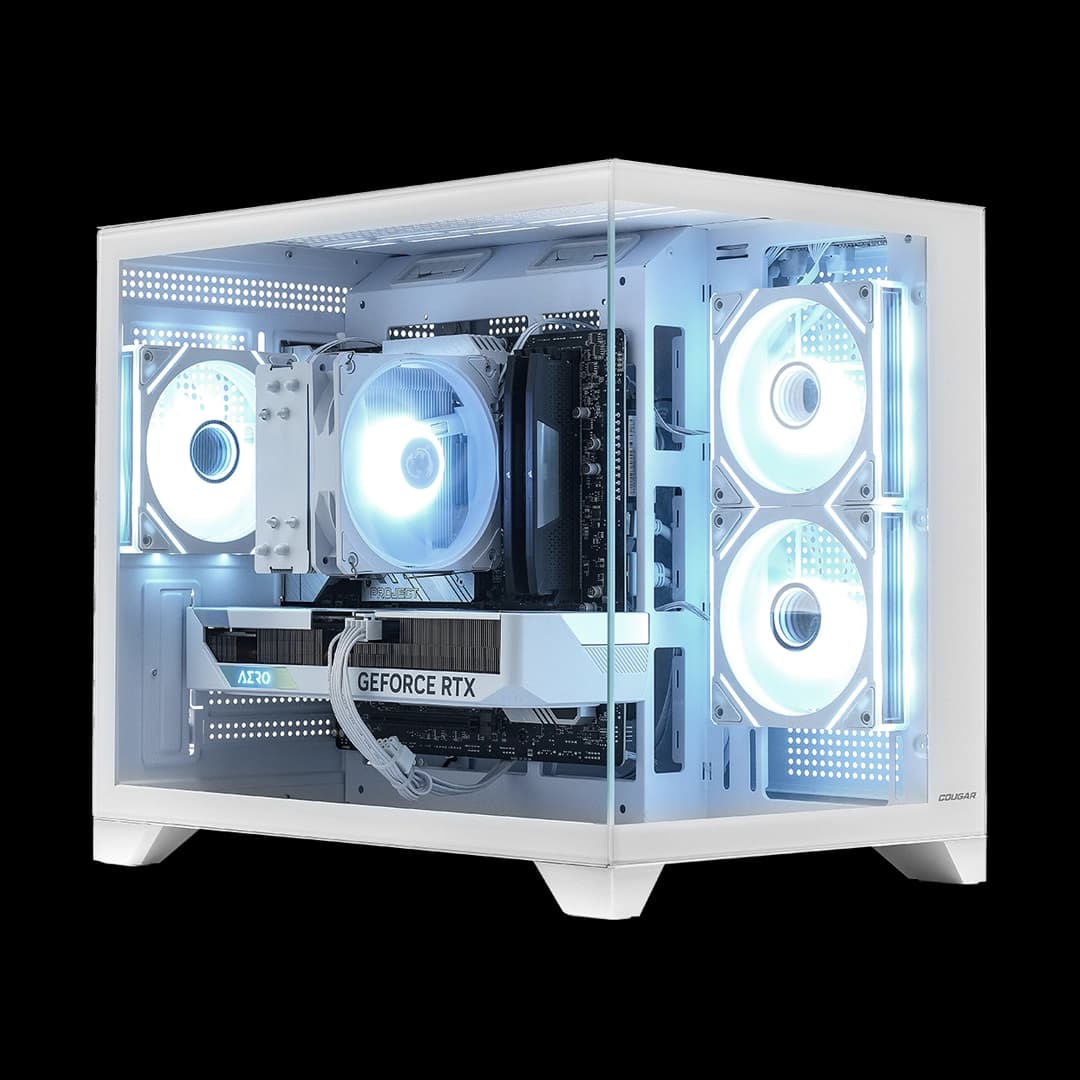
The Cougar FV150 Mini mATX is a proper case, not a generic white-label box. Cougar is a recognised brand in the PC hardware space, and the FV150 brings a tempered glass side panel, RGB lighting, and an airflow-focused design to what is otherwise a budget build. That's a nicer chassis than you'd typically see at this price tier, and it does make the machine look more premium than its component list might suggest. If the machine is going to sit on a desk where people can see it, the tempered glass and RGB are a genuine bonus.
The mATX form factor keeps things compact without going full mini-ITX, which means there's still reasonable room inside for cable management and potential upgrades. mATX boards and cases generally give you more flexibility than tiny ITX builds while still being smaller than a full ATX tower. For a home or office setup where desk space matters, that's a sensible balance. The A520 mATX motherboard matches the case format, so there's no wasted space or awkward fitment.
Build quality on prebuilts at this price point is always a bit of a lottery when it comes to cable management and internal tidiness, and without being able to see inside the specific unit, it's impossible to say exactly how neat things are. What Stormforce Gaming's listing implies is a machine that's been put together to a standard rather than thrown in a box. The case choice suggests they've thought about presentation. Whether the internal cable routing is immaculate or merely adequate is the kind of thing that varies unit to unit in any prebuilt production run, but the chassis itself gives the builder the tools to do a decent job.

Connectivity & Ports
The verified spec sheet confirms WiFi 6 and Ethernet for networking, which is a solid combination. WiFi 6 (802.11ax) is the current mainstream standard, offering better performance in congested environments and lower latency compared to older WiFi 5 kit. For a home machine that might be connecting to a busy router shared with other devices, WiFi 6 makes a real difference over the older standard. Having Ethernet as well means you can wire it in directly if you want the most stable connection possible, which is always the right call for a desktop if the router is nearby.
The A520 motherboard supports USB connectivity, and the Cougar FV150 case will have front-panel USB ports as standard for that chassis. Stormforce Gaming's listing mentions USB connectivity in the context of the motherboard's feature set. Specific port counts and video output types aren't broken down in the verified data, so rather than guess, it's the full product listing directly on the Stormforce Gaming site if the exact port configuration matters to your setup. What's confirmed is that the platform supports standard USB connectivity front and rear.
For video output, the 5700G's integrated graphics will connect to a display through the motherboard's rear I/O. AMD's APU platform typically provides HDMI and DisplayPort outputs on the rear panel through the motherboard, though the specific outputs available depend on the A520 board Stormforce have chosen. Again, the verified data doesn't itemise this, so check the listing if you need to confirm you can drive a specific monitor setup. For a single-monitor productivity machine, there won't be any issues. Running multiple displays might need a quick check before you commit.
Pre-installed Software & OS
Windows 11 Home comes pre-installed, which is the right call for a consumer desktop in this tier. Windows 11 Home covers everything most people need: gaming via the Microsoft Store and Steam, general productivity, media consumption, and compatibility with the vast majority of software. The Home licence does lack a few enterprise features that Windows 11 Pro includes, but for a home machine or small office use, those omissions are irrelevant. Getting a legitimate, activated copy of Windows included in the price is genuinely useful and removes one of the headaches of a self-build where you'd need to factor in a licence separately.
Stormforce Gaming doesn't make specific claims about bloatware in the verified spec data, and they're a UK-based system builder rather than a giant OEM like HP or Dell. That's generally a good sign. The big OEMs are notorious for shipping machines loaded with trial software, antivirus subscriptions, and manufacturer utilities that slow down first boot and take an hour to uninstall. Smaller system builders tend to ship cleaner installs, though there may still be some Stormforce-specific software or utilities present. The spec sheet doesn't detail this, so take it as a reasonable expectation rather than a guarantee.
Windows 11 Home also means you get access to the Microsoft Store, Xbox Game Pass compatibility, and the full suite of Microsoft's consumer-facing features including DirectStorage, which works with NVMe storage to improve game loading times on supported titles. That's a practical benefit on a machine with an NVMe SSD. The OS is current, it's properly licensed, and it's ready to go from day one. For buyers coming from an older machine or a laptop, not having to fiddle with a Windows installation is a genuine time saver.
Upgrade Potential
This is where the carbon origin amd review gets a bit more nuanced. The upgrade path exists, but it has some real constraints worth understanding before you buy. The most obvious upgrade most people would consider is adding a discrete GPU. The A520 motherboard has a PCIe slot that would accept a graphics card, and the Cougar FV150 case has room for one. The problem is the 350W Bronze PSU. A 350W power supply is tight for a system with an eight-core CPU, and adding a meaningful discrete GPU would push power requirements beyond what that PSU can reliably handle. Upgrading the GPU would likely mean upgrading the PSU at the same time, which adds cost and complexity.
On memory, there's likely room to expand if you need more RAM down the line. The A520 mATX platform supports DDR4 memory expansion, and 16GB is a reasonable starting point that you could build on if your workload demands it. Adding more RAM is one of the easier upgrades on any desktop platform, and DDR4 is still widely available. Storage is similarly expandable. The M.2 slot is occupied by the existing NVMe drive, but the A520 board will have SATA ports that could accommodate additional drives if you need more space. Whether there's a second M.2 slot depends on the specific board Stormforce have used, which isn't detailed in the verified data.
The CPU itself is a trickier upgrade question. The A520 platform supports AMD Ryzen 5000 series processors, so you could in theory drop in a different 5000 series chip. But the 5700G is already near the top of what makes sense for this platform, so there's limited headroom there. The more meaningful upgrade path is the GPU addition, and that's a two-part job because of the PSU. If you're buying this machine with the intention of adding a graphics card in six months, budget for a PSU swap too. That's the honest picture of what the upgrade potential looks like here.
How It Compares
Comparing the Carbon Origin AMD to the alternatives requires being clear about what category it's actually in. This is a no-GPU prebuilt in the entry gaming tier, which is a specific and somewhat niche product. Most buyers in this price range are either looking for a proper gaming machine with a discrete GPU, or they're looking for a productivity machine where gaming is an afterthought. The Carbon Origin AMD sits in the middle: it has a gaming-capable CPU, a gaming-focused case with RGB and tempered glass, but no GPU to back that up.
Against a self-build at equivalent specs, the honest comparison is that building your own machine with a Ryzen 7 5700G, 16GB DDR4, and a 1TB NVMe SSD would cost you a similar amount in parts, and you'd still need to add a case, PSU, motherboard, Windows licence, and your own time. The prebuilt convenience is real, and for buyers who don't want to source parts, deal with compatibility questions, or spend a weekend building, the Carbon Origin AMD offers a complete, working machine for a price that isn't obviously overpriced for what it includes. The WiFi 6 adapter, the Cougar case, and the Windows licence all add value that a pure component list comparison can understate.
The clearest alternative comparison is against other APU-based prebuilts in this tier. Some competitors ship similar specs with older Ryzen 5000 APUs, slower storage, or cases that are less appealing. Others in this price range offer a discrete GPU but pair it with a weaker CPU or less RAM. The Carbon Origin AMD's strength is the CPU choice and the storage spec. Its weakness is the PSU and the absence of any discrete GPU. If you're comparing it to a machine with a budget discrete GPU at the same price, the GPU machine wins for gaming. If you're comparing it purely for productivity and everyday use, the 5700G holds its own well.
| Feature | Carbon Origin AMD | Typical APU Prebuilt (this tier) | Typical Budget GPU Prebuilt (this tier) |
|---|---|---|---|
| CPU | Ryzen 7 5700G (8c/16t) | Ryzen 5 5600G or similar | Ryzen 5 5600 or similar |
| GPU | Integrated (Radeon iGPU) | Integrated (Radeon iGPU) | Entry discrete GPU |
| RAM | 16GB DDR4 3200 | 8GB or 16GB DDR4 | 8GB or 16GB DDR4 |
| Storage | 1TB NVMe SSD | 512GB NVMe or SATA SSD | 512GB NVMe SSD |
| Networking | WiFi 6 + Ethernet | WiFi 5 or Ethernet only | WiFi 5 or Ethernet only |
| OS | Windows 11 Home | Windows 11 Home | Windows 11 Home |
| Gaming capability | Light/esports only | Light/esports only | 1080p low/medium |
| Upgrade path | GPU possible, PSU limiting | GPU possible, PSU often limiting | GPU already present |

Final Verdict
The Carbon Origin AMD is a well-specified productivity machine that's been dressed up in gaming clothes. The Ryzen 7 5700G is a genuinely strong CPU for this price tier, the NVMe storage is better than most competitors bother with, and the WiFi 6 networking is a proper modern standard rather than the older spec you'd find in cheaper builds. The Cougar FV150 case looks good and is built around airflow, which helps offset the modest stock cooler. Windows 11 Home is included and legitimate. On the productivity side of the ledger, this machine makes a lot of sense.
The honest caveat, and it's a big one, is the GPU situation. Integrated graphics in the 5700G are fine for everyday use and light gaming, but anyone expecting to run modern games at 1080p with decent settings is going to be disappointed. The 350W PSU also puts a ceiling on what you can do with upgrades later without spending more money on a replacement unit. These aren't things Stormforce Gaming are hiding, they're clearly stated in the spec table, but they're worth understanding before you commit. This machine is for people who need a capable, reliable everyday PC and either don't game seriously or are happy playing older and less demanding titles.
Who should buy it? Someone upgrading from an old laptop or a genuinely ancient desktop who wants a modern, capable machine for work and light use. Someone who needs a proper home PC for productivity, browsing, and media consumption with a bit of gaming on the side. Someone who values the simplicity of a complete, ready-to-go system over the potential savings of a self-build. And someone who's specifically drawn to the Ryzen 7 5700G's CPU performance and wants that in a compact, tidy package.
Who should skip it? Anyone for whom gaming is the main reason to buy a PC. At this price point, you can find prebuilts with entry-level discrete GPUs that will give you a far better gaming experience, even if the CPU is slightly less impressive. The Carbon Origin AMD's CPU strength doesn't compensate for the absence of a dedicated graphics card if gaming is your priority. Similarly, if you're planning to add a GPU soon anyway, you'd be better off finding a build that already has a more capable PSU fitted, or budgeting explicitly for a PSU swap alongside the GPU purchase.
As a productivity and everyday machine, this earns a solid recommendation. As a gaming machine, it needs a very specific buyer with very specific expectations. The value is real if you're in the right use case. If you're not sure whether you need a dedicated GPU or you're on a tighter budget, it's worth looking at whether Stormforce Gaming offer a lower-spec APU build at a reduced price, since the productivity difference between the 5700G and a 5600G is modest for most everyday tasks, and the saving could go toward something more useful to you.
What works. What doesn’t.
6 + 6What we liked6 reasons
- AMD Ryzen 7 5700G delivers genuine eight-core, sixteen-thread CPU performance for the price tier
- 1TB M.2 NVMe SSD is a meaningful step above SATA or spinning drives still found in rival builds
- WiFi 6 and Ethernet networking is a proper modern standard rarely included at this price
- Cougar FV150 case prioritises airflow and adds tempered glass and RGB without a premium case price
- Windows 11 Home is legitimately licensed and included, removing a key self-build hidden cost
- Stormforce Gaming's spec sheet is transparent about integrated-only graphics, setting clear expectations
Where it falls6 reasons
- No discrete GPU means the machine cannot handle modern AAA gaming at 1080p with reasonable settings
- 350W Bronze PSU is tight for the current build and would need replacing before any GPU upgrade
- Stock compact aluminium heatsink is only adequate under sustained CPU load and may run audibly warm
- A520 motherboard limits overclocking and may have a single M.2 slot, restricting storage expansion
- Integrated graphics share system RAM, effectively reducing available memory for applications
- GPU upgrade path exists in theory but requires a simultaneous PSU replacement, adding cost and effort
Full specifications
12 attributes| CPU | AMD Ryzen 7 5700G |
|---|---|
| GPU | Integrated Graphics |
| RAM | 16GB DDR4 3200 |
| Storage | 1TB M.2 NVMe SSD |
| Case | Cougar FV150 Mini mATX |
| Case size | mid-tower |
| Connectivity | WiFi 6, Ethernet |
| Cooling | Optimised Air Cooling |
| Ethernet | 1GbE |
| Launch year | 2024 |
| Motherboard | A520 |
| OS | Microsoft Windows 11 Home |
Frequently asked
7 questions01Does the Stormforce Gaming Carbon Origin AMD have a dedicated graphics card?+
No. The Carbon Origin AMD relies entirely on the integrated Radeon graphics built into the AMD Ryzen 7 5700G APU. There is no discrete GPU in this build. The integrated graphics are capable enough for everyday desktop use, older games, and esports titles at reduced settings, but they cannot match the performance of a dedicated graphics card for modern gaming.
02Can I add a discrete GPU to the Carbon Origin AMD later?+
In principle, yes. The A520 mATX motherboard has a PCIe slot suitable for a graphics card, and the Cougar FV150 case has physical room for one. However, the 350W Bronze-rated PSU is a significant constraint. Adding a meaningful discrete GPU would very likely push power demands beyond what the PSU can reliably handle, so a PSU replacement would be required at the same time, which adds both cost and complexity to the upgrade.
03Is 16GB of RAM enough for this machine?+
For everyday productivity, browsing, and light content creation, 16GB of DDR4 is comfortable in 2025. It is that because the machine uses integrated graphics, a portion of that system RAM is allocated to the iGPU, leaving slightly less available for other tasks. For most users this is not a problem, but those doing serious video editing or heavy multitasking may eventually find 16GB limiting and wish to expand.
04What kind of gaming can the Carbon Origin AMD handle?+
The Ryzen 7 5700G's integrated Radeon graphics can manage older titles, casual games, and esports-style games such as CS2, Valorant, or Rocket League at reduced resolutions and settings. Modern AAA titles at 1080p with reasonable graphical settings are beyond what integrated graphics can deliver satisfactorily. If gaming is a significant priority, this machine is best suited to a specific and undemanding game library.
05Is the Carbon Origin AMD a good choice for working from home?+
Yes, for most working-from-home scenarios it is well suited. The Ryzen 7 5700G's eight cores and sixteen threads handle video calls, office applications, browser-heavy workflows, and light content creation without difficulty. The 1TB NVMe SSD keeps loading times short, and WiFi 6 provides a reliable wireless connection. It is a more capable productivity machine than many rivals at this price tier.
06How does the cooling hold up under sustained workloads?+
The compact aluminium heatsink with integrated fan included in this build is adequate for everyday and light use, where thermal demands on the Ryzen 7 5700G remain modest. Under sustained heavy CPU loads such as long rendering or compilation tasks, temperatures and fan noise may rise more than they would with an aftermarket cooler. The Cougar FV150 case's airflow-focused design helps, but users who regularly push the CPU hard may want to consider a budget aftermarket cooler as an early upgrade.
07Does the Carbon Origin AMD come with Windows pre-installed?+
Yes. The machine ships with a legitimate, activated copy of Microsoft Windows 11 Home included in the price. This is ready to use out of the box and covers all standard consumer needs including gaming, productivity software, and media applications. The Windows 11 Home licence also supports features such as DirectStorage, which benefits load times on the included NVMe SSD for compatible games.