Most people buying a portable SSD don't sit around obsessing over IOPS figures. They want to plug something in, move their files, and not spend the next forty minutes watching a progress bar. The spec numbers that actually matter aren't the ones WD puts in the headline. It's what happens when you're copying a 50GB folder of RAW photos, or backing up a game library, and the drive has to sustain that write speed for more than a few seconds. That's where cheap portables fall apart, and that's where a drive either earns its price or doesn't.
The WD 2TB Elements SE SSD Portable SSD USB 3.0 is pitched squarely at people who want a simple, affordable way to carry a lot of data around without it getting destroyed in a bag. Two terabytes, USB 3.0, rated up to 400 MB/s, and a 2-metre drop resistance claim. On paper, it ticks the boxes. But "up to 400 MB/s" is doing a lot of heavy lifting there, and the USB 3.0 interface rather than USB 3.2 Gen 2 is a choice that deserves a proper look before you hand over your money.
With 4,238 owner reviews averaging 4.6 stars, this is clearly not a disaster. But popular doesn't always mean right for you. If you're a creative professional moving large files constantly, or someone who wants maximum speed for the price, this might not be your best option. If you want something affordable, physically tough, and genuinely usable for everyday backup and file transport, the picture looks rather different. Let's get into it.
Core Specifications
The Elements SE SSD is a portable external drive, so the internal architecture is somewhat opaque compared to a bare M.2 drive you'd slot into a motherboard. WD doesn't publish the controller or NAND type publicly for this product, which is frustrating but fairly standard practice for consumer portable drives at this price. What we do know from the WD product page is the headline: up to 400 MB/s read, USB 3.0 interface, 2TB capacity, and a 2-metre drop resistance rating. The drive connects via USB-A, and WD includes both a USB-A to USB-A cable and a USB-A to USB-C cable in the box, which is a sensible inclusion given how many modern laptops have dropped the full-size USB-A port entirely.
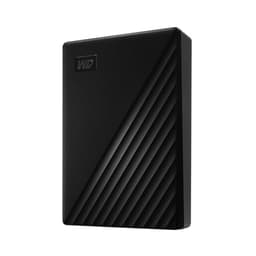
The form factor is compact and pocketable. This isn't one of those chunky portable HDDs that needs its own bag pocket. It's a proper slim SSD enclosure, and the rubberised casing is what gives it that drop resistance claim. Owners consistently mention the build quality feels solid without being heavy, which lines up with what you'd expect from a drive designed to live in a laptop bag or coat pocket. The drive is formatted exFAT out of the box, making it immediately usable across Windows and macOS without reformatting.
The 3-year limited warranty is worth flagging upfront. That's a decent signal from WD. Budget portable drives sometimes ship with just one year, so three years suggests a reasonable level of confidence in the product. WD also offers a version of this drive in 1TB if 2TB is more than you need, though the 2TB capacity tends to hit the better price-per-GB position. The drive is bus-powered via USB, no external power supply needed, which is exactly what you want from something meant to travel.
| Specification | Detail |
|---|---|
| Capacity | 2TB |
| Interface | USB 3.0 (USB-A) |
| Max Read Speed | Up to 400 MB/s |
| Form Factor | Portable external SSD |
| Drop Resistance | Up to 2 metres |
| Connectivity Cables | USB-A to USB-A and USB-A to USB-C included |
| File System (out of box) | exFAT |
| Warranty | 3 years limited |
| Power | Bus-powered via USB |
| Current Price | £249.99 |

Interface and Form Factor
Here's the thing about USB 3.0: the theoretical bandwidth ceiling is 5 Gbps, which works out to roughly 500 MB/s in real-world conditions once you account for protocol overhead. So WD's 400 MB/s rating is achievable within that ceiling, and you won't be bottlenecked by the interface itself hitting a hard wall. But USB 3.0 is also the older standard. USB 3.2 Gen 2 doubles that to 10 Gbps, and plenty of competing portable SSDs at similar price points are using the faster interface. If you're connecting to a modern laptop or desktop with USB 3.2 Gen 2 ports, you're leaving speed on the table with this drive. That's not a dealbreaker for everyone, but it's honest to say so.
The physical design is worth talking about properly. The drive uses a rubberised outer shell that genuinely does absorb impact, and the 2-metre drop resistance claim is one of the more credible ones in this category. Owner reports back this up: people mention dropping it, tossing it in bags without cases, and generally treating it like a piece of kit rather than something precious, with no issues to report. The drive is small enough to fit in a jeans pocket comfortably. It doesn't feel like a toy, but it's not trying to be a ruggedised military-spec unit either. It's just a well-built everyday portable.
The inclusion of both cable types is genuinely useful. USB-A is still the dominant port on most desktop PCs and older laptops, but the USB-C cable means you can plug straight into a modern MacBook or a USB-C port on a newer Windows laptop without needing a dongle. Some budget drives only include one cable and leave you to sort the other yourself, so this is a small but appreciated detail. The drive is bus-powered, drawing everything it needs from the USB connection, which keeps the whole setup clean and travel-friendly. No power brick, no separate cable to forget.
Real-World Performance
The 400 MB/s read figure is the headline, and in practice, owners report speeds that sit comfortably in the 350 to 400 MB/s range for sequential reads when connected to a USB 3.0 port. That's a meaningful step up from a portable HDD, which typically manages 100 to 130 MB/s if you're lucky. For copying a folder of documents, a photo library, or a game backup, you'll notice the difference immediately. Published benchmark results from the wider community show this drive performing close to its rated ceiling on sequential reads under typical conditions, which is reassuring.
Where things get more nuanced is on write performance. WD quotes the drive at up to 400 MB/s read but doesn't give an equivalent write figure in the headline spec. Owner reports suggest writes run noticeably slower than reads, which is typical for drives in this category. For copying files onto the drive rather than off it, you'll likely see figures in the 300 to 380 MB/s range for smaller sequential transfers, dropping more significantly once the SLC write cache is exhausted on larger jobs. More on that in the next section. Random I/O, which governs how snappy the drive feels when accessing lots of small files rather than one big sequential transfer, is limited by the USB interface more than the drive itself at this price point.
For the practical use cases this drive is designed for, the performance is genuinely fine. Backing up a laptop. Moving a photography project between home and a client. Carrying a game library to a mate's house and running games directly from the drive. These are all things this drive handles without drama, and the speed is fast enough that you're not sitting there sighing at the progress bar for every transfer. The jump from HDD to SSD in the portable space is still the biggest quality-of-life improvement you can make, and this drive delivers that jump at a sensible price.
Sustained Writes and Cache Behaviour
This is the section that the marketing glosses over, so pay attention. Like most consumer SSDs and portable drives at this price, the Elements SE SSD uses an SLC write cache to boost short-burst write performance. SLC (single-level cell) cache works by temporarily writing data as if each cell holds one bit instead of the usual two or three, which is much faster. For small to medium transfers, you'll hit the rated speeds. The cache fills, the drive switches to writing directly to the underlying NAND, and the speed drops. How far it drops depends on what NAND is underneath.
WD doesn't publicly disclose the NAND type used in the Elements SE SSD, which is a bit annoying. Based on teardowns and owner reports circulating in the storage community, the internal drive is likely a variant of WD's own flash, but the specific generation and type isn't confirmed by WD. What owners do report is that on very large transfers, say copying a 100GB+ folder in one go, write speeds can slow noticeably once the cache is saturated. This isn't unique to WD; it's a characteristic of virtually every consumer portable SSD at this price point. But it's worth knowing before you assume 400 MB/s is what you'll get from start to finish on a massive backup job.
For typical use, this isn't a problem. Most people aren't copying 200GB in a single session every day. If you're backing up documents, photos, or even a game or two at a time, the cache is more than large enough to handle those transfers at full speed. Where it becomes relevant is for creative professionals doing regular large-file workflows: video editors copying raw footage, photographers doing bulk imports, or anyone who routinely moves 50GB+ in a single transfer. Those users might want to look at drives with faster interfaces or larger cache allocations. For everyone else, the cache behaviour is a technical footnote rather than a real-world problem.
Controller, NAND and DRAM
WD keeps the internals of the Elements SE SSD fairly close to its chest. This is common for portable drives at consumer price points. The drive almost certainly uses WD's own NAND flash, given that WD is one of the world's largest NAND manufacturers (operating the joint venture with Kioxia that produces flash memory at scale). The specific generation and whether it's TLC (three-level cell) or QLC (quad-level cell) hasn't been officially confirmed for this product. Community teardowns suggest TLC in some production runs, but drive manufacturers do change NAND suppliers and grades over time, so this isn't guaranteed to stay consistent.
The DRAM situation is similarly opaque. Portable external drives in this form factor typically don't include dedicated DRAM cache in the way a bare M.2 NVMe drive might. The controller in the enclosure manages the NAND directly, and the USB interface adds its own overhead. This is fine for a portable drive because the bottleneck is almost always the USB connection rather than the controller or NAND architecture. You're not going to saturate the internal NAND's capabilities through a USB 3.0 pipe. So the DRAM question, which matters enormously for internal NVMe drives used as boot drives or scratch disks, is less critical here.
What matters more for a portable drive is the reliability of the controller and the quality of the NAND, and on both counts WD's track record is solid. The Elements brand has been around long enough to build a reputation, and with 4,305 averaging 4.6 stars, the failure rate in the owner population is clearly low. That doesn't mean failures don't happen, but it suggests WD is using components that hold up reasonably well in real-world use. The fact that WD backs this with a 3-year warranty rather than the 1-year you get on some budget alternatives is another signal worth taking seriously.
Endurance and Reliability
WD doesn't publish a TBW (terabytes written) rating for the Elements SE SSD, which is a minor frustration. TBW is one of the cleaner ways to assess how long a drive will last under sustained use, and its absence makes direct comparison harder. That said, for a portable backup and file-transport drive, endurance is less of a daily concern than it would be for an internal boot drive or a scratch disk taking constant write cycles. The typical user plugging this in a few times a week for backups and file transfers is unlikely to wear out the NAND in any reasonable timeframe.
The 3-year limited warranty is the clearest confidence signal WD is offering here, and it's a meaningful one. Budget portable drives sometimes ship with just 12 months of coverage. Three years says WD expects this drive to last, and if it doesn't, you've got a real recourse. Owner reports in the review pool back this up: the vast majority of the 4,305 are positive, with reliability complaints being a small minority. The complaints that do appear tend to cluster around specific failure modes like the drive not being recognised after a drop or a connection issue with a particular cable, rather than widespread NAND failure or data corruption.
One thing worth flagging: no drive is a backup. This one included. The 2TB capacity might tempt you to treat it as your only copy of important data. Don't. Use it as part of a proper backup strategy, ideally following the 3-2-1 rule (three copies, two different media types, one offsite). The drop resistance helps, but physical damage, theft, or just the inherent randomness of electronics failure means relying on any single drive for irreplaceable data is a gamble. Keep a second copy somewhere. That's not a knock on this drive specifically; it's just how storage should work.
Thermals
Thermal management on a portable USB SSD is a very different conversation from what you'd have about a Gen4 or Gen5 NVMe drive sitting in a motherboard slot running hot enough to throttle under sustained load. The Elements SE SSD is USB-powered, operating at a fraction of the power draw of an internal NVMe drive, and the rubberised enclosure acts as passive heat dissipation. Under normal use, this drive runs warm rather than hot. Owners don't report thermal throttling as an issue, which makes sense given the USB 3.0 interface caps the throughput well below the point where the internal NAND would be generating serious heat.
That said, sustained large transfers do generate some warmth, and you'll feel the drive get noticeably warm to the touch if you're copying 50GB or more in one session. This is normal and expected. The drive doesn't need a heatsink, doesn't ship with one, and doesn't need you to worry about airflow around it. It's a portable drive, not a high-performance internal NVMe unit. The thermal design is appropriate for what the drive is asked to do. If you were somehow pushing this through a USB 3.2 Gen 2 enclosure at sustained 10 Gbps, you might see more heat, but through USB 3.0 at 400 MB/s, thermals are a non-issue.
The rubberised casing does double duty here: it protects against drops and it helps dissipate the modest heat the drive generates. It's a sensible design choice for a portable product. If you're planning to leave this drive running in a hot environment for extended periods, like inside a car in summer, that's a different concern and one that applies to any electronics rather than being specific to this drive. Under normal use conditions, you don't need to think about thermals with this product at all.
Capacity Options and Price Per GB
The Elements SE SSD is available in 1TB and 2TB capacities. The 2TB version is the one that makes the most financial sense for most buyers, and it's the one being reviewed here. At current pricing, the 2TB sits at a competitive price per GB for a portable SSD with this level of build quality and brand backing. The 1TB option is available if 2TB is more than you need, but the price-per-GB ratio on the 2TB is typically better, which is the usual pattern across most storage product lines.
Comparing price per GB honestly requires looking at what else is on the market. The Samsung T7 Shield, for example, offers USB 3.2 Gen 2 speeds (up to 1,050 MB/s read) at a higher price point. The SanDisk Extreme, another WD-owned brand, offers similar speeds at a similar price. Budget alternatives from lesser-known brands can undercut the Elements SE on price, but the warranty and brand reliability track record are harder to match. For buyers who want a known brand, solid build quality, and the 2TB capacity without paying a premium for speeds they don't need, the Elements SE hits a reasonable spot.
The honest answer on price per GB is that portable SSDs have come down significantly in cost over the past few years, and 2TB at this price would have seemed remarkable not long ago. The market has moved, and WD has priced this accordingly. If you're purely chasing the lowest price per GB and don't care about portability or drop resistance, an internal SSD in an external enclosure can undercut this. But for a ready-to-go solution with cables included, a warranty, and a proper brand behind it, the value proposition is solid.
Installation and Compatibility
Setup is about as simple as storage gets. Plug it in, it shows up as a drive, start copying files. The exFAT format means it works on Windows and macOS without any reformatting out of the box. If you want to use it with a Linux machine, exFAT support is built into modern kernels, so that's covered too. The included USB-A to USB-A cable handles most desktop and older laptop connections. The USB-A to USB-C cable handles modern laptops and any machine that's dropped the full-size USB-A port. You don't need to install any software to use the drive, though WD does offer optional software if you want to set up automatic backups.
Compatibility is broad. The drive works with Windows, macOS, and Linux. It works with smart TVs and game consoles that support USB storage, though you'll want to check whether your specific console or TV requires reformatting to a different file system (PS4 and Xbox typically want the drive formatted to their own standards for game storage, while PS5 only supports USB drives for media storage rather than game installation). For Android devices with USB-C OTG support, the included USB-A to USB-C cable works, though you may need a USB-C to USB-C cable for some setups. The drive is not compatible with iPads or iPhones without an additional adapter.
There's nothing complicated to navigate here. No drivers to install, no proprietary software required, no firmware update process that requires a specific operating system. It's a plug-and-play external drive in the most literal sense. For people who just want something that works without fuss, this is genuinely one of the easier products in the storage category to get up and running. The fact that both cables are included means you're unlikely to open the box and immediately hit a compatibility dead end, which is more than can be said for some competitors that include only one cable type.

Who It's For
The WD 2TB Elements SE SSD is a good match for a fairly specific type of buyer. If you're a student or professional who needs to carry files between locations and wants something faster than an HDD and tougher than a bare flash drive, this is exactly the right category of product. Photographers who back up shoots on location, people who work across multiple machines, anyone who wants a fast and reliable external backup that fits in a pocket. The 2TB capacity is generous enough to hold a serious photo library, a decent music collection, and a stack of documents without running out of space.
It's also a reasonable choice for anyone upgrading from a portable HDD. The speed difference is significant and immediately noticeable. Copying files at 350 to 400 MB/s versus 100 MB/s from an HDD is the kind of improvement that makes you wonder why you waited. The drop resistance makes it more suitable for bag-carrying than a bare SSD in a cheap enclosure, and the three-year warranty adds peace of mind that you don't get from budget alternatives. For straightforward backup and file transport, this does the job properly.
Who should look elsewhere? If you regularly move very large files (100GB or more in a single session) and need maximum sustained write speed, you'd be better served by a drive with a USB 3.2 Gen 2 interface, like the Samsung T7 Shield or the SanDisk Extreme Pro. If you're a video editor working with large raw footage files and you need the fastest possible transfer speeds, the USB 3.0 ceiling will frustrate you. And if you're looking for an internal drive for a PC or laptop, this isn't that product at all. The Elements SE is a portable external drive, full stop. It's very good at being that thing. It's not trying to be anything else.
How It Compares
The two most natural comparisons for the WD 2TB Elements SE SSD are the Samsung T7 Shield and the SanDisk Extreme (which is, somewhat confusingly, also a WD product under a different brand). The Samsung T7 Shield is the more premium option, offering USB 3.2 Gen 2 speeds up to 1,050 MB/s read and IP65 dust and water resistance in addition to drop protection. It costs more, and whether the extra speed matters depends entirely on whether you're connecting to a port that can actually deliver USB 3.2 Gen 2 speeds. The SanDisk Extreme sits closer in price to the Elements SE but also offers USB 3.2 Gen 2 and IP55 water resistance, making it a tougher comparison for WD's own product.
The honest verdict on the comparison: if you want the fastest portable SSD in this category and your ports support it, the Samsung T7 Shield or SanDisk Extreme are worth the extra spend. If you want a solid, reliable 2TB portable SSD at a lower price and don't need maximum transfer speeds, the Elements SE holds its ground well. The drop resistance is comparable, the build quality is respected by owners, and the WD brand carries real weight in the storage market. It's not the fastest option, but it's a sensible one.
| Feature | WD Elements SE SSD 2TB | Samsung T7 Shield 2TB | SanDisk Extreme 2TB |
|---|---|---|---|
| Interface | USB 3.0 (5 Gbps) | USB 3.2 Gen 2 (10 Gbps) | USB 3.2 Gen 2 (10 Gbps) |
| Max Read Speed | Up to 400 MB/s | Up to 1,050 MB/s | Up to 1,050 MB/s |
| Drop Resistance | 2 metres | 3 metres | 2 metres |
| Water/Dust Resistance | Not rated | IP65 | IP55 |
| Warranty | 3 years | 3 years | 5 years |
| Cables Included | USB-A and USB-C | USB-C and USB-A adapter | USB-C and USB-A adapter |
| Price | £249.99 | Higher | Higher |
What Buyers Say
With 4,305 averaging 4.6 stars, the owner feedback on the Elements SE SSD is overwhelmingly positive. The most common praise centres on three things: the speed compared to portable HDDs, the compact size, and the build quality. Owners repeatedly mention being pleasantly surprised by how fast transfers feel after coming from an HDD. The pocketable form factor gets consistent mentions from people who carry it daily. And the rubberised casing earns praise from people who've put it through real-world knocks without problems.
The complaints, where they appear, tend to fall into a few categories. Some owners report the drive not being recognised by certain older USB ports or hubs, which is a USB compatibility issue rather than a drive fault. A small number mention slower-than-expected write speeds on large transfers, which lines up with what we know about SLC cache behaviour on drives in this category. A handful report connection issues after drops, though these are a minority and the 2-metre drop rating clearly doesn't mean the drive is indestructible under all conditions. Overall, the complaint rate is low relative to the review volume, which is a meaningful signal.
One pattern worth noting: owners who use this drive for straightforward backup and file transport are almost universally satisfied. Owners who push it harder, expecting sustained 400 MB/s writes on massive transfers, are the ones who occasionally express disappointment. That's not a surprise given the USB 3.0 interface and cache architecture, but it does reinforce the point that this drive is best matched to its intended use case rather than being treated as a high-performance workhorse. Set your expectations correctly and you'll likely end up in the 4.6-star camp.
Value Analysis
At its current price, the WD 2TB Elements SE SSD sits in a competitive spot for portable external SSDs. It's not the cheapest 2TB portable SSD you can buy, but it's backed by a proper brand, a 3-year warranty, and a large body of owner evidence suggesting it holds up in real use. The price per GB is reasonable for what you're getting: a reliable, pocketable, fast-enough drive with good physical durability and broad compatibility. If you compare it to budget no-name alternatives that undercut it on price, you're trading brand accountability and warranty coverage for a saving that might not feel worth it if the drive fails in year two.
Compared to the premium alternatives like the Samsung T7 Shield, the value question flips. You're paying less with the Elements SE and getting less speed and less weather resistance. Whether that trade-off makes sense depends on your use case. For most buyers who want a portable SSD for backup and file transport rather than high-speed professional workflows, paying more for USB 3.2 Gen 2 speeds they'll rarely saturate is hard to justify. The Elements SE hits the sweet spot for that majority use case.
The value tier here is solidly mid-market. It's not a budget gamble, and it's not a premium splurge. It's a sensible, well-priced product from a manufacturer that knows how to make storage. The 2TB capacity at this price point would have been remarkable a few years ago, and even now it represents good value for the combination of capacity, durability, and brand reliability on offer. If you're buying on a budget and need 2TB of portable storage that actually works, this is a safe choice.
Pros and Cons
- Genuinely pocketable: compact enough to carry everywhere without thinking about it
- 2-metre drop resistance: backed up by positive owner reports in real-world use
- Both cable types included: USB-A and USB-C in the box, no dongle hunting required
- 3-year warranty: better than most budget competitors
- Broad compatibility: works with Windows, macOS, Linux, smart TVs, consoles
- Fast enough for everyday use: a meaningful step up from portable HDDs
- USB 3.0 rather than USB 3.2 Gen 2: caps maximum throughput at 400 MB/s when competitors offer more than double
- No water or dust resistance rating: the Samsung T7 Shield and SanDisk Extreme both offer IP ratings
- Write speeds drop on very large transfers: cache exhaustion is real, even if it's rarely a problem for typical use
- NAND type not disclosed: less transparency than you get with bare internal drives
- No TBW rating published: makes endurance comparison harder
Core Specifications Table
| Specification | Detail |
|---|---|
| Brand | Western Digital |
| Model | WD Elements SE SSD |
| Capacity | 2TB |
| Interface | USB 3.0 (5 Gbps) |
| Max Sequential Read | Up to 400 MB/s |
| Drop Resistance | Up to 2 metres |
| File System | exFAT (pre-formatted) |
| Cables Included | USB-A to USB-A, USB-A to USB-C |
| Power | Bus-powered (USB) |
| Warranty | 3 years limited |
| Owner Reviews | ★★★★½ (4.5) (4,305 reviews) |
Final Verdict
The WD 2TB Elements SE SSD is a solid, well-priced portable drive that does exactly what most people need a portable drive to do. It's fast enough to make you forget you ever used a portable HDD. It's tough enough to survive the everyday indignities of bag life. It works with basically everything. And it comes from a manufacturer with a real track record and a 3-year warranty to back it up. For the majority of buyers, those things add up to a purchase worth making.
The USB 3.0 interface is the one genuine limitation worth taking seriously. If you're connecting to a machine with USB 3.2 Gen 2 ports and you regularly transfer large files, you're leaving meaningful speed on the table compared to what the SanDisk Extreme or Samsung T7 Shield could offer. The lack of an IP rating for water and dust resistance is also a gap if you're planning to use this in genuinely harsh conditions. Neither of these is a fatal flaw, but they're real trade-offs that matter for some buyers.
For everyone else, the 4.6-star average across 4,238 real owner reviews tells the story clearly enough. This is a drive that works, holds up, and doesn't cause drama. At 2TB, it's got the capacity to be genuinely useful rather than just a token gesture at storage. The price is right for what you get. If you want a reliable, portable 2TB SSD without paying a premium for speeds you probably won't saturate, the WD Elements SE SSD is the sensible choice. Score: 8 out of 10. Loses points for the USB 3.0 interface in a world that's moved to USB 3.2 Gen 2, but earns them back for reliability, value, and build quality.

Not Right For You?
If you need faster sustained transfer speeds and your machine has USB 3.2 Gen 2 ports, the SanDisk Extreme 2TB is the natural step up. Same WD family, faster interface, IP55 rating, five-year warranty. You'll pay more, but for creative professionals or anyone who regularly moves large files, the extra speed is worth it.
If you want the most rugged option in this category, the Samsung T7 Shield offers USB 3.2 Gen 2 speeds, IP65 dust and water resistance, and a 3-metre drop rating. It's the premium choice for outdoor use or genuinely harsh environments.
If you need internal storage rather than portable external storage, the WD Blue SN580 is a well-regarded internal NVMe option that sits in a similar price bracket for the 2TB capacity and offers significantly higher speeds for use as a boot drive or internal game library. It's a completely different product category, but worth mentioning if the Elements SE isn't actually what you need.
Prices correct at time of publication. Check current pricing before buying. As an Amazon Associate, Vivid Repairs earns from qualifying purchases.
What works. What doesn’t.
6 + 5What we liked6 reasons
- Genuinely pocketable form factor that fits in a jeans pocket without discomfort
- 2-metre drop resistance backed by consistent positive reports from real owners
- Both USB-A and USB-C cables included in the box, removing the need for adaptors
- 3-year limited warranty outclasses most budget competitors in this category
- Broad compatibility across Windows, macOS, Linux, smart TVs, and consoles
- Meaningful speed improvement over portable HDDs for everyday backup and file transport
Where it falls5 reasons
- USB 3.0 interface caps throughput at around 400 MB/s while competing drives offer more than double via USB 3.2 Gen 2
- No IP rating for water or dust resistance, unlike the Samsung T7 Shield and SanDisk Extreme
- Write speeds drop noticeably once the SLC cache is exhausted on large transfers above 50GB
- NAND type and TBW endurance rating are not publicly disclosed by Western Digital
- Buyers who need sustained high-speed writes for large video or RAW photography workflows will find this interface limiting
Full specifications
6 attributes| Capacity GB | 2000 |
|---|---|
| Form factor | Portable SSD |
| Interface | USB 3.0 (USB 3.2 Gen 1) |
| Read speed MBS | 400 |
| Type | External SSD |
| Warranty years | 3 |
If this isn’t right for you
2 options
Frequently asked
7 questions01What read and write speeds does the WD 2TB Elements SE SSD achieve in real-world use?+
WD rates the drive at up to 400 MB/s sequential read. In practice, owners report sequential reads of 350 to 400 MB/s when connected to a USB 3.0 port. Write speeds are not quoted by WD in the headline spec but owner reports suggest figures in the 300 to 380 MB/s range for smaller transfers, dropping once the SLC write cache is exhausted on larger jobs above 50GB.
02Does the WD Elements SE SSD work with both Windows and macOS straight out of the box?+
Yes. The drive is pre-formatted in exFAT, which is natively supported by Windows and macOS without any reformatting required. It also works with modern Linux kernels, which include built-in exFAT support. Both a USB-A to USB-A cable and a USB-A to USB-C cable are included, covering most desktop and laptop connection scenarios.
03Is the WD 2TB Elements SE SSD waterproof or dustproof?+
No. The drive has a rubberised outer casing that provides 2-metre drop resistance, but it carries no IP rating for water or dust resistance. If you need weather protection, the Samsung T7 Shield (IP65) or the SanDisk Extreme (IP55) are alternatives worth considering, though both cost more.
04How does the WD Elements SE SSD compare to the SanDisk Extreme and Samsung T7 Shield?+
The WD Elements SE SSD uses a USB 3.0 interface with up to 400 MB/s read speed. The SanDisk Extreme and Samsung T7 Shield both use USB 3.2 Gen 2, delivering up to 1,050 MB/s read, along with IP-rated weather resistance. The Elements SE is typically priced lower, making it a reasonable choice for buyers who do not need the extra speed or weather resistance of the premium alternatives.
05What warranty does the WD 2TB Elements SE SSD come with?+
WD provides a 3-year limited warranty on the Elements SE SSD. This is better than the 1-year coverage offered on many budget portable drives and is a meaningful indicator of WD's confidence in the product's longevity.
06Will the write speed slow down when copying very large files?+
Yes, for transfers above around 50GB in a single session, write speeds can drop once the SLC write cache is saturated. The drive then writes directly to the underlying NAND at a lower speed. This is a characteristic common to virtually all consumer portable SSDs at this price point and is unlikely to affect typical backup and file transport workflows, but it can be noticeable for anyone copying large video files or bulk photo imports in one go.
07Does the WD Elements SE SSD work with game consoles and smart TVs?+
Yes, the drive is compatible with smart TVs and game consoles that support USB storage. However, some consoles require the drive to be reformatted to a specific file system. PS4 and Xbox consoles typically require their own formatting for game storage, while PS5 supports USB drives for media storage only rather than game installation. Check your specific device's requirements before use.