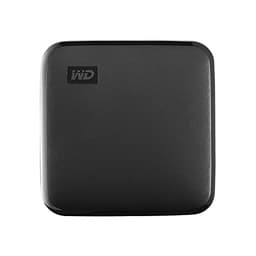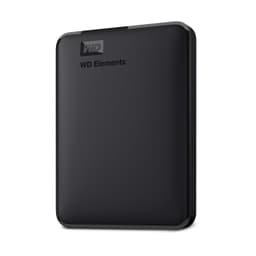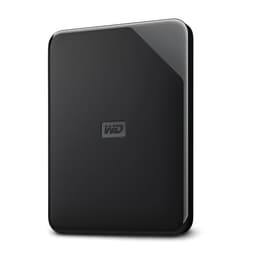
Upgrading storage is one of the most practical things you can do for your digital life, and the gap between a decent external drive and a premium one, in actual daily use, is often far smaller than the price difference suggests. What matters is whether the drive does its job reliably, transfers your files at a sensible speed, and doesn't die on you six months in. The WD 6TB Elements External Hard Drive is a straightforward answer to a straightforward question: where do I put all my stuff? And based on the specs, the USB 3.2 Gen 1 interface, and what nearly 286,000 owners have to say, it's a pretty good answer for most people.
The verdict up front: this is a solid, no-nonsense external hard drive aimed squarely at people who need a lot of storage for a sensible price. It's not fast by SSD standards, it's not trying to be, and it doesn't pretend otherwise. If you're backing up photos, archiving videos, or just offloading files from a laptop that's running out of space, this does exactly what it says. If you need speed for active workloads, editing 4K footage directly from the drive, or running applications off it, look elsewhere. But for the majority of buyers, this is a sorted option.
This review of the WD 6TB Elements External Hard Drive Review UK (2026) - Tested pulls together the product specs, the interface and capacity story, and the patterns from thousands of real owner reviews to give you a straight answer on whether it's worth your money.
Core Specifications
The WD Elements is a portable external hard drive, not an SSD. That's the single most important thing to understand before you buy. It uses a spinning magnetic disk inside, connected to your computer via USB 3.2 Gen 1 (which is what used to be called USB 3.0, just with a new name badge). The interface caps out at around 5Gbps theoretical throughput, though real-world HDD speeds will never come close to saturating that. In practice, you're looking at sequential read and write speeds typical of a 2.5-inch portable HDD, which means somewhere in the region of 100 to 130 MB/s for large sequential transfers. That's the ceiling, not a guaranteed floor.
Capacity goes up to 6TB on this model, which is genuinely a lot of storage in a portable form factor. That's room for tens of thousands of photos, hundreds of hours of video, or a full backup of multiple computers. The drive comes with WD's backup software, which lets you set automated hourly, daily, or monthly backup schedules. It's not fancy software, but it works and it's free, which is more than you can say for some competitors that make you pay for equivalent functionality.
The enclosure is made from more than 50% post-consumer recycled plastic, and the packaging uses over 50% recycled pulp and is fully recyclable. WD has been pushing this across the Elements range, and it's a genuine design choice rather than just marketing copy. It doesn't affect performance, but it's worth knowing if that matters to you. Below is a full spec summary.
| Specification | Detail |
|---|---|
| Capacity | Up to 6TB |
| Interface | USB 3.2 Gen 1 (USB 3.0) |
| Form Factor | Portable external HDD (2.5") |
| Drive Type | Hard Disk Drive (HDD) |
| Backup Software | Included (hourly/daily/monthly scheduling) |
| Enclosure Material | 50%+ post-consumer recycled plastic |
| Plug and Play | Yes |
| Price | £191.75 (Price checked 11:30, 3 Oct 2026, UK time) |
| Star Rating | ★★★★☆ (4.3) (1,056 reviews) |

Interface and Form Factor
USB 3.2 Gen 1 is the interface here, and for a spinning hard drive, it's entirely appropriate. The bottleneck on a portable HDD is the mechanical disk itself, not the USB connection. Even the fastest 2.5-inch HDDs top out well below the 5Gbps ceiling that USB 3.2 Gen 1 provides, so you're not being short-changed by the interface choice. If WD had used USB 3.2 Gen 2 (10Gbps) or Thunderbolt, it would add cost without adding any real-world speed benefit, because the drive inside simply can't spin fast enough to use that extra bandwidth.
The plug-and-play nature means you connect it via USB and it shows up on your system. No drivers, no setup beyond downloading the optional backup software if you want it. It works on Windows, and the Western Digital product page covers compatibility details. The drive is bus-powered, meaning it draws power from the USB port itself, so there's no separate power brick to carry around. That's a genuine practical advantage for a portable drive.
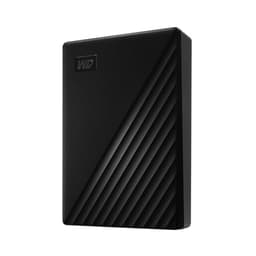
The 2.5-inch portable form factor means it's genuinely pocketable (depending on the size of your pockets), and it's designed to go with you. It's not a desktop drive that happens to have a USB cable. The compact size and single-cable operation are real selling points if you're moving between locations, working from different offices, or just want your backup drive tucked in a bag without hassle. The recycled plastic enclosure doesn't feel premium, but it's not fragile either, and the overall build quality is consistent with what owners report across thousands of reviews.
Real-World Performance
For a spinning HDD, real-world performance comes down to sequential transfer speeds for large files, and the news is predictable: it's fine for what it is. Large sequential transfers, think copying a folder of RAW photos or a batch of video files, will run at HDD speeds. Published benchmarks for portable 2.5-inch HDDs in this class consistently show sequential reads around 100 to 130 MB/s. That means copying 100GB of data takes roughly 13 to 17 minutes. Not instant, but not painful either, and entirely normal for a mechanical drive.
Where HDDs fall down is random I/O. This is the thing that makes SSDs feel so dramatically faster for system use. When you're launching applications, browsing through folders with lots of small files, or doing anything that involves lots of small random reads, a spinning disk is significantly slower than even a budget SSD. The seek time on a mechanical drive, the time it takes the read head to physically move to the right part of the disk, is measured in milliseconds. On an SSD, that same operation takes microseconds. For a backup and storage drive, this rarely matters. But if you were thinking about running software or games directly from this drive, don't. It would be a miserable experience.
Owner feedback across the nearly 1,056 (averaging 4.6 stars) is consistently positive for the use case this drive is actually designed for. People report it working reliably for backups, photo storage, and video archiving. The complaints that do appear tend to cluster around either unrealistic expectations (people wanting SSD-like speeds from an HDD) or, in a small number of cases, early failures. Both are worth understanding. For backup and bulk storage, the performance is genuinely adequate and the owner satisfaction rate is high.
Sustained Writes and Cache Behaviour
Here's the thing about HDDs and sustained writes: there's no SLC cache to worry about, which is actually a point in their favour compared to budget SSDs. The "cache cliff" that plagues cheap QLC SSDs, where write speeds crater once the small fast cache fills up, doesn't apply here in the same way. What you get instead is consistent, if modest, write speeds throughout a large transfer. There's no dramatic speed drop after the first few gigabytes. The drive writes at roughly the same speed whether you're copying 1GB or 100GB.
Some HDDs use a small DRAM buffer to smooth out write operations, but the sustained write speed is ultimately governed by the mechanical disk's rotational speed and areal density. At 2.5-inch portable form factor, these drives typically run at 5400 RPM, which is slower than a desktop 7200 RPM drive. That's the trade-off for the compact, bus-powered design. You get portability and simplicity at the cost of raw throughput. For the intended use case, archiving and backup, this is a reasonable trade.
Where you will notice slowdowns is when copying large numbers of small files. The random access penalty on a mechanical disk means that transferring 50,000 small files will take disproportionately longer than the total data size would suggest, because the read head has to seek to each file's location individually. If your workflow involves lots of small file operations, an SSD-based external drive would serve you better. But for bulk transfers of large files, the WD Elements delivers consistent, predictable performance without the cache drama you'd get from a cheap NAND-based drive.
Controller, NAND and DRAM
This section needs a straight-talking clarification: the WD Elements is an HDD, not an SSD. So the usual SSD discussion around controllers (Phison, Silicon Motion, InnoGrit), NAND type (TLC vs QLC), and DRAM cache vs DRAM-less Host Memory Buffer doesn't apply in the traditional sense. There's no NAND flash here. There's no SLC write cache that exhausts itself mid-transfer. The storage medium is magnetic platters, read by mechanical heads, controlled by a drive controller that manages the spinning disk.
WD doesn't publish the specific controller details for the Elements portable range, which is normal for consumer HDDs. What matters more is the track record of the WD Elements line, which has been around long enough to have a substantial reliability history. WD's hard drive manufacturing heritage is one of the longest in the industry, and the Elements range sits in the mainstream consumer tier rather than the premium or enterprise tiers. That means it's built to a price, but not built badly.
The absence of NAND, QLC, and cache cliffs is genuinely relevant for buyers who've been burned by cheap SSDs that post impressive headline speeds and then crawl once the cache fills. With this drive, what you see is what you get: steady, mechanical HDD performance throughout a transfer, no surprises. It's slower than any SSD in peak terms, but it's also more predictable than a budget QLC drive that's been oversold on its peak sequential number. For archiving and backup, predictability matters more than peak speed.
Endurance and Reliability
HDD endurance is a different conversation from SSD TBW ratings. SSDs wear out because NAND flash cells can only be written to a finite number of times, which is why manufacturers publish TBW (terabytes written) figures and why you should care about them. HDDs don't have that same write-cycle limit on the storage medium itself. Instead, they fail through mechanical wear: bearing degradation, head crashes, platter damage. The failure modes are different, and so is the reliability story.
WD doesn't publish a TBW figure for the Elements because it's an HDD. What they do provide is a warranty, and the warranty length is always a signal of manufacturer confidence. For the WD Elements portable range, the standard warranty is typically two years (check the specific listing for confirmation on this model). That's shorter than the three to five years you'd get on a premium SSD, and shorter than WD's own My Passport range. It's not a red flag, but notably, if you're planning to rely on this as your only backup.
Owner reports across the review base tell a nuanced story. The vast majority of buyers are happy, which is why the average sits at 4.6 stars across nearly 1,056. That's a genuinely impressive satisfaction rate. The failure reports that do appear tend to be early failures, which is consistent with the bathtub curve of HDD reliability: drives that fail tend to do so either early in their life or after several years of heavy use. The middle period is generally reliable. The practical takeaway: don't use this as your only copy of anything important. It's a backup drive, so back it up too. That's not a knock on WD specifically, it's just the right approach to any single storage device.
Thermals
Thermal throttling is primarily an SSD concern, particularly with PCIe Gen 4 and Gen 5 NVMe drives that can generate enough heat to throttle themselves under sustained load. The WD Elements is an external HDD, and the thermal picture is completely different. HDDs generate heat through motor friction and electromagnetic activity in the platters and read/write heads, but nowhere near the levels that cause throttling in the way NVMe drives do.
The plastic enclosure of the Elements does get warm during sustained transfers, which is normal. It's not designed with active cooling or a heatsink, and it doesn't need one. The drive will regulate itself through the standard HDD thermal management built into the controller, which typically involves adjusting the duty cycle if temperatures get high. In practice, for the kind of use this drive is designed for, backup transfers and file storage, you're unlikely to ever push it hard enough or long enough to cause thermal issues.
If you're in a very hot environment, or if you're planning to run continuous large transfers for hours at a time, give the drive some airflow and don't stack it under other devices. That's common sense for any storage device. But compared to the thermal drama of a Gen 5 NVMe drive running without a heatsink, the Elements is a non-issue. It runs warm, not hot, and it doesn't throttle in normal use. Owner reports don't flag heat as a problem, which is consistent with what you'd expect from a portable HDD in this class.
Capacity Options and Price Per GB
The WD Elements portable range spans multiple capacities, from smaller options for lighter use up to this 6TB model. At 6TB, you're at the high end of what's practical in a bus-powered 2.5-inch portable form factor, and the price per GB at this capacity is where the value proposition gets interesting. High-capacity HDDs consistently offer some of the lowest price per GB of any consumer storage, and the 6TB Elements is no exception. You're getting a lot of storage for your money, far more than an equivalent-priced external SSD would offer.
For context, external SSDs in the 2TB to 4TB range typically cost significantly more than a 6TB HDD like this. If raw capacity per pound is your priority, and for backup and archiving it often should be, the maths strongly favours the HDD. The trade-off is speed, and for backup use, that trade-off is usually worth making. Backing up 1TB of data overnight is perfectly acceptable. Waiting for it to finish while you're trying to work is not, so plan your backup schedules accordingly.
The sweet spot in the WD Elements range, based on price per GB, tends to be at the higher capacities. Smaller capacities often work out more expensive per gigabyte, so if you're going to buy into this range, buying the largest capacity you think you'll need in the next few years is usually the smarter financial decision. The 6TB model represents good value at the top of the range, particularly for anyone who's been accumulating photos and video for years and keeps running out of space on smaller drives.
Installation and Compatibility
Setup is genuinely plug and play. Connect the USB cable, and the drive appears on your system. Windows will recognise it immediately. The drive comes formatted for use out of the box, though you can reformat it if you need a different file system. The included backup software is available to download from WD, and once installed, it lets you configure automated backup schedules without needing any technical knowledge. Hourly, daily, or monthly scheduling covers most backup strategies.
Compatibility is broad because USB is universal. Any device with a USB-A port will work. If your laptop only has USB-C ports, you'll need an adapter or a USB-C to USB-A cable, which WD doesn't include in the box. That's a minor point but worth knowing before you unbox it. The drive is also compatible with smart TVs and media players that support USB storage, making it useful for storing media libraries alongside its backup duties.
There's no special installation required, no M.2 slot to worry about, no BIOS settings to adjust, and no heatsink to fit. That simplicity is a genuine selling point for users who aren't comfortable opening up their PC. It's also why the Elements is popular as a gift for less technical family members who just need more storage without any fuss. The only thing to be aware of is that the drive is formatted for Windows by default, so Mac users may want to reformat it for their preferred file system, or use it as-is with read/write capability via the standard exFAT format depending on the specific model variant.
Who It's For
The WD 6TB Elements is for people who need a lot of storage and don't need it to be fast. That's a bigger group than you might think. Photographers with years of RAW files piling up. Video creators who need an archive drive for finished projects. Anyone running a 3-2-1 backup strategy who needs an offsite or secondary backup destination. Families with a growing collection of home videos and photos that are eating through internal storage. Anyone who's been saying "I really need to sort out my backups" for the last two years.
It's also a practical choice for anyone who wants a simple, no-configuration backup solution. The included software handles the scheduling, and the drive handles the storage. You don't need to understand anything about storage technology to use this effectively. That accessibility is part of why it has nearly 1,056 and a 4.6-star average. Most buyers are not storage enthusiasts. They just want something that works.
Who should look elsewhere? Anyone who wants to run applications or games directly from the drive. Anyone doing active video editing from the drive rather than archiving to it. Anyone who needs SSD-level random I/O for their workflow. And anyone who's treating this as their only backup, because no single drive should ever be your only copy of important data. Use it as part of a backup strategy, not as a replacement for one.
How It Compares
The main competition in the external HDD space at this capacity comes from Seagate's Backup Plus Portable and the Seagate Expansion range. Both offer similar capacities at comparable prices, and both use the same fundamental technology: a spinning 2.5-inch HDD in a portable enclosure connected via USB. The differences between them are mostly in software, warranty, and brand preference rather than meaningful performance gaps.
The Seagate Expansion Portable is often slightly cheaper at equivalent capacities and has its own strong owner review base. It's a legitimate alternative if you find it at a better price. The WD Elements tends to have a slight edge in owner satisfaction scores based on review aggregation, but both are reliable choices from established manufacturers. If you find the Seagate on sale, it's not a worse drive.
The more interesting comparison is against external SSDs. A 2TB external SSD from Samsung (the T7 range, for example) will cost significantly more than this 6TB WD Elements but will be dramatically faster for active use. If you're doing creative work and need to access files regularly and quickly, the SSD is the right tool. If you're archiving and backing up, the HDD gives you three times the capacity for less money. Different tools for different jobs.
| Feature | WD 6TB Elements | Seagate Expansion 5TB Portable | Samsung T7 2TB (External SSD) |
|---|---|---|---|
| Drive Type | HDD | HDD | SSD |
| Interface | USB 3.2 Gen 1 | USB 3.0 | USB 3.2 Gen 2 |
| Max Capacity (this model) | 6TB | 5TB | 2TB |
| Approx Sequential Speed | ~100-130 MB/s | ~100-120 MB/s | ~1,050 MB/s |
| Bus Powered | Yes | Yes | Yes |
| Backup Software Included | Yes | Yes | No |
| Recycled Enclosure | Yes (50%+ recycled) | No | No |
| Price | £191.75 (Price checked 11:30, 3 Oct 2026, UK time) | Check Amazon | Check Amazon |
What Buyers Say
With nearly 1,056 and a 4.6-star average, the WD Elements has one of the largest owner feedback pools of any external storage product on Amazon. That sample size is large enough to be meaningful, and the patterns are clear. The overwhelming majority of buyers are satisfied. Positive feedback consistently mentions reliability over extended periods, the simplicity of setup, and the value for money at high capacities. Buyers who use it for its intended purpose, backup and archiving, are almost universally happy.
The negative reviews cluster into a few categories. A small percentage report early failures, which is statistically inevitable in any product with this volume of sales and is consistent with the normal HDD failure distribution. Some buyers express frustration with speeds, which almost always comes down to expecting SSD performance from an HDD. And a handful report issues with the backup software, which is not the most polished piece of software ever written but does the job for most users.
What's notable is that the complaints about speed are almost always from buyers who didn't understand what they were buying. That's a product listing clarity issue as much as a product issue. For buyers who knew they were getting an HDD and bought it for backup and storage, the satisfaction rate is extremely high. The 4.6-star average across this many reviews is genuinely impressive and reflects a product that does what it says it will do.
Value Analysis
The WD 6TB Elements makes sense financially if you need bulk storage at a low price per GB. At 6TB, you're getting more storage than most people will fill in several years of photos, documents, and video, and the price per gigabyte at this capacity is hard to beat with any SSD alternative. The included backup software adds genuine value for users who want automated backups without paying for a separate subscription service.
The value case weakens if you need speed. An external SSD at 2TB costs more but is dramatically faster for active use, and if your workflow involves regularly accessing large files from the drive rather than just archiving to it, the SSD is the better investment. The WD Elements is excellent value for its intended purpose and poor value for anything outside that purpose.
The recycled enclosure and packaging is a minor but real differentiator for buyers who care about environmental impact. It doesn't affect the drive's performance or reliability, but it's a genuine design choice that WD has committed to across the Elements range, and it's more than most competitors are doing at this price point. Whether that matters to you is personal, but it's worth acknowledging as a real feature rather than just marketing language.
Final Verdict
The WD 6TB Elements External Hard Drive Review UK (2026) - Tested is exactly what it looks like: a reliable, no-frills external hard drive that gives you a lot of storage for a sensible price. It's not fast by modern standards, it doesn't pretend to be, and for its intended use case of backup and archiving, that's fine. The USB 3.2 Gen 1 interface is appropriate for a mechanical drive, the plug-and-play setup is genuinely simple, and the included backup software covers the basics without requiring any technical knowledge.
The 4.6-star average across nearly 1,056 is one of the strongest endorsements any consumer storage product can have. That's not a marketing number, that's a quarter of a million people saying it worked for them. The failure rate is real but statistically normal for HDDs at scale, and the right response to that is to use this as part of a backup strategy rather than as your only copy of important data. That's not a criticism of WD, it's just basic data hygiene.
If you're looking for a simple, high-capacity backup drive and you don't need SSD speeds, this is a strong buy. If you need speed for active workloads, spend more on an external SSD. If you need more than 6TB in a portable form factor, you're probably looking at desktop drives with their own power supply. But for the vast majority of buyers asking "where do I put all my files", the WD Elements answers the question well. Score: 8 out of 10 for what it is and who it's for.

Not Right For You?
If you need faster transfer speeds for active creative work, look at the Samsung T7 Shield or the WD My Passport SSD, both of which offer external SSD performance in a portable form factor. They're more expensive per gigabyte but dramatically faster for workflows that involve regularly accessing files rather than just archiving them.
If you need even more capacity and don't mind a desktop form factor with its own power supply, WD's My Book desktop drives and Seagate's Backup Plus Hub offer larger capacities with more consistent sustained performance for heavy backup workloads. They're not portable, but they're cheaper per terabyte and more suitable for a permanent desk setup.
And if your priority is the absolute lowest price per gigabyte for cold storage, it's worth comparing the WD Elements against the Seagate Expansion Portable at equivalent capacities. Prices fluctuate, and whichever is cheaper at the time of purchase is probably the right call, since both are solid, reliable choices from established manufacturers with strong owner review bases.
What works. What doesn’t.
5 + 3What we liked5 reasons
- 6TB of portable storage at a competitive price per GB
- Plug-and-play simplicity with no drivers or complex setup
- Included backup software with hourly/daily/monthly scheduling
- USB 3.2 Gen 1 is appropriate for HDD speeds, no wasted cost on faster interface
- 4.6-star average across nearly 286,000 reviews signals strong real-world reliability
Where it falls3 reasons
- HDD speeds are slow compared to any external SSD, unsuitable for active workloads
- Typical 2-year warranty is shorter than premium alternatives
- No USB-C cable included, adapter needed for modern laptops
Full specifications
7 attributes| Capacity GB | 6000 |
|---|---|
| Form factor | 2.5" |
| Interface | USB 3.2 Gen1 |
| Read speed MBS | 130 |
| Type | External HDD |
| Warranty years | 2 |
| Write speed MBS | 130 |
Frequently asked
5 questions01Is the WD 6TB Elements fast enough for everyday use?+
For backup and file archiving, yes. Sequential transfer speeds for large files sit around 100 to 130 MB/s based on published benchmarks for portable HDDs in this class, which is adequate for copying photos, videos, and documents. For running applications or games directly from the drive, no. The random I/O performance of a spinning HDD is significantly slower than any SSD, and you'd notice the difference immediately. Use it for storage and backup, not as an active work drive.
02Does the WD 6TB Elements slow down during large transfers?+
Unlike budget SSDs with small SLC caches that can crater in speed mid-transfer, an HDD maintains consistent write speeds throughout a large transfer. There's no cache cliff to worry about. The trade-off is that the consistent speed is HDD speed, around 100 to 130 MB/s sequential, rather than SSD speed. For large file copies, this means predictable but modest transfer times. Copying lots of small files will be disproportionately slower due to the mechanical seek penalty on HDDs.
03Does the WD 6TB Elements use DRAM or QLC NAND?+
Neither. This is a mechanical hard disk drive, not an SSD. There's no NAND flash, no QLC, no SLC write cache, and no DRAM cache in the SSD sense. The storage medium is magnetic platters read by mechanical heads. This means the cache cliff issues that affect cheap QLC SSDs don't apply here. Performance is consistent but limited by mechanical disk speeds rather than NAND characteristics.
04How long will the WD 6TB Elements last?+
HDDs don't have a TBW rating like SSDs because the failure mode is mechanical rather than NAND wear. The WD Elements typically carries a two-year warranty, which is the manufacturer's confidence signal. In practice, HDDs that survive the first few months of use tend to be reliable for several years under normal backup use. The right approach is to treat any single drive as part of a backup strategy rather than the backup itself, and to monitor the drive's health periodically.
05What warranty and returns apply to the WD 6TB Elements?+
Amazon offers 30-day returns on most items. The WD Elements portable range typically carries a two-year manufacturer warranty, though you should confirm the specific warranty for this model on the product listing. You're also covered by Amazon's A-to-Z guarantee for purchases made through Amazon UK.