Building your own PC used to be the obvious move if you cared about what went inside the box. Pick your parts, check the compatibility, wait for the delivery pile to arrive, and spend a Saturday afternoon with a screwdriver and a YouTube tutorial. Satisfying? Sometimes. Guaranteed to save money? Not as often as it used to be. Prebuilt PCs have quietly closed the price gap, and at the entry gaming tier, the maths sometimes favours just buying the finished thing. The Stormforce Rogue Elite AMD sits right at that crossroads.
The Rogue Elite AMD pairs an AMD Ryzen 5 8500G with 16GB of DDR5 6000 memory, a 1TB NVMe SSD, and the Radeon 700M integrated graphics baked into the chip itself. No discrete GPU. That is the thing you need to sit with before reading another word. This is a capable everyday machine and a light gaming rig, but it is not a machine you buy if you want to play the latest AAA titles at high settings. If you understand that going in, the Rogue Elite AMD is genuinely decent. If you don't, you'll be disappointed within the first week.
So: is it any good? For the right buyer, yes. For the wrong buyer, it's a frustrating compromise. Let's work out which one you are.
Core Specifications
The Rogue Elite AMD is built on AMD's AM5 platform, using an A620 mATX motherboard. That is an entry-level chipset, and it does come with trade-offs around overclocking support (the A620 doesn't officially support CPU overclocking), but for a machine at this price tier it is a reasonable choice. The AM5 platform itself is AMD's current socket standard, which means you have a future upgrade path to more powerful Ryzen chips without swapping the motherboard, and that matters more than the A620's limitations for most buyers here.
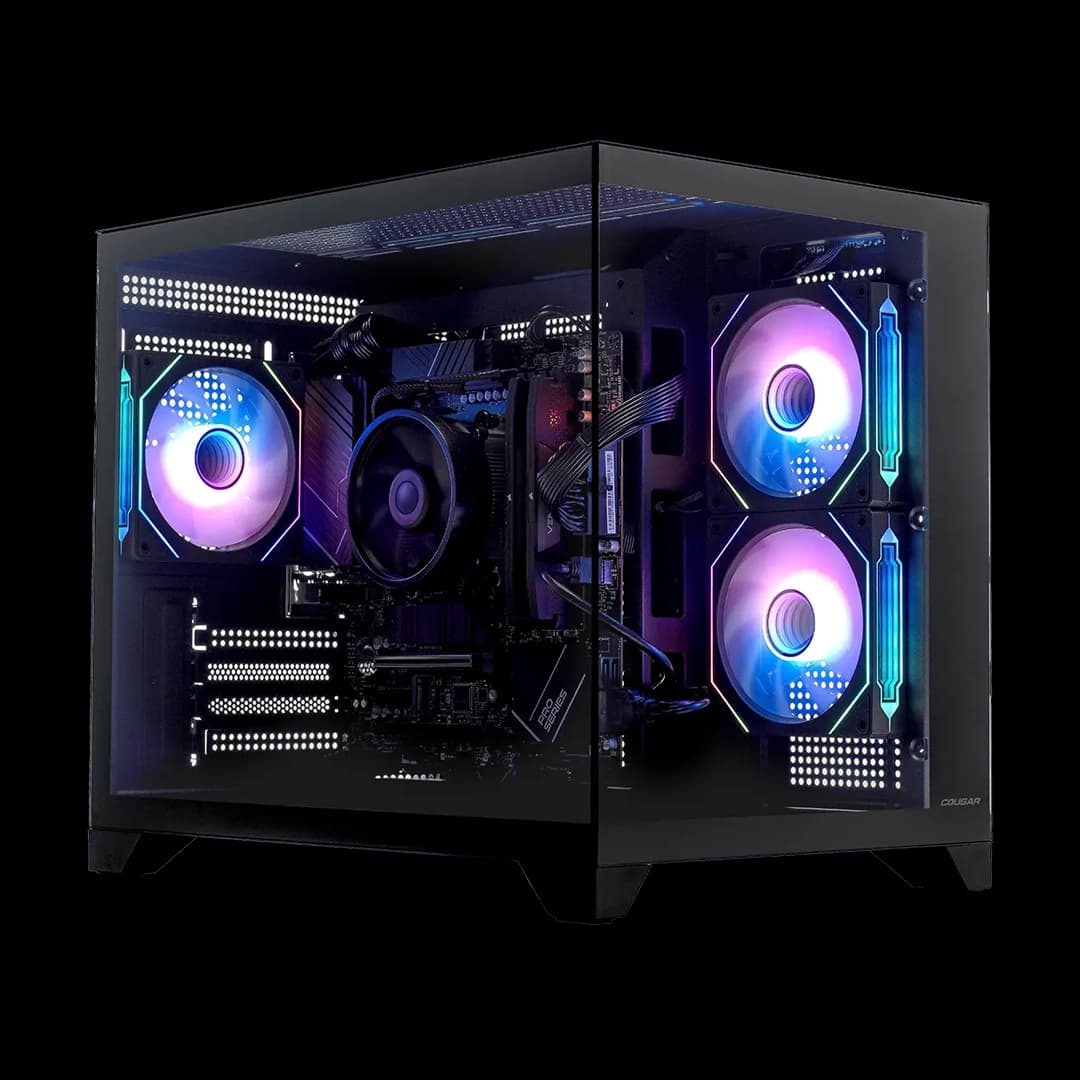
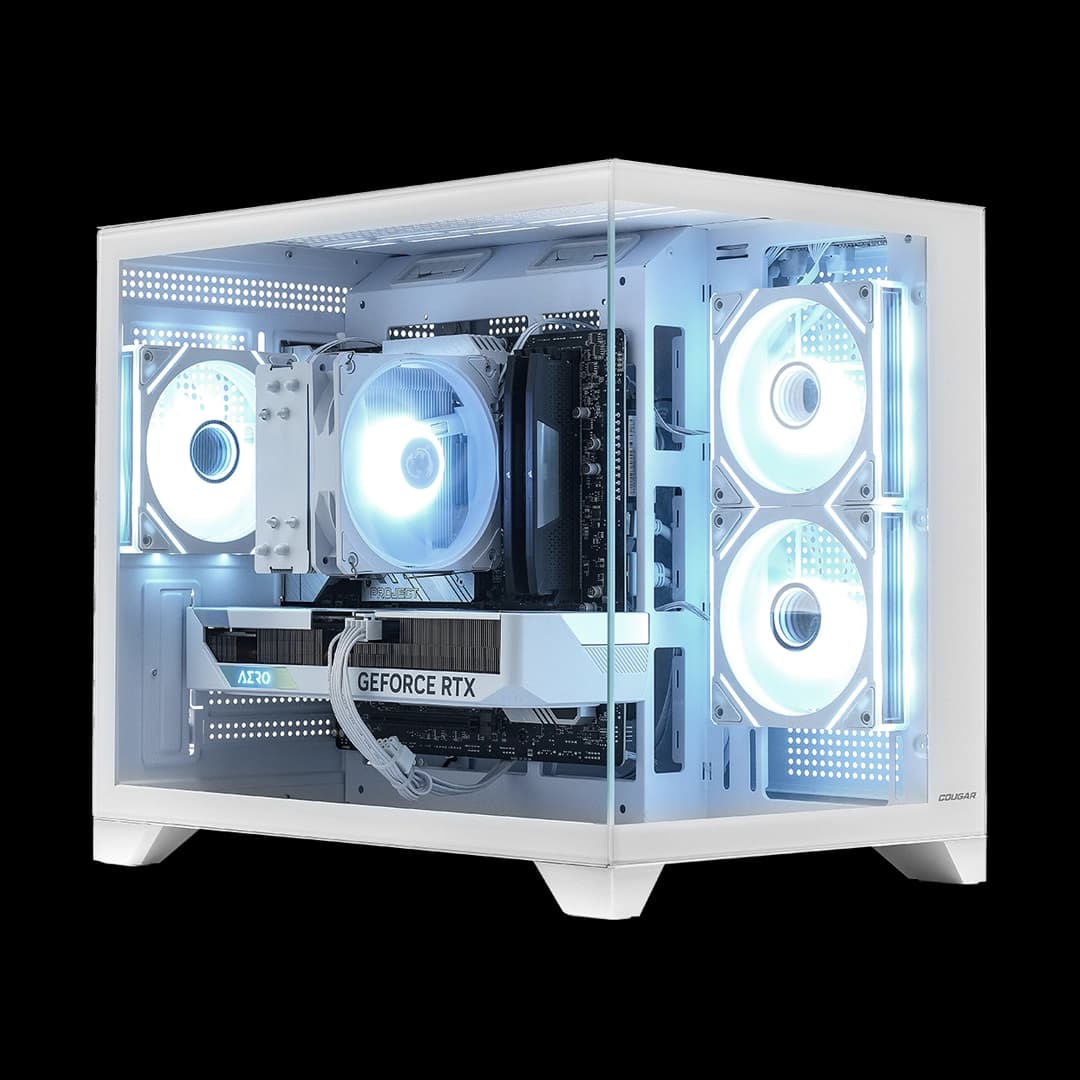
The case is a Cougar UniFace Mini RGB mATX chassis with a tempered glass side panel. Cougar makes decent mid-range cases, and the UniFace Mini is a compact, presentable box that won't embarrass itself on a desk. The RGB lighting is there for people who want it, and the tempered glass means you can actually see the internals without having to pop a panel. Power comes from a 350W Bronze-rated PSU. That rating is fine for this configuration, though it does limit your options if you later want to add a power-hungry discrete GPU.
Windows 11 Home is pre-installed, so you're ready to go from first boot without needing to source a licence separately. Networking covers WiFi 6 and Ethernet, both of which are covered in more detail in the connectivity section. Here's the full spec breakdown:
| Component | Specification |
|---|---|
| CPU | AMD Ryzen 5 8500G |
| GPU | Integrated Radeon 700M series |
| RAM | 16GB DDR5 6000 |
| Storage | 1TB M.2 NVMe SSD |
| Motherboard | A620 mATX (AM5 platform) |
| Case | Cougar UniFace Mini RGB mATX, tempered glass |
| Cooling | Optimised Air Cooling |
| PSU | 350W Bronze |
| Networking | WiFi 6, Ethernet |
| Operating System | Microsoft Windows 11 Home |
| Price | £799.99 |

CPU and Performance
The Ryzen 5 8500G is a Zen 4 architecture chip, which is AMD's current mainstream CPU generation. Zen 4 brought meaningful improvements in instructions-per-clock over Zen 3, and the 8500G specifically is a six-core chip designed to balance everyday computing with the demands of integrated graphics. It handles productivity tasks, web browsing, video calls, light video editing, and general Windows use without breaking a sweat. For office work and home computing, it is genuinely more than enough.
Now, the Ryzen 7 questions. People ask whether a Ryzen 7 is overkill for gaming, whether it's outdated, and whether it can run GTA 6. The honest answer is that a Ryzen 7 is not overkill for gaming if you pair it with a good discrete GPU, but it's not in this machine, so it's a moot point here. The Ryzen 5 8500G handles the CPU side of gaming well enough. Modern games are rarely bottlenecked by a six-core Zen 4 chip. The bottleneck on this machine is the integrated graphics, not the processor. As for Ryzen 7 being outdated, Zen 4 is current, not outdated. Any Zen 4 Ryzen 7 is a capable chip in 2024 and beyond.
For the Rogue Elite AMD specifically, the Ryzen 5 8500G is a sensible choice. It keeps costs down while delivering a processor that won't be a weak link in productivity scenarios. If you're running spreadsheets, streaming video, doing light photo work, or coding, this chip handles all of it without complaint. Multi-threaded workloads like video encoding will be slower than a Ryzen 7 or Ryzen 9, but for the target buyer of this machine, that's unlikely to be a daily concern. The CPU is not the compromise here. The GPU is.
GPU and Gaming Performance
The Radeon 700M series integrated graphics is what the Ryzen 5 8500G brings to the table, and it is genuinely the most important thing to understand about this machine. Integrated graphics have improved dramatically over the past few years. AMD's RDNA 3-based iGPU in the 8500G is a real step forward from the Vega-based integrated graphics that came before it, and it can handle light gaming in a way that older integrated solutions simply couldn't. Esports titles like Fortnite, Valorant, Rocket League, and older games run at playable frame rates at 1080p with settings adjusted. That's a genuine statement, not marketing spin.
But you need to be clear-eyed about what "playable" means here. You're not getting high settings at 1080p in demanding games. You're getting medium-to-low settings at 1080p in less demanding titles. AAA games like Cyberpunk 2077, Alan Wake 2, or anything with heavy ray tracing will either run poorly or not run at all at acceptable frame rates. The integrated GPU shares system memory rather than having its own dedicated VRAM, which limits what it can do in memory-hungry modern titles. If your gaming diet is Counter-Strike 2, League of Legends, or Minecraft, this machine works. If you want to play Elden Ring or the next big open-world release at anything resembling good settings, you'll struggle.
People are already asking whether GTA 6 will need 32GB of RAM and whether this machine could handle it. Based on what Rockstar has indicated about GTA 6's likely system requirements, 16GB of RAM should be the baseline, and 32GB may well be recommended for smoother performance. More pressingly, GTA 6 will almost certainly require a discrete GPU with dedicated VRAM to run at playable settings. The Radeon 700M will not be the right tool for GTA 6 at launch. If GTA 6 is your primary motivation for buying a gaming PC right now, you need a machine with a discrete GPU, not this one. The Rogue Elite AMD is a light gaming and productivity machine. Own that, and it's a solid buy. Pretend otherwise, and you'll be disappointed.
Memory and Storage
Sixteen gigabytes of DDR5 at 6000MHz is a genuinely good memory specification at this price tier. DDR5 6000 is considered the sweet spot for AMD Ryzen 8000 series processors, sitting at a frequency where the memory controller runs efficiently and the performance-per-pound is at its best. Some prebuilts at similar prices still ship with DDR4 or slower DDR5, so getting 6000MHz here is a proper win. For integrated graphics specifically, fast memory matters even more than usual, because the iGPU pulls its framebuffer from system RAM. Faster RAM means better integrated graphics performance, and Stormforce has got that right.
The 1TB M.2 NVMe SSD is another solid choice. NVMe storage loads Windows, applications, and games significantly faster than a traditional SATA SSD, and a terabyte gives you enough room for the operating system, a handful of installed games, and your working files without immediately running out of space. The spec sheet lists this as an M.2 NVMe SSD without specifying the exact drive model or generation, which is fairly typical for prebuilts at this tier. What you can say with confidence is that any M.2 NVMe drive will be meaningfully faster than a SATA SSD for everyday use.
A terabyte fills up faster than you'd think once you start installing modern games, some of which clock in at 80GB to 150GB each. The good news is that M.2 NVMe drives are easy to add if you have a free slot on the motherboard, and external USB storage remains an option for less frequently played titles. For most users starting out, 1TB is perfectly workable. Power users who want to keep a large library installed simultaneously will want to plan for expansion early.
Cooling Solution
The spec sheet describes the cooling as "Optimised Air Cooling," which is Stormforce's way of saying the machine ships with an air cooler rather than an AIO liquid cooler. For the Ryzen 5 8500G, that is absolutely the right call. The 8500G has a 65W TDP under AMD's specification, and a decent air cooler handles that without drama. You don't need a 240mm AIO for a chip at this thermal envelope, and fitting one would add cost without adding meaningful benefit in everyday use.
The Cougar UniFace Mini mATX case is a compact chassis, and airflow in smaller cases always deserves scrutiny. Cougar's design on the UniFace Mini uses a mesh-style front panel approach, which generally aids intake airflow compared to solid-panel designs. The Ryzen 5 8500G is not a chip that runs particularly hot under typical loads, so the combination of an adequate air cooler and a case with reasonable airflow should keep temperatures in check for productivity and light gaming use. Extended gaming sessions in a warm room are where compact cases can start to show thermal strain, but the 8500G's modest power draw gives the cooling system a decent margin to work with.
Noise is harder to assess without having the machine in front of you, but the 8500G's thermal characteristics suggest the cooler shouldn't need to spin hard under everyday workloads. Light gaming and productivity tasks should be quiet. Push the CPU harder with sustained workloads and the fan will naturally ramp up, as it does in any air-cooled system. The 350W Bronze PSU will also have its own fan, though at the power draw this configuration demands, the PSU fan may not spin at all under light loads depending on the unit's fan curve design.
Case and Build Quality
The Cougar UniFace Mini RGB mATX case is a recognisable chassis in the prebuilt and DIY market. Cougar sits in the mid-range of case manufacturers, producing enclosures that are decent without being exceptional. The UniFace Mini's tempered glass side panel is a genuine feature rather than a gimmick, giving you a clear view of the internals and the RGB lighting without the distortion you get from cheaper acrylic panels. Tempered glass also holds up better over time, less prone to scratching and yellowing than acrylic alternatives.
The mATX form factor keeps the footprint compact, which is useful if desk space is limited. mATX cases do constrain cable management more than full-ATX enclosures, and the internal space for routing cables neatly is tighter. Stormforce builds these machines professionally, so the cable management should be presentable out of the box, but if you later open the case to add components, you may find it tighter to work in than a larger chassis. That's a general mATX trade-off rather than a Stormforce-specific criticism.
The RGB lighting in the UniFace Mini adds visual appeal without being the primary selling point of the build. It's there, it looks decent through the glass panel, and whether you care about it is entirely personal. What matters more from a build quality perspective is that the components are properly seated, the cooler is mounted correctly, and the thermal paste application is adequate. Stormforce is an established UK prebuilt builder with a track record, and their assembly quality is generally consistent. This isn't a white-label machine assembled in a warehouse by the lowest bidder.

Connectivity and Ports
The Rogue Elite AMD ships with WiFi 6 and Ethernet. WiFi 6 is the current mainstream wireless standard, offering improved throughput and better performance in congested wireless environments compared to WiFi 5. For a desktop machine, Ethernet is always the preferred choice for gaming and anything latency-sensitive, but having WiFi 6 on board means you're not forced to run a cable if your setup doesn't allow for it. The combination of both is the right call for a machine at this price.
The spec sheet doesn't detail the specific front and rear USB port count or the video output configuration, so those specifics aren't something that can be confirmed here. What can be said is that the A620 mATX motherboard platform and the Ryzen 5 8500G's integrated graphics will determine the available video outputs, and the Radeon 700M supports modern display connectivity. For exact port counts and video output types, Stormforce's product page is the place to check before buying, particularly if you're planning a multi-monitor setup or have specific peripheral requirements.
WiFi 6 over the 802.11ax standard is a meaningful upgrade over older wireless implementations. It supports speeds that comfortably handle 4K streaming, large file downloads, and online gaming simultaneously without the bottleneck that older WiFi standards can introduce. For a home setup where the router is in another room, WiFi 6 is a practical solution that doesn't meaningfully compromise your online gaming or streaming experience compared to a wired connection in most real-world home environments. Ethernet remains available for those who want the absolute lowest latency.
Pre-installed Software and OS
Windows 11 Home comes pre-installed and activated, which removes one of the minor headaches of building your own PC. A Windows 11 Home licence from Microsoft directly costs around £120 on its own, so having it included in the machine's price is genuine value rather than a throwaway inclusion. Windows 11 Home is the right tier for most home users. The Pro edition adds features around BitLocker encryption, Remote Desktop hosting, and domain joining that the vast majority of home buyers will never use.
Stormforce doesn't publicise a heavy bloatware load on their machines, which is a positive. Some prebuilt manufacturers stuff their machines with trial software, antivirus subscriptions, and promotional apps that slow down first boot and require a cleanup session before the machine feels like yours. The cleaner the Windows installation, the better the out-of-box experience, and Stormforce's reputation in the UK prebuilt market suggests their builds don't arrive in a state that needs immediate degunking. That said, it's always sensible to check what's running in Task Manager on first boot and remove anything you don't recognise or need.
Windows 11 itself has divided opinion since its launch, but at this point it's a mature operating system with regular updates and broad software compatibility. DirectX 12 support, Auto HDR, and DirectStorage are all Windows 11 features that are increasingly relevant for gaming, and the Ryzen 5 8500G's platform supports these properly. The operating system is not a weak point in this build. One practical note: Windows 11 Home does require a Microsoft account for initial setup unless you navigate around it during the installation process, which some users find irritating. That's a Microsoft policy, not a Stormforce one.
Upgrade Potential
The AM5 platform is AMD's current socket standard, and AMD has committed to AM5 support through at least 2027. That means the motherboard in this machine can accept future Ryzen processors as they release, giving you a genuine CPU upgrade path without replacing the entire system. Dropping a Ryzen 7 or Ryzen 9 into the same board down the line is a realistic option, though the A620 chipset's limitations around overclocking mean you won't get the full performance ceiling from higher-end chips. Still, a CPU upgrade on this platform is a real possibility rather than a theoretical one.
The most impactful upgrade for this machine is adding a discrete GPU. The 350W Bronze PSU is the limiting factor here. A modest discrete GPU like an AMD RX 7600 or an Nvidia RTX 4060 would transform this machine's gaming capability, but both of those cards have power requirements that push against what a 350W PSU can safely deliver alongside the rest of the system. Realistically, adding a discrete GPU means also replacing the PSU with a 550W or 650W unit, which adds to the upgrade cost. It's doable, but factor that into your planning if GPU expansion is on your roadmap.
Memory is already at a solid 16GB of DDR5 6000, which is fine for most use cases today. If you find yourself running memory-intensive workloads, the A620 platform supports additional RAM in the available slots, though you'd want to check the specific motherboard's slot count and maximum supported capacity before purchasing additional sticks. Storage expansion via additional M.2 NVMe drives is the easiest and most immediately useful upgrade for most users, as that 1TB fills up. The compact mATX chassis and the platform's upgrade paths make this a machine with a reasonable future rather than a dead end.
How It Compares
The honest comparison for the Rogue Elite AMD is against building the equivalent system yourself. An AMD Ryzen 5 8500G, 16GB DDR5 6000, 1TB NVMe SSD, A620 mATX motherboard, a decent mATX case with tempered glass, a 350W Bronze PSU, and a Windows 11 Home licence adds up to a component cost that, at current UK retail prices, sits close to or above what Stormforce is charging for the assembled machine. The prebuilt premium has shrunk significantly at this tier, and when you factor in the time cost of sourcing parts, assembling, troubleshooting, and activating Windows, the Rogue Elite AMD represents fair value for buyers who don't want the DIY process.
Against other prebuilts at a similar entry gaming price, the Rogue Elite AMD's main differentiator is the DDR5 6000 memory specification, which is genuinely above average for this tier. Some competing prebuilts at similar prices ship with slower DDR5 or even DDR4, which matters particularly for integrated graphics performance. The AM5 platform's upgrade longevity is another point in its favour versus machines built on older Intel or AMD platforms with limited forward compatibility.
The honest caveat is that any prebuilt at this tier without a discrete GPU is competing in a narrow market. Buyers who can stretch their budget should seriously consider machines that include even a modest discrete GPU, because the jump in gaming capability is dramatic. The Rogue Elite AMD is not trying to be a serious gaming machine. It's a capable everyday PC with light gaming ability, and at that, it competes well.
| Feature | Rogue Elite AMD | Equivalent DIY Build | Entry Prebuilt with Discrete GPU |
|---|---|---|---|
| CPU | Ryzen 5 8500G (Zen 4) | Ryzen 5 8500G (Zen 4) | Ryzen 5 or Core i5 equivalent |
| GPU | Integrated Radeon 700M | Integrated (no discrete added) | Discrete GPU (e.g. RX 7600 class) |
| RAM | 16GB DDR5 6000 | 16GB DDR5 6000 | 16GB DDR4 or DDR5 (varies) |
| Storage | 1TB NVMe SSD | 1TB NVMe SSD | 512GB to 1TB NVMe SSD |
| Platform longevity | AM5 (supported to 2027+) | AM5 (supported to 2027+) | Varies by platform |
| Assembly required | None | Yes, full build | None |
| Gaming capability | Light / esports | Light / esports | Mainstream 1080p gaming |
| Price | £799.99 | Similar or higher (parts + Windows) | Higher (discrete GPU premium) |

Final Verdict
The Rogue Elite AMD is a machine that knows what it is, and the question is whether you know what you want. If you need a compact, well-specified everyday PC that can handle productivity, light gaming, and general home computing without costing a fortune or requiring you to build it yourself, this is a genuinely solid option. The Ryzen 5 8500G is a current, capable chip. The DDR5 6000 memory is better than you'd expect at this tier. The AM5 platform gives you a real upgrade path. And the Cougar UniFace Mini case is a presentable, compact chassis with a tempered glass panel that doesn't look cheap on a desk.
But. If gaming is your primary reason for buying this machine, and by gaming you mean anything beyond esports titles and older releases, you need to think carefully. The Radeon 700M integrated graphics is impressive for an iGPU, but it is still an iGPU. GTA 6 will need a discrete GPU. Modern AAA titles will need a discrete GPU. The 350W PSU limits how easily you can add one later without also upgrading the power supply. The Rogue Elite AMD is not a gaming PC in the way that phrase is commonly understood. It is a productivity and light gaming PC, and that is a meaningful distinction.
On value, the prebuilt premium here is small enough to be defensible. Sourcing the same components individually in the UK, assembling them, and adding a Windows 11 Home licence gets you to a similar or higher total cost, without the warranty that comes with a Stormforce build. For buyers who want a complete, ready-to-use machine on the AM5 platform with good memory specs and a clean Windows install, the Rogue Elite AMD earns a recommendation with clear eyes about its limitations.
If gaming is your priority and your budget is fixed at this tier, look at machines that include a discrete GPU, even if it means accepting slower memory or a smaller SSD. The jump from integrated to discrete graphics is the single biggest performance upgrade available at any price point, and no amount of fast RAM or quick storage compensates for the difference in gaming capability. The Rogue Elite AMD is the smarter buy for the productivity-first buyer. The gaming-first buyer should spend a bit more and get a discrete GPU in the box.
What works. What doesn’t.
6 + 6What we liked6 reasons
- DDR5 6000 memory is above average for this price tier and meaningfully benefits integrated graphics performance
- AM5 platform offers a genuine CPU upgrade path through at least 2027 without changing the motherboard
- Windows 11 Home is pre-installed and activated, removing the cost and hassle of sourcing a separate licence
- Ryzen 5 8500G is a current Zen 4 chip that handles productivity tasks and light gaming without issue
- Cougar UniFace Mini case provides a compact, presentable chassis with a proper tempered glass panel
- Prebuilt premium over equivalent DIY component cost is small enough to be defensible for most buyers
Where it falls6 reasons
- No discrete GPU means AAA gaming at acceptable settings is not possible on this machine
- 350W Bronze PSU limits the ability to add a discrete GPU later without also replacing the power supply
- A620 chipset does not officially support CPU overclocking, capping the performance ceiling for enthusiasts
- Compact mATX chassis makes future internal upgrades and cable management more fiddly than a full-ATX build
- Exact USB port count and video output configuration are not detailed in the spec sheet
- 1TB storage fills quickly with modern game installs, and expansion planning is needed from the outset
Full specifications
12 attributes| CPU | AMD Ryzen 5 8500G |
|---|---|
| GPU | Integrated Graphics |
| RAM | 16GB DDR5 6000 |
| Storage | 1TB M.2 NVMe SSD |
| Case | Cougar UniFace Mini RGB mATX |
| Connectivity | WiFi 6, Ethernet |
| Cooling | Optimised Air Cooling |
| Motherboard | A620 mATX |
| OS | Microsoft Windows 11 Home |
| Other | Bundle: Bundle, Complete Bundle, Dual Monitor Bundle, Standalone PC |
| PSU | 350w Bronze PSU |
| RAM GB | 16 |
Frequently asked
7 questions01Is a Ryzen 7 overkill for gaming?+
Not in most cases. A Ryzen 7 paired with a capable discrete GPU is a well-balanced gaming setup, and the CPU is rarely the bottleneck in modern games when the GPU is strong. Where a Ryzen 7 becomes disproportionate is when it is paired with a budget GPU, because the graphics card limits performance before the CPU cores are meaningfully used. The Rogue Elite AMD uses a Ryzen 5 8500G, which is the appropriate CPU for this machine's price and scope, and the limiting factor in gaming here is the integrated graphics rather than the processor.
02Is Ryzen 7 outdated?+
No. AMD's Zen 4 Ryzen 7 processors are current-generation parts. Zen 4 delivered meaningful gains in instructions-per-clock over Zen 3, and Ryzen 7 8000 series chips are fully supported on the AM5 platform, which AMD has committed to maintaining through at least 2027. Parts that could reasonably be called outdated are Zen 2 or older chips on the AM4 platform, which are functional but no longer receiving new-generation processor support.
03Can a Ryzen 7 run GTA 6?+
Based on what is publicly known, a current Zen 4 Ryzen 7 should handle GTA 6's CPU requirements without issue. Rockstar's titles have historically been well-optimised for multi-core processors, and a Ryzen 7 has the core count and single-thread performance to meet those demands. The realistic bottleneck for GTA 6 will be the GPU rather than the CPU, so a capable discrete graphics card is the critical requirement regardless of which Ryzen processor you are running.
04Will GTA 6 need 32GB of RAM?+
Rockstar has not confirmed official PC system requirements for GTA 6 at the time of writing. Based on the scale of the game and the direction modern game requirements are trending, 16GB may prove to be the minimum specification and 32GB a recommended figure for smoother performance. For the Rogue Elite AMD, the 16GB of DDR5 6000 is a reasonable foundation, but the more pressing limitation for GTA 6 is the absence of a discrete GPU rather than the RAM capacity.
05Will GTA 6 cost $200?+
No price for GTA 6 on PC has been confirmed by Rockstar or Take-Two Interactive. Speculation about premium pricing exists given the scale of the game's development, but nothing official has been announced. This is a question for Rockstar's future communications. From a hardware perspective, the more relevant point is that the Rogue Elite AMD, with integrated graphics only, will not run GTA 6 at playable settings regardless of what the game costs to purchase.
06Can you add a discrete GPU to the Stormforce Rogue Elite AMD later?+
Technically yes, but the 350W Bronze-rated PSU is a practical constraint. A modest discrete GPU such as an AMD RX 7600 or Nvidia RTX 4060 has power requirements that push against what a 350W PSU can safely deliver alongside the rest of the system components. Adding a discrete GPU realistically means also replacing the PSU with a 550W or 650W unit, which adds to the overall upgrade cost. It is possible, but factor in the PSU replacement cost when planning a GPU upgrade.
07Is the Stormforce Rogue Elite AMD good for working from home?+
Yes, for most working-from-home scenarios it is a strong fit. The Ryzen 5 8500G handles video calls, web browsing, document editing, spreadsheets, and light creative work without difficulty. The 16GB of DDR5 6000 is sufficient for multitasking with several applications open simultaneously. WiFi 6 and Ethernet connectivity cover both wireless and wired networking needs, and Windows 11 Home is pre-installed and activated. The compact mATX chassis also keeps the desk footprint manageable.