So you've got a spec sheet in front of you and a budget that won't stretch far, and you're wondering whether the PNY NVIDIA Quadro P600 DVI 4x Mini DP is actually worth your money or just a dusty old professional card that got lost on its way to a workstation. Fair question. The honest answer is: it depends entirely on what you're trying to do, and for most people reading this, the answer is probably no. But for a specific, narrow group of users, this card is genuinely one of the smarter purchases in the entry-level bracket right now.
The Quadro P600 is not a gaming card. It was never designed to be. It's a low-profile professional GPU built around the Pascal architecture, aimed at CAD operators, architects, and anyone running certified professional applications on a small form factor machine. At £80.08, with a 4.5-star average across 357 owner reviews, it has carved out a very specific niche. If that niche is yours, this card is sorted. If you were hoping to play modern games on it, you're going to have a bad time.
Core Specifications
The PNY NVIDIA Quadro P600 DVI 4x Mini DP sits on the Pascal architecture, which NVIDIA launched back in 2016. It uses the GP107 die, the same silicon family that underpins the consumer GeForce GTX 1050 series, but tuned and certified for professional workloads rather than gaming. You get 384 CUDA cores, 2 GB of GDDR5 memory on a 128-bit bus, and a total board power of just 40W. That last number is the one that matters most in this context, because it means the card runs entirely off the PCIe slot with no external power connector required.
The form factor is low-profile, which is the entire point for a lot of buyers. It fits in small form factor workstations, mini towers, and compact OEM machines that a full-height card simply won't go into. The output configuration is unusual: you get four Mini DisplayPort outputs plus one DVI port, giving you five display outputs in total. That's a lot of screens for a card this size, and it's one of the genuine selling points for multi-monitor professional setups.
The card carries NVIDIA's Quadro driver certification, which matters if you're running software like AutoCAD, SolidWorks, or other ISV-certified applications. Consumer GeForce cards technically run the same GPU, but the Quadro drivers unlock specific optimisations and stability guarantees that professional software vendors certify against. That certification is part of what you're paying for here, and it's not nothing.
| Specification | Detail |
|---|---|
| GPU Architecture | NVIDIA Pascal (GP107) |
| CUDA Cores | 384 |
| VRAM | 2 GB GDDR5 |
| Memory Bus Width | 128-bit |
| Memory Bandwidth | 64 GB/s |
| Base Clock | 1152 MHz |
| Boost Clock | 1317 MHz |
| TDP / Board Power | 40W |
| Power Connector | None (PCIe slot powered) |
| Display Outputs | 4x Mini DisplayPort 1.4, 1x DVI |
| Max Resolution | 5120 x 2880 (per DP output) |
| Form Factor | Low Profile, single slot |
| PCIe Interface | PCIe 3.0 x16 |
| DirectX Support | DirectX 12 |
| OpenGL | 4.5 |
| Price | £80.08 |

Architecture and Cores
Pascal is old. There's no way around that. NVIDIA launched the Pascal architecture in 2016, and it's now several generations behind the current Ada Lovelace lineup. The GP107 die at the heart of the P600 is manufactured on TSMC's 16nm FinFET process, which was competitive in its day but is a long way from the 4nm node used in modern cards. In raw compute terms, 384 CUDA cores is a modest number, roughly comparable to the lower end of the GTX 1050 family in gaming workloads.
What Pascal lacks compared to later architectures is significant. There are no dedicated ray tracing cores, no Tensor cores for AI-accelerated tasks, and no support for DLSS. This is a pre-Turing card, so all of those modern NVIDIA features simply don't exist here. For gaming, that's a meaningful gap in 2026. For professional CAD and visualisation work in OpenGL and DirectX 12, it matters considerably less, because those workflows don't typically lean on RT or Tensor hardware anyway.
The Quadro-specific benefit of the GP107 in this configuration is ECC memory support (Error-Correcting Code), which consumer GTX cards based on the same die don't offer. ECC memory catches and corrects single-bit memory errors, which is relevant for precision engineering and scientific computing where data integrity matters. It's a small but real advantage over a GeForce GTX 1050 LP, which is the closest consumer equivalent. The Quadro also supports synchronisation features like Quadro Sync for multi-display professional setups, though that's beyond what most small workstation users will need.
Clock Speeds and Boost
The P600 runs a base clock of 1152 MHz and a boost clock of 1317 MHz. These are conservative figures, which makes sense given the 40W power budget and the passive-adjacent thermal design. The boost clock is consistent rather than aggressive. Because the card is thermally constrained by its small cooler and low power ceiling, it doesn't have much headroom to push beyond its rated boost, but it also doesn't throttle aggressively under sustained load because the workloads it's designed for are rarely as punishing as gaming.
In professional applications, clock speed consistency matters more than peak boost. A card that sits at a steady 1300 MHz through a long render is more useful than one that hits 1500 MHz briefly and then throttles back. The P600's conservative tuning actually works in its favour here. Owner reviews consistently note that the card handles sustained professional workloads without the thermal thrashing you sometimes see with more aggressively clocked budget cards.
If you're comparing this to consumer alternatives on clock speed alone, the numbers look unimpressive. A GTX 1050 LP boosts higher, and a modern entry-level card like the GTX 1650 LP runs considerably faster. But raw clock speed comparisons miss the point of what the Quadro P600 is. The drivers, the certification, and the workstation-tuned behaviour are part of the package. PNY's implementation follows NVIDIA's reference design closely, which is standard practice for Quadro cards where stability takes priority over squeezing out extra MHz.
VRAM Analysis
Two gigabytes of GDDR5 in 2026. Yes, really. For gaming, this is essentially a dealbreaker, full stop. Modern titles routinely consume 4 GB to 8 GB of VRAM at 1080p with medium to high texture settings, and anything above that resolution is simply off the table. If you're thinking about using this card for gaming, the VRAM situation alone should redirect you elsewhere.
For professional CAD and visualisation work, the picture is more nuanced. Many CAD applications, particularly those working with 3D models rather than photorealistic rendering, are surprisingly efficient with VRAM. SolidWorks, AutoCAD 3D, and similar tools can operate comfortably within 2 GB for most typical professional workflows. Where you'll start to hit limits is in complex assemblies with high-polygon counts, or in visualisation tasks that involve large textures. Architects working with detailed photorealistic renders will likely find 2 GB limiting. Engineers working with mechanical CAD models often won't.
The memory bandwidth is 64 GB/s from the 128-bit GDDR5 bus. That's not fast by modern standards, but it's adequate for the workloads this card is designed for. The GDDR5 standard delivers enough bandwidth for professional OpenGL workloads at 1080p and even 1440p in CAD applications, where the geometry complexity matters more than raw texture throughput. For multi-display setups running four monitors at 1080p for productivity, 2 GB is genuinely sufficient. Four 1080p displays for spreadsheets, CAD drawings, and browser windows don't require the VRAM headroom that gaming textures do.
Ray Tracing and Upscaling
There is no ray tracing hardware here. The Pascal architecture predates NVIDIA's Turing launch in 2018, which is when dedicated RT cores arrived. Software-based ray tracing is theoretically possible on Pascal through Microsoft's DXR implementation, but the performance is so poor on 384 CUDA cores that it's not worth discussing as a practical feature. If ray tracing is on your requirements list, this card is not for you.
DLSS is similarly absent. DLSS requires Tensor cores, which arrived with Turing. The P600 has neither RT cores nor Tensor cores, so you're getting neither NVIDIA's AI upscaling nor hardware-accelerated ray tracing. AMD's FSR is technically an open standard that doesn't require specific hardware, but FSR support in professional applications is limited, and the gaming performance of this card is so constrained by other factors that upscaling wouldn't save it anyway.
For the professional use case this card is actually designed for, none of this matters. CAD applications don't use DLSS. Viewport rendering in SolidWorks doesn't need RT cores. The professional visualisation pipeline that the Quadro P600 is certified for operates through OpenGL and DirectX rasterisation, which Pascal handles fine. The absence of RT and Tensor hardware is only a problem if you bought this card expecting consumer GPU features, which would be a misunderstanding of what the Quadro range is for.
Video Encoding
The P600 includes NVIDIA's NVENC hardware encoder, which is the Pascal generation version. It supports H.264 and H.265 (HEVC) encoding in hardware, which is useful if you're doing any video work alongside your professional applications. What it doesn't support is AV1 encoding, which arrived with the Ada Lovelace generation and is now the preferred codec for streaming and efficient video compression in 2026. If AV1 encoding is important to you, this card can't help.
For basic streaming or recording, the Pascal NVENC is still functional. H.264 and H.265 hardware encoding takes the load off your CPU during capture, and the encoder quality from Pascal NVENC is decent for its era. But compared to the NVENC implementation in RTX 30 and 40 series cards, it's behind in both efficiency and output quality. Turing and Ampere brought meaningful improvements to NVENC's B-frame support and overall quality, and Ada Lovelace improved things further still.
The more relevant encoding consideration for Quadro P600 buyers is likely CUDA-accelerated professional video work in applications like Adobe Premiere or DaVinci Resolve. With only 384 CUDA cores, the P600 is not going to be a powerhouse for GPU-accelerated video rendering. It'll offload some tasks from the CPU, but don't expect the kind of acceleration you'd get from a card with a larger shader count. For light editing work on a compact workstation, it's adequate. For serious video production, you'd want more cores and more VRAM.
Power Consumption
Forty watts. That's the total board power for the Quadro P600, and it's one of the card's most genuinely impressive characteristics. No external power connector is required. The card draws everything it needs from the PCIe slot, which the PCI-SIG specification allows up to 75W for. The P600 runs comfortably within that limit, meaning it will work in virtually any system with a spare PCIe x16 slot, regardless of PSU capacity.
This has real practical implications. If you're dropping this into an OEM workstation or a small form factor machine that shipped with a modest PSU, you don't need to worry about upgrading the power supply. A 300W OEM PSU that came with a Dell OptiPlex or HP EliteDesk will handle this card without complaint. That's a genuinely useful property for the corporate workstation upgrade market, which is a significant portion of who actually buys Quadro cards at this price point.
At 40W under load, the card also runs cool enough that its small cooler can manage the thermals without becoming a noise problem. In idle, power consumption drops well below that figure. For an office environment where the machine runs all day, the low power draw means minimal heat contribution to the room and a negligible impact on electricity costs compared to a higher-TDP card. Owner reviews frequently mention the card running quietly and without causing thermal issues in compact chassis, which aligns with what you'd expect from a 40W design.
Thermal Performance
The P600 uses a single-slot active cooler with a small fan. Given the 40W TDP, this is entirely sufficient. The cooler doesn't need to be large or elaborate because there isn't much heat to shift. Published specifications from NVIDIA and PNY don't cite specific temperature targets, but the thermal design is straightforward: a small aluminium heatsink with a blower-style or axial fan moving air across the fins. For a card this power-constrained, it works.
Owner reviews across the 8 are broadly positive about thermals. The consistent pattern in the feedback is that the card runs without complaint in compact cases, including small form factor OEM machines where airflow is often restricted. A few owners note the fan is audible under sustained load, but nobody's reporting thermal throttling or unexpected shutdowns. That's the practical outcome you'd expect from a conservatively designed professional card that's not being pushed hard.
One thing is that the low-profile form factor means the cooler has a smaller surface area than a full-height card. In a very poorly ventilated case with high ambient temperatures, you might see higher GPU temperatures than in a well-ventilated tower. But given the 40W power budget, even in a warm environment the card has significant thermal headroom before it becomes a problem. This is not a card that's going to cook itself, and that's part of why it suits compact professional workstations where you can't always guarantee great airflow.
Acoustic Performance
The single small fan on the P600 is the main acoustic consideration. At idle or light load, the fan runs slowly and is effectively inaudible in a normal office environment. Under sustained professional workloads, it spins up but remains relatively quiet given the modest heat it's managing. This isn't a card with a zero-RPM mode, which some modern consumer GPUs offer, but it doesn't need one because the fan never needs to work particularly hard.
Owner reviews don't flag noise as a significant complaint, which is telling. When 357 people buy a card and the noise doesn't come up repeatedly as a problem, that's a reasonable signal that it's not a problem. A few reviewers mention a slight hum under load, but the consensus is that this is a quiet card, appropriate for office use where a loud fan would be disruptive. That's consistent with the professional workstation market it targets.
Compare this to the noise profile of a typical entry-level gaming card under load, where the fan curve often ramps aggressively to keep up with 75W to 100W of heat, and the P600's acoustic behaviour is noticeably more civilised. The trade-off is that you're getting far less performance per pound than a gaming card, but for a quiet office workstation that needs multi-display support and Quadro certification, the acoustic profile is a genuine advantage. Blower-style coolers on some Quadro variants can be noisier than open-air designs, but the P600's low power draw keeps even a blower fan at manageable speeds.
Gaming Performance
This is where the review gets blunt. The Quadro P600 is not a gaming card, and its gaming performance reflects that. With 384 Pascal CUDA cores and 2 GB of GDDR5, you're looking at performance broadly comparable to a GTX 1050 in games, which in 2026 means struggling at 1080p with modern titles at medium settings. Games like Cyberpunk 2077, Alan Wake 2, or anything with a demanding modern renderer will either refuse to run well or require such low settings that the experience is frustrating.
Older games and esports titles are more forgiving. Games like CS2, Rocket League, or titles from a few years ago will run at 1080p with reasonable frame rates on the P600. Published benchmark data for the GTX 1050 class, which shares the GP107 silicon, suggests playable performance in older titles at 1080p medium settings. But if you're buying this card for gaming in 2026, you're making a mistake. A used GTX 1650 or even a used RX 580 will give you dramatically better gaming performance for similar or lower money, without the Quadro premium that only pays off in professional workflows.
At 1440p and 4K, gaming is essentially off the table. The VRAM alone makes 4K gaming impossible, and the shader count isn't sufficient to drive 1440p in modern titles at any playable frame rate. The card supports DisplayPort 1.4, which technically allows 4K output, but that's for professional display work at lower frame rates, not for gaming. If your use case is a 4K monitor for CAD work, the display output is fine. If you want to game at 4K, look elsewhere.
How It Compares
The most relevant comparison for the P600 is the NVIDIA Quadro P400, which sits below it with 256 CUDA cores and 2 GB GDDR5, and the Quadro P1000, which sits above with 640 CUDA cores and 4 GB GDDR5. Within the Quadro low-profile range, the P600 occupies a sensible middle position. It offers meaningfully more compute than the P400 while costing less than the P1000, and for most professional users who don't need the extra VRAM of the P1000, it hits a reasonable balance.
On the consumer side, the closest comparison is the GTX 1050 Low Profile, which uses the same GP107 die in a consumer configuration. The GTX 1050 LP is typically cheaper and offers similar raw gaming performance, but it lacks Quadro driver certification, ECC memory support, and the five-display output configuration. If you're running certified professional software, the Quadro drivers are worth the premium. If you're just doing general computing with occasional light gaming, the GTX 1050 LP is the smarter buy.
A used NVIDIA Quadro P1000 is if your budget allows it. The jump to 4 GB GDDR5 and 640 CUDA cores is significant for professional applications, particularly for complex 3D models and visualisation tasks. But the P1000 commands a higher price, and for users whose workflows sit comfortably within 2 GB, the P600 at its current entry-level price point is a more efficient use of money.
| Feature | PNY Quadro P600 | NVIDIA Quadro P400 | NVIDIA Quadro P1000 |
|---|---|---|---|
| Architecture | Pascal (GP107) | Pascal (GP107) | Pascal (GP107) |
| CUDA Cores | 384 | 256 | 640 |
| VRAM | 2 GB GDDR5 | 2 GB GDDR5 | 4 GB GDDR5 |
| Memory Bandwidth | 64 GB/s | 32 GB/s (64-bit bus) | 80 GB/s |
| TDP | 40W | 30W | 47W |
| Display Outputs | 4x Mini DP + 1x DVI | 3x Mini DP | 4x Mini DP |
| Form Factor | Low Profile | Low Profile | Low Profile |
| Quadro Certified | Yes | Yes | Yes |
| Price Tier | Entry-level | Entry-level (lower) | Entry-level (higher) |

Final Verdict
The PNY NVIDIA Quadro P600 DVI 4x Mini DP is a card with a very clear purpose and a very clear audience. If you're that audience, it's a good buy. If you're not, it's the wrong product entirely, and no amount of reading about it will change that.
Who it's actually for: people upgrading a compact OEM workstation (a Dell OptiPlex, an HP EliteDesk, a Lenovo ThinkCentre) that needs Quadro-certified drivers for professional CAD or engineering software, multi-monitor support up to five displays, and a card that draws no more power than the PCIe slot provides. That's a real and legitimate use case, and for it, the P600 delivers. The 357 owner reviews and 4.5-star average reflect a user base that largely bought it for exactly this purpose and found it works as expected. Owner feedback consistently highlights the multi-display capability, the quiet operation, and the drop-in compatibility with compact machines as the card's strongest points.
The cons are significant but only matter if you're buying for the wrong reasons. Gaming performance is poor by 2026 standards. Two gigabytes of VRAM is limiting for complex visualisation work. The Pascal architecture has no RT cores, no Tensor cores, no DLSS, and no AV1 encoding. It's an old card running on old silicon with a specific professional purpose, and the price reflects that.
Value assessment: in the entry-level bracket, this card is priced fairly for what it is. You're paying partly for the Quadro certification and driver stack, not just the GPU hardware. If you don't need that certification, a used consumer card gives you more raw performance for less money. The honest don't-overspend line: if your software doesn't specifically require Quadro certification and you're not running five displays, a used GTX 1650 Low Profile will serve you better for general use and light gaming at a similar price point. Save the Quadro premium for when the Quadro features actually matter to your workflow.
Editorial score: 7 out of 10, but only within its intended use case. Judged purely as a professional low-profile workstation card for certified applications and multi-display setups, it does exactly what it's supposed to do, quietly and reliably. Judged as a general-purpose GPU in 2026, it'd score considerably lower. Know what you're buying it for before you buy it.
What works. What doesn’t.
5 + 4What we liked5 reasons
- No external power connector needed, works in any PCIe slot
- Five display outputs (4x Mini DP + DVI) in a single low-profile slot
- Quadro-certified drivers for professional CAD and engineering software
- Quiet operation at 40W TDP, suitable for office environments
- Fits compact OEM workstations where full-height cards won't go
Where it falls4 reasons
- Only 2 GB VRAM, limiting for complex visualisation and useless for modern gaming
- Pascal architecture has no RT cores, Tensor cores, DLSS, or AV1 encoding
- Gaming performance is poor by 2026 standards
- Expensive relative to consumer cards with equivalent raw GPU performance
Full specifications
10 attributes| Vram GB | 2 |
|---|---|
| Boost clock MHZ | 1455 |
| Chipset | Quadro P600 |
| Core clock MHZ | 1354 |
| Generation | Quadro P Series |
| Length MM | 145 |
| Memory BUS BIT | 128 |
| Memory type | GDDR5 |
| Slot width | 1 |
| TDP W | 40 |
If this isn’t right for you
2 options 7.5 / 10
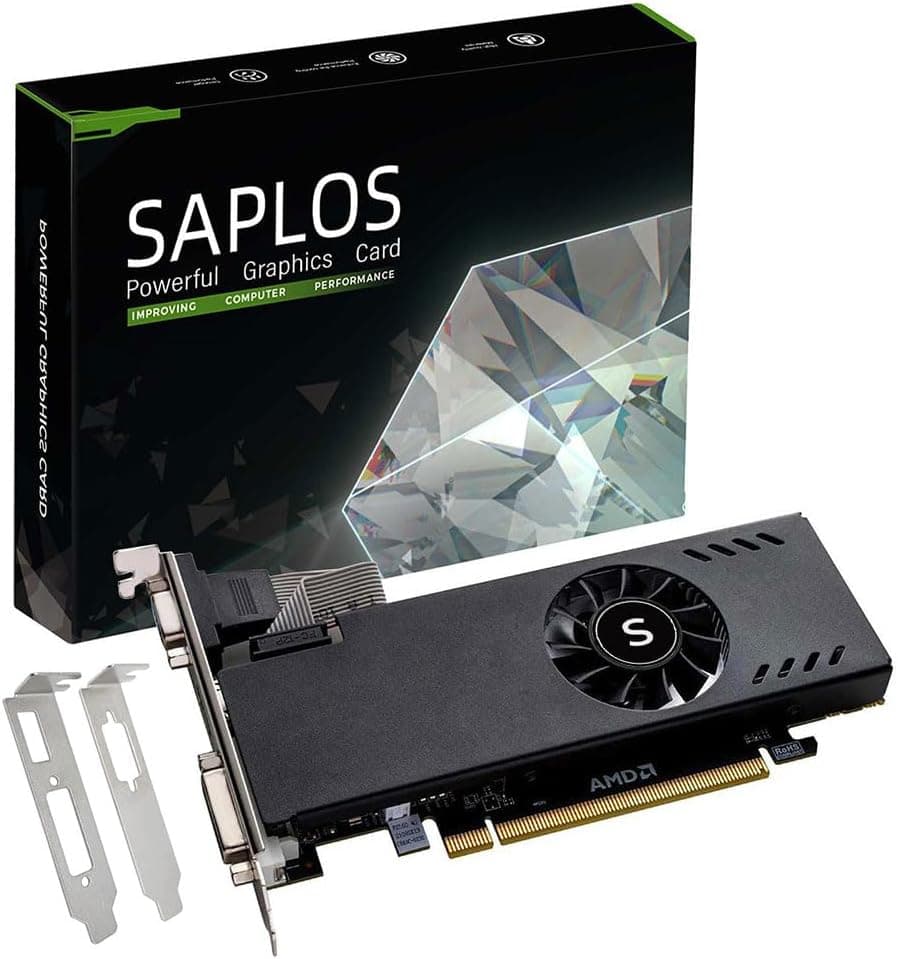
SAPLOS Radeon RX 550 Low Profile Graphics Card 4GB, GDDR5, 128-bit, VGA DVI-D HDMI, Video Card for PC Gaming, 4K Support, Gaming Computer GPU, DirectX 12
£98.99 · SAPLOS
 7.5 / 10
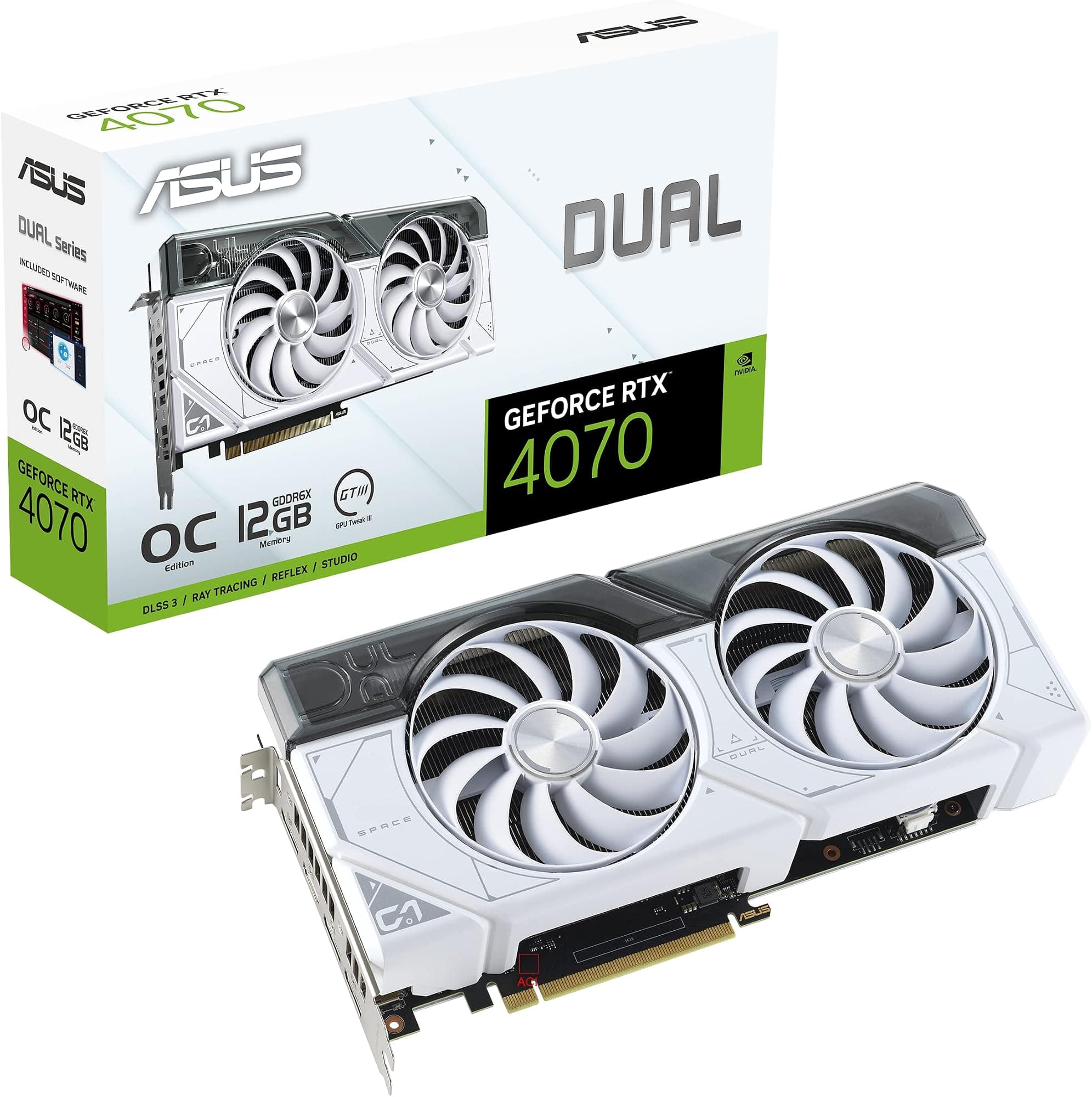
ASUS NVIDIA GeForce GT 730 Graphics Card (PCIe 2.0, 2GB GDDR5 Memory, 4X HDMI Ports, Single-Slot Design, Passive Cooling)
£88.95 · ASUS
Frequently asked
5 questions01Is the PNY NVIDIA Quadro P600 DVI 4x Mini DP 2 GB LP GDDR5 good for 1440p gaming?+
No, not in any practical sense. With 384 Pascal CUDA cores and only 2 GB of GDDR5 VRAM, this card struggles at 1080p in modern titles, let alone 1440p. It's a professional workstation card, not a gaming GPU. For gaming, a used GTX 1650 or RX 580 will give you dramatically better performance.
02What PSU do I need for the PNY NVIDIA Quadro P600 DVI 4x Mini DP 2 GB LP GDDR5?+
The P600 has a 40W TDP and requires no external power connector, drawing everything it needs from the PCIe slot. This means virtually any system PSU will handle it, including the modest 300W to 350W units that ship in OEM workstations like Dell OptiPlex or HP EliteDesk machines. No PSU upgrade required.
03Is 2 GB VRAM enough in 2026?+
For professional CAD and engineering applications in a workstation context, 2 GB is adequate for most typical workflows, though complex assemblies with high-polygon counts may push the limits. For gaming, 2 GB is not enough in 2026. Modern titles at 1080p routinely use 4 GB to 8 GB of VRAM, so this card is effectively unsuitable for gaming regardless of other performance factors.
04How does the PNY NVIDIA Quadro P600 DVI 4x Mini compare to AMD alternatives?+
AMD's professional GPU equivalent range is the Radeon Pro series. At this price point and form factor, the Quadro P600's main advantage over AMD alternatives is NVIDIA's Quadro driver certification, which more professional software vendors certify against. AMD's Radeon Pro WX series offers comparable low-profile options, but NVIDIA's ISV certification list is broader, making the Quadro the safer choice for certified professional applications.
05What warranty and returns apply to the PNY NVIDIA Quadro P600 DVI 4x Mini DP 2 GB LP GDDR5?+
PNY typically offers a three-year warranty on Quadro professional graphics cards, but you should verify the specific warranty terms with the seller at point of purchase. Regardless, Amazon UK's standard 30-day returns policy and A-to-Z guarantee apply to purchases made through Amazon, giving you a baseline of buyer protection.