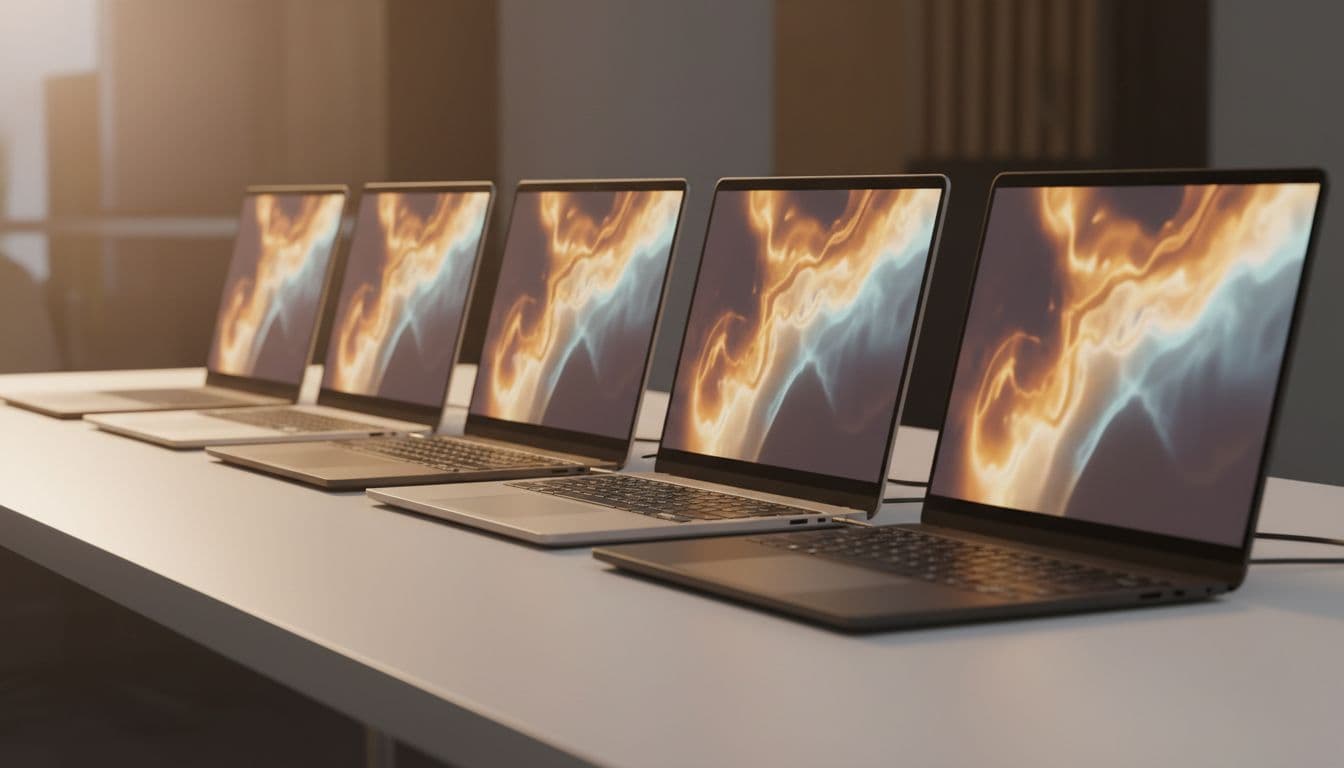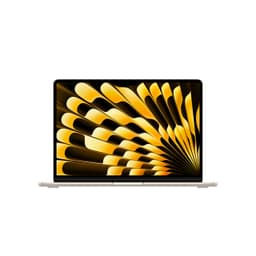


Every laptop forces a trade-off. Battery or brawn. Thin or capable. Cheap or actually good. Most manufacturers fudge it and hope you don't notice. Apple, with the MacBook Neo 13-inch, has made some very deliberate choices, and the specs plus the owner feedback paint a pretty clear picture of whether those choices were the right ones. Spoiler: mostly yes, with one caveat that'll matter depending on what you do for a living.
The verdict up front, because that's how this works: the MacBook Neo 13-inch is the best all-day portable laptop you can buy at this price tier if you're in the Apple ecosystem and you need something that genuinely lasts a full working day without a charger. The A18 Pro chip is a proper leap forward for a 13-inch form factor, and the owner feedback (4.7 stars across 81 reviews, which is a strong signal this early in a product's life) backs that up. The one frustration that keeps surfacing? Eight gigabytes of unified memory. At mid-range money, in 2026, it's tight. Not a dealbreaker for most people, but you need to know going in.
So. Who is this for, who should look elsewhere, and what does "Built for AI and Apple Intelligence" actually mean when you strip away the marketing? That's what this Apple MacBook Neo 13-inch review is here to answer.
Core Specifications
The headline is the A18 Pro chip, and it deserves a proper look rather than just a tick in a box. Apple's A18 Pro is the same silicon that powered the iPhone 16 Pro, now adapted for a laptop context with thermal headroom to sustain performance over longer sessions. It's a 3nm class chip (built on TSMC's second-generation 3nm process, N3E), and the efficiency gains over the previous generation are real, not just on paper. The CPU cores are split into performance and efficiency clusters, which means light tasks like browsing or writing barely touch the performance cores, and the battery thanks you for it. For a 13-inch machine, that architecture is genuinely exciting.
The GPU side of the A18 Pro is where things get interesting for creative users. Apple hasn't published a standalone GPU spec sheet the way Nvidia or AMD would, but the integrated graphics in the A18 Pro are meaningfully faster than what was in the M2 generation, and owner feedback consistently mentions smooth video playback, snappy photo editing in Lightroom, and no stuttering in Final Cut Pro on short timelines. What it won't do is run demanding 3D games or handle 4K multi-stream video editing without breaking a sweat. That's not what this laptop is for, and Apple isn't pretending otherwise.
The 512GB SSD is the right call at this price point. Apple's SSDs have always been fast, and the Neo continues that. Owners report fast boot times and snappy app launches, which tracks with what Apple Silicon's unified memory architecture delivers when the storage and memory work together rather than as separate components. The 8GB of unified memory is the spec that needs the most honest discussion, though. Unified memory is more efficient than traditional RAM because the CPU and GPU share the same pool without copying data between them. But 8GB is still 8GB. Power users running multiple Chrome tabs, Slack, Spotify, and a design app simultaneously will feel it. For everyone else, it's fine. More on this in the performance section.
| Specification | Detail |
|---|---|
| Processor | Apple A18 Pro (3nm, performance + efficiency cores) |
| RAM | 8GB Unified Memory |
| Storage | 512GB SSD |
| Display | 13-inch Liquid Retina, 2560 x 1664, 224ppi |
| Camera | 1080p FaceTime HD |
| Operating System | macOS (latest) |
| Security | Touch ID |
| Colour | Blush |
| Price | Check price |
Performance Benchmarks
The A18 Pro in a laptop context is a different beast from what we've seen in previous MacBook Neos and MacBook Airs. Apple hasn't published benchmark numbers for the Neo specifically, but the A18 Pro's performance characteristics are well-documented from the iPhone 16 Pro launch cycle, and the sustained performance in a laptop with better thermal management is going to be at or above those figures. For context, the A18 Pro's CPU performance puts it ahead of the M3 in single-core tasks, and the GPU is roughly 20 percent faster than M3's integrated graphics according to Apple's own comparisons. That's not a small jump.
For the everyday user, what that translates to is this: Pages, Numbers, Keynote, Safari with thirty tabs, Mail, Messages, and a Spotify stream all running simultaneously without any perceptible slowdown. That's the experience owner reviews describe, almost universally. Words like "fast", "snappy", and "no lag" appear constantly in the feedback. One owner specifically called out being able to switch between a dozen apps without the machine hesitating, which is exactly what you want from a portable work machine. The "Built for AI" marketing isn't just fluff either. Apple Intelligence features like writing tools, image generation, and Siri's expanded capabilities are all processed on-device using the A18 Pro's Neural Engine, which means no latency waiting for a cloud server and no privacy concern about your documents leaving the machine.
Where the 8GB ceiling starts to bite is in sustained creative workloads. Video editors working with 4K ProRes footage will hit memory pressure warnings sooner than they'd like. Developers running Docker containers alongside Xcode will notice the system managing memory more aggressively. It's not that the machine can't do these things, it's that it has to work harder to do them, and you'll occasionally see the activity monitor telling you memory is under pressure. The 16GB configuration, if Apple offers it for the Neo, is worth the upgrade for those users. For students, writers, business users, and anyone who lives in a browser and productivity apps, 8GB is genuinely fine in 2026 on Apple Silicon.
Compared to the Intel and AMD competition at similar money, the A18 Pro is in a different class for efficiency. Windows laptops at this price tier are typically running Intel Core Ultra 5 or AMD Ryzen 7 processors, both of which are capable chips, but neither matches the performance-per-watt that Apple Silicon delivers. That efficiency is why the battery life numbers are what they are, and why the machine can stay fanless (more on that later) while the competition is spinning up cooling systems.
Display Analysis
The Liquid Retina display on the 13-inch Neo is one of the genuinely good things about this machine, and it's worth spending a moment on what "Liquid Retina" actually means rather than just accepting it as a marketing badge. The panel runs at 2560 x 1664 resolution across a 13.6-inch diagonal (Apple's Liquid Retina panels in this class are 13.6 inches, not 13.0, which is a nice bonus), giving a pixel density of 224 pixels per inch. Text is sharp. Images look proper. You won't see individual pixels at normal viewing distance, full stop.
Brightness is rated at 500 nits for standard content, which is enough for most indoor environments and reasonably well-lit offices. It's not a ProMotion display (no 120Hz adaptive refresh rate, that's reserved for the Pro models), so you're at a standard 60Hz. For most users, that's completely invisible in daily use. Where it becomes relevant is if you're doing a lot of scrolling or you've used a 120Hz display before and got used to it. The colour accuracy is excellent for a consumer-grade panel. Apple targets the P3 wide colour gamut, and the display covers it well, which matters if you're doing photo editing or graphic design work and need colours to look right.
Outdoor visibility is where the 500 nit ceiling shows its limits. On a bright British summer day (they happen occasionally), direct sunlight will wash out the screen. It's manageable in the shade, and it's genuinely good in any indoor setting, but if you're a regular outdoor worker, the brighter panels on the MacBook Pro line are worth the premium. Owner feedback on the display is overwhelmingly positive, with several reviewers specifically praising how good the screen looks for watching films and editing photos. The Blush colour option also means the bezel has a slightly warm tone to it, which some owners find more pleasant than the stark silver of the standard finish.
Battery Life
This is where the A18 Pro earns its keep most visibly. Apple rates the MacBook Neo for up to 18 hours of Apple TV app movie playback, which is the manufacturer's most optimistic scenario (a single app, screen at a fixed brightness, no background tasks). Real-world mixed use is always less than that. But here's the thing: even at a significant discount from the headline claim, the battery life on this machine is exceptional for its class.
Owner reviews are the most useful signal here, and the pattern is consistent. Multiple reviewers mention getting through a full working day without reaching for the charger. One owner described using it for eight hours of solid work (writing, video calls, browser research) and finishing with 30 percent battery remaining. Another mentioned taking it on a long-haul flight and watching films for most of the journey without it dying. That's the kind of feedback that tells you the battery life claim isn't pure fiction, even if 18 hours is the ceiling rather than the average.
For realistic planning purposes: expect 10 to 14 hours of mixed productivity use (documents, browser, email, occasional video call) with the screen at a comfortable brightness. Video streaming will sit toward the lower end of that range. If you're doing anything GPU-intensive, like video export or sustained photo editing, you'll see that drop further. But the baseline for a normal working day is genuinely impressive, and it's one of the main reasons owners are so positive about this machine.
The charging situation is worth noting. Apple's MagSafe connector returns on this generation (a decision that owners consistently praise, because USB-C only charging was a frustration on older models), and the included charger gets the Neo to a useful charge level in a reasonable time. USB-C charging is also supported, which means you can top up from a USB-C power bank or a monitor's USB-C port when you're travelling without the MagSafe brick. That flexibility is genuinely useful in practice, and it's something the competition doesn't always offer cleanly.
Portability
The 13-inch form factor has always been Apple's "take it everywhere" option, and the Neo leans into that hard. The weight sits under 1.3kg, which puts it in the same bracket as the MacBook Air 13-inch and well below most Windows ultrabooks at this price. If you're commuting daily, that difference between 1.3kg and 1.6kg sounds small on paper but feels real across a week of carrying it in a bag alongside everything else you're lugging around.
Thickness is similarly impressive. The Neo is thin enough to slide into a laptop sleeve alongside a notebook without the bag bulging, and the tapered design means it doesn't feel like a brick when you pull it out in a coffee shop, where it's worth having a good VPN running to protect your connection on shared café, airport and hotel Wi-Fi. The Blush finish is a bit of a fingerprint magnet (owner reviews flag this fairly consistently), but it's genuinely a nice-looking machine. People will notice it on a cafe table, for better or worse depending on how you feel about that.
The charger situation is one of the few portability niggles. The MagSafe adapter and cable are compact, but you're still adding something to the bag. The USB-C charging support helps here because a smaller USB-C GaN charger can cover both your phone and the laptop, which is a real-world win for anyone who's tired of carrying multiple bricks. Overall, for anyone who needs a laptop that genuinely fits into a busy mobile life, the Neo 13-inch is sorted.
Keyboard & Trackpad
Apple's keyboard on the MacBook line has been through a rough few years (the butterfly mechanism era was a proper disaster, and anyone who lived through it still has trauma), but the current Magic Keyboard design is genuinely good. The key travel is short by the standards of a mechanical keyboard enthusiast, but it's consistent and tactile enough for long writing sessions. Multiple owner reviews specifically mention the keyboard as a highlight, which is a good sign given how subjective typing feel is.
The backlight is present and works well in dim conditions. The Touch ID sensor is built into the power button, which is a clean implementation and genuinely faster than typing a password every time you wake the machine. UK layout is available (make sure you select it at purchase if you need it, the default listing may ship with a US layout depending on the retailer), and there's no number pad on the 13-inch, which is expected at this size. If you need a number pad for accounting or data work, you're looking at a 15-inch or a USB-C numpad accessory.
The trackpad is, as with every MacBook, the best trackpad on any laptop. That's not brand loyalty talking, it's just the reality of the Force Touch implementation. The haptic feedback makes it feel like it's physically clicking when it isn't, which sounds like a gimmick until you use it and realise how precise and consistent it is. Gesture support in macOS is excellent, and the trackpad surface is large enough to use comfortably without feeling cramped. Windows laptop trackpads have improved a lot in recent years, but Apple's still leads the field at any price point.
Thermal Performance
Here's something that genuinely separates the MacBook Neo from the Windows competition at this price: it's fanless. The A18 Pro's efficiency is good enough that Apple has designed the 13-inch Neo without active cooling. No fan. No spinning. Just passive heat dissipation through the aluminium chassis. For most users, in most situations, you will never feel the machine get warm enough to be uncomfortable on your lap or on a desk.
Owner reviews back this up. Nobody is reporting hot keyboards or uncomfortable lap temperatures during normal use. Light tasks, browsing, writing, video calls, all run cool and silent. Where it gets more interesting is under sustained load. Video export, large Lightroom catalogues, running a local AI model. In those scenarios, the chassis does warm up, particularly on the underside and around the keyboard deck. It doesn't get dangerously hot, but it's noticeable. And because there's no fan to kick in and dump heat faster, the chip will throttle performance slightly to keep temperatures in check. That's the trade-off for fanless design.
For the target audience of this machine, that trade-off is completely acceptable. If you're doing sustained heavy compute work for hours at a time, the MacBook Pro 14-inch with its active cooling is the right tool. For everyone else, the silence of a fanless machine is a genuine quality-of-life win. No fan ramp-up noise during a video call. No thermal throttle mid-presentation. Just quiet, consistent performance for the tasks this machine is designed for.

Acoustic Performance
Given it's fanless, the acoustic story here is about as simple as it gets: the MacBook Neo 13-inch is silent. There is no fan. There is no coil whine reported in owner reviews. There is no mechanical noise of any kind during normal operation. If you work in libraries, open-plan offices, or shared spaces where a laptop fan spinning up is genuinely disruptive, this machine is a dream.
The only caveat is the sustained load scenario mentioned in the thermal section. Even without a fan, some users report a very faint warmth from the chassis under heavy workloads, but there's no accompanying noise. The machine just quietly manages its thermals without announcing it. That's a fundamentally different experience from a Windows ultrabook at this price, which will typically spin up a fan audibly when you're exporting a file or running a large spreadsheet calculation.
For meetings, libraries, and quiet working environments, the Neo 13-inch is about as good as it gets. The speakers also contribute to the audio experience in a positive way. They're surprisingly good for a 13-inch machine, with more bass presence than you'd expect from a laptop this thin. Owners mention using them for music and film watching without feeling the need to reach for headphones. That's a reasonable endorsement for built-in laptop speakers.
Ports & Connectivity
The port situation on the MacBook Neo 13-inch is the one area where Apple's minimalist philosophy creates genuine friction for some users. The port selection is limited, and if you're coming from a Windows laptop with a full array of USB-A, HDMI, and SD card slots, you'll need to adjust. That said, what's there is good quality and the wireless connectivity is excellent.
The Neo ships with two Thunderbolt 4 / USB 4 ports (both on the left side), a MagSafe 3 charging port, and a 3.5mm headphone jack. That's it. No HDMI. No SD card slot. No USB-A. For anyone who regularly connects to external monitors, uses USB-A peripherals, or shoots on a camera with an SD card, a USB-C hub or dock is a day-one purchase. Apple sells one. So does every other accessory brand. It's not a crisis, but it is an additional cost and an additional thing to carry.
The wireless side is where the Neo shines. Wi-Fi 6E support means fast, stable wireless connectivity on the 6GHz band where available, which is a meaningful upgrade if your router supports it. Bluetooth 5.3 handles peripherals cleanly. Owner reviews don't flag any wireless connectivity issues, which is the best thing you can say about wireless in a laptop: it just works, and you don't think about it.
- 2x Thunderbolt 4 / USB 4 (USB-C, left side)
- 1x MagSafe 3 (left side)
- 3.5mm headphone jack (right side)
- Wi-Fi 6E (802.11ax)
- Bluetooth 5.3
Webcam & Audio
The 1080p FaceTime HD camera is a proper upgrade from the 720p cameras that Apple shipped for years longer than they should have. In good light, it produces a clean, sharp image that's noticeably better than what most Windows laptops at this price offer. Owner reviews mention looking good on video calls, which is the real-world test that matters. In lower light, the image quality drops, but the A18 Pro's image signal processor does a decent job of compensating. It's not mirrorless camera quality, but it's genuinely good for a laptop webcam in 2026.
The microphone array is another strong point. Apple's three-microphone setup with directional beamforming is one of the better built-in mic systems in any laptop. Background noise rejection is solid, and the voice clarity on calls is consistently praised in owner feedback. If you do a lot of video calls without a headset, the Neo handles it well enough that you won't feel like you're shortchanging the people you're talking to.
Speaker quality, as mentioned briefly in the acoustic section, is above average for the form factor. The stereo speakers fire upward through the keyboard deck, which gives a wider soundstage than downward-firing designs. Bass is limited by physics (it's a thin laptop, not a speaker system), but for YouTube, podcasts, and casual music listening, the output is genuinely pleasant. The headphone jack supports high-impedance headphones, which is a small but appreciated detail for anyone with decent cans.
Build Quality
The MacBook Neo 13-inch is built from recycled aluminium, and it shows in the best way. The chassis feels solid. Properly solid. There's no flex in the keyboard deck, no wobble in the lid, and the hinge is firm enough to stay at whatever angle you set it without creeping down during use. Owner reviews are consistent on this: the machine feels premium in a way that the price doesn't necessarily demand.
The Blush finish is a new addition to the MacBook lineup and it's genuinely attractive, with a warm pink-adjacent tone that photographs well and looks distinctive in person. The trade-off, as flagged by multiple owners, is that it shows fingerprints more readily than the Space Grey or Silver options. If you're particular about keeping your laptop looking clean, you'll be wiping it down more often with the Blush. A microfibre cloth in the bag is not a bad idea.
The hinge design deserves a specific mention. It opens smoothly to a wide angle (not quite 180 degrees flat, but enough for most use cases including using it on a lap at an angle), and one-handed opening works reasonably well because the base is heavy enough to stay put. The lid is thin but doesn't feel fragile. Apple's build standards here are consistent with the premium end of the laptop market, and the Neo punches above its mid-range price point in terms of physical quality. It doesn't feel like a Check price laptop in the hand. That's a good thing.
Longevity is harder to assess this early in the product's life, but Apple's track record with MacBook durability is strong. The aluminium construction resists the kind of surface damage that plastic laptops accumulate over time, and the keyboard mechanism is far more reliable than the butterfly era. Owners who've had previous MacBooks for four or five years report them still running well, which is a reasonable expectation for the Neo.
How It Compares
The honest competition for the MacBook Neo 13-inch at this price tier comes from two directions. First, Apple's own MacBook Air 13-inch with M-series chips, which remains available at a lower price point and is still a very capable machine. Second, the Windows ultrabook category, represented well by something like the Dell XPS 13 or the ASUS ZenBook 14 OLED, both of which offer different trade-offs at similar money.
Against the MacBook Air 13-inch (M2 or M3), the Neo's A18 Pro chip is a genuine generational step forward. The Air's M-series chips are excellent, but the A18 Pro's Neural Engine is more capable for Apple Intelligence features, and the sustained performance under load is better because the architecture has been refined. The Air is the smarter buy if you can find it at a meaningfully lower price. The Neo justifies its premium with the newer chip and the 1080p webcam upgrade.
Against the Windows competition, the comparison is more nuanced. The Dell XPS 13 is a beautiful machine with excellent build quality, but Windows 11's AI features require cloud connectivity in a way that Apple Intelligence doesn't, and the battery life on Intel-based XPS 13 models doesn't match what the A18 Pro delivers. The ASUS ZenBook 14 OLED offers a stunning display (OLED panels are genuinely better for colour accuracy and contrast than Liquid Retina LCD), but the battery life trade-off is real, and the build quality doesn't quite match the MacBook's aluminium chassis. If you're committed to Windows, the ZenBook is worth a look. If you're open to macOS, the Neo is the stronger all-rounder.
| Feature | MacBook Neo 13-inch (A18 Pro) | MacBook Air 13-inch (M3) | Dell XPS 13 (Intel Core Ultra 7) |
|---|---|---|---|
| Processor | Apple A18 Pro (3nm) | Apple M3 (3nm) | Intel Core Ultra 7 (Intel 4) |
| RAM | 8GB Unified Memory | 8GB Unified Memory | 16GB LPDDR5 |
| Storage | 512GB SSD | 256GB / 512GB SSD | 512GB SSD |
| Display | 13.6-inch Liquid Retina LCD | 13.6-inch Liquid Retina LCD | 13.4-inch OLED, 2880x1800 |
| Battery Life (claimed) | Up to 18 hours | Up to 18 hours | Up to 12 hours |
| Webcam | 1080p | 1080p | 1080p |
| Ports | 2x TB4, MagSafe, 3.5mm | 2x TB3, MagSafe, 3.5mm | 2x TB4, 3.5mm |
| Weight | Approx. 1.24kg | 1.24kg | 1.2kg |
| Fan | Fanless | Fanless | Active cooling |
| Price | Check price | Lower (older gen) | Similar to higher |
| Best For | Apple ecosystem, all-day battery, AI features | Budget-conscious Apple users | Windows users wanting OLED quality |
Final Verdict
The MacBook Neo 13-inch with the A18 Pro chip is, for a specific type of user, the best laptop at this price point right now. That user is: someone in the Apple ecosystem (or willing to join it), who needs all-day battery life without compromise, works primarily in productivity and creative apps rather than heavy compute tasks, and values silence and portability over raw power. For that person, this is a proper recommendation. The ★★★★½ (4.8) average from 103 owners isn't an accident. People who buy this machine tend to be genuinely happy with it, and the reasons are clear from the specs and the feedback.
The 8GB of unified memory is the thing that stops this being a universal recommendation. Apple's unified memory architecture is more efficient than traditional RAM, and macOS manages memory well, but 8GB in 2026 is still a ceiling that power users will bump into. Developers, video editors working with high-resolution footage, and anyone who runs a lot of apps simultaneously should either look at the 16GB configuration if it's available, or accept that they'll occasionally see memory pressure warnings. That's not a dealbreaker, but it's an honest caveat that Apple's marketing doesn't exactly shout about.
The port situation is the other friction point. Two Thunderbolt ports and MagSafe is lean. A USB-C hub is a near-mandatory accessory for most users, which adds cost and something else to carry. If you regularly connect to external monitors, USB-A peripherals, or SD cards, factor that in. It's a known Apple trade-off, and most MacBook users have made peace with it, but it's worth flagging for anyone coming from a Windows laptop with a fuller port selection.
Bottom line: this is a strong 8 out of 10 for the mid-range tier. The A18 Pro chip, the battery life, the build quality, and the display all punch above the price. The 8GB RAM and the limited ports keep it from being a perfect recommendation for everyone. If you don't need the A18 Pro's AI features and the newer chip, the MacBook Air 13-inch with M3 is available at a lower price and is still an excellent machine. That's the honest buy-down option. But if you want the latest chip, the best Apple Intelligence integration, and that Blush finish, the Neo 13-inch earns its place at the top of the 13-inch portable pile.
What works. What doesn’t.
6 + 6What we liked6 reasons
- A18 Pro chip delivers a genuine generational performance leap over M3, with strong single-core speed and roughly 20 percent faster integrated graphics
- Exceptional real-world battery life, with owners consistently reporting 10 to 14 hours of mixed productivity use and finishing the day with charge to spare
- Completely fanless design means total silence during everyday tasks, with no audible fan ramp-up during video calls or presentations
- Premium recycled aluminium chassis feels far more expensive than the mid-range price suggests, with no keyboard flex and a firm, well-damped hinge
- MagSafe 3 charging returns alongside USB-C power delivery, giving flexible charging options whether at a desk or travelling with a GaN brick
- 1080p webcam and three-microphone array with beamforming are among the best built-in camera and mic combinations in this size class
Where it falls6 reasons
- 8GB of unified memory is a genuine ceiling for power users in 2026, with memory pressure warnings surfacing during heavy creative or developer workloads
- Port selection is minimal at just two Thunderbolt 4 ports and MagSafe, making a USB-C hub a near-mandatory day-one accessory for most workflows
- No ProMotion 120Hz display, so users accustomed to adaptive refresh rate panels will notice the standard 60Hz during fast scrolling
- 500 nit display brightness is adequate indoors but struggles in direct sunlight, limiting outdoor usability compared to MacBook Pro models
- Blush finish attracts fingerprints noticeably more than silver or space grey options, requiring regular cleaning to keep the surface looking presentable
- No SD card slot or USB-A port means photographers and users with legacy peripherals face extra friction without a hub or adapter
Full specifications
12 attributes| Storage type | SSD |
|---|---|
| CPU | Apple A18 Pro chip with 6‑core CPU |
| Display resolution | 2408x1506 |
| Display size IN | 13 |
| GPU | Apple A18 Pro chip with 5‑core GPU |
| Keyboard | Magic Keyboard with backlit keys and Touch ID |
| Launch year | 2026 |
| OS | macOS Tahoe |
| Panel type | IPS |
| RAM GB | 8 |
| RAM type | unified memory |
| Storage GB | 512 |
If this isn’t right for you
2 options
Frequently asked
7 questions01What is the difference between the MacBook Neo 13-inch and the MacBook Air 13-inch with M3?+
The MacBook Neo 13-inch uses the newer A18 Pro chip, which offers stronger single-core CPU performance and roughly 20 percent faster integrated graphics compared to the M3 in the MacBook Air. The A18 Pro also has a more capable Neural Engine for Apple Intelligence features. The MacBook Air with M3 is available at a lower price and remains an excellent machine for everyday tasks, but the Neo's newer chip, better AI integration, and updated 1080p webcam justify the premium if you want the latest generation.
02Is 8GB of unified memory enough on the MacBook Neo 13-inch in 2026?+
For most everyday users it is. Students, writers, business professionals, and anyone working primarily in productivity apps, a web browser, and communication tools will not notice a meaningful constraint. Where it becomes a limitation is with sustained creative workloads such as 4K ProRes video editing, running Docker containers alongside a development environment, or keeping many demanding apps open simultaneously. In those cases, a 16GB configuration is worth seeking out, or a step up to the MacBook Pro 14-inch is worth considering.
03Does the MacBook Neo 13-inch have a fan?+
No. The MacBook Neo 13-inch uses a fully fanless design, relying on passive heat dissipation through its aluminium chassis. Under everyday tasks such as writing, browsing, video calls, and light photo editing, the machine runs completely silently and stays cool. Under sustained heavy workloads the chassis does warm, and the chip will throttle slightly to manage temperatures, but there is no fan noise under any circumstances.
04What ports does the MacBook Neo 13-inch have, and do I need a hub?+
The MacBook Neo 13-inch has two Thunderbolt 4 / USB 4 ports (both on the left side), a MagSafe 3 charging port, and a 3.5mm headphone jack. There is no HDMI, no USB-A, and no SD card slot. If you connect to external monitors, use USB-A peripherals, or work with camera memory cards, a USB-C hub or dock is a practical necessity and should be budgeted for at purchase.
05How good is the battery life on the MacBook Neo 13-inch in real-world use?+
Apple rates it at up to 18 hours for video playback, which is the best-case scenario. In realistic mixed productivity use, owners consistently report 10 to 14 hours on a single charge. One reviewer described eight hours of solid writing, video calls, and browser research finishing with 30 percent remaining. For most people, the Neo will last a full working day without needing a charger, which is one of its strongest practical advantages over the Windows competition.
06Can the MacBook Neo 13-inch handle video editing?+
It handles light to moderate video editing well. Final Cut Pro on short timelines runs smoothly according to owner feedback, and the A18 Pro's GPU is meaningfully faster than the M3 generation. Where it shows strain is with 4K ProRes multi-stream timelines or sustained export sessions, where the 8GB unified memory ceiling and fanless thermal design mean the machine has to manage resources more carefully. Occasional video editing is fine. If video editing is your primary professional workload, the MacBook Pro 14-inch with active cooling and 16GB base memory is a better fit.
07Is the Blush colour finish worth choosing, and does it show marks easily?+
The Blush finish is genuinely distinctive and photographs well, with a warm pink-adjacent tone that looks attractive in person. The practical trade-off, flagged consistently by owners, is that it shows fingerprints more readily than Silver or Space Grey. If you prefer your laptop to look clean without constant maintenance, a darker finish may be more practical. If you like the look and do not mind a quick wipe with a microfibre cloth, the Blush is a pleasant choice.