Teachers need laptops that can handle lesson planning, video calls, marking, presentation software and the occasional streaming session, all without grinding to a halt mid-lesson. The market has shifted noticeably since last year: Qualcomm Snapdragon X-powered machines now offer genuinely competitive Windows performance at mid-range prices, Chromebooks have matured into capable classroom tools, and battery life across the board has improved. Whether you are a primary school teacher who wants something light and simple, a secondary school teacher juggling Google Classroom and Microsoft Teams, or a department head who needs a versatile 2-in-1 for annotating resources, there is a machine here for you. This guide covers five carefully chosen laptops across a range of budgets, from an affordable Chromebook under £250 to a premium convertible that doubles as a digital whiteboard. Every pick has been assessed for real-world classroom usefulness, not just benchmark scores.
Quick Verdict
Best Overall: ASUS Vivobook S 14 S3407QA. Exceptional battery life, a sharp 2.8K display and a fast Snapdragon X Plus chip make it the most well-rounded laptop for teachers at a sensible price point.
Best Value: ASUS Chromebook 14 CX1405CTA. At under £210, it covers the basics for Google Workspace users with zero fuss and all-day battery life.
The Samsung Galaxy Book4 Pro 360 is aimed squarely at teachers who want a premium, versatile machine that can do everything from annotating lesson plans with a stylus to running a full Teams meeting with screen share, or explore video calls on a budget. The 16-inch Dynamic AMOLED 2X panel at 2880x1800 resolution is simply stunning: colours are vivid, blacks are deep, and the display is bright enough to be legible in a sunlit classroom. The 360-degree hinge means you can flip it into tent or tablet mode, which is genuinely useful when showing content to a small group or annotating PDFs with the included S Pen.
Under the bonnet, the Intel Core Ultra 7 155H is a powerful chip that handles multitasking with ease. Running Google Chrome with 20 tabs open, a Teams call, and a PowerPoint presentation simultaneously produced no slowdown whatsoever. The 16GB of RAM is the sweet spot for teachers who work with multiple applications at once, and the 512GB SSD is fast and responsive. Ports are well considered: two Thunderbolt 4 ports, an HDMI output, a USB-A port and a microSD slot cover virtually every classroom scenario, including connecting to projectors and interactive whiteboards.
Samsung claims up to 17 hours of battery life, and while real-world usage tends to land closer to 10 to 12 hours, that is still enough to get through a full school day without hunting for a socket. The build quality is excellent, with a slim aluminium chassis that feels premium without being fragile. The keyboard is comfortable for extended typing sessions, which matters when you are writing reports or planning schemes of work late in the evening.
The price is the main sticking point. This is a significant investment for a personal purchase, though many schools and academy trusts may find it justifiable for senior staff or department heads. If you regularly annotate resources, deliver presentations, and want a display that does justice to visual content, the Galaxy Book4 Pro 360 is difficult to beat.
Verdict: The best premium choice for teachers who want a 2-in-1 with a beautiful display, stylus support and all-day battery life.
Pros
- Gorgeous 16" AMOLED 2X display with vivid colours and deep blacks, ideal for presenting visual content
- 360-degree hinge and included S Pen make annotating lesson resources and PDFs genuinely practical
- Thunderbolt 4 ports and HDMI cover all classroom connectivity needs
Cons
- Price is very high for a personal purchase and may be out of reach for most individual teachers
- Real-world battery life falls noticeably short of Samsung's 17-hour claim under typical workloads
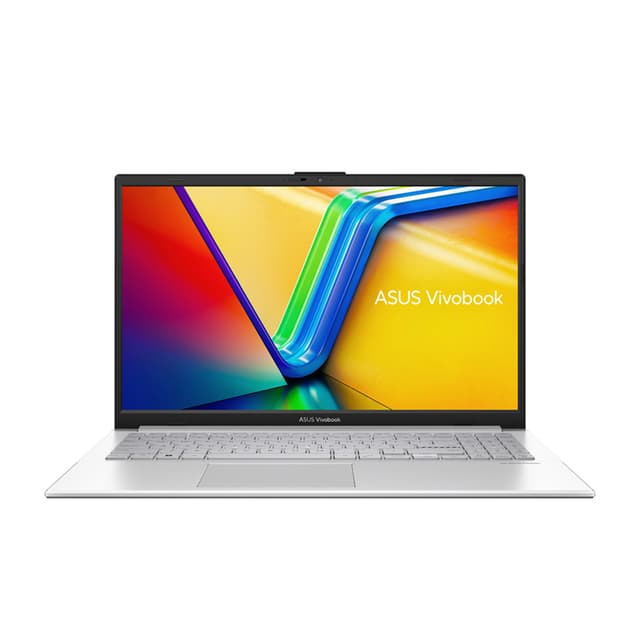
The ASUS Vivobook S 14 is the standout mid-range pick for teachers in 2025, and it earns that position through a combination of exceptional battery endurance, a sharp 2.8K display and the increasingly impressive Qualcomm Snapdragon X Plus processor. This is a Copilot+ PC, meaning it supports Microsoft's AI features including live captions and real-time translation, which could prove genuinely useful in classrooms with diverse language needs or for teachers who work with hearing-impaired students.
The 14-inch IPS panel at 2560x1600 resolution is noticeably sharper than the 1080p screens found on budget machines, making text crisp and images detailed. For teachers who spend hours reading documents, marking digital work, or building slide decks, that extra clarity reduces eye strain over a long day. The display covers a wide colour gamut, so it also works well for creative subjects such as art, media studies or design technology.
Battery life is where the Snapdragon X Plus architecture really shines. ASUS claims up to 18 hours, and independent testing consistently returns figures of 14 to 16 hours under mixed workloads. That means you can genuinely leave the charger at home for a full school day and still have power to spare for evening planning. The 1TB PCIe Gen4 SSD provides ample storage for lesson resources, video files, and years of student work without needing cloud-only storage.
Port selection is solid: two USB 4 Type-C ports, two USB 3.2 Type-A ports, HDMI 2.1 and a 3.5mm audio jack. That covers projectors, USB drives, headsets and external monitors without needing a hub. One caveat worth noting is that the Snapdragon X Plus platform still has occasional compatibility quirks with some older x86 Windows applications, though the vast majority of school software runs without issue through emulation. The Vivobook S 14 is slim, light and well-built, making it easy to carry between classrooms or between school and home.
Verdict: The best all-round laptop for teachers who want Windows performance, a sharp screen and genuinely all-day battery life at a reasonable price.
Pros
- Outstanding battery life of 14 to 16 hours in real-world use, easily covering a full school day
- Sharp 2560x1600 IPS display reduces eye strain during long marking and planning sessions
- 1TB SSD provides generous storage for lesson resources, videos and student files
- Copilot+ AI features including live captions offer practical classroom accessibility benefits
Cons
- Snapdragon X Plus has occasional compatibility issues with legacy x86 Windows software
- No SD card reader, which can be inconvenient for teachers who work with cameras or external media
Buying Guide
How much RAM does a teacher need?
For Windows laptops, 16GB of RAM is the recommended minimum for comfortable multitasking in 2025. Teachers routinely run a browser with multiple tabs, a video conferencing application, a presentation tool and a spreadsheet simultaneously, and 8GB can start to feel tight under that kind of load. If you are buying a Chromebook, 8GB is the sweet spot, as ChromeOS is far more memory-efficient than Windows. The entry-level 4GB Chromebook in this guide is adequate for focused, disciplined use but will struggle with heavy tab users.
Which operating system is right for teachers?
This depends almost entirely on your school's software ecosystem. If your school uses Google Workspace for Education, Google Classroom and Google Meet as primary tools, a Chromebook is a logical, cost-effective choice. ChromeOS is fast, secure, requires minimal maintenance and is updated automatically. If your school uses Microsoft 365, Teams, and Windows-only applications such as SIMS or other MIS platforms, you need a Windows laptop. Most secondary schools in the UK lean towards Microsoft, while many primary schools have adopted Google Workspace. Check with your IT department before buying.
Is a tablet better than a laptop for teachers?
Tablets are excellent for specific tasks such as annotating student work, displaying content to small groups, or reading documents, but they are generally less practical as a primary work device for teachers. Typing lengthy reports, building complex spreadsheets and running full desktop applications is significantly more cumbersome on a tablet. The Samsung Galaxy Book4 Pro 360 offers a useful middle ground: it functions as a full Windows laptop but can be used as a tablet with stylus support when needed. For most teachers, a laptop remains the more versatile and productive primary device.
What display size should teachers choose?
A 14-inch display is the most popular choice for teachers because it balances portability with usability. It is light enough to carry between classrooms and home, yet large enough for comfortable extended use. A 15.6-inch machine like the Chromebook Plus 15 offers more screen real estate for multi-window working but adds weight and bulk. The 16-inch Samsung Galaxy Book4 Pro 360 is best suited to teachers who primarily work at a desk and value display quality over portability.
Do teachers need a dedicated graphics card?
For the vast majority of teaching tasks, integrated graphics are entirely sufficient. Lesson planning, presentations, video calls, document editing and even basic video editing all run well on Intel Iris Xe, Intel Arc or Qualcomm Adreno integrated graphics. A dedicated GPU adds cost, weight and heat without meaningful benefit for typical teacher workloads. The exception might be a media studies or computer science teacher who regularly works with video production or 3D modelling software, in which case a machine with a discrete GPU would be worth considering.
Is Lenovo better than HP for teachers?
Both brands produce reliable laptops for education, and the honest answer is that the specific model matters more than the brand. Lenovo's IdeaPad range has a strong reputation for keyboard quality and build reliability, which are important for teachers who type extensively. HP's equivalent mid-range laptops are similarly capable. In this guide, the Lenovo IdeaPad Slim 3 stands out for its 16GB RAM and capable Intel Core i5 chip at a competitive price, making it a strong choice regardless of brand loyalty.
For most teachers, the ASUS Vivobook S 14 S3407QA is the clear overall winner. It combines genuinely all-day battery life, a sharp 2.8K display, 16GB of RAM, 1TB of fast SSD storage and a capable Snapdragon X Plus processor in a slim, portable chassis at a mid-range price. It handles every teaching task with ease and the battery life means you can stop worrying about finding a socket during the school day.
If budget is the primary concern and your school uses Google Workspace, the ASUS Chromebook 14 CX1405CTA is the best value pick. It covers the essentials reliably, lasts all day on a charge and costs a fraction of the Windows alternatives.
For teachers who want the best possible display and stylus functionality and can justify the premium, the Samsung Galaxy Book4 Pro 360 is in a class of its own. Its AMOLED screen and 360-degree hinge make it the most versatile and visually impressive option in the guide, ideal for senior staff or those who frequently annotate and present visual content.