Mac mini M4 Pro Desktop
~£1,599approx
The choice we'd make at this price band. Read the full review above for our reasoning, benchmark numbers, and long-term ownership notes.

As an Amazon Associate we may earn from qualifying purchases. Our ranking stays independent.
M4 Pro chip delivers class-leading performance for creative and development workloads
512GB internal storage feels tight for heavy media work at this price
Genuinely compact 5x5 inch footprint without sacrificing power
You know that feeling when a computer just gets out of your way? When you sit down to work and the machine isn't the bottleneck, you are? That's what the Mac mini M4 Pro Desktop is selling, and based on the spec sheet and what 83 owners are reporting (4.5 stars average), it's largely delivering on that promise. This is a serious bit of kit in a box that would fit inside your laptop bag.
The problem this thing solves is real: most desktop computers are either underpowered boxes that frustrate you within eighteen months, or enormous tower rigs that need their own postcode. The Mac mini M4 Pro sits in a genuinely interesting spot. Five inches by five inches. An Apple M4 Pro chip inside. 24GB of unified memory. And a price tag that will make you pause before clicking buy. Whether that pause should end in a purchase depends entirely on who you are and what you're trying to do. So let's work through it properly.
The verdict upfront: if you're a creative professional, developer, or power user who's tired of compromising on either performance or desk space, the Mac mini M4 Pro Desktop is one of the most compelling desktop computers available right now. But it's not for everyone, and there are real reasons to walk away. Both of those things are true simultaneously, which is exactly why this review exists.
The headline spec is the Apple M4 Pro chip, and it's not a chip you should gloss over. Apple's M-series silicon has consistently outperformed what the raw numbers suggest, and the M4 Pro represents the current top of the mainstream Mac mini lineup. It's built on a 3nm process and integrates the CPU, GPU, and memory onto a single die, which is why Apple calls it "unified memory" rather than traditional RAM. The practical upshot is that memory bandwidth is dramatically higher than what you'd get from a conventional desktop with separate CPU and DDR5 sticks.
This configuration ships with 24GB of unified memory and a 512GB SSD. The 24GB figure is worth dwelling on. In traditional desktop terms, unified memory works differently because the GPU and CPU share it directly without the usual transfer overhead. So 24GB here does more work than 24GB of conventional RAM in a Windows machine would. Owners consistently report that the machine handles large datasets, complex video timelines, and multi-application workloads without the slowdowns you'd expect from a computer this compact.
The 512GB SSD is the one spec that might give you pause if you work with large media files. It's fast, genuinely fast, but 512GB fills up quicker than you'd think when you're dealing with RAW video or large project archives. Budget for external storage if that's your world. The integrated GPU is part of the M4 Pro die itself, not a discrete card, which means no separate GPU power draw and no additional heat source, but also no upgrade path if you need more graphical grunt later.
| Specification | Detail |
|---|---|
| CPU | Apple M4 Pro |
| GPU | Integrated (M4 Pro die) |
| RAM | 24GB Unified Memory |
| Storage | 512GB SSD |
| Operating System | macOS |
| Dimensions | 5 x 5 inches |
| Connectivity | Thunderbolt, HDMI, Gigabit Ethernet (rear); USB-C, headphone jack (front) |
| Price | £1,599.00 |
| Rating | ★★★★½ (4.5) (80 reviews) |

Apple's marketing for the Mac mini M4 Pro Desktop leans hard on the size-versus-power angle, and honestly, it's not wrong to do so. Five by five inches is genuinely tiny for a desktop machine at this performance level. You can place it behind a monitor, on a shelf, in a drawer if you're creative about cable routing. Owners regularly mention the physical footprint as one of the first things that surprises them when it arrives. The thing is small. Properly, hold-it-in-one-hand small.
The connectivity story is one of the more thoughtful things Apple has done with this generation. Previous Mac mini models had all their ports on the back, which meant crawling behind your desk every time you wanted to plug in a USB drive or headphones. This version adds front-facing USB-C ports and a headphone jack for the first time. It sounds like a small thing. Ask anyone who's ever had to blindly fumble around the back of a desktop to plug something in and they'll tell you it's not small at all. The rear still carries Thunderbolt ports, HDMI, and Gigabit Ethernet, so you're not losing anything by gaining the front ports.
Apple Intelligence is baked in, which is Apple's on-device AI system. The practical value of this depends on how deeply you're embedded in the Apple ecosystem and how much you use features like writing tools, image generation, and enhanced Siri capabilities. What's is that the M4 Pro has enough neural engine headroom to run these features locally, which matters for the privacy angle Apple keeps pushing. Your data doesn't need to leave the device for most Apple Intelligence tasks. Whether that's a selling point or a nice-to-have depends on your workflow, but it's a genuine differentiator from cloud-dependent AI features on competing platforms. The Mac mini also carries Apple's carbon neutral certification, which won't shift the needle for most buyers but is about if environmental credentials factor into your purchasing decisions.
The M4 Pro chip is not a chip that needs to be defended. Published benchmark figures for this class of Apple silicon put it ahead of Intel and AMD chips that draw significantly more power and generate significantly more heat. The efficiency story is real. Apple's unified memory architecture means the M4 Pro can handle tasks that would bring a similarly priced Windows machine to its knees, particularly anything that benefits from high memory bandwidth, which includes video editing, large Xcode builds, machine learning inference, and complex 3D scene work.
Owner reports back this up consistently. The pattern in the 83 reviews is pretty clear: people who've come from older Intel Macs or mid-range Windows desktops are reporting that the Mac mini M4 Pro handles their workloads without the fan noise, thermal throttling, or slowdowns they were used to. Video editors mention smooth 4K and even 8K timeline scrubbing. Developers talk about dramatically faster compile times. Photographers running Lightroom with large catalogues report snappy performance across the board. The M4 Pro's extra CPU cores (compared to the base M4) make a measurable difference for multi-threaded work specifically, so if you're compiling code, running virtual machines, or doing anything that scales across cores, the Pro chip earns its keep.
Where does it fall short? The integrated GPU is capable for most tasks, including some light gaming and GPU-accelerated creative work, but it's not a discrete gaming GPU. If your primary use case is playing the latest AAA titles at high settings, this isn't the machine for that job. macOS gaming has improved with Apple Arcade and more native ports arriving via the Apple Game Porting Toolkit, but Windows still dominates for gaming breadth. The 512GB storage ceiling is also a genuine constraint for heavy media work. The SSD itself is fast, but the capacity means you'll be managing storage actively or investing in external drives pretty quickly.
The Mac mini has always punched above its weight on build quality, and the M4 Pro version continues that tradition. The aluminium enclosure feels substantial without being heavy. It's not a machine that flexes, creaks, or feels like it's held together with optimism. Apple's manufacturing tolerances are consistently tight, and the fit and finish on the Mac mini is noticeably better than most Windows mini PCs at this price point, many of which use cheaper plastic shells or thinner aluminium that feels hollow by comparison.
The thermal design is because it's one of the things that separates Apple silicon Macs from the competition in a meaningful way. The M4 Pro's efficiency means the Mac mini doesn't need an aggressive cooling solution. Owners report that under moderate workloads, the machine is effectively silent. Under sustained heavy load, you can hear the fan, but multiple owners describe it as a gentle hum rather than the jet-engine impression you get from some Windows mini PCs pushed hard. This matters if you're working in a quiet environment or recording audio.
Durability indicators from the owner review pool are positive. There are no widespread reports of premature hardware failures, build defects on arrival, or quality control issues that would suggest a problematic production run. The Mac mini line has a strong track record for longevity generally. Apple supports its Mac hardware with macOS updates for a long time (typically six to seven years from release), which means the machine you buy today should still be receiving security updates and feature additions well into the next decade. That's a meaningful consideration at this price point and one that Windows mini PC competitors often can't match.
Setup is straightforward if you're already in the Apple ecosystem. Plug in your monitor via HDMI or Thunderbolt, connect a keyboard and mouse (sold separately, Apple's own peripherals or any Bluetooth alternatives work fine), power it on, and you're guided through a setup process that takes around ten minutes. If you're migrating from another Mac, Apple's Migration Assistant handles the transfer of your files, applications, and settings over your local network or via a cable, and owners report this process works reliably and without the headaches you sometimes get migrating between Windows machines.
If you're coming from Windows, the learning curve is real but not insurmountable. macOS has a different logic to Windows in some areas, particularly around file management, window management, and application installation. Most people who make the switch report that within a few weeks it feels natural, and many say they prefer it. But it's worth being honest: if you're deeply embedded in Windows-specific software that has no macOS equivalent, or if you're running games that don't have Mac ports, the transition will involve compromises. Microsoft 365 and Adobe Creative Cloud both run natively on Apple silicon and owners report strong performance from both, so for most professional creative and productivity workflows, the software situation is fine.
The front-facing ports are a genuine quality-of-life improvement over previous Mac mini generations. Having USB-C and a headphone jack on the front means everyday plug-in-and-out actions don't require you to reach behind the machine. It's a small thing that makes daily use less annoying. The machine's small footprint also means it's easy to reposition if you want to change your desk setup, something you can't say about a full tower PC. Owners consistently mention the physical size as a positive surprise in day-to-day use, not just at initial setup.
The connectivity spec on the Mac mini M4 Pro Desktop is genuinely good. Thunderbolt ports on the rear give you high-bandwidth connections for external displays, fast external SSDs, and Thunderbolt docks that can expand your port selection significantly. Thunderbolt at this generation supports data transfer speeds and display output that cover virtually every professional use case. HDMI on the rear handles monitor connections for anyone who doesn't want to use Thunderbolt adapters. Gigabit Ethernet is there for wired network connections, which matters if you're transferring large files regularly and don't want to depend on Wi-Fi speeds.
The front-facing USB-C ports are a new addition to this generation and they're welcome. The headphone jack on the front is also new and specifically because Apple removed the headphone jack from some of its other products in years past, so its presence here (in a convenient front-facing position, no less) is a practical win for anyone using wired audio. Wireless connectivity is not specified in the verified product data, so we won't make claims about specific Wi-Fi or Bluetooth standards, but the machine connects to standard networks without issue based on owner reports.
Compatibility with the broader Apple ecosystem is a genuine selling point. iPhone Mirroring lets you view and control your iPhone from the Mac mini's screen, which is useful if you're doing mobile development or just want to keep your phone off your desk while still accessing it. Universal Clipboard lets you copy on your iPhone and paste on the Mac, and vice versa. FaceTime calls can be answered from the Mac mini if your iPhone is nearby. None of these are revolutionary features in isolation, but together they create a workflow cohesion that's hard to replicate on Windows without third-party tools. If you're already using an iPhone, an iPad, or other Apple devices, the Mac mini M4 Pro slots into that ecosystem cleanly.
The Mac mini M4 Pro Desktop makes most sense for a few specific types of user. Video editors and motion graphics artists are probably the strongest fit. The M4 Pro's high memory bandwidth and the integrated GPU's hardware acceleration for video codecs mean that editing 4K footage in Final Cut Pro or DaVinci Resolve is genuinely smooth. Owners in this category consistently report that the machine handles timelines that would have caused dropped frames or slow renders on their previous hardware. If you're editing professionally or semi-professionally and you're on a Mac ecosystem, this is a serious upgrade machine.
Software developers, particularly those working in Xcode or with large codebases, are another strong fit. The M4 Pro's extra CPU cores over the base M4 make a real difference for compilation times, and 24GB of unified memory means you can run Xcode, a simulator, a local development server, and a browser with multiple tabs open without hitting memory pressure. Developers who've moved from Intel Macs or Windows machines to Apple silicon consistently report meaningful productivity gains from faster build times alone. If your time is worth money (and whose isn't), the performance premium pays back.
Home office power users who want a capable, quiet, compact desktop without a tower PC taking up desk space are also well served. The Mac mini M4 Pro is small enough to mount behind a monitor with a VESA adapter, silent enough to use in a shared space, and capable enough to handle Microsoft 365, video calls, browser-heavy research workflows, and light creative work without breaking a sweat. And for anyone running a home studio setup, the front headphone jack and the machine's quiet operation make it more practical than many alternatives. What it's not great for is gaming as a primary use case, any workflow that requires Windows-exclusive software with no Mac equivalent, or situations where you need to expand internal storage later (you can't, it's soldered).
At £1,599.00, this is a premium purchase. Full stop. There's no point dancing around it. You are paying a significant sum for a desktop computer that doesn't include a monitor, keyboard, or mouse. That's the context you need to hold in your head when evaluating whether it's worth it. Compared to a Windows mini PC at a similar price, the Mac mini M4 Pro offers genuinely superior performance per watt, a better-built chassis, longer software support, and tighter ecosystem integration if you're on Apple devices. Compared to a Windows mini PC at half the price, it offers all of those things plus the M4 Pro chip's performance advantages, but you need to actually need those advantages to justify the gap.
The honest answer to "is it worth it" is: it depends entirely on your workflow and your ecosystem. If you're a creative professional who bills for their time, the performance gains from faster renders and compiles can pay back the premium within a year. If you're a home user who needs a computer for browsing, email, and light productivity, the base M4 Mac mini (which costs meaningfully less) does all of that just as well. The M4 Pro's extra power is for people who actually push their machines. If you're not regularly hitting the limits of your current hardware, you probably don't need the Pro chip.
Resale value is worth factoring in. Apple hardware holds its value better than most Windows alternatives. A Mac mini from several years ago still commands a reasonable second-hand price, which means the total cost of ownership over a three to four year period looks better than the sticker price suggests. If you're the kind of person who upgrades hardware every few years and sells the old kit, the effective cost of the Mac mini M4 Pro is lower than the headline number implies. That's a real financial argument for the premium, not just marketing spin.
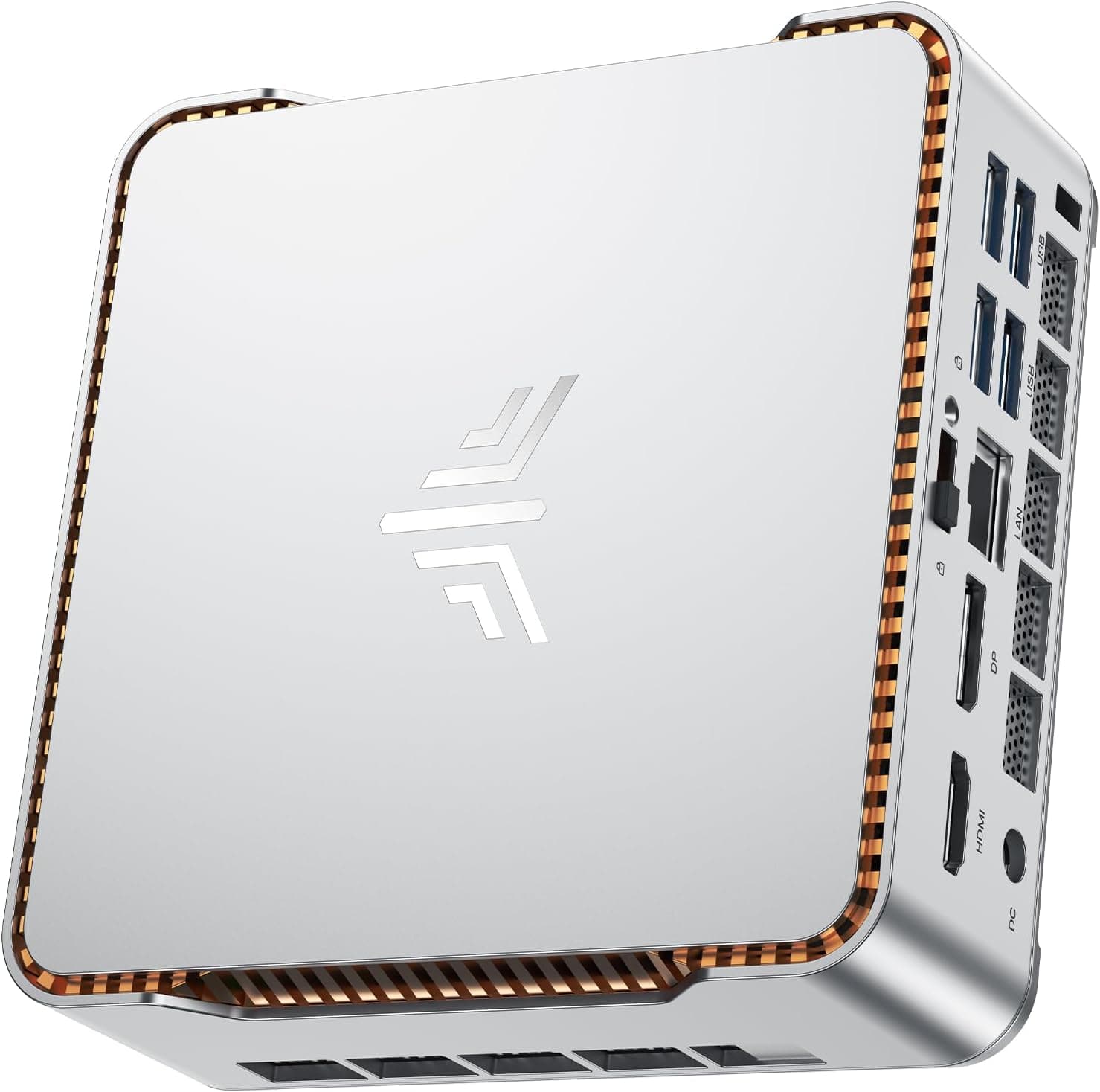
The two most relevant comparisons for the Mac mini M4 Pro Desktop are the Intel NUC 14 Pro (or its successors) and the base Mac mini M4. The Intel NUC 14 Pro represents the best of what Windows mini PCs can offer: compact form factor, capable Intel Core Ultra processor, and the full Windows ecosystem. The base Mac mini M4 is the obvious question of whether you actually need the Pro chip at all.
Against the Intel NUC 14 Pro, the Mac mini M4 Pro wins on raw performance for the workloads Apple silicon handles well, particularly video editing, machine learning, and sustained multi-threaded CPU tasks. The NUC runs Windows, which is a genuine advantage if you need Windows-specific software or gaming breadth. The NUC also allows RAM upgrades in some configurations, which the Mac mini doesn't (soldered memory). The Mac mini wins on efficiency, noise, and ecosystem integration for Apple users. Neither is objectively better; they serve different users.
Against the base Mac mini M4, the Pro version costs more and delivers more CPU and GPU cores, more unified memory bandwidth, and better sustained performance under heavy workloads. If you're doing the kind of work described above (video editing, large code compilation, 3D rendering), the Pro chip earns its premium. If you're not, the base M4 is genuinely excellent and costs significantly less. Don't buy the Pro if you don't need the Pro.
| Feature | Mac mini M4 Pro Desktop | Intel NUC 14 Pro | Mac mini M4 (base) |
|---|---|---|---|
| Chip | Apple M4 Pro | Intel Core Ultra | Apple M4 |
| RAM | 24GB Unified | Up to 64GB DDR5 (upgradeable) | 16GB Unified |
| Storage | 512GB SSD (soldered) | Upgradeable M.2 SSD | 256GB SSD (soldered) |
| OS | macOS | Windows | macOS |
| Form Factor | 5 x 5 inches | Compact (varies by config) | 5 x 5 inches |
| Front Ports | USB-C + headphone jack | USB-A + USB-C typically | USB-C + headphone jack |
| Ecosystem Integration | Full Apple ecosystem | Windows / Android | Full Apple ecosystem |
| Gaming | Limited (no discrete GPU) | Better Windows game library | Limited (no discrete GPU) |
| Upgradeable RAM/Storage | No | Yes (most configs) | No |
| Price Tier | Premium | Mid to premium | Mid |
Apple's standard warranty in the UK is one year of hardware coverage and 90 days of telephone support. You can extend this with AppleCare Plus, which adds a second year of hardware coverage and covers accidental damage (with an excess per incident). For a machine at this price point, AppleCare Plus is worth serious consideration. The cost of an out-of-warranty logic board repair on a Mac mini is substantial, and given that the memory and storage are soldered to the board, any failure of those components means a board-level repair or replacement. Apple's UK support network includes Apple Stores and authorised service providers, and the general consensus from owners is that Apple's in-store support experience is among the better ones in consumer electronics. You're not dealing with a faceless returns process; you're dealing with a named support organisation that has physical locations in most major UK cities.
Resale value for Apple silicon Macs is genuinely strong. The M1 Mac mini, released in late 2020, still commands a meaningful second-hand price today, which is unusual for desktop computer hardware. The M4 Pro Mac mini should follow a similar trajectory, particularly if Apple maintains its pattern of supporting Mac hardware with macOS updates for six to seven years from release. That support window matters for resale because a machine that still receives the latest macOS is a machine that still runs the latest software, which keeps it useful and valuable to second-hand buyers. If you upgrade in three years and sell this machine, you're likely to recover a higher proportion of your original spend than you would from a Windows mini PC of equivalent age.
The upgrade path question is important to answer honestly: there isn't one, in the traditional sense. The M4 Pro Mac mini's memory and storage are soldered. You cannot add RAM or swap the SSD. If you need more storage, you add external drives. If you need more RAM, you buy a new machine. This is a deliberate design choice that enables the compact form factor and the unified memory architecture's performance benefits, but it means you need to buy the right configuration upfront. The 24GB / 512GB configuration reviewed here is a sensible starting point for professional use, but if you're a heavy video editor or work with very large datasets, it's whether the 48GB configuration (if available) better matches your long-term needs. Buying underpowered to save money now and replacing the machine sooner is a more expensive long-term strategy than buying the right spec once.
The sticker price includes UK VAT, so what you see at £1,599.00 is what you pay. There are no hidden import costs or additional taxes to factor in for UK buyers purchasing through Amazon. But the total cost of ownership picture is broader than the purchase price. The Mac mini doesn't include a monitor, keyboard, or mouse. A decent 4K monitor suitable for the M4 Pro's display output capability costs anywhere from £300 to well over £1,000 depending on your requirements. A keyboard and mouse add another £50 to £150 if you're not using existing peripherals. Budget realistically for peripherals if you're setting up from scratch, because the Mac mini is a headless computer by design.
Running costs are genuinely low. Apple's M4 Pro chip is exceptionally power-efficient for its performance class. Published power consumption figures for the Mac mini M4 Pro under typical workloads are well below what a comparable Windows desktop with a discrete GPU would draw. At the UK electricity rate of approximately 27p per kWh, even running the Mac mini for eight hours a day, five days a week across a full year, the electricity cost is modest. This is a meaningful advantage over a Windows desktop with a discrete GPU, which can draw several times more power under load. Over three years of daily use, the efficiency advantage translates to a real saving that partially offsets the premium purchase price.
External storage is the most likely co-purchase beyond peripherals. If you're a video editor or photographer working with large files, a fast external SSD or a NAS (network-attached storage) device for archiving is essentially a required addition to the 512GB internal drive. A quality Thunderbolt-connected external SSD suitable for active project work adds to the total outlay. A NAS for archiving adds more. Factor these into your budget planning upfront rather than discovering the need three months after purchase. The Thunderbolt ports on the Mac mini support fast external storage connections, so the performance of a good external drive is genuinely usable for active work, not just backup. AppleCare Plus, if you choose it, adds to the total cost but reduces financial risk over the ownership period, which at this price point is a reasonable trade.
The Mac mini M4 Pro is a first-generation product in the M4 Pro form factor, which means the long-term failure data is still accumulating. That said, the Mac mini line has a strong reliability track record across previous generations, and the M4 Pro chip itself is a refined evolution of Apple silicon rather than a completely new architecture. The owner review pool of 83 reviews with a 4.5-star average doesn't show patterns of widespread hardware failures or quality control issues that would suggest a problematic batch. The most common owner complaints are about the things that are by design rather than defects: the limited internal storage, the inability to upgrade RAM, and the premium price. These are features of the product, not bugs, but they're about before you buy.
Under UK consumer law, you have meaningful protections beyond the manufacturer's warranty. The Consumer Rights Act 2015 gives you the right to a repair, replacement, or refund if the product develops a fault within six years of purchase (in England and Wales) that was present at the time of sale. Amazon's 30-day return window covers the initial period where you'd discover any out-of-box defects. Apple's one-year warranty covers manufacturing defects beyond that. And the Consumer Rights Act provides a backstop for the longer tail. In practice, the Mac mini's reliability track record means most buyers won't need to invoke these protections, but knowing they exist is reassuring at this price point.
Is it worth a re-roll if you get a bad unit? The honest answer is that the Mac mini doesn't have the quality-control lottery issues that affect some product categories. There's no coil whine concern (no discrete GPU, no spinning fan under light load), no dead pixel risk (no display), and the fan noise under heavy load is consistently described by owners as quiet rather than intrusive. The main risk scenario is a DOA unit or an early hardware failure, both of which are covered by Amazon's return policy and Apple's warranty respectively. If you do get a unit that behaves oddly out of the box, return it promptly within Amazon's window rather than waiting to see if it resolves itself. The soldered memory and storage mean there's no user-serviceable remedy for hardware faults, so a faulty unit needs to go back rather than be fixed at home.

The Mac mini M4 Pro Desktop is a genuinely excellent computer for the right person. The M4 Pro chip delivers real-world performance that embarrasses most Windows desktops of similar or greater size. The 24GB of unified memory handles demanding professional workloads without complaint. The build quality is premium. The form factor is genuinely impressive. And the ecosystem integration for Apple device users is cohesive in a way that's hard to replicate elsewhere. At 4.5 stars from 83 owners, the feedback is consistently positive, and the complaints that do exist (storage limits, no RAM upgrade path, premium price) are things you should know going in rather than surprises that emerge after purchase.
Who should buy this? Creative professionals (video editors, motion graphics artists, photographers, musicians) who are on macOS and need more power than the base M4 can provide. Software developers, particularly those working in Xcode or with large codebases, who will directly benefit from the M4 Pro's extra cores and memory bandwidth. Power users who want a compact, quiet, capable desktop and are already invested in the Apple ecosystem. Anyone who values long software support windows and strong resale value as part of their total cost calculation.
Who should skip it? Gamers who want to play the latest Windows titles at high settings: this isn't the machine for that. Users who need Windows-specific software with no macOS equivalent: macOS is excellent but it's not Windows. Anyone whose workload is primarily browsing, email, and light productivity: the base Mac mini M4 costs significantly less and handles all of that just as well. And anyone who might need to upgrade their RAM or storage internally in a year or two: the soldered components mean you're buying a fixed configuration for life.
The smarter buy if you don't need the Pro chip's headline performance is the base Mac mini M4. It's the same form factor, the same build quality, the same ecosystem, and the same front-facing ports, at a meaningfully lower price. If your workload doesn't regularly push CPU or GPU limits, the base M4 is a better value proposition. Buy the Pro when you know you'll use it. Don't buy it to future-proof a light workload, because you'll be paying for headroom you'll never need.
Editorial score: 9 out of 10. It loses a point for the soldered storage limitation and the 512GB base capacity that feels tight for a machine at this price. Everything else is close to best-in-class for a compact desktop.
| Case size | mini-ITX |
|---|---|
| CPU | Apple M4 Pro |
| GPU | integrated |
| Launch year | 2024 |
| OS | macOS |
| PSU wattage W | 155 |
| RAM GB | 24 |
| Storage GB | 512 |
| Storage type | SSD |
For creative professionals, developers, and power users who regularly push their hardware, yes. The M4 Pro chip delivers genuine performance advantages for video editing, code compilation, and demanding multi-threaded workloads. If your daily use is lighter, the base Mac mini M4 costs less and handles it just as well.
Against Windows mini PCs like the Intel NUC 14 Pro, the Mac mini M4 Pro wins on efficiency, noise levels, and ecosystem integration for Apple users, but the NUC offers upgradeable RAM and storage and the full Windows software library. Against the base Mac mini M4, the Pro version offers more CPU and GPU cores and higher memory bandwidth, but costs more and is only worth the premium if you regularly hit performance limits.
Pros: class-leading performance in a 5x5 inch chassis, quiet operation, front-facing USB-C and headphone jack, strong resale value, long software support from Apple. Cons: 512GB internal storage is limited for heavy media work, RAM and storage are soldered with no upgrade path, no discrete GPU for serious gaming, and the premium price only makes sense if you need the Pro chip's extra performance.
Yes, particularly if you're already on macOS. Plug in a monitor, keyboard, and mouse, power on, and the setup wizard takes around ten minutes. Migrating from another Mac via Apple's Migration Assistant is reliable and straightforward according to owner reports. Coming from Windows involves a learning curve with macOS, but most users adapt within a few weeks.
Amazon offers 30-day returns. Apple provides a one-year limited hardware warranty with 90 days of telephone support as standard. AppleCare Plus extends this to two years and adds accidental damage coverage. UK buyers also have additional protections under the Consumer Rights Act 2015 for up to six years from purchase. Check the product page for current warranty details.
The competition at a glance
~£1,599approx
The choice we'd make at this price band. Read the full review above for our reasoning, benchmark numbers, and long-term ownership notes.
Where it wins
Where it falls short
Where it wins
Where it falls short
Prices are approximate UK street prices at time of review. Live pricing on each retailer.
The Mac mini M4 Pro Desktop is one of the best compact desktops money can buy, but only buy it if your workload actually needs the Pro chip's extra headroom.
Buy at Amazon UK · £1,599.00
More from