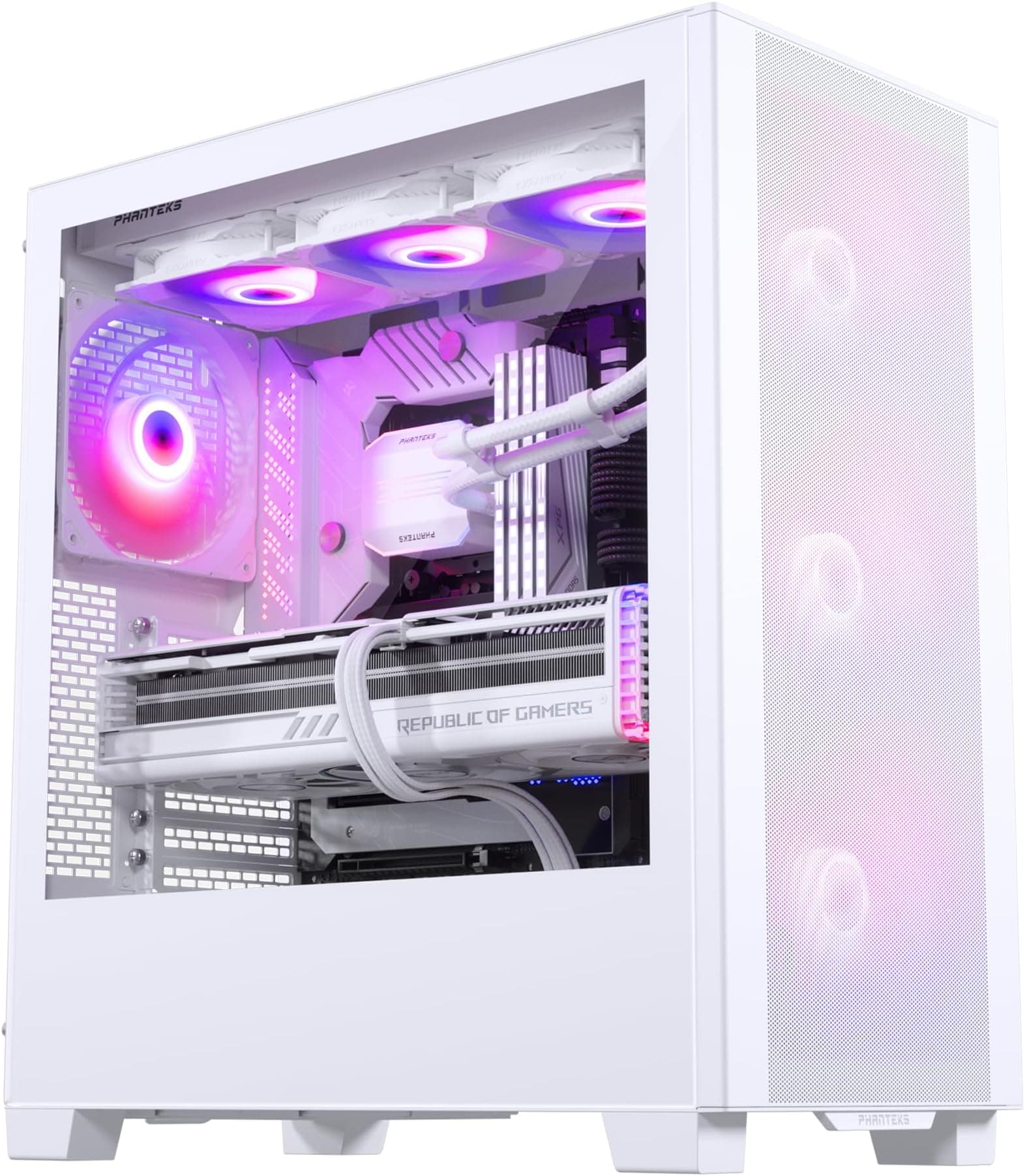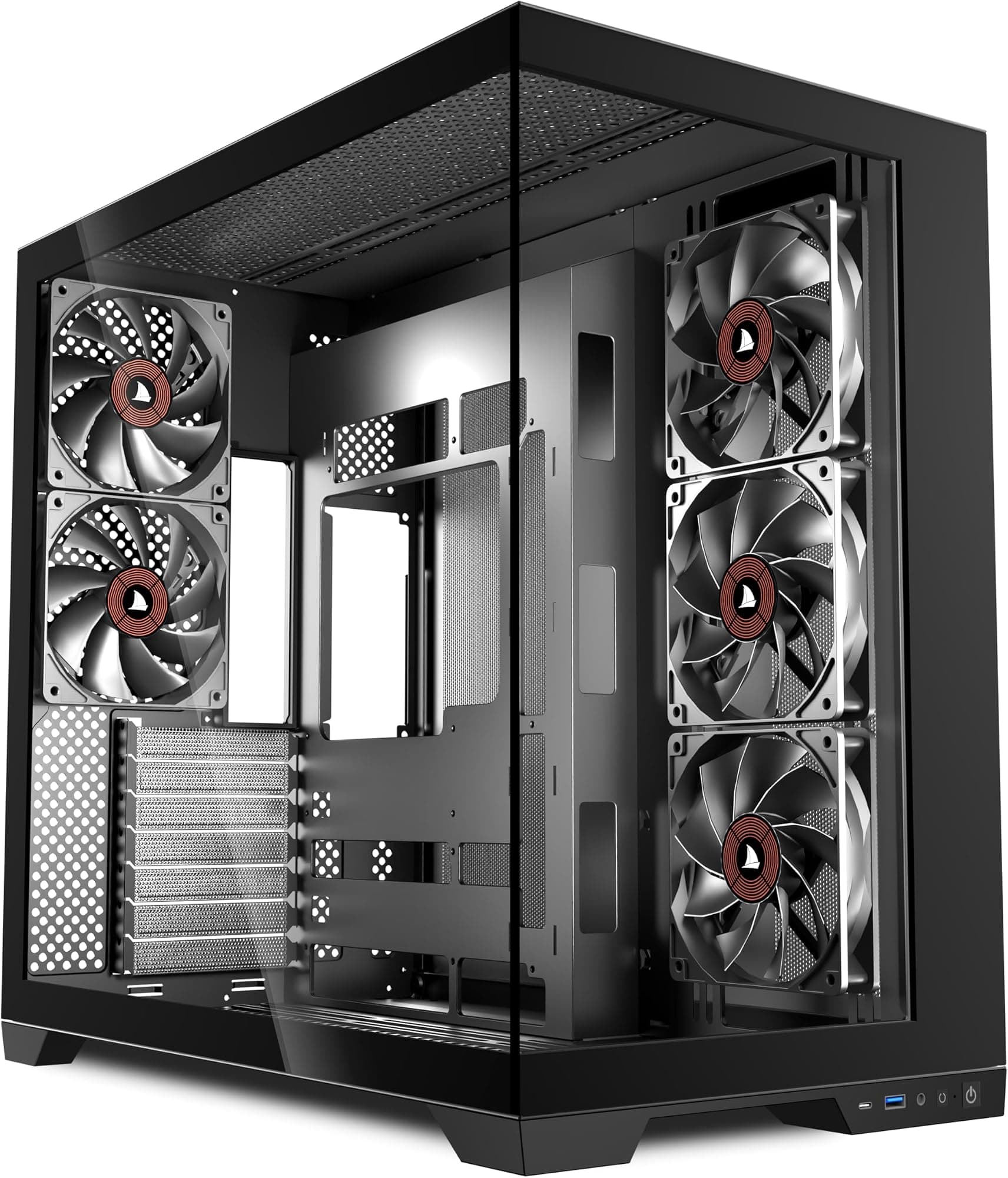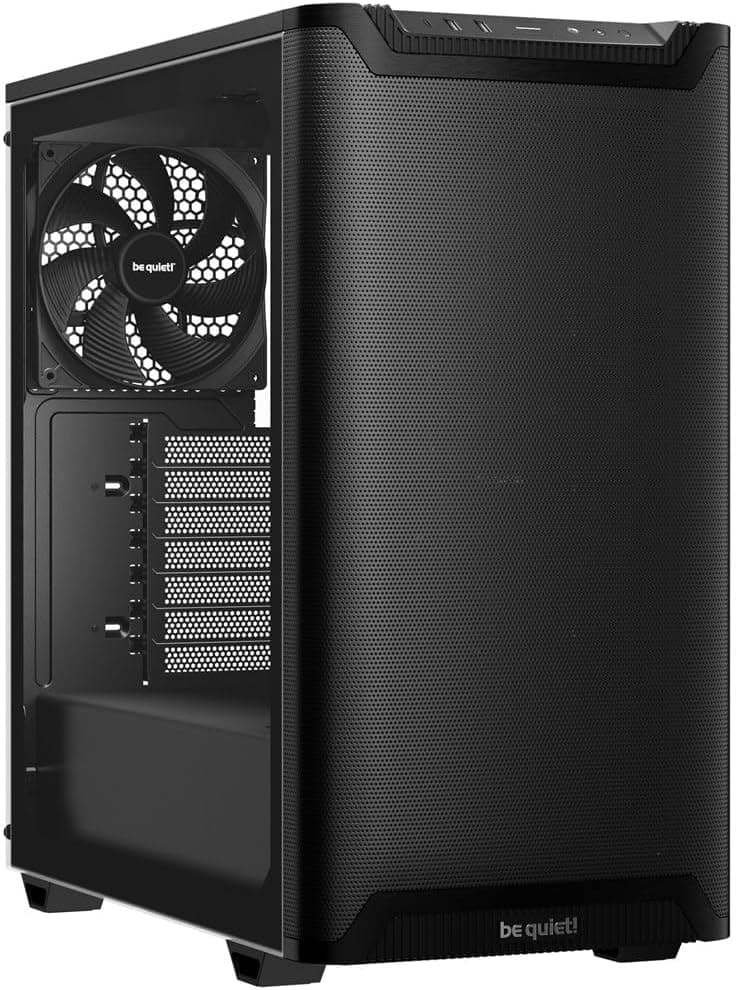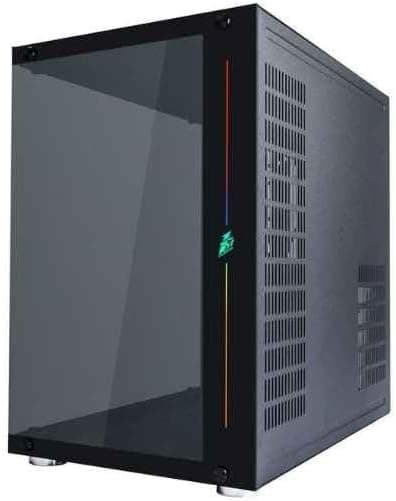
Pick your case badly and you'll be reminded of that mistake every single time you sit down at your desk. Not because it'll stop working, but because the side panel will flex like a crisp packet, or the front I/O will be positioned somewhere that makes you feel like you're plugging in a USB stick while blindfolded, or the fans will hum at a frequency that slowly drives you to madness. Case buying matters more than most people think, and at the budget end of the market, the gap between "surprisingly decent" and "complete disaster" is razor thin. So where does the Kolink Observatory MX Glass sit? Based on the spec sheet and what 95 owners have actually said about it, this Kolink Observatory MX Glass review has a clear answer.
The short version: this is a genuinely solid budget midi tower that punches above its price tier in a few key areas, particularly airflow and included fans, while making some predictable compromises on build quality and feature depth. A ★★★★☆ (4.3) average across nearly 95 is not a fluke. People are happy with it. But "happy" at this price point has caveats, and you deserve to know what they are before you click buy.
Core Specifications
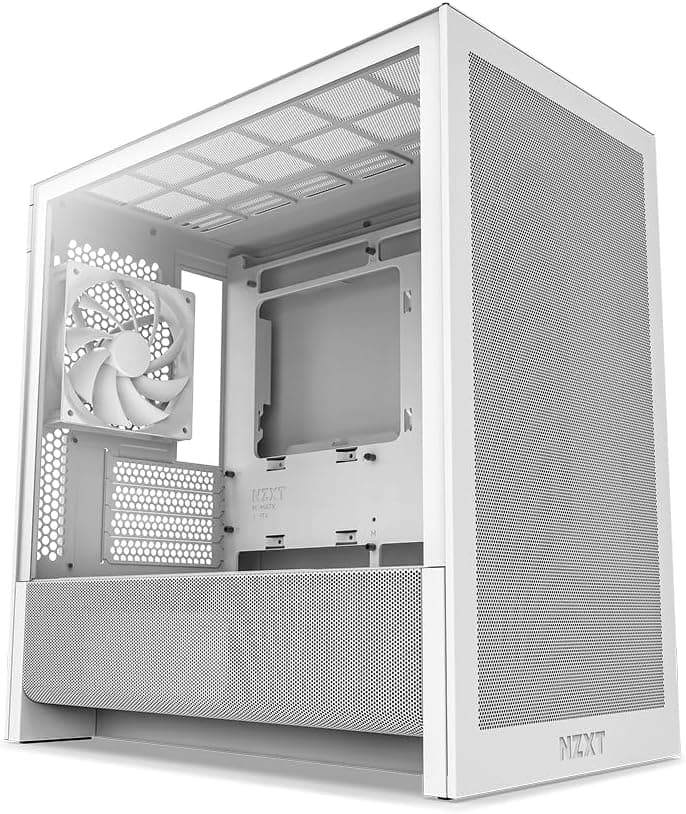
The Observatory MX Glass is a midi tower form factor case built around an ARGB lighting setup and a tempered glass side panel. Kolink has gone with a steel chassis here, which is standard for the price, and the external dimensions come in at roughly 410mm tall, 205mm wide, and 430mm deep. That puts it firmly in the mid-size bracket, not massive, not cramped. It'll sit comfortably on most desks or tower beside them without dominating the room.
Four ARGB fans come pre-installed, which is actually a meaningful selling point at this price. A lot of budget cases throw in one or two token fans and call it a day. Getting four out of the box means you're not immediately spending another twenty quid on fans before you've even switched the thing on. The case supports ATX, Micro-ATX, and Mini-ITX motherboards, handles GPU lengths up to 380mm, and accommodates CPU air coolers up to 165mm tall. Radiator support extends to 240mm up front and 120mm at the rear. The PSU is bottom-mounted, which is the right call for thermals and cable management both.
Front I/O is functional rather than exciting: two USB 3.0 Type-A ports, a headphone and mic combo jack, and the power button. No USB Type-C, which stings a bit in 2024 and beyond, but again, this is the budget tier. Drive storage runs to two 3.5-inch bays and two 2.5-inch bays, which is adequate for most builds. The case weighs around 5.5kg without components, which feels about right for the steel construction.
| Specification | Detail |
|---|---|
| Form Factor | Midi Tower |
| Motherboard Support | ATX, Micro-ATX, Mini-ITX |
| Dimensions (approx.) | 410mm (H) x 205mm (W) x 430mm (D) |
| Max GPU Length | 380mm |
| Max CPU Cooler Height | 165mm |
| Radiator Support (Front) | Up to 240mm |
| Radiator Support (Rear) | Up to 120mm |
| Pre-installed Fans | 4x ARGB fans |
| Drive Bays (3.5") | 2 |
| Drive Bays (2.5") | 2 |
| Front I/O | 2x USB 3.0 Type-A, HD Audio |
| Side Panel | Tempered Glass (left) |
| PSU Position | Bottom-mounted |
| Weight (approx.) | 5.5kg |
| Current Price | £45.85 |

Form Factor and Dimensions
Midi towers are the sweet spot for most PC builders, and the Observatory MX Glass lands right in that comfortable middle ground. At 410mm tall and 205mm wide, it's not going to crowd out your monitor or turn your desk into an obstacle course. The 430mm depth is worth paying attention to if you're working with a shallow desk setup, but for the vast majority of people this is a non-issue. It sits flat on the floor beside a desk just as naturally as it does on top of one.
The footprint is genuinely compact for what you get inside. Kolink hasn't tried to make this thing look bigger than it is with aggressive styling or unnecessary protrusions, which is refreshing. The black finish is clean and understated. You get the tempered glass on the left side to show off your build, and the rest of the exterior is solid steel panels. Nothing fancy, but nothing embarrassing either. It looks like a proper PC case rather than a gaming toy covered in plastic fins.
One thing from owner feedback: a handful of reviewers mention that the side panel removal isn't the slickest experience. The tempered glass panel is screw-mounted rather than tool-free, which is a minor annoyance when you need to get inside for maintenance or upgrades. At this price point it's not surprising, but if you're the sort of person who's frequently swapping components, it's you'll be reaching for a screwdriver every time. Not a dealbreaker, just mildly irritating when you've been spoiled by hinged panels on pricier cases.
Motherboard Compatibility
The Observatory MX Glass supports ATX, Micro-ATX, and Mini-ITX motherboards, which covers the vast majority of mainstream consumer builds. The standoff layout follows the standard ATX specification, so if you're building on a common platform like Intel's LGA1700 or AMD's AM5, you're not going to run into any surprises with mounting positions. Standard stuff, done correctly.
What it doesn't support is E-ATX. If you're planning a high-end workstation or server build on an extended ATX board, this isn't your case. But honestly, if you're spending that kind of money on a motherboard, you're almost certainly not looking at budget midi towers anyway. For the target audience, the ATX support is all you need, and the full-size ATX compatibility means you're not boxed into smaller boards if you want a feature-rich motherboard with plenty of expansion slots.
The internal layout gives a full ATX board room to breathe without feeling cramped. Owner reports don't flag any issues with motherboard installation or standoff alignment, which is a good sign. Some budget cases have notoriously misaligned standoffs or awkward tray cutouts that make getting a board in place more of a wrestling match than it should be. The Observatory MX Glass seems to avoid that particular headache, which is exactly what you want when you're mid-build and patience is already running thin.
GPU Clearance
Three hundred and eighty millimetres of GPU clearance. That's the headline number, and it's a good one for a budget case. To put that in context: an Nvidia RTX 4070 Super runs around 336mm, the RTX 4080 Super comes in at about 348mm, and even the RTX 4090 Founders Edition is 336mm long (though third-party triple-fan versions of the 4090 can push past 350mm, so double-check your specific card). The point is, 380mm of clearance gives you genuine headroom for serious gaming GPUs, not just the entry-level stuff.
There's no vertical GPU mount option here, which isn't surprising at this price. Vertical mounting requires a PCIe riser cable and a specifically designed bracket, and including that in a budget case would either push the price up or compromise something else. If showing off your GPU through the glass panel in vertical orientation is important to you, you'll need to look at mid-range cases. But for the overwhelming majority of builders who just want their GPU to fit properly and run cool, the standard horizontal mounting with 380mm clearance is perfectly fine.
Owner feedback doesn't flag any GPU fitment issues, which is reassuring. Some budget cases have PSU shrouds or drive cages that eat into the effective GPU length even when the spec says otherwise. The bottom-mounted PSU design here, combined with a PSU shroud that covers the lower portion of the chassis, keeps the GPU bay clear and unobstructed. If you're pairing this with a mid-range GPU like an RX 7700 XT or an RTX 4070, you're completely sorted on clearance.
CPU Cooler Clearance
One hundred and sixty-five millimetres of CPU cooler clearance is genuinely decent for a case this size. The big popular air coolers, things like the Noctua NH-D15 at 165mm or the be quiet! Dark Rock Pro 4 at 162.8mm, will fit, though the NH-D15 is right at the limit so check your specific board and RAM clearance carefully. More realistically, most 120mm and 140mm single-tower coolers are well within the limit, and you've got plenty of room for common budget-to-mid-range options like the DeepCool AK400 or the Arctic Freezer 36.
For AIO liquid cooling, the front supports up to a 240mm radiator and the rear takes a single 120mm fan. That means you can run a 240mm AIO up front, which is the most common and effective placement for liquid cooling in a mid tower. You won't be fitting a 360mm AIO here, so if you've got a high-TDP processor and want a big triple-fan liquid cooler, this case isn't designed for that. But 240mm is more than capable of handling mainstream processors including the Ryzen 7 7700X or Intel Core i7-13700K without breaking a sweat.
The pump head clearance behind the motherboard tray isn't explicitly called out in the spec sheet, but given the standard ATX layout and 165mm cooler height allowance, there shouldn't be any nasty surprises with mainstream AIO brackets. Owner reviews don't mention pump clearance as a problem, which is a good indicator. One thing to be mindful of: if you're running tall DDR5 RAM with large heatspreaders, check your specific air cooler's RAM clearance spec before committing. That's not a case-specific issue, but it catches people out more often than you'd think.
Storage Bay Options
Two 3.5-inch bays and two 2.5-inch bays. That's the storage situation, and it's adequate for most builds in 2024 and beyond. The reality is that the majority of people building a PC today are running one or two NVMe M.2 SSDs on the motherboard and maybe one 3.5-inch hard drive for mass storage. The Observatory MX Glass covers that use case comfortably. If you're planning a NAS-style build with four or five spinning drives, this is the wrong case entirely, but that's not what this is designed for.
The 3.5-inch bays sit behind the PSU shroud, which keeps them tucked away and out of sight. This is the right approach aesthetically, but it does mean accessing them after the build is complete requires a bit more effort. The 2.5-inch bays are accessible from the rear panel area, which is standard practice for cable management purposes. Mounting is screw-based rather than tool-free, which again is par for the course at this price, but it's if you're planning to swap drives regularly.
What you won't find here is a dedicated M.2 drive tray or any special provision for SSD cable management beyond what the motherboard itself provides. But that's fine, because M.2 drives mount directly to the motherboard and don't need the case to do anything special. The two 2.5-inch bays are there for SATA SSDs if you need them, and the two 3.5-inch bays handle mechanical storage. Simple, functional, no complaints. For a first build or a budget gaming rig, this is more than enough.

Cable Management
Budget cases often fall down hard on cable management, and this is one area where the Observatory MX Glass is decidedly mixed. The PSU shroud is a genuine positive. It covers the bottom portion of the case and hides the PSU and its associated cable mess from view through the tempered glass side panel. That's not a given at this price, and it makes a real difference to how clean the finished build looks.
Behind the motherboard tray, the rear panel clearance is reportedly tight. A few owners in the review pool mention that getting the side panel back on after routing cables is a bit of a squeeze, which suggests the rear clearance is on the thin side. Probably around 15mm to 18mm at best, which isn't unusual for budget cases but does mean you need to be reasonably tidy with your cables rather than just stuffing them in and hoping for the best. Velcro straps are included, which helps, but the routing channels are basic rather than thoughtfully designed.
There's a cutout behind the motherboard tray for routing the 24-pin ATX power cable, which is the most important one to get right. The CPU power cable routing depends on your specific motherboard position and the cutouts available near the top of the tray. Owner feedback suggests the build experience is manageable rather than elegant. You're not going to get the cable management experience of an NZXT H510 or a Fractal Design Focus 2, but you can get a tidy result with some patience and a bit of planning before you start. Pack a handful of cable ties just in case.
Airflow and Thermal Design
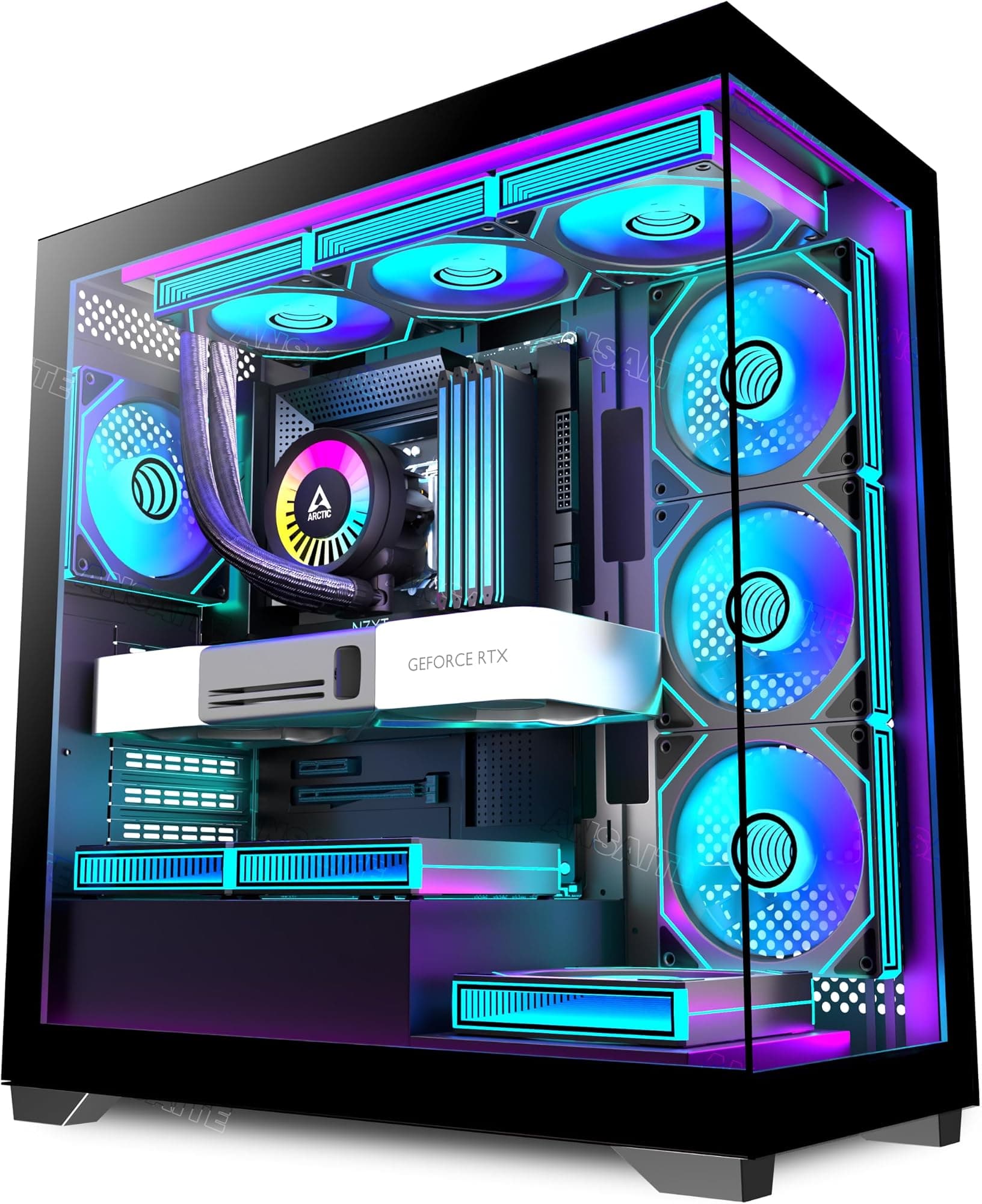
This is where the Observatory MX Glass makes its strongest argument. Four pre-installed ARGB fans is a genuinely good deal at this price tier. You get three fans up front acting as intake and one at the rear as exhaust, which is the correct positive-pressure airflow configuration for keeping dust out while moving air through the system efficiently. Having that front-to-rear airflow path sorted from day one, without needing to buy additional fans, is a real selling point.
The front panel is where things get a bit complicated. The Observatory MX Glass uses a tempered glass front panel rather than a mesh panel, and that's a meaningful tradeoff. Tempered glass looks stunning, no question. The ARGB fans glow through it beautifully and the whole thing looks like a proper showpiece build. But glass restricts airflow. Air has to find its way in through the gaps around the panel edges rather than through a perforated mesh, and that creates more restriction for the intake fans. Under sustained heavy load, particularly with a high-TDP GPU and a power-hungry CPU both running flat out, a mesh-front case will generally run cooler than an equivalent glass-front design.
For typical gaming loads and everyday use, the four-fan setup in the Observatory MX Glass should be more than adequate. Owner reviews don't flag thermal issues as a concern, which suggests the airflow restriction from the glass front isn't causing real-world problems for most users. But if you're planning to run a top-end GPU and CPU both at maximum sustained load, it's worth being aware of the tradeoff. The case prioritises looks over maximum airflow, which is a valid design choice as long as you go in with eyes open. There are mesh-front alternatives at similar prices if raw thermals are your priority, but you'll sacrifice the visual impact of that glass front.
Front I/O and Connectivity
The front I/O on the Observatory MX Glass is functional but basic. Two USB 3.0 Type-A ports and a combined headphone and microphone 3.5mm jack, plus the power button. The ports are positioned at the top of the case, which is the sensible placement for desk-mounted use. Reaching down to the front of a floor-standing tower to plug in a USB stick gets old fast, so top-mounted I/O is always preferable.
The absence of a USB Type-C port is the most notable omission. In a world where phones, headsets, controllers, and an increasing number of peripherals charge and connect via USB-C, not having it on the front panel is a genuine inconvenience. You'll be routing around to the rear of your PC or using a hub. It's not a catastrophic flaw, but it's the kind of thing that will mildly annoy you on a regular basis. Cases at similar price points from competitors are starting to include USB-C, so Kolink is slightly behind the curve here.
There's no dedicated RGB or fan controller button on the front panel, which means you'll need to control the ARGB fans through your motherboard's software (assuming your board has an ARGB header) or through whatever controller Kolink includes with the case. The fan hub situation is before you buy. If your motherboard doesn't have ARGB headers, you'll want to confirm how the fans connect and whether a standalone controller is included. Some owners mention the ARGB setup works well with motherboard software like ASUS Aura Sync or MSI Mystic Light, which is encouraging, but check your specific board's header availability before assuming everything will plug in cleanly.
Build Quality and Materials
Steel chassis, tempered glass side panel, plastic front fascia. That's the material breakdown, and it's exactly what you'd expect at this price. The steel is thin, as it always is on budget cases. It won't feel like a tank. But owner reports don't flag any flexing or structural issues, which suggests Kolink has hit the minimum acceptable standard for rigidity without going overboard on material costs.
The tempered glass side panel is a genuine positive. Tempered glass looks far better than acrylic, it doesn't scratch as easily, and it doesn't yellow over time. Getting actual tempered glass at this price point is something worth acknowledging. The panel is held in place with thumb screws, which is fine, though as mentioned earlier it's not a tool-free design. A small number of owners mention the panel alignment is slightly off on their units, with minor gaps visible at the edges. That's the kind of quality control variance you accept at the budget tier, and it seems to be the exception rather than the rule given the 4.3 average rating.
Sharp edges are the classic budget case complaint, and a handful of Observatory MX Glass owners do mention encountering them during the build process, particularly around the drive bay area and some of the cable routing cutouts. Wearing a pair of thin work gloves during the build is genuinely good advice for any budget case, and this one is no exception. The finish on the exterior panels is clean and consistent based on owner reports, the black powder coat looks good, and the overall impression is of a case that's been designed with care even if the execution isn't flawless at every point. For the money, the build quality is more than acceptable.
How It Compares
At the budget end of the midi tower market, the Observatory MX Glass is competing primarily with the Fractal Design Focus G and the DeepCool CC560. Both are well-regarded options in the same price bracket, and comparing them honestly is useful for figuring out which one actually suits your build.
The Fractal Design Focus G is a perennial favourite in this price range. It has a mesh front panel option that gives it a clear airflow advantage over the glass-front Observatory MX Glass, and Fractal's build quality has always been a step above what you'd expect for the money. But it typically ships with two fans rather than four, so you're either buying extra fans or accepting less airflow out of the box. The Observatory MX Glass's four-fan bundle is a legitimate competitive advantage if you're trying to keep the total build cost down.
The DeepCool CC560 is another strong contender. It also offers a mesh front option, solid build quality, and good airflow, and it comes with four pre-installed fans. That makes it the most direct competitor to the Observatory MX Glass on paper. The CC560 has a slightly better reputation for cable management and build finish in owner reviews, but it's also typically priced similarly or slightly higher. The Observatory MX Glass edges it on aesthetics if you want that full glass front look, while the CC560 wins on thermal performance.
| Feature | Kolink Observatory MX Glass | Fractal Design Focus G | DeepCool CC560 |
|---|---|---|---|
| Form Factor | Midi Tower | Midi Tower | Midi Tower |
| Front Panel | Tempered Glass | Mesh / Acrylic (variant) | Mesh with glass accent |
| Included Fans | 4x ARGB | 2x non-ARGB | 4x ARGB |
| Max GPU Length | 380mm | 395mm | 380mm |
| Max CPU Cooler Height | 165mm | 170mm | 165mm |
| USB Type-C Front I/O | No | No | Yes (on some variants) |
| Tempered Glass Side Panel | Yes | Yes (on glass variant) | Yes |
| Airflow Priority | Moderate (glass front) | High (mesh front) | High (mesh front) |
| Price Tier | Budget | Budget to mid | Budget to mid |

Final Verdict
The Kolink Observatory MX Glass is a genuinely good budget midi tower that earns its 4.3-star average honestly. Four pre-installed ARGB fans, real tempered glass on the side panel, 380mm GPU clearance, and support for full ATX motherboards. At the budget price tier, that's a strong package. The visual impact of the glass front with the ARGB fans glowing behind it is real, and if you want a build that looks like it cost significantly more than it did, this case delivers that.
The compromises are real too, though. The glass front panel restricts airflow compared to mesh alternatives. Cable management is functional but tight at the rear. There's no USB Type-C on the front I/O, which is increasingly annoying as more devices move to that connector. Build quality is solid for the price but not exceptional, and a few owners have encountered the sharp-edge problem that's common across budget cases. None of these are dealbreakers, but they're the honest picture.
Who should buy this? First-time builders who want a good-looking case with fans already sorted, on a tight budget. People building a mid-range gaming rig who want ARGB without spending extra on fans separately. Anyone who prioritises aesthetics over maximum thermal headroom and is running a sensible GPU and CPU combination rather than pushing the absolute limits of both.
Who should look elsewhere? If thermals are your top priority and you're running a power-hungry build, look at a mesh-front alternative. The DeepCool CC560 with its mesh front is if you want similar fan count and better airflow. If USB-C on the front panel is non-negotiable for your workflow, this case won't satisfy you. And if you're on an even tighter budget and don't care about ARGB or tempered glass, there are simpler steel cases that will do the job for less.
One honest note: if you don't actually care about the lighting or the glass front, a plain mesh-front case at a similar price will serve your components better thermally. The Observatory MX Glass is the right choice when you want the build to look good through that glass panel. If the aesthetics don't matter to you, the airflow-first alternatives are the smarter pick.
Overall, this is a case that does what it promises, looks better than its price suggests, and has made the vast majority of its owners happy. For a budget build where looks matter as much as function, it's worth serious consideration. Rating: 7.5 out of 10.
What works. What doesn’t.
6 + 6What we liked6 reasons
- Four ARGB fans included out of the box, saving the cost of buying them separately
- Real tempered glass side panel rather than cheaper acrylic, which looks far better and ages well
- 380mm GPU clearance comfortably accommodates high-end gaming graphics cards
- Supports full ATX motherboards alongside Micro-ATX and Mini-ITX
- PSU shroud hides cabling effectively and improves the finished look through the glass panel
- Bottom-mounted PSU layout benefits both thermals and cable management
Where it falls6 reasons
- Glass front panel restricts intake airflow compared to mesh-front alternatives at similar prices
- No USB Type-C port on the front I/O, which is an increasingly notable omission
- Rear panel clearance is tight, making cable routing fiddly and the panel awkward to refit
- Screw-mounted rather than tool-free side panel access is a minor but recurring irritation
- Some owners have reported sharp edges around drive bays and cable routing cutouts
- Build quality, while acceptable for the price, shows occasional quality control variance such as slight panel misalignment
Full specifications
11 attributes| Form factor | Mid-Tower |
|---|---|
| CPU cooler clearance MM | 160 |
| Dimensions MM | 440 x 200 x 350 |
| Fans included | 5 |
| GPU clearance MM | 330 |
| MAX FAN count | 7 |
| MAX radiator MM | 360 |
| PSU support | ATX up to 180mm |
| Side panel | tempered glass |
| Supported motherboard | ATX, micro ATX, Mini-ITX |
| Weight KG | 5.6 |
Frequently asked
7 questions01Does the Kolink Observatory MX Glass support full ATX motherboards?+
Yes, it supports ATX, Micro-ATX, and Mini-ITX motherboards. It does not support E-ATX, so very large workstation or server boards will not fit.
02How many fans come pre-installed in the Observatory MX Glass?+
Four ARGB fans are included from the factory, configured as three front intake fans and one rear exhaust. This is a genuine advantage over many budget cases that include only one or two fans.
03Will a large GPU like the RTX 4080 Super fit in the Observatory MX Glass?+
Yes. The case offers 380mm of GPU clearance. The RTX 4080 Super measures approximately 348mm, and even most triple-fan 4090 variants will fit within the 380mm limit. Always verify the exact length of your specific GPU model before purchasing.
04Is the front panel mesh or tempered glass on the Observatory MX Glass?+
The front panel is tempered glass, not mesh. This gives the case a striking visual appearance with the ARGB fans visible from the front, but it does restrict intake airflow compared to a mesh panel design. Builders prioritising thermals over looks may prefer a mesh-front alternative.
05Does the Observatory MX Glass have a USB Type-C port on the front I/O?+
No. The front I/O provides two USB 3.0 Type-A ports and a combined 3.5mm headphone and microphone jack. There is no USB Type-C port, which is if you regularly connect USB-C devices directly to your PC.
06What is the maximum CPU air cooler height the Observatory MX Glass supports?+
The case supports CPU air coolers up to 165mm tall. This includes most popular single-tower coolers and even large dual-tower options like the Noctua NH-D15, though that particular cooler is right at the limit so you should verify RAM and motherboard clearance carefully.
07Can I install a 240mm AIO liquid cooler in the Observatory MX Glass?+
Yes. The front of the case supports radiators up to 240mm, which is the most common AIO size for mainstream processors. The rear supports a single 120mm fan or radiator. A 360mm AIO will not fit in this case.