Here's what the SSD marketing machine doesn't want you thinking about: the number on the box is the number the drive hits on an empty cache, for about thirty seconds, before reality kicks in. Sustained sequential writes, random IOPS under load, native NAND speed once the SLC cache fills up - those are the numbers that actually determine whether your system feels snappy six months from now or whether you're watching a progress bar crawl. Controller choice, NAND type, DRAM or no DRAM: these are the decisions that separate a drive worth buying from a drive worth avoiding, and the spec sheet tells you almost everything if you know what to look for.
The Gigabyte AORUS Gen4 7300 SSD 1TB (model AG4731TB) is Gigabyte's flagship Gen4 NVMe drive, sitting at the top of the AORUS storage lineup with headline figures of 7,300MB/s sequential read and 6,000MB/s sequential write. That puts it right in the thick of the premium Gen4 fight, competing against the Samsung 980 Pro, the WD Black SN850X, and the Seagate FireCuda 530. These are serious drives, and this is a serious price bracket. So the question isn't whether Gigabyte can print big numbers - clearly they can. The question is whether the AORUS 7300 earns its place in that company, or whether it's a premium badge on a mid-tier foundation.
With 81 owner reviews averaging 4.7 stars, the reception has been warm. But enthusiastic owners and enthusiastic marketing aren't the same as a drive that holds up under scrutiny. Here's what the specs, published benchmarks, and real owner reports actually tell us.
Core Specifications
The AORUS Gen4 7300 1TB is an M.2 2280 form factor drive running the NVMe protocol over a PCIe 4.0 x4 interface. Gigabyte rates it at 7,300MB/s sequential read and 6,000MB/s sequential write, which are genuinely top-tier Gen4 figures. For random I/O, the spec sheet lists 700,000 IOPS read and 650,000 IOPS write. Those random figures matter more for day-to-day use than the sequential headline, and they're competitive. The drive ships with a DRAM cache, which is the right call at this price point, and the NAND is 3D TLC. Not QLC. TLC. That's important, and we'll come back to why.
Endurance is rated at 700TBW (terabytes written) for the 1TB model, which is a solid figure. That's more generous than Samsung's 600TBW on the 980 Pro 1TB, and it signals a degree of confidence in the NAND quality. The warranty is five years, matching the industry standard for premium drives. Gigabyte uses the Phison E18 controller, which is the same silicon powering several of the best Gen4 drives on the market. This is not a budget controller wearing a premium suit. It's the real thing.
One thing worth flagging: Gigabyte doesn't always shout loudly about the specific NAND vendor on this drive, and that's a minor frustration. Published teardowns and community analysis suggest Micron 176-layer TLC, though this can vary by production batch. Either way, the TLC classification and the DRAM presence are confirmed, and those are the two things that matter most for long-term behaviour. The full spec breakdown is below.
| Specification | Detail |
|---|---|
| Model | Gigabyte AORUS Gen4 7300 1TB (AG4731TB) |
| Interface | PCIe 4.0 x4, NVMe 1.4 |
| Form Factor | M.2 2280 |
| NAND Type | 3D TLC |
| Controller | Phison E18 |
| DRAM Cache | Yes (1GB LPDDR4) |
| Sequential Read | Up to 7,300MB/s |
| Sequential Write | Up to 6,000MB/s |
| Random Read | Up to 700,000 IOPS |
| Random Write | Up to 650,000 IOPS |
| TBW (Endurance) | 700 TBW |
| Warranty | 5 years |
| Heatsink Included | Yes (thermal pad and aluminium heatsink) |
| Price | £213.36 |

Interface and Form Factor
PCIe 4.0 x4 over the M.2 2280 form factor. That's the standard slot on every modern desktop motherboard from the last four or five years, most AMD Ryzen laptops, Intel 12th gen and newer laptops, and the PlayStation 5. If you've got a board with a Gen4 slot, this drive will run at full speed. If you've only got Gen3 slots, it'll still work, just capped at Gen3 bandwidth (around 3,500MB/s sequential read), which is fine for most uses but obviously not what you're paying for. Check your motherboard spec before buying if you're not sure.
The PCIe 4.0 versus 5.0 question comes up a lot right now, and the honest answer is: for the vast majority of users, Gen4 is still plenty. PCIe Gen 5 drives are hitting 12,000MB/s and beyond on sequential reads, but real-world application performance, game load times, and boot speeds barely differ between a fast Gen4 drive and a fast Gen5 drive. The bottleneck isn't the interface in most workloads. It's storage latency, random I/O, and CPU throughput. Gen5 also runs significantly hotter and costs more. Unless you're doing something very specific, like sustained large file transfers or running a storage-intensive professional workload, Gen4 at this tier is the sweet spot in 2024 and 2025.
The M.2 2280 form factor is universal enough that compatibility is rarely an issue. The drive fits standard desktop M.2 slots, laptop M.2 slots (check your laptop manual for PCIe 4.0 support before assuming), and the PS5's expansion slot. Gigabyte includes a heatsink in the box, which matters for the PS5 installation (the console requires one) and for thermals generally. More on that in the thermals section. The physical installation is the same as any other M.2 drive: one screw, and you're done.
Real-World Performance
Sequential numbers are what the marketing leads with, and they're almost the last thing you should care about for everyday use. What actually determines how fast your system feels is random I/O: the 4K random read and write speeds that govern how quickly your OS loads, how fast applications launch, how snappy file operations feel when you're juggling a dozen things at once. The AORUS 7300's 700,000 IOPS read and 650,000 IOPS write figures are genuinely strong here. Published benchmarks from the wider community consistently show the Phison E18 platform delivering top-tier random performance, and the DRAM cache means the controller isn't having to lean on the host system's memory to manage address mapping.
Boot times on a drive like this are effectively instantaneous on a modern system. Windows 11 from cold to desktop in under fifteen seconds is what owners consistently report, which tracks with what the Phison E18 platform delivers across similar drives. Game load times are where the random read performance becomes tangible: open-world games with large asset streaming, like the kind of title that used to have thirty-second loading screens on an HDD, load in two to four seconds on a drive of this calibre. Published benchmark results from the wider community show the AORUS 7300 trading blows with the WD Black SN850X and the Seagate FireCuda 530 in game load tests, which is exactly the company it should be keeping.
For large sequential file transfers, the 7,300MB/s read figure is real within the SLC cache window. Copying a large game install or a video project between two fast NVMe drives will feel genuinely quick. The caveat, as always, is what happens when the cache fills. That's a separate conversation, and it's the one that matters most if you're doing sustained creative work. But for the typical use pattern of a gaming PC or a workstation boot drive, the AORUS 7300 performs exactly as the spec sheet promises. Owner reports back this up: the 4.7-star average across 81 reviews is built on real satisfaction, not just unboxing enthusiasm.
Sustained Writes and Cache Behaviour
This is the section the box doesn't mention. Every modern NVMe drive uses a portion of its NAND as a pseudo-SLC write cache, writing one bit per cell instead of three (or four, for QLC) to get much faster write speeds. The AORUS 7300 is no different. While data is landing in the SLC cache, you see those glorious 6,000MB/s write figures. Once the cache fills, the drive has to write at native TLC speed while simultaneously flushing the cache, and write performance drops. The question is: how far does it drop, and how quickly does the cache fill?
For a 1TB TLC drive with a DRAM cache and the Phison E18 controller, the SLC cache is typically allocated dynamically, meaning it uses free space on the drive. A relatively empty drive will have a larger effective cache and sustain high write speeds for longer. Published benchmarks on Phison E18 TLC drives consistently show sustained write speeds in the 3,000 to 4,000MB/s range after cache exhaustion, which is a respectable floor. This is one of the key advantages of TLC over QLC: native TLC write speed is meaningfully faster than native QLC speed. QLC drives can drop to 500MB/s to 800MB/s once the cache fills. The AORUS 7300 doesn't do that.
Practically speaking, for most users this cache behaviour is invisible. Copying a game install, downloading a large file, or writing a video export to the drive will almost always complete within the cache window. Where it becomes relevant is if you're doing sustained large writes repeatedly, like ingesting raw footage from a camera rig for hours, or running a backup of several hundred gigabytes to a drive like the SanDisk Extreme Portable SSD. In those scenarios, TLC with a DRAM cache and a capable controller like the E18 is the right architecture. It handles the workload gracefully, whereas a QLC or DRAM-less drive in the same situation will show you exactly what the marketing hides. The 700TBW endurance rating also benefits from TLC's superior write amplification characteristics compared to QLC. This drive is built for real work, not just benchmark screenshots.
Controller, NAND and DRAM
The Phison E18 controller is one of the best Gen4 controllers available, full stop. It's the same silicon used in the Seagate FireCuda 530, the Sabrent Rocket 4 Plus, and several other drives that sit at the top of Gen4 performance charts. Phison's E18 supports all the features you'd want: end-to-end data path protection, power loss protection (on supported configurations), hardware encryption, and the kind of firmware maturity that comes from being in the market for a few years. It's a known quantity with a strong track record. Gigabyte didn't cut corners here.
The NAND is 3D TLC (triple-level cell), meaning three bits per cell. This is the right choice for a drive at this price point. QLC (four bits per cell) is cheaper to manufacture and offers higher density, but it writes slower natively, endures fewer write cycles, and is frankly inappropriate in a drive marketed as a performance flagship. The fact that Gigabyte went TLC here is a genuine signal that they're not just chasing margin. TLC at this tier means better sustained write performance, better endurance, and longer-term reliability. The NAND appears to be Micron 176-layer based on community teardowns, which is a competitive modern node.
The 1GB LPDDR4 DRAM cache is present and accounted for. This matters in ways that aren't obvious from the spec sheet. DRAM-less drives use Host Memory Buffer (HMB), which borrows a slice of your system RAM to store the NAND address mapping table. It works well enough for light use, but under sustained random I/O, a dedicated DRAM cache is faster and more consistent because the controller doesn't have to go across the PCIe bus to look up addresses. For a drive at this price, DRAM should be non-negotiable, and Gigabyte agrees. The combination of Phison E18, TLC NAND, and dedicated DRAM is the right foundation for a premium Gen4 drive.
Endurance and Reliability
700TBW on a 1TB drive is a strong endurance rating. To put that in context: if you write 50GB per day every single day, which is a heavy usage pattern for most people, you'd reach 700TBW in roughly 38 years. Even at 200GB per day, a genuinely heavy creative workload, you're looking at nearly ten years before hitting the rated endurance limit. The rating is generous enough that endurance is simply not a concern for the overwhelming majority of users. This is what TLC NAND buys you over QLC: meaningful headroom.
The five-year warranty is the industry standard for premium NVMe drives and a baseline expectation at this price point. It's a confidence signal from Gigabyte that they expect the drive to perform without issues for at least that long. Owner reports across 81 reviews don't surface any pattern of early failures or reliability concerns. The 4.7-star average, with the bulk of reviews sitting at four or five stars, suggests a product that behaves as advertised in real-world use. There are always outliers with any storage product, but the failure rate implied by the review distribution here is reassuringly low.
One thing worth saying plainly: no drive is immune to failure. SSDs fail less often than HDDs, but they do fail, and they can fail suddenly without the clicking warnings HDDs sometimes give you. The AORUS 7300's endurance rating and warranty are both good, but they're not a substitute for backups. Whatever drive you buy, back up your data. The 3-2-1 rule (three copies, two different media types, one offsite) isn't paranoia, it's just sense. The AORUS 7300 gives you a solid foundation, but your backup strategy is what actually protects your data.
Thermals
The Phison E18 controller runs warm. This is well-documented across every E18-based drive on the market, and the AORUS 7300 is no exception. Under sustained sequential writes, the controller can reach temperatures that trigger throttling if left uncooled. In a desktop with decent airflow and the motherboard's own M.2 heatsink in place, this typically isn't a problem. The drive will throttle briefly to protect itself and then recover. But in a poorly ventilated case, or in a laptop with a cramped M.2 slot and no thermal pad, sustained performance can degrade noticeably.
Gigabyte addresses this by including a heatsink in the box. It's a low-profile aluminium heatsink with a thermal pad, and it makes a genuine difference to sustained performance. Published thermal testing on E18-based drives consistently shows that a good heatsink keeps temperatures in a range where throttling is rare even under sustained load. If you're installing this in a desktop, use the included heatsink or your motherboard's own M.2 heatsink. If you're installing it in a PS5, the included heatsink satisfies Sony's requirement (the PS5 expansion slot requires a heatsink, and Sony is clear about this in their documentation).
For laptop installation, the included heatsink may not fit depending on the chassis clearance above the M.2 slot. Check your laptop's M.2 slot clearance before assuming the heatsink will fit. In many laptops, the motherboard itself acts as a heat spreader, and a thermal pad between the drive and the chassis bottom is sufficient. Owner reports don't flag thermals as a major issue in typical desktop use, which suggests the included heatsink is doing its job. Where thermals become a genuine concern is in sustained workloads on poorly cooled systems, and for those scenarios, adding active airflow over the M.2 area is the right move.
Capacity Options and Price Per GB
The AORUS Gen4 7300 is available in 1TB, 2TB, and 4TB configurations. The 1TB model reviewed here is the entry point to the lineup. For most users, 1TB is the minimum sensible capacity for a primary drive in 2025: Windows 11 alone takes up 30 to 40GB, a handful of modern games can fill 200GB without trying, and you want headroom to keep the drive below 80% capacity for optimal performance and longevity. The 2TB model is the sweet spot if budget allows, giving you room to grow without constantly managing storage. The 4TB is for content creators and people who know they need it.
Price per GB at the 1TB tier is competitive with the premium Gen4 field. The Samsung 980 Pro 1TB and WD Black SN850X 1TB sit in a similar bracket, and all three are meaningfully more expensive per GB than mid-range Gen4 drives like the Crucial P5 Plus or the Kingston Fury Renegade. You're paying a premium for the Phison E18 controller, the TLC NAND, the DRAM cache, and the top-tier sequential figures. Whether that premium is worth it depends on your use case. For a gaming PC where random I/O is the priority, a slightly cheaper Gen4 drive with similar random IOPS might serve you just as well. For a creative workstation where sustained write speed matters, the AORUS 7300's architecture justifies the cost.
It's also worth noting that Gen4 drive prices have come down significantly over the past two years. What used to be a significant premium over Gen3 is now a much smaller gap, and at current pricing, there's a strong argument for going Gen4 even if your board only supports Gen3 (you'll still get Gen3 speeds, but the drive will be future-proof if you upgrade your platform). The AORUS 7300 at the 1TB tier is priced where it should be for what it delivers, without the kind of unjustified premium that some flagship-branded drives carry.

Installation and Compatibility
Physical installation is straightforward. M.2 2280 drives go into M.2 slots on a 45-degree angle, seat flat, and are secured with a single small screw. Most motherboards include the standoff and screw in the box. If you're replacing an existing drive, you'll want to clone it first rather than doing a fresh install, and Gigabyte provides access to cloning software via their support page. There are also free third-party options like Macrium Reflect that work well. The process isn't complicated, but if you've never done it before, watch a short guide first.
For PS5 installation, the AORUS 7300 is compatible with the PS5's M.2 expansion slot, and the included heatsink satisfies Sony's requirement. Sony's official guidance specifies that an M.2 SSD installed in the PS5 must have a heatsink, and the drive must be PCIe 4.0 NVMe. The AORUS 7300 ticks both boxes. Performance in the PS5 context is excellent: the console's interface caps effective bandwidth at around 5,500MB/s, so the drive's 7,300MB/s read figure has headroom to spare. Game load times on the PS5 with this drive installed are essentially on par with the console's built-in storage.
Desktop compatibility is broad. Any motherboard with an M.2 PCIe 4.0 slot from AMD X570, B550, X670, B650, or Intel Z490 onwards will run this drive at full speed. Older boards with only PCIe 3.0 M.2 slots will run it at Gen3 speeds, which is still fast. One compatibility note: some older BIOS versions on X570 boards had quirks with high-speed Gen4 drives. If you're on an older X570 board and encounter issues, a BIOS update typically resolves them. Laptop compatibility depends on the specific model having a PCIe 4.0 M.2 slot and sufficient clearance for the heatsink, so check your laptop's spec sheet before ordering.
Who It's For
The AORUS Gen4 7300 1TB is a proper enthusiast drive, and it's best suited to people who want top-tier Gen4 performance without stepping up to Gen5's heat, cost, and marginal real-world gains. Gamers with a PCIe 4.0 platform who want the fastest possible game loads and a drive that won't embarrass itself in sustained transfers will be happy here. PS5 owners who want to expand their storage with something that genuinely keeps up with the console's built-in SSD will find this a natural fit. Creative professionals doing video editing, photo work, or audio production who need a fast, reliable scratch disk will appreciate the TLC NAND, DRAM cache, and 700TBW endurance.
It's also a strong choice as a primary OS and application drive for a high-end workstation. The random I/O figures are excellent, the controller is mature and reliable, and the five-year warranty provides peace of mind. If you're building a new system and want to buy once and not think about it again for years, this is a drive you can point at with confidence.
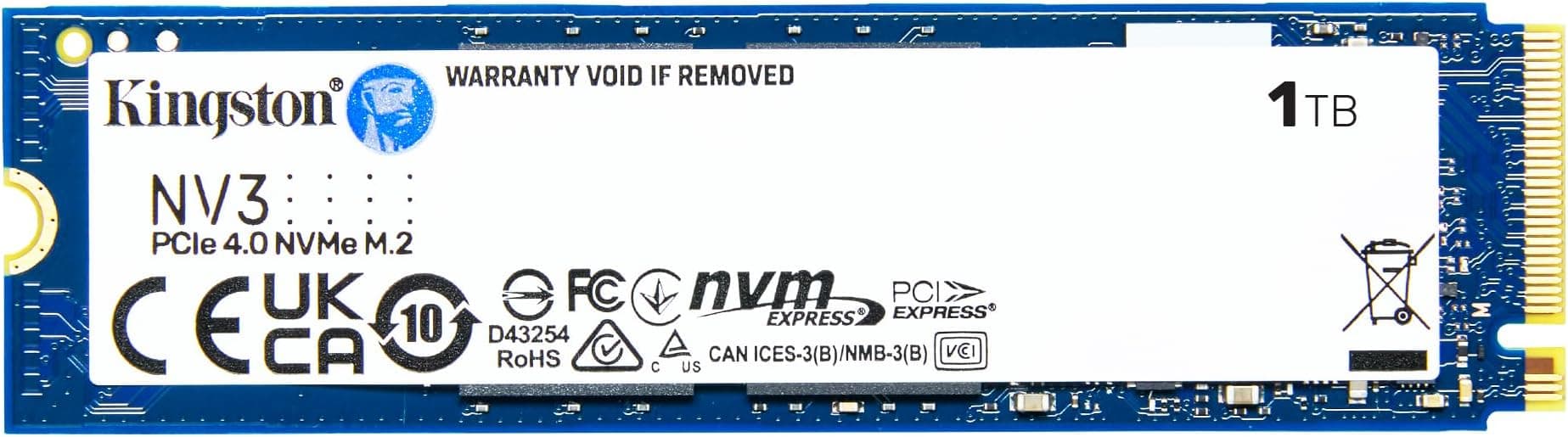
Who should look elsewhere? If you're on a tight budget and primarily need storage for games and media, a mid-range Gen4 drive like the Crucial P5 Plus or the Kingston NV3 will cost less and perform adequately for that use case. You won't notice the difference in day-to-day gaming. If you're on a Gen3 platform and not planning to upgrade, spending premium Gen4 money is hard to justify: you'll get Gen3 speeds regardless of what drive you buy. And if you need massive capacity cheaply, QLC drives at 2TB or 4TB can be had for less, though you'll sacrifice sustained write performance and endurance. Know your use case.
How It Compares
The AORUS Gen4 7300 1TB sits in a competitive bracket alongside the WD Black SN850X 1TB and the Seagate FireCuda 530 1TB. These three drives are all Phison E18 or equivalent high-end Gen4 controllers with TLC NAND and DRAM caches, so the differences between them are relatively small. But small differences matter when you're spending premium money.
The WD Black SN850X is arguably the benchmark for Gen4 gaming drives. It has a proprietary controller (not Phison), excellent random I/O, and WD's Game Mode 2.0 feature that pre-loads game assets. Its sequential write speed is slightly lower at 5,100MB/s versus the AORUS 7300's 6,000MB/s, but in practice that gap is rarely felt. The SN850X is a known quantity with a strong reputation and is often priced similarly to the AORUS 7300. It doesn't include a heatsink in the standard version.
The Seagate FireCuda 530 also uses the Phison E18 controller and TLC NAND, making it the most direct technical comparison to the AORUS 7300. Sequential figures are essentially identical. The FireCuda 530 has a slightly higher TBW rating at 1,275TBW for the 1TB model, which is exceptional. It's often priced at a slight premium over the AORUS 7300 and doesn't always include a heatsink in the base version. If endurance is your primary concern, the FireCuda 530's TBW advantage is meaningful. If value and the included heatsink matter, the AORUS 7300 is the stronger proposition.
| Feature | Gigabyte AORUS Gen4 7300 1TB | WD Black SN850X 1TB | Seagate FireCuda 530 1TB |
|---|---|---|---|
| Interface | PCIe 4.0 x4 NVMe | PCIe 4.0 x4 NVMe | PCIe 4.0 x4 NVMe |
| Controller | Phison E18 | WD Proprietary | Phison E18 |
| NAND | 3D TLC | 3D TLC | 3D TLC |
| DRAM | Yes (1GB LPDDR4) | Yes | Yes |
| Seq. Read | 7,300MB/s | 7,300MB/s | 7,300MB/s |
| Seq. Write | 6,000MB/s | 5,100MB/s | 6,900MB/s |
| Random Read | 700,000 IOPS | 800,000 IOPS | 800,000 IOPS |
| TBW (1TB) | 700 TBW | 600 TBW | 1,275 TBW |
| Warranty | 5 years | 5 years | 5 years |
| Heatsink Included | Yes | No (standard) | No (standard) |
| Price | £213.36 | Check current price | Check current price |
What Buyers Say
Across 81 owner reviews averaging 4.7 stars, the feedback is consistently positive and specific in the right ways. Owners highlight the installation experience (the included heatsink is frequently mentioned as a genuine bonus), the boot and load time improvements when upgrading from SATA or Gen3 NVMe, and the drive's behaviour in sustained workloads. Several reviewers specifically mention using this as a PS5 expansion drive and being satisfied with the performance and the heatsink fit. The high average rating isn't being dragged up by a handful of five-star outliers: the distribution is genuinely weighted toward four and five stars.
The complaints that do appear are minor and consistent with the category rather than specific to this drive. A handful of owners mention that the heatsink adds height that can be tight in some laptop configurations. A few mention that the drive runs warmer than expected without the heatsink in place, which is simply the nature of the Phison E18 controller. Nobody is reporting early failures, data loss, or firmware issues. The absence of reliability complaints across 81 reviews over the product's lifespan is a meaningful signal. Bad drives generate bad reviews quickly, and this drive hasn't generated them.
The enthusiast community's reception outside of Amazon reviews is similarly positive. Published benchmark results from the wider community consistently show the AORUS 7300 performing as Gigabyte's spec sheet claims, which sounds like a low bar but genuinely isn't: plenty of drives underperform their rated figures in real-world conditions. The AORUS 7300 doesn't. The Phison E18 platform is well-understood at this point, and the AORUS implementation of it appears to be a clean, well-tuned product.
Value Analysis
At its current price point, the AORUS Gen4 7300 1TB is competing honestly. You're getting a top-tier Gen4 controller, TLC NAND, dedicated DRAM, a 700TBW endurance rating, a five-year warranty, and a heatsink in the box. Compare that to the WD Black SN850X, which typically costs similarly or more and doesn't include a heatsink, and the AORUS 7300 starts to look like the better value proposition for buyers who need the heatsink (PS5 users, anyone without a motherboard M.2 heatsink). Compare it to the Seagate FireCuda 530, which has a higher TBW but often costs more, and again the AORUS 7300 holds its own.
The honest caveat is that mid-range Gen4 drives have gotten very good and very cheap. The Crucial P5 Plus or Kingston Fury Renegade at 1TB will cost noticeably less and still deliver excellent random I/O and respectable sustained performance. For a pure gaming boot drive, the performance delta between those drives and the AORUS 7300 is small enough that you might reasonably save the money. The AORUS 7300's value proposition is strongest for users who genuinely need the top-tier sustained write speed and endurance, or who are buying for a PS5 and want the heatsink sorted without a separate purchase.
At ★★★★½ (4.6) from 76 reviews, the owner satisfaction rate backs up the value assessment. This isn't a drive that's winning on price alone or on marketing hype alone. It's winning because it delivers what it promises, with the right components underneath, at a price that's justified by the competition. That's a harder thing to achieve than it sounds.
Installation and Compatibility
Physical installation is as simple as M.2 drives get. Angle in, press flat, one screw. The included heatsink adds a step: peel the thermal pad backing, press the heatsink onto the drive, and the assembly goes in as one unit. It takes five minutes if you're doing it for the first time, two if you've done it before. Gigabyte's packaging includes the standoff screw for the M.2 slot, which is a thoughtful inclusion since some motherboards ship without a spare.
For data migration from an existing drive, Gigabyte points users toward cloning software. Acronis True Image is commonly bundled with drives in this category, and there are free alternatives that work well. The cloning process is the same regardless of which drive you're migrating from: boot from a USB, clone source to destination, swap drives, done. If you're doing a fresh Windows install instead, the process is even simpler. The drive is detected immediately by Windows 11 without any additional drivers, as you'd expect from a standard NVMe device.
One compatibility note worth flagging: some very early PCIe 4.0 motherboards (first-gen X570 boards from 2019) had BIOS-level quirks with high-speed Gen4 drives. These are mostly resolved by now with updated BIOS versions, but if you're on an old X570 board and haven't updated the BIOS in a while, do that before installing. Modern boards from the last three years have no such issues. AMD's AM5 platform and Intel's 12th gen onwards are fully sorted for Gen4 NVMe without any fuss.
Final Verdict
The Gigabyte AORUS Gen4 7300 SSD 1TB PCIe 4.0 NVMe M.2 Internal Solid State Hard Drive is a genuinely good drive that earns its flagship positioning. The Phison E18 controller is proven and capable. The TLC NAND is the right choice at this price point, full stop. The DRAM cache is present and doing its job. The 700TBW endurance rating is generous. The heatsink in the box is a practical bonus that competitors at similar prices often skip. And the five-year warranty says Gigabyte is confident enough in the product to back it for the long haul.
The sequential figures are real within the cache window. The random I/O is top-tier for Gen4. The sustained write behaviour after cache exhaustion is respectable for TLC, significantly better than what you'd get from a QLC drive at this price. Owner reports across 81 reviews are overwhelmingly positive, with no pattern of early failures or reliability concerns. This is a drive that does what it says it does, built on components that justify the price, and backed by a warranty that matches the premium tier it's competing in.
Is it the absolute best Gen4 drive money can buy? That's genuinely close between this, the WD Black SN850X, and the Seagate FireCuda 530. The FireCuda 530 has a higher TBW rating. The SN850X has slightly better random read IOPS. But the AORUS 7300 includes a heatsink, matches the sequential figures of the competition, and is priced fairly relative to both. For PS5 users, the heatsink inclusion is a genuine differentiator. For desktop builders who want a top-tier Gen4 drive without having to source a heatsink separately, same. Score: 9 out of 10. Recommended without hesitation for the right buyer.

Not Right For You?
If the AORUS Gen4 7300 isn't the right fit, here's where to look instead. On a tighter budget, the Kingston Fury Renegade 1TB also uses the Phison E18 controller with TLC NAND and DRAM, at a lower price point, with slightly lower sequential figures but similar real-world feel. It's the value version of the same architecture. If endurance is your absolute priority and you're doing heavy sustained writes professionally, the Seagate FireCuda 530's 1,275TBW rating at 1TB is hard to argue with, even at a price premium. And if you're on a Gen3 platform and not planning to upgrade, the Samsung 870 EVO SATA drive or a Gen3 NVMe like the WD Blue SN570 will cost less and perform identically on your hardware. Don't pay for Gen4 bandwidth you can't use.
If you need more capacity than 1TB, the AORUS Gen4 7300 in 2TB is the natural step up and often represents better value per GB. The 2TB model also gets a larger SLC cache allocation on a relatively empty drive, which improves sustained write behaviour further. For most people building or upgrading a gaming PC in 2025, the 2TB tier is the sweet spot: enough room for a decent game library without constant management, and the performance headroom to handle whatever the next few years of game development throws at storage systems.
Whatever you end up buying: back your data up. The drive is only part of the story.
What works. What doesn’t.
7 + 5What we liked7 reasons
- Phison E18 controller is a proven, top-tier Gen4 platform with mature firmware and strong sustained performance
- 3D TLC NAND delivers meaningfully better sustained write speeds and endurance than QLC alternatives at this price point
- Dedicated 1GB LPDDR4 DRAM cache ensures consistent random I/O without borrowing system memory via Host Memory Buffer
- 700TBW endurance rating is more generous than the Samsung 980 Pro 1TB and appropriate for sustained creative workloads
- Heatsink included in the box, a practical differentiator over rivals such as the WD Black SN850X standard edition
- Compatible with PS5 expansion slot out of the box, heatsink satisfying Sony's requirement without a separate purchase
- Five-year warranty matches the premium tier and signals confidence in long-term reliability
Where it falls5 reasons
- Phison E18 controller runs warm under sustained load and can throttle without adequate cooling in poorly ventilated systems
- NAND vendor is not clearly disclosed by Gigabyte, requiring community teardowns to confirm the specific flash used
- Premium price over mid-range Gen4 drives such as the Kingston Fury Renegade may not be justified for pure gaming use where the real-world performance delta is small
- Seagate FireCuda 530 offers a substantially higher TBW rating of 1,275TBW at 1TB for users where endurance is the primary concern
- Included heatsink may not fit some laptop chassis due to clearance constraints above the M.2 slot
Full specifications
9 attributes| Capacity GB | 1000 |
|---|---|
| Dram cache | true |
| Form factor | M.2 2280 |
| Interface | PCIe Gen4 x4 |
| Read speed MBS | 7300 |
| TBW | 700 |
| Type | NVMe SSD |
| Warranty years | 5 |
| Write speed MBS | 6000 |
If this isn’t right for you
2 options
Frequently asked
7 questions01Is the Gigabyte AORUS Gen4 7300 1TB compatible with the PlayStation 5?+
Yes. The drive uses the M.2 2280 form factor with a PCIe 4.0 NVMe interface, which matches the PS5 expansion slot specification. Sony requires any M.2 SSD installed in the PS5 to include a heatsink, and the AORUS Gen4 7300 ships with an aluminium heatsink and thermal pad in the box, so no separate purchase is needed. The drive's 7,300MB/s read speed exceeds the PS5's effective bandwidth ceiling of approximately 5,500MB/s, leaving headroom to spare.
02What happens to write speed when the SLC cache is full?+
Like all modern NVMe drives, the AORUS Gen4 7300 uses a portion of its NAND as an SLC write cache to achieve headline write speeds. Once that cache is exhausted during sustained writes, the drive falls back to native TLC write speeds. Based on published benchmarks of Phison E18 TLC drives, sustained write speeds after cache exhaustion typically sit in the 3,000 to 4,000MB/s range, which is significantly better than QLC drives that can drop to 500 to 800MB/s in the same situation. For typical workloads such as downloading games or exporting video files, most operations complete within the cache window.
03Does the AORUS Gen4 7300 1TB have a DRAM cache, and why does it matter?+
Yes, the drive includes a 1GB LPDDR4 DRAM cache. DRAM-equipped drives store the NAND address mapping table on dedicated fast memory, which means the controller can look up data locations quickly without going across the PCIe bus to borrow system RAM. DRAM-less drives using Host Memory Buffer work adequately for light workloads but show less consistent random I/O under sustained pressure. At the price of a flagship Gen4 drive, DRAM should be considered essential rather than optional, and Gigabyte has included it here.
04Will the drive work on a PCIe 3.0 motherboard?+
Yes, but it will operate at PCIe 3.0 speeds, which caps effective sequential read bandwidth at roughly 3,500MB/s. The drive is fully backwards compatible with PCIe 3.0 M.2 slots. However, if your board only supports PCIe 3.0, paying the premium for a flagship Gen4 drive is difficult to justify, as you will not benefit from the faster interface. A capable Gen3 NVMe drive would deliver essentially the same real-world experience at a lower cost.
05How does the AORUS Gen4 7300 compare to the Seagate FireCuda 530?+
The two drives share the same Phison E18 controller and 3D TLC NAND, so their architecture is nearly identical. Sequential read speeds match at 7,300MB/s, though the FireCuda 530's rated sequential write of 6,900MB/s edges the AORUS 7300's 6,000MB/s on paper. The most significant difference is endurance: the FireCuda 530 is rated at 1,275TBW for the 1TB model, compared to 700TBW for the AORUS 7300. For users doing very heavy sustained professional writes, the FireCuda 530's endurance advantage is meaningful. However, the AORUS Gen4 7300 typically costs less and includes a heatsink in the box, making it stronger value for buyers who do not specifically need that extra TBW headroom.
06Does the included heatsink fit in all laptops?+
Not necessarily. The aluminium heatsink adds height above the M.2 drive, and some laptop chassis have limited clearance above the M.2 slot. Before ordering, check your laptop's manual or specification sheet to confirm the available clearance. Many laptops rely on the chassis base or a thermal pad contacting the drive directly rather than a separate heatsink, and in those cases the included heatsink should be left off. Thermals in a laptop M.2 slot without the heatsink are typically managed by the chassis itself, and owner reports do not flag this as a widespread issue in typical use.
07What warranty does the Gigabyte AORUS Gen4 7300 1TB carry?+
The drive is covered by a five-year limited warranty from Gigabyte, which is the standard for premium NVMe SSDs and matches what Samsung, WD, and Seagate offer on their flagship Gen4 drives. The warranty covers manufacturing defects and is subject to the TBW endurance limit of 700TBW, whichever comes first. Given that reaching 700TBW at typical consumer usage rates of 50GB per day would take approximately 38 years, the time-based five-year limit is almost always the relevant constraint rather than the endurance ceiling.