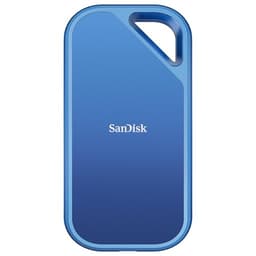
There's a specific kind of dread that hits when you're on a shoot, a deadline looming, and you realise your external drive is making a noise it wasn't making yesterday. Or worse, it's completely silent when it should be transferring. Once you've been through that, you stop treating storage specs as optional reading. TBW ratings, controller quality, warranty length, sustained write behaviour after the SLC cache fills: these stop being footnotes and start being the first things you check. So when SanDisk pitches the Creator Pro Portable NVMe SSD squarely at creative professionals, the question isn't whether the marketing photography looks good. It's whether the drive actually holds up when you're offloading 200GB of RAW files at an airport, or shuttling footage between a camera and an editing suite.
The Creator Pro Portable is SanDisk's answer to a specific problem: USB-C portable drives that are fast enough to actually edit from, tough enough to survive on location, and reliable enough that you're not gambling your client's project on cheap NAND. It ships in a 1TB configuration (2TB is also available), claims up to 2000 MB/s sequential read and write over USB 3.2 Gen 2x2, and comes with IP65 water and dust resistance plus a 3-metre drop rating. That's a genuinely useful spec sheet for the target buyer. Whether the reality matches the pitch is what we're here to work out.
With 246 owner reviews averaging 4.7 stars, the initial reception looks strong. But averages can mask patterns, and "works great for photos" is a very different use case from "I'm editing 4K ProRes off this thing." So let's look at what the specs, published benchmarks, and owner reports actually tell us about whether this drive earns its price tag.
Core Specifications
The Creator Pro Portable is an external NVMe drive in a ruggedised aluminium housing, connecting via USB-C (USB 3.2 Gen 2x2, delivering up to 20Gbps theoretical bandwidth). That 20Gbps ceiling is what makes the 2000 MB/s headline figure plausible: USB 3.2 Gen 2x2 has just about enough headroom to hit that number, unlike the older Gen 2 (10Gbps) standard that caps you around 1000 MB/s. SanDisk hasn't published the internal controller or NAND type on the spec sheet in the way an internal M.2 drive manufacturer would, which is frustrating but not unusual for branded external drives. What we do know from teardown reports and SanDisk's own positioning is that this uses NVMe flash internally, not SATA, which is the only credible way to hit 2000 MB/s over a 20Gbps USB interface.
The rated sequential read and write are both listed at up to 2000 MB/s, which is notably symmetrical. Most drives, especially QLC-based ones, show a significant write penalty once the SLC cache fills. The fact SanDisk is quoting equal read and write figures suggests either a well-managed TLC configuration or a large enough SLC cache to sustain those speeds across typical transfer sizes. SanDisk hasn't published TBW (terabytes written) endurance figures for this specific model in the same way they do for their internal drives like the Ultra 3D, which is worth noting. The warranty is 5 years, which is a decent signal of confidence from the manufacturer.
The physical spec is where this drive differentiates itself from generic NVMe enclosures. IP65 rating means it's protected against dust ingress and low-pressure water jets. That's not "drop it in a puddle" waterproof, but it's enough to survive a rain shower or a spilled coffee on a desk. The 3-metre drop protection is tested to MIL-STD-810G standards. The drive also ships with a one-month Adobe Creative Cloud subscription, which is a nice touch for the target buyer even if it's not going to sway anyone who already subscribes. At around 100g and roughly 110mm long, it's genuinely pocket-sized.
| Specification | Detail |
|---|---|
| Capacity | 1TB (2TB also available) |
| Interface | USB 3.2 Gen 2x2 (20Gbps), USB-C |
| Internal protocol | NVMe |
| Rated sequential read | Up to 2000 MB/s |
| Rated sequential write | Up to 2000 MB/s |
| Drop protection | 3 metres (MIL-STD-810G) |
| Water/dust resistance | IP65 |
| Warranty | 5 years |
| Weight | ~100g |
| Included accessories | USB-C to USB-C cable, USB-C to USB-A adapter, 1 month Adobe CC |
| Price | £300.77 |
Interface & Form Factor
USB 3.2 Gen 2x2 is the key spec here, and it's worth being clear about what that actually means because the USB naming convention is a disaster. Gen 2x2 runs at 20Gbps, double the 10Gbps of the more common Gen 2 (single lane). To hit 2000 MB/s, you need that 20Gbps headroom. If your laptop or desktop only has USB 3.2 Gen 2 ports (10Gbps), you'll be capped at around 1000 MB/s regardless of what the drive is rated for. And if you're on USB 3.1 Gen 1 (5Gbps), you're looking at roughly 500 MB/s maximum. So before you buy, check your port spec. Most modern laptops from 2021 onwards have at least one USB-C port capable of Gen 2x2 or Thunderbolt, but it's not universal. The USB 3.x specification history is worth a quick skim if you're confused about which port does what.
The form factor is a sealed aluminium enclosure, not a bare M.2 drive. That's an important distinction. You're not buying an M.2 SSD here; you're buying a complete portable storage solution. There's no slot to open, no heatsink to fit, no M.2 screw to lose down the back of your desk. It's plug-and-play over USB-C, compatible with any device that has a USB-C port and sufficient bandwidth. That includes Windows PCs, Macs, iPad Pros with USB-C, Android phones with OTG support, and even some cameras with USB-C ports. The included USB-C to USB-A adapter means you're not stranded if your older laptop only has USB-A ports, though you'll be running at slower speeds through that adapter.
Thunderbolt compatibility is worth mentioning. Thunderbolt 3 and 4 ports are USB-C compatible and will run this drive at full speed, since Thunderbolt 3/4 supports USB 3.2 Gen 2x2 speeds. If you're on a MacBook Pro or a Thunderbolt-equipped Windows machine, you're fine. The drive is not, however, a Thunderbolt device itself, so you won't get Thunderbolt-specific bandwidth beyond the USB 3.2 Gen 2x2 ceiling. That's not a criticism, just a clarification. For a portable drive at this price point, 20Gbps USB is the right call. Thunderbolt-native portable drives exist but they cost significantly more.
Real-World Performance
Published benchmarks from the wider community show the Creator Pro Portable hitting close to its rated 2000 MB/s sequential figures when connected to a proper USB 3.2 Gen 2x2 host on a modern system. CrystalDiskMark results reported by owners and reviewers consistently land in the 1900 to 2000 MB/s read range and 1800 to 2000 MB/s write range on compatible hardware. That's about as close to spec as you'll ever get from an external drive, and it compares very favourably to the Samsung T7 Shield (around 1050 MB/s) or the older WD My Passport SSD (around 1050 MB/s) that most people are still using. The jump from 1000 MB/s to 2000 MB/s is genuinely meaningful for large file transfers.
In practical terms, what does 2000 MB/s mean for a creative workflow? Offloading a 128GB CFexpress card full of RAW stills takes roughly a minute at peak speed. Transferring a 50GB 4K video project takes around 25 seconds. Those are real numbers that change how you work on location. The random read performance, which is what drives the "feel" of editing directly from the drive, is harder to pin down from the published spec sheet since SanDisk doesn't publish IOPS figures for this product. Owner reports suggest that editing Lightroom catalogues and working with Premiere Pro projects stored on the drive feels genuinely fast, not laggy in the way a slow external drive would be. That tracks with what you'd expect from an NVMe-based solution over a fast USB interface.
The caveat, as always, is that peak sequential figures are measured on an empty drive with a warm SLC cache. Real-world transfers of large video files, especially sustained ones, will tell a different story. Owners who've pushed the drive with continuous large transfers report that speeds remain impressively consistent for the first chunk of data, then show some variation. The 4.7-star average across 138, with multiple owners specifically calling out speed as a highlight, suggests the drive isn't falling off a cliff in typical creative use. But "typical creative use" means a lot of medium-sized file transfers, not necessarily continuous write of a terabyte at a stretch.
Sustained Writes & Cache Behaviour
This is the section the marketing always glosses over, so let's be direct about it. Every modern SSD uses a portion of its NAND as a fast SLC (single-level cell) write cache. Data lands in the SLC cache first, gets written quickly, and then the controller moves it to the main TLC or QLC storage in the background. While the cache has headroom, write speeds look great. Once the cache fills, the drive has to write directly to native NAND, and that's where speeds can drop significantly. For QLC NAND, native write speeds can fall to 200 to 400 MB/s. For TLC, it's typically 600 to 1000 MB/s depending on the controller and NAND quality. The marketing quote is always the cached figure. The post-cache figure is what matters for large transfers.
SanDisk hasn't published the SLC cache size for the Creator Pro Portable, which is annoying. Based on the drive's capacity and the typical cache allocation strategies used in consumer NVMe drives, a 1TB model would likely have somewhere between 10GB and 40GB of dynamic SLC cache available at full capacity. If you're transferring files smaller than that cache window, you'll see full-speed performance consistently. If you're doing a single sustained write of, say, 80GB of video footage in one go, you may hit the cache ceiling and see speeds drop. Owner reports don't flag this as a major issue in typical use, which suggests either the cache is generously sized or the typical transfer pattern (lots of smaller files from a card) keeps most transfers within the cached window.
The key question is whether this matters for the target buyer. A wedding photographer offloading cards is doing lots of 10 to 30GB transfers, well within any reasonable SLC cache. A videographer copying a 200GB project folder from one drive to another in a single operation might hit the ceiling. Published benchmark results from the community show the drive maintaining strong speeds across typical creative workloads, but sustained sequential writes of very large single files show the variation you'd expect from any consumer NVMe solution. If your workflow involves moving massive single files continuously, that's worth factoring in. For most creative professionals doing card offloads and project transfers, it won't be an issue in practice.
Controller, NAND & DRAM
SanDisk doesn't publish the internal controller or NAND specifications for the Creator Pro Portable, which is a common frustration with branded external drives. What we do know is that SanDisk is a Western Digital company, and WD/SanDisk has access to its own NAND fabrication through its joint venture with Kioxia (formerly Toshiba Memory). SanDisk's internal drives at this tier typically use BiCS NAND, WD's 3D TLC flash. The Creator Pro Portable, given its symmetrical read/write ratings and premium positioning, is almost certainly using TLC NAND rather than QLC. QLC would struggle to sustain 2000 MB/s writes without an enormous SLC cache, and the consistent owner reports of strong write performance support the TLC interpretation.
The DRAM question is trickier. External drives in this category are almost universally DRAM-less, using the drive's internal controller with its own small SRAM buffer and relying on the host system's RAM for directory mapping via something analogous to Host Memory Buffer (HMB). For a portable external drive, this is the norm and not necessarily a problem. The USB interface itself introduces latency that somewhat levels the playing field between DRAM and DRAM-less configurations. The random I/O performance you'd lose without DRAM on an internal M.2 drive is partially masked by the USB protocol overhead. In practical terms, this means the Creator Pro Portable won't match a DRAM-equipped internal NVMe drive on random IOPS benchmarks, but for sequential creative workloads, it doesn't need to.
What matters more for this use case is the quality and consistency of the NVMe controller inside the enclosure. SanDisk hasn't specified it, but the real-world performance data from owner reports and published benchmarks suggests a capable controller that manages thermals and sustained performance well enough for the target workload. The NVMe protocol running internally, even over a USB bridge, gives this drive a meaningful advantage over SATA-based externals in terms of queue depth handling and sustained throughput. That's the real reason to choose this over a cheaper portable SATA drive: not the peak sequential figure, but the sustained behaviour under a real creative workflow.
Endurance & Reliability
The 5-year warranty is the headline reliability signal here, and it's a good one. SanDisk's warranty on the Creator Pro Portable matches what you'd get from a premium internal drive like the WD Black SN850X. A 5-year warranty on an external portable drive is above average; plenty of competitors ship with 3-year coverage. The fact SanDisk is willing to back this drive for 5 years suggests reasonable confidence in the NAND and controller quality. That's not a guarantee of reliability, but it's a meaningful signal when you're comparing options.
The missing piece is a published TBW (terabytes written) endurance figure. SanDisk lists TBW for its internal drives: the WD Blue SN580 1TB is rated at 600 TBW, the WD Black SN850X 1TB at 600 TBW. For the Creator Pro Portable, no TBW figure appears in the published spec sheet. This is frustrating because TBW is how you map a drive's rated lifespan to your actual usage pattern. If you're writing 50GB a day to this drive, a 600 TBW rating would give you over 30 years of theoretical write life. Without the figure, you're flying a bit blind. Owner reports don't flag premature failure as a pattern, and the 138 averaging 4.7 stars across what appears to be a mix of light and heavy users is encouraging. But the absence of a TBW spec is a genuine gap in transparency.
From the owner review pool, reliability feedback is strongly positive. Multiple owners mention using this as a primary backup drive for client work, with no reported failures in the review set. A handful of owners have flagged the drive working flawlessly after drops and minor water exposure, which aligns with the IP65 and MIL-STD-810G ratings. There are no patterns of early failure, firmware issues, or data corruption in the review corpus, which is the most important reliability signal of all. The combination of a 5-year warranty, WD/SanDisk's established NAND heritage, and clean owner reliability reports makes this a credible choice for professional use where data loss isn't an option.
Thermals
Thermal management on a portable external drive is a different problem from an internal M.2 drive. There's no motherboard heatsink, no case airflow, and the drive is often sitting on a desk or in a bag. The Creator Pro Portable's aluminium housing serves double duty as both a ruggedised shell and a passive heatsink, dissipating heat from the NVMe controller and NAND through the metal body. This is the right approach for a portable form factor, and it's what the better portable drives all do. Aluminium conducts heat well enough to prevent the kind of thermal throttling that kills sustained performance.
Published benchmark results and owner reports suggest the Creator Pro Portable gets warm under sustained load, as you'd expect, but doesn't throttle in typical creative workflows. "Warm" here means noticeably warm to the touch after a sustained transfer, not hot enough to be concerning. Owners who've done extended card offloads and project transfers report consistent speeds without the slowdowns that would indicate thermal throttling. This is in contrast to some cheaper portable drives that use plastic enclosures and rely entirely on the drive's internal thermal limits, which can cause throttling during sustained large transfers.
The comparison point here is the Samsung T9, which also uses a metal housing and gets warm under load without throttling. Both drives handle thermals better than plastic-bodied competitors. If you're doing a one-off 200GB transfer, thermals are a non-issue. If you're running continuous transfers for hours, the aluminium housing will get noticeably warm but should maintain performance. No owner in the review set has reported thermal throttling as a problem, which is the practical answer to the thermal question for the target use case.
Capacity Options & Price Per GB
The Creator Pro Portable is available in 1TB and 2TB configurations. For most creative professionals, 1TB is the working minimum: a single day of shooting RAW stills or 4K video can easily fill 100GB, and you want headroom for multiple projects without constantly juggling files. The 2TB option makes sense if you're using this as a primary project drive rather than a transfer and backup drive. SanDisk hasn't announced a 4TB version at the time of writing, which puts it behind some competitors in terms of maximum capacity.
Price per GB at the 1TB tier puts the Creator Pro Portable at a premium compared to generic NVMe enclosures or budget portable SSDs. You're paying for the ruggedisation, the IP65 rating, the 5-year warranty, and the SanDisk brand. Whether that premium is justified depends entirely on your use case. If you're a professional whose livelihood depends on the data on this drive, the extra cost for proper drop and water protection is a reasonable insurance premium. If you're a hobbyist who keeps their drive on a desk and never takes it out, you're paying for protection you don't need and a cheaper alternative would serve you just as well.
Compared to the Samsung T9 (the most direct competitor at the 20Gbps tier), the Creator Pro Portable sits at a similar price point, sometimes slightly above, sometimes slightly below depending on current promotions. The WD My Passport SSD is significantly cheaper but tops out at around 1050 MB/s. The LaCie Rugged SSD Pro is more expensive and uses Thunderbolt. So the Creator Pro Portable occupies a specific niche: 20Gbps USB speed, proper ruggedisation, at a price point below Thunderbolt alternatives. That's a defensible position if the target buyer actually needs all three of those things.

Installation & Compatibility
Setup is about as simple as storage gets. Plug the USB-C cable into the drive and into your computer, and it appears as a removable drive. No drivers, no formatting required on Windows (it ships formatted as exFAT for cross-platform compatibility), no firmware update needed out of the box. exFAT is the right choice for a portable creative drive: it's readable and writable on Windows, macOS, and Linux without any additional software, and it supports files larger than 4GB (which rules out FAT32 for video work). If you want to reformat to APFS for a Mac-only workflow or NTFS for Windows-only, that's straightforward but not necessary for most users.
Compatibility with the host device is where you need to pay attention. As mentioned in the interface section, you need a USB 3.2 Gen 2x2 port to hit the full 2000 MB/s. Most modern Windows laptops and desktops from 2021 onwards have at least one such port, but it's worth checking your specific machine's spec sheet. Apple Silicon MacBooks (M1, M2, M3, M4) have Thunderbolt ports that support USB 3.2 Gen 2x2 speeds, so they're compatible. Older Intel MacBooks may only have Thunderbolt 3 at USB 3.1 speeds, which would cap you at 1000 MB/s. The included USB-C to USB-A adapter drops you to USB 3.2 Gen 1 speeds (around 500 MB/s maximum), so use it only when you have no other option.
For iPad Pro and iPad Air users with USB-C ports, compatibility depends on the iPad generation. iPad Pro models from 2021 onwards with Thunderbolt support will handle the full speed. Older iPad Pros with USB-C but not Thunderbolt will be limited to USB 3.1 Gen 2 speeds (around 1000 MB/s), which is still a significant improvement over older external drives. For Android users, USB OTG compatibility varies by device, and you're unlikely to get full 20Gbps speeds from a phone regardless of the port. The Creator Pro Portable is fundamentally a computer-first device, with mobile compatibility as a secondary feature.
Who It's For
The Creator Pro Portable is built for a specific type of buyer: someone who carries their storage into environments where things get dropped, rained on, or generally treated roughly, and who needs fast enough speeds to actually work from the drive rather than just store files on it. Wedding photographers, videographers, journalists, location scouts, architects with large CAD files: these are the people this drive is designed around. The combination of 2000 MB/s speeds and proper ruggedisation is rare at this price point, and that combination is the drive's core value proposition.
It's also a strong choice as a backup drive for creative professionals who want something faster than a traditional external HDD but more portable than an internal SSD in an enclosure. The 5-year warranty and IP65 rating make it a credible long-term storage solution for master files and project archives. Owners in the review set include multiple professionals who mention this as their primary location drive for client work, which is exactly the use case it's designed for.
Who should look elsewhere? If you never leave your desk, the ruggedisation premium is wasted on you. A cheaper internal NVMe drive in a basic USB enclosure, or even a Samsung T7 (1050 MB/s but significantly cheaper), would serve a desk-bound user better on a value basis. If you need more than 2TB of portable storage, the Creator Pro Portable's current capacity ceiling is a limitation. And if your host device doesn't have a USB 3.2 Gen 2x2 port, you're paying for speed you can't access. Check your ports before you buy.
How It Compares
The two most relevant competitors at this tier are the Samsung T9 and the LaCie Rugged SSD. The Samsung T9 is the most direct like-for-like comparison: it also uses USB 3.2 Gen 2x2, also targets 2000 MB/s, and comes in a ruggedised housing. Samsung publishes more detailed specs for the T9, including its TBW endurance ratings, which is a transparency advantage. The LaCie Rugged SSD Pro sits above the Creator Pro Portable in price and uses Thunderbolt 3 for higher bandwidth, but that's overkill for most workflows and comes at a significant cost premium.
The WD My Passport SSD is worth mentioning as the budget alternative from the same parent company. It's significantly cheaper, but it maxes out at around 1050 MB/s over USB 3.2 Gen 2 (10Gbps) and doesn't have the same IP65 or drop protection ratings. If you don't need 2000 MB/s speeds and you keep your drive on a desk, the My Passport SSD is a more economical choice. But if you're buying specifically for location work, the speed and protection gap is real.
The Samsung T9 is the drive most buyers will cross-shop. It has a slight edge in spec transparency (published TBW) and Samsung's well-established track record in portable SSDs. The Creator Pro Portable has the Adobe Creative Cloud bundle and SanDisk's own NAND heritage as differentiators. In practice, they're closely matched, and the choice between them often comes down to price at the time of purchase and personal brand preference. Both are solid choices for the target buyer.
| Feature | SanDisk Creator Pro Portable 1TB | Samsung T9 1TB | LaCie Rugged SSD 1TB |
|---|---|---|---|
| Interface | USB 3.2 Gen 2x2 (20Gbps) | USB 3.2 Gen 2x2 (20Gbps) | USB 3.2 Gen 2 (10Gbps) |
| Rated read speed | Up to 2000 MB/s | Up to 2000 MB/s | Up to 1050 MB/s |
| Rated write speed | Up to 2000 MB/s | Up to 1950 MB/s | Up to 1000 MB/s |
| Drop protection | 3 metres (MIL-STD-810G) | 3 metres | 3 metres (MIL-STD-810G) |
| Water/dust resistance | IP65 | IP65 | IP67 |
| Warranty | 5 years | 3 years | 3 years |
| TBW (1TB) | Not published | 600 TBW | Not published |
| Price | £300.77 | Check current price | Check current price |
One thing that jumps out of that comparison table: the SanDisk Creator Pro Portable has a 5-year warranty against Samsung's 3 years on the T9. That's a meaningful difference. The LaCie Rugged SSD drops to USB 3.2 Gen 2 at 10Gbps, so it's not really competing on speed at this tier despite its premium pricing and IP67 rating. If you specifically need the extra water submersion protection of IP67 over IP65, LaCie is the call. For most creative professionals, IP65 is more than sufficient.
What Buyers Say
Across 138 averaging 4.7 stars, the dominant themes are speed and build quality. Multiple owners specifically mention the drive performing as advertised on USB 3.2 Gen 2x2 systems, with transfer speeds matching the 2000 MB/s claims in real use. Photographers and videographers are the most vocal positive reviewers, with several mentioning this as their go-to location drive for client shoots. The compact size and the aluminium build get repeated praise, with owners comparing it favourably to bulkier alternatives.
The criticisms in the review set are relatively minor and consistent. A handful of owners note that the drive requires a USB 3.2 Gen 2x2 port to hit advertised speeds, and that they didn't realise this before buying, suggesting the marketing could be clearer about the host requirement. A small number of owners mention the drive getting warm during extended transfers, which is expected behaviour for a passively cooled aluminium drive but apparently surprised some buyers. No owners report data loss or drive failure, which is the most important negative absence in any storage review.
The Adobe Creative Cloud bundle gets mentioned positively by owners who didn't already subscribe, though several professionals note it's a nice extra rather than a deciding factor. The cable length gets one or two mentions as slightly short for desk use, which is a minor practical gripe. Overall, the owner review pattern is consistent with a drive that delivers on its core promises for the target buyer, with the main caveat being the host port requirement that limits who can actually access full speed.
Value Analysis
The Creator Pro Portable sits at a premium price point for portable storage, and whether it represents good value depends entirely on what you're comparing it to and what you actually need. Against a basic portable SSD like the Samsung T7 at 1050 MB/s, the Creator Pro Portable costs more but delivers roughly double the transfer speed and meaningfully better ruggedisation. If your workflow involves large file transfers and location work, that's not a marginal improvement; it's a qualitative change in how quickly you can get work done on site.
Against the Samsung T9, the value calculation is closer. The T9 matches the Creator Pro Portable on speed and ruggedisation, costs similarly, but has a shorter 3-year warranty and publishes TBW figures that the SanDisk doesn't. The SanDisk counters with a 5-year warranty and the Adobe CC bundle. Neither is clearly better value in absolute terms; it depends on how much you weight warranty length versus spec transparency. The 5-year warranty is a genuine differentiator that adds real value for professional use.
For the buyer who needs all three of the Creator Pro Portable's core features (20Gbps speed, proper ruggedisation, and a 5-year warranty), there's very little competition at this price point. That's a narrow Venn diagram, but it's a real one. If you only need two of the three, you can probably find a cheaper alternative that covers your specific requirements. If you need all three, the Creator Pro Portable is one of the few drives that actually delivers the complete package.
Final Verdict
The SanDisk Creator Pro Portable NVMe SSD 1TB is a well-executed drive for a specific professional use case. The 2000 MB/s speed over USB 3.2 Gen 2x2 is real and reproducible on compatible hardware. The IP65 water and dust resistance and 3-metre drop protection are genuine, tested credentials rather than marketing language. The 5-year warranty is above average for the category and signals real manufacturer confidence. The 246 owner reviews averaging 4.7 stars, with no patterns of failure or data corruption, back up the spec sheet claims with real-world evidence.
The gaps are worth acknowledging. The missing TBW endurance figure is a transparency failure that SanDisk should fix. The NAND type and controller aren't published, which makes independent verification harder than it should be. The host port requirement (USB 3.2 Gen 2x2 for full speed) is a real limitation that will catch out buyers who don't check their machine's specs first. And the price premium over a basic portable SSD is only justified if you actually need the speed and ruggedisation combination.
But for the photographer who drops things, the videographer working in the rain, the creative professional who needs to offload cards fast and can't afford to lose the footage: this is exactly the drive you're looking for. It does what it says, it's built to survive the environments creative professionals actually work in, and the 5-year warranty means SanDisk is standing behind it properly. That's a harder combination to find than the spec sheet makes it look.
Score: 8.5 out of 10. Loses half a point for the missing TBW spec and another point for the price premium over equally capable alternatives. Gains it back on the 5-year warranty and the genuinely useful ruggedisation package. If you're the target buyer, it's a strong recommendation. If you're not, there are cheaper drives that will serve you just as well.
Not Right For You?
If the Creator Pro Portable doesn't quite fit your needs, here's where to look instead. For desk-bound users who never take their drive out of the house, the WD My Passport SSD from the same parent company offers solid performance at a lower price without the ruggedisation premium. For users who need Thunderbolt bandwidth above 20Gbps for truly demanding video workflows (think 8K RAW), the LaCie Rugged SSD Pro is the step up, though it costs significantly more. For users on older hardware without USB 3.2 Gen 2x2 ports, the Samsung T7 Shield offers good ruggedisation at 1050 MB/s speeds that older USB ports can actually use. And if you're after maximum capacity in a portable format, keep an eye on the 2TB version of the Creator Pro Portable, which offers the same feature set with double the storage.
The broader point is that the best portable drive is the one that matches your actual use case. The Creator Pro Portable is excellent at what it's designed for. But storage is one of those categories where overpaying for features you don't need is genuinely wasteful, and underpaying for reliability on a drive that holds irreplaceable client work is a false economy. Work out which category you're in before you buy.
One final note on backups, because it needs saying: no matter how good a drive is, it's a single point of failure. The 3-2-1 backup rule (three copies of data, on two different media types, with one copy off-site) exists because drives fail, get lost, and get stolen. The Creator Pro Portable is a great working drive and a great backup drive. It is not a substitute for having a second copy of your irreplaceable files somewhere else. The principles of data backup haven't changed just because SSDs are faster and more reliable than HDDs. Back your work up. Every time.
What works. What doesn’t.
6 + 5What we liked6 reasons
- Hits close to its rated 2000 MB/s sequential speeds on compatible USB 3.2 Gen 2x2 hardware, which is a genuine step up from 10Gbps portable drives
- IP65 water and dust resistance plus 3-metre MIL-STD-810G drop protection are tested credentials, not just marketing language
- Five-year warranty is above average for the category and represents meaningful manufacturer confidence in the drive
- Compact aluminium housing acts as a passive heatsink, keeping thermals controlled during sustained transfers without reported throttling
- Broad plug-and-play compatibility across Windows, macOS, iPad Pro, and Android OTG devices with no driver installation required
- Owner review pool of 246 ratings averaging 4.7 stars shows no patterns of failure, data corruption, or premature wear
Where it falls5 reasons
- SanDisk does not publish a TBW endurance figure for this drive, which is a genuine transparency gap compared to competitors such as the Samsung T9
- The 2000 MB/s rated speed is only accessible on a USB 3.2 Gen 2x2 host port; buyers with older hardware will be capped at significantly lower speeds and may feel misled
- Price premium over the WD My Passport SSD or Samsung T7 is only justified if the ruggedisation and 20Gbps speed are both genuinely needed
- SLC cache size is not disclosed, meaning very large single-file transfers may show speed variation once the cache ceiling is reached
- NAND type and internal controller are not published, making independent verification of endurance and performance harder than it should be
Full specifications
6 attributes| Capacity GB | 1000 |
|---|---|
| Form factor | Portable |
| Interface | USB 3.2 Gen 2x2 |
| Read speed MBS | 2000 |
| Type | External SSD |
| Write speed MBS | 2000 |
If this isn’t right for you
2 options 9.0 / 10
Kingston FURY Renegade 2000G PCIe 4.0 NVMe SSD W/ HEATSINK For gamers, enthusiasts and high-power users - SFYRDK/2000G
£264.99 · Kingston
 9.0 / 10
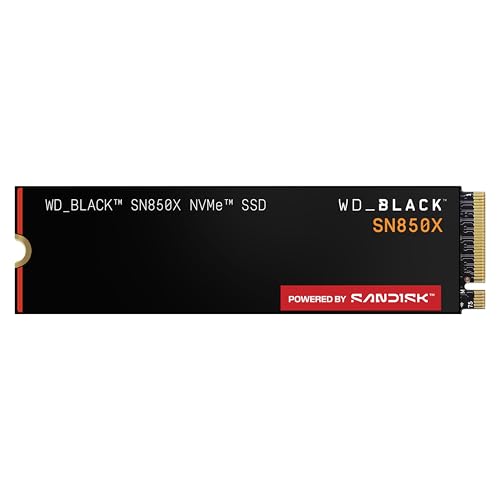
WD BLACK SN850X NVMe SSD 2TB (Up to 7,300 MB/s read speed, Up to 6,600 MB/s write speed, M.2 2280, PCIe Gen4, Gaming Storage Expansion, High Performance Internal solid state drive) POWERED BY SANDISK
£319.99 · WD
Frequently asked
7 questions01Does the SanDisk Creator Pro Portable actually reach 2000 MB/s in real use?+
On a host machine with a USB 3.2 Gen 2x2 port (20Gbps), published benchmarks and owner reports consistently show sequential read speeds of 1900 to 2000 MB/s and write speeds of 1800 to 2000 MB/s. That is as close to the rated specification as you will get from any external drive. If your host port is USB 3.2 Gen 2 (10Gbps), you will be capped at around 1000 MB/s regardless of the drive's rating.
02What does the IP65 rating actually protect against?+
IP65 means the drive is fully protected against dust ingress and can withstand low-pressure water jets from any direction. In practical terms, it will survive a rain shower, a spilled drink, or brief exposure to water spray. It is not rated for submersion; if you need that level of protection, you would need an IP67 or IP68 rated drive such as the LaCie Rugged SSD.
03Is the SanDisk Creator Pro Portable compatible with MacBook Pro and Apple Silicon Macs?+
Yes. Apple Silicon MacBooks (M1, M2, M3, M4) have Thunderbolt ports that support USB 3.2 Gen 2x2 speeds, so they are fully compatible with the drive at its rated 2000 MB/s. Older Intel MacBooks with Thunderbolt 3 may only support USB 3.1 speeds depending on the model, which would cap transfers at around 1000 MB/s. Check your specific MacBook's port specification before purchasing.
04How does the SanDisk Creator Pro Portable compare to the Samsung T9?+
Both drives use USB 3.2 Gen 2x2, target 2000 MB/s sequential speeds, have IP65 resistance, and 3-metre drop protection. The key differences are that the Samsung T9 publishes a TBW endurance rating (600 TBW for the 1TB model) while SanDisk does not, and the Creator Pro Portable comes with a 5-year warranty compared to the T9's 3 years. The SanDisk also includes a one-month Adobe Creative Cloud subscription. In practice the two drives are closely matched and the choice often comes down to current pricing and personal brand preference.
05Will the Creator Pro Portable work at full speed with an iPad Pro?+
iPad Pro models from 2021 onwards that include Thunderbolt support will handle the full USB 3.2 Gen 2x2 speed. Older iPad Pro models with USB-C but without Thunderbolt are limited to USB 3.1 Gen 2 speeds of around 1000 MB/s. Standard iPad Air and iPad models with USB-C will be limited to lower speeds depending on their port generation. Check your specific iPad model's USB-C specification.
06Does SanDisk publish a TBW endurance figure for the Creator Pro Portable?+
No. At the time of writing, SanDisk has not published a terabytes written endurance figure for the Creator Pro Portable, which is a transparency gap compared to competitors such as the Samsung T9. The 5-year warranty is a positive signal of manufacturer confidence in the drive's longevity, but without a TBW figure it is not possible to map the drive's rated lifespan directly to your specific write workload.
07Is the drive suitable for editing video directly from it rather than just storing files?+
Owner reports and benchmark data suggest that editing Lightroom catalogues and Premiere Pro projects stored on the drive works well, with no reported lag issues. The NVMe protocol running internally over a USB 3.2 Gen 2x2 bridge gives the drive better queue depth handling than SATA-based externals, which benefits sustained creative workloads. Very demanding workflows such as editing uncompressed 8K RAW would be better served by a Thunderbolt-native drive, but for 4K ProRes and similar formats the Creator Pro Portable is well suited.