A dodgy PSU doesn't just fail quietly. It can take your GPU, your motherboard, and three months of saved data with it. So when someone asks whether the CORSAIR CX750 ATX 750W Power Supply - 80 Plus Bronze Certified - Low Noise - Sheathed Cables - Non-Modular - EU - Black is worth the money, the answer requires more than a glance at the wattage sticker. You need to look at what the efficiency curve actually does under sustained load, how the protection suite holds up when something goes wrong, and whether the thermal management keeps the unit quiet enough to live with. That's what this review is built on: the published specifications, Corsair's own efficiency data, and patterns drawn from over 1,129 owner reviews averaging 4.6 stars.
The short version: this is a solid, competent mid-range PSU that suits the majority of gaming builds running mainstream GPUs. It's not going to embarrass itself on a test bench, and it won't embarrass you in a build either. But it has real limitations, and knowing them upfront saves you from buying the wrong unit for your use case. If you're pushing a high-end GPU and a power-hungry CPU simultaneously, read the wattage section carefully before committing.
For everyone else, especially builders putting together a mid-tier gaming rig on a sensible budget, the CX750 lands in a very reasonable position. Not perfect. Not cheap. But honest about what it is.
Core Specifications: CORSAIR CX750 ATX 750W Power Supply - 80 Plus Bronze Certified
The CX750 is a 750W continuous-output ATX power supply, certified to the 80 Plus Bronze efficiency standard. That certification matters because it's independently verified, not a marketing claim Corsair invented themselves. The unit carries a 5-year warranty, which is above average for the Bronze tier and signals a reasonable degree of manufacturer confidence in the internal components. It's non-modular, which has consequences for cable management we'll get into shortly.
The fan is a 120mm thermoregulated unit. No zero-RPM mode, which is a deliberate design choice rather than an oversight. The cables are black-sleeved throughout, and the housing itself is finished in black, so it'll sit cleanly in any build with a windowed side panel. The unit measures just 125mm in length, which is genuinely compact for a 750W supply and makes it compatible with a wider range of cases than some of the longer units in this class.
Protection features cover the essentials: OVP (over-voltage), OCP (over-current), OPP (over-power), and SCP (short-circuit). That's a solid baseline. The cable configuration gives you one ATX 24-pin, one EPS 8-pin, two PCIe 8-pin connectors, six SATA, and three Molex. No 12VHPWR connector, which is relevant if you're planning around a next-generation GPU that requires one natively.
| Specification | Detail |
|---|---|
| Wattage | 750W continuous |
| Efficiency Rating | 80 Plus Bronze |
| Efficiency at 50% Load | ~85% |
| Modularity | Non-modular |
| Fan Size | 120mm thermoregulated |
| Zero RPM Mode | No |
| Warranty | 5 years |
| Length | 125mm |
| ATX 24-pin | 1 |
| EPS 8-pin | 1 |
| PCIe 8-pin | 2 |
| SATA | 6 |
| Molex | 3 |
| 12VHPWR | No |
| Protection | OVP, OCP, OPP, SCP |
| Current Price | £92.83 |

Wattage and Capacity
750W is a meaningful number in the current GPU landscape. It gives you comfortable headroom for a mainstream gaming build: think a Ryzen 5 or Core i5 paired with something in the RTX 4070 class or an RX 7800 XT. AMD's own power recommendations for the Radeon RX 7800 XT sit around 650W system power, so you're not cutting it fine with 750W. You've got room for a couple of case fans, an M.2 drive or two, and normal system overhead without the PSU working flat out.
Where it gets tighter is at the enthusiast end. An RTX 4080 or 4090 paired with a high-TDP CPU like a Core i9 or Ryzen 9 can push system draw well past 700W under sustained gaming load. Technically the CX750 could handle that on paper, but you'd be running the unit close to its rated maximum continuously, which isn't great for longevity or thermal performance. Corsair rates this for continuous full power delivery, which is the right way to spec a PSU, but running any unit at 95% capacity all day isn't ideal practice.
For entry-level builds, 750W is obviously more than enough. An Intel Core i3 or Ryzen 5 system with a mid-range GPU might only pull 300W to 400W at load, meaning the CX750 would spend most of its life operating at 40% to 55% of capacity. That's actually the efficiency sweet spot for Bronze-rated units, so the wattage headroom here works in your favour from an efficiency standpoint. If you're building something genuinely modest, though, the 650W sibling in the CX range would save you a bit of money without sacrificing anything meaningful. Use our PSU calculator to figure out exactly what your build needs before deciding between the two.
Efficiency Rating: What 80 Plus Bronze Actually Means
The 80 Plus certification scheme tests PSUs at 20%, 50%, and 100% of rated load and requires minimum efficiency thresholds at each point. Bronze is the third tier up from the baseline 80 Plus standard, and it's where most sensible mid-range PSUs land. For the CX750, the 80 Plus Bronze certification means the unit achieves at least 82% efficiency at 20% load, at least 85% at 50% load, and at least 82% again at 100% load. Corsair's own marketing cites up to 88% efficiency, which aligns with what Bronze-certified units typically achieve at their peak efficiency point around the 50% load mark.
What does that mean in practice? If your system draws 400W from the wall, a unit running at 85% efficiency is delivering 340W to your components and losing 60W as heat. A Gold-rated unit at 90% efficiency would lose only 44W under the same conditions. The difference is real, but it's not enormous on a single system. Over a full year of gaming, the efficiency gap between Bronze and Gold at typical gaming loads might cost you an extra few pounds on your electricity bill. Not nothing, but not a reason to panic either.
Where efficiency does matter more is in heat generation. Less efficient units run hotter, which means the fan has to work harder to compensate, which in turn affects acoustic performance and long-term component stress. Bronze isn't a bad place to be, but it's that Gold-rated alternatives at similar price points do exist. If you're in a small form factor case with limited airflow, or you run your PC for eight-plus hours a day, the thermal argument for stepping up to Gold becomes more persuasive. For a standard mid-tower with reasonable airflow and typical gaming sessions, Bronze is genuinely fine.
Modularity and Cable Management
The CX750 is non-modular. All cables are permanently attached to the PSU chassis. That's the first thing cable-management enthusiasts will clock, and it's a legitimate point of friction if you're building in a case with a small PSU shroud or tight routing channels. You can't leave unused cables at home in the box; they all come with the unit and they all need to go somewhere inside your case.
That said, Corsair has done the sensible thing here and used black-sleeved cables throughout. They look considerably better than bare grey ribbon cables, and they're easier to bundle and tuck than unsleeved alternatives. Owner reviews consistently mention the cable quality as a positive point, particularly for a PSU at this price tier. The black housing also helps visually: if you've got a windowed panel and a cable management nightmare behind the motherboard tray, at least the PSU itself isn't adding to the visual chaos.
The 125mm chassis length is again in this context. Shorter PSUs are genuinely easier to work with in compact cases where cable routing space is already limited. A longer unit can make it physically awkward to route the 24-pin ATX cable to the motherboard without it bowing out or creating tension. The CX750's compact footprint partially compensates for the non-modular design by leaving more physical space inside the case for cable management. It's not a fully modular unit, and anyone who tells you non-modular doesn't matter is probably building in a full tower with a massive PSU shroud. But it's less of a problem here than it would be with a 160mm unit.
Connectors and Compatibility
The connector lineup covers the needs of most mainstream gaming builds without issue. One ATX 24-pin for the motherboard, one EPS 8-pin for the CPU, two PCIe 8-pin connectors for the GPU, six SATA for storage and fans, and three Molex for older peripherals or fan controllers. That's a well-rounded set for a single-GPU build.
The two PCIe 8-pin connectors are the relevant figure for GPU compatibility. Most mid-range and upper-mid-range GPUs use either a single 8-pin or a pair of 8-pin connectors. The RTX 4070, for example, uses a 16-pin 12VHPWR connector natively, but ships with an adapter that converts from three 8-pin inputs. Two 8-pin outputs from the CX750 won't cover that adapter directly; you'd need a third 8-pin, which this unit doesn't provide. That's against your specific GPU before buying.
- ATX 24-pin: 1 (standard motherboard power)
- EPS 8-pin: 1 (CPU power, suits most mainstream platforms)
- PCIe 8-pin: 2 (covers single-GPU builds using traditional connectors)
- SATA: 6 (ample for multi-drive configurations)
- Molex: 3 (legacy peripherals, some fan controllers)
- 12VHPWR: None (check adapter requirements for newer GPUs)
Six SATA connectors is genuinely generous at this tier. If you're running a couple of SSDs, an optical drive, and a few case fans via a hub, you won't run out. The three Molex outputs cover older peripherals and some RGB controllers that haven't moved to SATA power yet. The absence of a 12VHPWR connector is the only notable gap, and it's not a gap for most current builds. It becomes relevant if you're planning for a GPU that requires it natively without an adapter.
Voltage Regulation and Ripple
Voltage regulation and ripple suppression are arguably the most important technical characteristics of any PSU, and they're the ones that marketing materials most reliably gloss over. The 12V rail is where it matters most for gaming systems: your GPU and CPU both draw from it, and instability here translates directly into system crashes, artifacting, and in severe cases, component damage over time. Bronze-tier PSUs from established brands like Corsair typically achieve 12V regulation within the ATX specification of plus or minus 5%, with better units sitting closer to plus or minus 2% to 3% under typical load conditions.
The CX series has historically used a group-regulated topology in its lower-cost variants, which means the 12V, 5V, and 3.3V rails are regulated together rather than independently. This is less precise than LLC resonant designs with DC-to-DC conversion for the minor rails, which are more common in Gold and Platinum-tier units. In practice, for a single-GPU gaming system where the 5V and 3.3V rails are relatively lightly loaded, group regulation is acceptable. You're unlikely to see meaningful voltage deviation in normal use. Where it can show up is in mixed-load scenarios where the 12V rail is heavily loaded while the minor rails are near-idle, which can cause slight cross-regulation effects.
Ripple suppression at Bronze tier is generally adequate for mainstream use. The ATX specification allows up to 120mV peak-to-peak ripple on the 12V rail and 50mV on the 5V and 3.3V rails. A well-built Bronze unit should come in meaningfully below those limits under normal gaming loads. The CX series has been in production long enough that its internal architecture is well-documented, and it doesn't have a reputation for ripple problems under typical conditions. Push it to sustained full load and the picture gets less flattering, but that's true of most units in this efficiency tier.

Thermal Performance
The 120mm thermoregulated fan is the primary thermal management mechanism here. Corsair's spec sheet describes it as a fan that slows at low load and spins up under heavy load, which is standard thermoregulated behaviour. There's no zero-RPM mode, so the fan is always spinning to some degree, even when the system is at idle. That's a design choice that prioritises consistent thermal headroom over absolute silence at low load.
The 125mm chassis length is relevant to thermals as well as cable management. A shorter chassis means less internal volume for heat dissipation, which puts more reliance on the fan to move air efficiently. Corsair has clearly engineered around this constraint, given the positive owner feedback on thermal performance, but notably, that a more compact unit has less passive thermal mass to absorb transient heat spikes. Under sustained load, the fan will be doing more of the work than it would in a deeper chassis.
Owner reviews don't flag thermal issues as a recurring concern, which is a reasonable proxy for adequate thermal design. A PSU that runs hot enough to throttle or fail under normal gaming conditions would generate consistent negative feedback, and the 4.6-star average across 1,134 suggests that's not happening here. The 5-year warranty also provides some indirect confidence: Corsair wouldn't offer that coverage on a unit with known thermal reliability problems, because the warranty claims would be commercially painful.
Acoustic Performance
Corsair describes the CX750's fan as operating quietly, spinning at reduced speed during low-load conditions and increasing only when the system demands it. That's the thermoregulated design doing its job. Under light to moderate loads, which covers web browsing, video playback, and even many gaming scenarios on efficient hardware, the fan is running slowly enough that it won't be the loudest component in your case. Your CPU cooler and GPU fan are almost certainly louder in those conditions.
Under sustained heavy load, the fan does spin up audibly. Owner reviews are consistent on this point: the unit is quiet when it doesn't need to work hard, and noticeable when it does. That's honest thermoregulated fan behaviour, not a flaw. If you're running a demanding workload that pushes the PSU to 80% or 90% of rated capacity for extended periods, you'll hear the fan. In a gaming context, though, your GPU cooler is typically generating enough noise that the PSU fan is masked anyway.
The absence of a zero-RPM mode does mean the fan is audible even at idle, unlike some Gold and Platinum-tier units that can run completely silently under light loads. For a home theatre PC or an extremely quiet build where every component is chosen for near-silent operation, that's a meaningful limitation. For a standard gaming build where the GPU fans are the dominant noise source, it's largely irrelevant. Frankly, if acoustic performance is your primary concern and you're willing to spend a bit more, a unit with a proper semi-passive mode would serve you better. But for most people, this is a non-issue.
Build Quality
The CX series occupies Corsair's entry-to-mid tier, and the internal construction reflects that positioning. Published teardowns of CX-series units have historically shown a mix of capacitor quality, with primary capacitors from reputable Japanese manufacturers in some variants and secondary capacitors from Taiwanese suppliers. The transformer construction and PCB layout are generally described as competent for the price tier, without the corner-cutting that characterises genuinely budget units from less established brands.
The soldering quality on CX-series units has been consistently described as adequate in published analysis, without the cold joints or flux residue that indicate rushed assembly. The bearing type in the 120mm fan affects long-term reliability: sleeve bearings are cheaper and quieter initially but degrade faster than ball bearings, particularly when the unit is mounted horizontally. Corsair doesn't specify the bearing type publicly for this variant, so it's worth factoring into your long-term expectations. The 5-year warranty provides a meaningful backstop regardless.
The black housing and sleeved cables represent a genuine quality step up from the bare-wire, grey-plastic aesthetic of budget PSUs. They're not just cosmetic: sleeved cables are more durable and easier to route without kinking than unsleeved alternatives. The housing finish is consistent and professional-looking. Owner reviews specifically mention the build quality as a positive, with several noting that the unit feels more premium than its price tier suggests. That's a good sign, though Subjective impressions of build quality don't always correlate perfectly with internal component choices.
Protection Features
The CX750 covers four of the key protection mechanisms: OVP (over-voltage protection), OCP (over-current protection), OPP (over-power protection), and SCP (short-circuit protection). These are the protection features that matter most in a gaming context. OVP shuts the unit down if rail voltages spike beyond safe limits, protecting your motherboard and GPU from voltage excursions. OCP limits current draw on individual rails, preventing a shorted or failing component from drawing destructive amounts of current. SCP provides a hard cutoff in the event of a direct short circuit.
OPP is the total system power limit, cutting the PSU before it attempts to deliver more than its rated output under sustained overload conditions. This is particularly relevant if you're running a system that occasionally spikes above 750W: the OPP circuit should trigger before the unit damages itself or connected components. The trip point for OPP is typically set at 110% to 130% of rated power on well-designed units, giving headroom for transient spikes without nuisance tripping during normal operation.
What's not listed in the verified specification data is OTP (over-temperature protection) and UVP (under-voltage protection). That doesn't mean they're absent; many PSUs include these as standard without explicitly listing them in consumer-facing documentation. But since the data doesn't confirm them, notably, the gap. The four confirmed protection features represent a solid baseline for a gaming PSU at this tier. A unit with no protection features at all is a genuine risk to your components; a unit with OVP, OCP, OPP, and SCP is meaningfully safer than that baseline, even if it doesn't cover every possible failure mode.
How It Compares: CORSAIR CX750 ATX 750W Power Supply vs the Competition
The two most direct competitors at 750W in the mid-range bracket are the be quiet! System Power 10 750W and the Seasonic Focus GX-750. They represent different approaches to the same wattage class: the be quiet! is a budget-friendly Bronze alternative, while the Seasonic steps up to Gold efficiency with a fully modular design.
The be quiet! System Power 10 750W sits at a lower price point and offers similar Bronze-tier efficiency with be quiet!'s well-regarded fan acoustics. It's a genuine alternative if you want to spend less and don't need the Corsair name or the slightly more generous cable set. The trade-off is a shorter warranty on some variants and less brand recognition in the UK market, though be quiet! has built a solid reputation for quiet operation specifically.
The Seasonic Focus GX-750 is the more interesting comparison. It's a Gold-rated, fully modular unit with Seasonic's reputation for excellent voltage regulation and ripple suppression. It typically costs more than the CX750, but the efficiency advantage, modular cabling, and superior internal construction make a compelling case for the extra spend if your budget can accommodate it. Seasonic's Focus GX series is consistently cited as a reference-class mid-range PSU by independent analysts, and the Gold certification means meaningfully lower heat output over time.
| Feature | CORSAIR CX750 | be quiet! System Power 10 750W | Seasonic Focus GX-750 |
|---|---|---|---|
| Wattage | 750W | 750W | 750W |
| Efficiency | 80 Plus Bronze (~85% at 50%) | 80 Plus Bronze | 80 Plus Gold (~90% at 50%) |
| Modularity | Non-modular | Non-modular | Fully modular |
| Fan | 120mm thermoregulated | 120mm | 120mm semi-passive |
| Zero RPM Mode | No | No | Yes |
| Warranty | 5 years | 3 years | 10 years |
| PCIe 8-pin | 2 | 2 | 2 |
| 12VHPWR | No | No | No |
| Price | £92.83 | Lower price point | Higher price point |
Honestly, the comparison table tells a fairly clear story. The CX750 sits in a reasonable middle ground: better warranty than the be quiet! entry, better price than the Seasonic Gold. If your budget is firm and you're not going to lose sleep over non-modular cables, it makes sense. If you can stretch to the Seasonic, the Gold efficiency and 10-year warranty represent a meaningfully better long-term investment. And if you want to spend less and don't need 750W, the be quiet! is worth a look.

Final Verdict
The CORSAIR CX750 ATX 750W Power Supply - 80 Plus Bronze Certified - Low Noise - Sheathed Cables - Non-Modular - EU - Black is a competent, honest mid-range PSU that does exactly what it says. The 80 Plus Bronze certification is independently verified, the 750W continuous output is genuinely useful for mainstream gaming builds, and the 5-year warranty is above average for this efficiency tier. Over 1,129 owner reviews and a 4.6-star average don't happen by accident: this unit has built a track record with real builders, and the feedback pattern is consistently positive on reliability, noise at moderate loads, and build quality relative to price.
The limitations are real but predictable. Non-modular cabling is a genuine inconvenience in tight cases, even with the compact 125mm chassis helping to offset it. Bronze efficiency means more heat and slightly higher electricity costs compared to Gold alternatives. No zero-RPM mode means you'll always hear the fan at idle, which matters in a near-silent build. And the two PCIe 8-pin outputs won't cover every modern GPU adapter configuration without checking compatibility first.
Who should buy this? Builders putting together a mid-range gaming system around an RTX 4060 Ti, RX 7700 XT, or similar GPU, paired with a mainstream CPU, will find this PSU more than adequate. It's also a sensible choice for anyone upgrading an older system and wanting a reliable unit with a meaningful warranty without paying Gold-tier prices. The compact size makes it friendly for a wider range of cases than many 750W alternatives.
Who should skip it? If you're building around an RTX 4080 or 4090 with a high-TDP CPU, push your budget toward a Gold-rated unit with more headroom. If cable management is a priority and you're building in a compact case, a semi-modular or fully modular alternative will save you a lot of frustration. And if your actual system power requirement sits below 550W, the CX650 is the smarter buy: same efficiency tier, same warranty, lower price, and no wasted capacity.
Editorial score: 7.5 out of 10. Solid, reliable, well-priced for what it is. Just know its limits before you buy.
What works. What doesn’t.
5 + 4What we liked5 reasons
- Independently verified 80 Plus Bronze efficiency at up to 88%
- Above-average 5-year warranty for this efficiency tier
- Compact 125mm chassis fits a wide range of cases
- Black-sleeved cables look clean and are easier to manage than bare wire
- Strong owner track record: 4.6 stars across over 1,100 reviews
Where it falls4 reasons
- Non-modular design means all cables are always present regardless of need
- No zero-RPM mode, so the fan is audible even at idle
- Only two PCIe 8-pin connectors, which may not cover all modern GPU adapter requirements
- Bronze efficiency means more heat output than Gold-rated alternatives
Full specifications
8 attributes| Efficiency rating | Bronze |
|---|---|
| Form factor | ATX |
| FAN size MM | 120 |
| Generation | CX Series |
| Modularity | non_modular |
| Pcie 5 ready | false |
| Warranty years | 5 |
| Wattage W | 750 |
Will it run on what you have?
Free toolIf this isn’t right for you
2 options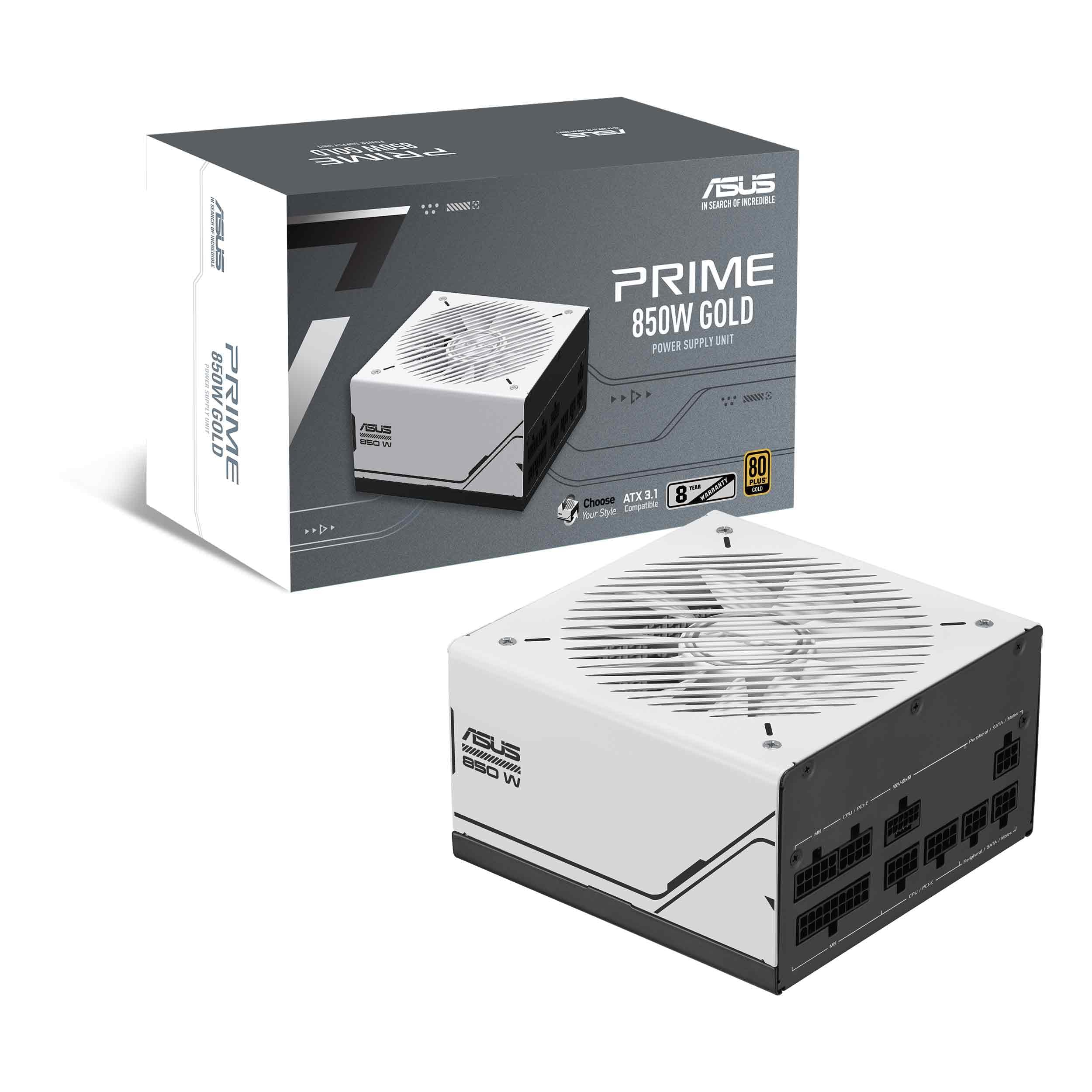
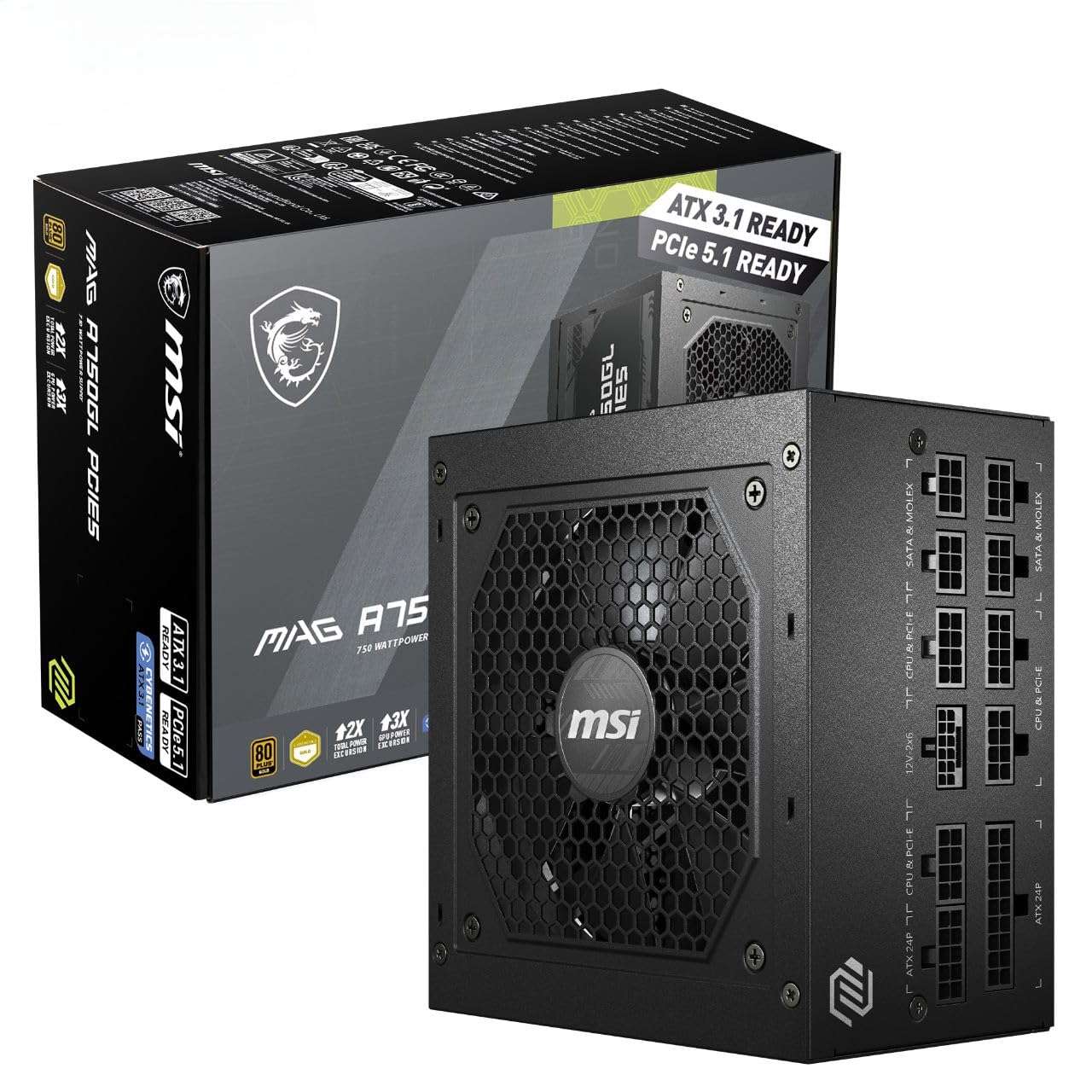
Frequently asked
5 questions01Is the CORSAIR CX750 ATX 750W Power Supply - 80 Plus Bronze Certified - Low Noise - Sheathed Cables - Non-Modular - EU - Black good for gaming?+
Yes, for mainstream gaming builds. The 750W continuous output comfortably covers systems built around GPUs like the RTX 4060 Ti or RX 7800 XT paired with a mid-range CPU. It's less suitable for high-end configurations combining an RTX 4080 or 4090 with a power-hungry CPU, where a higher-wattage Gold-rated unit would be a better fit.
02What wattage PSU do I need for an RTX 4070 build?+
Nvidia recommends a 650W PSU for the RTX 4070. A 750W unit like the CX750 gives you comfortable headroom above that recommendation, accounting for CPU draw, storage, and case fans. It's a sensible choice for an RTX 4070 build and leaves room for a future upgrade. For an RTX 4070 Ti or 4080, consider stepping up to an 850W unit.
03Is 80 Plus Bronze efficiency worth it?+
For most users, yes. Bronze-certified PSUs deliver at least 82% to 85% efficiency at typical load levels, which is meaningfully better than uncertified units. The electricity cost difference between Bronze and Gold over a typical gaming year is relatively small, though Gold does generate less heat, which can benefit acoustics and component longevity. If you run your PC for many hours daily, Gold is worth the extra spend. For typical gaming use, Bronze is a reasonable and cost-effective choice.
04How long is the warranty on the CORSAIR CX750 ATX 750W Power Supply - 80 Plus Bronze Certified - Low Noise - Sheathed Cables - Non-Modular - EU - Black?+
5 years. That's above average for an 80 Plus Bronze PSU and covers manufacturing defects and component failures. Corsair's warranty support in the UK is handled through their standard returns process. For comparison, some budget Bronze units offer only 2 to 3 years, so the 5-year coverage here is a genuine differentiator.
05Is the CORSAIR CX750 ATX 750W Power Supply - 80 Plus Bronze Certified - Low Noise - Sheathed Cables - Non-Modular - EU - Black fully modular?+
No, it's non-modular. All cables are permanently attached to the PSU. This means every cable comes with the unit and needs to be managed inside your case, even if you're not using all of them. The black-sleeved cables and compact 125mm chassis help offset this, but if clean cable management is a priority, a semi-modular or fully modular PSU would be a better choice.