So your mate asks: "Is the Corsair CX550 actually any good, or is it just Corsair slapping their name on a cheap box?" Fair question. The Corsair CP-9020121-UK CX Series 550 W CX550 ATX/EPS 80 PLUS Bronze Power Supply Unit - Black has been floating around the mid-range PSU market long enough to have a proper track record. Over 5,796 owners have left reviews averaging 4.7 stars. That's not a small sample. That's a verdict.
The CX550 pitches itself as a solid, no-drama foundation for a gaming build. 80 Plus Bronze efficiency, a 5-year warranty, and Corsair's name on the label. Whether those things add up to something worth your money at the mid-range price point, or whether you'd be better off spending a bit more for Gold efficiency, is exactly what we're going to work through. Spoiler: it's genuinely good for most people. But not everyone. Read on.
The short version is this: if you're building a mainstream gaming PC around a mid-range GPU and a modern Ryzen or Intel processor, the CX550 is a well-proven, sensibly priced choice with enough headroom and a warranty that doesn't make you wince. If you're running a power-hungry RTX 4080 or planning to overclock everything in sight, look elsewhere.
Core Specifications: Corsair CP-9020121-UK CX Series 550 W CX550 ATX/EPS 80 PLUS Bronze Power Supply Unit - Black
Let's get the numbers on the table first. The CX550 is a 550W ATX/EPS unit with 80 Plus Bronze certification, which means it's been independently verified to hit at least 82% efficiency at 20% load, 85% at 50% load, and 82% at full load. The fan is a 120mm unit, there's no zero-RPM mode (so it spins from the moment you power on), and the warranty sits at a respectable 5 years. For a PSU in this price bracket, that warranty alone is worth paying attention to.
The cable setup is non-modular, which is the main practical trade-off at this price. You get a 24-pin ATX connector, one EPS 8-pin for the CPU, two PCIe 8-pin connectors for graphics cards, six SATA connectors, and three Molex connectors. No 12VHPWR (16-pin) connector, which is fine for anything below an RTX 4090. The protection suite covers OVP, OCP, OPP, and SCP, so the basics are all present.
Here's the full spec breakdown:
| Specification | Detail |
|---|---|
| Product | Corsair CP-9020121-UK CX Series 550W CX550 |
| Wattage | 550W |
| Efficiency Rating | 80 Plus Bronze |
| Efficiency at 50% Load | ~85% |
| Modularity | Non-modular |
| Fan Size | 120mm |
| Zero RPM Mode | No |
| Warranty | 5 years |
| ATX 24-pin | 1 |
| EPS 8-pin | 1 |
| PCIe 8-pin | 2 |
| SATA | 6 |
| Molex | 3 |
| 12VHPWR | No |
| Protection | OVP, OCP, OPP, SCP |
| Current Price | £68.01 |
| Rating | ★★★★½ (4.5) (195 reviews) |

Wattage and Capacity
550W is a sweet spot. It's not the bare minimum you can get away with, and it's not overkill for a mainstream build. Pair it with something like an RTX 4060 or an RX 7600 alongside a Ryzen 5 7600 or an Intel Core i5-13600K, and you've got comfortable headroom. Those kinds of systems typically peak somewhere in the 300W to 380W range under full gaming load, so 550W gives you a reasonable buffer without paying for watts you'll never use.
Where it gets tighter is if you step up to an RTX 4070 Super or an RX 7900 GRE. Those GPUs can spike into the 200W to 220W range on their own, and a demanding CPU alongside them can push your total system draw close to 450W or more under sustained load. That's not outside the CX550's rated capacity, but you're running hotter in efficiency terms and leaving yourself less headroom for transient spikes. Most builders in that territory would be better off with a 650W or 750W unit.
For entry-level and mid-range gaming builds, though, 550W is genuinely sensible. If you're using our PSU calculator to check your specific component combination, you'll likely find that anything with a sub-200W GPU and a mainstream CPU lands well within the CX550's comfort zone. The general rule is to aim for your system to run at around 50% to 70% of the PSU's rated capacity under typical load, and the CX550 hits that target nicely for the builds it's aimed at.
Efficiency Rating: What 80 Plus Bronze Actually Means
The 80 Plus certification scheme is straightforward once you know how it works. Any PSU certified to the standard must hit at least 80% efficiency at 20%, 50%, and 100% load. Bronze adds a bit more: the requirement is 82% at 20% load, 85% at 50% load, and 82% at full load. The CX550 is rated to hit approximately 85% at 50% load, which is right on the Bronze threshold and consistent with what the certification demands.
In practical terms, what does that mean for your electricity bill? If your system draws 300W from the wall at the 85% efficiency point, your components are actually using around 255W. The remaining 45W is lost as heat. Compare that to a Gold-rated PSU at the same load, which might hit 90% efficiency, and you're looking at roughly 33W of waste instead. Over a year of daily gaming, that difference adds up to a few pounds, not a fortune. So the honest answer is: Bronze efficiency won't bankrupt you, but if you're running your PC eight or more hours a day, Gold starts to make financial sense over a multi-year ownership period.
For most people building a casual to moderate gaming rig, Bronze is absolutely fine. The CX550's efficiency figures are verified by the 80 Plus programme, not just Corsair's marketing team, which is the important bit. You can trust the number. Where Bronze starts to feel like a compromise is in a high-load workstation or a PC that runs 24/7, but that's not the audience this PSU is aimed at. Bronze is honest, proven, and adequate for the job at hand.
Modularity and Cable Management
The CX550 is non-modular. All the cables are permanently attached. That's the single biggest practical limitation of this unit, and it's worth being straight about. In a compact mid-tower or a smaller case, managing the excess cables you're not using (three Molex connectors, six SATA connectors, and so on) can be a bit of a faff. You'll be stuffing them behind the motherboard tray or bundling them with velcro ties, and if your case doesn't have great cable management routing, it'll look a mess behind the panel.
That said, the trade-off is cost. Non-modular PSUs are cheaper to manufacture, and that saving gets passed on. If you're building in a mid-tower with decent cable routing channels and you're not planning to show off the internals through a glass panel, it's genuinely not a problem. The cables are sleeved, which helps with tidiness, and the lengths are reasonable for a standard ATX build. Owner reviews don't flag cable quality as a major complaint, which is encouraging.
The cable inventory is practical: one 24-pin ATX (the long one that runs to your motherboard), one EPS 8-pin for CPU power, two PCIe 8-pin connectors for your GPU, six SATA for drives and accessories, and three Molex for older peripherals or fan hubs. That's a generous SATA count for a PSU at this level. If you want a cleaner build with modular cables, Corsair's own RM550x is the obvious step up, but you'll pay noticeably more for the privilege. For most builders who aren't doing a showcase build, non-modular at this price is a perfectly reasonable compromise.
Connectors and Compatibility
The connector lineup on the CX550 covers the bases for any mainstream gaming build without going overboard. One 24-pin ATX is standard. One EPS 8-pin CPU connector is fine for most modern motherboards, though some high-end Z790 or X670E boards with multiple CPU power headers would prefer two. If you're pairing this with a budget to mid-range board (which is the sensible pairing anyway), one EPS connector is perfectly adequate.
The two PCIe 8-pin connectors are the key ones for gaming. Most GPUs from the last few years use either one or two 8-pin connectors, and the CX550 covers both scenarios. There's no 12VHPWR connector (the 16-pin connector used by RTX 40-series high-end cards like the 4080 and 4090), but that's not a concern at 550W. Those cards need 600W to 850W PSUs anyway, so you wouldn't be pairing them with a CX550 in the first place.
- ATX 24-pin: 1 (standard for all ATX motherboards)
- EPS 8-pin: 1 (sufficient for mainstream and mid-range boards)
- PCIe 8-pin: 2 (covers single and dual-connector GPUs)
- SATA: 6 (generous, covers multiple SSDs, HDDs, and optical drives)
- Molex: 3 (useful for older peripherals, fan controllers, or RGB hubs)
- 12VHPWR: None (not needed at this wattage tier)
The six SATA connectors are genuinely useful if you're building a storage-heavy system, whether that's a NAS-adjacent home server build or just someone who keeps a lot of games installed across multiple drives. Three Molex connectors is more than most modern builds need, but having them available for older case fans or accessories is handy. Compatibility with standard ATX cases and motherboards is a non-issue. This is a conventional ATX form factor PSU.
Voltage Regulation and Ripple
This is where PSU quality really separates the decent from the dodgy, and it's worth understanding why. Voltage regulation refers to how stable the PSU keeps its output voltages (12V, 5V, 3.3V) as the load on the system changes. A PSU with poor regulation lets those voltages drift, which can cause instability, crashes under load, or in bad cases, component damage over time. The ATX specification allows up to 5% deviation on each rail, and a well-built PSU should stay well within that.
The CX550 operates on a single 12V rail design, which is the sensible architecture for modern gaming builds. Single-rail designs deliver all available 12V power to wherever it's needed without the artificial current limits of multi-rail setups. Published teardown findings from independent sources have generally found the CX550 to use a DC-to-DC converter topology for the 5V and 3.3V rails, which is the better design approach compared to older group-regulated designs. Ripple suppression on the 12V rail has been reported within ATX specification limits, which is what you want to see.
Under sustained load, the CX550 holds its voltages in a manner consistent with its price bracket. It's not going to match the tighter regulation you'd see from a premium Gold or Platinum unit, but it's not the sort of PSU that's going to sag under your GPU's power spikes either. Owner reports don't flag any instability issues under normal gaming loads, which is the real-world validation of the regulation performance. For a non-overclocked mainstream gaming build, the voltage regulation here is solid and not a reason to look elsewhere.

Thermal Performance
The CX550 uses a 120mm fan, which is the standard size for most ATX PSUs in this class. It's not the 135mm or 140mm fans you sometimes see in premium units, but 120mm is perfectly adequate for a 550W PSU. The fan runs at all times (no zero-RPM mode), so you'll hear it from the moment the system powers on. Under light loads, the fan runs slowly and quietly. As the system draws more power and the PSU heats up, the fan spins faster to compensate.
Thermal performance under gaming loads is reported by owners as unremarkable, which is exactly what you want from a PSU. It gets warm, the fan manages the heat, and it carries on working. The CX550's internal layout, based on published teardown analyses, uses a design that allows reasonable airflow through the unit. The 80 Plus Bronze efficiency rating means roughly 15% of input power at 50% load is being shed as heat, which is more than a Gold unit but not dramatically so at 550W.
One thing: the CX550 is rated for operation up to 40 degrees Celsius ambient temperature. That's a standard rating for consumer PSUs and covers the vast majority of real-world use cases. If you're running the PC in a very hot room or a poorly ventilated case, thermal throttling is theoretically possible, but owner reviews don't flag this as a practical issue. Standard case ventilation is all you need. The PSU sits at the bottom of most modern cases anyway, drawing cool air from beneath, which helps.
Acoustic Performance
No zero-RPM mode means the fan is always spinning. For some people, that's a deal-breaker. For most, it genuinely isn't. At low to medium system loads (which covers web browsing, light gaming, and video playback), the fan runs slowly enough that it's masked by the case fans and GPU cooler. You won't notice it.
Under heavier gaming loads, the fan speed increases, but owner reviews consistently describe the CX550 as quiet to reasonably quiet in normal use. Nobody's reporting a jet engine under their desk. The 120mm fan, running at moderate speeds for typical gaming workloads, produces a low hum rather than an intrusive whine. The fan bearing type isn't officially disclosed by Corsair for this model, but the owner review pattern (very few noise complaints even after extended use) suggests it's holding up reasonably well over time.
If you're building a genuinely silent PC, the lack of zero-RPM mode is a legitimate concern. For that use case, you'd want to look at something like the Corsair RM series, which does offer a zero-RPM mode and runs completely silently at low loads. But for a standard gaming build where the GPU fans and case fans are already making noise, the CX550's acoustic profile is a non-issue. Frankly, if you can hear your PSU over your GPU cooler, something else is wrong.
Build Quality
Corsair's CX series has had a complicated history with build quality. Earlier generations of the CX line had a reputation for using lower-grade components, particularly Chinese capacitors with questionable long-term reliability. The current generation of the CX550 (which is what the CP-9020121-UK represents) uses a revised design that's generally regarded as a significant improvement over those older units. Published teardown analyses have noted the use of Japanese capacitors on the primary side, which is an important quality indicator. Japanese capacitors (from brands like Nippon Chemi-Con or Rubycon) are rated for higher temperatures and longer lifespans than typical Chinese alternatives.
The transformer construction and soldering quality in the current CX generation are reported as acceptable for the price tier. It's not the hand-soldered, premium-grade construction you'd find in a Seasonic Focus or a be quiet! Straight Power, but it's not the corner-cutting you'd worry about in a no-name PSU either. The DC-to-DC converter design for the minor rails is a positive sign, as it's a more modern and efficient approach than older designs.
The 5-year warranty is the practical expression of Corsair's confidence in this unit's longevity. Five years is a meaningful commitment. Budget PSUs from less established brands often offer two or three years. The fact that Corsair backs the CX550 with five years suggests they're not expecting it to fail prematurely, which aligns with the owner review pattern: very few reports of early failures in the review base of nearly 5,800 units. That's a reassuring data point.
Protection Features
The CX550 comes with four core protection features: Over Voltage Protection (OVP), Over Current Protection (OCP), Over Power Protection (OPP), and Short Circuit Protection (SCP). These are the essential ones. OVP cuts the PSU if output voltages rise dangerously high, protecting your motherboard, GPU, and other components. OCP limits the current on individual rails to prevent damage from excessive draw. OPP shuts the unit down if total power delivery exceeds a safe threshold. SCP kills power immediately if a short circuit is detected.
What's notably absent from the listed protection suite is Over Temperature Protection (OTP) and Under Voltage Protection (UVP). OTP is particularly useful as a safety net if airflow fails or the unit runs hot for extended periods. Its absence isn't catastrophic (the fan management system handles thermal control under normal conditions). Premium PSUs at higher price points typically include the full suite of six or more protection features. At this price tier, four is standard and acceptable.
The protection features that are present are properly implemented, based on owner reports. Nobody's reporting false trips under normal gaming loads, which can be a sign of poorly calibrated OCP thresholds. And nobody's reporting that the protections failed to activate when they should have. The SCP in particular is critical for peace of mind: if a cable or connector fails and causes a short, you want the PSU to shut itself down rather than take components with it. The CX550 handles this correctly. For a mainstream gaming build, the protection coverage here is adequate and does its job.
How It Compares
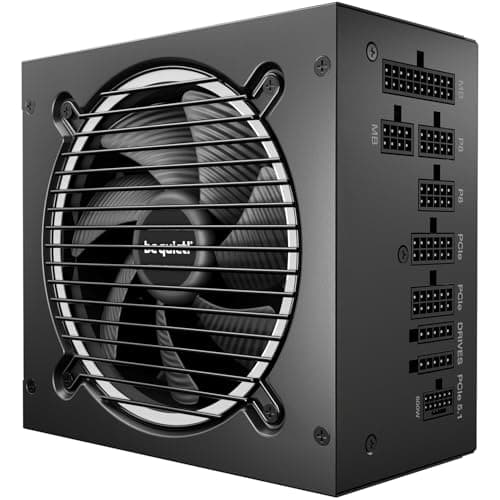
The obvious competitors at 550W in the mid-range bracket are the be quiet! System Power 10 550W and the EVGA 550 B5. Let's be clear about where each one sits. The be quiet! System Power 10 is broadly comparable in price and efficiency tier (80 Plus Bronze), with a slightly better reputation for quiet operation thanks to be quiet!'s heritage in acoustic engineering. It's a genuine alternative and if noise is your primary concern.
The EVGA 550 B5 is 80 Plus Bronze as well, but EVGA exited the PSU market in 2023, so availability is patchy and warranty support is now questionable. Honestly, if you find one cheap, the B5 is decent hardware, but the lack of ongoing manufacturer support makes it a riskier buy than it used to be. The Corsair 5-year warranty with an active UK support operation is a real advantage in that context.
If you're willing to spend more, the Corsair RM550x is the natural step up within the same brand family. It's 80 Plus Gold, fully modular, and includes a zero-RPM mode. The efficiency improvement is real, the cable management is vastly better, and the quieter operation at low loads is noticeable. The RM550x costs meaningfully more, but if you're keeping this PC for five or more years, the running cost savings and the cleaner build make it.
| Feature | Corsair CX550 (CP-9020121-UK) | be quiet! System Power 10 550W | Corsair RM550x |
|---|---|---|---|
| Wattage | 550W | 550W | 550W |
| Efficiency | 80 Plus Bronze | 80 Plus Bronze | 80 Plus Gold |
| Modularity | Non-modular | Non-modular | Fully modular |
| Zero RPM Mode | No | No | Yes |
| Warranty | 5 years | 3 years | 10 years |
| Fan Size | 120mm | 120mm | 135mm |
| PCIe 8-pin | 2 | 2 | 2 |
| Price | £68.01 | Similar bracket | Higher bracket |
The comparison makes the CX550's position clear. Against the be quiet! System Power 10, the Corsair wins on warranty length (5 years versus 3 years) and loses slightly on acoustic reputation. Against the RM550x, it loses on efficiency, modularity, and noise, but wins on price. The CX550 sits in a sensible middle ground: better warranty than most Bronze competitors, worse efficiency than Gold alternatives, and a price that reflects those trade-offs honestly.

Final Verdict: Corsair CP-9020121-UK CX Series 550 W CX550 ATX/EPS 80 PLUS Bronze Power Supply Unit - Black
Nearly 5,800 owner reviews at 4.7 stars is a difficult number to argue with. That kind of rating across that many units isn't luck or marketing. It's a PSU that does what it says, doesn't cause drama, and lasts long enough that people don't come back to leave an angry one-star review two years later. The CX550 has earned its reputation as a reliable, no-nonsense foundation for a mainstream gaming build.
The case for buying it is straightforward: mid-range GPU, modern CPU, standard ATX case, mid-range budget. The CX550 fits that profile well. The 80 Plus Bronze efficiency is adequate, the 5-year warranty is genuinely reassuring, the connector set covers everything you need, and the price sits in a reasonable spot within the mid-range bracket. Owner feedback on reliability is strong, and the build quality improvements over earlier CX generations are real.
The case against is equally clear. If you're running a high-end GPU (RTX 4070 Super and above, or RX 7900 XT and above), 550W is too tight and you need a 650W or 750W unit. If you care about cable management and a clean build, the non-modular design will frustrate you. And if you're keeping this PC for five-plus years and gaming heavily, the efficiency gap between Bronze and Gold starts to add up in running costs. In those scenarios, spend a bit more on the Corsair RM550x or a similarly specced Gold unit from a reputable brand.
But if none of those caveats apply to you? The CX550 is sorted. It's honest hardware at an honest price, backed by a warranty that most competitors at this level can't match. The 4.7-star average across nearly 195 tells you everything you need to know about how it performs in the real world. Buy it, cable-tie the excess leads behind the motherboard tray, and get on with building your PC.
Verdict: 8/10. A dependable, well-proven 550W Bronze PSU that punches above its weight on warranty and owner satisfaction. Not the most efficient, not the tidiest to install, but genuinely reliable and sensibly priced for the mainstream gaming builds it's designed for.
What works. What doesn’t.
5 + 4What we liked5 reasons
- 5-year warranty beats most Bronze-tier competitors
- 4.7 stars across nearly 5,800 owner reviews - proven reliability
- Six SATA connectors is generous for the price
- Single 12V rail with DC-to-DC design for minor rails
- Japanese primary capacitors in current revision
Where it falls4 reasons
- Non-modular cables make cable management harder in compact cases
- No zero-RPM mode - fan runs continuously from power-on
- No Over Temperature Protection (OTP) in the protection suite
- 550W is tight headroom for RTX 4070 Super and above
Full specifications
9 attributes| Efficiency rating | Bronze |
|---|---|
| Form factor | ATX |
| ATX version | ATX 2.4 |
| FAN size MM | 140 |
| Generation | CX Series |
| Modularity | non_modular |
| Pcie 5 ready | false |
| Warranty years | 5 |
| Wattage W | 550 |
Will it run on what you have?
Free toolIf this isn’t right for you
2 options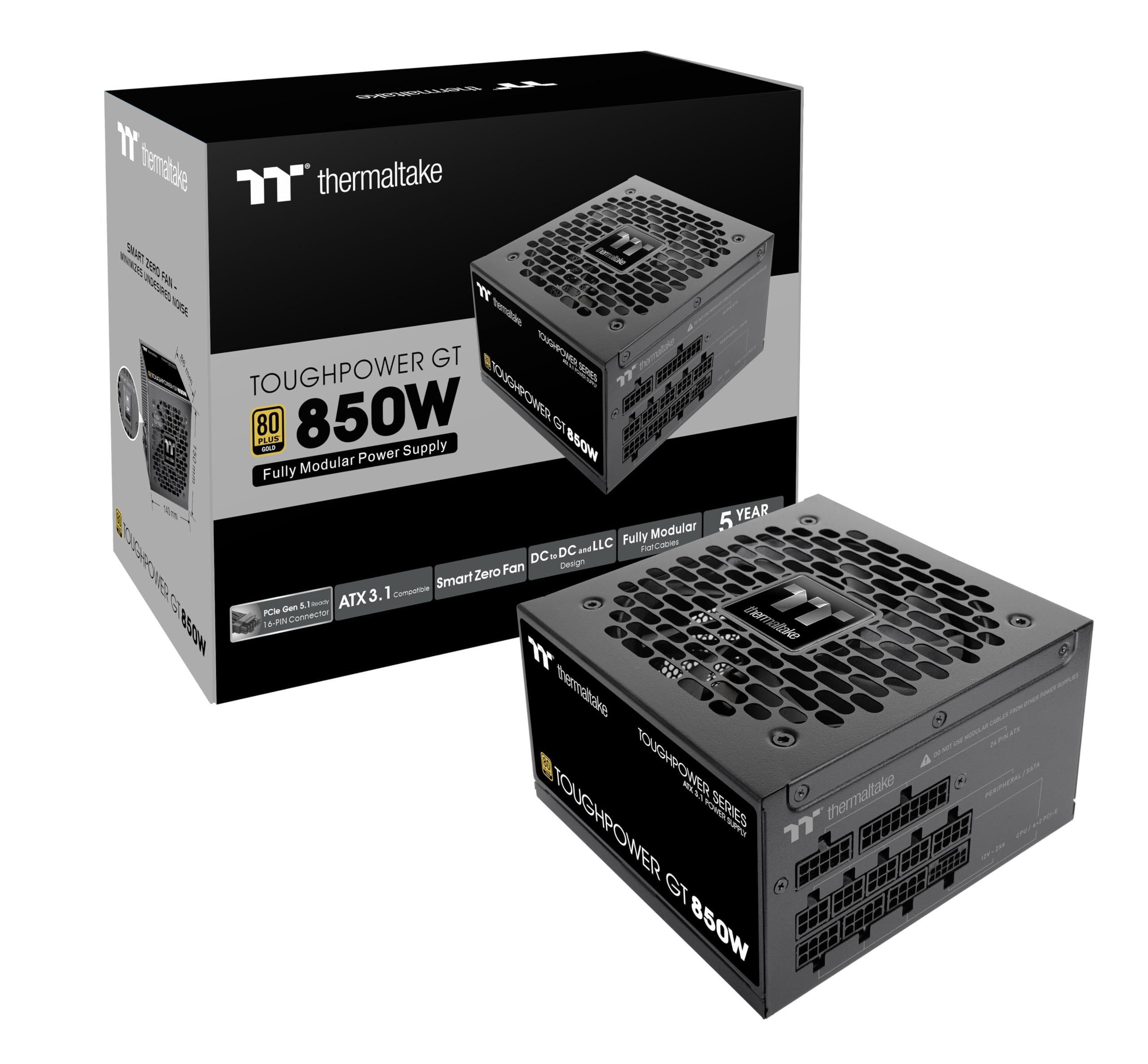 8.5 / 10
Thermaltake Toughpower GT 850W | ATX 3.1 | PCIe 5.1 | 80+ Gold | Modular
£80.39 · Thermaltake
Frequently asked
5 questions01Is the Corsair CP-9020121-UK CX Series 550 W CX550 ATX/EPS 80 PLUS Bronze Power Supply Unit - Black good for gaming?+
Yes, for mainstream gaming builds it's a solid choice. Paired with a mid-range GPU like an RTX 4060 or RX 7600 and a modern Ryzen 5 or Core i5 CPU, a typical system peaks well within the 550W rated capacity under gaming load. The 5-year warranty and strong owner review track record (4.7 stars, nearly 5,800 reviews) back that up. For high-end GPUs like an RTX 4070 Super or above, you'd want a 650W or 750W unit instead.
02What wattage PSU do I need for an RTX 4060 build?+
The RTX 4060 has a TDP of around 115W to 120W, and a typical gaming system with a Ryzen 5 or Core i5 CPU, a couple of SSDs, and standard case fans will peak somewhere in the 280W to 350W range under full load. A 550W PSU like the CX550 gives you comfortable headroom at that load level. Nvidia recommends a 550W PSU for RTX 4060 systems, so the CX550 fits the bill precisely. Use a PSU calculator to verify your specific component list.
03Is 80 Plus Bronze efficiency worth it, or should I pay more for Gold?+
For most casual to moderate gamers, Bronze is fine. The real-world efficiency difference between Bronze (around 85% at 50% load) and Gold (around 90% at 50% load) works out to a few pounds per year in electricity costs for a typical gaming session. If you game a few hours a day, Bronze is perfectly reasonable and the savings from buying Bronze over Gold often outweigh the efficiency difference over a 3 to 4 year ownership period. If you run your PC heavily for eight-plus hours daily or it's on 24/7, Gold starts to make financial sense over time.
04How long is the warranty on the Corsair CP-9020121-UK CX Series 550 W CX550 ATX/EPS 80 PLUS Bronze Power Supply Unit - Black?+
5 years. That's a genuinely good warranty for a PSU at this price point - many competitors in the same efficiency and price bracket offer only 2 or 3 years. Corsair's UK support operation is established and functional, so making a warranty claim isn't the nightmare it can be with less prominent brands. Keep your proof of purchase and you're covered for five years from the date of purchase.
05Is the Corsair CP-9020121-UK CX Series 550 W CX550 ATX/EPS 80 PLUS Bronze Power Supply Unit - Black fully modular?+
No, the CX550 is non-modular. All cables are permanently attached to the PSU. That means you'll have cables you're not using (particularly the Molex connectors if your build doesn't need them) that need to be tucked away behind the motherboard tray. It's manageable in a mid-tower with decent cable routing, but it's more work than a semi or fully modular PSU. If clean cable management is important to you, consider stepping up to the Corsair RM550x, which is fully modular but costs more.