Professional architects place unique demands on a processor. Unlike gamers who need raw single-core speed for frame rates, architects typically juggle multiple workloads simultaneously: parametric modelling in Revit or ArchiCAD, real-time 3D navigation in Rhino or SketchUp, CPU-based rendering in V-Ray or Lumion, and large BIM file management that can push RAM bandwidth to its limits. The right CPU must perform well across all of these tasks rather than excelling at just one. Since last year, AMD's Ryzen 9000 series has arrived on AM5, bringing improved instructions-per-clock efficiency and better memory support, while Intel's 14th-generation desktop line has matured in pricing. The result is a more competitive market than ever for workstation-class desktop processors at accessible price points. Whether you are a sole practitioner building a budget workstation or a studio upgrading several machines, this guide covers five processors that genuinely suit architectural workflows, from value picks to serious multi-threaded powerhouses.
Quick Verdict
Best Overall: AMD Ryzen 7 9700X. It delivers the best balance of single-core responsiveness for CAD navigation and multi-threaded throughput for rendering on the modern AM5 platform, all within a sensible 65W power envelope.
Best Value: AMD Ryzen 5 9600X. A six-core AM5 chip that punches well above its price for Revit and SketchUp users who do not run overnight render farms.
Spec Comparison
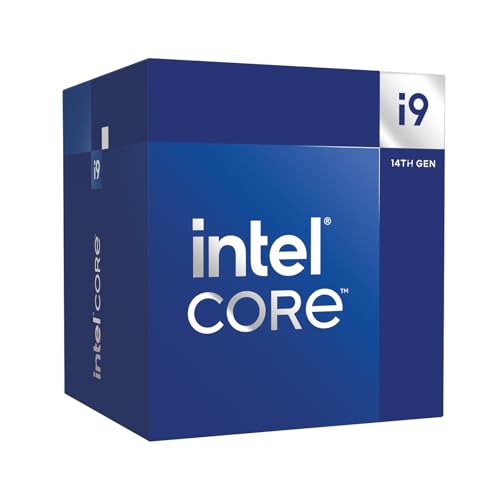
The Intel Core i9-14900 is the most powerful processor in this roundup and is aimed squarely at architects who need serious multi-threaded muscle for CPU rendering alongside responsive single-core performance for live 3D navigation. With 24 cores split across eight Performance cores and sixteen Efficiency cores, it is one of the highest core-count desktop chips available at this price point, making it particularly compelling for studios that use V-Ray CPU, Enscape on CPU mode, or run Revit alongside heavy Grasshopper scripts simultaneously.
The non-K variant reviewed here carries a 65W base TDP, though in practice it will draw significantly more under sustained all-core load, often reaching its 219W Power Limit 2. That means you will need a capable cooler and a quality power supply, but it also means the chip can be paired with a standard Z790 or B760 motherboard without needing to unlock overclocking features. For architectural workstations where stability and reliability matter more than squeezing out every last megahertz, the locked multiplier is rarely a drawback.
In rendering benchmarks, the i9-14900 competes closely with AMD's higher-end Ryzen 9 chips, and its Cinebench R23 multi-core scores regularly exceed 35,000 points. Single-core performance is also strong, which translates to snappy viewport responsiveness in Rhino and SketchUp, where most of the interactive load falls on a single thread. DDR5 memory support via an LGA1700 motherboard means architects working with very large BIM models can load up to 192 GB of RAM on some boards, a ceiling that matters when handling complex Revit projects with dozens of linked files.
The trade-off is power consumption and heat. This chip will run warm under sustained rendering loads, and a 240mm or 360mm AIO cooler is advisable. It also sits at the top of the price range here, so it is best justified when rendering time directly affects project deadlines or client billing. For a sole practitioner doing primarily CAD with occasional rendering, it is more chip than most workflows require. For a busy studio workstation that runs overnight renders, it earns its place.
Verdict: The most capable multi-threaded option in this selection, best suited to studios where rendering throughput is a daily priority and power consumption is a secondary concern.
Pros
- 24-core configuration delivers outstanding multi-threaded rendering performance for V-Ray and similar CPU renderers
- Strong single-core boost speeds keep Revit and Rhino viewports responsive
- LGA1700 platform supports very high RAM capacities for large BIM projects
Cons
- Real-world power draw under all-core load can exceed 200W, requiring a substantial cooler and PSU
- Highest price in this roundup, which is difficult to justify for lighter CAD-only workflows
The AMD Ryzen 7 9800X3D is a fascinating choice for architects, and one that deserves more attention in professional circles than it typically receives. Its headline feature is AMD's 3D V-Cache technology, which stacks an additional 64 MB of L3 cache on top of the standard die, bringing total cache to 104 MB. For architectural workflows, this is not merely a gaming trick. Large cache pools dramatically reduce the latency of repeated memory accesses, which matters enormously when navigating complex 3D scenes, running iterative structural analysis scripts, or processing large point cloud datasets in software like Leica Cyclone or ReCap.
The 9800X3D sits on AMD's AM5 platform, which means DDR5 memory support and PCIe 5.0 connectivity. It boosts to 5.7 GHz on a single core, making it one of the fastest chips available for single-threaded tasks, which is precisely where most interactive CAD applications spend the majority of their time. Revit's notoriously single-threaded model regeneration, ArchiCAD's GDL object calculations, and SketchUp's viewport rendering all benefit from the highest possible single-core frequency.
Multi-threaded performance with eight cores and sixteen threads is solid rather than exceptional compared to higher core-count chips like the i9-14900. If your workflow involves long overnight renders using all available CPU threads, a chip with more cores will eventually pull ahead. However, for architects who render in shorter bursts, use a GPU renderer like D5 Render or Enscape, or prioritise interactive speed over batch throughput, the 9800X3D's cache advantage can make the working day noticeably smoother.
The 120W TDP is higher than the standard Ryzen 9000 chips but still manageable with a good 240mm AIO or a high-quality tower cooler. AM5 motherboards are widely available at reasonable prices, and the platform is confirmed to support future AMD processors, giving this investment longevity. At its price point, the 9800X3D represents a genuinely differentiated option for architects who spend more time modelling than rendering.
Verdict: The best choice for architects who prioritise interactive 3D performance and large-scene navigation over raw multi-threaded rendering throughput.
Pros
- 104 MB of total cache dramatically reduces latency during complex 3D scene navigation and large point cloud processing
- 5.7 GHz single-core boost is among the highest available, keeping CAD applications highly responsive
- AM5 platform ensures long-term upgrade compatibility with future AMD processors
Cons
- Eight cores limit sustained all-core rendering throughput compared to higher core-count alternatives at similar prices
- 120W TDP requires a capable cooler, adding to the overall build cost
The AMD Ryzen 7 9700X is our Best Overall pick, and for good reason. It strikes the most balanced profile for professional architectural workstations: eight cores and sixteen threads handle multi-threaded tasks such as rendering and BIM coordination with genuine competence, while its single-core boost of up to 5.5 GHz keeps interactive applications like Revit, Rhino, and SketchUp feeling sharp and immediate. Critically, it achieves all of this within a 65W TDP, making it one of the most thermally efficient high-performance desktop processors available.
That 65W figure has real practical implications for architects building or specifying workstations. It means the chip runs cool enough to be adequately cooled by a quality air cooler such as a Noctua NH-D15 or a 120mm AIO, reducing both cost and noise in the office environment. It also means the chip will not throttle under sustained loads on a modest cooling solution, which matters for architects who leave renders running during the working day while continuing to model in another application.
The 9700X is built on AMD's Zen 5 architecture, which brings meaningful improvements in instructions-per-clock efficiency over the previous Zen 4 generation. In practice, this means better performance per watt and improved handling of the mixed workloads that characterise architectural practice: switching between a Grasshopper parametric model, a Revit coordination session, and a background V-Ray render without the system grinding to a halt. The AM5 platform supports DDR5 memory, and pairing this chip with 64 GB of fast DDR5 RAM gives it an excellent foundation for large project files.
Compared to the 9800X3D above it, the 9700X lacks the massive L3 cache advantage, so in very large 3D scenes the cache-equipped chip will feel marginally more fluid. Compared to the i9-14900 above it in core count, the 9700X will be slower in long all-core renders. But for the majority of architectural practices, the 9700X hits the sweet spot: fast enough for everything, efficient enough to run quietly, and priced fairly for what it delivers.
Verdict: The most well-rounded processor for professional architects, balancing single-core responsiveness, multi-threaded rendering capability, and thermal efficiency on a future-proof AM5 platform.
Pros
- 65W TDP allows quiet, cool operation with a quality air cooler, ideal for office workstations
- Zen 5 architecture delivers strong performance across both single-threaded CAD and multi-threaded rendering tasks
- AM5 platform with DDR5 support provides a modern, upgradeable foundation for large BIM workflows
Cons
- Lacks the 3D V-Cache of the 9800X3D, so very large scene navigation is marginally less fluid
- Eight cores mean it trails higher core-count chips in sustained overnight rendering sessions
The AMD Ryzen 5 9600X is our Best Value pick and a compelling option for architects who spend the majority of their time in CAD and BIM applications rather than CPU rendering. Six cores and twelve threads is not the most generous configuration for heavily multi-threaded workloads, but the 9600X compensates with excellent single-core performance, boosting to 5.4 GHz, and the efficiency advantages of AMD's Zen 5 architecture. For Revit, ArchiCAD, SketchUp, and AutoCAD workflows, where the application itself rarely saturates more than a handful of threads at once, the 9600X delivers a working experience that is very close to more expensive eight-core chips.
The 65W TDP is the same as the 9700X, and in practice the 9600X runs even cooler given its lower core count. This makes it an excellent choice for compact workstation builds or for practices that want to keep noise levels low in an open-plan studio. A mid-range air cooler is entirely sufficient, and the savings on cooling hardware can be redirected towards more RAM or a faster NVMe drive, both of which have a tangible impact on architectural workflows.
Being an AM5 processor, the 9600X supports DDR5 memory and PCIe 5.0, giving it access to the fastest storage options available. Architects working with large point cloud files, high-resolution texture libraries, or complex Revit models with many linked files will appreciate the faster storage bandwidth that PCIe 5.0 NVMe drives provide. The platform also ensures forward compatibility with future AMD processors, so upgrading to a higher core-count chip in two or three years without replacing the motherboard is a realistic option.
The main limitation is rendering. If you use V-Ray CPU, Corona, or any other CPU-based renderer for final-quality output, six cores will become a bottleneck on complex scenes. Architects who render frequently should budget for the 9700X or consider offloading rendering to a GPU renderer, which would make the 9600X's core count largely irrelevant. For those whose rendering needs are modest or who use cloud rendering services for final outputs, the 9600X is an excellent, efficient, and cost-effective foundation.
Verdict: The smartest choice for budget-conscious architects or those whose workflows are dominated by CAD and BIM rather than CPU rendering, offering modern AM5 platform benefits at a very accessible price.
Pros
- 5.4 GHz single-core boost delivers excellent responsiveness in Revit, SketchUp, and ArchiCAD
- 65W TDP and six-core design run very cool, enabling quiet office-friendly builds with modest cooling
- AM5 platform with DDR5 and PCIe 5.0 support provides modern connectivity and future upgrade options
Cons
- Six cores limit multi-threaded rendering throughput, making it a poor choice for practices that rely heavily on CPU rendering
- Marginally slower than the 9700X in all workloads, with a smaller gap in price than the performance difference might suggest
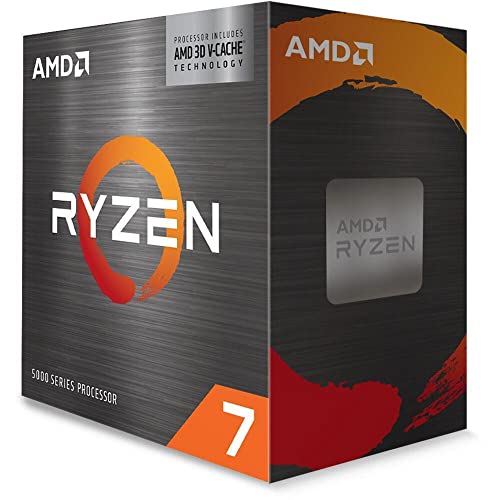
The AMD Ryzen 7 5800X3D occupies an interesting position in 2024. It is an older AM4 processor, but its 3D V-Cache technology, which stacks 64 MB of additional L3 cache on top of the standard Zen 3 die for a total of 100 MB, continues to deliver genuinely differentiated performance in cache-sensitive workloads. For architects who already have an AM4 platform, the 5800X3D represents one of the most cost-effective upgrades available, transforming an existing system into a capable workstation without the expense of a new motherboard and DDR5 memory.
The large cache pool is particularly beneficial for architects working with dense 3D geometry, complex parametric models, or large point cloud datasets. When the working dataset fits within the cache, the processor avoids slow trips to main memory, which reduces latency and keeps the application feeling responsive even under heavy load. In practical terms, navigating a complex Rhino model or regenerating a large Grasshopper definition feels noticeably smoother on the 5800X3D than on a standard Zen 3 chip of the same core count.
The trade-off compared to the newer AM5 chips is the platform itself. AM4 is a mature, end-of-life platform, meaning there are no future CPU upgrades available beyond what already exists. DDR4 memory is supported rather than DDR5, and PCIe 4.0 is the maximum storage interface. For architects building a new workstation from scratch, these limitations make AM5 the more sensible long-term investment. However, for those upgrading an existing Ryzen 3000 or 5000 series system, the 5800X3D can slot straight into a compatible B550 or X570 board with a BIOS update, making it an exceptionally efficient upgrade path.
The 105W TDP is higher than the newer 65W Ryzen 9000 chips, and the 5800X3D runs warmer as a result. A 240mm AIO or a high-end tower cooler is recommended. Boost clocks top out at 4.5 GHz, which is lower than the newer Zen 5 chips, so in purely single-threaded scenarios it will feel slightly less snappy. Despite these caveats, the 5800X3D remains a strong performer for architectural workflows and a genuinely worthwhile option for AM4 platform owners.
Verdict: The best upgrade option for architects on existing AM4 platforms, with 3D V-Cache delivering real-world benefits for complex 3D modelling workflows at a price that undercuts the newer AM5 alternatives.
Pros
- 100 MB of total L3 cache significantly reduces latency in complex 3D modelling and large parametric model workflows
- Drop-in upgrade for existing AM4 B550 or X570 systems, avoiding the cost of a new motherboard and DDR5 memory
- Strong real-world performance in cache-sensitive architectural applications despite older architecture
Cons
- AM4 platform is end-of-life with no further CPU upgrade path available
- 4.5 GHz boost clock trails newer Zen 5 chips in single-threaded CAD responsiveness
- 105W TDP runs warmer than the newer 65W Ryzen 9000 processors, requiring more capable cooling
Buying Guide
Single-Core Performance Matters Most for CAD
The single most important specification for architects who spend the majority of their time in Revit, ArchiCAD, Rhino, or SketchUp is single-core clock speed. These applications are largely single-threaded in their interactive operations: viewport navigation, model regeneration, GDL object calculations, and command execution all run on one or two cores at most. A processor with a high boost clock, typically 5.0 GHz or above on modern chips, will feel noticeably more responsive in day-to-day use than a chip with more cores but lower per-core speed. This is why a six-core chip like the Ryzen 5 9600X can feel nearly as fast as an eight-core chip in CAD applications, despite having fewer threads available.
Core Count for Rendering
If your practice uses CPU-based rendering software such as V-Ray CPU, Corona Renderer, or Chaos Vantage in CPU mode, core count becomes the dominant factor for final render times. Rendering is an embarrassingly parallel workload: every additional core contributes proportionally to faster output. For practices that run overnight renders or have tight visualisation deadlines, investing in a higher core-count processor like the i9-14900 can directly reduce project turnaround times. If you use GPU-based renderers like D5 Render, Enscape, or Lumion, the CPU's core count matters far less, and you can prioritise single-core speed and budget more towards a powerful graphics card instead.
Cache and Memory Bandwidth
Large architectural models, particularly those involving point cloud data, high-resolution texture libraries, or complex parametric geometry, benefit significantly from large CPU cache pools and fast memory. AMD's 3D V-Cache chips, the 9800X3D and 5800X3D, offer a meaningful advantage here. For standard workflows, ensuring you have at least 32 GB of RAM is advisable, with 64 GB recommended for practices handling large Revit projects with multiple linked models. DDR5 memory, available on AM5 platform chips, offers higher bandwidth than DDR4, which helps when processing large datasets.
Platform Longevity
When building or specifying a workstation, consider the upgrade path of the platform as well as the processor itself. AMD's AM5 platform is confirmed to support processors through to at least 2027, meaning a motherboard purchased today will accept future CPU upgrades. Intel's LGA1700 platform is reaching the end of its lifecycle. If you are building new, AM5 is the more future-proof investment. If you are upgrading an existing AM4 system, the 5800X3D is an excellent option that avoids the cost of a full platform change.
Thermal and Noise Considerations
Architectural offices are often open-plan environments where workstation noise is a genuine concern. Processors with lower TDP ratings, particularly the 65W Ryzen 9000 chips, run cooler and quieter than higher-wattage alternatives, and can be adequately cooled by quality air coolers that operate nearly silently at typical workloads. If noise is a priority, favour lower-TDP chips and pair them with a reputable air cooler. If maximum performance is the priority, a 240mm or 360mm AIO will keep even the most demanding chips under control.
For most professional architects, the AMD Ryzen 7 9700X is the processor we would recommend without hesitation. It delivers strong single-core performance for interactive CAD, eight cores for competent rendering throughput, a 65W TDP that keeps noise and heat manageable in an office environment, and the modern AM5 platform with DDR5 support for future-proofing. It is not the fastest chip for any single task, but it is the most consistently capable across the full breadth of architectural workflows, and that balance is exactly what a professional workstation demands. Architects who render heavily should consider the i9-14900 for its 24-core advantage, while those upgrading an existing AM4 system will find the 5800X3D an outstanding value proposition. The Ryzen 5 9600X remains the smartest budget pick for practitioners whose work is predominantly CAD rather than rendering.