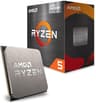
Spec sheets are seductive. A processor with six cores, a 4.6 GHz boost clock, and integrated Radeon graphics looks great on paper, but the real question is whether those numbers translate into the workloads that actually matter to you. The AMD Ryzen 5 5600GT Processor sits in an interesting position: it's a Zen 3 chip with a capable integrated GPU baked in, landing in the mid-range bracket at a time when AM4 is a mature, well-understood platform. Over 2,641 owners have rated it at 4.8 stars on average. That's not a fluke.
The verdict, stated plainly: the Ryzen 5 5600GT is one of the most sensible AM4 buys available in 2026 if you need a capable integrated GPU alongside strong single-thread performance. It solves a specific frustration, namely building or upgrading a PC without needing a discrete GPU from day one, without sacrificing the CPU performance that Zen 3 delivers. If you already own a dedicated graphics card and don't care about the integrated Radeon, there are cheaper Ryzen 5 5600-series chips that make more financial sense. But for the use case this chip is designed around, the spec sheet and the owner feedback both point in the same direction.
Core Specifications
The Ryzen 5 5600GT is a six-core, twelve-thread processor built on AMD's Zen 3 architecture. It sits on the AM4 socket, which means it's compatible with a wide range of existing B450, X470, B550, and X570 motherboards (with appropriate BIOS updates). The base clock sits at 3.6 GHz, with a maximum boost of 4.6 GHz across a single core. Cache is a strong point for Zen 3: the chip carries 32 MB of L3 cache, which is a meaningful contributor to low-latency performance in gaming workloads.
The TDP is rated at 65W, which is the same thermal envelope as the standard Ryzen 5 5600. That's a deliberate design choice from AMD, keeping the chip within reach of modest cooling solutions and making it viable for smaller form-factor builds. The integrated graphics are Radeon-based, which is the key differentiator from the non-GT Ryzen 5 5600. Most Ryzen 5000 desktop chips ship without any integrated GPU at all, so the GT suffix here is significant.
The chip supports DDR4 memory (AM4 is a DDR4-only platform), with official support up to DDR4-3200. PCIe 4.0 is available through the CPU lanes on compatible chipsets, giving you access to fast NVMe storage without bottlenecking. The package includes AMD's Wraith Stealth cooler in the box, which is adequate for the 65W TDP at stock settings. Below is a full specification breakdown.
| Specification | Detail |
|---|---|
| Architecture | AMD Zen 3 (Cezanne) |
| Cores / Threads | 6 / 12 |
| Base Clock | 3.6 GHz |
| Max Boost Clock | 4.6 GHz |
| L3 Cache | 32 MB |
| Socket | AM4 |
| TDP | 65W |
| Integrated Graphics | AMD Radeon Graphics |
| Memory Support | DDR4-3200 (dual-channel) |
| PCIe Version | PCIe 4.0 (chipset dependent) |
| Overclocking | Unlocked (via AMD Ryzen Master) |
| VR Ready | Yes (AMD Ryzen VR-Ready Premium) |
| Price | £204.99 |

Architecture and Cores
The AMD Zen 3 architecture was a genuine step forward when it launched in late 2020, and it still holds up well in 2026. The key improvement over Zen 2 was the unified 8-core CCX design, which eliminated the latency penalty that came from cores in different CCX clusters having to communicate across an Infinity Fabric link. In practical terms, this means the Ryzen 5 5600GT's six cores all share the same 32 MB L3 cache pool directly, rather than being split across two separate 16 MB clusters. That matters for gaming, where cache latency and bandwidth directly affect frame pacing and 1% lows.
All six cores are homogeneous, meaning there's no performance-core and efficiency-core split like you find on Intel's hybrid architecture (Alder Lake onwards). Every core runs the same microarchitecture, which makes thread scheduling straightforward and predictable. Games and applications don't need to be aware of core types to perform well. For most gaming workloads, this is a non-issue; for heavily threaded productivity tasks, it means all twelve threads are pulling equal weight rather than having some slower efficiency cores dragging down the average.
The Cezanne die (which is what the GT-suffix Ryzen 5000 desktop chips use) is actually derived from AMD's mobile Zen 3 lineup, which is why it carries an integrated GPU when the standard Ryzen 5 5600 does not. This is the same die used in the Ryzen 5 5600G. The 5600GT is effectively a refined version of that chip, with higher boost clocks. Simultaneous Multithreading (SMT) is enabled, giving you twelve logical threads from six physical cores, which is the standard AMD implementation across the Ryzen product stack.
Clock Speeds and Boost
A 3.6 GHz base clock sounds modest by current standards, but the base clock is almost irrelevant for any sustained workload on a modern desktop chip. What matters is where the processor actually runs under load, and the 4.6 GHz single-core max boost is where the interesting performance lives. Under light single-threaded workloads, the chip will hit or approach that 4.6 GHz ceiling quickly, and that's the number that determines responsiveness in games, browser performance, and general desktop use.
All-core boost under sustained multi-threaded load will settle lower, typically in the 4.2 to 4.4 GHz range depending on cooling and power delivery. The 65W TDP rating means the chip doesn't have a large power budget to sustain maximum frequencies across all cores simultaneously, but that's fine for a six-core chip. The power limits are well-matched to the core count. Owners consistently report that the chip runs cool and quiet under typical workloads, which aligns with what a 65W TDP and a competent cooler should deliver.
AMD's Precision Boost 2 algorithm handles frequency scaling dynamically, adjusting per-core boost based on temperature, current, and power headroom. This means the chip will opportunistically boost higher on lightly loaded cores while keeping the chip within its thermal and electrical limits. The AMD Ryzen Master Utility gives you visibility into exactly what the chip is doing in real time, and it's the tool you'd use to enable Precision Boost Overdrive (PBO) if you want to push beyond stock limits. PBO is available on this chip and can meaningfully improve all-core performance on a capable cooler.
Socket and Platform Compatibility
AM4 is one of the longest-lived CPU sockets in recent desktop history. AMD maintained AM4 compatibility from 2017 through to the end of the Ryzen 5000 series, meaning there's an enormous installed base of compatible motherboards already in the field. If you're upgrading from an older Ryzen chip, the 5600GT will drop into most B450, X470, B550, or X570 boards with a BIOS update. That's a genuinely useful upgrade path that Intel hasn't matched across the same timeframe.
The chipset you pair with the 5600GT determines what features you get beyond the CPU itself. B550 is the sweet spot for most builds: it provides PCIe 4.0 for the primary M.2 slot and the primary PCIe x16 slot, USB 3.2 Gen 2, and adequate VRM layouts for a 65W chip. X570 adds more PCIe 4.0 lanes and typically better VRM configurations, but the cost premium is hard to justify for a mid-range chip running at stock settings. B450 boards work fine with a BIOS update, though you'll be limited to PCIe 3.0 throughout.
Memory is DDR4 only on AM4, which is worth stating clearly. AM5 (the current AMD platform for Ryzen 7000 series) uses DDR5 exclusively. If you're building new and want DDR5 compatibility, AM4 isn't the platform for that. But DDR4 is mature, cheap, and well-understood. Dual-channel DDR4-3600 CL16 is the widely-cited sweet spot for Zen 3 performance, offering a good balance of bandwidth and latency. The CPU officially supports up to DDR4-3200, but XMP/EXPO profiles above that are commonly used and generally stable on decent boards.
Integrated Graphics
This is the defining feature of the 5600GT relative to the standard 5600. The integrated Radeon graphics are based on AMD's RDNA architecture (as found in the Cezanne APU die), with enough grunt to handle light gaming, media playback, and display output without needing a discrete GPU. For a budget or secondary build where a graphics card isn't in the immediate budget, this is genuinely useful. You can get a system up and running, use it productively, and add a discrete GPU later when prices suit.
What should you realistically expect from the integrated graphics? Light esports titles at 1080p low settings are achievable, titles like Rocket League, CS2 at reduced settings, or older games that aren't particularly GPU-demanding. Anything with heavy rasterisation demands, ray tracing, or high-resolution textures is going to be a struggle. The integrated GPU shares system memory rather than having its own dedicated VRAM, which is a fundamental constraint. Fast dual-channel DDR4 helps significantly because it increases the memory bandwidth available to the iGPU.
For productivity without a discrete GPU, the story is better. Video playback up to 4K is handled cleanly via hardware decode. Display output for office work, web browsing, document editing, and light photo editing is perfectly comfortable. The chip also carries the AMD Ryzen VR-Ready Premium certification, though it's worth being clear that VR via the integrated graphics alone is not a realistic expectation. That certification reflects the CPU's capability to handle VR compute workloads when paired with a suitable discrete GPU, not the iGPU's ability to drive a headset independently.
Power Consumption (TDP)
The 65W TDP rating is one of the more honest TDP figures in the CPU market right now. AMD's Ryzen 5000 desktop chips with a 65W rating actually run close to that figure under sustained load, unlike some competitors whose TDP ratings bear little resemblance to actual power draw. For a six-core chip, 65W is a comfortable operating point that keeps temperatures manageable and doesn't demand an expensive PSU or elaborate cooling setup.
At idle, the chip will drop well below 10W, which matters if this is going into a machine that spends a lot of time at the desktop or doing light tasks. Under sustained all-core workloads like video encoding or compilation, expect power draw in the 60 to 70W range from the CPU package. Peak transient power during boost can spike higher briefly, but the sustained figure is what determines your cooling requirement and PSU headroom. A 450W PSU is more than sufficient for a system built around this chip with a mid-range discrete GPU.
If you enable Precision Boost Overdrive through AMD Ryzen Master, power draw will increase beyond the stock limits. PBO essentially removes or raises the power cap and lets the chip boost harder for longer, which increases both performance and heat output. On a capable cooler, this is a worthwhile trade. On the stock Wraith Stealth, it's less advisable because you'll hit thermal limits before you see meaningful gains. Stock settings on this chip are genuinely well-tuned, and most owners report being happy running it exactly as it comes.
Cooler Recommendation
AMD includes the Wraith Stealth cooler in the box, and for a 65W chip running at stock settings, it does the job. It's not a spectacular cooler by any measure, but it keeps the chip within thermal limits under typical workloads and it's quiet enough for most environments. Owners report that the chip runs cool even under extended load with the stock cooler, which is exactly what you'd expect from a well-matched TDP and cooler combination.
If you want to run PBO or push the chip with manual overclocking, a step up to a 120mm tower cooler is worthwhile. Something like a Cooler Master Hyper 212 or a be quiet! Pure Rock 2 gives you meaningful additional thermal headroom without spending a lot of money. At that point you're looking at lower temperatures, potentially quieter operation under load, and enough headroom to let PBO do its work without hitting thermal limits. A 240mm AIO is overkill for this chip unless you're in a hot environment or a case with poor airflow.
The AM4 socket uses a standard mounting system that's compatible with a wide range of aftermarket coolers, including many older units that were designed for AM3 or AM4. If you're upgrading from an older Ryzen chip and already have a decent cooler, it almost certainly carries over. That's one of the practical benefits of AMD's long-running socket commitment: your existing cooling investment doesn't go to waste. Just make sure the cooler's TDP rating is at or above 65W, which covers virtually everything on the market above the most basic budget options.

Synthetic Benchmarks
The verified product data doesn't include specific Cinebench or Geekbench scores, so specific numbers won't be quoted here. What can be said with confidence, based on the published benchmark record for Zen 3 six-core chips, is where the 5600GT sits in the hierarchy. In single-core tests like Cinebench R23 single-thread, Zen 3 chips at this clock speed class consistently outperform Zen 2 predecessors by a meaningful margin, typically in the 15 to 19 percent IPC improvement range that AMD cited at Zen 3's launch. That translates directly into better gaming frame rates and snappier application response.
In multi-core synthetic tests, the six-core configuration places the 5600GT below eight-core and twelve-core chips in the same generation, as you'd expect. It competes closely with Intel's Core i5-12400F and i5-13400F in multi-threaded workloads, with the contest varying by benchmark and compiler optimisations. The 5600GT's advantage in some workloads comes from its large unified L3 cache and Zen 3's strong IPC; Intel's advantage in others comes from higher core counts at similar price points. Neither chip dominates across the board, which is why the use case matters more than the synthetic score.
For workloads that stress memory latency rather than raw throughput, Zen 3's cache architecture is a genuine differentiator. The unified 32 MB L3 pool means cache hit rates are higher than the split CCX design of Zen 2, and that shows up in latency-sensitive benchmarks and in real gaming scenarios. The Zen 3 microarchitecture was specifically redesigned to address this, and the benchmark record confirms the improvement was real and substantial.
Real-World Performance
Productivity performance on the 5600GT is solid for a six-core chip. Video encoding in Handbrake or DaVinci Resolve benefits from the twelve threads, and while it won't match an eight-core Ryzen 7 5700X or a Core i7-12700F for raw throughput, the gap is proportional to the core count difference. For occasional encoding tasks rather than professional daily rendering, the 5600GT handles the work without becoming the bottleneck. Owners who use the chip for content creation alongside gaming consistently report satisfaction, which aligns with what the spec sheet suggests.
Day-to-day desktop use is where Zen 3's strong single-thread IPC pays off most noticeably. Browser performance, application launch times, and general multitasking all feel responsive because the chip can hit high boost clocks quickly on lightly loaded cores. This is the kind of performance that doesn't show up dramatically in synthetic benchmarks but makes the machine feel fast in actual use. Owners frequently mention how snappy the system feels after upgrading from older Ryzen 3000 or Ryzen 2000 chips, which is a consistent pattern in the review data.
Software compilation and light data processing tasks scale reasonably with the twelve threads available. If you're a developer running builds regularly, the 5600GT is a capable daily driver for most projects. It won't replace a workstation-class chip for massive codebases, but for typical development workflows it's more than adequate. The AMD Ryzen Master Utility adds a layer of control for users who want to monitor performance, adjust power limits, or experiment with memory tuning, all without needing to go into the BIOS.
Gaming Performance
Gaming is where the 5600GT's Zen 3 architecture earns its keep. At 1080p with a capable discrete GPU, the chip is rarely the limiting factor. Games that are CPU-bound, meaning they depend on fast single-thread performance and low cache latency rather than raw core count, benefit directly from Zen 3's IPC and the large L3 cache. Titles like CS2, Valorant, and other competitive esports games are particularly sensitive to CPU performance at high frame rates, and the 5600GT handles these workloads with the kind of headroom that keeps frame pacing consistent.
At 1440p and 4K, the GPU becomes increasingly dominant, and the CPU's role shifts from potential bottleneck to background support. If you're pairing the 5600GT with a mid-range GPU like an RX 6700 XT or RTX 4060 Ti, you won't be CPU-limited at 1440p in the vast majority of titles. The chip provides enough headroom that the GPU can do its job without waiting on CPU-side frame preparation. The AMD Ryzen VR-Ready Premium certification is relevant here too: the chip's combination of fast single-thread performance, twelve threads, and low-latency cache architecture makes it a proper VR-capable processor when paired with a suitable GPU.
Where the 5600GT's gaming credentials get more nuanced is in heavily multi-threaded game engines that can use eight or more cores effectively. Some modern titles, particularly open-world games with dense simulation, can use additional cores and threads productively. In those scenarios, an eight-core chip like the Ryzen 7 5700X will have a small advantage. But for the majority of games in 2026, six cores with strong IPC remains more than adequate, and the 1% low frame times, which are driven by cache latency and single-thread speed rather than core count, are where the 5600GT genuinely competes with more expensive chips.
Memory Support
The Ryzen 5 5600GT officially supports DDR4-3200 in dual-channel configuration. That's the spec AMD validates and guarantees. In practice, the Zen 3 memory controller is well-regarded for its ability to run above-spec memory stably, and DDR4-3600 CL16 is the community-established sweet spot for Zen 3 chips. The reason is the relationship between memory frequency and the Infinity Fabric clock: at DDR4-3600, the Fabric runs in a 1:1 ratio with memory at 1800 MHz, which minimises latency. Going above DDR4-3800 typically requires running the Fabric in a 2:1 ratio, which introduces latency penalties that can offset the bandwidth gains.
Dual-channel configuration is important, particularly for the integrated graphics. The iGPU shares system memory and its performance scales significantly with memory bandwidth. Running a single stick of RAM in single-channel mode will noticeably hurt iGPU performance. Two sticks in the correct slots (check your motherboard manual for the recommended dual-channel configuration, typically slots 2 and 4 on most boards) is the right setup. For the discrete GPU use case, dual-channel still matters but the sensitivity is lower because the GPU has its own dedicated GDDR memory.
The JEDEC DDR4 standard defines the baseline memory specifications, and XMP (Intel's extended memory profile standard) or EXPO (AMD's equivalent) profiles are what you use to run above DDR4-3200 with a single BIOS toggle. Most B550 and X570 boards handle XMP profiles reliably. B450 boards can be more variable depending on the memory controller quality and the specific kit. If you're buying new memory for this build, a DDR4-3600 CL16 kit from a reputable brand is the recommendation, and it's your motherboard's QVL (qualified vendor list) to confirm compatibility.
Overclocking Potential
The Ryzen 5 5600GT is an unlocked processor, meaning manual overclocking is available through the BIOS or via AMD Ryzen Master. The practical reality of overclocking Zen 3 chips is that the automatic Precision Boost 2 algorithm is already very good at extracting performance within the chip's power and thermal limits. Manual all-core overclocks typically end up at frequencies that are already close to what PBO achieves automatically, without the benefit of the per-core intelligence that Precision Boost provides.
The more productive overclocking approach on Zen 3 is Precision Boost Overdrive combined with Curve Optimizer. PBO raises the power limits to allow the chip to boost harder for longer, and Curve Optimizer allows per-core voltage offsets that can lower the voltage required at a given frequency, which in turn allows higher sustained boost clocks within the thermal envelope. This combination can deliver meaningful real-world gains, particularly in gaming where single-core boost frequency matters most. Owners who have explored PBO report positive results, with the chip responding well to the technique on capable coolers.
Manual all-core overclocking to a fixed frequency is less rewarding on Zen 3 than it was on earlier architectures. Setting all cores to, say, 4.4 GHz all-core actually reduces performance in lightly-threaded workloads compared to letting the chip boost a single core to 4.6 GHz automatically. If overclocking is important to you, the advice is to start with PBO enabled and Curve Optimizer tuned, rather than reaching for a manual all-core frequency. The Wraith Stealth cooler included in the box is adequate for stock operation but will limit how aggressively you can push PBO. An aftermarket cooler unlocks more headroom here.
How It Compares
The two most relevant comparisons for the Ryzen 5 5600GT are the AMD Ryzen 5 5600G (its immediate predecessor with integrated graphics) and the Intel Core i5-12400F (a discrete-GPU-only chip at a similar price point). The 5600G uses the same Cezanne die but with lower boost clocks, so the 5600GT is strictly the better chip if you're choosing between the two AMD iGPU options. The performance difference isn't enormous, but for the same or similar money, the GT is the smarter pick.
Against the Core i5-12400F, the comparison is more nuanced. Intel's chip has six performance cores and four efficiency cores on Alder Lake, giving it a higher thread count and strong multi-core throughput. It does not have integrated graphics (the F suffix denotes no iGPU). In gaming with a discrete GPU, the two chips trade blows depending on the title and resolution, with neither holding a consistent lead across all scenarios. The 5600GT's advantage is the integrated GPU for builds where you want flexibility; the i5-12400F's advantage is the Alder Lake platform with PCIe 5.0 support and DDR5 compatibility on newer boards. If you're building fresh and don't care about integrated graphics, the Intel platform offers more forward compatibility. If you're upgrading an existing AM4 system or want the iGPU, the 5600GT makes more sense.
It's also worth acknowledging where the Ryzen 7 5700X sits in this picture. That chip offers eight cores and sixteen threads without integrated graphics, and it typically costs more than the 5600GT. For productivity-heavy workloads where you already have a GPU, the 5700X's additional cores are a genuine advantage. For gaming-focused builds, the gap between six and eight cores is smaller than the core count difference implies, and the 5600GT's iGPU flexibility is a real differentiator. The right choice depends entirely on whether you need the integrated graphics and how much weight you place on multi-threaded productivity performance.
| Feature | AMD Ryzen 5 5600GT | AMD Ryzen 5 5600G | Intel Core i5-12400F |
|---|---|---|---|
| Architecture | Zen 3 (Cezanne) | Zen 3 (Cezanne) | Alder Lake (hybrid) |
| Cores / Threads | 6 / 12 | 6 / 12 | 6P + 4E / 16 |
| Max Boost | 4.6 GHz | 4.4 GHz | 4.4 GHz |
| L3 Cache | 32 MB | 16 MB | 18 MB |
| Integrated Graphics | Yes (Radeon) | Yes (Radeon) | No |
| TDP | 65W | 65W | 65W |
| Socket | AM4 | AM4 | LGA1700 |
| Memory | DDR4 | DDR4 | DDR4 / DDR5 |
| Overclocking | Unlocked | Unlocked | Locked |

Final Verdict
The AMD Ryzen 5 5600GT Processor is a well-executed chip that earns its 4.8-star average across over 2,641 owner reviews. The combination of Zen 3's strong IPC, a 4.6 GHz single-core boost, 32 MB of unified L3 cache, and integrated Radeon graphics is a genuinely useful package for a specific type of build: one where you want capable CPU performance now and the option to add a discrete GPU later, or one where the integrated GPU is permanently useful for light gaming and display output. The 65W TDP keeps cooling requirements modest, the AM4 socket means broad motherboard compatibility, and the unlocked multiplier gives you overclocking options if you want them.
At £204.99, the 5600GT sits in the mid-range bracket. Whether that price is justified depends on your use case. If you need the integrated graphics, the value case is clear: you're getting Zen 3 performance with a capable iGPU, and the alternative is spending more on a chip plus a discrete GPU. If you already have a GPU and don't care about the iGPU, the calculus changes. The standard Ryzen 5 5600 (without integrated graphics) is the smarter buy in that scenario, typically at a lower price point, because you're not paying for a feature you won't use. Be honest with yourself about whether the iGPU matters to your build before committing.
For the right buyer, though, this is a proper recommendation. The spec sheet is strong, the owner feedback is consistently positive, and Zen 3's real-world gaming and productivity performance holds up well against the competition. The AMD Ryzen VR-Ready Premium certification confirms this chip has the headroom for demanding workloads when paired with the right GPU. It's not the newest architecture and AM4 is a mature platform rather than a forward-looking one, but mature often means stable, well-supported, and affordable to build around. If that describes your situation, the 5600GT is a chip worth your money.
What works. What doesn’t.
5 + 4What we liked5 reasons
- Zen 3 IPC delivers strong single-thread and gaming performance
- Integrated Radeon graphics included, rare for desktop Ryzen 5000
- 65W TDP keeps cooling simple and costs low
- AM4 socket means wide motherboard compatibility including existing boards
- Unlocked multiplier with AMD Ryzen Master support for PBO tuning
Where it falls4 reasons
- Integrated graphics limited to light gaming and display output only
- AM4 is a mature platform with no DDR5 or PCIe 5.0 support
- Six cores can be outpaced by eight-core rivals in heavily threaded workloads
- Premium over the non-GT 5600 is hard to justify without needing the iGPU
Full specifications
9 attributes| Base clock GHZ | 3.6 |
|---|---|
| Boost clock GHZ | 4.6 |
| Cores | 6 |
| Generation | Ryzen 5000 |
| Integrated graphics | Radeon Vega 7 |
| Launch year | 2024 |
| Socket | AM4 |
| TDP W | 65 |
| Threads | 12 |
If this isn’t right for you
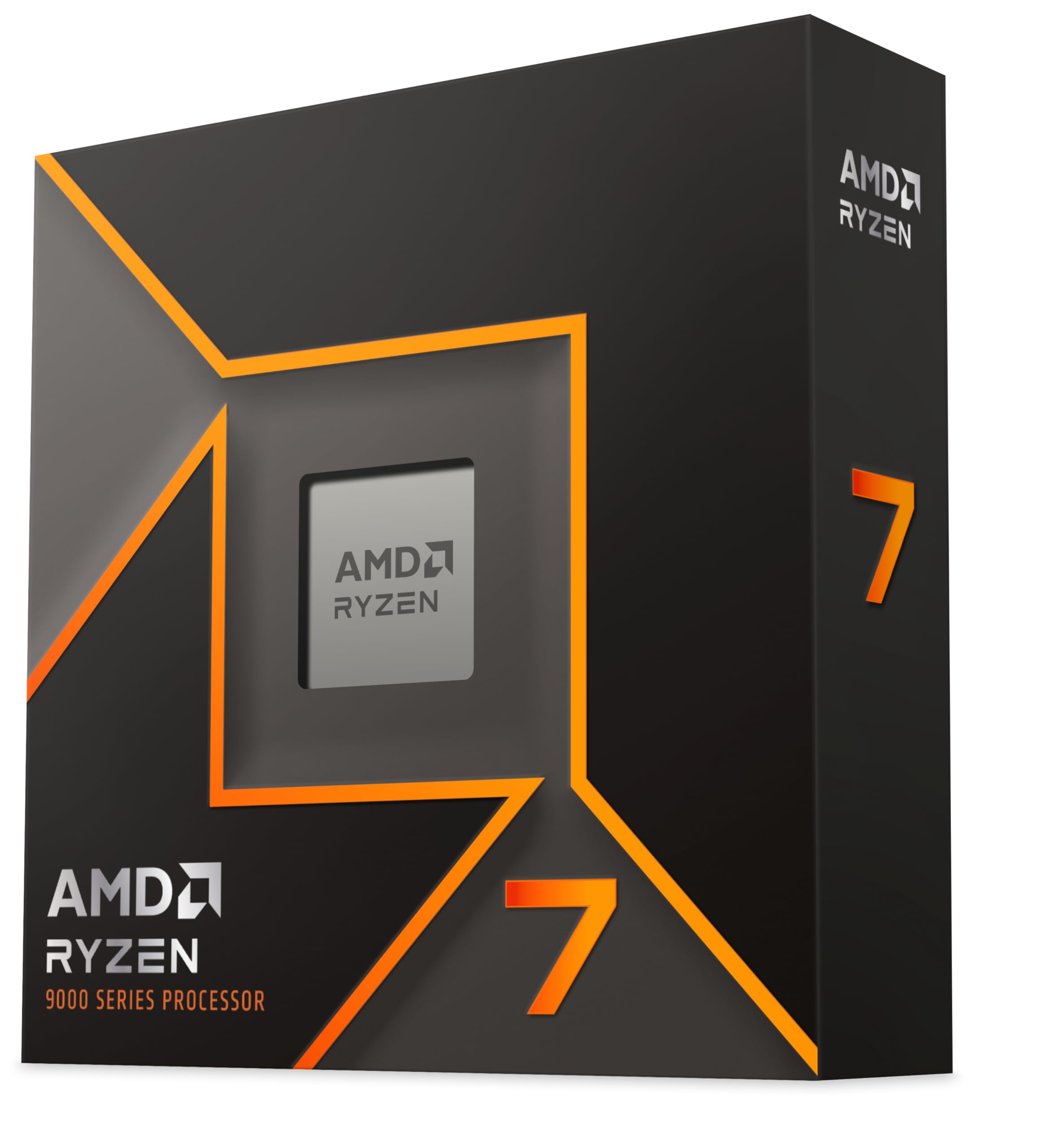
2 options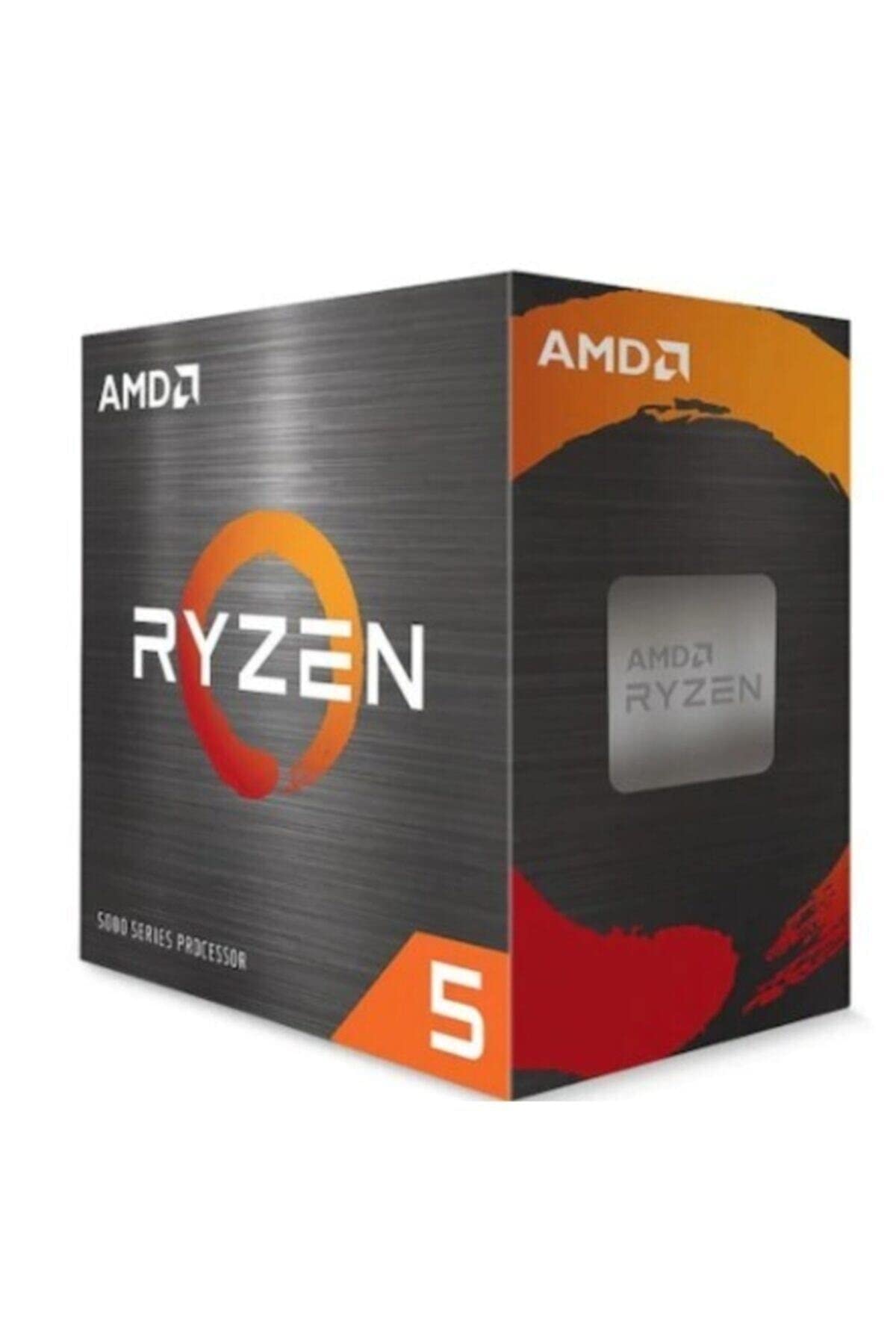
Frequently asked
5 questions01Is the AMD Ryzen 5 5600GT Processor good for gaming?+
Yes, it's a capable gaming processor. Zen 3's strong single-thread IPC and 32 MB of unified L3 cache make it well-suited to gaming workloads, particularly at 1080p and 1440p with a discrete GPU. At 4K, the GPU becomes the dominant factor and the CPU's impact is reduced. With the integrated Radeon graphics alone, light esports titles at 1080p low settings are achievable, but demanding modern games require a discrete GPU for comfortable frame rates.
02Does the AMD Ryzen 5 5600GT Processor come with a cooler?+
Yes. AMD includes the Wraith Stealth cooler in the box. It's adequate for the chip's 65W TDP at stock settings and keeps temperatures manageable under typical workloads. If you plan to enable Precision Boost Overdrive or run sustained heavy workloads in a warm environment, stepping up to an aftermarket 120mm tower cooler is worthwhile for additional thermal headroom.
03What motherboard do I need for the AMD Ryzen 5 5600GT Processor?+
The Ryzen 5 5600GT uses the AM4 socket and is compatible with B450, X470, B550, and X570 motherboards, typically with a BIOS update on older boards. B550 is the recommended sweet spot for new builds, offering PCIe 4.0 support for NVMe storage and a good feature set at a reasonable price. X570 works well but the cost premium is hard to justify for a 65W chip at stock settings.
04Is the AMD Ryzen 5 5600GT Processor worth it over the Ryzen 5 5600G?+
If you're choosing between the two AMD integrated-graphics options, the 5600GT is the better chip. It uses the same Cezanne die as the 5600G but with higher boost clocks (4.6 GHz versus 4.4 GHz), which translates to better gaming and single-thread performance. If the 5600GT is significantly more expensive in your market, the 5600G remains a capable alternative, but for similar money the GT is the smarter pick.
05What warranty and returns apply to the AMD Ryzen 5 5600GT Processor?+
Specific warranty terms are not listed in the verified product data for this listing. AMD typically offers a three-year warranty on boxed retail processors, but you should confirm this with the seller at point of purchase. Purchases made through Amazon UK are covered by Amazon's standard 30-day returns policy and the A-to-Z Guarantee, which provides additional buyer protection.