Competitive PC gaming demands something different from a processor than general-purpose workloads do. When you are chasing 240 fps or higher in titles like Counter-Strike 2, Valorant, or Rainbow Six Siege, raw single-core clock speed and low-latency cache architecture matter far more than core counts built for video rendering. Since last year, AMD's AM5 platform has matured considerably, with the Ryzen 9000 series bringing improved instructions-per-clock performance and the 3D V-Cache technology trickling down to more affordable price points. Intel's Raptor Lake Refresh chips remain competitive at the top end, though power consumption continues to be a talking point. This guide is aimed squarely at players who prioritise frame rate consistency and minimum-fps stability over anything else, whether they are building a fresh rig or upgrading an existing AM4 or AM5 system on a budget. Every pick below has been evaluated with those priorities in mind.
Quick Verdict
Best Overall: AMD Ryzen 9800X3D. The 3D V-Cache architecture delivers the lowest 1% lows of any consumer CPU in competitive titles, making it the clear choice for serious players with a mid-to-high budget.
Best Value: AMD Ryzen 5 9600X. At its price point it offers AM5 longevity, strong single-core performance, and enough headroom for a 240 Hz monitor without breaking the bank.
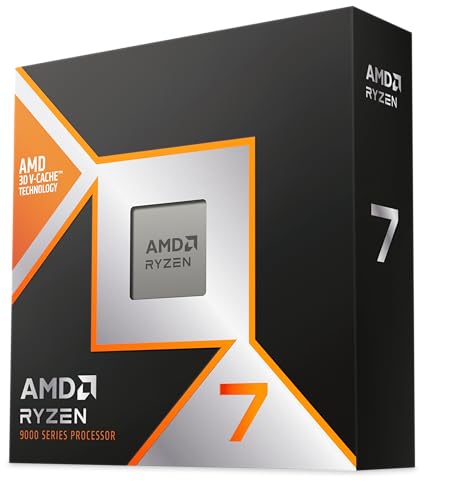
The AMD Ryzen 9800X3D is the processor that competitive gamers with a serious budget have been waiting for. Built on AMD's Zen 5 architecture and paired with 64MB of stacked 3D V-Cache sitting beneath the compute die rather than on top of it (a first for AMD), it combines the improved instructions-per-clock gains of the 9000 series with the cache-heavy gaming advantage that made the 5800X3D and 7800X3D so dominant in their respective generations.
Who is it for? Players competing at the highest level, particularly those running GPU-limited setups at 1080p or 1440p where CPU bottlenecks become the ceiling. It suits anyone running a high-refresh-rate monitor at 240 Hz or above, where consistent 1% lows matter as much as average frame rates. Streamers who game competitively will also appreciate that 8 physical cores handle encoding threads without stealing gaming performance, thanks to AMD's improved thread scheduling on AM5.
The headline specs are compelling: 8 cores and 16 threads, a maximum boost clock of 5.7 GHz, and a total of 104MB of cache. The 104W TDP is modest for what it delivers, and in practice the chip runs cooler than the previous 7800X3D under gaming loads, meaning a mid-range 240mm AIO or a quality tower cooler is perfectly adequate. The AM5 socket also guarantees platform longevity, with AMD having committed to AM5 support through at least 2027.
In competitive titles, the 9800X3D consistently posts the highest minimum frame rates of any consumer CPU currently available. In Counter-Strike 2 at 1080p with a high-end GPU, it routinely delivers 1% lows that are 15 to 20 per cent higher than non-3D-Cache alternatives at the same price tier. In Valorant and Apex Legends, the difference is similarly meaningful at the extremes of performance where frame drops cause the most disruption to aiming and reaction.
The only real caveat is that the 3D V-Cache architecture does not overclock, so enthusiasts who enjoy pushing clocks manually will find the chip locked in that respect. Pricing also places it firmly in the premium bracket, so buyers on a tight budget should look further down this list. For those who can stretch to it, however, no other chip currently matches it for competitive gaming.
Verdict: The best competitive gaming CPU money can buy right now, with unmatched minimum-fps stability and a platform that will remain relevant for years.
Pros
- Highest 1% lows of any consumer CPU in competitive titles
- 65W gaming TDP keeps thermals manageable with a mid-range cooler
- AM5 socket ensures platform longevity through at least 2027
Cons
- No manual overclocking support due to 3D V-Cache architecture
- Premium price puts it out of reach for budget-conscious builders
The Ryzen 5 9600X is AMD's entry point into the Zen 5 generation and, for competitive gamers who do not need the 3D V-Cache premium, it makes a compelling case for itself at a significantly lower price. Six cores and twelve threads might sound modest compared to eight-core alternatives, but in the titles that matter most to competitive players, including Counter-Strike 2, Valorant, Overwatch 2, and Fortnite, six fast Zen 5 cores are more than sufficient to keep a high-end GPU fed at 240 fps and beyond.
The chip targets players who are upgrading from an AM4 system or building their first AM5 rig and want to future-proof their platform without spending flagship money on the processor. It is also a strong choice for players who game at 1440p, where the GPU becomes the bottleneck earlier and the difference between a 9600X and a 9800X3D narrows considerably in practice.
Headline specs include a 5.4 GHz maximum boost clock, which is the highest in the Ryzen 5 9000 series, a 65W TDP that runs cool enough for a quality air cooler, and 38MB of combined cache. The Zen 5 architecture brings a meaningful improvement in instructions-per-clock over Zen 4, particularly in workloads that benefit from the wider front-end and improved branch prediction. In practice, this translates to better frame pacing in CPU-heavy scenarios compared to the equivalent Ryzen 5 7600.
Integrated Radeon graphics are included, which is a useful safety net during a build if the dedicated GPU is delayed or unavailable. The chip also supports DDR5 memory, and pairing it with fast DDR5-6000 in EXPO mode is straightforward on most AM5 motherboards and provides a measurable uplift in gaming performance.
The 9600X does not have 3D V-Cache, so its 1% lows in CPU-bound scenarios will trail the 9800X3D, but for most competitive gamers the gap is academic rather than practically significant. Where it shines is in offering a genuinely modern architecture on a platform with a long upgrade path, at a price that leaves budget for a better GPU or monitor.
Verdict: The smartest value pick for competitive gamers building on AM5, combining Zen 5 efficiency with a price that leaves room in the budget for peripherals and display upgrades.
Pros
- Zen 5 IPC gains deliver noticeably better frame pacing than Zen 4 at the same price
- 65W TDP runs cool on a budget air cooler, reducing overall build cost
- AM5 platform longevity and DDR5 support future-proof the build
Cons
- No 3D V-Cache means 1% lows trail the 9800X3D in CPU-bound competitive titles
- Six cores may feel limiting if the user moves into content creation or streaming workloads
Sitting between the value-focused 9600X and the premium 9800X3D in AMD's current lineup, the Ryzen 7 9700X offers eight Zen 5 cores at a 65W TDP, making it one of the most thermally efficient eight-core processors available. For competitive gamers who also stream, record, or run background applications while playing, the additional two cores over the 9600X provide meaningful headroom without the cost premium of the 3D V-Cache variant.
The 9700X is aimed at players who want a well-rounded chip: fast enough for 240 Hz competitive gaming, capable enough for light content creation or streaming in parallel, and efficient enough to run on a modest cooler. The 65W TDP is particularly notable for an eight-core chip, and AMD achieves this through a combination of Zen 5's improved efficiency and conservative base clock settings that can be loosened through AMD's Precision Boost Overdrive for users who want more performance from a better cooler.
Maximum boost clock sits at 5.5 GHz, just 200 MHz behind the 9800X3D, and in non-V-Cache-dependent workloads the two chips perform very similarly. In GPU-limited scenarios at 1440p or 4K, the 9700X often matches the 9800X3D within the margin of error. Where the gap opens is in CPU-heavy competitive titles at 1080p with a powerful GPU, where the 3D V-Cache architecture gives the 9800X3D a clear advantage in minimum frame rates.
The 40MB of cache is a step up from the 9600X's 38MB but obviously nowhere near the 104MB of the 9800X3D. For most competitive titles this is not a limiting factor, and the chip handles all the major esports titles with ease. DDR5 support and AM5 compatibility mean the platform story is identical to the rest of the 9000 series, and integrated Radeon graphics are included for build flexibility.
Pricing places the 9700X in an interesting position: it costs more than the 9600X but less than the 9800X3D, and for many competitive gamers the 9600X will be the more sensible choice unless streaming or multitasking is a genuine priority. That said, for users who want a single chip that handles everything without compromise, the 9700X is an excellent all-rounder.
Verdict: A capable, efficient eight-core chip that suits competitive gamers who also stream or multitask, though pure gaming performance does not justify the premium over the 9600X for most players.
Pros
- Eight Zen 5 cores at a 65W TDP is an impressive efficiency achievement
- 5.5 GHz boost clock keeps pace with the 9800X3D in GPU-limited scenarios
- Handles simultaneous gaming and streaming without frame rate penalties
Cons
- Costs noticeably more than the 9600X for gains that are marginal in pure gaming
- No 3D V-Cache means 1% lows fall short of the 9800X3D in CPU-bound titles
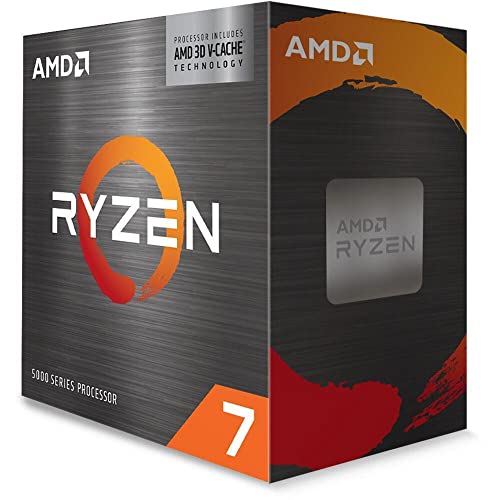
The Ryzen 7 5800X3D was the chip that proved 3D V-Cache technology was genuinely transformative for gaming rather than a marketing exercise, and it remains one of the most interesting options in this guide for a specific group of buyers: those already on an AM4 platform who want the best possible gaming performance without the cost of switching to AM5. For anyone with an existing B550 or X570 motherboard, the 5800X3D is a drop-in upgrade that can dramatically improve competitive gaming performance.
The chip pairs eight Zen 3 cores with 64MB of stacked V-Cache, bringing total cache to 96MB. This enormous cache reduces the frequency with which the processor has to fetch data from slower system memory, which is precisely the bottleneck that limits frame rates in many competitive titles. The result is 1% lows that, in several esports titles, still rival or exceed those of non-V-Cache Zen 4 and even some Zen 5 chips, despite the underlying architecture being a generation older.
The maximum boost clock of 4.5 GHz is lower than any other chip in this guide, and the 5800X3D cannot be overclocked due to the V-Cache stack. In workloads that do not benefit from the large cache, such as content creation or compilation tasks, it can trail a standard Ryzen 7 5800X. However, in the competitive gaming titles this guide focuses on, the cache advantage more than compensates for the clock speed deficit.
At its current price point, the 5800X3D represents outstanding value for AM4 upgraders. A new AM4 board, DDR4 memory, and this chip can be assembled for considerably less than an equivalent AM5 build, and the gaming performance delta between the 5800X3D and the 9600X is smaller than the platform cost difference in many scenarios. For budget-conscious players already invested in AM4, it is the logical ceiling of the platform.
The 105W TDP is the highest in this guide, and users should ensure their cooler is adequate. A quality 240mm AIO or a high-end tower cooler is recommended for sustained gaming sessions. The chip does not include integrated graphics, so a dedicated GPU is required from day one.
Verdict: The definitive upgrade for AM4 platform owners, delivering V-Cache gaming performance at a price that makes the AM5 switch unnecessary for competitive gaming purposes.
Pros
- 96MB of V-Cache delivers 1% lows that rival newer non-V-Cache chips in esports titles
- Drop-in upgrade for existing B550 and X570 motherboards, saving significant platform cost
- Strong competitive gaming performance-per-pound for AM4 upgraders
Cons
- 105W TDP requires a capable cooler and is the highest in this selection
- No overclocking support and lower boost clock limits non-gaming workload performance
- AM4 platform is approaching end of life, limiting future upgrade options
The Ryzen 5 5600X was the chip that defined affordable high-performance gaming on the AM4 platform when it launched, and at its current price it remains a genuinely sensible option for budget-focused competitive gamers who are building or upgrading on AM4. Six Zen 3 cores, a 4.6 GHz maximum boost clock, and a 65W TDP combine to produce a chip that handles every major esports title without breaking a sweat, and without breaking the bank.
This chip is for the player who needs a reliable, fast processor for Counter-Strike 2, Valorant, or Apex Legends but cannot justify spending three times as much on an AM5 platform. It is also a strong choice for anyone upgrading from a Ryzen 3 or first-generation Ryzen 5 chip on an existing AM4 board, where it represents a meaningful generational leap in single-core performance and efficiency.
The 35MB of combined cache is modest by modern standards, but Zen 3's strong single-core performance means the chip rarely becomes a bottleneck in the titles competitive players care about, provided the GPU is not excessively powerful. Pairing a 5600X with a mid-range GPU such as an RX 7600 or RTX 4060 is a well-balanced combination that will comfortably sustain 144 Hz and often reach 240 Hz in lighter esports titles.
The 65W TDP means the included Wraith Stealth cooler is adequate for stock operation, though a modest aftermarket cooler will reduce temperatures and potentially improve boost behaviour. The chip does not include integrated graphics, so a dedicated GPU is required. DDR4 memory compatibility keeps system costs low, and the AM4 platform is widely available at competitive prices in the second-hand market.
The honest caveat is that the 5600X is now a mature product and the AM4 platform is approaching the end of its upgrade runway. Buyers who anticipate wanting to upgrade their CPU again in two or three years should consider whether spending a little more on a 9600X and an AM5 board makes more long-term sense. For those who simply want a fast, affordable chip right now and have no plans to upgrade the platform, the 5600X remains a sound choice.
Verdict: A proven, affordable competitive gaming chip that delivers excellent value on the AM4 platform, best suited to players who want strong performance now without investing in a new platform.
Pros
- Strong Zen 3 single-core performance keeps pace with GPU-limited esports titles at 144 Hz and beyond
- 65W TDP works with the included Wraith Stealth cooler, reducing total build cost
- Widely available AM4 ecosystem means affordable board and DDR4 memory options
Cons
- AM4 platform is approaching end of life, limiting future CPU upgrade options
- No integrated graphics means a dedicated GPU is required from day one
Buying Guide
Single-core performance versus core count
Competitive gaming is, with very few exceptions, a single-core-dominant workload. Titles like Valorant, Counter-Strike 2, and Overwatch 2 are not designed to scale across sixteen or more threads, and a chip with six fast cores will typically outperform one with twelve slower cores in these games. When evaluating CPUs for competitive gaming, prioritise maximum boost clock speed and instructions-per-clock efficiency over headline core counts. The shift from eight to sixteen cores makes a meaningful difference in video rendering or 3D modelling, but in a competitive gaming context it is largely irrelevant.
Cache architecture and why it matters
AMD's 3D V-Cache technology has changed the competitive gaming CPU landscape significantly. By stacking additional cache directly on the processor die, AMD reduces the frequency with which the CPU must fetch data from comparatively slow system memory. In practice, this reduces frame time variance and improves 1% low frame rates, which is precisely what competitive players need. If your budget extends to a V-Cache chip, the gaming performance advantage is real and measurable, not just a benchmark curiosity.
Platform choice: AM4 versus AM5
AM4 is a mature, affordable platform with a wide range of compatible boards available at low prices, including the second-hand market. It is the right choice for budget builders or those upgrading an existing system. AM5 is AMD's current platform with a longer upgrade runway, DDR5 support, and compatibility with the latest Ryzen 7000 and 9000 series chips. If you are building from scratch and plan to upgrade the CPU in the next two to three years, AM5 is the more future-proof investment despite the higher initial platform cost.
Memory speed and its impact
Both AM4 and AM5 platforms benefit from fast memory in gaming. On AM4, DDR4-3600 in dual-channel configuration is the sweet spot. On AM5, DDR5-6000 in EXPO mode provides the best balance of performance and stability. Do not overlook memory when budgeting for a competitive gaming build, as the difference between slow and fast RAM can be equivalent to a CPU generation in some titles.
Cooling requirements
Most 65W TDP chips in this guide will run adequately on a quality budget air cooler, and some include a stock cooler that is sufficient for stock operation. Higher TDP chips, particularly the 5800X3D at 105W, benefit from a 240mm AIO or a high-end tower cooler to maintain boost clocks during extended gaming sessions. Investing in a good cooler also reduces system noise, which matters for players using open-back headsets or microphones.
Integrated graphics
Several chips in this guide include integrated Radeon graphics. These are not intended for gaming but serve as a useful diagnostic tool during builds and provide display output if the dedicated GPU fails or is temporarily unavailable. If you are building a competitive gaming rig with a dedicated GPU, integrated graphics are a convenience rather than a necessity, but their presence is a useful safety net.
The AMD Ryzen 9800X3D is the outright winner for competitive PC gamers who want the best possible performance. Its combination of Zen 5 architecture and 3D V-Cache technology produces the highest and most consistent minimum frame rates of any consumer CPU currently available, and the AM5 platform ensures the investment remains relevant as game engines evolve. For players who cannot justify the premium, the Ryzen 5 9600X offers the best value proposition: Zen 5 efficiency, AM5 longevity, and strong single-core performance at a price that leaves budget for a better GPU or display. AM4 owners looking to maximise their existing platform without switching should go straight to the Ryzen 7 5800X3D, which remains the definitive ceiling of that ecosystem for gaming purposes.