Streaming to Twitch demands more from a processor than almost any other PC task. You are simultaneously running a game, encoding video in real time, managing OBS or Streamlabs, and often handling a browser with chat open on the side. The wrong CPU turns that into a stuttering, dropped-frame disaster that costs you viewers. Since last year, AMD's AM5 platform has matured considerably, with the Ryzen 5 9600X and Ryzen 7 9700X now sitting at much more accessible prices, and the Ryzen 7 9800X3D has emerged as a genuine all-rounder that handles both gaming and software encoding with authority. Meanwhile, AM4 chips like the Ryzen 5 5600X remain outstanding value for budget builders who already own a compatible board. This guide is aimed at streamers broadcasting at 720p60 or 1080p60, whether you are just starting out on a tight budget or building a dedicated streaming rig that can handle 1080p60 at high bitrates without breaking a sweat. We cover five carefully chosen processors across a range of price points and platforms.
Quick Verdict
Best Overall: AMD Ryzen 7 9700X. It combines eight efficient Zen 5 cores with a 65W TDP, excellent single-threaded performance, and enough multi-threaded headroom to run software encoding alongside demanding titles without compromise.
Best Value: AMD Ryzen 5 5600X. On AM4 it remains one of the most cost-effective streaming CPUs available, pairing strong IPC with a low price tag that leaves budget for a dedicated GPU encoder or more RAM.
The Ryzen 5 5600X launched in late 2020 and, thanks to consistent price cuts, it has become one of the best-value streaming CPUs money can buy in 2025. Built on TSMC's 7nm process and AMD's Zen 3 architecture, it delivers a meaningful IPC uplift over the older Zen 2 chips and holds its own against more expensive processors in lightly-threaded workloads.
For streamers, the six-core, twelve-thread configuration is the practical minimum for running a game and software encoding side by side without noticeable performance penalties. With OBS set to x264 at the 'fast' or 'veryfast' preset, the 5600X handles 1080p60 streaming alongside most titles at medium-to-high settings without dropping frames. If you pair it with an Nvidia GPU, you can offload encoding entirely to NVENC, at which point the CPU's workload drops dramatically and the 5600X becomes almost overkill for the encoding side of things.
The chip sits in AMD's AM4 socket, which means a huge ecosystem of affordable motherboards and DDR4 memory. If you already own an AM4 board from the Ryzen 3000 or 4000 era, a BIOS update is usually all that stands between you and a 5600X upgrade. The 65W TDP keeps temperatures manageable with even a modest cooler, and the included Wraith Stealth cooler is adequate for everyday streaming workloads, though enthusiasts will want something beefier for sustained encoding sessions.
Single-core boost of 4.6 GHz ensures that games which rely heavily on one or two threads still run smoothly, and the 35 MB total cache (32 MB L3 plus 3 MB L2) reduces latency in memory-sensitive workloads. The 5600X is not the fastest chip here, and it lacks the platform longevity of AM5, but for a streamer on a budget who wants proven, reliable performance without overspending, it is hard to fault.
Verdict: The Ryzen 5 5600X is the go-to recommendation for budget-conscious streamers who want solid 1080p60 streaming performance without committing to a new platform. Its combination of low price, low power draw, and broad motherboard compatibility makes it an easy first choice for anyone upgrading from a Ryzen 3000-series chip or building a new budget rig.
Pros
- Extremely competitive price for a six-core Zen 3 chip with strong IPC
- 65W TDP keeps thermals and power bills low during long streaming sessions
- Huge AM4 ecosystem means affordable board and DDR4 memory options
Cons
- AM4 is a mature platform with no upgrade path beyond Ryzen 5000 series
- Six cores can feel stretched when running demanding titles alongside CPU-based encoding at slower presets
The Ryzen 5 9600X represents AMD's most affordable entry point into the AM5 platform as of 2025, and it is a genuinely impressive chip for streamers who want modern architecture without spending big. Built on TSMC's 4nm process using the Zen 5 microarchitecture, it delivers a substantial IPC improvement over Zen 3, with AMD claiming roughly a 16% uplift in instructions per clock cycle compared to the Ryzen 5 7600.
For Twitch streamers, the headline numbers are compelling: six cores and twelve threads with a boost clock of up to 5.4 GHz, all within a 65W TDP envelope. That boost clock matters for games that are sensitive to single-threaded performance, and the improved branch prediction and wider execution units in Zen 5 mean that real-world gaming frame rates are noticeably higher than the equivalent Zen 4 chip. When you add OBS running x264 encoding at 'veryfast' or 'superfast' preset, the 9600X handles 1080p60 without breaking a sweat, and even manages 1440p60 encoding in testing with the right settings.
The AM5 platform brings DDR5 memory support, which reduces latency in memory-bandwidth-sensitive workloads, and PCIe 5.0 connectivity for future-proofing. AM5 is confirmed to remain AMD's primary platform through at least 2027, so buying in now gives you a meaningful upgrade runway. The chip also ships with Radeon graphics integrated, which is a useful fallback if your dedicated GPU fails or you are building a secondary streaming machine without a discrete card initially.
Thermals are well controlled at stock settings. The 9600X runs cool enough under a mid-range 240mm AIO or a decent air cooler like the Thermalright Peerless Assassin, and it does not require the aggressive power limits that some Intel competitors demand. At its current street price, it sits between the budget AM4 chips and the more expensive eight-core options, occupying a sweet spot for streamers who want a modern platform without the full cost of a Ryzen 7.
Verdict: The Ryzen 5 9600X is the best choice for streamers who want to invest in the AM5 platform at a sensible price. It outperforms the 5600X in both gaming and encoding, runs cool, and gives you a clear upgrade path to eight-core Zen 5 chips later.
Pros
- Zen 5 architecture delivers noticeably higher IPC than Zen 3 or Zen 4 at a competitive price
- 65W TDP with boost clocks up to 5.4 GHz keeps thermals manageable during long streams
- AM5 platform offers DDR5 support and a confirmed upgrade path through 2027
Cons
- AM5 motherboards and DDR5 memory add to total build cost compared to AM4 alternatives
- Six cores may feel limiting if you move to 4K streaming or run multiple encoding workloads simultaneously
The Ryzen 7 9700X is our top overall recommendation for Twitch streamers, and the reasoning is straightforward: it gives you eight Zen 5 cores at a 65W TDP, a boost clock of 5.5 GHz, and enough multi-threaded performance to handle virtually any streaming scenario you are likely to encounter in 2025 or beyond. It is the chip that makes the step up from six cores feel genuinely worthwhile rather than a marginal improvement.
For streamers, those two extra cores over the 9600X translate into real-world headroom. Running OBS with x264 at the 'medium' preset, which produces noticeably better image quality than 'veryfast', becomes practical on the 9700X in a way it simply is not on a six-core chip without sacrificing game performance. If you are streaming at 1080p60 with a high bitrate and want the best possible visual quality from software encoding, the 9700X is the minimum chip we would recommend for that use case.
The 65W TDP is a headline feature. AMD has achieved this through careful binning and architectural efficiency improvements in Zen 5, and the result is a chip that runs surprisingly cool under sustained load. A good air cooler, such as a Noctua NH-D15 or be quiet! Dark Rock Pro 5, is more than sufficient for even the most demanding streaming sessions. Power consumption during a combined gaming-and-streaming workload sits well below competing Intel chips, which matters if you are running your rig for six to eight hours a day.
The 40 MB total cache (32 MB L3 plus 8 MB L2) is generous for a non-3D V-Cache chip, and it helps the 9700X punch above its weight in cache-sensitive titles. Gaming performance is strong across the board, and while it does not match the 9800X3D in the most cache-sensitive games, the gap is smaller than many benchmarks suggest for the majority of titles streamers actually play. The 9700X also benefits from AM5's DDR5 memory controller and PCIe 5.0 support.
At its current price point, the 9700X represents exceptional value for a streamer who wants a chip that will not need replacing for several years. It handles today's most demanding games while streaming without compromise, and it leaves room for future software and game requirements to grow into.
Verdict: The Ryzen 7 9700X is the best all-round streaming CPU available at a sensible price in 2025. Eight Zen 5 cores, a 65W TDP, and strong single-threaded performance make it the ideal foundation for a serious streaming rig.
Pros
- Eight Zen 5 cores at 65W TDP deliver excellent streaming and gaming performance without high power draw
- Allows x264 encoding at 'medium' preset alongside demanding games without frame drops
- Strong upgrade path on AM5 platform with DDR5 and PCIe 5.0 support
Cons
- Costs noticeably more than the six-core 9600X for a gain that is modest in lighter streaming workloads
- AM5 platform entry cost (motherboard and DDR5 RAM) increases total build price
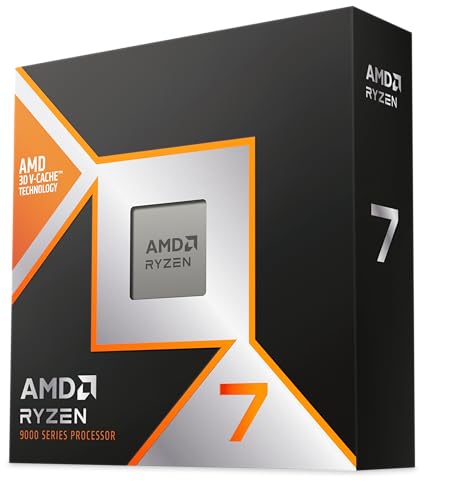
The Ryzen 7 9800X3D is AMD's most advanced consumer gaming processor, combining eight Zen 5 cores with AMD's 3D V-Cache technology to produce a chip with a staggering 104 MB of total cache. It launched in late 2024 and immediately took the top spot in gaming CPU benchmarks, outperforming everything else in cache-sensitive titles by a significant margin. For streamers who also want the absolute best gaming performance, it is a compelling option.
The 3D V-Cache works by stacking additional SRAM directly on top of the CPU die, dramatically increasing the amount of data that can be accessed at low latency without going to slower system RAM. In practice, this means that games which are sensitive to cache size, including many popular streaming titles such as Escape from Tarkov, Microsoft Flight Simulator, and various open-world games, run faster on the 9800X3D than on any other consumer CPU. Frame rates in these titles can be 20-30% higher than on a standard eight-core chip.
For streaming specifically, the 9800X3D handles software encoding alongside heavy gaming workloads with authority. The eight cores and sixteen threads give OBS plenty of resources to work with, and the additional cache reduces the performance penalty of running encoding in parallel with a demanding game. If you stream titles that are particularly CPU-intensive, the 9800X3D's cache advantage means your game performance suffers less when encoding is active.
The trade-off is price and power. At its current price point, the 9800X3D costs significantly more than the 9700X, and the 3D V-Cache architecture means boost clocks are slightly lower than the standard 9700X, at 5.2 GHz versus 5.5 GHz. The 120W TDP is higher than the 9700X's 65W, though it remains far below Intel's competing high-end chips. You will want a capable cooler, ideally a 240mm or 360mm AIO, to keep temperatures in check during long streaming sessions.
For most streamers, the 9700X is the better value proposition. But if you are a competitive gamer who streams as a secondary activity, or if you play the most cache-sensitive titles and want every frame you can get, the 9800X3D justifies its premium.
Verdict: The Ryzen 7 9800X3D is the best streaming CPU for gamers who refuse to compromise on in-game performance. Its 3D V-Cache gives it a unique advantage in cache-sensitive titles, and it handles encoding workloads with ease. The price premium is real, but so is the performance advantage.
Pros
- 104 MB total cache delivers best-in-class gaming performance in cache-sensitive titles popular with streamers
- Eight Zen 5 cores handle simultaneous gaming and software encoding without meaningful frame rate penalties
- AM5 platform with DDR5 and PCIe 5.0 ensures long-term relevance
Cons
- Significantly more expensive than the Ryzen 7 9700X for gaming gains that are title-dependent
- 120W TDP requires a capable cooler, adding to total build cost
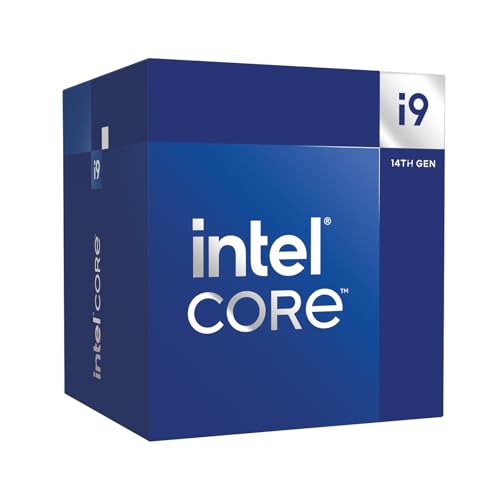
The Intel Core i9-14900 is a 24-core processor built on Intel's Raptor Lake Refresh architecture, combining eight Performance cores and sixteen Efficiency cores in a hybrid design. It is the most powerful chip in this list in terms of raw multi-threaded throughput, and for streamers who run demanding production workflows, record and stream simultaneously, or operate a dual-PC streaming setup from a single machine, it offers capabilities that no other chip here can match.
The headline figure is the thread count: 32 threads across 24 cores gives OBS and other encoding software an enormous amount of parallelism to exploit. Running x264 at the 'slow' or even 'slower' preset, which produces broadcast-quality video compression, becomes genuinely practical on the i9-14900 in a way it is not on any six or eight-core chip. If you are a professional streamer who cares deeply about stream quality and is willing to invest in the hardware to achieve it, this chip delivers.
The Performance cores boost to 5.8 GHz, which is among the highest boost clocks available on any consumer processor. Single-threaded performance is excellent, meaning that games relying on fast single-core execution run smoothly. The Efficiency cores handle background tasks, encoding threads, and OS overhead, freeing the P-cores to focus on the game. In practice, this architecture works well for streaming, as OBS can be assigned to E-cores while the game runs on P-cores.
The caveats are significant, however. The i9-14900's power consumption under full load is very high, with PL2 reaching up to 219W. You will need a high-quality 360mm AIO or a top-tier air cooler to keep temperatures under control during long streaming sessions, and a 850W or higher PSU is advisable. The LGA1700 platform is also at end of life, with Intel having moved to LGA1851 for its Core Ultra 200 series, so the upgrade path from this chip is limited.
Intel's 13th and 14th generation chips also attracted attention for instability issues in some configurations, though the non-K i9-14900 (as opposed to the 14900K and 14900KS) is less affected by the elevated voltage problems that caused issues in overclocked variants. Still, it is worth ensuring your BIOS is up to date and running Intel's recommended power profiles.
Verdict: The Core i9-14900 is the right choice for professional or semi-professional streamers who need maximum multi-threaded performance for high-quality software encoding, simultaneous recording, and demanding production workflows. For most Twitch streamers, the AMD options above offer better value and efficiency.
Pros
- 24 cores and 32 threads provide unmatched multi-threaded throughput for simultaneous streaming, recording, and production tasks
- 5.8 GHz P-core boost clock delivers strong single-threaded gaming performance
- Hybrid core architecture allows efficient task distribution between OBS and the game engine
Cons
- PL2 power draw of up to 219W demands premium cooling and a high-wattage PSU, significantly increasing build cost
- LGA1700 platform is at end of life, limiting future upgrade options
Buying Guide
How many cores do you actually need for streaming?
The minimum viable core count for combined gaming and streaming in 2025 is six cores and twelve threads. Below that, you will notice frame drops when OBS is active, particularly in CPU-intensive titles. Six cores is sufficient for 1080p60 streaming at bitrates up to around 6,000 Kbps using NVENC or AMD's AMF hardware encoder, which offloads the encoding work to your GPU entirely. If you rely on software encoding with x264, eight cores is a more comfortable starting point, as it gives OBS enough threads to run at faster presets without robbing your game of CPU resources.
Software encoding versus hardware encoding
This is one of the most important decisions for a streaming CPU purchase. Nvidia's NVENC encoder, available on GTX 10-series and newer GPUs, produces excellent quality at 1080p60 and has improved dramatically with each GPU generation. If you own a modern Nvidia GPU, NVENC at the P5 or P7 quality preset rivals x264 at 'medium' in terms of visual quality, and it uses almost no CPU resources. This means a six-core chip like the Ryzen 5 5600X or 9600X is entirely adequate. AMD's AMF encoder on RX 5000-series and newer GPUs is also good, though it trails NVENC slightly in quality at equivalent bitrates. If you do not own a modern GPU, or if you stream to platforms that benefit from the superior compression of x264 at slower presets, you need more CPU cores.
Platform choice: AM4, AM5, or Intel LGA1700?
AM4 offers the lowest entry cost and the widest range of affordable motherboards and DDR4 memory. It is the right choice if you are on a tight budget or already own compatible hardware. AM5 is AMD's current platform and offers DDR5 memory, PCIe 5.0, and a confirmed upgrade path through at least 2027. The higher upfront cost of AM5 boards and DDR5 memory is offset by the fact that you will not need to change platform for your next CPU upgrade. Intel's LGA1700 is at end of life and is not recommended for new builds in 2025, though it remains a viable option if you are upgrading an existing Intel system.
Clock speeds and IPC
For gaming, which drives your stream quality indirectly by determining how smooth your gameplay looks, single-threaded performance matters most. Look for chips with high boost clocks and strong IPC. The Zen 5 architecture in AMD's 9000-series chips delivers the best IPC available on a consumer platform in 2025, and boost clocks above 5.0 GHz ensure that single-threaded workloads run quickly.
Thermal and power considerations
Streamers run their rigs for hours at a time, so thermal performance and power consumption matter more than in typical gaming use. A chip that runs at 95 degrees Celsius under sustained encoding load will throttle and produce inconsistent performance. Aim for a chip with a TDP of 65W to 120W and invest in adequate cooling. A 240mm AIO or a high-quality air cooler is sufficient for most chips in this list, with the exception of the i9-14900 under full load, which benefits from a 360mm AIO.
The AMD Ryzen 7 9700X is the best CPU for Twitch streamers in 2025. It combines eight Zen 5 cores, a 65W TDP, and a 5.5 GHz boost clock in a package that handles every streaming scenario from casual 720p60 to demanding 1080p60 software encoding without compromise. The AM5 platform provides DDR5 memory support and a clear upgrade path, making it a genuinely future-proof investment. For budget builders, the Ryzen 5 5600X remains an outstanding choice on AM4, delivering reliable 1080p60 streaming performance at a price that leaves room in the budget for a capable GPU. Streamers who want the absolute best gaming performance alongside their stream should look at the Ryzen 7 9800X3D, whose 3D V-Cache advantage in popular streaming titles is real and measurable.