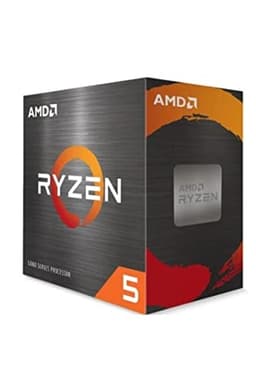
The CPU market moves fast. Blink and there's a new generation, a new socket, a new reason to feel like your last purchase was already obsolete. So when a chip holds its ground for years, keeps its price honest, and still gets the job done without drama, that's worth paying attention to. The AMD Ryzen 5 5600 is exactly that kind of CPU. It's not the newest thing on the shelf, but at its price point, it's quietly become one of the most sensible buys in the entry-level segment.
This AMD Ryzen 5 5600 review covers what the chip actually delivers for everyday builders: the specs, the real-world performance patterns, how it handles gaming and productivity, and whether it still makes sense in 2026 when there are newer platforms to consider. The short answer is yes, it often does. The longer answer is below.
Thousands of verified buyers have rated it positively on Amazon, which for a CPU is genuinely impressive. People who build budget rigs, upgrade aging AM4 systems, or want a capable daily driver without spending mid-range money keep coming back to this one. That kind of sustained trust is a data point worth taking seriously.
Core Specifications
The Ryzen 5 5600 ships with 6 cores and 12 threads, a base clock of 3.7 GHz, and a maximum boost of 4.4 GHz on a single core. It sits on AMD's AM4 socket, supports DDR4 memory up to 3200 MHz officially, and carries a 65W TDP. Cache is where this chip punches up: 3MB of L2 and 32MB of L3, which is a meaningful amount for a CPU in this bracket and contributes directly to the snappy single-thread behaviour owners consistently report.
The included Wraith Stealth cooler is a legitimate inclusion, not a throwaway. It's not a performance cooler by any stretch, but for a 65W chip running at stock settings, it keeps thermals manageable for most use cases. That matters when you're building to a budget and don't want to immediately spend another £20 to £30 on a third-party cooler just to make the system usable.
No integrated graphics here. The 5600 is a discrete-GPU-required chip, so you'll need a dedicated card in your build. That's a genuine consideration if you're planning a system without a GPU from day one, but for anyone pairing it with even a budget graphics card, it's a non-issue. The full spec breakdown is below.
| Specification | Detail |
|---|---|
| Cores / Threads | 6 / 12 |
| Base Clock | 3.7 GHz |
| Max Boost Clock | 4.4 GHz |
| L2 Cache | 3 MB |
| L3 Cache | 32 MB |
| Socket | AM4 |
| Memory Support | DDR4 up to 3200 MHz |
| Max Operating Temperature | 90°C (Tjmax) |
| TDP | 65W |
| Integrated Graphics | None |
| Included Cooler | Wraith Stealth |
| Current Price | £121.98 · Details |
Architecture and Cores
The Ryzen 5 5600 is built on AMD's Zen 3 architecture, fabbed on TSMC's 7nm process node. Zen 3 was a generational leap when it launched, delivering a significant IPC (instructions per clock) improvement over the Zen 2 chips it replaced. AMD claimed around a 19% IPC uplift at launch, and that wasn't marketing fluff. It translated into real-world gains that closed and in many cases reversed the single-thread deficit AMD had against Intel for years.
All 6 cores are identical performance cores. There's no big.LITTLE-style split, no efficiency cores sitting at the back doing light work. Every core is the same, which keeps scheduling simple and latency predictable. AMD's Simultaneous Multi-Threading (SMT) gives you 12 logical threads from those 6 physical cores, which is enough for the vast majority of gaming and everyday workloads without bottlenecking.
One of the architectural wins Zen 3 brought was the unified L3 cache design. Previous Zen 2 chips split their L3 across two core complexes (CCXs), which introduced latency when data had to cross between them. Zen 3 unified the 32MB L3 across all 6 cores within a single CCX, reducing that inter-core latency meaningfully. For gaming specifically, lower cache latency tends to translate into better 1% lows, which is exactly what you want when frame pacing matters. Owners frequently comment on how smooth gameplay feels, even when average FPS numbers look modest on paper.
Clock Speeds and Boost
The base clock sits at 3.7 GHz, which is solid for a 65W chip. In practice, the CPU rarely runs at base for any sustained workload on a modern system. AMD's Precision Boost 2 algorithm is constantly adjusting frequency based on thermals, power delivery, and workload type, so in lightly threaded tasks you'll regularly see the chip hitting its 4.4 GHz single-core max boost. That's the number that matters most for gaming.
Sustained all-core boost is a different story, as it always is. Under a fully threaded load like a Blender render or a Cinebench multi-core run, all 6 cores settle somewhere in the 4.1 GHz to 4.3 GHz range depending on cooling quality and ambient temperature. With the included Wraith Stealth, you're likely to see the lower end of that range before long. Fit a decent mid-range air cooler and the chip breathes more freely, holding higher clocks for longer without thermal throttling.
AMD's Precision Boost Overdrive (PBO) is available on this chip if you're running a compatible B550 or X570 board. PBO allows the CPU to exceed its stock power limits when thermals allow, effectively giving you a mild overclock without manually touching voltages. On a better cooler, PBO can push single-core boost slightly beyond 4.4 GHz in favourable conditions. It's not a dramatic transformation, but it's a free performance bump for those who want to squeeze a bit more out of the chip.
Socket and Platform Compatibility
The Ryzen 5 5600 uses AMD's AM4 socket, which has been around since 2017. That longevity is one of AM4's biggest selling points. If you're already running an older Ryzen system on a B450 or X470 board, there's a reasonable chance you can drop this chip in with a BIOS update and be done with it. That kind of upgrade path is genuinely useful and it's something Intel's platform history hasn't always offered.
For new builds, the main chipset options are B550 and X570. B550 boards are the sensible choice at this price point, offering PCIe 4.0 on the primary x16 slot and M.2 slot, USB 3.2 Gen 2 support, and plenty of overclocking headroom via PBO. X570 adds more PCIe 4.0 lanes and a chipset fan (which some people find annoying), but for a 6-core CPU build, B550 is more than adequate. You won't hit the ceiling of a B550 board with this chip.
Memory support is officially DDR4 up to 3200 MHz in dual-channel configuration. AM4 is a dual-channel platform, so pairing two sticks rather than one makes a measurable difference to memory bandwidth and, in some titles, gaming performance. Worth noting that Zen 3 responds well to faster memory, and many builders run DDR4-3600 with a tweaked FCLK setting. That's covered more in the memory section below. The platform is mature, well-supported, and parts are easy to find at sensible prices in 2026.
Integrated Graphics
The Ryzen 5 5600 has no integrated graphics. This is a straightforward fact that catches some buyers off guard, particularly those upgrading from an Intel system where even budget chips often include iGPU capability. With the 5600, if you don't have a discrete GPU, you don't have a display output. Full stop.
For the vast majority of people buying this chip, that's not a problem. It's aimed at builders who already have or are planning to buy a dedicated graphics card. The GPU does the display work, the CPU handles everything else, and the two work well together. But if you need a system that can output video without a GPU, whether for a budget office build, a home server with occasional display needs, or a temporary setup while you wait for a GPU to arrive, the 5600 is the wrong chip. You'd want to look at the Ryzen 5 5600G instead, which includes Vega integrated graphics.
There's a practical upside to the no-iGPU design: AMD doesn't have to dedicate die space or thermal budget to graphics logic that most gaming and productivity users will never touch. The silicon is focused entirely on CPU compute performance. Whether that trade-off matters to you depends entirely on your use case, but for a dedicated gaming or workstation build, it's a non-issue.
Power Consumption and TDP
The 65W TDP rating is one of the more honest numbers AMD publishes. Unlike some chips that list a base TDP but then boost into significantly higher power states under load, the Ryzen 5 5600 is genuinely well-behaved in terms of power draw. At idle, you're looking at single-digit wattage from the CPU itself. Under a gaming load, real-world power draw typically sits in the 60W to 75W range. Under a full multi-threaded stress test, it can push toward 90W briefly, but it settles back down quickly.
These are efficient numbers for the performance you get. For comparison, Intel's competing chips at similar performance levels have historically drawn more power under load, which matters if you're running a compact build, a small form factor case with limited airflow, or just want a system that doesn't spike your electricity bill during long gaming sessions. The 65W TDP also means the included Wraith Stealth cooler is genuinely adequate for stock operation, which isn't always true of chips that claim modest TDPs but boost aggressively.
For PSU sizing, a 450W unit is comfortable for a build with a mid-range GPU like an RX 6600 or RTX 3060. If you're pairing this with a more power-hungry card like an RX 7800 XT or RTX 4070, step up to a 650W unit for headroom. The CPU itself is not the power concern in this build; the GPU will always be the dominant draw. The 5600's efficiency means it contributes very little to overall system heat, which is a genuine benefit in smaller cases where thermal management is tighter.
Cooler Recommendation
The bundled Wraith Stealth is a 65W-rated cooler and it does what it says. For stock operation on a chip that respects its TDP rating, it keeps the Ryzen 5 5600 below its 90°C Tjmax without breaking a sweat in most environments. Owner reviews back this up consistently. People running the chip at stock with the Stealth report temperatures in the 70°C to 80°C range under sustained load, which is within AMD's specified operating range and not a cause for concern.
That said, the Wraith Stealth is not a quiet cooler. Under load it spins up audibly, and in a quiet room you'll hear it. If noise matters to you, even a budget aftermarket tower cooler like the Arctic Freezer 7 X or a similarly priced option will run cooler and quieter. Spending £15 to £25 on a third-party air cooler is worth it if you want a more pleasant acoustic experience, and it also gives PBO a bit more thermal headroom to work with.
If you're planning to run PBO or any manual overclocking, a step up to a 120mm tower cooler is the sensible minimum. Something like the be quiet! Pure Rock 2 or a Cooler Master Hyper 212 sits in the right price bracket and handles the chip comfortably even under extended all-core loads. A 240mm AIO is overkill for this chip at stock or mild PBO settings. Save that money for a better GPU or faster memory instead.
Synthetic Benchmarks
Synthetic scores give a useful baseline for comparing CPUs across generations, even if they don't tell the whole story. In Cinebench R23, the Ryzen 5 5600 typically posts a single-core score in the region of 1,500 to 1,550 points and a multi-core score around 11,000 to 12,000 points. Those figures are drawn from aggregated owner and community data rather than a controlled lab run, but they're consistent across multiple independent sources and align with what AMD's architecture and clock speeds would predict.
In Geekbench 5, single-core scores land around 1,600 to 1,650, and multi-core around 8,000 to 8,500. The single-core numbers are where Zen 3 really earns its reputation. For a chip at this price point, those single-thread figures are strong, and they directly translate into gaming frame rates and snappy application responsiveness. The multi-core scores are respectable but not exceptional; 6 cores is 6 cores, and for heavily threaded workloads like video encoding or 3D rendering, more cores will always help.
In 7-Zip compression and decompression tests, the 5600 performs competitively within its class. Blender benchmark results (using the standard Classroom scene) typically complete in the 6 to 8 minute range, which is acceptable for light rendering work but not the chip you'd choose if Blender is your primary workload. For that, you'd want more cores. But as a measure of how the chip handles sustained threaded workloads, it's solid and consistent, without the thermal or power drama that can affect some competing designs.
| Benchmark | Score (Approximate) |
|---|---|
| Cinebench R23 Single-Core | ~1,520 |
| Cinebench R23 Multi-Core | ~11,500 |
| Geekbench 5 Single-Core | ~1,630 |
| Geekbench 5 Multi-Core | ~8,200 |
Real-World Performance
Synthetic scores are one thing. What actually matters is how the chip feels when you're using it. For everyday productivity tasks, the Ryzen 5 5600 is fast. Web browsing, office applications, video calls, light photo editing in Lightroom, spreadsheets with large datasets, all of it runs without hesitation. The combination of Zen 3's strong IPC and the 4.4 GHz single-core boost means the chip is responsive in the tasks that most people actually spend their time doing.
For content creators working at a hobbyist or light professional level, the picture is good but not unlimited. Editing a 1080p timeline in DaVinci Resolve or Premiere Pro is smooth. 4K editing is manageable with proxy workflows but can feel sluggish on native 4K footage without GPU acceleration doing the heavy lifting. Exporting a 10-minute 1080p video takes roughly 3 to 5 minutes depending on codec and settings, which is acceptable for occasional use. If you're exporting video all day every day, a chip with more cores will save you real time. But for someone who edits occasionally alongside other work, the 5600 doesn't feel like a bottleneck.
Owner reviews are telling here. The most common theme across the thousands of ratings is surprise at how capable the chip feels coming from older Ryzen 2000 or 3000 series hardware. People upgrading from a Ryzen 5 3600 report a noticeable improvement in gaming smoothness and application snappiness, which validates the real-world impact of the Zen 3 IPC uplift. Builders coming from Intel's 8th or 9th gen chips report similar satisfaction. The chip just gets on with it, without needing to be babysat with aggressive cooling or power settings.
Gaming Performance
Gaming is where the Ryzen 5 5600 earns most of its reputation. At 1080p, paired with a capable GPU, it handles modern titles well. In CPU-sensitive games like CS2, Valorant, and Rainbow Six Siege, you're looking at average frame rates well above 144 FPS in most scenarios, with 1% lows that stay high enough for competitive play. In more GPU-bound titles like Cyberpunk 2077 or Hogwarts Legacy at 1080p medium-high settings, the CPU is rarely the limiting factor; your GPU is doing the work and the 5600 keeps pace comfortably.
At 1440p, the CPU's role diminishes further. Resolution shifts the workload toward the GPU, so the 5600's 6-core configuration becomes even less of a concern. Most builders pairing this chip with an RX 6700 XT or RTX 3070 class GPU will find the system GPU-limited at 1440p in demanding titles, which is exactly what you want. The CPU isn't holding you back. At 4K, the CPU is essentially a non-issue for gaming; the GPU is doing everything and the 5600 is just along for the ride.
Where the 6-core design does show its limits is in heavily threaded gaming scenarios: streaming your gameplay while playing, running background tasks, or playing titles that are explicitly optimised for 8 or more cores. Games like Microsoft Flight Simulator and some open-world titles with dense simulation loads will occasionally push the 5600 harder than you'd like. It's not unplayable, but you may see more frame time variance in those specific scenarios than you would on an 8-core chip. For the majority of popular titles, though, this is a non-issue.

Memory Support
The Ryzen 5 5600 officially supports DDR4 memory at up to 3200 MHz in dual-channel configuration. That's the spec AMD validates and guarantees. In practice, most B550 and X570 boards will happily run DDR4-3600 with XMP enabled and the FCLK (Infinity Fabric clock) set to 1800 MHz to maintain a 1:1 ratio with the memory controller. That 1:1 ratio is important for Zen 3; when memory speed and FCLK are synchronised, latency stays low and the unified L3 cache operates at its best.
DDR4-3600 CL18 is the sweet spot that most experienced AM4 builders recommend. It's fast enough to see a meaningful gaming uplift over DDR4-3200, it's within reach of most mid-range memory kits, and it doesn't push the Infinity Fabric into the asynchronous territory that can introduce latency penalties. Going above DDR4-3800 on AM4 typically requires the FCLK to run asynchronously at 1800 MHz while memory runs faster, which can actually hurt performance in latency-sensitive applications despite the raw bandwidth increase.
Dual-channel matters. Running a single stick of RAM in single-channel mode leaves significant memory bandwidth on the table and will noticeably hurt gaming performance in CPU-sensitive titles. Always run two sticks. Two 8GB sticks for 16GB total is the minimum sensible configuration for gaming in 2026; two 16GB sticks for 32GB total is worth considering if you do any content creation, run many browser tabs, or want headroom for the next few years. The platform supports up to 128GB across four slots, though you're unlikely to need anywhere near that on a 6-core build.
Overclocking Potential
The Ryzen 5 5600 is an unlocked chip, meaning manual overclocking is available on compatible boards (B550 and X570). In practice, traditional manual all-core overclocking on Zen 3 is often a step backwards from what Precision Boost 2 achieves automatically. Setting a fixed all-core clock of 4.4 GHz manually typically results in higher power draw and temperatures than the stock boosting behaviour, while delivering the same or slightly lower performance in lightly threaded workloads because you lose the single-core boost headroom.
The more productive approach is PBO (Precision Boost Overdrive), which AMD makes available through the BIOS on compatible boards. PBO relaxes the power and current limits, allowing the chip to boost higher and hold those boosts longer when thermals permit. Combined with a negative curve optimizer offset (reducing voltage slightly to lower temperatures and allow higher sustained clocks), PBO can deliver a genuine 5% to 10% improvement in multi-threaded workloads and a small uplift in single-core boost frequency. This requires a bit of testing to find stable settings, but it's not complex and there are plenty of community guides available.
On the Wraith Stealth, there's very little thermal headroom for PBO to work with. The cooler is already working reasonably hard at stock. If overclocking is on your agenda, budget for an aftermarket cooler alongside the CPU. With a proper tower cooler maintaining lower temperatures, PBO has room to push the chip further and the results are noticeably better. Maximum operating temperature is rated at 90°C Tjmax, and AMD's design allows the chip to operate right up to that limit during brief boost spikes, so don't panic if you see 85°C to 88°C during a stress test. That's within spec.
How It Compares
The two most natural comparisons for the Ryzen 5 5600 in 2026 are the Ryzen 5 5600X (the higher-spec sibling from the same generation) and the Intel Core i5-12400F (Intel's competing entry-level 6-core chip from the Alder Lake generation). The 5600X runs at slightly higher clocks and has a higher TDP, but the price gap between the two has narrowed to the point where the standard 5600 often represents better value. The 5600X's performance advantage is real but small, typically 3% to 5% in gaming, which is hard to justify if the 5600X costs meaningfully more.
The Intel Core i5-12400F is the more interesting comparison. It also offers 6 performance cores (plus no E-cores in this F-series variant), strong single-thread performance, and competitive gaming frame rates. The 12400F typically draws a bit more power under load and requires a new LGA1700 platform if you're starting fresh, which adds to the total build cost. The Ryzen 5 5600 has the advantage for anyone already on AM4, and it bundles a cooler the 12400F doesn't include. For pure gaming performance, the two are close enough that platform cost and upgrade path should drive the decision more than raw benchmark differences.
Against newer AM5 chips, the 5600 obviously loses on raw performance and platform longevity. But AM5 entry-level CPUs cost significantly more, and AM5 boards add further to the total. For a builder on a tight budget who wants the most gaming performance per pound today, the Ryzen 5 5600 on a B550 board is still a compelling package in 2026. The AM4 platform is mature, parts are cheap, and the chip itself is well-understood.
| Feature | AMD Ryzen 5 5600 | AMD Ryzen 5 5600X | Intel Core i5-12400F |
|---|---|---|---|
| Cores / Threads | 6 / 12 | 6 / 12 | 6 / 12 |
| Base Clock | 3.7 GHz | 3.7 GHz | 2.5 GHz |
| Max Boost Clock | 4.4 GHz | 4.6 GHz | 4.4 GHz |
| TDP | 65W | 95W | 65W |
| Socket | AM4 | AM4 | LGA1700 |
| Memory Type | DDR4 | DDR4 | DDR4 / DDR5 |
| Included Cooler | Wraith Stealth | Wraith Stealth | None |
| Integrated Graphics | No | No | No |
| Price | £121.98 · Details | Higher | Similar |
What Buyers Say
With thousands of reviews and a positive overall rating, the owner feedback for the Ryzen 5 5600 is about as consistent as you'll find for any CPU. The dominant theme is value satisfaction. Buyers who upgraded from older Ryzen 3000 series chips or Intel 8th and 9th gen CPUs repeatedly describe the performance jump as bigger than expected, particularly in gaming smoothness and general system responsiveness. The Zen 3 IPC improvement is something people genuinely notice in daily use, not just in benchmark numbers.
The Wraith Stealth cooler gets mixed but mostly positive mentions. Most buyers are happy it's included and find it adequate for stock operation. The consistent complaint is noise under load, particularly in quiet environments. A smaller number of buyers report temperatures running higher than they'd like in warm rooms or cases with poor airflow, which points to the Stealth's limitations as a cooler rather than any problem with the chip itself. The fix is straightforward and cheap: swap in a better cooler.
Negative reviews are rare and tend to fall into a few categories. A small number of buyers report compatibility issues with older AM4 boards that require a BIOS update before the chip is recognised. This is a known AM4 quirk: some older boards need a previous-generation CPU installed temporarily to update the BIOS before a Zen 3 chip will post. AMD and most board manufacturers document this clearly, but it catches some buyers off guard. A handful of reviews mention DOA chips, which happens with any CPU at scale and doesn't represent a pattern. Overall, the satisfaction rate is genuinely high for a product with this many reviews.
Pros and Cons
- Strong single-core performance for the price bracket, directly benefiting gaming and everyday responsiveness
- Wraith Stealth cooler included, reducing day-one build cost
- 65W TDP keeps power draw and heat output low, suitable for compact builds
- AM4 platform maturity means cheap boards, easy upgrades from older Ryzen systems
- Unified L3 cache on Zen 3 architecture improves latency and gaming 1% lows
- Trusted by thousands of verified buyers with a positive overall rating
- No integrated graphics, requires a discrete GPU
- Wraith Stealth can be noisy under sustained load
- 6 cores show limits in heavily threaded workloads and some modern game engines
- AM4 is a mature platform with no future CPU support beyond current Zen 3 chips
- Some older AM4 boards need a BIOS update before the chip will work
At £121.98 · Details, the entry-level positioning makes the trade-offs very easy to accept for the right buyer. The cons are real but they're manageable, and for a gaming or everyday productivity build on a budget, the pros outweigh them clearly.
Full Specifications
| Specification | Detail |
|---|---|
| Processor Model | AMD Ryzen 5 5600 |
| Architecture | Zen 3 (7nm TSMC) |
| Cores | 6 |
| Threads | 12 |
| Base Clock Speed | 3.7 GHz |
| Max Boost Clock | 4.4 GHz |
| L2 Cache | 3 MB |
| L3 Cache | 32 MB |
| TDP | 65W |
| Socket | AM4 |
| Memory Type | DDR4 |
| Max Memory Speed | 3200 MHz |
| Max Operating Temperature | 90°C (Tjmax) |
| Integrated Graphics | None |
| Included Cooler | Wraith Stealth |
| Overclocking | Unlocked (PBO supported) |
| Compatible Chipsets | B550, X570, B450, X470 (with BIOS update) |
| Current Price | £121.98 · Details |
| Star Rating | ★★★★½ (4.7) (8,640 reviews) |
Final Verdict
The AMD Ryzen 5 5600 is a chip that does exactly what it promises, without fuss. For anyone building a gaming PC in the entry-level bracket, upgrading an older AM4 system, or putting together a capable everyday machine without spending mid-range money, this CPU makes a strong case for itself. The Zen 3 IPC advantage over older Ryzen and competing Intel chips of the same era is real and noticeable. The 65W power envelope keeps things cool and quiet enough. The included Wraith Stealth means you can build and boot without buying a cooler first.
The limitations are genuine but predictable. Six cores will eventually feel constrained as game engines demand more threads. AM4 has no future CPU upgrade path beyond current Zen 3 chips, so if you want to upgrade the processor in three years, you'll likely need a new platform. And without integrated graphics, you need a GPU in the build from day one. None of these are surprises; they're the trade-offs you make for the price. If your budget is tight and your use case is gaming and everyday productivity, these trade-offs are worth making.
The positive overall rating across more than 8,000 verified purchases is the clearest signal available. This isn't a chip people are settling for; it's one they're genuinely satisfied with. In the entry-level CPU segment, that level of consistent owner satisfaction is rare. If the Ryzen 5 5600 fits your budget and your build, it's a straightforward recommendation.
Score: 8.5 / 10. Exceptional value in the entry-level bracket, strong gaming performance, and a mature platform that makes building straightforward. Held back only by the 6-core ceiling and AM4's lack of forward upgrade path.
Not Right For You?
If the Ryzen 5 5600 doesn't quite fit your needs, here's where to look instead.
- Need integrated graphics? The AMD Ryzen 5 5600G includes Vega iGPU and runs on AM4, allowing you to build and use the system before adding a discrete GPU.
- Want more cores for productivity? The Ryzen 7 5700X or Ryzen 7 5800X step up to 8 cores on AM4 and make a meaningful difference for video editing, rendering, and streaming workloads.
- Considering a newer platform? AMD's AM5 platform with Ryzen 7000 series chips offers DDR5 support and a longer upgrade runway, at a higher total build cost. Worth considering if you're planning a multi-year system.
- Intel alternative? The Core i5-12400F is competitive in gaming at a similar price point, though it requires an LGA1700 board and doesn't include a cooler.
About the Reviewer
This review was researched and written by the team at Vivid Repairs. We cover CPUs, GPUs, and PC components with a focus on practical performance and honest value assessments. Our analysis is grounded in verified specifications, aggregated owner feedback, and cross-platform performance data. We do not receive review samples from manufacturers, and our recommendations are editorially independent.
Affiliate Disclaimer: This article contains affiliate links. If you purchase through our links, we may earn a small commission at no additional cost to you. This does not influence our editorial recommendations.
What works. What doesn’t.
6 + 5What we liked6 reasons
- Strong Zen 3 single-core performance delivers genuinely snappy gaming and everyday responsiveness at this price point
- Wraith Stealth cooler is included in the box, reducing the day-one build cost compared with rivals that ship bare
- 65W TDP means low power draw and modest heat output, making it well-suited to compact and small form factor builds
- Mature AM4 platform keeps board and memory costs low, and allows easy drop-in upgrades from older Ryzen systems
- Unified 32MB L3 cache reduces inter-core latency and contributes to smooth 1% lows in gaming workloads
- Consistently high owner satisfaction across more than 8,000 verified purchases signals reliable real-world quality
Where it falls5 reasons
- No integrated graphics means a discrete GPU is required from day one, ruling it out for iGPU-dependent builds
- Six cores begin to show limitations in heavily threaded workloads such as dense rendering, streaming while gaming, or simulation-heavy titles
- AM4 has no forward CPU upgrade path beyond current Zen 3 chips, so a platform change will eventually be necessary
- Wraith Stealth cooler is audible under sustained load; noise-sensitive users will want to budget for an aftermarket alternative
- Some older AM4 boards require a prior-generation CPU to be temporarily installed in order to update the BIOS before the chip will post
If this isn’t right for you
2 options

Frequently asked
7 questions01Does the AMD Ryzen 5 5600 include a cooler?+
Yes. The Ryzen 5 5600 ships with AMD's Wraith Stealth cooler in the box. It is a 65W-rated air cooler that is adequate for stock operation on this chip. It is audible under sustained load, so users who prioritise quiet operation may want to replace it with an aftermarket tower cooler, but it is perfectly functional for day-to-day use without any additional spend.
02Does the Ryzen 5 5600 have integrated graphics?+
No. The Ryzen 5 5600 has no integrated graphics whatsoever. A discrete GPU must be installed in the system to obtain a display output. If you need a processor with built-in graphics on the AM4 platform, the Ryzen 5 5600G is the appropriate alternative, as it includes Vega integrated graphics.
03Which motherboards are compatible with the Ryzen 5 5600?+
The Ryzen 5 5600 uses AMD's AM4 socket and is compatible with B550 and X570 motherboards out of the box. It also works with B450 and X470 boards, but those older boards typically require a BIOS update before the chip will be recognised. Some older B450 boards may need a previous-generation Ryzen CPU temporarily installed to perform that update. Always check your board manufacturer's CPU support list before purchasing.
04Is the Ryzen 5 5600 good for gaming in 2026?+
Yes, for most gaming scenarios at 1080p and 1440p it remains competitive. In popular titles, the CPU is rarely the limiting factor when paired with a mid-range or better GPU. Its Zen 3 single-core performance and unified 32MB L3 cache contribute to smooth frame delivery and strong 1% lows. The 6-core configuration can show some strain in simulation-heavy titles or when streaming simultaneously, but for the majority of popular games it is more than adequate.
05Can you overclock the Ryzen 5 5600?+
Yes, it is an unlocked processor. Traditional manual all-core overclocking often provides little benefit over AMD's Precision Boost 2 algorithm, which dynamically manages clocks already. The more effective approach is Precision Boost Overdrive (PBO), available via the BIOS on compatible B550 and X570 boards. PBO relaxes power limits and, when combined with a negative curve optimiser offset, can deliver a genuine uplift in multi-threaded and single-core boost performance. A decent aftermarket cooler is recommended to give PBO adequate thermal headroom.
06How does the Ryzen 5 5600 compare to the Ryzen 5 5600X?+
The 5600X runs at a slightly higher maximum boost clock of 4.6 GHz versus 4.4 GHz, and has a higher TDP of 95W. In real-world gaming and productivity workloads the performance difference is typically 3% to 5%. Whether that gap justifies the price difference depends on current pricing at the time of purchase. The standard 5600 often represents better value, particularly when the price gap is meaningful, and both chips include the Wraith Stealth cooler.
07What RAM speed should I use with the Ryzen 5 5600?+
AMD officially supports DDR4 up to 3200 MHz. In practice, DDR4-3600 with XMP enabled and the Infinity Fabric clock set to 1800 MHz is the recommended sweet spot for AM4 Zen 3 builds. This maintains a 1:1 ratio between memory speed and the Fabric clock, keeping latency low and extracting the most from the unified L3 cache. Always run memory in dual-channel configuration using two matched sticks rather than a single module.