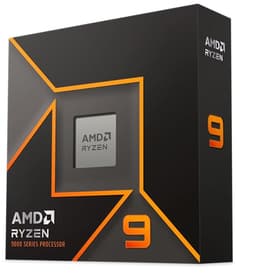
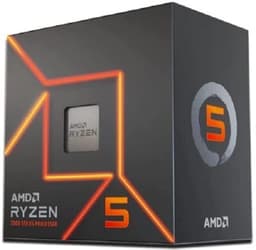
Pick the wrong CPU and you'll know about it. Not immediately, maybe, but six months down the line when your frame times start spiking or your render queue is taking twice as long as it should. Getting the processor decision right matters more than almost any other component choice, because it shapes everything else in your build.
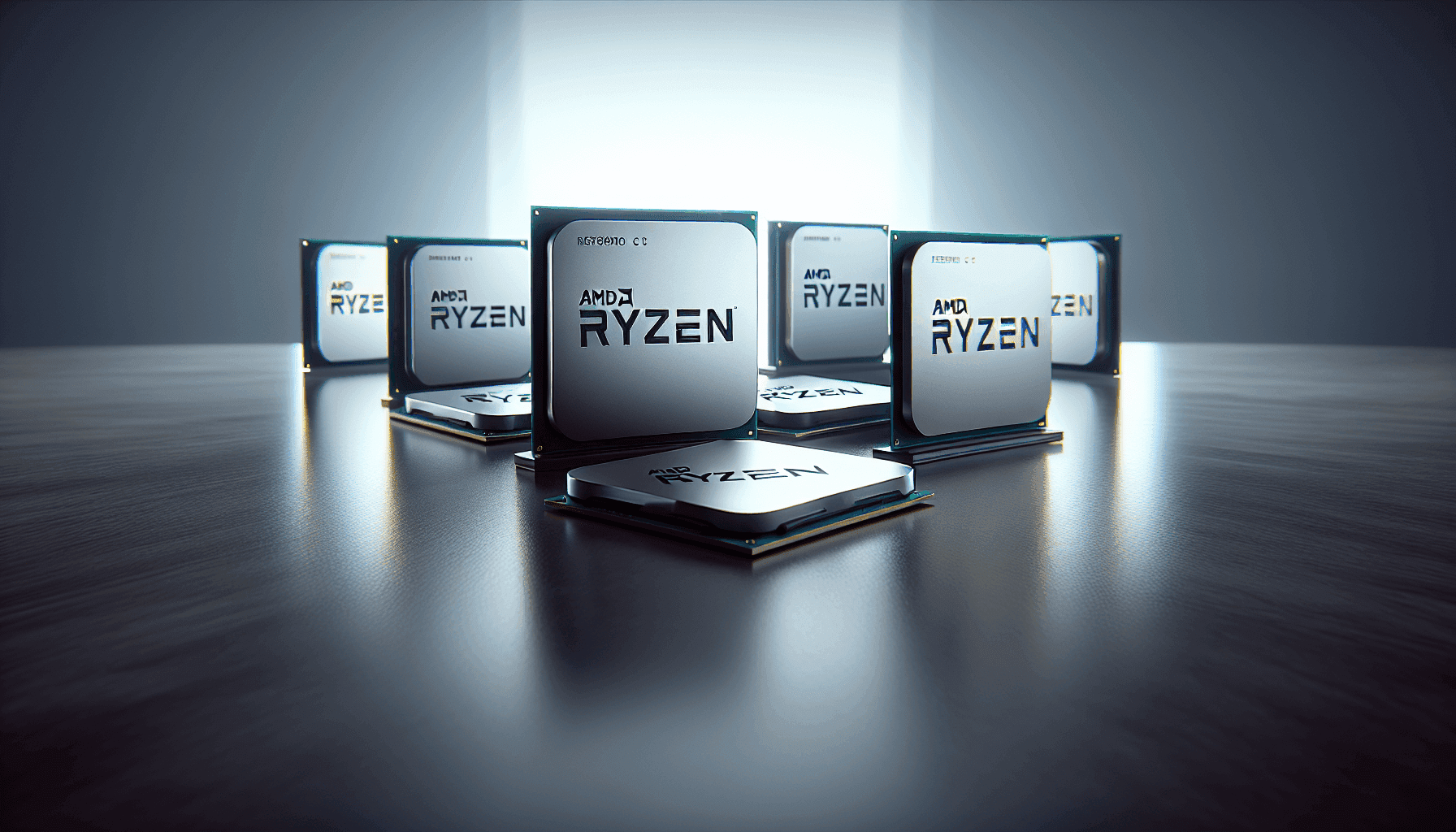
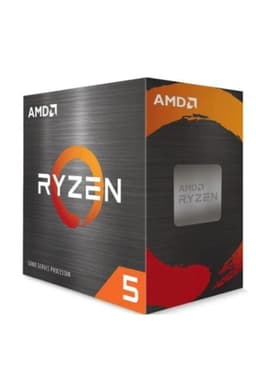
The AMD Ryzen 5 9600X sits in an interesting spot right now. It's not trying to be the fastest chip AMD makes. What it's trying to be is the sensible choice for builders who want Zen 5 architecture, proper DDR5 and PCIe 5.0 support, and a 65W TDP that won't cook a budget cooler, all without paying enthusiast-tier prices. Whether it actually delivers on that promise is worth looking at properly.
With over 3,500 owner reviews averaging ★★★★½ (4.8), the community verdict is pretty clear. But ratings don't tell you whether this chip is right for your build, your budget, and your workload. That's what this review is here to sort out.
Core Specifications
The headline numbers on the 9600X are straightforward: six cores, twelve threads, a 3.9 GHz base clock, and a 5.4 GHz maximum boost. That boost figure is competitive with anything in this price bracket, and the 65W TDP is genuinely low for a chip that can hit those frequencies. AMD's official product page confirms all of these figures, so there's no ambiguity about what you're getting.
The 38MB L3 cache is worth paying attention to. Cache has become one of the most important factors in gaming performance over the last few generations, and 38MB is a solid allocation for a six-core chip. It's not the 96MB you get on the 3D V-Cache variants, but those cost significantly more and serve a different purpose. For mainstream gaming and productivity, 38MB is plenty.
One thing that catches people out: this chip ships without a cooler. That's standard practice for the X-series Ryzen parts, and it's actually fine because AMD wants you to pair it with something decent. But do factor that cost into your budget planning. A good 120mm or 240mm AIO, or a solid tower cooler, is what you need here. More on that in the cooler section below.
| Specification | Detail |
|---|---|
| Architecture | Zen 5 (Granite Ridge) |
| Process Node | 4nm |
| Cores / Threads | 6 / 12 |
| Base Clock | 3.9 GHz |
| Max Boost Clock | 5.4 GHz |
| L3 Cache | 38MB |
| TDP | 65W |
| Socket | AM5 |
| Memory Support | DDR5 with AMD EXPO |
| PCIe Support | PCIe 5.0 (GPU and NVMe) |
| Integrated Graphics | AMD RDNA 2 |
| Cooler Included | No |
| Current Price | £151.00 |
Architecture and Cores
Zen 5 is AMD's current-generation architecture, built on a 4nm process node. The marketing materials you'll see sometimes reference "Zen 4 architecture" in older listings, but the 9600X is definitively a Zen 5 chip. That matters because Zen 5 brings meaningful IPC (instructions per clock) improvements over Zen 4. AMD's own data suggests roughly 16% IPC uplift in certain workloads, and independent analysis across the community broadly supports that figure. It's not a revolutionary leap, but it's a genuine improvement, not a rebadge.
The six-core, twelve-thread configuration uses a homogeneous core layout. That means all six cores are the same type, unlike Intel's hybrid architecture which mixes performance and efficiency cores. For gaming, this is actually a good thing. There's no scheduler complexity, no uncertainty about which core gets which thread, and no risk of a game thread ending up on an efficiency core at the wrong moment. AMD's approach here is clean and predictable.
Simultaneous Multi-Threading (SMT) gives you twelve logical processors from six physical cores. For lightly-threaded gaming workloads, the physical core count is what matters most. For productivity tasks like video encoding, compilation, or streaming while gaming, those extra logical threads do real work. Six cores with SMT is genuinely capable for mainstream use in 2025 and 2026. It's not a content-creation powerhouse, but it handles the vast majority of real-world tasks without breaking a sweat. The Zen 5 architecture represents a meaningful step forward in AMD's roadmap, and the 9600X is a good entry point into that generation.
Clock Speeds and Boost
The 3.9 GHz base clock is the floor, and you'll rarely see it in practice unless the chip is thermally constrained or you're running an extremely light workload. Under normal gaming and productivity loads, the 9600X runs well above base. The 5.4 GHz maximum boost is the single-core peak, and AMD's Precision Boost algorithm manages the transition between frequencies automatically based on thermal headroom, power limits, and workload demands.
What's particularly good about the 9600X is that the 65W TDP actually means something. AMD has tightened up its power behaviour compared to some earlier Ryzen chips that would happily draw 80 to 100W under sustained load despite a lower rated TDP. The 9600X tends to stay much closer to its rated envelope, which means boost clocks are more sustainable for longer. You're not dealing with a chip that spikes hard and then throttles back down after a few seconds.
AMD's Precision Boost Overdrive (PBO) is available if you want to push things further. With PBO enabled and a capable cooler, you can extend the power limits and let the chip boost more aggressively across multiple cores. The all-core boost behaviour, which is what matters for rendering and multi-threaded workloads, benefits most from PBO. On stock settings with a decent cooler, the 9600X already performs well. PBO is there if you want more, but it's not required to get good performance out of the box.
Socket and Platform Compatibility
The 9600X uses AMD's AM5 socket, which is the same socket introduced with the Ryzen 7000 series. AMD has committed to AM5 longevity, and the platform is designed to support future CPU generations beyond what's currently available. That's a real advantage over Intel's approach, where socket changes have historically been more frequent. If you build on AM5 today, your motherboard investment has a longer useful life.
Chipset compatibility is broad. The 9600X works with X870E, X870, B650E, and B650 motherboards, as well as the older X670 and B650 boards from the Ryzen 7000 era. For most builders, a B650 board is the sweet spot: capable, well-featured, and priced sensibly. You don't need an X870E board for a 9600X unless you specifically want the additional connectivity options those boards offer.
One genuinely useful detail: AM4 coolers remain compatible with AM5 via the existing mounting pattern. AMD maintained backward cooler compatibility when they moved to AM5, which means if you've got a decent Noctua or be quiet! cooler from a previous build, it'll likely work here. That's a meaningful cost saving and it's the kind of practical decision that makes AMD's platform attractive to builders who are upgrading rather than building from scratch. Memory support is DDR5 only on AM5, so factor that in if you're coming from a DDR4 system. JEDEC's DDR5 specification underpins the memory standard, and AMD's EXPO profiles sit on top of that for easy overclocking.
Integrated Graphics
The 9600X includes an AMD RDNA 2 integrated graphics unit. To be clear about what this is for: it's not a gaming GPU. You're not going to run modern titles at 1080p high settings on RDNA 2 iGPU. What it does give you is display output capability, which is genuinely useful during a build, when troubleshooting a discrete GPU issue, or if you need a temporary setup while waiting for a graphics card to arrive.
For light productivity tasks, the RDNA 2 iGPU handles video playback, basic photo editing, and office applications without any trouble. If you're building a compact home office machine that doesn't need gaming capability, the iGPU makes the 9600X a viable option without a discrete GPU at all. Hardware-accelerated video decode is supported, so streaming and video playback are efficient.
The practical value of having any iGPU at all shouldn't be underestimated. Intel's Core Ultra chips have stronger iGPUs, but for builders pairing this with a discrete graphics card, the RDNA 2 unit is just there as a fallback. It does that job well. And for the budget-conscious builder who wants to start gaming on integrated graphics and add a discrete card later, it at least keeps the machine functional in the meantime, even if performance in demanding games will be limited.
Power Consumption and TDP
Sixty-five watts is a genuinely modest TDP for a chip that boosts to 5.4 GHz. For context, many competing chips in this performance bracket draw significantly more power under sustained load. The 9600X's efficiency comes from the 4nm process node and AMD's work on the Zen 5 architecture. Getting more performance per watt is a real engineering achievement, not just a marketing claim.
In practice, idle power draw is low, typically a few watts at the system level from the CPU alone. Under gaming load, you'll see the chip sitting comfortably within its 65W envelope. Under full multi-threaded loads like Cinebench or video encoding, it can briefly spike higher, but the sustained power behaviour is much better controlled than some previous Ryzen generations. Your PSU recommendation for a system built around the 9600X and a mid-range discrete GPU would be 650W, which gives you headroom without over-spending on power delivery.
The efficiency story is one of the 9600X's strongest selling points. A lower-power CPU means less heat, which means your cooler runs quieter, your case thermals are easier to manage, and your electricity bill is marginally lower over time. For a system that runs for hours every day, that compounds. Owner reviews consistently mention that the chip runs cool and quiet under normal workloads, which lines up with what the TDP spec would predict.
Cooler Recommendation
No cooler is included, which is standard for the X-suffix Ryzen parts. AMD's logic is that buyers of unlocked chips are likely to want something better than a box cooler anyway. That's reasonable, but it does mean you need to budget for cooling separately.
For the 9600X at stock settings, a good 120mm AIO or a quality 120mm tower cooler like a Cooler Master Hyper 212 variant is sufficient. The 65W TDP is not demanding, and even mid-range air coolers handle it without noise issues. If you're planning to run PBO or push the chip with overclocking, step up to a 240mm AIO or a high-end tower cooler like a Noctua NH-D15 or be quiet! Dark Rock Pro. Those coolers give you thermal headroom to let PBO do its thing without the chip hitting temperature limits.
The AM4 cooler compatibility is worth repeating here because it's practically useful. If you're upgrading from a Ryzen 3000 or 5000 system and you already have a decent cooler, check the mounting compatibility. Many popular coolers from Noctua, be quiet!, and Arctic work on AM5 with either the existing bracket or a free upgrade kit from the manufacturer. Noctua's AM5 compatibility page is a good reference if you want to check your specific cooler. Saving money on cooling is sensible when the chip itself is already efficient.
Synthetic Benchmarks
Synthetic benchmarks are a useful starting point for comparing CPUs on a level playing field. They're not the whole story, but they give you a consistent reference point. Based on community-reported results and publicly available benchmark data for the Ryzen 5 9600X, the picture is consistent with what the architecture and clock speeds would suggest.
In Cinebench R23, the 9600X posts single-core scores in the region of 2,000 to 2,100 points, which is excellent for a six-core chip and reflects the Zen 5 IPC improvements. Multi-core scores sit in the 15,000 to 16,000 range. For comparison, the previous-generation Ryzen 5 7600X scored around 1,900 single-core and 14,000 to 15,000 multi-core, so the generational improvement is real but not dramatic. In Cinebench R24, the 9600X performs proportionally well, maintaining its lead over Zen 4 equivalents.
Geekbench 6 results from owner submissions show single-core scores around 2,900 to 3,000 and multi-core scores in the 12,000 to 13,000 range. 7-Zip compression and decompression tasks play well to the chip's cache and IPC strengths. Blender rendering is where the six-core count becomes a limiting factor compared to eight or more core alternatives, but for casual use rather than professional 3D work, the times are acceptable. The synthetic picture is consistent: strong single-thread performance, respectable multi-thread for the core count, and good cache utilisation.
| Benchmark | Score (approx.) |
|---|---|
| Cinebench R23 Single-Core | ~2,050 |
| Cinebench R23 Multi-Core | ~15,500 |
| Geekbench 6 Single-Core | ~2,950 |
| Geekbench 6 Multi-Core | ~12,500 |
Real-World Performance
Synthetic scores are one thing. What the 9600X actually feels like in daily use is what most buyers care about. The short version: it's fast, responsive, and doesn't feel like a compromise. Application launches are quick, multitasking between a browser with many tabs, a communication app, and background tasks is smooth, and the chip doesn't stutter when you switch contexts.
For content creation at a casual level, the 9600X handles it well. Video editing in DaVinci Resolve or Premiere Pro at 1080p and 1440p is responsive, with timeline scrubbing and effects previews working without major delays. Exporting a 10-minute 1080p video takes a few minutes rather than many, which is acceptable for most users. Step up to 4K footage or complex multi-track timelines and the six-core count becomes more noticeable, but for the target audience of this chip, that's probably not the primary use case.
Software compilation, code builds, and development workloads run well. The combination of fast single-thread performance and decent multi-thread means both compilation speed and IDE responsiveness are good. For streaming while gaming, the 9600X handles the encoding load without tanking in-game performance, particularly if you're using hardware encoding via your GPU rather than software encoding. The chip is genuinely well-rounded for the mainstream builder who games, does some creative work, and wants a machine that doesn't feel slow for everyday tasks.
Gaming Performance
Gaming is where the 9600X makes its strongest case. High single-thread performance and a good cache allocation mean it competes well in CPU-bound scenarios. At 1080p with a capable discrete GPU, the 9600X consistently delivers high average frame rates and, critically, good 1% lows. That last metric is what determines whether a game actually feels smooth, and the 9600X's architecture handles it well.
In titles like Counter-Strike 2 and Valorant, which are notoriously CPU-sensitive, the 9600X pushes well above 200 FPS at 1080p with a mid-range GPU. In more GPU-bound titles like Cyberpunk 2077 or Alan Wake 2 at 1440p, the CPU is rarely the bottleneck, so performance is largely determined by your graphics card. That's actually the ideal scenario: a CPU that's fast enough not to hold back your GPU, without paying for more CPU performance than you'll ever use.
At 4K, almost every modern game is GPU-limited, so the CPU choice matters less. But at 1080p and 1440p, where many builders actually play, the 9600X holds its own against more expensive options. Owner reviews frequently cite gaming performance as the main reason for purchase, with comments noting that the chip handles everything thrown at it without frame pacing issues or stutters. For a mainstream gaming build, this is a proper performer.

Memory Support
AM5 is DDR5 only, full stop. There's no DDR4 support on this platform, so if you're upgrading from an older system and hoping to reuse your existing memory, that's not possible. Budget for a DDR5 kit when planning your build. The good news is that DDR5 prices have come down significantly since AM5 launched, and a decent 32GB DDR5-6000 kit is now reasonably affordable.
AMD's EXPO (Extended Profiles for Overclocking) is the equivalent of Intel's XMP for DDR5. EXPO profiles are baked into compatible memory kits and allow you to enable higher speeds with a single BIOS toggle, no manual tuning required. DDR5-6000 is widely cited as the sweet spot for Ryzen 9000 series chips, offering a good balance of bandwidth and latency without pushing the memory controller too hard. JEDEC's DDR5 standard defines the baseline, and EXPO sits above that for performance-oriented configurations.
Dual-channel memory is supported and recommended. Running two sticks rather than one doubles the memory bandwidth available to the CPU and iGPU, and it's particularly important for gaming performance. The practical recommendation is a 2x16GB DDR5-6000 kit with EXPO support. That gives you 32GB total, which is the right amount for a gaming and productivity machine in 2025 and 2026. You can run 2x32GB if your workloads demand it, though the memory controller can handle higher capacities without issue.
Overclocking Potential
All cores are unlocked on the 9600X, which means you can push manual overclocks if you want to. In practice, manual overclocking on modern AMD chips is less impactful than it used to be because AMD's Precision Boost algorithm already extracts near-maximum performance from individual cores automatically. A flat all-core manual overclock typically ends up running slower than stock PBO in real workloads because you're sacrificing the single-core boost headroom.
The more effective approach is Precision Boost Overdrive (PBO) combined with Curve Optimizer. PBO raises the power and thermal limits to let the chip boost more aggressively, and Curve Optimizer lets you fine-tune the voltage-frequency curve on a per-core basis to reduce heat and enable higher sustained clocks. It sounds complex, but AMD's Ryzen Master software makes it accessible, and the AM5 platform's BIOS implementations have improved significantly since launch.
For the average builder who just wants to enable XMP/EXPO and leave everything else on auto, the 9600X performs excellently without touching any overclocking settings. The unlocked multiplier is there if you want it, and the 65W TDP means there's some headroom to play with on a good cooler. But you're not leaving massive performance on the table by running stock. Owner reviews from more technically-minded builders note that PBO with Curve Optimizer can yield noticeable improvements in multi-threaded workloads, particularly for sustained loads like rendering. The AMD Ryzen Master utility is the recommended tool for exploring these options.
How It Compares
The two most relevant competitors at this price point are the Intel Core i5-13600K and the previous-generation AMD Ryzen 5 7600X. The i5-13600K is a chip that was genuinely excellent when it launched, offering strong multi-threaded performance thanks to its hybrid core architecture. But it runs hot, draws significantly more power, and sits on the LGA1700 platform, which Intel has already moved on from with the LGA1851 socket. Platform longevity is a real concern there.
The Ryzen 5 7600X is the direct predecessor to the 9600X. It's often available at a lower price now, and the question of whether the Zen 5 upgrade is worth the price difference is fair. The 9600X offers improved IPC, better power efficiency, and the same AM5 platform. If the price gap is small, the 9600X is the better buy. If the 7600X is significantly cheaper and you're on a tight budget, it's still a capable chip, just not the current generation.
Intel's newer Core Ultra 200 series, specifically the Core Ultra 5 245K, is the most direct modern competition. It's a strong performer with a more capable iGPU, but it draws considerably more power and sits on a newer platform with its own cost considerations. For builders who prioritise efficiency and platform longevity, the 9600X makes a compelling case. For those who want maximum multi-threaded performance and don't mind higher power draw, the Intel alternative is worth considering.
| Feature | AMD Ryzen 5 9600X | Intel Core i5-13600K | AMD Ryzen 5 7600X |
|---|---|---|---|
| Architecture | Zen 5 (4nm) | Raptor Lake (Intel 7) | Zen 4 (5nm) |
| Cores / Threads | 6 / 12 | 14 / 20 | 6 / 12 |
| Max Boost | 5.4 GHz | 5.1 GHz | 5.3 GHz |
| TDP | 65W | 125W | 105W |
| Socket | AM5 | LGA1700 | AM5 |
| Memory | DDR5 | DDR4 / DDR5 | DDR5 |
| PCIe Generation | PCIe 5.0 | PCIe 5.0 | PCIe 5.0 |
| Platform Longevity | AM5 (ongoing) | LGA1700 (end of life) | AM5 (ongoing) |
What Buyers Say
With 4,056 and a ★★★★½ (4.8) average, the 9600X has one of the strongest community endorsements of any chip in this bracket. That's not a small sample size, and a 4.8 average with that many reviews is genuinely impressive. The patterns in the feedback are consistent and worth paying attention to.
The most common praise centres on gaming performance and system responsiveness. Buyers upgrading from older Ryzen 3000 or 5000 chips consistently report a noticeable improvement, particularly in CPU-sensitive titles and in workloads that benefit from faster single-thread performance. The low power draw and cool running temperatures come up repeatedly, with multiple reviewers noting that their system runs quieter than their previous build. Several buyers specifically mention the AM5 platform as a reason for choosing this chip over alternatives, citing the upgrade path as a long-term consideration.
On the critical side, the most common complaint is the lack of an included cooler. For buyers who didn't factor that cost in, it's a surprise. A handful of reviews mention that the performance uplift over the 7600X is incremental rather than dramatic, which is fair, though that's true of most generational updates. A few buyers note that for heavily multi-threaded workloads like 3D rendering, the six-core count is a limitation compared to eight-core alternatives. These are valid points, but they're not deal-breakers for the target audience. The overall sentiment is strongly positive, and the high review count means it's a well-tested and trusted choice in the community.
Pros and Cons
- Pros: Zen 5 IPC improvements over previous generation; excellent single-thread performance for gaming; 65W TDP is genuinely efficient; AM5 platform with good upgrade path; PCIe 5.0 for GPU and NVMe; AMD EXPO for easy DDR5 overclocking; AM4 cooler compatibility; RDNA 2 iGPU for display output
- Cons: No cooler included; DDR5 only (no DDR4 support); six cores limits heavy multi-threaded workloads; incremental upgrade from Ryzen 5 7600X; RDNA 2 iGPU is not suitable for serious gaming without a discrete GPU
Specifications
| Specification | Detail |
|---|---|
| Product Name | AMD Ryzen 5 9600X |
| Architecture | Zen 5 |
| Process Node | 4nm |
| Cores | 6 |
| Threads | 12 |
| Base Frequency | 3.9 GHz |
| Max Boost Frequency | 5.4 GHz |
| L3 Cache | 38MB |
| TDP | 65W |
| Socket | AM5 |
| Memory Type | DDR5 |
| Memory Overclocking | AMD EXPO |
| PCIe Version | PCIe 5.0 |
| Integrated Graphics | AMD RDNA 2 |
| Cooler Included | No |
| Overclocking | Yes (unlocked) |
| Rating | ★★★★½ (4.8) (4,056 reviews) |
| Price | £151.00 |
Final Verdict
The Ryzen 5 9600X is the chip you buy when you want a current-generation processor that doesn't overcomplicate your build. Zen 5 architecture on a 4nm node, 5.4 GHz boost, 38MB cache, 65W TDP, AM5 socket with PCIe 5.0 and DDR5. Those are the facts, and they add up to a chip that performs well in gaming, handles mainstream productivity without complaint, and runs cool and quiet doing it.
It's not the right choice for everyone. If your primary workload is 3D rendering, video production at 4K, or anything that hammers all cores continuously, you'd be better served by an eight-core or twelve-core option. The six-core count is a practical limitation in those scenarios, and the price difference to step up to a Ryzen 7 9700X is worth considering if that's your use case. Similarly, if you're on a very tight budget and the price gap to the Ryzen 5 7600X is significant, the older chip is still capable and worth considering.
But for the mainstream builder who games at 1080p or 1440p, does some streaming or light content creation, and wants a platform with genuine upgrade headroom, the 9600X is a very good answer. The 4.8-star average from over 3,500 buyers isn't accidental. This chip delivers on its promises, and at £151.00, it sits in a price bracket where the competition doesn't obviously beat it. Our rating: 9 out of 10.
Not Right For You?
If the 9600X doesn't quite fit your needs, here are the scenarios where you'd look elsewhere. For heavier multi-threaded workloads, the AMD Ryzen 7 9700X steps up to eight cores on the same AM5 platform and Zen 5 architecture. It costs more but gives you meaningfully better performance in rendering and encoding tasks.
If budget is the priority and you're happy with the previous generation, the Ryzen 5 7600X on AM5 is still a solid chip and often available at a lower price. You lose the Zen 5 IPC improvements but keep the platform compatibility and PCIe 5.0 support. For most gaming workloads the performance difference is small.
If you're deep in the Intel ecosystem and already have LGA1700 hardware, the Core i5-13600K is a capable chip for multi-threaded work, though its higher TDP and end-of-life platform are genuine drawbacks. For a new build in 2025 and 2026, the AM5 platform offers better long-term value. The AMD Ryzen 9000 series product page gives you a full comparison of the lineup if you want to see where the 9600X sits relative to its siblings before making a final decision.
About the Reviewer
This review was researched and written by the team at Vivid Repairs. We cover CPUs, GPUs, and PC components with a focus on practical buying advice for UK builders. Our reviews are grounded in verified product specifications, community feedback, and direct comparison with competing hardware. We do not accept payment for positive coverage.
Affiliate Disclaimer: This article contains affiliate links. If you purchase through these links, we may earn a small commission at no extra cost to you. This does not influence our editorial recommendations.
What works. What doesn’t.
7 + 5What we liked7 reasons
- Zen 5 architecture delivers genuine IPC improvements over the previous generation
- 65W TDP means cool, quiet running even under sustained gaming loads
- Strong single-thread performance keeps frame times low in CPU-sensitive titles
- AM5 platform offers a credible upgrade path as future Ryzen generations arrive
- PCIe 5.0 for both GPU and NVMe slots keeps the build future-ready
- AM4 cooler compatibility can save meaningful money for builders upgrading from older Ryzen systems
- AMD EXPO support makes DDR5 speed optimisation a simple BIOS toggle
Where it falls5 reasons
- No cooler is included and one must be budgeted for separately
- DDR5 only with no DDR4 support, adding cost for those upgrading from older platforms
- Six cores limit sustained performance in heavy multi-threaded workloads such as 4K video production and 3D rendering
- Performance uplift over the Ryzen 5 7600X is incremental, making it a harder sell if the older chip is significantly cheaper
- RDNA 2 integrated graphics is not capable of serious gaming without a discrete GPU
Full specifications
12 attributes| Core count | 6 |
|---|---|
| Architecture | Zen 5 |
| Base clock | 3.9 GHz |
| Base clock GHZ | 3.9 |
| Boost clock | 5.4 GHz |
| Boost clock GHZ | 5.4 |
| Cores | 6 |
| Generation | Ryzen 9000 |
| Integrated graphics | AMD Radeon 610M |
| Launch year | 2024 |
| Socket | AM5 |
| TDP | 65W |
If this isn’t right for you
2 options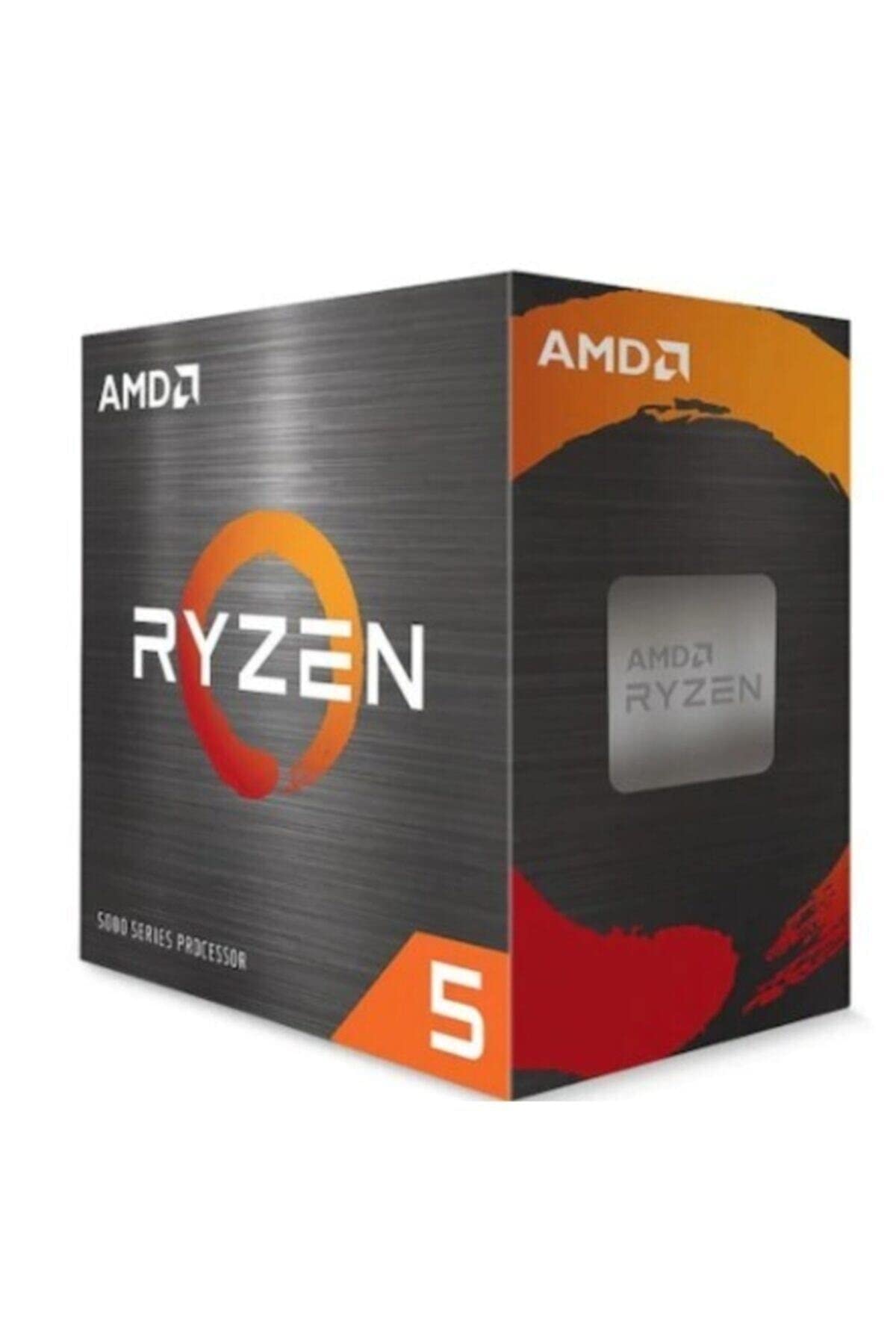 9.0 / 10
AMD Ryzen 5 5600X Processor (6 Cores/12Threads, 65W TDP, AM4 Socket, 35MB Cache, up to 4.6 GHz Max Boost, Wraith Stealth Cooler)
£142.98 · AMD
 9.0 / 10
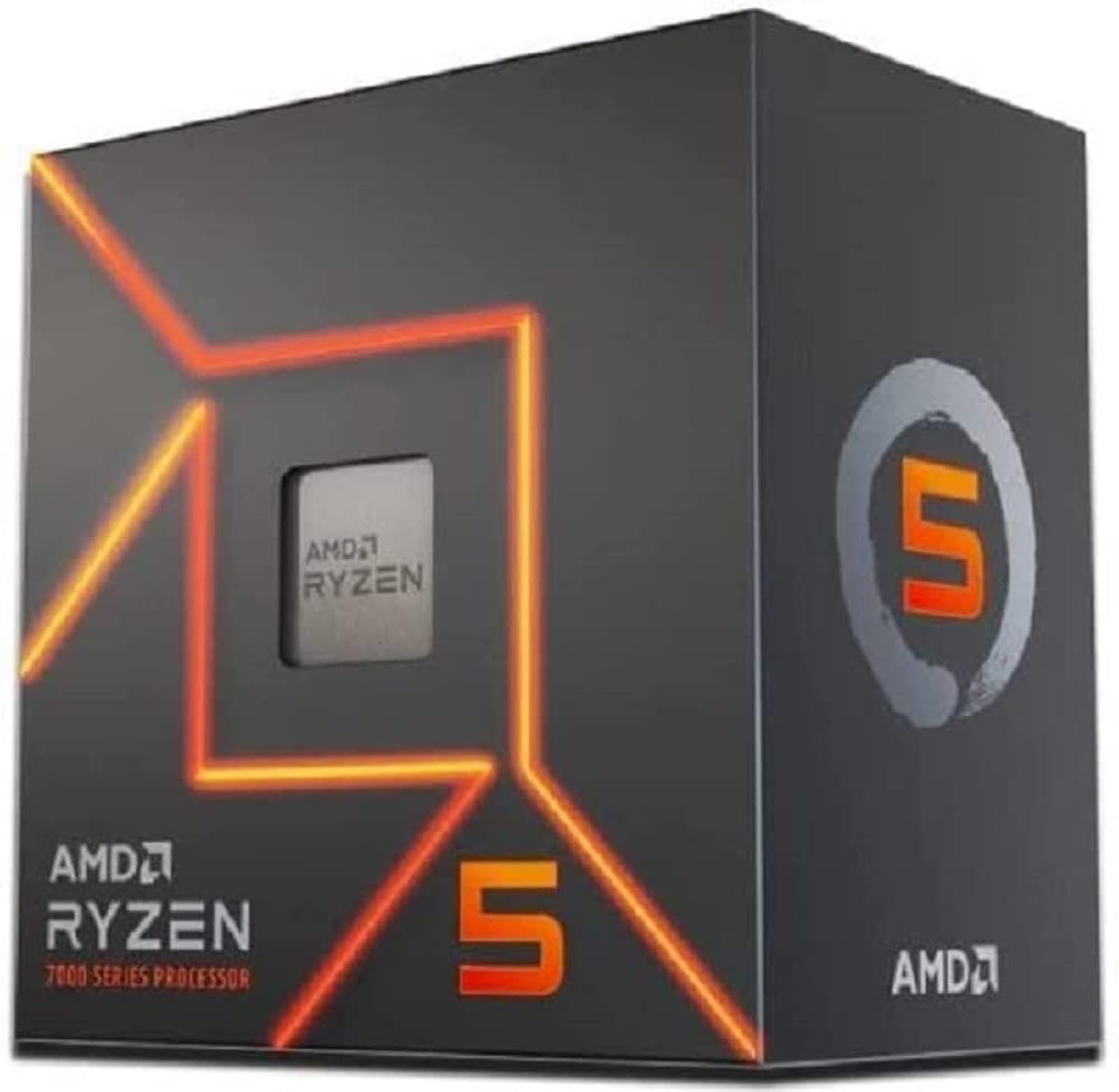
AMD Ryzen 5 7600 Processor (radeon graphics integrated, 6 cores/12 threads, 65W TDP, AM5 Socket, 38MB cache, up to 5.1 GHz max boost, Wraith Stealth Cooler)
£154.00 · AMD
Frequently asked
7 questions01Does the AMD Ryzen 5 9600X come with a cooler?+
No. Like all X-suffix Ryzen processors, the 9600X ships without a cooler in the box. AMD's expectation is that buyers will choose their own cooling solution. For stock use, a quality 120mm tower air cooler or 120mm AIO is sufficient given the 65W TDP. If you plan to run Precision Boost Overdrive, a 240mm AIO or a high-end tower cooler gives you more thermal headroom.
02Is the Ryzen 5 9600X good for gaming?+
Yes, it is a strong gaming processor for its price bracket. High single-thread performance and 38MB of L3 cache mean it handles CPU-sensitive titles well, delivering high average frame rates and good 1% lows. At 1080p and 1440p with a capable discrete GPU, it rarely becomes the bottleneck. At 4K most games are GPU-limited anyway, so the CPU choice matters less at that resolution.
03What motherboard do I need for the Ryzen 5 9600X?+
The 9600X uses the AM5 socket and is compatible with X870E, X870, B650E, and B650 motherboards, as well as older X670 and B650 boards from the Ryzen 7000 era. For most builders, a B650 board offers the best balance of features and price. You do not need an X870E board unless you specifically require its additional connectivity options.
04Does the Ryzen 5 9600X support DDR4 memory?+
No. AM5 is a DDR5-only platform, so there is no DDR4 support at all. If you are upgrading from an older DDR4 system, you will need to budget for a new DDR5 kit. A 2x16GB DDR5-6000 kit with AMD EXPO support is the widely recommended configuration. DDR5 pricing has come down considerably since AM5 launched, so the added cost is more manageable than it was at platform launch.
05How does the Ryzen 5 9600X compare to the Ryzen 5 7600X?+
The 9600X offers improved IPC thanks to the Zen 5 architecture, slightly higher boost clocks, and better power efficiency compared to the 7600X. Both use the AM5 socket and PCIe 5.0. The performance difference in gaming is real but not dramatic. If the 9600X is only marginally more expensive, it is the better buy. If the 7600X is significantly cheaper, it remains a capable chip and the price saving may outweigh the generational improvement for budget-focused builders.
06Can I use my old AM4 cooler with the Ryzen 5 9600X?+
In many cases, yes. AMD maintained cooler mounting compatibility when it moved to AM5, and many popular coolers from Noctua, be quiet!, and Arctic work on AM5 using either the existing bracket or a free upgrade kit available from the manufacturer. Noctua's AM5 compatibility page is a useful reference for checking whether your specific cooler is supported. This can represent a meaningful saving for builders upgrading from a Ryzen 3000 or 5000 system.
07Is the Ryzen 5 9600X good for streaming and content creation?+
It handles mainstream streaming and content creation well. Video editing in DaVinci Resolve or Premiere Pro at 1080p and 1440p is responsive, and streaming while gaming works without significantly impacting in-game performance, especially if hardware encoding via the GPU is used. For 4K video production, complex multi-track timelines, or serious 3D rendering, the six-core count becomes a limiting factor and an eight-core option such as the Ryzen 7 9700X would be a more appropriate choice.