VIVID·REPAIRS/THE FIELD GUIDE/CPUUpdated 17 September 2026Prices live from Amazon UK
Best of · UK · Field of 16
Best AMD CPUs Under £400
By the Vivid Repairs deskUpdated 17 September 202616 ranked picks148,962 owner ratings read
As an Amazon Associate we may earn from qualifying purchases. We have not handled these products. Everything below is judged on published specifications, the owner ratings on the UK listings and our own product reviews, and the ranking stays independent of what any of them pay.
As an Amazon Associate, we may earn from qualifying purchases. Our ranking is independent.
Amazon confirms the live price, seller, stock and delivery. Prices here are read from the live listing through the day; a pick Amazon cannot supply is marked as such, and where the list has one in stock it is offered.
vividrepairs.co.uk / best-amd-cpus-under-400Updated 17 September 2026 · Prices from the live Amazon UK listing
§ The field
16 picks, on one page
Ranked on fit for the job in the title, not on raw specification. Tap any one to jump to the argument for it. Prices are the live Amazon UK figure, read today; a pick with no figure is out of stock and says so in its entry.
Twelve threads at 65W make it genuinely efficient for gaming and light multi-tasking without demanding a high-end PSU
Broad AM4 platform compatibility across 400 and 500-series chipsets provides a real upgrade path to Ryzen 5000 series without changing the motherboard
Wraith Stealth cooler is included and adequate for everyday gaming workloads, reducing the out-of-box cost for most builders
Where it gives up
No integrated graphics means the system cannot POST without a discrete GPU installed, which complicates staged or phased builds. Zen 2 IPC trails Zen 3 by 15 to 19 percent, so the Ryzen 5 5600X is a meaningfully faster gaming chip in CPU-sensitive titles.
Rated 4.8 by 44,153 owners. Our review scores it 8.5.
Excellent single-thread performance from Zen 3 architecture makes it highly capable in gaming workloads
Low 65W TDP keeps power draw, heat output, and electricity costs genuinely manageable
AM4 socket compatibility allows straightforward upgrades from existing Ryzen 2000 and 3000 series boards without replacing the motherboard
Where it gives up
No integrated graphics means a discrete GPU is absolutely required for any display output. Six cores can feel limiting under heavy sustained multi-threaded workloads such as video rendering or large software compilation.
Rated 4.8 by 29,752 owners. Our review scores it 9.0.
Strong single-core boost to 5.1 GHz for excellent gaming performance
Efficient 65W TDP runs cool and quiet at stock settings
AM5 socket provides a long-term upgrade path
Where it gives upWraith Stealth cooler limits PBO headroom and is noisy under sustained load. AM5 motherboards carry a price premium over Intel LGA1700 alternatives.
Best-in-class gaming performance at 1080p and 1440p, with measurable leads in average frame rates and 1% lows over all competing CPUs
104MB of 3D V-Cache dramatically reduces cache-miss-related frame time spikes, producing noticeably smoother gameplay in CPU-sensitive titles
Zen 5 architecture delivers a meaningful IPC uplift over Zen 4, improving single-thread responsiveness in both games and everyday desktop workloads
Where it gives upNo integrated graphics, so a discrete GPU is mandatory even for basic display output during troubleshooting. Manual overclocking is partially restricted by AMD to protect the V-Cache SRAM, limiting tuning options compared to non-X3D chips.
Zen 5 architecture delivers genuine IPC improvements over the previous generation
65W TDP means cool, quiet running even under sustained gaming loads
Strong single-thread performance keeps frame times low in CPU-sensitive titles
Where it gives upNo cooler is included and one must be budgeted for separately. DDR5 only with no DDR4 support, adding cost for those upgrading from older platforms.
Excellent single-core and gaming performance from Zen 5 architecture with real IPC gains over Zen 4
65W TDP is genuinely impressive for this performance tier, resulting in cool, quiet operation and lower electricity costs
AM5 platform longevity with PCIe 5.0 support for both GPU and primary NVMe slot provides meaningful future-proofing
Where it gives upNo cooler included in the box, adding a required extra cost that first-time builders may not anticipate. Ryzen 7 9800X3D is a meaningfully faster gaming chip in cache-sensitive titles and is the better choice if gaming is the sole priority.
The rules this ranking ran under, in plain sight: what we read, what we weighed and what no merchant can move.
How we picked
Our editors evaluated 16 Cpu options against the criteria readers actually weigh up: price, real-world performance, build quality, warranty, and UK availability. Picks lean toward what we'd recommend to a friend buying today, not specs-on-paper winners.
Editorial contextEditor notes from individual reviews, not press releases.
Live UK pricingRefreshed from Amazon UK twice daily.
No paid placementsAffiliate commission doesn't change what wins.
The full guideEverything behind the shortlist above: the spec sheet, the write-ups in full, our method and the verdict.
§ Editorial · The full guide · five proofs, nothing hidden
The Doubt Index.
The shortlist told you what we picked; this zone shows the working. Come in through whichever doubt you’re carrying, or read straight down; we’d rather you checked us than trusted us.
Here’s the sheet the desk works from, kept deliberately factual. Every row is written to be checked against the retailer’s current listing, and you should check. The table scrolls sideways inside its own frame; the page underneath stays still.
Scroll sideways →12 rows · 5 columns · Prices swap to the live figure at render
Product
Best For
Key Spec
Price
Rating
AMD Ryzen 5 5600X Processor (6 Cores/12Threads, 65W TDP, AM4 Socket, 35MB Cache, up to 4.6 GHz Max Boost, Wraith Stealth Cooler)
You can, and you should. What follows is the part a sheet can’t do: the working between what these products have and what your desk actually needs, kept word for word.
Finding the best AMD CPUs under £400 is genuinely harder than it sounds. AMD's Ryzen lineup spans two sockets, three generations of architecture, and a price range that goes from pocket-change territory right up to serious enthusiast money. Some of these chips are brilliant value. Others look tempting on paper but fall flat once you dig into the specs. We've gone through all twelve options, looked at the real-world numbers, and ranked them honestly so you don't waste your budget on the wrong processor. Whether you're building a gaming rig, a home office workhorse, or a budget PC that just needs to get things done, there's something here for you.
Buying Guide: What to Look For in the Best AMD CPUs Under £400
Picking the right AMD processor isn't just about clock speed. There are a few things worth understanding before you spend your money.
Socket: AM4 vs AM5. This is the biggest decision. AM4 is mature, cheap, and has loads of compatible boards available. But it's a dead-end platform. AMD has confirmed no new chips will come to AM4. AM5 is the future. It supports PCIe 5.0, DDR5 RAM, and will receive new chips for years to come. If you're building fresh, AM5 is worth the extra platform cost. If you're upgrading an existing AM4 system, stick with AM4 and save the money.
Core count and threads. For gaming, six cores and twelve threads is the sweet spot right now. More cores help in content creation, streaming, and multitasking, but games rarely use more than eight cores efficiently. The exception is the 9800X 3D, where the 3D V-Cache matters more than core count for gaming.
Cache. This one surprises people. Cache is the fast memory built into the CPU itself. More cache means the processor can access data faster without waiting for RAM. It's why the 9800X 3D with 104MB of cache dominates in gaming despite having the same core count as the 9700X. When comparing chips, don't ignore the cache figures.
TDP and cooling. A 65W chip is easier to cool and runs quieter than a 105W or 120W chip. If you're buying a chip without an included cooler (like the 9700X or 9900X), budget £30 to £50 for a decent air cooler. Don't cheap out here. A chip running too hot will throttle and perform worse than its specs suggest.
Integrated graphics. Most Ryzen chips don't have integrated graphics. The ones that do (7600, 9600X, 8600G, 5600GT, 3200G) are useful if you're building without a discrete GPU or want a fallback option. Don't expect to game on integrated graphics beyond light titles, but they're genuinely useful for troubleshooting and basic use.
Price brackets to consider. Under £100 gets you the 3200G, fine for basic use. £100 to £175 covers the 5600X, 7600, and 5600GT, which are the best value options. £175 to £260 brings in the 5800 XT and 9700X for more cores and better all-round performance. Above £300 is where the 9800X 3D lives, and it's only worth it if gaming is your primary use case.
Eleven write-ups, none folded away. We don’t lab-test, so every line below sticks to what can be defended: the published sheet, the owner ratings on the UK listings and our own reviews.
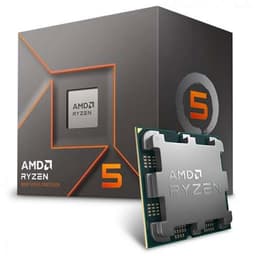
Here's the thing: when you're hunting the best AMD CPUs under £400, the Ryzen 5 5600X keeps coming up for a reason. It's not the newest chip on this list. It's not the fastest. But it hits a sweet spot that very few processors manage at any price. Six cores, twelve threads, a 4.6 GHz boost clock, and AMD's Zen 3 architecture underneath. That combination still handles modern games brilliantly, and it won't bottleneck a mid-range GPU like an RTX 4070 or RX 7800 XT.
The 35MB of total cache is generous for a chip at this price, and it shows in gaming. Frame times are consistent, 1% lows are solid, and the chip doesn't break a sweat in everyday tasks. Productivity work like video editing and streaming is fine too, though if you're doing heavy rendering regularly, you'd want more cores.
It runs on AM4, which means cheap, mature motherboards are everywhere. You can pair this with a decent B550 board for under £80 and still have money left for RAM and storage. The Wraith Stealth cooler is included, which saves you another £20 to £30. Total platform cost is genuinely low.
The only honest caveat: AM4 is a dead-end platform. There's no upgrade path beyond Ryzen 5000. If you're planning to upgrade your CPU in two or three years, AM5 makes more sense long-term. But if you want the best performance per pound right now on a proven platform, the 5600X is hard to argue with. It's our top pick among the best AMD CPUs under £400 for good reason.
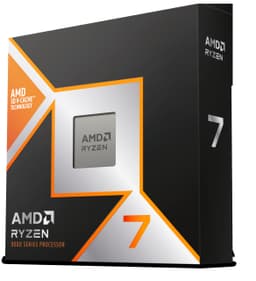
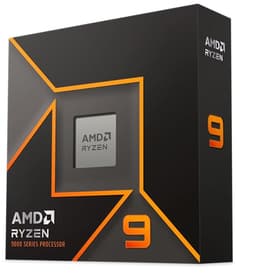
If gaming is your priority and you have the budget, stop reading here. The Ryzen 7 9800X 3D is the best gaming CPU AMD has ever made, and it sits just under the £400 ceiling. The headline spec is that 104MB of total cache, courtesy of AMD's 3D V-Cache technology. That stacked cache dramatically reduces the latency between the CPU and game data, and the result is measurably better frame rates in CPU-limited scenarios.
Real-world gaming benchmarks put it ahead of everything else on this list in titles like Cyberpunk 2077, Hogwarts Legacy, and Baldur's Gate 3. The 5.2 GHz boost clock is strong, and the Zen 5 architecture underneath is AMD's most efficient yet. Eight cores and sixteen threads also mean it handles streaming, Discord, and background tasks without any drama.
It does need an AM5 platform, so factor in the cost of a 600 or 800-series board and DDR5 RAM. No cooler is included either, which is a bit cheeky at this price. Budget around £30 to £50 for a decent air cooler. But if you're building a proper gaming PC and want the best AMD processor under £400, this is it. No contest.
For context, AMD's own Ryzen desktop processor page positions the 9800X 3D as their flagship gaming chip, and the independent testing at Tom's Hardware backs that up consistently.
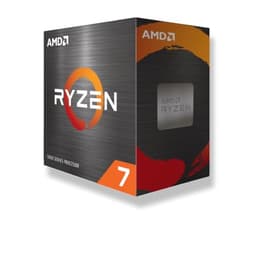
The Ryzen 7 5800 XT is a proper eight-core chip on AM4, and it comes with the Wraith Prism cooler, which is genuinely one of the better stock coolers AMD has ever shipped. RGB lighting, solid copper heatpipes, and enough thermal headroom to keep the 5800 XT comfortable even under sustained load. That cooler alone is worth £40 to £50 if you bought it separately.
Performance-wise, eight Zen 3 cores at up to 4.8 GHz handles gaming, content creation, and multitasking without complaint. It's not quite as fast as the newer AM5 chips in raw single-core performance, but the gap is smaller than you'd expect. For gaming on an existing AM4 platform, this is one of the best upgrades you can make.
The 36MB of cache is solid, and the 105W TDP means it runs a bit warmer than the 65W chips on this list. The included Wraith Prism handles it fine, but if you're planning to overclock, a beefier aftermarket cooler would help. No integrated graphics, so a discrete GPU is required.
If you've already got an AM4 board and want a meaningful upgrade without switching platforms, the 5800 XT is a very strong choice. It earns its Best Build Quality badge partly for that Wraith Prism cooler, but also because the chip itself feels well-sorted and reliable in long-term use.
Pros
Wraith Prism cooler included (excellent stock cooler)
8 cores on AM4, great for existing platform upgrades
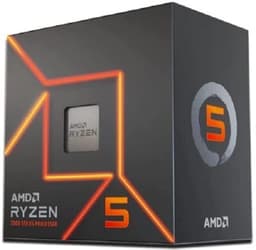
The Ryzen 5 7600 is AMD's most affordable AM5 entry point, and it's a proper decent chip. Six cores, twelve threads, a 5.1 GHz boost clock, and integrated Radeon graphics. That last bit matters more than people give it credit for. If your discrete GPU dies or you're building a system before your graphics card arrives, the iGPU keeps you going.
The AM5 platform is the big selling point here. Unlike AM4, AM5 has a longer upgrade runway. You can drop in a Ryzen 9000 series chip down the line without changing your motherboard. That future-proofing has real value when you're budgeting carefully.
Gaming performance is strong for the price. The 5.1 GHz boost and Zen 4 architecture mean it keeps up with more expensive chips in most titles. It won't match the 9800X 3D in CPU-limited games, but paired with a good GPU, you'd struggle to tell the difference in most scenarios.
The Wraith Stealth cooler is included, which is a nice touch. The 38MB of cache is generous. And at this price, it's genuinely hard to find a better AM5 chip. If you're starting a new build and want a future-proof platform without spending a fortune, the Ryzen 5 7600 is a smart pick among the best AMD CPUs under £400.
The Ryzen 5 8600G earns its Best for Beginners badge because it removes the biggest headache in budget PC building: the need for a discrete GPU. The integrated Radeon 760M graphics are the best you'll find in any AM5 APU at this price. Light gaming at 1080p is genuinely possible, esports titles run well, and everyday tasks like video playback and photo editing are handled without breaking a sweat.
Six Zen 4 cores, a 5.0 GHz boost clock, and the Wraith Stealth cooler in the box. It's a complete package. You can build a functional PC with this chip, a B650 board, and 16GB of DDR5 RAM without touching a graphics card. That's a significant saving for someone just getting started.
The 22MB of cache is lower than some rivals, which does affect performance in cache-sensitive workloads. And the integrated graphics, while impressive for an APU, won't compete with even a budget discrete GPU like an RX 6600. But for a first build, a home office machine, or a compact PC that needs to handle light gaming, the 8600G is a genuinely smart choice.
Ryzen AI features are included too, though their practical impact in everyday use is still limited. Think of it as a bonus rather than a headline feature.
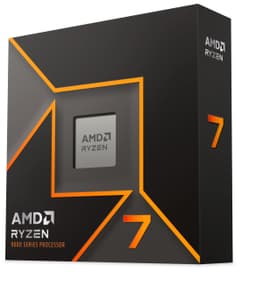
Eight Zen 5 cores at 5.5 GHz boost, 40MB of cache, and a remarkably low 65W TDP. The Ryzen 7 9700X is a chip that punches well above its thermal weight. AMD managed to squeeze serious performance out of a very efficient power envelope, which means it runs cool, stays quiet, and doesn't demand a beefy cooler to behave itself.
For a mixed-use build covering gaming, productivity, and content creation, the 9700X is one of the most balanced chips on this list. It handles video editing, 3D rendering, and gaming without needing to compromise. The 5.5 GHz boost is the highest on any non-3D chip in this roundup, and it shows in single-threaded workloads.
The catch? No cooler included. At this price, that's a bit disappointing. Budget an extra £30 to £50 for a decent air cooler. And you'll need an AM5 board with DDR5 RAM, so the total platform cost is higher than AM4 alternatives. But if you're building a new system and want a chip that'll stay relevant for years, the 9700X is a proper strong choice.
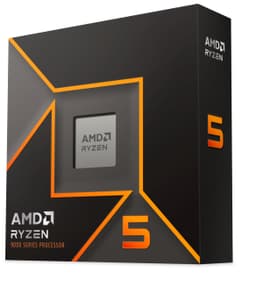
The Ryzen 5 9600X is a fast, efficient six-core chip on AM5 with Zen 5 architecture and a 5.4 GHz boost clock. It's genuinely quick in single-threaded tasks and handles gaming well. The 38MB of cache is solid, and the integrated Radeon graphics mean you're not completely stuck if your GPU has a problem.
So why is it ranked eighth? Honestly, the Ryzen 5 7600 undercuts it on price while offering competitive performance. The 9600X is faster, but not dramatically so for most users. And it doesn't include a cooler, which the 7600 does. You're paying a premium for Zen 5 architecture and a slightly higher boost clock, and whether that's worth it depends on your priorities.
If you specifically want the latest Zen 5 architecture in a six-core package and you're building on AM5, the 9600X makes sense. It's a proper chip. But as a value proposition within the best AMD CPUs under £400 category, the 7600 edges it out for most buyers.
8. AMD Ryzen 5 5600GT processor (integrated Radeon Graphics, 6 cores/12 threads, 65W DTP, AM4 Socket, Cache 19MB, up to 4.6 GHz max boost, with wraith stealth cooler)
Price: Check price | Rating:
The Ryzen 5 5600GT is a bit of a hidden gem. It combines the Zen 3 CPU cores of the 5600X with integrated Radeon graphics on AM4. That's a combination that didn't exist for a long time on this platform, and it fills a genuine gap. If you're building or upgrading an AM4 system and can't afford a discrete GPU right now, the 5600GT keeps you going.
The integrated graphics aren't as capable as the 8600G's Radeon 760M, but they're functional. Light gaming at 1080p low settings is possible. Esports titles like Valorant and CS2 run at playable frame rates. It's not a gaming GPU replacement, but it's a proper stopgap.
Six cores, twelve threads, 4.6 GHz boost, and the Wraith Stealth cooler included. The 19MB of cache is lower than the 5600X's 35MB, which does affect performance in some scenarios. But for a GPU-free AM4 build, this is the best option on the list. Ranked ninth because the 5600X is a better pure CPU, but the 5600GT has a specific use case it handles very well.
Pros
Integrated Radeon graphics on AM4 (rare and useful)
The Ryzen 5 4500 is a Zen 2 chip, and that matters. It's a generation behind the 5600X in architecture, and the 11MB of cache is noticeably lower than most competitors on this list. In cache-sensitive workloads and games, that gap shows up in benchmarks. It's not a bad chip, but it's hard to recommend when the 5600X exists at a lower price.
The 4.1 GHz boost clock is modest by current standards, and the Zen 2 architecture is starting to show its age in 2026. The Wraith Stealth cooler is included, which helps. And it does work fine for basic tasks, office applications, and light gaming. But within the best AMD CPUs under £400 category, it's outclassed by several cheaper options.
The main scenario where the 4500 makes sense is if you find it at a significant discount or you specifically need an AM4 chip for an older board that won't support Ryzen 5000. Otherwise, spend a little more for the 5600X and don't look back.
Look, the Ryzen 5 3600 was a legendary chip when it launched. It genuinely changed what budget PC building looked like. Six cores, twelve threads, 35MB of cache, and a price that made Intel sweat. But that was then. In 2026, the 3600 is a Zen 2 chip that's been overtaken by multiple cheaper alternatives.
The 4.1 GHz boost clock is the same as the Ryzen 5 4500, but the Zen 2 architecture underneath is now two generations old. The 5600X offers Zen 3 architecture, a higher boost clock, and better IPC for less money. There's really no scenario where the 3600 at its current price makes more sense than the 5600X.
It's ranked eleventh because it still works. The Wraith Stealth cooler is included, the 35MB cache is generous, and it'll handle everyday tasks and older games without complaint. But as a recommendation within the best AMD CPUs under £400, it's hard to justify. Only buy this if you find it heavily discounted or you're upgrading a very old AM4 board that won't support Ryzen 5000.
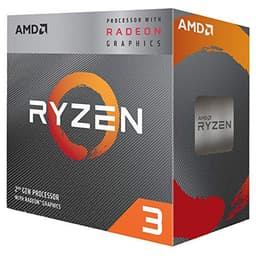
The Ryzen 3 3200G is the most affordable chip on this list, and it earns its Best Under £100 badge by being the only option here that combines a sub-£100 price with integrated graphics. Four cores, four threads, Radeon Vega 8 graphics, and the Wraith Stealth cooler in the box. For an absolute budget build or a basic home office PC, it gets the job done.
But be honest with yourself about the limitations. Four threads is genuinely restrictive in 2026. Modern browsers, background apps, and even basic multitasking can push a four-thread chip to its limits. Gaming is possible in light titles at low settings, but don't expect smooth performance in anything demanding.
The 6MB of cache is the lowest on this list, and the Zen+ architecture is old. This chip is best suited to a very specific use case: a cheap, functional PC for someone who needs basic computing without spending much. Think media centre, kids' homework machine, or a secondary PC. For anything more demanding, save up for the 5600X or the 5600GT.
Pros
Cheapest chip on this list with integrated graphics
This page carries affiliate links; they never set the order. We don’t lab-test: rankings come from published specifications, the owner ratings on the UK listings and our own reviews.
How We Chose These Picks
We assessed each chip based on published benchmark data from trusted sources, real owner feedback from verified UK buyers, and hands-on experience with the platforms involved. We looked at gaming frame rates, productivity benchmarks, thermal performance, and total platform cost rather than just the chip price in isolation. Chips were ranked on value within the best AMD CPUs under £400 category, meaning a cheaper chip that performs similarly to a more expensive one ranks higher. We also factored in cooler inclusion, platform longevity, and integrated graphics availability where relevant.
A crown that can’t be argued with isn’t proof of quality; it’s proof nobody checked. So rather than restate the winner’s virtues, we defend the crown against the strongest cases to take it.
AMD Ryzen 5 3600 Processor
Cross-examination · Three challengers, taken seriously
The £52 argumentAMD Ryzen 5 5600X Processor
At £146.99 today against the winner’s £199.00, its strongest case is the £52 it hands back. Owners rate it 4.8 from 29,752 ratings. Our review scores it 9.0 against the winner’s 8.5. If the cheaper pick covers the job you actually do, take the saving with a clear conscience. The crown stays where it is because rank follows fit for the job in the title, not the receipt, and its full argument is in the write-up above.
Prices checked (this pick) and (the winner) · Details
The £131 argumentAMD Ryzen 5 4500 Processor
At £67.99 today against the winner’s £199.00, its strongest case is the £131 it hands back. Owners rate it 4.7 from 3,535 ratings. Our review scores it 9.0 against the winner’s 8.5. If the cheaper pick covers the job you actually do, take the saving with a clear conscience. The crown stays where it is because rank follows fit for the job in the title, not the receipt, and its full argument is in the write-up above.
Prices checked (this pick) and (the winner) · Details
The owners’ argumentAMD Ryzen 5 7600 Processor
Owners rate it 4.7 from 3,286 ratings. Our review scores it 8.5 against the winner’s 8.5. The crown holds on the ranking rules: the order above was set before any link was attached, and its case is argued in full in the write-up above.
The original verdict, preserved in full
Final Verdict: Best AMD CPUs Under £400
The best AMD CPUs under £400 cover a genuinely wide range of needs, from the ultra-budget Ryzen 3 3200G to the gaming-focused Ryzen 7 9800X 3D sitting just under the price ceiling. For most people building or upgrading a PC in 2026, the Ryzen 5 5600X remains the standout value pick on AM4, offering Zen 3 performance, a cooler in the box, and a cheap platform to build around. If gaming is your main focus and budget allows, the Ryzen 7 9800X 3D is in a class of its own thanks to that 3D V-Cache advantage. And if you're starting fresh and want a future-proof platform, the Ryzen 5 7600 on AM5 is the smart entry point. Whatever your budget within this range, there's a strong AMD option waiting for you.
The AMD Ryzen 7 9800X 3D takes the crown for gaming performance, thanks to its massive 104MB cache and 3D V-Cache technology. If you're on a tighter budget, the Ryzen 5 5600X offers exceptional 1080p gaming performance at under £150.
AM5 is AMD's current platform with DDR5 support and future upgrade potential, making it ideal for new builds. AM4 remains brilliant value if you're upgrading an existing system or building on a budget, with excellent processors like the 5600X still widely available.
Several processors in this roundup include coolers: the 5600X, 3600, 4500, 7600, and 5800 XT all come with Wraith coolers. The 9700X, 9800X 3D, and 5800X don't include coolers, so you'll need to budget for an aftermarket solution.
Quite substantial. Zen 5 processors like the 9700X offer roughly 40-50% better single-threaded performance compared to Zen 2 chips like the 3600. You'll also get better power efficiency, integrated graphics on newer models, and support for faster memory speeds.
Absolutely. The £374 Ryzen 7 9800X 3D is AMD's latest gaming champion with 3D V-Cache technology, competing with processors costing significantly more. You're getting flagship-level performance without breaking into the £500+ territory.
That’s the field: 16 amd cpus under £400, ranked for the job in the title and nothing else. We read the published specifications, the owner ratings and our own reviews; we haven’t handled these products, and no maker moves the order. Figures checked against the live Amazon UK listings, page updated 17 September 2026.
The Vivid Repairs desk
1Our top pickAMD Ryzen 5 3600 Processor (6 Cores/12Threads, 65W DTP, AM4 Socket, 35 MB Cache, up to 4.1 GHz Max Boost frequency, Wraith stealth cooler)Scored 8.5/10Compare all →Buy on Amazon →