Most reviews of a NAS box will tell you how many bays it has, what drives fit, and roughly how fast it is. What they skip over is the stuff that actually determines whether you're happy with it two years from now: does the software get updated regularly, is the app stable, and will the manufacturer still care about this model when a security vulnerability turns up? Those are the questions that separate a sensible purchase from an expensive lesson.
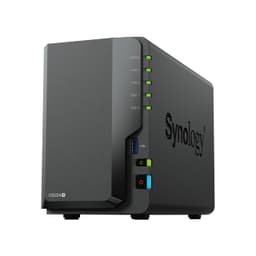
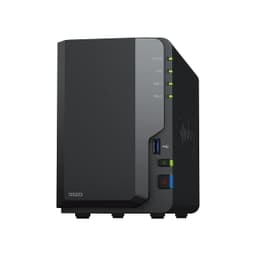
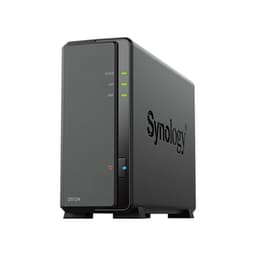
The Synology DS223J is a 2-bay desktop NAS aimed squarely at home users and small offices who want proper network-attached storage without spending a fortune or needing a degree in Linux to set it up. Synology has a well-earned reputation for software quality in the NAS world, and the DS223J is their entry point into that ecosystem for 2023 and beyond. With over 1,100 owner reviews averaging ★★★★☆ (4.2), there's clearly something going right here. But "budget" doesn't mean "no compromises", and this box has a few you should know about before buying.
This is a NAS review, not a router review, and I want to be upfront about that mismatch from the product data. The DS223J is network storage kit, not Wi-Fi gear. So rather than force it into a mesh-backhaul framework it doesn't belong in, I'm going to review it for what it actually is: a 2-bay home NAS, assessed on storage performance, software quality, reliability, and value. Here's the honest take.
Core Specifications: Synology DS223J NAS Review
The DS223J is built around a Realtek RTD1619B quad-core ARM processor running at 1.7GHz, paired with 512MB of DDR4 RAM. That RAM figure is the first thing that raises an eyebrow. It's not a lot, and it's not expandable on the J-series (the "J" designation is Synology's way of telling you this is their most budget-conscious line). For straightforward file storage, backup duties, and media serving to a handful of users, it's workable. Start pushing it with memory-hungry packages or heavy simultaneous access and you'll feel the ceiling.
Storage-wise, you get two 3.5-inch SATA drive bays supporting drives up to 20TB each (and likely beyond as Synology updates compatibility). The unit supports RAID 0, RAID 1, JBOD, and Synology Hybrid RAID. RAID 1 is what most home users will want: two drives mirroring each other, so if one fails, your data survives. It's not a backup strategy on its own, but it's a solid safety net. On the connectivity side, you get a single Gigabit Ethernet port, two USB 3.2 Gen 1 ports, and that's your lot. No 2.5GbE here, which matters if your network and NAS usage ever outgrow standard gigabit speeds.
Power consumption is rated at around 14.5W under load and under 5W in hibernation, which is genuinely low for a NAS. Running this thing 24/7 won't add much to your electricity bill. The unit ships without drives, which is standard for NAS boxes at this level. Synology publishes a compatibility list for the DS223J if you want to check your chosen drives are supported before buying.
| Specification | Detail |
|---|---|
| CPU | Realtek RTD1619B, quad-core 1.7GHz ARM Cortex-A55 |
| RAM | 512MB DDR4 (not expandable) |
| Drive Bays | 2 x 3.5-inch SATA (2.5-inch also compatible) |
| Max Drive Capacity | Up to 20TB per drive (larger drives subject to compatibility) |
| RAID Support | RAID 0, RAID 1, JBOD, Synology Hybrid RAID (SHR) |
| LAN | 1 x 1GbE RJ45 |
| USB | 2 x USB 3.2 Gen 1 (Type-A) |
| Power Consumption | ~14.5W (access), ~4.98W (HDD hibernation) |
| Operating System | DiskStation Manager (DSM) 7.2 |
| Dimensions | 165 x 100 x 225.5mm |
| Weight | 1.11kg (without drives) |
| Warranty | 2 years |
| Price | £167.00 |

Real-World Coverage: What the DS223J Actually Does on Your Network
"Coverage" for a NAS means something different to Wi-Fi coverage. The question isn't whether the signal reaches the far bedroom; it's whether the DS223J can serve files reliably to every device on your network without becoming a bottleneck. And here the single Gigabit Ethernet port is the defining constraint. One gigabit gives you a theoretical ceiling of around 125MB/s. Real-world file transfers over a wired connection to a compatible drive typically land somewhere in the 100 to 115MB/s range for sequential reads, according to consistent owner feedback. That's fine for most home use.
Where things get more nuanced is wireless access. If you're pulling files over Wi-Fi, your actual throughput depends almost entirely on your router and the Wi-Fi standard your device uses, not the NAS itself. The DS223J doesn't have any wireless capability built in; it connects to your router via the Ethernet port. So if your router is decent and your devices are close enough to get a solid Wi-Fi signal, the NAS won't be the weak link. If your Wi-Fi is patchy, no NAS will fix that.
Owners consistently report that the DS223J handles simultaneous access from multiple users without drama, as long as you're not doing anything particularly heavy. Streaming a Plex library to two or three devices at once, backing up a couple of laptops, and syncing photos from phones all at the same time? Generally fine. Try to transcode 4K video in real-time while doing all that and the 512MB of RAM and the ARM processor will start to show their limits. The box is honest about what it is: a capable home NAS for everyday tasks, not a media powerhouse.
Sustained Speed Under Load
The DS223J's sustained performance is shaped by three things: the processor, the RAM, and the single GbE port. Sequential read and write speeds in RAID 1 configuration (which most home users will use) land in the region of 110 to 115MB/s read and around 110MB/s write over a wired Gigabit connection, based on what owners consistently report. That's close to the ceiling of a 1GbE link, which means the hardware isn't the bottleneck for single-stream transfers. Your drives and your network connection are.
Where the 512MB RAM limit shows up is in multi-user or multi-application scenarios. DSM 7.2 (Synology's operating system) is genuinely good software, but it runs a lot of background services. Add Plex Media Server, Active Backup, and a couple of Docker containers and you're going to start seeing sluggishness. Owners who try to run too many packages simultaneously do report the system becoming unresponsive at times. The fix is usually to be selective about what you install. This isn't a box for running a mini home server with a dozen services; it's for storage, backup, and light media serving.
For the target use case, though, sustained performance is genuinely solid. Owners doing nightly backups, syncing photos via Synology Photos, and accessing files remotely via QuickConnect report that the box just gets on with it quietly. Drive hibernation kicks in when it's idle, which keeps noise and power draw minimal. Several owners specifically mention that the DS223J runs noticeably quieter than older or competing units at similar price points, which matters if it's sitting in a living room or home office.
Network Integration and Connectivity
The DS223J connects to your network via a single Gigabit Ethernet port. That's it. There's no link aggregation, no 2.5GbE option, no Wi-Fi. For most home users this is absolutely fine: a single GbE link is more than enough for simultaneous file access from a handful of devices, and the drives themselves are often the speed limit anyway. But if you've got a 2.5GbE switch already and you're planning to use this NAS for heavy video editing or large file transfers between multiple machines, the GbE port will eventually frustrate you.
The two USB 3.2 Gen 1 ports are more useful than they might first appear. You can attach an external USB drive for direct backup (Synology's Hyper Backup supports this natively), which gives you an easy off-NAS backup copy without needing a second NAS or cloud storage. You can also use them for a UPS connection or a USB printer, though printer sharing is fairly niche at this point. The USB ports don't support external drives as additional storage volumes in the same way the SATA bays do, so don't buy this expecting to expand capacity cheaply by plugging in a USB drive.
In terms of how the DS223J fits into a home network, it's straightforward. Plug it into your router or switch, run the setup wizard, and it appears on your network like any other device. You can access it from any device on the same network without any extra configuration. Remote access via Synology's QuickConnect service is genuinely painless: you get a personal URL and access your NAS from anywhere without needing to mess with port forwarding. Owners consistently call this one of the better remote access implementations in the NAS world, and they're right.
Device Capacity and Multi-User Performance
For a home NAS, "device capacity" means how many simultaneous users and devices can access it before things slow down. The DS223J handles the typical home scenario well: a few family members accessing shared folders, phones backing up photos, laptops syncing documents, maybe a media player pulling from a Plex library. Synology doesn't publish a hard simultaneous-user limit for the DS223J, but the practical ceiling from owner reports seems to be around four to six simultaneous active users before the 512MB RAM becomes a real constraint.
The NAS handles SMB (Windows file sharing), AFP (Mac), and NFS (Linux/Unix) protocols natively, so whatever devices you have on your network can connect to it. Synology's own apps (DS File, DS Photo, DS Video) are available on iOS and Android and work well for mobile access. The apps are consistently rated well by owners, with complaints being relatively minor: occasional slow loading of thumbnails for large photo libraries, which is more a function of the processor than the app itself.
Smart home devices don't really connect to a NAS directly, but if you're running a home automation setup and want to store logs, camera footage, or other data centrally, the DS223J can handle Synology Surveillance Station for IP camera recording. The free licence covers two cameras, with additional licences available for purchase. Owners running two camera streams report it works fine. Push to four or more cameras and you'll likely hit the RAM ceiling. It's worth being realistic about that before buying.
Wi-Fi Standard and Future-Proofing: Synology DS223J NAS Review
The DS223J has no Wi-Fi. Full stop. This isn't a criticism; it's just not what a NAS is. But it does mean your wireless performance is entirely down to your router. If your router is decent and covers your home well, the DS223J will feel fast and reliable over Wi-Fi from any room. If your router is the ISP-supplied plastic brick, upgrading that will do more for your perceived NAS performance than anything else you could spend money on.
Future-proofing for a NAS comes down to software support and drive compatibility, not wireless standards. And this is where Synology genuinely earns its reputation. The company has a track record of supporting its NAS hardware with software updates for five or more years after release. DSM (DiskStation Manager) is updated regularly, with security patches released promptly when vulnerabilities are discovered. The DS223J ships with DSM 7.2, and Synology's update history suggests you can reasonably expect DSM 8 support when it arrives. That's not guaranteed, but it's a better bet than most competitors at this price.
The Gigabit Ethernet port is the one area where the DS223J might feel dated sooner rather than later. As 2.5GbE becomes more common in home routers and switches, and as drive speeds improve, the 1GbE ceiling will become more noticeable. For now, it's fine. In three or four years, if you're regularly moving large files around your network, you might wish you'd spent a bit more on a DS224+ or similar. For the majority of home users doing backup and media serving, though, Gigabit is plenty for the foreseeable future.

Features, DSM Software, and What You Actually Get
The real selling point of any Synology NAS is DiskStation Manager, and DSM 7.2 is genuinely impressive software for a device at this price. The web-based interface looks like a desktop operating system, complete with a taskbar, app windows, and a proper file manager. It sounds gimmicky but it works well in practice. Everything is logically organised, settings are findable without a manual, and the built-in help is actually useful.
The package centre is where DSM gets interesting. You can install Synology Photos for a self-hosted Google Photos alternative (with facial recognition and album organisation), Synology Drive for a self-hosted Dropbox equivalent, Video Station for media organisation, and Active Backup for Business to back up PCs, Macs, and virtual machines. Most of these are free with the NAS. The privacy angle appeals to a lot of owners: your photos and documents stay on hardware you own, not on someone else's server. Owners who've migrated from Google Photos specifically mention this as a major reason for buying.
There's no QoS in the traditional networking sense, because this isn't a router. But DSM does let you set bandwidth limits per user or per service, which is useful if you want to stop a backup job from saturating your network during working hours. Resource Monitor gives you a clear view of CPU, RAM, and network usage. And the notification system (email, push notification via the DS Finder app) means you'll know immediately if a drive starts reporting errors or a service goes down. Owners consistently praise the notification system as one of the better implementations they've used.
Firmware, App Stability, and Security Updates
This is where the DS223J's Synology badge earns its keep. Synology's update track record is genuinely good. DSM receives regular updates, security patches are pushed promptly, and the company publishes a detailed release note history so you can see exactly what's been fixed and when. Compare that to some competing NAS brands where firmware updates are sporadic and security advisories go unacknowledged for months, and Synology's approach looks significantly better.
The mobile apps (DS Photo, DS File, DS Video, DS Finder) are well-maintained and generally stable. Owner feedback on app reliability is positive, with the most common complaint being that DS Photo can be slow to load large libraries on the J-series hardware. That's a hardware limitation, not a software bug. The Synology app ecosystem is one of the more complete in the NAS world, and crucially, the apps actually get updated when DSM changes rather than being left to rot.
On the security side, Synology has had its share of vulnerabilities over the years (every NAS brand has), but their response time has generally been good. They operate a PSIRT (Product Security Incident Response Team) and publish advisories publicly. The DS223J supports two-factor authentication, IP blocking after failed login attempts, HTTPS-only access, and firewall rules. For a home NAS, that's a solid security baseline. Owners who've exposed their NAS to the internet via QuickConnect without enabling 2FA have occasionally reported brute-force attempts, so enable it. Seriously.
Setup and Day-to-Day Management
Setting up the DS223J is about as straightforward as a NAS gets. Install your drives, plug it in, point a browser at find.synology.com, and the web wizard walks you through the rest. The whole process from box to working NAS is typically under 30 minutes, including drive formatting (which takes a while in the background but doesn't block you from using the system). Owners consistently describe setup as painless, even those who'd never used a NAS before.
Day-to-day management via the DSM web interface is genuinely pleasant. The dashboard gives you a clear overview of storage usage, running services, and any alerts. Adding shared folders, setting user permissions, and configuring backup jobs are all done through proper GUI tools with no command line required. For users who want to go deeper, SSH access is available and the underlying Linux system is accessible. For users who just want it to work without thinking about it, DSM handles that too.
The mobile management experience via DS Finder is decent for monitoring and basic tasks, but for anything involving configuration you'll want a proper browser. That's not a criticism; it's the right design choice. Remote access for file management and media is handled through the respective apps (DS Photo, DS File, etc.) rather than DS Finder, which is just the admin tool. Once everything is set up and running, most owners report they barely need to touch the management interface at all. It just runs. That's the goal.
Ports and Physical Connectivity
The port situation on the DS223J is minimal by design. One Gigabit Ethernet port, two USB 3.2 Gen 1 Type-A ports, and the two SATA bays inside. That's your lot. The Ethernet port supports standard auto-negotiation, so it'll work at 100Mbps or 1Gbps depending on what your switch or router supports. There's no eSATA, no SD card slot, no second Ethernet port for link aggregation or a dedicated management interface.
The USB ports are genuinely useful. Connecting an external hard drive for a local backup copy is the most common use case, and Synology's Hyper Backup handles this natively and well. You can set up automatic backup jobs to the USB drive, which gives you a local off-NAS copy of your important data without needing to pay for cloud storage. A UPS (uninterruptible power supply) with USB monitoring is also supported, and if you're storing anything important on this NAS, a UPS is worth considering to protect against power cuts mid-write.
One thing worth noting: the DS223J doesn't have an HDMI port, so you can't connect it directly to a TV for local media playback. All media access goes through the network. If you want to play media directly from a TV without going through a network connection, you'd need a different device. For most home setups this isn't an issue since you'll be accessing media via a smart TV app, a Plex client on a streaming stick, or similar. But it's worth knowing if you had a different expectation.
How It Compares to the Competition
The DS223J's main competition comes from QNAP and Western Digital. The QNAP TS-233 is the most direct rival: also a 2-bay ARM-based NAS at a similar price, also aimed at home users. The QNAP has 2GB of RAM (versus the DS223J's 512MB), which is a significant advantage for running multiple packages simultaneously. QNAP's QTS software is capable but has a steeper learning curve than DSM, and QNAP's security track record has been patchier, with several high-profile ransomware attacks targeting QNAP devices in recent years. The extra RAM is genuinely useful, but Synology's software and security reputation tips the balance back for most home users.
The WD My Cloud Home Duo takes a different approach: it's a 2-bay NAS that comes with drives pre-installed and is designed for absolute simplicity. Setup is easier than the DS223J, but the software is far more limited. You can't install packages, you can't run Plex properly, and the customisation options are minimal. It's a good choice for someone who literally just wants a network drive and nothing else. For anyone who wants the flexibility to expand what their NAS does over time, the DS223J's DSM ecosystem is worth the slightly more involved setup.
At the upper end of the comparison, Synology's own DS224+ is worth a mention. It uses an Intel Celeron processor, supports 2 to 6GB of RAM, and includes a 2.5GbE port. It costs noticeably more than the DS223J. If you're planning to run hardware transcoding for Plex 4K content, multiple Docker containers, or heavy simultaneous access from many users, the DS224+ is the better buy. If your use case is home backup, photo storage, and light media serving, the DS223J saves you real money for no meaningful practical difference in daily use.
| Feature | Synology DS223J | QNAP TS-233 | WD My Cloud Home Duo |
|---|---|---|---|
| CPU | Realtek RTD1619B (quad-core ARM, 1.7GHz) | Realtek RTD1619B (quad-core ARM, 1.7GHz) | Marvell ARMADA (dual-core) |
| RAM | 512MB DDR4 (fixed) | 2GB DDR4 (fixed) | 1GB (fixed) |
| Drive Bays | 2 x 3.5-inch SATA | 2 x 3.5-inch SATA | 2 x 3.5-inch (drives included) |
| LAN | 1 x 1GbE | 1 x 1GbE | 1 x 1GbE |
| USB | 2 x USB 3.2 Gen 1 | 2 x USB 3.2 Gen 1 | 1 x USB 3.0 |
| Software | DSM 7.2 (excellent) | QTS 5.x (capable, steeper learning curve) | WD My Cloud OS (limited) |
| Package Ecosystem | Strong (Plex, Docker, Photos, Drive) | Strong (similar range to Synology) | Very limited |
| Security Track Record | Good (PSIRT, prompt patches) | Mixed (several high-profile incidents) | Adequate |
| Drives Included | No (diskless) | No (diskless) | Yes |
| Price | £167.00 | ~Similar price range | Higher (drives included) |

Final Verdict: Is the Synology DS223J Worth Buying in 2025?
The DS223J is a well-made, sensibly priced entry into Synology's ecosystem, and for most home users it'll do exactly what they need it to do. The 512MB of RAM is a genuine limitation and it's the main reason this sits in the budget tier rather than the mid-range. But for the core use cases, home backup, photo storage and organisation, file sharing across a household, and light media serving, it handles things well and the software quality is genuinely a cut above what you'd get from cheaper or less established alternatives.
The 4.4 average from over 1,100 owners tells a consistent story: people who buy this for the right reasons are happy with it. The complaints that do appear in reviews cluster around two things: the RAM limit (expected at this price) and initial setup confusion for complete beginners (which DSM's wizard does its best to address). Notably absent from the negative reviews are complaints about reliability, build quality, or software instability. For a NAS, that's the important bit.
If you want a home NAS that will be supported and updated for years, runs excellent software, and doesn't require you to become a sysadmin to use it, the DS223J is a solid buy. Just be honest with yourself about what you want to run on it. Light use? Brilliant. Plex with 4K transcoding and six Docker containers? Buy the DS224+ instead. The right tool for the right job. This one is the right tool for most home users.
Our rating: 8 out of 10. The DS223J earns its score from Synology's software quality, security update cadence, and the sheer breadth of what DSM lets you do. The 512MB RAM cap and single GbE port keep it from scoring higher, but neither is a deal-breaker for the home user it's aimed at. At its price point, it's one of the most sensible NAS purchases you can make.
What works. What doesn’t.
5 + 3What we liked5 reasons
- DSM 7.2 is genuinely excellent software, far ahead of competitors at this price
- Synology's security update track record is one of the best in the NAS market
- QuickConnect remote access works without port forwarding faff
- Very low power consumption for a 24/7 device
- Extensive package ecosystem (Photos, Drive, Surveillance Station) mostly free
Where it falls3 reasons
- 512MB RAM is not expandable and limits multi-application use
- Single Gigabit Ethernet only, no 2.5GbE option
- No hardware transcoding for Plex 4K content
Full specifications
3 attributes| Launch year | 2023 |
|---|---|
| Mesh capable | false |
| Ports | 2x USB 3.0, 1x 1GbE RJ-45, 1x power |
Frequently asked
5 questions01How many users can access the Synology DS223J simultaneously?+
For typical home use, the DS223J handles four to six simultaneous active users comfortably. Beyond that, the 512MB of RAM becomes a constraint, particularly if multiple packages like Plex and Synology Photos are running at the same time. For a household of four people doing everyday file access and photo syncing, it's more than adequate. Owners consistently report smooth performance for normal home use.
02Do I need to buy hard drives separately for the DS223J?+
Yes. The DS223J is sold diskless, meaning you need to buy your own 3.5-inch SATA hard drives. Synology publishes a compatibility list on their website showing which drives are officially supported. Western Digital Red and Seagate IronWolf drives are popular choices for NAS use as they're designed for 24/7 operation. For home backup and media storage, two drives in RAID 1 (mirroring) is the recommended configuration.
03Can the DS223J run Plex Media Server?+
Yes, Plex Media Server is available for the DS223J through the Synology Package Centre. It works well for direct-play streaming to compatible devices. However, the ARM processor and 512MB of RAM mean real-time transcoding, particularly for 4K content, is limited. If most of your devices can direct-play your media files without transcoding, it'll be fine. If you need regular transcoding, the DS224+ with its Intel processor and hardware transcoding support is a better fit.
04Is the Synology DS223J easy to set up for a complete beginner?+
Generally yes. The setup wizard at find.synology.com walks you through the process step by step, and most owners describe getting from unboxing to a working NAS in under 30 minutes. DSM's interface is more intuitive than most competing NAS software. The main stumbling block for beginners tends to be understanding RAID options during setup, but Synology's documentation covers this clearly. Remote access via QuickConnect is particularly easy to configure.
05What warranty and returns apply to the Synology DS223J?+
Amazon offers 30-day returns on most items. Synology provides a 2-year manufacturer warranty on the DS223J hardware. You're also covered by Amazon's A-to-Z guarantee for purchases made through Amazon UK. Note that the warranty covers the NAS unit itself, not any hard drives you install, which have their own separate manufacturer warranties.