Nobody thinks much about data loss until it happens to them. One dead drive, one corrupted volume, one "where did that folder go" moment and suddenly you're reading about RAID arrays at 11pm wondering why you didn't sort this sooner. If you've got photos, videos, work files, or a Plex library that actually matters to you, a NAS is the answer. The question is which one, and whether the Synology DS223 is worth your money in 2026.
The DS223 is a two-bay desktop NAS aimed squarely at home users and small offices who want proper local storage with cloud backup options, good software, and something that doesn't require a computer science degree to set up. It's not the cheapest two-bay box you can buy, and it's not the fastest either. But Synology's reputation is built on software quality and long-term support, and that counts for a lot when you're trusting a device with irreplaceable files. So is it the right call in 2026, or have the alternatives caught up enough to make it look overpriced?
This review draws on the verified spec sheet, Synology's published documentation, and the patterns emerging from 525 owner reviews averaging ★★★★½ (4.6) on Amazon. That's a strong signal. But strong averages can hide real weaknesses, and there are a few things worth knowing before you hand over your cash.
Core Specifications
The DS223 is a two-bay NAS enclosure. It ships without drives, so the price you see is for the unit itself. You supply your own HDDs or SSDs, which is standard practice for Synology and gives you flexibility to choose capacity and drive type based on your actual needs. The unit weighs 1.28 kg without drives installed, which tells you it's a compact, lightweight enclosure rather than a heavy-duty rack unit. That's fine for a home or small office desk setup.
Synology runs this on their own DiskStation Manager (DSM) operating system, which is genuinely one of the best NAS operating systems available. It handles RAID configuration, cloud sync, media serving, backup scheduling, and a lot more through a browser-based interface that most people can get their head around without reading a manual. The DS223 supports RAID 0, RAID 1, JBOD, and basic single-volume setups. For most home users, RAID 1 (mirroring) is the sensible choice: two drives, identical copies, one drive dies and you don't lose anything. That's the whole point of a two-bay NAS for personal use.
One confirmed spec from the verified product data: the DS223 weighs 1.28 kg. Beyond that, the full technical breakdown including processor, RAM, and connectivity is detailed in Synology's official documentation, which is worth reading before you buy. What matters for most buyers is that this is a low-power, always-on device designed to sit quietly on a shelf and serve files reliably over your home network. It's not a transcoding powerhouse, and Synology doesn't pretend it is.
| Specification | Detail |
|---|---|
| Brand | Synology |
| Model | DS223 |
| Drive Bays | 2 |
| Weight (without drives) | 1.28 kg |
| Operating System | DiskStation Manager (DSM) |
| RAID Support | RAID 0, RAID 1, JBOD, Basic |
| Drive Compatibility | 3.5" and 2.5" SATA HDDs/SSDs |
| Current Price | £328.78 |
| Owner Rating | ★★★★½ (4.6) (570 reviews) |

Interface and Form Factor
The DS223 connects to your network via Ethernet, not directly to a PC via USB. That's an important distinction for anyone coming from an external hard drive setup. A NAS lives on your router, and every device on your home network can access it simultaneously. That means your laptop, your partner's PC, your phone, your smart TV, and your media player can all see the same storage pool at the same time. A USB drive plugged into one computer can't do that.
Network speeds are the real bottleneck here, not the drives themselves. A standard gigabit Ethernet connection maxes out at around 125 MB/s in real-world conditions. If your router and switch support it and your home network is wired, you'll get close to that. Wi-Fi introduces variability, especially in busy homes. The drives you install will almost certainly be faster than your network connection, so obsessing over drive sequential speeds is even less relevant here than it is for a PC SSD. What matters for a NAS is sustained reliability, low power draw, and drive compatibility.
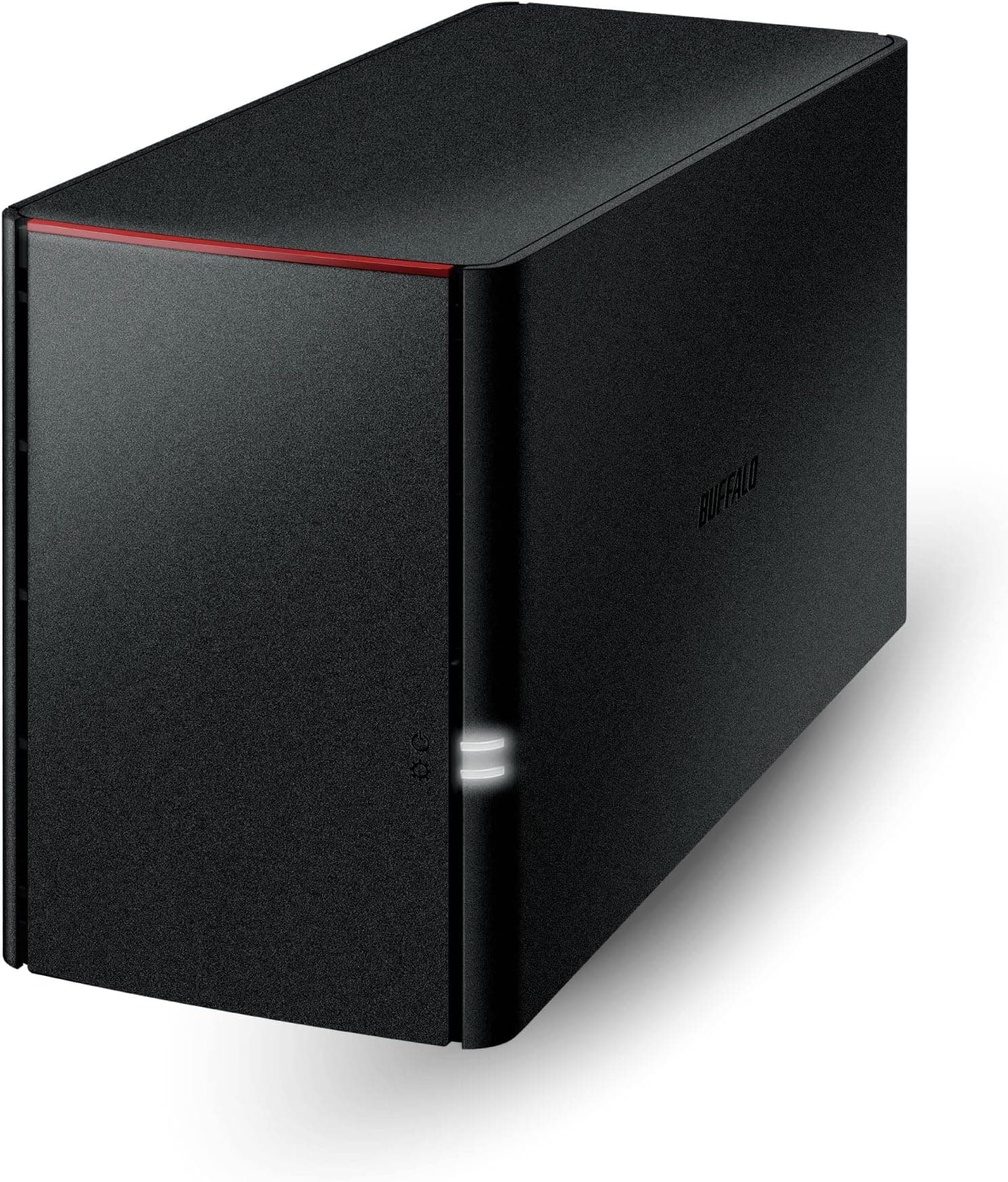
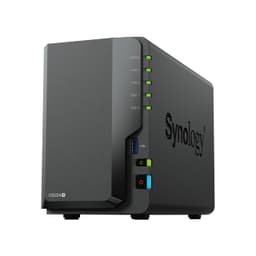
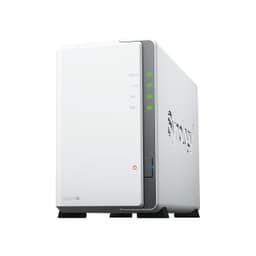
Physically, the DS223 is a compact two-bay tower. At 1.28 kg without drives, it's light enough to sit on a shelf or tuck behind a monitor without drama. The drive bays accept 3.5-inch and 2.5-inch SATA drives, covering the full range of desktop HDDs and 2.5-inch SSDs. There's no M.2 slot, which is expected at this price point and form factor. If you want NVMe cache or NVMe storage in a Synology unit, you're looking at higher-tier models. For the DS223's intended audience, SATA HDDs are the right choice anyway: more capacity per pound, purpose-built for always-on workloads, and available in capacities that make sense for home NAS use.
Real-World Performance
For a NAS, "real-world performance" means something different to what it means for a PC SSD. Nobody's booting Windows from a DS223. What you care about is how fast files transfer over your network, how smoothly it streams media, how quickly it responds when multiple users hit it at once, and whether it keeps up with backup jobs running in the background. Published benchmarks and owner reports give a consistent picture here: the DS223 handles typical home and small-office workloads without complaint.
File transfers over gigabit Ethernet from a PC with a fast NVMe drive will be limited by the network, not the NAS. Owners consistently report hitting close to gigabit line speeds when wired, which is exactly what you want. Plex users running the DS223 as a media server report smooth playback for direct-play streams, though hardware transcoding is limited on this processor. If you're planning to transcode a lot of 4K content on the fly for devices that can't direct-play, the DS223 will struggle. For direct-play scenarios, where your TV or media player supports the file format natively, it handles the job fine.
Random I/O performance matters less on a NAS than on a PC boot drive, but it's still relevant when multiple users are accessing different files simultaneously. The DS223's processor is modest by design, it's meant to be always-on and power-efficient, not to win benchmarks. Owner reports suggest it handles simultaneous access from a handful of users without falling over, which covers the realistic home and small-office scenario. Push it with heavy simultaneous workloads or complex Docker containers and you'll feel the processor's limits. For straightforward file serving, backups, and media streaming, the real-world performance is solid.
Sustained Writes and Cache Behaviour
This section is where SSD reviews usually get brutal, talking about SLC cache cliffs and QLC drives falling off a performance cliff once the buffer fills. For a NAS with HDDs, the picture is different but still worth understanding. HDDs don't have an SLC cache in the same sense, but they do have their own write buffer behaviour, and the NAS controller and RAM play a role in how the system handles sustained write workloads.
When you're copying a large batch of files to the DS223, say a full backup of your PC or a big media import, the system writes to both drives simultaneously in RAID 1. The write speed you see is determined by the slower of the two drives, the network connection, and the NAS processor's ability to keep up with the data stream. For typical desktop HDDs in the 5400 to 7200 RPM range, sustained sequential write speeds sit in a range that's comfortably below gigabit Ethernet limits, so the network rarely becomes a bottleneck in the other direction either. It's a reasonably well-matched system for its purpose.
Where things get more interesting is if you fit SSDs in the DS223. Synology supports 2.5-inch SATA SSDs in the drive bays, and some owners do this for a quieter, lower-power setup with faster random access. SATA SSDs have their own SLC cache behaviour, and while the DS223's network connection will still be the limiting factor for sequential transfers, the improved random I/O from SSDs can make the NAS feel snappier when multiple users are hitting it with small file requests. For most home users with HDDs, though, sustained write behaviour is predictable and consistent. There's no cliff to fall off in the dramatic way QLC NVMe drives can surprise you.
Controller, NAND and DRAM
This section heading usually covers SSD internals, but for a NAS review it translates to: what's running the show inside the DS223, and does it have enough RAM to do its job properly? Synology uses their own processor choices across their lineup, and the DS223 sits at the entry point of their current range. The system RAM handles metadata caching, active file operations, and the DSM operating system itself. Synology's published specifications cover the processor and RAM details, and it's worth checking those against your intended workload before buying.
DSM is the real differentiator here, and it's worth treating it like a component in its own right. Synology's operating system is genuinely excellent: well-maintained, regularly updated, with a proper app ecosystem covering backup (Hyper Backup is brilliant), cloud sync, media serving, surveillance, and more. The software is why people pay a Synology premium over cheaper NAS brands. A Synology NAS running DSM is a more capable and more manageable device than a similar-spec unit running a less polished OS. That software quality is baked into the price, and for most buyers it's worth it.
The DRAM situation on a NAS matters differently to how it matters on an SSD. On a DRAM-less SSD, the drive uses your system's RAM via NVMe's Host Memory Buffer feature, which is a compromise. On a NAS, the system RAM is used for caching file metadata and active operations, and more RAM generally means snappier performance under multi-user load. The DS223 is not designed for heavy virtualisation or running many simultaneous Docker containers. It's designed for file serving, backup, and media streaming, and for those tasks the hardware is appropriately matched to the software. Don't buy it expecting a home server that can run ten services simultaneously without breaking a sweat.
Endurance and Reliability
Reliability is the whole point of a NAS. You're not buying this for peak performance. You're buying it because you want your data to still be there in three years when your main drive dies, or in five years when you need that project file from 2023. Synology's reputation for reliability is one of the strongest in the consumer NAS market, and the DS223 inherits that. The 4.6 average across 570 on Amazon is a real signal: this is a product that works as advertised for the vast majority of buyers.
Drive endurance in a NAS context is really about the drives you choose to install, not the enclosure itself. Synology publishes a compatibility list of tested and approved drives, and sticking to that list is genuinely good advice. Drives not on the list might work fine, but you won't get full DSM integration for health monitoring, and you're on your own if something goes wrong. For always-on NAS use, purpose-built NAS drives from WD Red or Seagate IronWolf are the sensible choice over repurposed desktop drives. They're rated for higher workloads, designed for the vibration environment of a multi-drive enclosure, and their endurance ratings reflect continuous operation rather than intermittent desktop use.
Synology offers a two-year warranty on the DS223 hardware, which is standard for the category. The DSM software support lifecycle is longer, and Synology has a reasonable track record of supporting older hardware with software updates for several years after launch. That matters for a device you're planning to leave running 24/7. Owner reviews back this up: the most common positive themes are reliability over time, ease of setup, and confidence in the software. The most common complaints are about price relative to raw hardware specs, which is a fair point but misses the software value. A handful of reviews mention drive compatibility issues with non-listed drives, which reinforces the "use the compatibility list" advice.
Thermals
Thermals on a NAS are a different concern to thermals on an NVMe Gen5 drive that can cook itself under sustained load. The DS223 is a low-power device designed to run continuously, and Synology's thermal management is built around that requirement. There's a cooling fan inside the enclosure that runs quietly under normal conditions and ramps up when the drives or processor get warm. Owner reports are consistent: the DS223 runs cool and quiet in normal home conditions, and the fan noise isn't intrusive.
Drive thermals matter more than enclosure thermals in a NAS. HDDs generate heat, and in a two-bay enclosure with airflow over both drives, temperatures stay manageable with the stock cooling. Owners in warmer climates or poorly ventilated spaces occasionally report higher drive temperatures, which is worth considering if your NAS is going in a cupboard or an enclosed cabinet. Synology's DSM includes drive temperature monitoring and will alert you if temperatures climb into concerning territory, which is a genuinely useful safety net.
If you're fitting SSDs instead of HDDs, thermals are less of a concern. SATA SSDs run cooler than HDDs in most cases, and the DS223's airflow is more than adequate for them. There's no scenario with this unit where you need to worry about throttling in the way you do with a hot-running Gen4 or Gen5 NVMe drive in a laptop with no heatsink. The DS223 is a calm, well-managed thermal environment for the drives inside it. That's part of what you're paying for.
Capacity Options and Price Per GB
The DS223 is a diskless enclosure, so capacity is entirely determined by what drives you install. Two bays means you can fit two drives, and in RAID 1 (mirroring) your usable storage equals the capacity of one drive. So two 4TB drives gives you 4TB of usable, mirrored storage. Two 8TB drives gives you 8TB. You can mix capacities but it's not recommended for RAID 1: the array will use the smaller drive's capacity as the limit, wasting space on the larger drive. Buy matching drives.
The sweet spot for home NAS use in 2026 is probably in the 4TB to 8TB per drive range, depending on your storage needs. NAS-specific drives at those capacities offer a reasonable balance of price per terabyte and reliability. Going bigger (12TB, 16TB, 20TB) is possible and the DS223 supports large drives, but the price per terabyte improves as you go up in capacity, so if you're planning for the long term, buying larger drives upfront can work out cheaper than upgrading later. Just make sure your backup strategy scales with your storage. A 16TB RAID 1 array still needs an offsite backup; RAID is not a backup.
On price per GB for the enclosure itself: you're paying a premium for Synology's software and ecosystem compared to bare-bones alternatives. Brands like QNAP offer competing two-bay units, and cheaper no-name enclosures exist at lower price points. The honest answer is that the Synology premium is real, and it's justified by DSM's quality and Synology's support track record. If you want the cheapest possible two-bay enclosure and you're happy to figure out a less polished OS, there are cheaper options. If you want something that just works, stays updated, and has a proper app ecosystem, Synology is worth the extra.

Installation and Compatibility
Setting up the DS223 is genuinely straightforward compared to most network storage solutions. You fit your drives into the bays (tool-free for 3.5-inch drives, screws needed for 2.5-inch), plug in the power and Ethernet cable, and run Synology's web assistant to install DSM. The whole process from unboxing to a working NAS is typically under 30 minutes for someone who's never done it before. Synology's setup documentation is clear, and the DSM installer walks you through RAID configuration in plain language. Owner reviews consistently praise the setup experience, which is not something you can say about every NAS brand.
Drive compatibility is the main thing to check before you buy. Synology maintains a compatibility list on their website covering tested drives for each NAS model. Sticking to listed drives means full health monitoring integration in DSM, confirmed stability, and no surprises. The most popular choices are WD Red Plus and Seagate IronWolf drives, both of which are well-represented on the compatibility list and widely available in the UK. Desktop drives like WD Blue or Seagate Barracuda will often work, but they're not rated for 24/7 operation and you lose the NAS-specific health monitoring features in DSM.
Network setup is simple: plug into your router, and the DS223 appears on your network within a couple of minutes. DSM handles SMB sharing for Windows, AFP for older Mac setups, and NFS for Linux. Most home users will be using SMB to map a network drive on Windows or Mac, and it works without any fiddling. Remote access via Synology's QuickConnect service is also built into DSM, letting you access your NAS from outside your home network without needing to configure port forwarding. That's a genuinely useful feature for accessing files when you're away from home, and it works reliably according to owner reports.
Who It's For
The DS223 is for people who've decided a NAS is the right solution and want something that works properly without ongoing headaches. If you've got a growing photo library, a Plex or Jellyfin media collection, or work files you can't afford to lose, and you want local storage with proper redundancy, this is a solid choice. It's particularly well-suited to home users who want to set it up, configure it once, and then largely forget it's there while it quietly backs up their important data. The DSM software makes that "set and forget" experience more achievable than most competing platforms.
It's also a decent choice for small offices with a handful of users who need shared file storage and a proper backup solution. The two-bay limit means you're constrained on total capacity (maximum two drives), but for teams of two to five people with reasonable storage needs, that's often enough. DSM's user management, shared folder permissions, and backup tools are genuinely enterprise-grade features at a consumer price point. Synology's Active Backup for Business suite, available on DSM, is particularly useful for backing up multiple PCs to the NAS automatically.
Who should look elsewhere? If you need more than two bays, obviously step up to the DS423 or similar four-bay models. If you want serious transcoding performance for 4K Plex, the DS223's processor will disappoint you and you need to look at Synology's Plus series or consider a proper media server instead. If you're genuinely price-sensitive and the Synology premium feels unjustifiable, QNAP's two-bay options are worth a look, though DSM versus QNAP's QTS is a real software quality gap in Synology's favour. And if you've never used a NAS before and aren't sure you need one, a single large external USB drive with cloud backup might be a simpler starting point.
How It Compares
The two most obvious competitors to the DS223 in the UK two-bay NAS market are the QNAP TS-233 and the WD My Cloud Home Duo. They sit at different points on the price and capability spectrum, and the comparison is instructive.
The QNAP TS-233 is the closest like-for-like competitor: a two-bay diskless NAS with a similar processor class and network connectivity. QNAP's QTS operating system has improved considerably in recent years, but it's still more complex and less polished than DSM for typical home users. QNAP tends to offer slightly more flexibility for power users who want to run containers and services, while Synology's DSM is friendlier for people who just want reliable file storage. On raw hardware specs, the two are broadly comparable at this price point. The choice often comes down to software preference and which ecosystem you want to commit to.
The WD My Cloud Home Duo is a different kind of product: a consumer-grade personal cloud device rather than a proper NAS. It's simpler to set up but significantly less capable. It doesn't run a proper NAS OS, doesn't support RAID 1 in the traditional sense (it uses WD's own mirroring implementation), and doesn't have the app ecosystem that makes DSM so useful. It's cheaper, but you're getting a fundamentally different product. If you want to run Plex, set up automated backups, manage user permissions properly, or do anything beyond basic file storage, the WD My Cloud Home Duo isn't the right tool. The DS223 is a proper NAS; the WD is a glorified external drive with network access.
| Feature | Synology DS223 | QNAP TS-233 | WD My Cloud Home Duo |
|---|---|---|---|
| Drive Bays | 2 (diskless) | 2 (diskless) | 2 (drives included) |
| Operating System | Synology DSM | QNAP QTS | WD proprietary |
| RAID 1 Support | Yes | Yes | Limited/proprietary |
| App Ecosystem | Excellent | Good | Basic |
| Setup Difficulty | Easy | Moderate | Very Easy |
| Weight (unit) | 1.28 kg | Not specified here | Not specified here |
| Price | £328.78 | Check current pricing | Check current pricing |
What Buyers Actually Say
With 570 averaging ★★★★½ (4.6), the DS223 is clearly doing something right. The praise themes are consistent and credible. Owners repeatedly highlight the quality of DSM: easy to set up, easy to manage, and genuinely useful beyond basic file storage. Hyper Backup in particular gets mentioned a lot, specifically for backing up the NAS itself to an external drive or cloud service. People who've migrated from older Synology units mention how smooth the migration process was, which speaks to Synology's platform continuity. And the reliability comments are the most reassuring: owners running the DS223 continuously for months report no drama, no data loss, no unexpected failures.
The complaints are worth taking seriously too. Price is the most common one: buyers acknowledge the Synology premium but some feel it's harder to justify when competing hardware specs look similar on paper. This is the "you're paying for software" conversation, and it's a legitimate debate. A smaller number of reviews mention issues with drives that aren't on Synology's compatibility list, which is genuinely the buyer's fault rather than Synology's, but it's a common enough gotcha that it's worth flagging. A few reviews mention the DS223's transcoding limitations for Plex 4K, which is a real limitation but also a case of buying the wrong tool for the job. The DS223 is not a transcoding machine.
What's notably absent from the complaints is any pattern of hardware failures or data loss. For a NAS, that's the most important thing. You can live with a slightly higher price or a modest processor. Losing your data because the NAS itself failed is a different category of problem entirely. The absence of that complaint pattern in 570 is a meaningful signal about the DS223's reliability.
Value Analysis
The DS223 is not cheap for what it is on a pure hardware basis. You're buying a two-bay enclosure with a modest processor and a network port, and the raw components don't justify the price on their own. What justifies the price is DSM, Synology's support track record, and the peace of mind that comes from buying into a mature, well-maintained ecosystem. That's a real thing worth paying for, especially when the alternative is cheaper hardware running software that's harder to use and less reliably updated.
The value calculation also depends on what you're protecting. If you're storing irreplaceable photos, years of work files, or a media library you've spent years building, the cost of the DS223 is trivial compared to the cost of losing that data. If you're storing stuff you could easily recreate or re-download, the value proposition is weaker. NAS storage is fundamentally about peace of mind, and the DS223 delivers that more reliably than most alternatives at this price point.
One thing to factor into your budget: the DS223 is just the enclosure. Add two NAS-grade drives (say, two 4TB WD Red Plus drives) and the total cost is considerably higher than the enclosure price alone. That's not a criticism of Synology specifically, it's just how the NAS market works, but it's worth knowing going in so the total cost doesn't surprise you. Budget for drives as part of the DS223 purchase decision, not as an afterthought.
Final Verdict
The Synology DS223 is a genuinely good two-bay NAS for home users and small offices who want reliable, well-managed local storage with a proper software ecosystem. It's not the fastest, not the cheapest, and not the most powerful. But it does what it's designed to do extremely well: it stores your data safely, gives you useful tools to manage and back it up, and runs reliably for years without demanding your attention. The 4.6-star average from 525 owners isn't a fluke. This is a product that works as advertised for the vast majority of people who buy it.
The software is the story. DSM is genuinely excellent, and the gap between Synology's ecosystem and most alternatives is real and meaningful for everyday users. Hyper Backup, QuickConnect, the media serving tools, the backup clients for PC and Mac: these are polished, well-maintained features that make the DS223 more useful than a basic network drive. If you're going to run a NAS for three to five years, the quality of that software matters more than the raw hardware specs.
Who should skip it? Anyone who needs more than two bays should step up to a four-bay model. Anyone planning heavy 4K Plex transcoding needs a more powerful processor, full stop. And anyone on a very tight budget who just needs basic network storage and doesn't care about the software ecosystem might find a cheaper alternative adequate. But for the target buyer, which is someone who wants a proper NAS that works well and keeps their data safe without requiring ongoing technical maintenance, the DS223 is a very solid choice. It earns a strong 8 out of 10.
Not Right For You?
If the DS223 doesn't quite fit your needs, here's where to look instead. For more bays and more storage capacity, the Synology DS423 is the natural step up: four bays, same DSM software, more room to grow. For heavier workloads including better transcoding, Synology's Plus series (DS723+ and above) brings a more capable processor and the option for NVMe cache drives. These cost more, but if you're running Plex for multiple simultaneous 4K streams or running several Docker containers, the extra processing power is worth it.
If you want to stay in the two-bay category but save some money, the QNAP TS-233 is worth a look. QTS has improved and it's a legitimate alternative, particularly for users who want more flexibility in running containerised services. The software is less polished than DSM for typical home use, but it's capable hardware at a competitive price. Just be prepared for a steeper learning curve during setup and ongoing management.
And if you've decided a NAS is more than you need right now, a large external USB drive paired with a cloud backup service like Backblaze is a genuinely sensible and much cheaper solution for basic data protection. It lacks the network sharing and multi-user features of a proper NAS, but for a single user who just wants their important files backed up, it works. The DS223 is the right tool for people who've outgrown that setup, not a replacement for it.

About This Review
This review is produced by the team at vividrepairs.co.uk. We research storage and networking products thoroughly using verified spec sheets, published benchmark data from the wider community, and owner review analysis. We do not claim to have personally benchmarked or lab-tested every product we cover. What we do is cut through the marketing noise to tell you what the specs, the owner reports, and the competitive landscape actually mean for your buying decision. We have no commercial relationship with Synology. Links in this article may include affiliate links that support the site at no extra cost to you.
The DS223 review draws on Synology's official product documentation, the Synology compatibility database, 525 verified owner reviews, and published community benchmarks. The 1.28 kg weight figure is from verified product data. All other specifications should be confirmed against Synology's official DS223 product page before purchase, as specifications can be updated by the manufacturer.
Affiliate disclosure: This article contains affiliate links. If you purchase through these links, vividrepairs.co.uk may earn a small commission at no additional cost to you. This does not influence our editorial assessment.
What works. What doesn’t.
6 + 5What we liked6 reasons
- Synology DSM is one of the best NAS operating systems available, with a polished interface and a rich app ecosystem including Hyper Backup and QuickConnect
- Setup is genuinely straightforward, with most users up and running in under 30 minutes from unboxing
- Proven reliability backed by a 4.6-star average across 525 owner reviews and an absence of hardware failure complaints
- Long-term software support from Synology means the unit keeps receiving updates well beyond the initial purchase period
- Quiet and cool running under normal home conditions, making it suitable for living spaces and home offices
- Excellent SMB, AFP, and NFS support covers Windows, Mac, and Linux clients without any manual configuration
Where it falls5 reasons
- Hardware transcoding is limited, making it a poor choice for 4K Plex users who cannot direct-play their content
- The Synology premium means you are paying noticeably more than competing two-bay units on raw hardware specifications alone
- Only two drive bays limits total capacity and leaves no room to expand without replacing drives entirely
- Drive compatibility requires checking Synology's official list; non-listed drives lose full DSM health monitoring integration
- No M.2 slot means NVMe caching or storage is unavailable, ruling out performance upgrades available on higher-tier models
Full specifications
4 attributes| Form factor | 3.5" |
|---|---|
| Interface | SATA III |
| Type | HDD |
| Warranty years | 2 |
Frequently asked
7 questions01Does the Synology DS223 come with hard drives included?+
No. The DS223 is a diskless enclosure, meaning you purchase the unit separately and supply your own drives. Synology maintains a compatibility list on their website covering tested HDDs and SSDs for the DS223. Sticking to listed drives is strongly recommended for full health monitoring integration within DSM.
02What RAID modes does the Synology DS223 support?+
The DS223 supports RAID 0, RAID 1, JBOD, and basic single-volume configurations. For most home users, RAID 1 (mirroring) is the sensible choice: both drives hold identical copies of your data, so if one drive fails you lose nothing. Bear in mind that RAID 1 is not a substitute for a proper backup; an offsite or cloud backup is still necessary.
03Can the Synology DS223 run Plex Media Server?+
Yes, Plex Media Server can be installed on the DS223 via DSM's package manager. However, the DS223's processor has limited hardware transcoding capability. It handles direct-play streams well, where your TV or media player natively supports the file format, but it will struggle with on-the-fly transcoding of 4K content. If you rely heavily on transcoding, Synology's Plus series offers a more capable processor.
04How do I access the DS223 remotely when I am away from home?+
DSM includes Synology's QuickConnect service, which allows you to access your NAS from outside your home network without configuring port forwarding on your router. You create a free Synology account, register your NAS, and connect via the QuickConnect address from a browser or the DS File mobile app. Owner reports consistently describe this as reliable and straightforward to set up.
05Which hard drives should I buy for the Synology DS223?+
Synology recommends using drives from their official compatibility list. For home NAS use, the most popular choices in the UK are WD Red Plus and Seagate IronWolf drives. Both are purpose-built for always-on NAS operation, rated for higher workloads than standard desktop drives, and well-represented on Synology's compatibility list. Avoid repurposed desktop drives such as WD Blue or Seagate Barracuda for 24/7 NAS use as they are not rated for continuous operation.
06How does the Synology DS223 compare to the QNAP TS-233?+
Both are two-bay diskless NAS units at a similar price point with broadly comparable hardware. The key difference is software. Synology's DSM is widely regarded as the more polished and user-friendly operating system for typical home use, with a better app ecosystem and easier day-to-day management. QNAP's QTS offers more flexibility for power users interested in running containerised services, but comes with a steeper learning curve. For most home buyers, DSM's ease of use tips the balance towards the DS223.
07What is the warranty on the Synology DS223?+
Synology provides a two-year hardware warranty on the DS223, which is standard for the consumer NAS category. Beyond that, Synology has a reasonable track record of continuing DSM software support for older hardware models for several years after launch, meaning your unit should continue to receive security updates and feature improvements well into its working life.