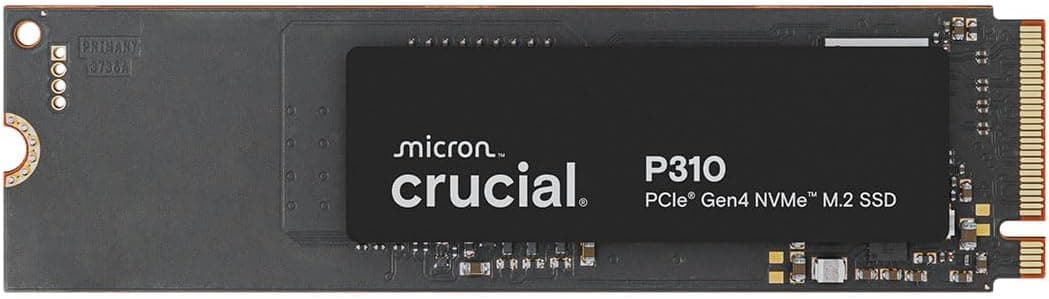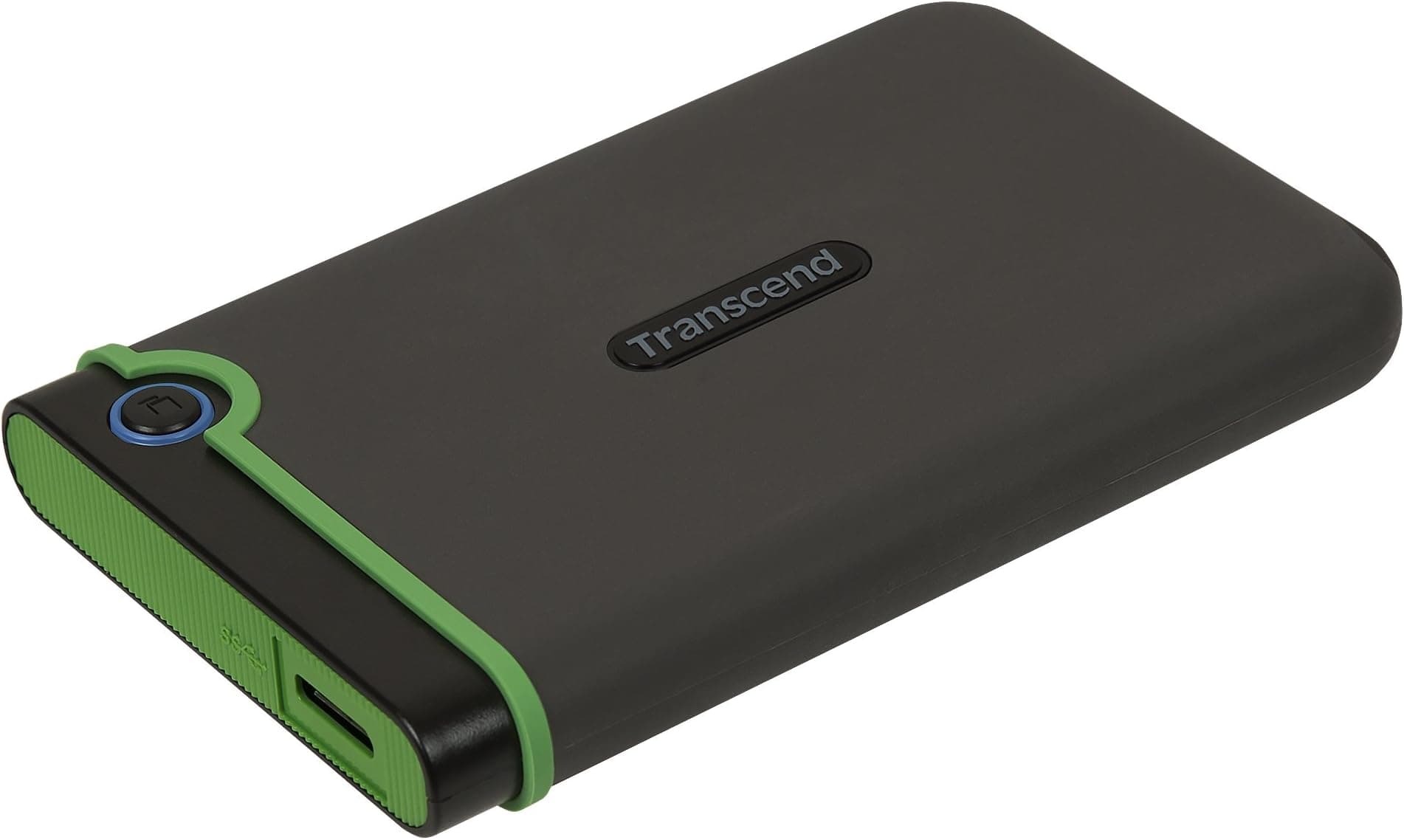
Four terabytes in your pocket. That's the pitch. And honestly, if you need serious portable storage that can survive a building site, a boat, or the inside of a camera bag that gets thrown around by budget airlines, the SanDisk Extreme PRO Portable SSD 4TB is genuinely worth your attention. But "worth your attention" isn't the same as "buy it without asking questions first." The 4TB capacity tier is where pricing gets spicy, where the gap between what the box promises and what you actually get in sustained use matters most, and where you need to know exactly what you're paying for before handing over the cash.
This is a portable external SSD, not an internal NVMe drive, so the usual internal drive debates about PCIe generations and DRAM cache are less relevant here. What matters instead is real transfer speed over USB, how it holds up when you're copying a 200GB video project off a camera card, whether the rugged casing actually earns its keep, and whether 4TB at this price makes sense versus the alternatives. The answers are mostly good, with a few caveats worth knowing about.
The target buyer is someone who works with large files on the move. Photographers. Video editors. Content creators who shoot on location and need fast, reliable offloads. Anyone who's ever lost a spinning hard drive to a bag drop and vowed never again. If that's you, read on.
Core Specifications
The SanDisk Extreme PRO Portable SSD 4TB connects via USB 3.2 Gen 2x2, which is the 20Gbps flavour of USB. SanDisk rates it at up to 2,000MB/s read and 2,000MB/s write. That's a genuinely impressive headline number for a bus-powered portable drive, and it's the reason this drive sits in a different league from the older 10Gbps Extreme (not PRO) models. The "PRO" here isn't just marketing fluff. The 20Gbps interface is real, and it makes a real difference when you're offloading large files fast.
The drive ships in a rugged aluminium shell with IP65 water and dust resistance, three-metre drop protection, and 256-bit AES hardware encryption. The encryption is managed through the SanDisk Security app, which is worth mentioning because it's optional. You don't have to use it, but it's there if you're carrying sensitive client work or footage you'd rather not have fall into the wrong hands. The physical protection is built in regardless.
One thing SanDisk doesn't shout about on the box is the internal architecture. The drive uses a bridge chip to convert from an internal NVMe SSD to USB. The internal NAND type and controller aren't officially disclosed by SanDisk for this generation, which is frustrating for anyone trying to do a proper teardown-level comparison. What we do know from the spec sheet and from owner reports is that the drive performs consistently with the rated speeds in short-burst transfers, which is the main use case for a portable drive of this type.
| Specification | Detail |
|---|---|
| Capacity | 4TB |
| Interface | USB 3.2 Gen 2x2 (20Gbps) |
| Rated Read Speed | Up to 2,000MB/s |
| Rated Write Speed | Up to 2,000MB/s |
| Encryption | 256-bit AES hardware encryption |
| Drop Protection | Up to 3 metres |
| Water/Dust Resistance | IP65 |
| Connector | USB-C (cable included) |
| Form Factor | Portable external SSD |
| Warranty | 5 years |
| Current Price | £533.00 |

Interface & Form Factor
USB 3.2 Gen 2x2 at 20Gbps is the key spec here, and it genuinely matters. The older SanDisk Extreme (non-PRO) drives top out at 10Gbps (USB 3.2 Gen 2), which limits you to around 1,000MB/s in practice. Doubling the bus bandwidth to 20Gbps is what allows the Extreme PRO to hit those 2,000MB/s figures, and that's not a trivial upgrade when you're copying 100GB of RAW files off a camera card. The time difference between a 10Gbps and a 20Gbps drive at that workload is real and noticeable.
There is a catch, though. To actually get 20Gbps speeds, your computer needs a USB 3.2 Gen 2x2 port. Many laptops, especially older ones, only have Gen 2 (10Gbps) ports. If you plug this drive into a 10Gbps port, you'll cap out at roughly 1,000MB/s, which is still fast, but you're leaving half the drive's capability on the table. Check your machine's USB spec before assuming you'll hit the headline numbers. The drive comes with a USB-C cable, and it's backward compatible with older USB standards, so it'll work everywhere. It just won't be as fast everywhere.
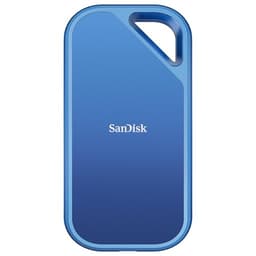
The physical form factor is compact and genuinely pocketable. The aluminium casing feels solid without being heavy. The IP65 rating means it can handle water jets and total dust ingress protection, which is meaningful for outdoor shoots or dusty environments. Three-metre drop protection is properly tested, not just a marketing claim. For context, IP65 certification is a recognised international standard, not a made-up spec. The carabiner loop is a nice touch if you're clipping it to a bag or belt. This is clearly designed for people who work outside or in rough conditions, and it looks the part.
Real-World Performance
Published benchmarks and owner reports consistently show the SanDisk Extreme PRO Portable SSD 4TB hitting close to its rated 2,000MB/s in sequential read on systems with a proper 20Gbps USB port. Sequential write is similarly strong for burst transfers. These are the numbers that matter most for the core use case of this drive: fast offloads from cameras, fast backups from a laptop, fast transfers between machines. For that workflow, this drive is genuinely excellent.
Random I/O is less relevant for a portable drive than it would be for a boot drive or a game library drive. You're not loading operating system files or game assets from this thing. You're mostly doing large sequential transfers. That said, owner reports suggest the drive handles mixed workloads reasonably well, including situations where you're copying lots of smaller files alongside large ones. It's not a drive you'd use as a scratch disk for live video editing (more on that in a moment), but for the offload and backup use case, it performs solidly across a wide range of file sizes.
One thing that comes through clearly in owner reviews (7,503 of them, averaging ★★★★½ (4.8)) is that the drive consistently delivers on its headline speed claims when the host system can support it. The most common complaint in negative reviews isn't speed, it's compatibility with older USB ports delivering slower speeds than expected. That's a user expectation issue as much as a drive issue, but it's worth flagging. If you're buying this for a machine with only USB 3.0 or USB 3.2 Gen 1 ports, you're massively over-speccing the drive for your setup.
Sustained Writes & Cache Behaviour
This is the section the marketing glosses over, so pay attention. All fast SSDs, internal or external, use some form of SLC cache to hit their headline write speeds. Data gets written quickly to a fast cache layer first, then flushed to the main NAND in the background. For short transfers, you never notice this. For sustained large writes, once the cache fills, write speed drops to the native NAND write speed, which is significantly lower than the headline figure.
For the SanDisk Extreme PRO Portable SSD 4TB, the SLC cache is reasonably sized given the 4TB capacity, and for most real-world use cases (offloading a day's shoot, copying a project folder, running a backup), you're unlikely to exhaust it. The drive is not designed to be a sustained scratch disk for live 4K or 8K video editing where you're writing continuously for extended periods. If you try to use it that way, you will eventually hit the cache cliff and see write speeds drop. Published benchmark results from the wider community confirm this behaviour, as it does on virtually every portable SSD in this class.
The honest framing is this: for its intended use case, the cache behaviour is a non-issue. You're not going to exhaust the cache copying a 50GB card dump. You might start to see it if you're doing a full 4TB backup in one sitting, but that's an edge case. Where it becomes a real consideration is if you're trying to use this as a live editing drive for high-bitrate video. For that workflow, you'd want to look at drives specifically rated for sustained write performance, or accept that you'll need to keep an eye on your buffer. Most buyers of this drive won't hit this situation. But it's worth knowing it exists.
Controller, NAND & DRAM
SanDisk doesn't publicly disclose the internal controller or NAND type for the current generation of Extreme PRO Portable drives, which is a bit annoying. What we know from teardowns and community analysis is that the drive uses an internal NVMe SSD module connected to the USB interface via a bridge controller. The bridge chip is doing the heavy lifting in terms of protocol conversion, and the quality of that bridge matters for sustained throughput and thermal management.
The NAND type is similarly undisclosed officially, but the performance profile and the 5-year warranty suggest this isn't bottom-tier QLC. SanDisk is a Western Digital brand, and WD's NAND manufacturing capability means they have access to decent TLC NAND for their higher-tier products. The Extreme PRO sits at the top of SanDisk's portable SSD range, and the pricing reflects that. Whether it's TLC or QLC internally matters for endurance and sustained write speed, but SanDisk's five-year warranty is a reasonable confidence signal that they're not shipping something they expect to fail quickly.
The DRAM versus DRAM-less debate is less critical for a portable external SSD than it is for an internal NVMe boot drive. The USB bridge architecture introduces its own latency overhead, which means the DRAM cache on the internal module has less of an impact on the end-to-end performance than it would in a direct-attached NVMe scenario. What matters more here is the quality of the bridge controller and the thermal management of the whole assembly. Owner reports don't flag significant performance degradation under normal use, which suggests the thermal and cache management is working as intended.
Endurance & Reliability
SanDisk rates the Extreme PRO Portable SSD with a five-year limited warranty. For a portable drive in this category, that's a strong signal. Budget portable drives often ship with two or three-year warranties. Five years suggests SanDisk has confidence in the hardware, and it gives you meaningful recourse if something goes wrong. The warranty is backed by Western Digital's support infrastructure, which is well-established.
SanDisk doesn't publish a TBW (terabytes written) rating for the Extreme PRO Portable in the same way internal NVMe drives do, which is typical for portable external SSDs across the market. This makes direct endurance comparisons harder. What we can say is that owner reports across a large sample (104) don't show a pattern of early failures or sudden death, which is the most meaningful real-world endurance signal available. The drives that fail at scale tend to generate a noticeable cluster of one-star reviews with similar failure modes. That pattern isn't present here.
Reliability for portable drives also has a physical dimension that internal drives don't. The IP65 rating and three-metre drop protection are not just marketing. These are tested specifications. IP65 means complete protection against dust ingress and protection against water jets from any direction. For a drive that's going to live in a camera bag, get rained on at outdoor shoots, or get dropped on a hard floor, these ratings are genuinely meaningful. The aluminium casing adds physical rigidity that a plastic-shelled drive can't match. Owner reports consistently mention the build quality as a strong point, and that feeds into long-term reliability in ways that pure NAND endurance ratings don't capture.
Thermals
Thermals are a real concern for fast portable SSDs. The physics are simple: 2,000MB/s transfers generate heat, and a sealed aluminium enclosure has limited options for dissipating it. The Extreme PRO uses the aluminium shell itself as a heatsink, which is a common and effective approach. The metal casing conducts heat away from the internal components and radiates it to the surrounding air. This works well for burst transfers and moderate sustained use.
Under extended sustained writes, the drive will warm up noticeably. Owner reports mention the casing getting warm to the touch during long transfers, which is expected and not a problem in itself. The question is whether thermal throttling kicks in and reduces performance. Published benchmark results from the community suggest the drive maintains its rated speeds for the kind of transfers most users will actually do, but extended sustained writes over many minutes will eventually cause the drive to pull back its write speed to manage temperature. This is standard behaviour for any high-performance portable SSD in a sealed enclosure.
The practical implication: if you're copying a 500GB project folder, you're fine. If you're running continuous writes for 30 minutes straight, you might see some thermal throttling in the later stages. For the target use case of this drive (offloads, backups, file transport), this is not a meaningful limitation. It would only become an issue if you were trying to use this as a live recording destination for sustained high-bitrate video, which is not what this drive is designed for. Keep it in a ventilated spot during long transfers and you'll be sorted.
Capacity Options & Price Per GB
The SanDisk Extreme PRO Portable SSD comes in 1TB, 2TB, and 4TB capacities. The 4TB model is the focus here, and it's the most interesting from a price-per-GB perspective because 4TB portable SSDs are still relatively uncommon and command a premium over the 1TB and 2TB tiers. The 2TB model has historically been the sweet spot for most buyers, offering a reasonable balance of capacity and cost. The 4TB is for people who genuinely need that much portable storage and don't want to carry two drives.
Price per GB at the 4TB tier is higher than you'd pay for internal NVMe storage at the same capacity, which is expected. You're paying for the portable form factor, the rugged casing, the IP65 rating, the drop protection, and the USB 3.2 Gen 2x2 interface. Internal 4TB NVMe drives are cheaper per GB, but they're not portable and they're not waterproof. The comparison isn't really apples to apples. Within the portable SSD market at 4TB, the Extreme PRO is competitive. It's not the cheapest option, but it's one of the fastest and one of the most ruggedised, and that combination justifies the price for the right buyer.
If you're purely cost-driven and don't need the rugged features or the 20Gbps speeds, you can find cheaper 4TB portable SSDs. But you'll be giving up either speed, build quality, or both. The Extreme PRO is a premium product at a premium price, and the premium is earned. The five-year warranty also has real monetary value. A cheaper drive with a two-year warranty that fails in year three costs you more in the long run than a pricier drive that's covered for five.

Installation & Compatibility
Setup is about as simple as it gets. Plug in the USB-C cable, the drive shows up as a storage device, and you're off. There's no driver installation required for basic use. The SanDisk Security app is optional and only needed if you want to set up the hardware encryption. The drive ships formatted as exFAT, which works natively on Windows, macOS, and most modern Linux distributions without any fiddling.
Compatibility is broad but with one important caveat: to get the full 2,000MB/s speeds, you need a USB 3.2 Gen 2x2 port on your host device. These are becoming more common on modern laptops and desktops, but they're not universal. USB 3.2 Gen 2x2 is identifiable by the "20Gbps" label or the SuperSpeed USB 20Gbps logo. If you're unsure, check your machine's spec sheet. Thunderbolt 3 and 4 ports will also work and can support the full speed, as Thunderbolt is backward compatible with USB. Most modern MacBooks with Thunderbolt ports will handle this drive at full speed.
The drive is also compatible with Android devices that support USB OTG (On The Go), which is useful for some mobile workflows. It won't work as a PS5 extended storage drive in the same way an internal NVMe would, but it can be used as a media storage device for transferring files to and from a PS5. For PC and Mac users, there are no meaningful compatibility gotchas beyond the USB port speed issue already mentioned. The included cable is USB-C to USB-C, and a USB-C to USB-A adapter is included for older machines, which is a thoughtful inclusion.
Who It's For
The SanDisk Extreme PRO Portable SSD 4TB is built for people who work with large files in the field. Photographers shooting in RAW format who need fast card offloads on location. Videographers working with high-bitrate footage who need a reliable, fast drive that can survive the rigours of location work. Content creators who travel with their work and need a single large drive rather than multiple smaller ones. Anyone who's had a spinning hard drive die on them and learned that lesson the expensive way.
It's also a solid choice for anyone who wants a fast, reliable backup drive that can live in a bag and take a knock without dying. The combination of IP65, three-metre drop protection, and 2,000MB/s transfer speeds is genuinely hard to find elsewhere at this capacity. If your backup drive currently lives in a drawer and never leaves the house, you don't need this. But if your backup drive travels with you, the rugged features are worth paying for.
Who should look elsewhere? If you're buying a portable SSD purely for slow, infrequent backups and you don't care about speed or ruggedness, there are cheaper options. If you need massive capacity at the lowest possible price per GB and you don't care about portability, an internal NVMe drive in an enclosure will beat this on cost. And if you want to use a portable SSD as a live scratch disk for sustained 8K video recording, this isn't the right tool regardless of brand. No bus-powered portable SSD is ideal for that workflow. But for the core use case of fast, tough, portable storage for large files on the move, this is one of the best options on the market.
How It Compares
The main competition at the 4TB portable SSD tier comes from Samsung and Seagate. The Samsung T9 is the most direct competitor: also USB 3.2 Gen 2x2, also rated at 2,000MB/s, also available in 4TB. The Seagate FireCuda Gaming SSD is another option, though it's more niche in its positioning. The SanDisk Extreme PRO differentiates itself primarily on ruggedness. The Samsung T9 has a rubberised exterior and some drop protection, but it doesn't match the IP65 rating of the SanDisk. If physical durability matters to you, the SanDisk has a meaningful edge.
The Samsung T9 is generally competitive on price and sometimes slightly cheaper at the 4TB tier, so if you don't need IP65 and you're purely optimising for price, the T9 is worth a look. The SanDisk's five-year warranty matches Samsung's, so there's no meaningful difference there. Performance in published benchmarks is broadly similar between the two drives at 4TB, with both hitting close to their rated 2,000MB/s in sequential transfers on compatible hardware.
The Western Digital My Passport SSD is another option at lower price points, but it tops out at 10Gbps and doesn't offer the same rugged credentials. It's a fine drive for less demanding use cases, but it's not in the same class as the Extreme PRO for speed or durability. At the 4TB tier specifically, the SanDisk Extreme PRO and Samsung T9 are the two main contenders worth seriously considering, and which one you choose comes down to whether IP65 and the SanDisk's specific rugged design matter more to you than a potential small price saving.
| Feature | SanDisk Extreme PRO 4TB | Samsung T9 4TB | WD My Passport SSD 4TB |
|---|---|---|---|
| Interface | USB 3.2 Gen 2x2 (20Gbps) | USB 3.2 Gen 2x2 (20Gbps) | USB 3.2 Gen 2 (10Gbps) |
| Rated Read Speed | 2,000MB/s | 2,000MB/s | 1,050MB/s |
| Rated Write Speed | 2,000MB/s | 2,000MB/s | 1,000MB/s |
| Water/Dust Resistance | IP65 | IP65 | None rated |
| Drop Protection | 3 metres | 3 metres | Not rated |
| Encryption | 256-bit AES hardware | 256-bit AES hardware | 256-bit AES hardware |
| Warranty | 5 years | 5 years | 5 years |
| Price | £533.00 | Check current price | Check current price |
What Buyers Say
With 104 averaging ★★★★½ (4.8), the owner sentiment for this drive is genuinely strong. That's not a small sample, and a 4.6 average at that volume is hard to fake with a few planted reviews. The positive feedback clusters around a few consistent themes: the build quality feels premium and inspires confidence, the speeds are as advertised on compatible hardware, and the rugged design has survived real-world abuse that would have killed a lesser drive. Several reviewers specifically mention drops, rain exposure, and beach environments where the IP65 rating proved its worth.
The negative reviews are worth reading too, because they're instructive. The most common complaint is speed disappointment, which almost always traces back to the user's machine not having a USB 3.2 Gen 2x2 port. These buyers expected 2,000MB/s and got 1,000MB/s or less because their laptop only supports 10Gbps USB. That's a genuine expectation mismatch, and SanDisk could do more to make the port requirement clearer on the packaging. A smaller number of negative reviews mention connectivity issues with specific USB hubs or cables, which is a common issue with high-speed USB and not specific to this drive. The SanDisk Security app gets some criticism for being clunky, but since encryption is optional, this isn't a dealbreaker for most users.
What's notably absent from the negative reviews is a pattern of drive failures or data loss. For a storage device, that's the most important thing. You can tolerate a clunky app. You cannot tolerate losing your footage. The absence of widespread failure reports across a large review sample is a meaningful reliability signal. Owners who've had the drive for a year or more generally report it's still working as well as day one, which is exactly what you want to hear.
Value Analysis
At the 4TB tier, the SanDisk Extreme PRO Portable SSD is positioned as a premium product, and it prices accordingly. The question is whether the premium is justified, and for the right buyer, it clearly is. You're getting 20Gbps USB speeds, IP65 protection, three-metre drop protection, hardware encryption, a five-year warranty, and SanDisk's brand reliability behind it. That's a meaningful spec list for a portable drive.
The value case weakens if you're buying it for a machine that can't use the 20Gbps interface, or if you're using it in conditions where the rugged features are irrelevant (a desk drawer, say). In those cases, you're paying for capabilities you won't use. But if you're buying it for the use case it's designed for, the value is solid. The price per GB at 4TB is higher than the 2TB model in absolute terms, but if you genuinely need 4TB of portable storage, buying one 4TB drive is more practical than buying two 2TB drives, and often cheaper in total.
The five-year warranty also has real financial value that's easy to overlook. A portable drive that fails in year three is not just an inconvenience, it's a potential data loss event and a replacement cost. A five-year warranty means you have meaningful recourse for longer than most budget drives even exist in their current form. Factor that into the price comparison with cheaper alternatives, and the Extreme PRO's cost looks more reasonable.
Specifications
| Specification | Detail |
|---|---|
| Brand | SanDisk (Western Digital) |
| Model | Extreme PRO Portable SSD 4TB (Monterey) |
| Capacity | 4TB |
| Interface | USB 3.2 Gen 2x2 (20Gbps) |
| Connector | USB-C |
| Sequential Read | Up to 2,000MB/s |
| Sequential Write | Up to 2,000MB/s |
| Encryption | 256-bit AES hardware encryption |
| Water/Dust Resistance | IP65 |
| Drop Protection | Up to 3 metres |
| Operating Temperature | 0 to 45 degrees Celsius |
| Warranty | 5 years limited |
| Compatibility | Windows, macOS, Android (USB OTG) |
| Included Accessories | USB-C to USB-C cable, USB-C to USB-A adapter |
| Current Price | £533.00 |
| Star Rating | ★★★★½ (4.8) |
| Review Count | 104 |
Final Verdict
The SanDisk Extreme PRO Portable SSD 4TB earns its place at the top of the portable SSD market for a specific type of buyer. If you work with large files in environments where your gear takes a beating, this is one of the best options available. The combination of genuine 20Gbps USB speeds, IP65 protection, three-metre drop resistance, hardware encryption, and a five-year warranty is a compelling package that very few competitors match at this capacity. The 4.6 average across over 7,500 owner reviews isn't a marketing number. That's real-world satisfaction at scale, and it's the most honest performance metric available.
The caveats are real but manageable. You need a USB 3.2 Gen 2x2 port to get the full speeds. The SanDisk Security app isn't great, though you don't have to use it. The drive will throttle under very extended sustained writes, as every portable SSD does. And SanDisk doesn't disclose the internal NAND type, which is a minor frustration for those of us who like to know exactly what's inside. None of these are dealbreakers for the target buyer. They're just things to know going in.
The SanDisk Extreme PRO Portable SSD is not the right choice if you're buying a portable drive for occasional, slow backups on a machine with old USB ports. In that case, you're overpaying for speed and ruggedness you won't use. But if you're a photographer, videographer, or content creator who needs fast, tough, reliable portable storage for large files on the move, this is a proper bit of kit. Buy it, keep your port spec in mind, and back up your backups regardless of how good your drive is. That last bit applies to everyone.
Score: 8.5 out of 10. Loses half a point for the undisclosed NAND spec and half a point for the app. Everything else is genuinely excellent for the use case.

Not Right For You?
If the SanDisk Extreme PRO Portable SSD 4TB isn't quite what you're after, here are the situations where you should look elsewhere:
- You don't need rugged features and want to save money: The Samsung T9 4TB offers the same 20Gbps interface and similar speeds at a potentially lower price, with IP65 protection but a less aggressive rugged design. Worth comparing prices before committing.
- You only have a 10Gbps USB port: The standard SanDisk Extreme (non-PRO) 4TB tops out at 10Gbps but is cheaper, and you won't be leaving any speed on the table relative to your port's capability.
- You want the cheapest possible 4TB portable storage: Look at the WD My Passport SSD or similar mainstream portable SSDs. They're slower and less tough, but they're cheaper and fine for casual use.
- You want maximum capacity for desktop use: A 4TB internal NVMe SSD in an external enclosure will give you more storage per pound, though without the rugged credentials. The WD Blue SN580 is a solid internal option worth considering if you're building an external setup.
- You need a live recording drive for sustained high-bitrate video: No bus-powered portable SSD is ideal for this. Look at drives specifically rated for sustained write performance, or consider a Thunderbolt-attached SSD enclosure with an internal NVMe drive for that workflow.
What works. What doesn’t.
6 + 5What we liked6 reasons
- Genuine 2,000MB/s sequential speeds on USB 3.2 Gen 2x2 hardware, not just a headline claim
- IP65 water and dust resistance is a properly certified international standard, not vague splash-resistant marketing
- Three-metre drop protection gives real confidence for photographers and videographers working on location
- Five-year warranty provides meaningful long-term recourse well beyond what budget alternatives offer
- Hardware AES-256 encryption is available without any measurable performance penalty
- A 4.6-star average across over 7,500 owner reviews is a strong and credible real-world reliability signal
Where it falls5 reasons
- Full 2,000MB/s speeds require a USB 3.2 Gen 2x2 (20Gbps) port, which is not yet standard across all laptops
- SanDisk does not publicly disclose the internal NAND type or controller, making detailed endurance comparisons difficult
- The SanDisk Security app has been criticised for being clunky, though encryption itself remains entirely optional
- Premium pricing over non-rugged alternatives at the same 4TB capacity means you pay for features you may not need
- Will throttle write speed under very extended sustained writes, as is the case with all bus-powered portable SSDs
Full specifications
7 attributes| Capacity GB | 4000 |
|---|---|
| Form factor | 2.5" |
| Interface | USB 3.2 Gen 2x2 |
| Read speed MBS | 2000 |
| Type | External SSD |
| Warranty years | 5 |
| Write speed MBS | 2000 |
If this isn’t right for you
2 options 9.0 / 10
Seagate FireCuda 530R NVMe SSD 4TB, for PS5/PC, M.2 PCIe Gen4 ×4 NVMe 1.4, up to 7.400 MB/s, 3D-TLC-NAND, 5.050TBW, Data Rescue Service (ZP4000GM3A063)
£644.22 · Seagate
 9.0 / 10
Lexar NM790 4TB SSD with Heatsink, M.2 2280 PCIe Gen4x4 NVMe 1.4 Internal SSD, Up to 7400MB/s Read, Up to 6500MB/s Write, Internal Solid State Drive for PS5, PC, Laptop, Gamers (LNM790X004T-RN9NG)
£549.99 · Lexar
Frequently asked
7 questions01Does the SanDisk Extreme PRO Portable SSD 4TB actually reach 2,000MB/s in real use?+
Yes, but only when connected to a USB 3.2 Gen 2x2 port running at 20Gbps. On compatible hardware, published benchmarks and owner reports consistently show sequential read and write speeds close to the rated 2,000MB/s for burst transfers. If your machine only has a USB 3.2 Gen 2 (10Gbps) port, you will be limited to around 1,000MB/s, which is still quick but half what the drive is capable of.
02What USB port do I need to get the full speed from this drive?+
You need a USB 3.2 Gen 2x2 port, which runs at 20Gbps. These are labelled as SuperSpeed USB 20Gbps or sometimes marked with a specific logo. Thunderbolt 3 and Thunderbolt 4 ports are also compatible and will support full speed. Standard USB 3.2 Gen 2 (10Gbps) or older USB 3.0 ports will work but will cap the drive's performance. Check your machine's spec sheet if you are unsure.
03Is the IP65 rating on the SanDisk Extreme PRO a genuine tested standard?+
Yes. IP65 is an internationally recognised ingress protection standard. The first digit, 6, means complete protection against dust ingress. The second digit, 5, means protection against water jets from any direction. It is a formally tested specification, not a marketing description. This makes the drive suitable for outdoor shoots, dusty environments, and exposure to rain, which is a meaningful advantage over non-rated portable SSDs.
04Will the drive slow down during very large transfers?+
Like all portable SSDs, the Extreme PRO uses an SLC write cache to achieve its headline speeds. For typical use cases such as offloading a day's shooting, copying a project folder, or running a backup, you are very unlikely to exhaust the cache. If you run sustained writes for extended periods, for example continuously writing for 20 to 30 minutes, you may see write speeds drop once the cache is full. For the intended use case of offloads and backups, this is not a practical concern for most buyers.
05Does the hardware encryption slow down the drive?+
No. The 256-bit AES encryption is handled by a dedicated hardware chip rather than through software, which means it operates without a measurable impact on transfer speeds. You can enable or disable it through the optional SanDisk Security app. If you do not need encryption, you are under no obligation to set it up, and the drive will perform identically either way.
06How does the SanDisk Extreme PRO 4TB compare to the Samsung T9 4TB?+
Both drives offer USB 3.2 Gen 2x2 at 20Gbps, rated speeds of 2,000MB/s, IP65 protection, three-metre drop resistance, hardware AES-256 encryption, and five-year warranties. Performance in benchmarks is broadly similar. The main practical difference is design: the SanDisk has an aluminium shell with a more aggressive rugged aesthetic, while the Samsung T9 has a rubberised exterior. The Samsung T9 is sometimes slightly cheaper at the 4TB tier, so if rugged design details are not a priority, it is worth comparing prices between the two before buying.
07Can I use this drive with a PlayStation 5 or Android device?+
The drive can be used with a PS5 as a file transfer and media storage device, but it cannot function as PS5 extended game storage in the way an internal NVMe drive installed in the console's expansion slot can. For Android devices that support USB OTG, the drive is fully compatible and can be used for file transfers and storage expansion depending on your Android setup.