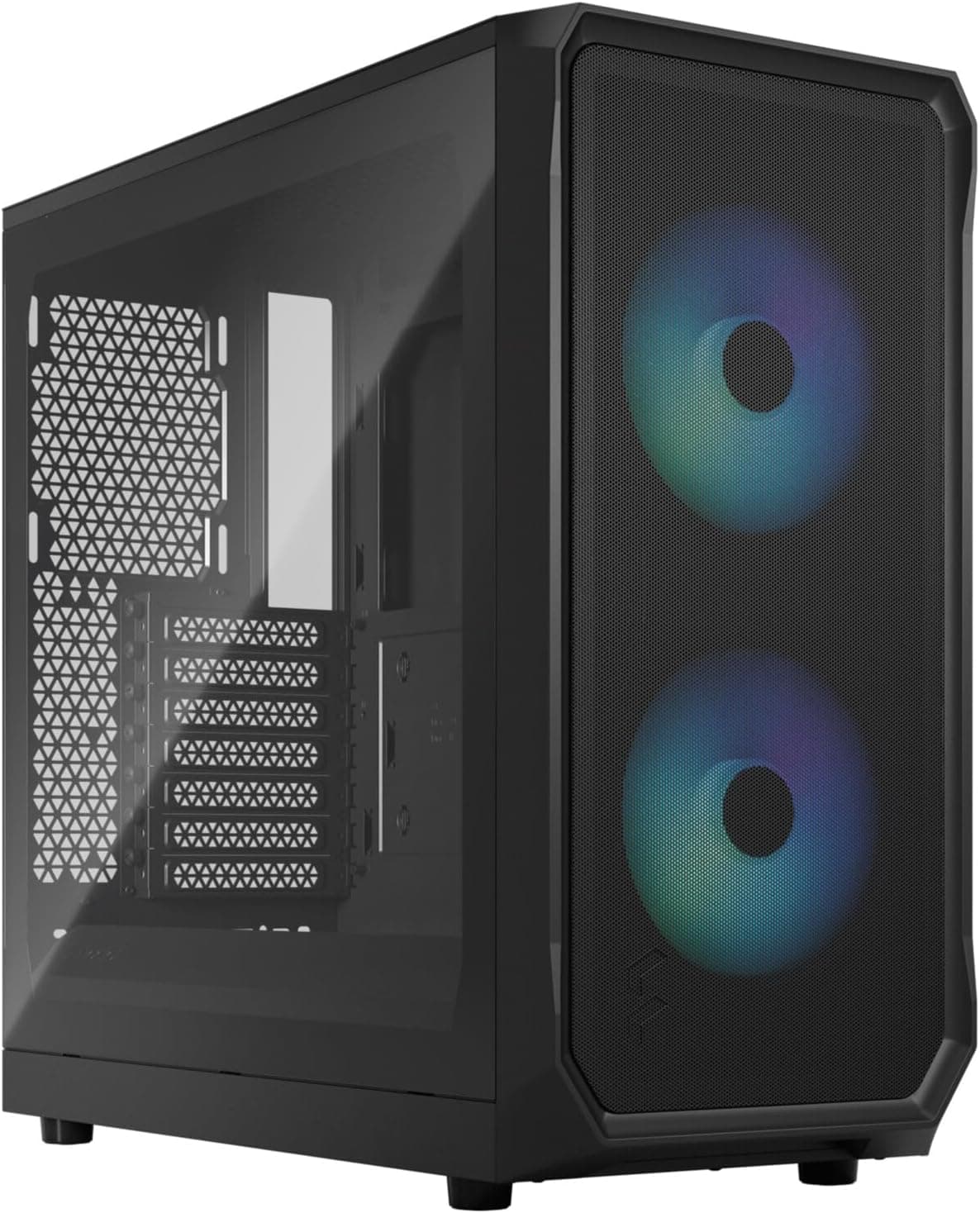
Case listings are full of dramatic render shots and zero useful information. You want to know if the cable management is actually usable, whether the tempered glass panels are properly fitted, and what owners found annoying after a week of living with it. That's what this Mars Gaming MC-ULTRA review is going to cover, because the spec sheet and 76 owner reviews tell you a lot more than a glamour shot ever will.
The short version: this is a big, bold, mid-range E-ATX tower that looks genuinely impressive on a desk, offers more internal space than most builders will ever need, and comes with dual ARGB strips and dual tempered glass panels as standard. It's priced competitively for the segment. But it's a Mars Gaming product, which means you're trading some of the build refinement you'd get from Corsair or Fractal Design for a much more dramatic visual presence at a lower price point. Whether that trade-off works for you depends entirely on what you're building and why.
Owner feedback sits at ★★★★☆ (4.4) across 76 reviews, which is a solid result for a case at this price tier. The complaints that do surface are about before you buy. So let's get into the specifics.
Core Specifications: Mars Gaming MC-ULTRA Review
The MC-ULTRA is a full-tower chassis built around the XXL designation Mars Gaming uses for their largest cases. It supports E-ATX motherboards up to 305mm x 277mm, which immediately tells you this isn't a compact build machine. The case is constructed from steel and tempered glass, with the dual vertical camera structure (Mars Gaming's term for the twin side-panel viewing windows) being one of its most distinctive visual features. Both side panels are tempered glass, which is unusual at this price and gives you a 360-degree view of the build if you position it correctly.
Fan support is generous. The front can take up to three 120mm or two 140mm fans. The top supports up to three 120mm or two 140mm fans. The rear takes a single 120mm exhaust. Mars Gaming includes fans in the box, which varies by regional listing, so check the specific listing details, but the included fans are ARGB units that tie into the dual LED stripe system. The PSU shroud is present and covers the bottom chamber, which helps with cable tidiness in the main chamber even if the routing options behind the motherboard tray are fairly standard for the price.
GPU clearance is quoted at up to 400mm, which handles any current flagship card including the RTX 5090 and RX 9070 XT without issue. CPU cooler height clearance sits at 185mm, comfortably covering most tower air coolers. Radiator support goes up to 360mm at the front and 360mm at the top, which is proper AIO territory. Weight comes in at around 9.5kg without components, which is typical for a steel full-tower of this size.
| Specification | Detail |
|---|---|
| Form Factor | Full Tower / XXL E-ATX |
| Motherboard Support | E-ATX, ATX, mATX, mITX |
| Max GPU Length | 400mm |
| Max CPU Cooler Height | 185mm |
| Front Radiator Support | Up to 360mm |
| Top Radiator Support | Up to 360mm |
| Rear Fan Mount | 1x 120mm |
| Front Fan Mounts | 3x 120mm or 2x 140mm |
| Top Fan Mounts | 3x 120mm or 2x 140mm |
| Drive Bays (3.5") | 2x |
| Drive Bays (2.5") | 4x |
| Expansion Slots | 8+2 vertical |
| Front I/O | 2x USB 3.0, 1x USB Type-C, HD Audio |
| Side Panels | Dual Tempered Glass |
| ARGB | Dual LED stripes, ARGB fans |
| PSU Shroud | Yes |
| Weight | ~9.5kg |
| Current Price | £90.99 |

Form Factor and Dimensions
Full tower is not a marketing exaggeration here. The MC-ULTRA is a genuinely large chassis, and if you're coming from a mid-tower you'll notice the difference immediately when you try to find desk space for it. The footprint is substantial, and the vertical camera structure (the twin tempered glass side panels) means the case is visually dominant from multiple angles. This is not a case that hides in the corner quietly. It wants to be seen, and the ARGB lighting makes sure of that.
For most people building a standard ATX or E-ATX system, the interior volume is more than you'll ever fill. That's not a criticism. Extra space means easier cable routing, better airflow paths, and room to add components later without the usual tetris puzzle you get in a mid-tower. The PSU shroud adds to the clean look in the main chamber, hiding the power supply and the rats' nest of cables that inevitably come with it.
The dual tempered glass panels are the headline feature from a visual standpoint. Having glass on both sides is relatively unusual at this price tier. Most cases give you glass on the left and a steel panel on the right. Here you get the view from both sides, which only matters if your desk setup allows visibility from the right as well. If the case is against a wall, the right-side glass is wasted, but it's a nice touch for open desk setups or LAN party builds. The case sits on rubber-footed legs that provide a small gap underneath for bottom-mounted PSU ventilation, which is standard practice for this class of case.
Motherboard Compatibility
The MC-ULTRA supports E-ATX, standard ATX, mATX, and mITX motherboards. The standoff layout covers the full E-ATX footprint up to 305mm x 277mm, which is the standard ATX specification extended format used by high-end Intel and AMD platform boards. If you're running an ASUS ROG Maximus, an MSI MEG, or any other enthusiast E-ATX board, this case is built for exactly that.
For builders using a standard ATX board, the extra space in the E-ATX footprint just gives you more room to work. The standoffs are pre-installed for ATX in most configurations, and the case is wide enough that you won't feel cramped even with a large ATX board and a full-size GPU installed simultaneously. Owners report no significant issues with motherboard installation or standoff alignment, which is a good sign because misaligned standoffs are a surprisingly common complaint with budget-tier cases.
One thing: if you're putting an mITX board in here, you're going to have a lot of empty space and the build will look a bit lost. The MC-ULTRA makes sense for ATX and E-ATX builds. Dropping a small form factor board into a full tower is technically possible but practically a bit pointless unless you're planning a very specific multi-GPU or multi-storage setup that needs the expansion slots and drive bays.
GPU Clearance
The 400mm GPU clearance figure is the headline number, and it's a good one. To put that in context, the Nvidia RTX 5090 Founders Edition comes in at around 336mm long, and most third-party AIB cards with triple-fan coolers land between 300mm and 360mm. So the MC-ULTRA handles every current flagship GPU without any length-related stress. Even with a front 360mm radiator installed, you should retain enough clearance for most cards, though you'd want to check specific measurements if you're running a particularly long card alongside a thick 360mm rad.
The case also includes a vertical GPU mount option, which is a feature that usually costs extra or requires a separate riser cable kit on competing cases. Vertical mounting shows off the GPU cooler through the side glass rather than pointing it at the motherboard, and it's become a popular choice for builds that prioritise visual impact. Mars Gaming includes this as part of the dual vertical camera structure. You'll still need a PCIe riser cable to use it properly, and those aren't always included, so check the listing carefully before assuming it's a complete out-of-the-box solution.
Owners haven't reported significant GPU fitment issues, which is reassuring. The main thing to watch is GPU sag with heavier cards. A 400mm triple-fan card is heavy, and without a sag bracket or anti-sag support, you can end up with visible drooping over time. The MC-ULTRA doesn't appear to include a dedicated sag bracket, so if you're installing a particularly hefty card, it's worth picking one up separately. They're cheap and save you a headache later.
CPU Cooler Clearance
The 185mm CPU cooler height clearance is generous. The Noctua NH-D15, which is one of the tallest and most popular high-end air coolers on the market, comes in at 165mm. The be quiet! Dark Rock Pro 5 sits at 162.8mm. So you've got around 20mm of headroom above the tallest air coolers currently available, which means you're not going to have clearance issues with any mainstream tower cooler. Even the chunkier Thermalright Peerless Assassin 120 SE, which is a popular budget-to-mid option, fits without drama.
For AIO liquid cooling, the MC-ULTRA's front and top radiator support both go up to 360mm. That covers the full range from 120mm single-fan AIOs right up to 420mm if you're using the front mount with 140mm fans. Front-mounted AIOs are generally preferred for intake cooling, pulling cool air in across the radiator before it reaches the CPU and GPU. Top-mounted AIOs work well as exhaust, pushing hot air directly out of the case. Having both options available gives you flexibility depending on your specific build priorities.
One practical consideration with 360mm AIOs at the top: RAM clearance. Tall RAM with high-profile heatspreaders can sometimes conflict with top-mounted radiators on cases where the mounting position sits low. The MC-ULTRA is a tall case, so this is less likely to be an issue than in a mid-tower, but it's your specific RAM height against the top radiator position if you're running something like G.Skill Trident Z5 Royal with the tall fins. Most standard-height DDR5 kits will be fine.
Storage Bay Options
The MC-ULTRA provides two 3.5-inch drive bays for traditional hard drives or 3.5-inch SSDs, and four 2.5-inch bays for 2.5-inch SSDs. That's a reasonable count for a full-tower, though some enthusiast cases at this size offer more 3.5-inch bays for NAS-style storage builds. If you're running multiple spinning hard drives for media storage, two bays might feel limiting. For most gaming builds that rely on NVMe M.2 SSDs on the motherboard plus one or two SATA SSDs, it's more than enough.
The 2.5-inch bays are mounted behind the PSU shroud and on the back of the motherboard tray in most configurations, which keeps them hidden from the main viewing area. This is good for aesthetics and it's the right approach for a case that's clearly designed with visual presentation in mind. Nobody wants to see a stack of SATA SSDs ruining the clean look through the tempered glass. The M.2 slots on your motherboard handle the primary fast storage anyway, and the SATA bays are really just for secondary storage overflow.
Tool-less drive mounting is present for the 2.5-inch bays, which is a welcome feature. The 3.5-inch caddies use screws, which is standard practice and not a problem in practice since you're not swapping hard drives regularly. Owners haven't flagged drive mounting as a frustration point, which suggests the bay design is functional enough not to cause problems during the build process. That's a low bar, but some budget cases manage to fail it anyway.

Cable Management
This is where the pragmatic assessment gets interesting. The MC-ULTRA is a large case with a PSU shroud, which gives you the basic building blocks of decent cable management. The PSU shroud hides the power supply and the bulk of the cable runs in the lower chamber, so the main motherboard area stays clean. Behind the motherboard tray there's a cable routing channel, and Mars Gaming includes some cable management provisions in the form of routing holes with rubber grommets, which is the standard approach at this price tier.
The rear panel clearance, which is the gap between the motherboard tray and the right-side panel, is a critical measurement for cable management quality. Tight rear clearance means you can't close the panel without squashing cables, which leads to either a bulging panel or compromised cable routing. The MC-ULTRA's full-tower dimensions mean there's more rear space than you'd find in a mid-tower, and owners generally report being able to close the right panel without significant difficulty. That's a good sign. Some do note that the cable management isn't quite as refined as what you'd find in a Fractal Design Define 7 or a Corsair 5000D, but those cases cost considerably more.
Velcro straps are a small detail that makes a big difference to cable tidiness. Some owners mention they're present, others suggest the provision is minimal. At this price point, bringing your own Velcro cable ties is sensible regardless. They cost almost nothing and make a significant difference to how the build looks through that tempered glass. The ARGB lighting inside the case will highlight any cable mess, so it's worth taking the time to route things properly. The wide internal volume actually helps here, giving you room to tuck cables into corners and behind the PSU shroud without fighting for space.
Airflow and Thermal Design
Here's the honest tension with the MC-ULTRA: it has dual tempered glass panels. Both of them. That looks brilliant, but tempered glass is not a breathable material. The front panel is the critical one for airflow, and a solid glass front means your intake air has to come from somewhere else, typically small gaps around the panel edges or a mesh strip at the bottom. This is a design compromise that affects thermals, and it's one of the most common complaints about glass-fronted cases in general.
Mars Gaming addresses this partially through the top fan mounts and the rear exhaust. With three 120mm fans at the top exhausting hot air and a rear 120mm doing the same, you can create reasonable airflow even with a restricted front intake. But it's not going to match a case with a proper mesh front panel like the Fractal Design Meshify 2 or the Lian Li Lancool 216. If you're building a high-TDP system with a top-end GPU and a power-hungry CPU, the glass front is something to factor into your decision. For mid-range builds with a 65W to 125W CPU and a mainstream GPU, it's less of a concern.
The included ARGB fans are functional but not premium. They're Mars Gaming's own units, and while they look good with the lighting system, they're not going to match the static pressure or airflow performance of dedicated fans from Noctua, be quiet!, or Arctic. Most builders who care about thermals will replace them eventually. The dual ARGB LED stripes add to the visual effect and can be controlled via the included controller or synced with a compatible motherboard header. The overall lighting effect is genuinely impressive for the price, which is clearly a priority for the target audience.
Front I/O and Connectivity
The front I/O panel includes two USB 3.0 Type-A ports, one USB Type-C port, and a combined HD Audio jack (headphone and microphone). The USB Type-C port is a welcome inclusion at this price tier. Many cases in the mid-range segment still skip it or charge a premium for it, and having it on the front panel saves you routing cables around to the rear of the machine every time you want to connect a modern device. Whether it's USB 3.2 Gen 1 or Gen 2 speeds depends on the motherboard header you connect it to, so that's a build-dependent variable rather than a case limitation.
The USB-IF specification for front panel connectors has evolved significantly over the past few years, and having Type-C on the front is increasingly a baseline expectation for any case above budget tier. The MC-ULTRA meets that expectation. Two USB Type-A ports is the standard count, and for most users that's fine. If you regularly connect multiple USB devices at the front simultaneously, you might find yourself wanting more, but that's a fairly niche complaint.
The power button and reset button are positioned on the top of the case, which is the standard location for a full tower. The ARGB controller button is also accessible from the front or top panel, letting you cycle through lighting modes without needing software. That's a practical touch. Some owners appreciate being able to change the lighting without opening a control panel, especially during a build when you're testing the system before everything is properly installed. The HD Audio connector is a standard HD Audio header connection to the motherboard, so audio quality is determined by your motherboard's audio codec rather than anything in the case itself.
Build Quality and Materials
Mars Gaming is a Spanish brand that targets the value-for-money gaming market, and the MC-ULTRA sits at the upper end of their range. The steel used in the chassis is functional rather than exceptional. It's not as thick or as rigid as what you'd find in a Fractal Design or a Lian Li, but it's adequate for the purpose. The case doesn't feel flimsy when you're working in it, and the panel fitment is generally reported as acceptable by owners. You're not going to find the same level of manufacturing precision as a premium case, but for the price tier, it's honest value.
The tempered glass panels are the premium component of the build. Tempered glass is tempered glass at a certain thickness, and the panels on the MC-ULTRA appear to be standard 4mm units, which is the industry norm. They're held in place by thumbscrews, and owners report they seat properly without significant gaps or misalignment. A few owners mention that the glass panels feel slightly less secure than they'd like, which is a subjective concern but. Tempered glass is fragile, and any case that ships it needs to pack it properly. Most owners report it arriving intact, which is the minimum expectation.
Sharp edges inside the case are a concern with any budget-to-mid-range steel chassis. A few owners in the review pool mention catching themselves during the build, which is an annoyance rather than a serious problem but worth being aware of. Wearing gloves during the build is sensible with any steel case, and the MC-ULTRA is no exception. The screw quality is adequate. Nothing strips easily under normal use, and the thumbscrews for the panels are properly knurled for hand-tightening. The overall impression from owner feedback is a case that looks better than it feels, which is a fair summary of the Mars Gaming approach to product design.
How It Compares: Mars Gaming MC-ULTRA Review vs the Competition
The two most obvious comparisons at this price tier are the Corsair 5000D Airflow and the Fractal Design North XL. The Corsair 5000D Airflow is a mid-tower rather than a full tower, which immediately differentiates it from the MC-ULTRA on size and E-ATX support. But it's the gold standard for airflow at this price point, with its mesh front panel delivering dramatically better thermal performance than any glass-fronted case. If thermals are your priority over visual drama, the 5000D Airflow is the honest recommendation.
The Fractal Design North XL is a full-tower competitor with a very different aesthetic, leaning into the natural wood and mesh front design rather than the ARGB gaming look. It's generally better built, with thicker steel and more refined cable management options. But it's also priced higher, often significantly so, which changes the value calculation. The MC-ULTRA offers more visual impact per pound than the North XL, even if the North XL is the better case in objective build quality terms.
Where the MC-ULTRA genuinely wins is on the combination of E-ATX support, dual tempered glass, ARGB lighting, and mid-range pricing. You're not going to find all four of those things together at a lower price from a more established brand. That's the honest case for buying it. And the 4.4-star average from 76 owners suggests most people who bought it are happy with that trade-off.
| Feature | Mars Gaming MC-ULTRA | Corsair 5000D Airflow | Fractal Design North XL |
|---|---|---|---|
| Form Factor | Full Tower / E-ATX | Mid Tower / ATX | Full Tower / E-ATX |
| Front Panel | Tempered Glass | Mesh | Mesh / Wood |
| Side Panels | Dual Tempered Glass | Single Tempered Glass | Single Tempered Glass |
| Max GPU Length | 400mm | 420mm | 461mm |
| CPU Cooler Height | 185mm | 170mm | 188mm |
| Front Radiator | 360mm | 360mm | 420mm |
| ARGB Included | Yes (dual strips + fans) | No | No |
| USB Type-C Front | Yes | Yes | Yes |
| Vertical GPU Mount | Yes | Optional (extra cost) | No |
| Price Tier | Mid-range | Mid-range (higher) | Premium |
| Build Quality | Good for price | Excellent | Excellent |
| Airflow Rating | Moderate (glass front) | Excellent (mesh front) | Very Good (mesh front) |

Final Verdict: Mars Gaming MC-ULTRA Review
The Mars Gaming MC-ULTRA is a case that knows exactly what it is. It's not trying to compete with Fractal Design on build refinement or with Lian Li on engineering precision. It's going after the builder who wants a big, visually dramatic, ARGB-lit full tower with dual tempered glass and E-ATX support, at a price that doesn't require a second mortgage. And on those terms, it largely delivers.
The dual ARGB strips, the dual glass panels, the vertical GPU mount option, the 400mm GPU clearance, the 360mm radiator support front and top, and the USB Type-C front I/O are all genuinely good inclusions at this price tier. The 4.4-star average from real owners backs that up. This isn't a case that's disappointing people at scale. The complaints that do exist are about build refinement rather than fundamental design failures: a few sharp edges, cable management that's functional but not exceptional, and the inevitable thermal compromise of a glass front panel.
Who should buy this? Someone building an E-ATX or high-end ATX gaming rig who wants maximum visual impact, has their desk positioned so the build can be seen from multiple angles, and is running a mid-range to high-end component set where the glass-front thermal compromise isn't going to cause temperature problems. It's also a solid choice for first-time builders who want the satisfaction of a dramatic-looking result without spending premium case money.
Who should skip it? If thermals are your top priority, a mesh-front case is the honest answer. The Corsair 5000D Airflow is the standard recommendation at this general price tier for airflow-first builds, even though it's a mid-tower and doesn't support E-ATX. If you don't specifically need E-ATX support and you're running a power-hungry system, the 5000D Airflow will serve your components better. Similarly, if you care more about build quality and longevity than visual drama, spending a bit more on a Fractal Design case is the smarter long-term investment. The MC-ULTRA is genuinely good value for what it is. Just be clear about what it is before you buy.
Overall score: 7.5 out of 10. Solid mid-range full tower with impressive visual credentials, held back slightly by the glass-front airflow compromise and build quality that matches the price rather than exceeding it. For the right builder, it's a great choice. Current pricing via the live listing below.
What works. What doesn’t.
5 + 4What we liked5 reasons
- Dual tempered glass panels on both sides, unusual at this price tier
- 400mm GPU clearance handles every current flagship card
- 360mm radiator support front and top for serious AIO builds
- Vertical GPU mount included as standard
- USB Type-C front I/O and ARGB lighting system included
Where it falls4 reasons
- Glass front panel restricts intake airflow compared to mesh alternatives
- Cable management functional but not refined at this price
- Steel thickness and panel fitment behind premium competitors
- Included fans are adequate but not high performance
Full specifications
10 attributes| Form factor | Full-Tower |
|---|---|
| CPU cooler clearance MM | 185 |
| Dimensions MM | 430 x 252 x 495 |
| GPU clearance MM | 390 |
| MAX FAN count | 9 |
| MAX radiator MM | 360 |
| PSU support | ATX |
| Side panel | tempered glass |
| Supported motherboard | E-ATX, ATX, Micro-ATX, Mini-ITX |
| Weight KG | 8.6 |
Frequently asked
5 questions01Is the Mars Gaming MC-ULTRA White, Custom XXL E-ATX Gaming Tower, Dual ARGB LED Stripes, Dual Tempered Glass Windows, Dual Vertical Camera Structure good for airflow?+
It's moderate rather than excellent. The front panel is tempered glass rather than mesh, which restricts intake airflow compared to mesh-front cases. The case compensates with up to three 120mm or two 140mm fan mounts at the top and a rear 120mm exhaust, so you can still build reasonable airflow with the right fan configuration. For mid-range component builds the thermal performance is acceptable. For high-TDP systems with top-end GPUs, a mesh-front case like the Corsair 5000D Airflow will serve you better thermally. The included ARGB fans are functional but most performance-focused builders will replace them with higher-quality units.
02What's the GPU clearance on the Mars Gaming MC-ULTRA White, Custom XXL E-ATX Gaming Tower, Dual ARGB LED Stripes, Dual Tempered Glass Windows, Dual Vertical Camera Structure?+
The maximum GPU length is 400mm, which comfortably accommodates every current flagship graphics card including the RTX 5090 Founders Edition (around 336mm) and the longest triple-fan AIB cards from ASUS, MSI, and Gigabyte. With a front 360mm radiator installed, clearance will be reduced, so check specific measurements if you're combining a very long GPU with a thick front radiator. The case also supports vertical GPU mounting, which is included as part of the dual vertical camera structure design.
03Can the Mars Gaming MC-ULTRA White, Custom XXL E-ATX Gaming Tower, Dual ARGB LED Stripes, Dual Tempered Glass Windows, Dual Vertical Camera Structure fit a 360mm AIO?+
Yes, the MC-ULTRA supports 360mm radiators at both the front and the top panel. Front mounting is generally preferred for intake cooling, pulling cool air across the radiator before it reaches the CPU and GPU. Top mounting works well as an exhaust configuration. With a 360mm AIO at the top, check your RAM height clearance, as tall heatspreader kits can occasionally conflict with top-mounted radiators. Standard-height DDR5 and DDR4 kits should fit without issues.
04Is the Mars Gaming MC-ULTRA White, Custom XXL E-ATX Gaming Tower, Dual ARGB LED Stripes, Dual Tempered Glass Windows, Dual Vertical Camera Structure easy to build in?+
Generally yes, with some caveats. The full-tower dimensions give you plenty of room to work, and the PSU shroud keeps the lower chamber tidy. Cable management options are functional with rubber-grommet routing holes and adequate rear panel clearance for closing the right-side glass panel. It's not as refined as premium cases from Fractal Design or Corsair, but owners generally report a smooth build process. A few mention catching themselves on sharp edges inside the case, so wearing gloves during the build is sensible. Bringing your own Velcro cable ties is recommended to make the most of the cable routing space.
05What warranty and returns apply to the Mars Gaming MC-ULTRA White, Custom XXL E-ATX Gaming Tower, Dual ARGB LED Stripes, Dual Tempered Glass Windows, Dual Vertical Camera Structure?+
Specific warranty terms from Mars Gaming are not confirmed in the verified product listing data. When purchasing through Amazon UK, you're covered by Amazon's standard 30-day returns policy and the Amazon A-to-Z Guarantee, which provides protection if the item arrives damaged or not as described. For warranty queries beyond the Amazon returns window, contact Mars Gaming directly or check the documentation included with the case.