GravaStar Mercury V75 PRO Hall Effect Magnetic Gaming Keyboard
~£249approx
The choice we'd make at this price band. Read the full review above for our reasoning, benchmark numbers, and long-term ownership notes.

As an Amazon Associate we may earn from qualifying purchases. Our ranking stays independent.
Hall effect switches with adjustable actuation from 0.1mm to 4.0mm
ABS keycaps feel underdone at this price point
Rapid trigger support for competitive gaming advantage
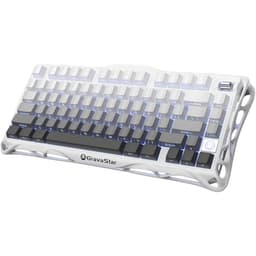
Hall effect keyboards have been quietly eating the lunch of traditional mechanical switches for a couple of years now, and the GravaStar Mercury V75 PRO sits right at the sharp end of that conversation. If you've been frustrated by the fact that your linear switches wear out, wobble in actuation point, or just feel inconsistent after a year of heavy gaming, this is the keyboard that answers that frustration directly. Hall effect magnetic switches don't have physical contact points, so they don't wear the same way, and the GravaStar Mercury V75 PRO layers on top of that a genuinely premium 75% layout with wireless connectivity and a spec sheet that punches hard at the premium tier.
The verdict? For competitive gamers and enthusiasts who want a wireless 75% board with genuinely adjustable actuation and a build that feels like it belongs at this price point, the GravaStar Mercury V75 PRO is a proper contender. It earns its 4.5-star average from 333 owners not through marketing luck but because the core technology actually delivers. That said, at premium pricing, there are real questions to ask about software maturity, keycap quality, and long-term support, and this review is going to dig into all of them honestly. Not every buyer needs what this keyboard offers, and there's a cheaper route if you do.
Pull up the spec sheet and cross-reference it with what owners are consistently reporting, and a clear picture forms fast. The strengths are obvious. The weaknesses are specific. And the competition is real enough that you shouldn't hand over premium money without reading this first.
The GravaStar Mercury V75 PRO is a 75% layout keyboard, which means you get the function row, arrow keys, and a small cluster of navigation keys, but the numpad is gone. That's a sensible trade-off for most gamers and a lot of productivity users who want more desk space without going full 65% and losing the function row entirely. The layout is one of the more practical compromises in the compact keyboard world, and GravaStar has executed it cleanly here.
The headline feature is the Hall effect magnetic switch implementation. These are proprietary magnetic switches rather than traditional mechanical ones, meaning the actuation is detected via a magnetic field rather than a physical contact closing a circuit. The practical upshot is that actuation points are adjustable in software, pre-travel can be tuned, and the switch mechanism itself doesn't wear in the conventional sense. GravaStar specs the polling rate at 1000Hz in wired mode, which is standard for competitive gaming use. Wireless connectivity covers both 2.4GHz and Bluetooth, with the 2.4GHz mode maintaining that 1000Hz polling rate, which is important because a lot of wireless keyboards drop to lower polling rates wirelessly.
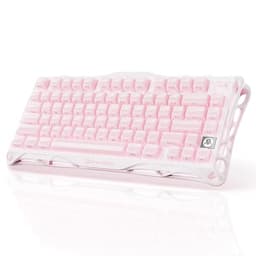
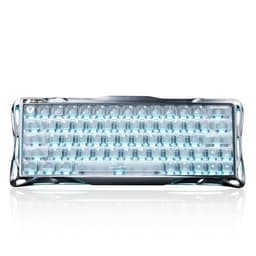
The case is aluminium alloy on the top frame with a polycarbonate or ABS base depending on the colourway, and the keyboard weighs in at a solid chunk that communicates premium build without being impractical to move around. There's a gasket-mount design in play here, which contributes to the typing sound profile and flex characteristics. RGB lighting is per-key. The battery sits at around 4000mAh, which is a large cell for a keyboard of this size.
| Specification | Detail |
|---|---|
| Layout | 75% (84 keys) |
| Switch Type | Hall Effect Magnetic (proprietary) |
| Actuation Point | Adjustable (0.1mm to 4.0mm) |
| Total Travel | 4.0mm |
| Polling Rate | 1000Hz (wired and 2.4GHz) |
| Connectivity | USB-C wired, 2.4GHz wireless, Bluetooth 5.0 |
| Battery | ~4000mAh |
| RGB | Per-key RGB |
| Mount Type | Gasket mount |
| Case Material | Aluminium alloy top frame |
| Hot-swap | Yes (Hall effect socket) |
| N-Key Rollover | Yes |
| Anti-Ghosting | Full |
| OS Compatibility | Windows, macOS, Linux |
| Price | £239.00 |

This is where the Mercury V75 PRO genuinely earns its premium positioning, and it's worth spending some time here because the technology is meaningfully different from what you're used to if you're coming from Cherry MX, Gateron, or even optical switches. Hall effect sensors detect the position of a magnet inside the switch stem without any physical contact. There's no leaf spring closing, no contact bounce, and no wear mechanism in the traditional sense. The switch essentially reads the magnetic field position continuously, which is what enables the adjustable actuation point functionality.
In practice, the switches on the V75 PRO feel linear, smooth, and consistent. The actuation point is adjustable from 0.1mm all the way down to 4.0mm total travel, which means you can set it to trigger at a hair's breadth if you want the fastest possible response for FPS gaming, or push it deeper if you prefer a more deliberate actuation for typing. That flexibility is genuinely useful and not just a spec-sheet number. Owners consistently report that the switches feel smooth out of the box without needing lubing, which is a real advantage over budget linear switches that often feel scratchy until you've spent an hour with a brush and Krytox 205g0. The magnetic mechanism also means no contact bounce, so debounce delays can be set very low without risking double-registration.
The rapid trigger feature is the other headline here. Rapid trigger means the switch reregisters a keypress as soon as it starts moving upward from the bottom of its travel, rather than waiting for it to return past the actuation point. For competitive FPS players doing counter-strafing or quick repeated inputs, this is a meaningful advantage. The V75 PRO supports rapid trigger with a configurable sensitivity, and owners who've used it for games like CS2 or Valorant report that it feels noticeably more responsive than traditional switches. Worth noting: this feature only matters if you're actually playing at a level where milliseconds of input timing make a difference. For most users it's a nice-to-have rather than a necessity.
The keycaps on the Mercury V75 PRO are where things get a bit more nuanced. At premium pricing, you'd ideally want PBT double-shot keycaps as standard. PBT plastic is denser and more resistant to the shine that develops on ABS keycaps after months of use, and double-shot legends mean the lettering is moulded in rather than printed on, so it won't fade. GravaStar ships the V75 PRO with what appears to be ABS keycaps based on the listing and owner feedback. That's not unusual even at this price point (plenty of premium boards ship with ABS), but it is worth flagging because ABS keycaps will start to develop that greasy shine within a few months of daily use, particularly on the most-used keys like WASD and the spacebar.
The legends are clean and the keycap profile is a standard OEM or Cherry-compatible profile, which means aftermarket keycap sets will fit without any drama. Given that the keycaps are arguably the weakest link in the package, this matters. Swapping to a quality PBT set is a realistic upgrade path, and because the V75 PRO uses standard switch spacing on a 75% layout, your options are wide. The 75% layout itself is well executed, with the function row sitting tight above the number row and the arrow cluster and navigation keys fitting into the right side without making the board feel cramped. Some 75% boards get the key spacing slightly wrong and it feels awkward; owners of the V75 PRO don't seem to report that issue.
One thing owners have flagged positively is the stabiliser quality. Stabilisers on the spacebar, shift, and enter keys are often the weak point on keyboards at any price, producing rattle or mushiness that undermines the feel of otherwise good switches. The V75 PRO's stabilisers arrive in decent shape from the factory, with owners generally reporting that they're usable without modification. They're not going to satisfy a dedicated keyboard modder who wants to clip, lube, and band-aid everything, but for a keyboard that most buyers will use out of the box, this is a solid baseline.
The aluminium alloy top frame is the first thing you notice when you pick this up. It's heavy in a way that communicates that GravaStar isn't cutting corners on materials, and it sits on the desk without any flex or wobble. The gasket mount design means the plate and PCB assembly is suspended on silicone gaskets rather than screwed directly to the case, which gives the typing feel a slight softness and reduces the harsh, clacky sound you get from top-mounted boards. It's a design choice that's become increasingly common in the enthusiast keyboard market over the last few years, and when it's done well it genuinely improves both the sound and feel of typing.
The USB-C connector is positioned at the top of the board, which is fairly standard for wireless keyboards where cable routing is less of a daily concern. The cable itself is braided, which is a nice touch. The feet on the underside give you a couple of angle options, and they're solid rubber so the keyboard doesn't slide around during intense gaming sessions. Owners who've been using the board for several months report that it maintains its structural integrity without any creaking or loosening, which is exactly what you want to hear from a premium build.
The weight is worth mentioning specifically because it's a double-edged sword. The aluminium construction makes this a heavy keyboard relative to plastic competitors. If you're someone who travels with their keyboard or regularly packs it up for LAN events, that weight adds up. If it lives on your desk permanently, the weight is a feature rather than a problem because it contributes to the planted, stable feel. Owners who take it to events have noted the weight as a mild complaint, but desk-bound users consistently mention it positively. The build quality overall is what you'd expect and what you're paying for at this price point.
Per-key RGB on a 75% layout means 84 individually addressable LEDs, and the Mercury V75 PRO makes good use of them. The lighting shines through the keycaps with reasonable uniformity, and the brightness is high enough to be visible in a lit room rather than only looking good in a dark gaming cave. GravaStar has included a solid selection of built-in lighting effects that work without any software, which matters for users who don't want to install yet another piece of keyboard software or who use the board across multiple machines.
The RGB effects include the usual suspects: static colour, wave, ripple, breathing, and reactive typing effects. Nothing that's going to shock anyone who's used a gaming keyboard before, but the execution is clean and the colours are reasonably accurate. Some owners have noted that the RGB is slightly dimmer when running wirelessly compared to wired, which is a battery-saving measure rather than a defect. If you're the sort of person who needs maximum RGB brightness at all times, wired mode is the answer. If you're using the keyboard in a more casual context, the wireless brightness is perfectly adequate.
Software-controlled lighting gives you more granular control including per-key colour assignment and custom animations, but the on-board effects cover most use cases without needing to touch the software at all. For users who switch between a Windows gaming PC and a macOS machine, the ability to store lighting profiles on the keyboard itself rather than relying on software running on the host machine is genuinely useful. The V75 PRO stores profiles on-board, so your lighting setup travels with the keyboard regardless of what machine it's plugged into.
GravaStar's software is the part of the package that generates the most mixed feedback from owners, and it's worth being direct about this. The software works, and it gives you access to the key features: actuation point adjustment, rapid trigger sensitivity, key remapping, macro programming, and RGB customisation. But it's not as polished as the software from more established keyboard brands, and a few owners have reported that the interface feels clunky or that certain settings require more steps than they should. This isn't unusual for a brand that's relatively newer to the premium keyboard space, but it's worth knowing going in.
The actuation point adjustment is the killer feature here and it works well through the software. You can set different actuation points per key, which means you could have your WASD keys set to a hair-trigger 0.1mm actuation while your typing keys sit at a more comfortable 2.0mm. Whether you'll actually want to do that is another question, but the flexibility is there. Macro programming is functional if not beautiful, and the profile management allows you to store multiple configurations and switch between them.
On-board memory means the keyboard stores your settings locally, so you don't need the software running to use your custom configuration. This is non-negotiable for a keyboard at this price point and GravaStar has got it right. Firmware updates come through the software, and owners report that the update process is straightforward. The software is Windows-first, with macOS support that's functional but slightly less feature-complete. Linux users will find the keyboard works as a standard HID device but won't have access to the advanced software features without running the Windows software through a compatibility layer.
Three connection modes: USB-C wired, 2.4GHz wireless via a USB dongle, and Bluetooth 5.0. The 2.4GHz mode is the one to use for gaming because it maintains the 1000Hz polling rate and has the lowest latency of the three wireless options. GravaStar claims sub-1ms wireless latency in 2.4GHz mode, which is consistent with what the best wireless gaming keyboards achieve, and owners gaming competitively on the wireless connection report no perceptible input lag compared to wired.
Bluetooth is the mode you'd use for connecting to a tablet, a second machine, or your phone. It's convenient for productivity use and for switching between devices without unplugging anything, but Bluetooth polling rates are lower and latency is higher, so it's not the right choice for competitive gaming. The keyboard supports pairing with multiple Bluetooth devices and switching between them, which is useful if you work across a laptop and a desktop and want to use the same keyboard for both without the dongle.
The USB-C connector is on the top edge of the board, and the included cable is braided and feels quality. Wired mode gives you the full 1000Hz polling rate and eliminates any wireless considerations entirely, so if you're a wired purist or you just want zero variables in your competitive setup, it's there. The dongle for 2.4GHz is small enough to store in a standard USB port or in the keyboard's battery compartment when travelling, which is a thoughtful design detail. Multi-device switching between the three modes is handled via keyboard shortcuts rather than a physical switch, which works fine once you've memorised the key combination.
The 4000mAh battery is large for a keyboard, and GravaStar's rated battery life reflects that. With RGB off, the keyboard is rated for several weeks of normal use on a single charge. With RGB on at moderate brightness, you're looking at somewhere in the range of 40 to 60 hours depending on the intensity settings, which is still very respectable. Owners generally report that battery life meets or slightly exceeds the rated figures, which is a good sign because manufacturers often quote optimistic numbers.
Charging is via USB-C, and the keyboard can be used while charging in wired mode without any interruption to functionality. Charge time from flat to full is a few hours, which is reasonable for a 4000mAh cell. There's a battery indicator built into the keyboard via LED feedback, so you're not going to be caught out by a dead keyboard mid-session without warning. The battery doesn't appear to be user-replaceable without opening the case, which is standard for this type of keyboard construction.
For context, the battery life here is meaningfully better than a lot of wireless gaming keyboards at this price point. Some competitors in the premium wireless keyboard space offer 30 to 40 hours with RGB, and the V75 PRO's larger cell gives it an edge there. If you use the keyboard primarily in Bluetooth mode for productivity work with RGB off, you're realistically looking at charging it once a month rather than once a week, which reduces the friction of wireless ownership considerably.

The gasket mount and the Hall effect switches combine to produce a typing experience that's notably different from a standard plate-mounted mechanical keyboard. The sound is deeper and less clacky, with a thockier character that a lot of keyboard enthusiasts actively seek out. It's not silent by any means, but it's not going to irritate your colleagues on a video call the way a clicky switch board would. Owners consistently describe the sound as satisfying without being loud, which is a good place to be for a keyboard that might see both gaming and productivity use.
For gaming specifically, the rapid trigger implementation is the standout feature. In fast-paced shooters, the ability to have the key reregister as soon as it starts moving upward from the bottom of its travel means that counter-strafing and quick repeated inputs feel more responsive than on a traditional switch. Owners who game competitively report this as a genuine advantage, particularly in CS2 and Valorant where precise movement control matters. The 1000Hz polling rate in both wired and 2.4GHz wireless modes means input timing is as tight as it can be at this polling rate, and the adjustable actuation point means you can tune the keyboard to exactly how light or heavy you want the trigger to feel.
For typing over long sessions, the adjustable actuation is again useful here. Set it too light and you'll find yourself accidentally triggering keys with resting fingers, which gets old fast. Set it at around 1.5mm to 2.0mm and the typing feel is comfortable for extended sessions without fatigue. The gasket mount absorbs some of the impact on each keystroke, which reduces the jarring feeling that can cause wrist discomfort over long typing sessions. N-key rollover means every key registers independently regardless of how many you're holding simultaneously, which matters for gaming and for fast typists who hit multiple keys at once.
Windows is the primary platform and where you'll get the full feature set including software access to actuation adjustment and rapid trigger. The keyboard works as a standard HID device on macOS and Linux without needing drivers, and the basic functionality including RGB lighting and key remapping stored on-board is available on all platforms. The GravaStar software for advanced configuration is Windows-first, so macOS users will have limited access to the more granular settings unless they configure the board on a Windows machine and rely on on-board memory.
Console compatibility is limited, as it is with most gaming keyboards that rely on proprietary software features. The keyboard will function as a basic input device when connected via USB-C to a PlayStation or Xbox, but the advanced features won't work, and console gaming with a keyboard and mouse is a niche use case anyway. For the target audience of PC gamers, this is a non-issue.
Bluetooth compatibility extends to tablets and phones for productivity use, which is a genuine convenience feature. Typing on an iPad with a proper mechanical keyboard is a significantly better experience than using a membrane or scissor-switch keyboard, and the V75 PRO's Bluetooth 5.0 connection is stable enough for this use case. Mobile gaming with a keyboard is less common but the option is there. The multi-device Bluetooth pairing means you can have the keyboard connected to your phone and your PC simultaneously and switch between them without re-pairing.
The two most relevant competitors at this price point are the Wooting 60HE and the Keychron Q1 Pro. The Wooting 60HE is the keyboard that essentially defined the modern Hall effect gaming keyboard market and introduced rapid trigger to a mainstream audience. It's a 60% layout rather than 75%, which means no function row and no arrow keys, making it more aggressively compact. The Wooting's software is more mature and the brand has a stronger community and track record in the enthusiast space. But the 60% layout is genuinely limiting for anyone who uses function keys in games or wants arrow keys for productivity, and the V75 PRO's 75% layout is more versatile for daily use.
The Keychron Q1 Pro is a different kind of comparison. It uses traditional mechanical switches (your choice of Gateron or Keychron's own switches) rather than Hall effect, so you don't get adjustable actuation or rapid trigger. But the Q1 Pro's build quality is exceptional, its software is mature, and Keychron's track record for long-term support and keycap compatibility is excellent. If you don't need the Hall effect features and just want a premium wireless 75% board with superb build quality, the Q1 Pro is a serious alternative. The V75 PRO wins on technology; the Q1 Pro wins on ecosystem maturity.
There's also the Nuphy Halo75 and similar mid-range wireless 75% boards that sit at a lower price point. These use traditional switches and don't offer Hall effect features, but they demonstrate that you can get a very good wireless 75% keyboard without paying premium prices. If rapid trigger and adjustable actuation aren't features you'll actually use, there's a real argument for spending less. The GravaStar Mercury V75 PRO is justified at its price point specifically because of the Hall effect technology and the wireless implementation. Strip those out and the value proposition weakens.
| Feature | GravaStar Mercury V75 PRO | Wooting 60HE | Keychron Q1 Pro |
|---|---|---|---|
| Layout | 75% (84 keys) | 60% (61 keys) | 75% (84 keys) |
| Switch Type | Hall Effect Magnetic | Hall Effect (Lekker) | Traditional Mechanical |
| Rapid Trigger | Yes | Yes | No |
| Wireless | 2.4GHz + Bluetooth 5.0 | No (wired only) | 2.4GHz + Bluetooth 5.0 |
| Polling Rate | 1000Hz | 1000Hz | 1000Hz |
| Mount Type | Gasket | Top mount | Gasket |
| Software Maturity | Developing | Excellent | Good |
| Price Tier | Premium | Premium | Premium |
GravaStar offers a standard 12-month manufacturer warranty on the Mercury V75 PRO, which is the baseline you'd expect at this price point but not exceptional. UK consumer rights extend your protection beyond that through the Consumer Rights Act 2015, which gives you up to six years to claim for faults that were present at the time of sale, though the burden of proof shifts to you after six months. For a premium keyboard purchase, it's worth being aware of both layers of protection. GravaStar's RMA process for UK customers runs through their website and through Amazon if purchased there, and owners report that responses are generally timely, though the brand's support infrastructure isn't as established as a Keychron or Logitech. That's not a dealbreaker, but it's honest context.
The Hall effect switch mechanism is theoretically more durable than traditional mechanical switches because there are no contact points to wear out. The rated switch lifespan for Hall effect designs is typically quoted in hundreds of millions of keystrokes rather than the 50 to 100 million you'd see from a quality mechanical switch. In practical terms, this means the switches themselves are unlikely to be the failure point over a normal ownership period. The more realistic long-term concerns are the battery degradation over charge cycles (lithium-ion cells typically retain around 80% capacity after 500 charge cycles, which at realistic usage patterns means several years before any noticeable degradation), and the USB-C connector, which is a mechanical wear point on any keyboard. The braided cable and quality connector on the V75 PRO are good signs here, but worth treating with care.
Resale value for premium gaming keyboards in the Hall effect category is holding up reasonably well at 24 months out, particularly for boards with wireless capability. The market for second-hand mechanical and Hall effect keyboards is active, and a well-maintained V75 PRO in good condition should retain a meaningful portion of its purchase price if you decide to move on. The upgrade path from here is interesting: Hall effect technology is evolving quickly, with higher polling rates (8000Hz and above) starting to appear in the category. The V75 PRO's 1000Hz polling rate is competitive today but may look modest in 18 to 24 months as higher polling rate boards become more mainstream. That's not a reason to avoid the purchase now, but it's worth knowing that this is a fast-moving technology segment.
The sticker price includes UK VAT, and at the premium tier you're making a considered purchase rather than an impulse one. The keyboard itself is the primary cost, but there are realistic co-purchases to factor in. If you want to upgrade the keycaps from the stock ABS set (and honestly, at this price point you probably will within a year), a quality PBT double-shot set in a 75% or 80% compatible kit runs from around £30 to £80 depending on the set. That's not a required purchase, but it's a common one among owners who want the build quality to match the switch quality all the way through.
The wireless functionality means you'll want a quality USB-A port or hub available for the 2.4GHz dongle, which is a minor consideration for most setups. There are no subscription fees, no premium software tiers, and no required accessories beyond what's in the box. The keyboard ships with a USB-C cable, the wireless dongle, and a basic keycap puller. Switch replacement is possible given the hot-swap design, but Hall effect switches aren't as widely available as traditional mechanical switches, so you're somewhat dependent on GravaStar's own switch ecosystem for like-for-like replacements. That's worth factoring in if you're the sort of person who likes to swap switches regularly.
Running costs for a keyboard are essentially zero beyond electricity, which for a device drawing a few watts is genuinely negligible. The real total cost of ownership calculation here is sticker price plus any keycap upgrade you choose to make, minus whatever you recover if you sell it down the line. At the premium tier, the value proposition rests on the Hall effect technology and wireless implementation being features you'll actually use and appreciate over the ownership period. If you're gaming competitively and rapid trigger genuinely improves your performance, the cost amortises quickly. If you're a casual gamer who mostly types, there are cheaper boards that serve that use case just as well.
The most commonly reported issue with the Mercury V75 PRO among owners is software inconsistency, specifically occasional difficulty getting the software to recognise the keyboard after a firmware update or after switching between connection modes. This appears to be a software-side issue rather than a hardware defect, and it typically resolves with a restart of the software or a USB re-plug, but it's annoying when it happens. It's the kind of rough edge that a more mature software team would have ironed out, and it's the most legitimate criticism of the package at this price point. Hardware failures are not a common theme in the owner feedback pool, which is a good sign for the underlying build quality.
UK consumer rights give you solid protection here. Amazon's 30-day return window means you can assess the keyboard thoroughly in real-world use and return it if it doesn't meet expectations. Beyond that, the Consumer Rights Act 2015 covers you for faults that were present at the time of purchase for up to six years, with the seller bearing the burden of proof for the first six months. In practice, this means that if you receive a unit with a dead LED, a sticky switch, or a connectivity issue that persists after troubleshooting, you have clear recourse. GravaStar's own 12-month warranty runs alongside this rather than replacing it.
Is it worth a re-roll if you get a bad unit? The honest answer is that the quality control on Hall effect keyboards from newer brands is generally good because the switch mechanism is simpler and less variable than traditional mechanical switches, but no manufacturing process is perfect. If you receive a unit with inconsistent wireless connectivity or a switch that doesn't register correctly, return it under Amazon's 30-day policy rather than troubleshooting indefinitely. The failure modes that owners report are mostly software-related and therefore fixable, but a hardware issue on a premium keyboard warrants a replacement rather than a workaround. The good news is that the 4.5-star average from 333 owners suggests that genuinely defective units are the exception rather than the rule.

The GravaStar Mercury V75 PRO Hall Effect Magnetic Gaming Keyboard is a genuinely impressive piece of kit for the right buyer. The Hall effect switches with adjustable actuation and rapid trigger are real, meaningful features that deliver a measurably different experience from traditional mechanical switches in competitive gaming contexts. The wireless implementation is one of the better ones in the category, maintaining 1000Hz polling over 2.4GHz and offering solid battery life that doesn't require weekly charging. The build quality, with its aluminium top frame and gasket mount, feels appropriate for the premium price point, and the 4.5-star average from 333 owners backs that up with real-world validation rather than just spec-sheet promises.
The weaknesses are real but specific. The software needs more polish and the ABS keycaps are a miss at this price point. GravaStar's support infrastructure and track record are still developing compared to more established brands, which is a legitimate concern for a premium purchase. And the Wooting 60HE, while wired-only and 60%, has more mature software and a stronger community around it for the same core Hall effect technology. These aren't dealbreakers, but they're reasons to go in with eyes open rather than purely on the strength of the spec sheet.
Who should buy this? Competitive PC gamers who want a wireless 75% keyboard with rapid trigger and adjustable actuation, and who game primarily on Windows where the software features are fully accessible. It's also a strong choice for enthusiasts who want the Hall effect technology in a layout that's practical for both gaming and productivity, without committing to the wired-only constraint of the Wooting 60HE.
Who should skip it? If you don't game competitively and won't use rapid trigger or adjustable actuation, you're paying a premium for features you won't touch. In that case, the Keychron Q1 Pro is a better-rounded wireless 75% keyboard with more mature software and a stronger keycap ecosystem at a similar price point. And if your budget is more flexible but you want the absolute best Hall effect software experience, the Wooting ecosystem is worth the trade-off of going wired and 60%.
The honest don't-overspend line: if rapid trigger and adjustable actuation aren't features you'll actively use, save yourself the premium and look at the Keychron Q1 Pro or the Nuphy Halo75. The GravaStar Mercury V75 PRO earns its price specifically through its Hall effect implementation. Without that, it's a good keyboard at an expensive price. With it, it's a proper premium choice for the right use case.
| Switch type | Hall Effect |
|---|---|
| Layout | 75% |
| Backlighting | Dual-zone RGB |
| HOT swappable | true |
| Keycaps | PBT |
| Polling rate HZ | 8000 |
| Switch actuation | linear |

£189.98 · SteelSeries

£232.21 · Corsair
The GravaStar Mercury V75 PRO uses proprietary Hall effect magnetic switches rather than traditional mechanical ones. These detect keypress position via a magnetic field with no physical contact, allowing the actuation point to be adjusted from 0.1mm to 4.0mm total travel through the software. They feel linear and smooth, require no lubing out of the box, and support rapid trigger functionality for competitive gaming.
Yes, particularly for competitive gaming. The Hall effect switches support rapid trigger, which reregisters a keypress as soon as the key starts moving upward rather than waiting for it to return past the actuation point. The keyboard runs at 1000Hz polling rate in both wired and 2.4GHz wireless modes, and the adjustable actuation point lets you tune how light or heavy the trigger feels. Owners gaming in CS2 and Valorant report a noticeable responsiveness advantage over traditional switches.
It's a decent typing keyboard, helped by the gasket mount design which softens the feel and sound compared to plate-mounted boards. The adjustable actuation is useful for typing too, as setting it around 1.5mm to 2.0mm gives a comfortable, deliberate feel over long sessions. The main typing caveat is the ABS keycaps, which will develop shine over time with heavy use. Overall comfortable for extended sessions but not specifically optimised for typists the way some enthusiast boards are.
Not particularly. The gasket mount absorbs some of the keystroke impact and produces a deeper, thockier sound profile rather than the sharp clack of a plate-mounted board. The Hall effect switches are linear in character so there's no click. Owners describe the sound as satisfying without being disruptive, making it usable in shared spaces or on video calls without being the most annoying person in the room.
GravaStar provides a 12-month manufacturer warranty. When purchased through Amazon UK, you also benefit from Amazon's 30-day return window for assessment in real-world use. Beyond that, the Consumer Rights Act 2015 gives UK buyers up to six years of protection against faults that were present at the time of sale, with the seller bearing the burden of proof for the first six months.
The competition at a glance
~£249approx
The choice we'd make at this price band. Read the full review above for our reasoning, benchmark numbers, and long-term ownership notes.
Where it wins
Where it falls short
Where it wins
Where it falls short
Prices are approximate UK street prices at time of review. Live pricing on each retailer.
A proper premium Hall effect keyboard that earns its price through adjustable actuation and wireless rapid trigger, let down slightly by ABS keycaps and developing software.
Buy at Amazon UK · £239.00


More from