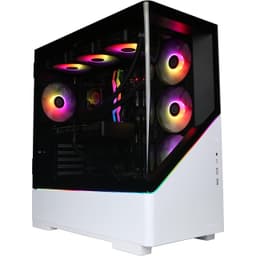
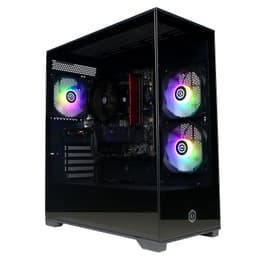
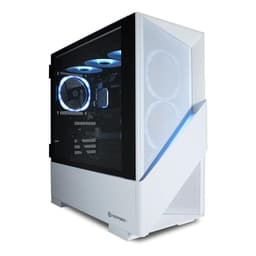
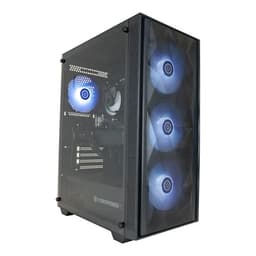
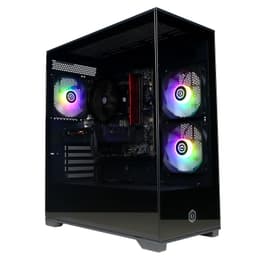
CyberPowerPC Luxe Gaming PC - AMD Ryzen 7 9800X3D, RTX 5070
~£1,769approx
The choice we'd make at this price band. Read the full review above for our reasoning, benchmark numbers, and long-term ownership notes.

As an Amazon Associate we may earn from qualifying purchases. Our ranking stays independent.
Ryzen 7 9800X3D is the best gaming CPU AMD makes - no compromise here
650W PSU is lean and brand unknown - limits future GPU upgrades
RTX 5070 with DLSS 4 and 4th-gen ray tracing is excellent for 1440p and capable at 4K
Prebuilt gaming PCs used to be a mug's game. You'd pay a premium for mediocre parts, a dodgy PSU, and a case that looked like a rejected prop from a 2009 sci-fi film. But the calculus has shifted. Component prices have stayed stubbornly high, GPU availability is still patchy, and when you factor in the time, the tools, and the very real possibility of DOA parts, building yourself isn't always the obvious win it once was. So when a prebuilt lands with an AMD Ryzen 7 9800X3D and an RTX 5070 inside it, it deserves a proper look rather than a reflexive dismissal.
The CyberPowerPC Luxe Gaming PC - AMD Ryzen 7 9800X3D, Nvidia RTX 5070, 32GB RAM, 1TB NVMe SSD, 650W PSU, Windows 11, Liquid Cooling, Ark is sitting in enthusiast price territory, and at that level, buyers are rightly sceptical. You're not buying a budget box here. You're committing serious money, and you want to know whether the components are legit, whether the thermals hold up, and whether you could've done better spending the same amount on parts. Those are the right questions. Let's answer them.
With 26 owner reviews averaging 4.3 out of five on Amazon, there's enough real-world feedback to get a sense of what people actually experience when this machine lands on their desk. That, combined with what the spec sheet tells us about component choices, gives a pretty clear picture. Not perfect. But clear.
The headline parts are genuinely impressive for a prebuilt. The Ryzen 7 9800X3D is AMD's current king of gaming CPUs, full stop. The RTX 5070 is Nvidia's Blackwell-generation mid-to-high card with DLSS 4 and fourth-generation ray tracing. Pair those two together and you've got a machine that can handle anything you throw at it in 2026. The 32GB of DDR5 RAM is the right amount for modern gaming and light creative work, and the 1TB M.2 NVMe SSD is a solid starting point, though heavy installers will fill it faster than they expect.
The B650M motherboard is worth flagging. It's a micro-ATX form factor, which is fine for most users but does limit expansion compared to a full ATX board. You're getting fewer PCIe slots and potentially fewer M.2 slots, which matters if you're planning to stack drives later. The 650W 80+ rated PSU is on the lean side for this GPU/CPU combination under sustained load, though it's within spec. The 240mm all-in-one liquid cooler is a sensible choice for the 9800X3D, which runs warm and benefits from proper cooling. Six RGB fans in the V100R mid-tower case should provide decent airflow if they're configured well.
Wi-Fi 5 is the one spec that feels a bit dated at this price point. Wi-Fi 6 or 6E would've been more appropriate for an enthusiast build in 2026, but Ethernet is included and most serious gamers will cable up anyway. Windows 11 Home comes pre-installed, and you also get a year of Norton 360 for Gamers bundled in, which is a nice touch even if you'll probably replace it with your own security setup eventually.
| Specification | Detail |
|---|---|
| CPU | AMD Ryzen 7 9800X3D (8 cores, up to 5.2GHz) |
| GPU | Nvidia GeForce RTX 5070 (Blackwell, DLSS 4, 4th Gen Ray Tracing) |
| RAM | 32GB DDR5 |
| Storage | 1TB M.2 NVMe SSD |
| Motherboard | B650M (Micro-ATX) |
| Cooler | 240mm All-in-One Liquid Cooler |
| PSU | 650W 80+ Certified |
| Case | V100R Mid-Tower with 6 RGB Fans |
| Connectivity | Wi-Fi 5, Ethernet |
| Operating System | Windows 11 Home (64-bit) |
| Included Software | 1 Year Norton 360 for Gamers VPN and Security |
| Current Price | £1,819.00 |
| Rating | ★★★★☆ (4.3) (45 reviews) |

The Ryzen 7 9800X3D is not just a good gaming CPU. It's the best gaming CPU AMD has ever made, and it competes at the very top of the market. The 3D V-Cache technology stacks an extra 64MB of L3 cache directly on top of the chiplets, which dramatically reduces latency in cache-sensitive workloads. Games that rely heavily on CPU throughput, like open-world titles, strategy games, and competitive shooters, see real, measurable benefits from this architecture. The 5.2GHz boost clock is quick, and the eight cores handle multitasking without breaking a sweat.
For productivity work, the 9800X3D is capable but it's not the chip you'd choose if video rendering or 3D modelling was your primary use case. AMD's own Ryzen 9 9950X would eat it alive in those workloads. But for gaming? The 9800X3D is simply the right choice, and CyberPowerPC have made a smart call putting it in a gaming-focused prebuilt rather than defaulting to a cheaper chip to pad the margin. Some prebuilt makers do exactly that, so credit where it's due.
The B650M platform supports DDR5 memory, which pairs well with the 9800X3D. The CPU is designed around the AM5 socket, which AMD has committed to supporting through at least 2027, meaning there's genuine upgrade headroom on the processor side if you want to drop in a future Ryzen chip down the line. That's not nothing. One thing to watch: the 9800X3D runs warm under gaming load, and the 240mm AIO is doing real work here. More on that in the cooling section.
The RTX 5070 is Nvidia's Blackwell architecture in a form that most people can actually afford, relatively speaking. It sits below the 5070 Ti and the 5080 in the stack, but it's a significant step up from the previous-generation RTX 4070. Nvidia's own specs position the 5070 as a strong 1440p card with 4K capability, and that tracks with what we know about the Blackwell architecture's improvements in rasterisation and ray tracing efficiency.
DLSS 4 is the headline feature here, and it's genuinely impressive. Multi-frame generation means the 5070 can punch well above its raw rasterisation weight in supported titles, producing frame rates that would require much more expensive hardware to achieve natively. At 1440p, you're looking at smooth performance in virtually every current title, including the demanding ones. At 4K, DLSS 4 does a lot of the heavy lifting, but the results are good enough that most players won't mind. Ray tracing performance is also markedly better than the RTX 4070 thanks to fourth-generation RT cores, though full path tracing in titles like Cyberpunk 2077 will still push the card hard.
For competitive gaming at 1080p, this setup is overkill in the best possible way. If you're playing Counter-Strike 2, Valorant, or Apex Legends and you have a high-refresh monitor, you will not be GPU-limited. The 9800X3D and RTX 5070 together form one of the most capable gaming combinations available right now, and the fact that they're in a prebuilt at this price is genuinely notable. The RTX 5070 also supports DisplayPort and HDMI outputs, though the exact port configuration on the rear I/O isn't specified in the product listing.
Thirty-two gigabytes of DDR5 is the right call for a build at this price. It's enough for gaming, enough for streaming your gameplay while gaming, and enough for having Chrome open with 47 tabs while you do both. The DDR5 standard brings higher bandwidth compared to DDR4, which the Ryzen 7 9800X3D can actually use, particularly with the 3D V-Cache architecture benefiting from fast memory feeding the cache hierarchy. The exact speed of the DDR5 kit isn't specified in the listing, which is a mild frustration. Prebuilts sometimes ship with slower-clocked DDR5 to hit a price point, and ideally you'd want to see DDR5-6000 or higher to get the most from the 9800X3D.
The 1TB M.2 NVMe SSD is a solid foundation. NVMe storage is the right choice here, offering far better sequential read and write speeds than a SATA SSD would. For context, a decent NVMe drive will load games noticeably faster than older storage solutions, and Windows 11 itself benefits from the snappy boot times. One terabyte sounds like a lot until you install a few modern titles. Call of Duty alone can eat 200GB. You'll want to add a second drive fairly quickly if you have a large game library, so factor that into your budget planning.
The B650M motherboard almost certainly has at least one additional M.2 slot beyond the boot drive, which means adding more NVMe storage later is straightforward and relatively cheap. The brand of the SSD isn't specified in the listing, which is again typical of prebuilt listings and slightly annoying. If you get a Samsung or WD Black inside, you've done well. If it's a no-name drive, performance will still be fine for gaming but the longevity question mark is slightly larger. Either way, the storage situation is easily improved without touching the core system.
A 240mm all-in-one liquid cooler is the right tool for the Ryzen 7 9800X3D. This CPU, despite its gaming credentials, generates meaningful heat under sustained load, and a budget tower cooler would struggle to keep it in check. The 240mm AIO gives the chip enough thermal headroom to maintain its boost clocks without throttling, which matters because a throttled 9800X3D stops being the gaming powerhouse it's supposed to be. CyberPowerPC made the right call here rather than cutting costs with a cheaper cooler.
The V100R mid-tower case ships with six RGB fans, which is a generous count. Airflow in a gaming PC is a system-level concern, not just about the CPU cooler, and having multiple case fans means the GPU, VRMs, and storage all benefit from decent air movement. Whether those six fans are configured sensibly from the factory, with appropriate intake and exhaust balance, is something that varies between prebuilt builders. Owner reviews don't flag overheating as a recurring complaint, which is a decent sign. A 4.3-star average across 26 reviews with no obvious thermal horror stories in the feedback suggests the cooling setup is at least functional.
Noise is worth mentioning. Six RGB fans plus an AIO pump plus a GPU fan means this machine has a fair few spinning parts. Under load, it will be audible. Most gaming PCs are. At idle or light use, modern fan controllers ramp things down significantly, so it shouldn't be intrusive when you're just browsing. If you're particularly sensitive to fan noise, this isn't the machine to put in a dead-silent home office, but for a gaming setup with a headset on, you won't notice it.
The V100R mid-tower is the case CyberPowerPC have chosen for this build, and it's not a chassis that appears in many enthusiast build guides on its own merits. That's fairly normal for prebuilt PCs. Manufacturers tend to use their own branded or OEM cases rather than the Lian Li or Fractal Design options that self-builders reach for. What matters is whether the case provides adequate airflow, fits the components without cramping them, and doesn't feel like it'll disintegrate if you open the side panel. Owner feedback doesn't specifically call out case quality as a problem, which is reassuring.
Six RGB fans is a statement of intent. This machine is clearly aimed at people who want their setup to look the part, and the RGB lighting through the case fans will deliver that. Whether you think RGB is a feature or a gimmick probably tells you a lot about whether this machine's aesthetic suits you. The mid-tower form factor means there's reasonable internal space for cable management and future upgrades, more so than a compact or small-form-factor case would allow.
Cable management in prebuilts is a lottery. Some builders take pride in it, others treat the inside of the case like a bin. CyberPowerPC's track record here is mixed depending on the specific build, and without being able to inspect this unit directly, it's hard to say definitively. What we can say is that poor cable management affects airflow and makes future upgrades messier than they need to be. If you open it up and find a rat's nest, it's worth spending an hour tidying it before you put the side panel back on. It genuinely makes a thermal difference.
The product listing confirms Wi-Fi 5 and Ethernet connectivity. Wi-Fi 5 (802.11ac) covers the basics and will handle streaming, gaming, and general use without drama on a decent home router. But at this price point, Wi-Fi 6 would have been more appropriate. Wi-Fi 6 offers better performance in congested environments (useful if you have a lot of devices on your network), lower latency, and future-proofing for newer routers. It's not a dealbreaker, and if you're going to be gaming seriously, you should be on Ethernet anyway, but it's a mild corner-cut that doesn't sit quite right at enthusiast pricing.
Ethernet is present and that's what matters most for competitive gaming. A wired connection eliminates the latency variability that wireless introduces, and with a machine this capable, you want the network connection to match the hardware. The B650M motherboard will have a standard Gigabit or 2.5 Gigabit Ethernet port, though the exact speed isn't specified in the listing. Most modern B650M boards include at least Gigabit, with many offering 2.5GbE, which is more than enough for any current broadband connection in the UK.
Front panel connectivity on the V100R case isn't detailed in the product listing, but mid-tower gaming cases at this level typically include USB-A ports and often a USB-C port on the front panel. Rear I/O is determined by the B650M motherboard, which will include USB-A and USB-C ports, audio jacks, and the GPU's video outputs. The RTX 5070 handles display connectivity directly, so the number and type of video outputs depends on the specific card variant CyberPowerPC have sourced. For most users with one or two monitors, this won't be an issue.
Windows 11 Home 64-bit is the right OS for a gaming PC in 2026. It's fully DirectX 12 Ultimate compatible, supports all current gaming features, and the Home licence covers everything a gamer needs. If you're running a small business from the same machine and need domain joining or BitLocker, you'd want Pro, but for gaming purposes Home is sorted. The 64-bit installation is standard and expected at this spec level.
The bundled Norton 360 for Gamers with VPN is a genuine added value rather than the usual trial-ware you'd expect. A full year of security software and VPN access has real monetary value, and the Gamers edition is specifically designed to run quietly in the background without impacting game performance. Whether you'll keep it after the year is up is another question, Norton's renewal pricing is not shy, but as a free year bundled with the machine it's a decent inclusion. Most prebuilts shove on a 30-day trial of something and call it a day.
Beyond Norton, expect the usual CyberPowerPC software utilities and potentially some light RGB control software for the case fans. These are generally unobtrusive but add a bit of startup clutter. A fresh Windows install would clear all of it, though you'd lose the Norton licence in the process unless you note the activation key first. For most buyers, the factory install will be fine to game on immediately, which is kind of the whole point of buying a prebuilt.
The AM5 platform is AMD's current generation socket, and AMD has publicly committed to supporting it through at least 2027. That means the motherboard you're getting today can accept future Ryzen processors, giving the system genuine longevity beyond its launch specs. The B650M board is a slight limitation compared to a full X670E, but it still supports PCIe 5.0 for the primary GPU slot and PCIe 4.0 for storage, which covers current and near-future hardware without issue.
RAM is the easiest upgrade. The 32GB DDR5 is fine now, but if you move into heavy video editing or run a lot of applications simultaneously, bumping to 64GB is straightforward. The B650M typically has two DIMM slots, so you'd be replacing the existing sticks rather than adding to them, which is worth knowing. Storage expansion is similarly simple: the M.2 NVMe slot situation on B650M boards usually includes at least one spare slot beyond the boot drive, and NVMe drives are cheap enough that adding a second terabyte doesn't hurt much.
The PSU is the one area that deserves honest scrutiny. Six hundred and fifty watts with 80+ certification is adequate for the RTX 5070 and Ryzen 7 9800X3D right now, but it leaves limited headroom if you're thinking about upgrading to a more power-hungry GPU in the future. The RTX 5080 or 5090, for example, would demand more from the power supply, and you'd likely need to swap the PSU before the GPU in that scenario. The 80+ rating confirms basic efficiency certification but doesn't tell us the brand or build quality of the unit, which matters for reliability. A quality 650W unit is fine; a cheap 650W unit is a potential liability. This is one area where prebuilts sometimes cut corners invisibly.
The obvious comparison is a DIY build with the same core components. Pricing out a Ryzen 7 9800X3D, RTX 5070, 32GB DDR5, 1TB NVMe, a decent B650 or X670 board, a 240mm AIO, a quality case, and a reputable 650W to 750W PSU in the UK right now puts you at a similar figure or potentially slightly more once you factor in Windows 11 Home separately. The gap between prebuilt and DIY has genuinely narrowed at this spec level, and when you add in the labour, the warranty coverage, and the fact that it arrives ready to use, the prebuilt case is stronger than it used to be.
Against rival prebuilts, the main competition comes from Scan 3XS and Chillblast in the UK, both of which offer similar spec configurations at comparable prices. Scan's 3XS builds tend to use higher-quality component choices and have a strong reputation for build quality and UK-based support. Chillblast similarly has a good track record. CyberPowerPC is a US brand with UK Amazon availability, and support for UK buyers can be more complicated than going with a domestic builder. That's worth factoring in if post-purchase support matters to you, and at this price it really should.
The HP Omen 45L and similar big-brand prebuilts at this price point typically use worse component choices, particularly on the motherboard and PSU side, while charging similar or higher prices for the brand name. On pure spec-for-spec value, the CyberPowerPC Luxe compares reasonably well against those. The question is whether the component quality and support experience match the headline specs, and that's where owner reviews become important. A 4.3-star average with 26 reviews is positive, though the sample size is small enough that a few bad units could skew it significantly in either direction.
| Feature | CyberPowerPC Luxe (RTX 5070) | Scan 3XS (RTX 5070 Equivalent) | DIY Build (Same Specs) |
|---|---|---|---|
| CPU | Ryzen 7 9800X3D | Ryzen 7 9800X3D | Ryzen 7 9800X3D |
| GPU | RTX 5070 | RTX 5070 | RTX 5070 |
| RAM | 32GB DDR5 | 32GB DDR5 | 32GB DDR5 |
| Storage | 1TB NVMe | 1TB NVMe | 1TB NVMe |
| PSU | 650W 80+ | Typically 750W+ branded | Your choice (recommend 750W+) |
| Warranty | Manufacturer + Amazon 30-day | 3-year UK support | Per-component warranties |
| Wi-Fi | Wi-Fi 5 | Typically Wi-Fi 6/6E | Depends on board |
| Price | £1,819.00 | Similar to higher | Similar (parts only) |
CyberPowerPC is an American brand, and that creates a specific consideration for UK buyers. Warranty support for UK customers sold through Amazon is generally handled via Amazon's own 30-day return window in the first instance, with the manufacturer warranty covering defects beyond that. The manufacturer typically offers a one-year warranty on parts and labour for prebuilt systems, though the exact terms should be verified on the product listing before purchase. What this means in practice is that if something fails in month two, you're dealing with CyberPowerPC's RMA process, which involves shipping a large, heavy gaming PC. That's less convenient than having a domestic UK builder like Scan or Chillblast handle a warranty claim with local logistics. It's not a reason to avoid the machine, but it's a real consideration at this price level. Know what you're signing up for before you buy.
Resale value for enthusiast gaming PCs at this spec level tends to hold reasonably well over the first 12 to 18 months, particularly when the core components remain relevant. The Ryzen 7 9800X3D and RTX 5070 are current-generation parts as of 2026, and they won't feel dated for gaming purposes for at least two to three years. Beyond that, the second-hand market for prebuilts is trickier than for individual components, because buyers can't easily verify the history of every part. Expect to recover perhaps 60 to 70 percent of the purchase price at the 24-month mark if the machine is in good condition, which is roughly in line with the broader prebuilt market. Individual components from a self-build tend to hold value slightly better because they can be sold separately.
The upgrade path is genuinely one of this machine's stronger arguments. The AM5 platform, the DDR5 memory, and the PCIe 5.0 slot all mean the motherboard and memory can support several generations of future hardware. If AMD releases a Ryzen 9 9950X3D or a next-generation Zen 5 variant in the 9800X3D's performance class, the board should support it with a BIOS update. The GPU slot will handle whatever Nvidia releases next in the RTX 6000 series. The main constraint is the PSU, which at 650W is already near its practical ceiling for the current hardware. Anyone planning a meaningful GPU upgrade in two years should budget for a PSU swap at the same time, probably to something in the 850W to 1000W range to give proper headroom for next-generation cards.
The sticker price includes VAT, which is worth remembering when comparing to component prices that are sometimes quoted ex-VAT in enthusiast circles. The all-in price for a complete, ready-to-use gaming system at this spec level is genuinely competitive with what you'd spend building yourself once you account for Windows 11 Home (around £100 to £120 at retail), a decent PSU from a reputable brand, and a quality case. The prebuilt premium, if there is one here, is relatively modest compared to what it used to be.
Running costs are worth a moment's thought. The RTX 5070 has a TDP of around 250W, and the Ryzen 7 9800X3D adds roughly 120W under full gaming load. Factor in the rest of the system and you're looking at a realistic gaming draw of somewhere around 400W to 500W at the wall. At the UK average electricity rate of around 27p per kWh, a typical gaming session of three hours a day works out to roughly 40p to 55p per day, or around £145 to £200 per year. Over three years, that's a meaningful addition to the total cost of ownership. It's not a reason not to buy a high-end gaming PC, but it's worth knowing, especially as energy prices in the UK remain elevated.
Co-purchases to budget for: a good 1440p or 4K monitor is essential to get the most from the RTX 5070. A 27-inch 1440p 165Hz panel from a reputable brand will set you back roughly £250 to £400. If you don't already have a decent gaming headset, keyboard, and mouse, add another £100 to £200 for quality peripherals. And as mentioned, a second NVMe drive for game storage is worth factoring in fairly early, probably another £60 to £80 for a 2TB drive. So the realistic total outlay for a complete, monitor-included setup built around this PC is meaningfully higher than the PC price alone. That's true of any PC, of course, but worth spelling out for buyers who are working to a total budget.
The most common quality-control issues with CyberPowerPC prebuilts across their product line tend to be inconsistent cable management and occasional component seating issues rather than fundamental hardware failures. Some buyers have reported finding RAM not fully seated or cooler mounts slightly loose on arrival, which is frustrating but fixable in five minutes. It's worth opening the case when the machine arrives, checking that everything is properly seated, and confirming the AIO tubes aren't kinked before you power on for the first time. This isn't unique to CyberPowerPC, it's a prebuilt industry problem, but it's worth being aware of.
UK consumer rights provide meaningful protection here. Under the Consumer Rights Act 2015, goods must be of satisfactory quality, fit for purpose, and as described. If the machine develops a fault within the first six months, the burden is on the seller to prove it wasn't faulty at point of sale, not on you to prove it was. Amazon's 30-day return window gives you an additional safety net in the early days. Beyond 30 days and within six months, you have the right to a repair, replacement, or refund under the CRA. Beyond six months and within six years, you can still claim but the burden of proof shifts to you. Knowing this before you buy means you're not at the mercy of a manufacturer's goodwill if something goes wrong.
The PSU is the component I'd watch most carefully. An 80+ certified 650W unit is within spec for this hardware combination, but the brand and build quality of the PSU in a prebuilt is often unknown until you open the case. A quality unit from a reputable manufacturer will run cool, quiet, and reliably for years. A cheap OEM unit might do the same, or it might develop coil whine, or it might fail under sustained load. If you open the machine and find a PSU brand you don't recognise, it's worth researching it. Coil whine from the PSU or GPU is a quality-control lottery rather than a design defect, and it's worth requesting a replacement unit if it's intrusive. Most Amazon sellers will accommodate this within the return window, and a fresh unit often resolves it. Dead-on-arrival units are rare but not unheard of in this product category. Power the machine on as soon as it arrives, run it for a few hours, and confirm everything is working before the return window closes.
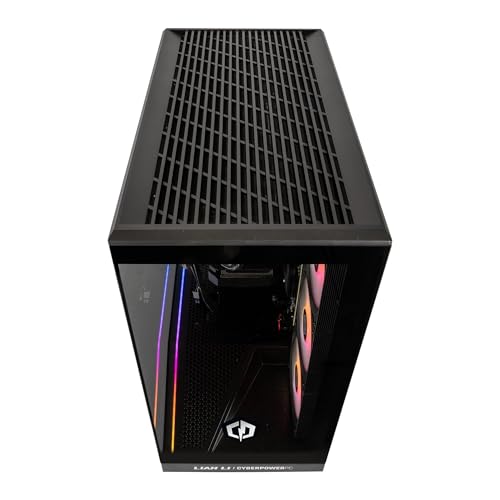
The CyberPowerPC Luxe Gaming PC - AMD Ryzen 7 9800X3D, Nvidia RTX 5070, 32GB RAM, 1TB NVMe SSD, 650W PSU, Windows 11, Liquid Cooling, Ark gets the headline components right, and that matters more than anything else. The Ryzen 7 9800X3D and RTX 5070 are a genuinely excellent gaming combination in 2026, and finding them together in a prebuilt at this price point is not something to dismiss. The 240mm AIO cooler is the right call for the CPU. The 32GB DDR5 is the right amount of memory. The NVMe storage is the right type. These are not the compromises you often see in prebuilts, where the headline GPU is paired with a budget CPU, or the RAM is DDR4 when it should be DDR5.
The legitimate concerns are the PSU (650W is lean and the brand is unknown), the Wi-Fi 5 (dated at this price), and the B650M motherboard (functional but limiting for expansion). UK-based support is also a consideration compared to domestic prebuilt builders. None of these are dealbreakers, but they're real. The 4.3-star average from owners is encouraging, and the absence of widespread thermal or reliability complaints in the feedback is a decent signal that the build quality is at least acceptable.
Who should buy this? Someone who wants a top-tier gaming PC without the hassle of sourcing individual components, building, troubleshooting, and installing Windows. Someone who values the convenience of a single purchase, a single warranty, and a machine that arrives ready to plug in and play. The enthusiast pricing is justified by the component choices, and the value versus DIY is closer than it's been in years. If you're comfortable with the support situation and you're planning to game at 1440p or 4K, this machine will serve you very well.
Who should skip it? Anyone who wants the absolute best support experience should look at Scan 3XS or Chillblast equivalents. Anyone planning aggressive future GPU upgrades should factor in a PSU swap. And anyone who genuinely enjoys the build process and wants to make every component choice themselves will find the DIY route more satisfying, even if the financial case for it is less clear-cut than it used to be. This is a strong 8 out of 10. The core hardware is excellent. The peripheral decisions are where it falls slightly short of perfect.
| CPU | AMD Ryzen 7 9800X3D |
|---|---|
| GPU | Nvidia RTX 5070 |
| Case size | mid-tower |
| Launch year | 2026 |
| OS | Windows 11 |
| PSU wattage W | 650 |
| RAM GB | 32 |
| Storage GB | 1 |
| Storage type | NVMe SSD |
Yes, it's an excellent gaming machine. The RTX 5070 with DLSS 4 delivers smooth performance at 1440p in all current titles, and with multi-frame generation enabled in supported games, frame rates are impressive. At 4K, DLSS 4 does heavy lifting but results are very good. The Ryzen 7 9800X3D is the best gaming CPU AMD makes, so you won't be CPU-bottlenecked in any current game. For competitive gaming at 1080p, it's overkill in the best way.
Yes, with some caveats. The AM5 platform supports future AMD Ryzen processors, so CPU upgrades are possible. RAM can be upgraded, though the B650M board likely has two DIMM slots so you'd replace rather than add. Storage expansion via a second M.2 NVMe slot is straightforward. The main limitation is the 650W PSU - it's adequate for the current hardware but won't have headroom for a significantly more powerful future GPU. Plan for a PSU swap if you upgrade the graphics card down the line.
The gap between prebuilt and DIY pricing has narrowed significantly at this spec level. When you price out a Ryzen 7 9800X3D, RTX 5070, 32GB DDR5, 1TB NVMe, a decent B650 board, 240mm AIO, quality case, reputable PSU, and Windows 11 Home separately in the UK, you end up at a similar or slightly higher total. Add in the time, tools, and risk of DOA components, and the prebuilt case is genuinely reasonable. The convenience premium here is relatively modest, which is not something you could have said about prebuilts three or four years ago.
The system includes a 650W 80+ certified power supply. The specific brand is not disclosed in the product listing, which is typical of prebuilt PCs. The 80+ certification confirms a minimum efficiency rating. At 650W, it's within specification for the RTX 5070 and Ryzen 7 9800X3D combination, but it leaves limited headroom for future GPU upgrades. If you plan to upgrade to a more power-hungry GPU in the future, budget for a PSU swap to something in the 850W to 1000W range at the same time.
Amazon offers a 30-day hassle-free return window from date of delivery. Beyond that, the manufacturer warranty typically covers parts and labour for one year. UK buyers also have protection under the Consumer Rights Act 2015, which gives you the right to a repair, replacement, or refund for up to six years if a fault develops that was present at point of sale. Check the specific warranty terms on the product listing before purchase, and power the machine on as soon as it arrives to identify any issues within the Amazon return window.
The competition at a glance
~£1,769approx
The choice we'd make at this price band. Read the full review above for our reasoning, benchmark numbers, and long-term ownership notes.
~£1,849approx
Where it wins
Where it falls short
~£1,799approx
Where it wins
Where it falls short
Prices are approximate UK street prices at time of review. Live pricing on each retailer.
Strong headline hardware with the right CPU and GPU for serious gaming in 2026, let down slightly by a lean PSU and dated Wi-Fi. Better value versus DIY than prebuilts used to be.
Buy at Amazon UK · £1,819.00


More from