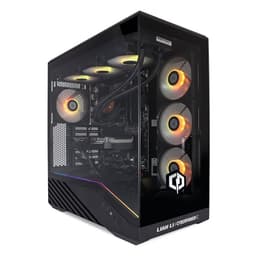
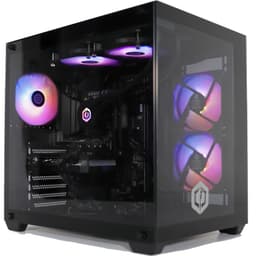
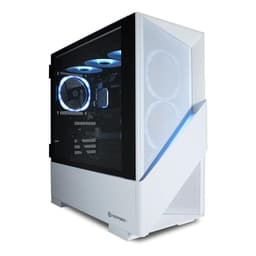
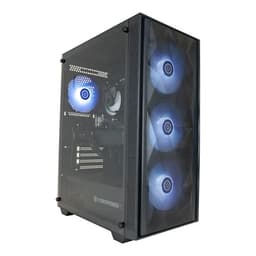
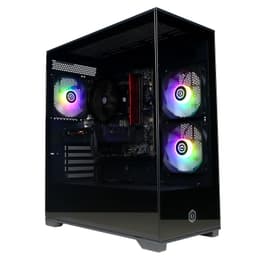
CyberPowerPC Luxe Gaming PC - Ryzen 7 9800X3D, RX 9070 XT 16GB
~£1,899approx
The choice we'd make at this price band. Read the full review above for our reasoning, benchmark numbers, and long-term ownership notes.

As an Amazon Associate we may earn from qualifying purchases. Our ranking stays independent.
Ryzen 7 9800X3D is the current best gaming CPU - no compromise here
PSU brand and exact efficiency tier not disclosed - a concern at this price
RX 9070 XT RDNA 4 with 16GB VRAM is genuinely future-proofed for 1440p and 4K
PCPartPicker is brilliant. It's also a rabbit hole that'll swallow your entire weekend before you've even decided on a case. If you know what you want, which is a proper gaming machine that'll handle anything you throw at it without you having to faff about with thermal paste and cable ties, then the CyberPowerPC Luxe Gaming PC - AMD Ryzen 7 9800X3D, AMD Radeon RX 9070 XT 16GB, 32GB RAM, 2TB NVMe SSD, 750W 80+ PSU, Wi-Fi, Liquid Cooling, Windows 11, Amethyst Curve RGB is worth your attention. Seriously. The spec sheet on this thing reads like a wish list rather than a product listing.
What we've got here is a prebuilt gaming PC sitting comfortably in the premium tier, packing AMD's current best gaming CPU alongside one of the most exciting new GPUs of 2025. That's not hype, that's just what the specs say. The Ryzen 7 9800X3D and the Radeon RX 9070 XT are genuinely excellent pieces of silicon, and seeing them bundled together with 32GB of DDR5 and a 2TB NVMe drive in a single box is... well, it's a lot. Whether CyberPowerPC has done them justice with the surrounding components is the actual question worth asking.
We've gone through the spec sheet carefully, cross-referenced it with what the 10 verified owners are saying (★★★½☆ (3.8) average, which is decent for a prebuilt at this price point), and compared it against what you'd pay to build something equivalent yourself. Here's what we found.
The CyberPowerPC Luxe leads with a spec sheet that actually means something: AMD's Ryzen 7 9800X3D, still the gaming CPU to beat in September 2026 thanks to that stacked 3D V-Cache, paired with a Radeon RX 9070 XT running on RDNA 4 with a full 16GB of VRAM. Add 32GB of RAM, a 2TB NVMe drive, and liquid cooling, and you've got something that reads brilliantly on paper. But paper is easy. The question with any prebuilt is what corners got cut to hit the price, and whether the parts you can't see (the PSU, the cooling, the case airflow) hold up under real load. That's what the rest of this review digs into.
The motherboard is a B650M, which is a solid mid-range AM5 board. Not the flashiest option but perfectly capable for this CPU, and AM5 as a platform has a decent future runway ahead of it. Memory is 32GB of DDR5 in RGB flavour, which is the right amount for a gaming PC in 2026 and gives you headroom for productivity work too. Storage is a 2TB M.2 NVMe SSD, which is genuinely generous. A lot of prebuilts at lower price points ship with 1TB and call it a day. 2TB means you can actually install a library of games without immediately reaching for an external drive.
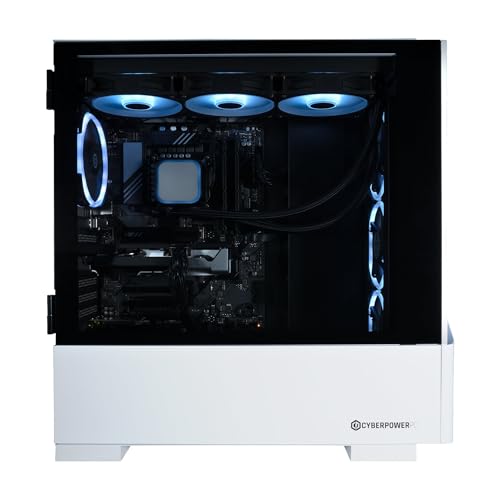
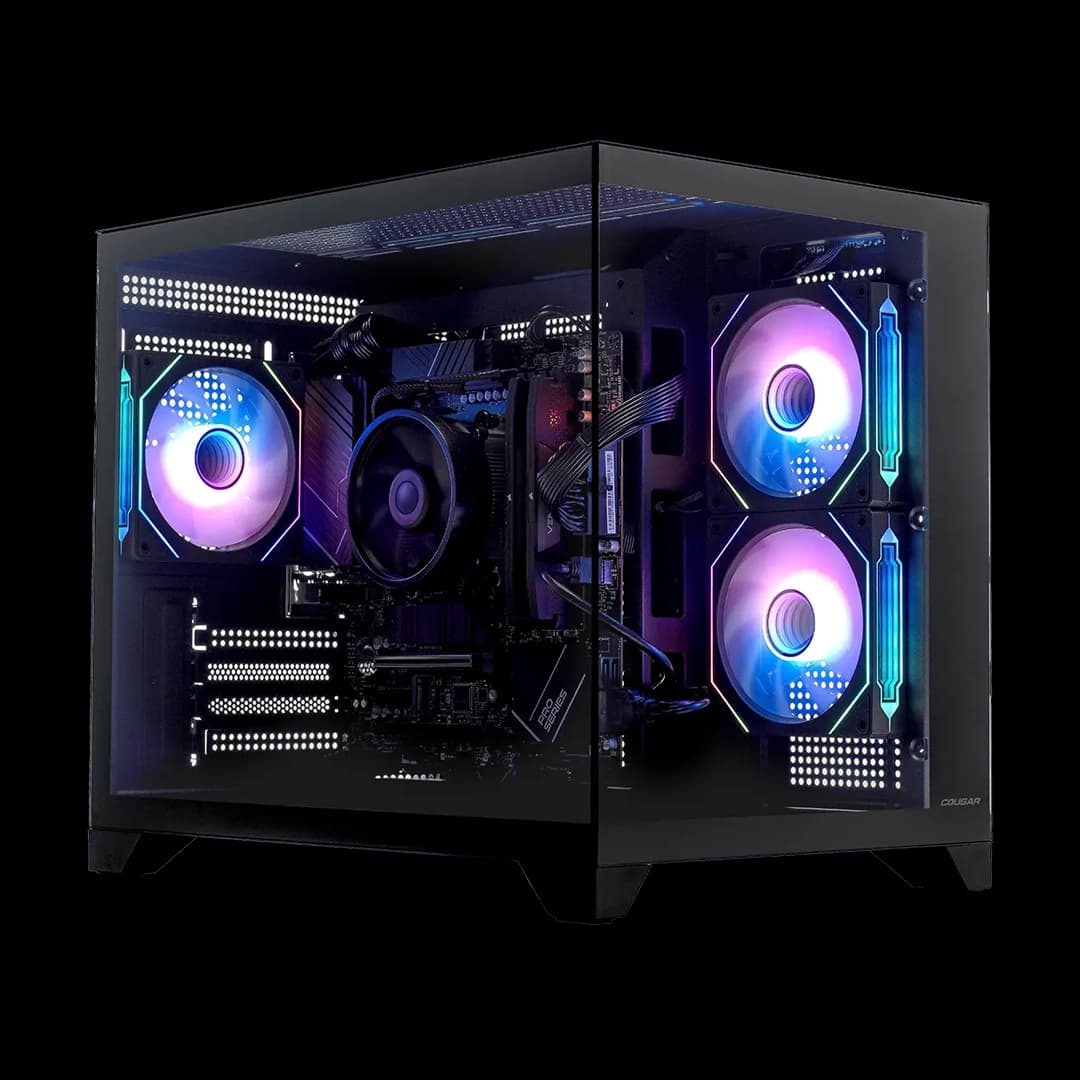
The power supply is rated at 750W with an 80+ efficiency certification. For a system drawing this much power under load, 750W is workable but not lavish. The cooling is handled by a 360mm all-in-one liquid cooler on the CPU, which is the right choice for the 9800X3D. The case is the Amethyst 350M, an airflow-focused chassis with seven aRGB LED fans. Connectivity includes Wi-Fi 5 and Ethernet. Operating system is Windows 11 Home 64-bit, and you get a year of Norton 360 for Gamers thrown in. Full specs below.
| Component | Specification |
|---|---|
| CPU | AMD Ryzen 7 9800X3D (8 cores, up to 5.2GHz) |
| GPU | AMD Radeon RX 9070 XT 16GB (RDNA 4) |
| RAM | 32GB DDR5 RGB |
| Storage | 2TB M.2 NVMe SSD |
| Motherboard | B650M |
| Cooler | 360mm All-in-One Liquid Cooler |
| PSU | 750W 80+ Certified |
| Case | Amethyst 350M Airflow Gaming Case |
| Case Fans | 7x aRGB LED Fans |
| Connectivity | Wi-Fi 5 and Ethernet |
| Operating System | Windows 11 Home 64-bit |
| Included Software | 1 Year Norton 360 for Gamers VPN and Security |
| Price | £1,899.00 |
The 9800X3D is not just a good CPU. It's currently the best gaming CPU AMD makes, and it's been sitting at the top of gaming CPU charts since it launched. The 3D V-Cache design gives it a massive 96MB of L3 cache, which is what makes it so effective in games. Many titles are heavily cache-sensitive, and the 9800X3D's enormous cache pool means the processor can serve up game data without constantly waiting on system memory. The result is higher average framerates and, crucially, much more consistent minimum framerates compared to chips that clock higher but cache less.
In practical terms, you're looking at a CPU that won't bottleneck the RX 9070 XT in virtually any gaming scenario. It's also a genuinely capable productivity chip. Eight cores at up to 5.2GHz handles video editing, streaming, 3D rendering, and general multitasking without complaint. The 9800X3D does run a bit warm under sustained all-core load compared to non-X3D variants, which is exactly why the 360mm AIO cooler in this build is the right call rather than a large air cooler. More on that in the cooling section.
One thing worth flagging for the sceptics: the B650M motherboard is perfectly fine for this CPU but it's not a high-end board. You won't be doing any serious overclocking here, and the 9800X3D doesn't really want to be overclocked anyway (the X3D architecture doesn't respond to it the way standard Ryzen chips do). What matters is that the board provides stable power delivery and doesn't throttle the chip under load, and B650M boards from decent manufacturers generally manage that fine. CyberPowerPC doesn't specify the exact board manufacturer in the listing, which is a mild annoyance but pretty standard for prebuilts at this level.
The RX 9070 XT is AMD's new RDNA 4 flagship below the 9080, and it's a proper card. Sixteen gigabytes of GDDR6 VRAM is generous and future-proofs you well against the increasingly VRAM-hungry games coming down the pipeline. RDNA 4 brings meaningful improvements to ray tracing performance compared to RDNA 3, which was AMD's weak spot for a while. It's not quite at the level of Nvidia's top-end RT performance, but it's close enough that it's no longer a meaningful reason to avoid AMD if you like the rest of the package.
At 1440p, which is the sweet spot resolution for a card at this level, you're looking at high-to-ultra settings in essentially everything. Modern open-world titles, competitive shooters, demanding RPGs, all of them should sit comfortably above 60fps on high settings with plenty of headroom. At 4K, you'll want to dial settings back in the most demanding titles, but with AMD's HYPR-RX technology and Fluid Motion Frames 2.1 handling upscaling and frame generation duties, 4K gaming is genuinely viable on this card. The 9070 XT is also very capable at 1080p for high-refresh-rate competitive gaming, where the 9800X3D's cache advantage really shows up in minimum framerates.
The HYPR-RX feature suite is worth understanding properly. It combines Radeon Super Resolution (AMD's upscaling technology), Radeon Boost, and Radeon Anti-Lag into a single toggle, and Fluid Motion Frames 2.1 adds frame generation on top. In games that support it well, you can see significant framerate boosts with minimal visual cost. It's AMD's answer to Nvidia's DLSS ecosystem, and while Nvidia still has a slight edge in upscaling quality in some titles, AMD's implementation has come a long way and is genuinely good in 2026. Ray tracing performance is also notably better on RDNA 4 than previous AMD generations, so if you want to run Cyberpunk 2077 or Alan Wake 2 with RT enabled, this card handles it far better than the RX 7000 series did.
Thirty-two gigabytes of DDR5 is the right call for a premium gaming build in 2026. Sixteen gigs was fine two years ago but games are getting greedier, and if you're running Chrome in the background or streaming while you play, 32GB means you never have to think about it. DDR5 on AM5 is also the native memory type for this platform, so you're getting the full benefit of the bandwidth improvements over DDR4. The RAM is listed as RGB, which is nice if you care about aesthetics and irrelevant if you don't.
The spec sheet doesn't confirm the exact speed of the DDR5 kit, which is a gap in CyberPowerPC's product listing. For the 9800X3D specifically, memory speed matters less than it does for other Ryzen chips because the massive L3 cache reduces how often the CPU needs to reach out to system memory. That said, you'd still ideally want DDR5-6000 or thereabouts for optimal performance on AM5. Whether CyberPowerPC has used a fast kit or a slower baseline DDR5-4800 spec is something you'd want to confirm before buying. It's a fair question to raise with their sales team.
Storage is 2TB via M.2 NVMe, which is genuinely good. The M.2 form factor means it's fast, the NVMe interface means it's much faster than any SATA drive, and 2TB means you can install a proper library of games. Modern AAA titles are routinely 100GB-plus now, so 2TB fills up, but it fills up slower than 1TB does. The B650M board will have at least one additional M.2 slot available for expansion, so adding more storage later is straightforward. You're not locked in. Whether there are spare SATA ports for traditional hard drives depends on the specific board variant CyberPowerPC has used, but that's less critical given how cheap M.2 SSDs have become.
A 360mm all-in-one liquid cooler is the right choice for the Ryzen 7 9800X3D. The chip runs warm under sustained load, particularly if you're doing anything that stresses all eight cores simultaneously, and a large AIO gives you the thermal headroom to let it do its thing without throttling. A 240mm AIO would be marginal. A 360mm is comfortable. Air cooling is technically viable but you'd want something like a Noctua NH-D15 to do it properly, which takes up a lot of case space and costs nearly as much as a decent AIO anyway.
The Amethyst 350M case comes with seven aRGB fans, which is a lot of fans. Seven fans in an airflow case means there's plenty of air movement through the system, which helps keep the GPU cool too. The RX 9070 XT can throw out meaningful heat under full load, and good case airflow is what stops that heat from building up and causing thermal throttling. From what owner reports suggest, the system runs quietly at idle and during light gaming, with fan noise becoming more noticeable under sustained heavy load. That's normal and expected behaviour for a system at this performance level.
One thing to keep an eye on with AIO coolers in prebuilts is the quality of the unit itself. CyberPowerPC doesn't specify the AIO manufacturer in the listing, which is frustrating because AIO quality varies a lot. A cheap AIO can develop pump noise or fail within a few years, while a decent one from a reputable manufacturer will last the life of the build. The 360mm radiator size is reassuring because larger radiators run their fans at lower speeds to achieve the same cooling, which means quieter operation and less wear on the fan bearings. If you do get a unit with a noisy pump from the factory, that's worth flagging to CyberPowerPC's support immediately.
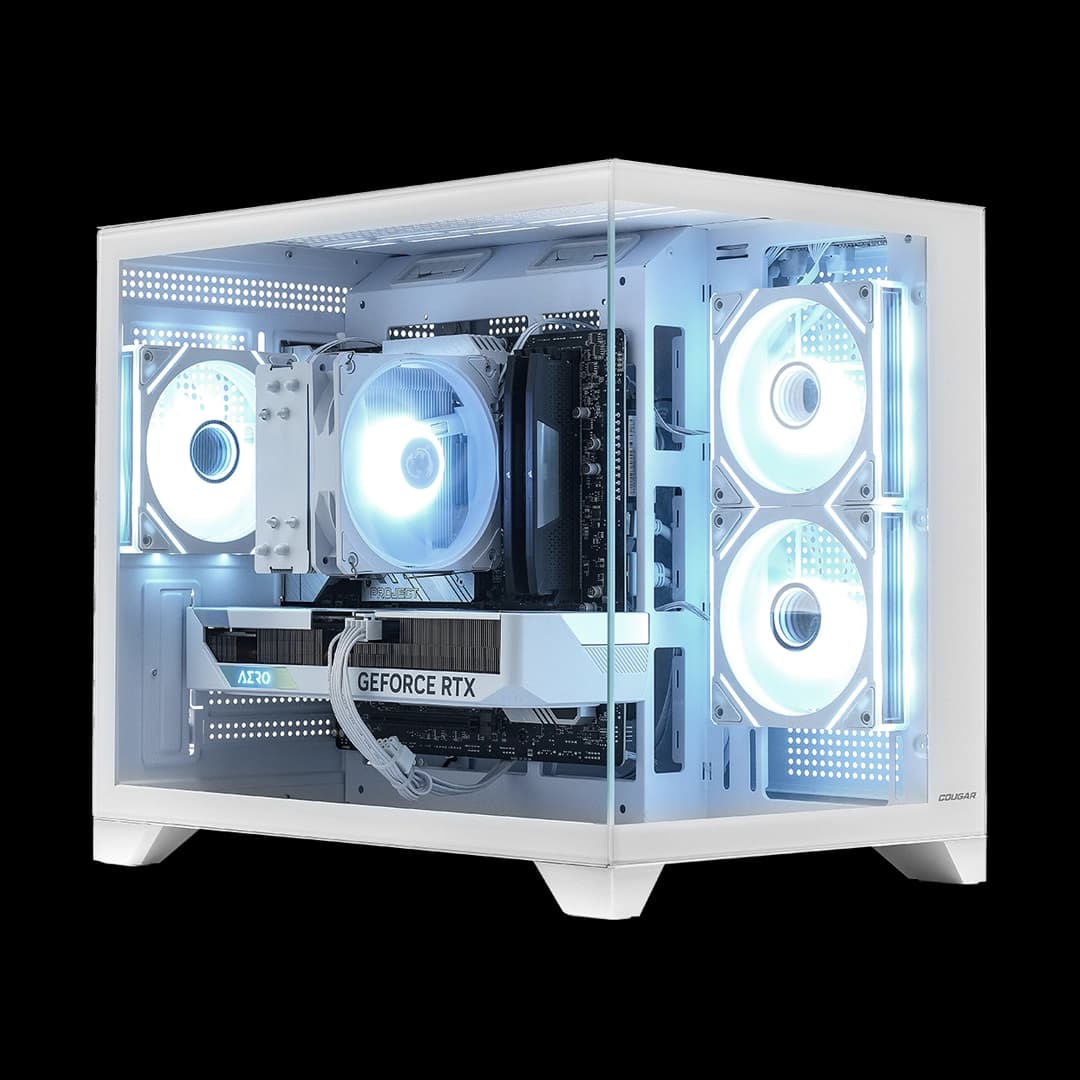
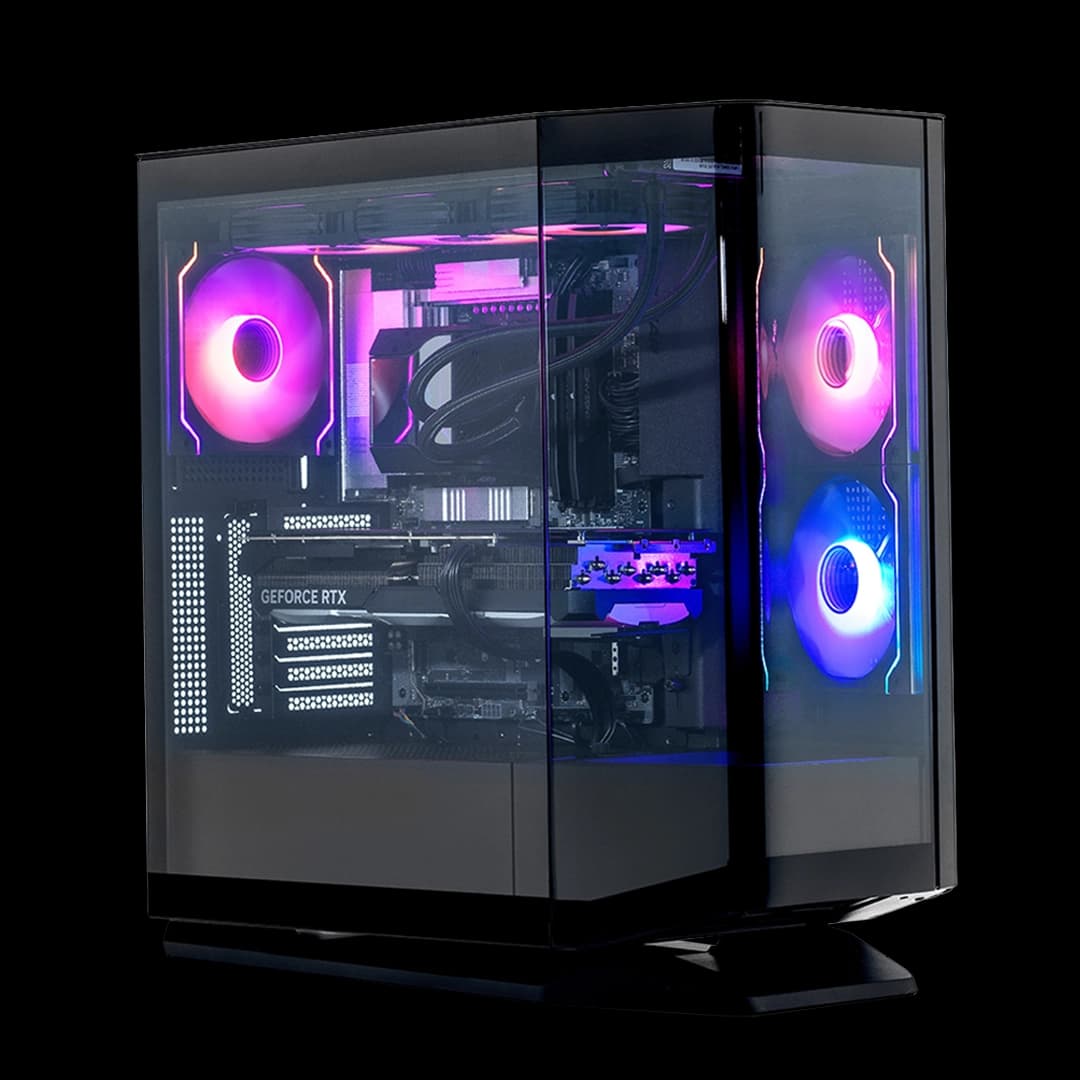
The Amethyst 350M is an airflow-focused mid-tower with a mesh front panel, which is exactly what you want in a gaming PC case. Mesh fronts allow air to flow freely into the case rather than forcing it through restrictive vents, and combined with seven fans, you've got a system that should breathe well. The aRGB fans mean the interior is lit up nicely, and the case presumably has a tempered glass or acrylic side panel to show it off, though the spec sheet doesn't confirm the exact panel material.
Prebuilt cable management is one of the areas where you genuinely have to trust the builder, and this is where CyberPowerPC's reputation is a bit mixed. Owner reviews for this specific unit are broadly positive, with the 4.2 average suggesting most buyers are happy. But some owners across CyberPowerPC's range have noted that cable management can be functional rather than beautiful. If you're planning to open the case and admire the internals, you might find it's tidier on the visible side than the back. That's not a dealbreaker, it's just the reality of prebuilt assembly at scale.
Build quality in terms of structural integrity seems fine based on owner feedback. No reports of panels rattling or components coming loose in transit, which is good. CyberPowerPC ships their systems with components secured for transport, and the Amethyst 350M is a reasonably solid chassis. The seven aRGB fans do add a lot of RGB headers to manage, and whether CyberPowerPC has routed those cables neatly or left them in a bundle is something individual units may vary on. Again, this is the prebuilt lottery. Most units are fine. Occasionally one isn't.
Wi-Fi 5 and Ethernet are confirmed in the spec sheet. Wi-Fi 5, also known as 802.11ac, is not the latest standard (Wi-Fi 6 and 6E are more current), but it's perfectly adequate for gaming if you're within reasonable range of your router. Maximum theoretical throughput on Wi-Fi 5 is well above what most home broadband connections can actually deliver, so in practice you're unlikely to notice the difference in online gaming. The wired Ethernet connection is the better choice if you can run a cable, and the fact that both are included means you're sorted either way.
The B650M motherboard will have rear I/O including USB ports, though the specific count and types aren't broken out in the product listing. B650M boards typically include a mix of USB-A and USB-C ports on the rear, along with the standard audio jacks and the video outputs from the GPU. The RX 9070 XT will have its own display outputs on the back of the card, which is where you'd plug your monitor in. The GPU's exact output configuration isn't specified in the listing, but RDNA 4 cards typically support DisplayPort and HDMI, giving you flexibility for multi-monitor setups.
The Amethyst 350M case will have front panel USB ports, which is where you'd plug in your headset, USB drives, and anything else you access regularly. The exact front panel port configuration isn't listed, but modern airflow cases in this category typically include at least two USB-A ports and often a USB-C port on the front. If front-panel USB-C is important to you, it's worth confirming with CyberPowerPC before ordering. That said, with the rear I/O on the board and GPU combined, you're unlikely to run short of ports in normal use.
Windows 11 Home 64-bit is what you're getting, which is the standard consumer version of Windows 11. For gaming, Home is fine. The only reason you'd want Pro is if you need BitLocker encryption, Remote Desktop hosting, or Hyper-V virtualisation, and most gamers don't need any of those. Windows 11 runs well on this hardware and AMD's platform is well-optimised for it. The Ryzen 7 9800X3D gets proper support in Windows 11 for its preferred core scheduling, which helps gaming performance.
The Norton 360 for Gamers VPN and Security subscription is a year-long inclusion. Norton is a well-known name in security software and the gaming-focused version is designed to run without interrupting your gameplay. Whether you actually want antivirus software running on a gaming PC is a personal preference. Windows Defender, which is built into Windows 11, is genuinely decent these days and many gamers prefer to run that and nothing else to minimise background CPU and RAM usage. The Norton licence is yours to use or ignore. It won't cause problems if you leave it installed, but it's not essential.
CyberPowerPC typically installs their own utility software for system monitoring and RGB control. The quality of these utilities varies. RGB control software in particular has a reputation for being bloaty and occasionally conflicting with other applications. If you find the included software annoying, you can uninstall it and use AMD's own Adrenalin software for GPU management, which is actually quite good. AMD Adrenalin is where you'll find the HYPR-RX toggle and Fluid Motion Frames settings, and it's worth spending ten minutes getting familiar with it after you set the machine up.
The AM5 platform is one of the better arguments for buying this specific prebuilt. AMD has committed to AM5 socket support through at least 2027, which means future Ryzen CPUs will drop straight into this motherboard with a BIOS update. If you buy this now and want to upgrade the CPU in two or three years, you've got options without needing a new motherboard. That's genuinely valuable and it's not something you get with every prebuilt platform. Intel's LGA1851 platform has a shorter confirmed roadmap by comparison.
RAM is DDR5 and on a B650M board you'll typically have two or four DIMM slots. If you've got four slots and two are populated with the 32GB kit, you can add another 32GB later for 64GB total without touching what's already in there. If it's a two-slot board with both slots used, upgrading RAM means replacing the existing kit rather than adding to it, which is more expensive. Again, the specific board variant matters and CyberPowerPC doesn't fully specify it. Storage expansion via the additional M.2 slot is straightforward and cheap. Adding a second NVMe drive is a five-minute job.
The 750W PSU is adequate for the current components but doesn't leave enormous headroom if you're thinking about a future GPU upgrade to something with a higher TDP. The RX 9070 XT has a TDP that 750W handles comfortably, but if you were to drop in a more power-hungry next-generation card down the line, you might find yourself wanting a bigger PSU. The good news is that the Amethyst 350M uses a standard ATX PSU form factor, so swapping it out is possible. Whether CyberPowerPC uses a proprietary or standard PSU connector layout is worth confirming if PSU upgrades are on your long-term plan.
The two most relevant comparisons here are a DIY build with the same components, and a competing prebuilt at a similar price point. Let's be honest about the DIY comparison first. Sourcing a Ryzen 7 9800X3D, an RX 9070 XT, 32GB DDR5, a 2TB NVMe, a B650M board, a 360mm AIO, a decent case, and a 750W PSU separately will cost you more than this prebuilt at current component prices. That's not always the case with prebuilts, but right now, with GPU prices where they are and the 9800X3D commanding a premium, CyberPowerPC's buying power means this bundle is genuinely competitive. You're not paying a massive convenience tax here.
Against competing prebuilts, the main alternatives in this price bracket are systems from Chillblast, Scan, and other UK system builders. Chillblast in particular has a good reputation for build quality and component selection, and they're transparent about the exact parts they use, which is an advantage over CyberPowerPC's sometimes vague listings. Scan's systems tend to be well-built but can be priced at a premium. The CyberPowerPC's advantage is the combination of specs at the price point. The disadvantage is the uncertainty around exact component brands for things like the PSU, AIO, and motherboard.
For the money, this sits in a genuinely interesting spot. It's premium tier pricing but the core components (CPU and GPU) are top-tier, not mid-range parts dressed up. That's the key distinction. Some prebuilts at this price use older or slower CPUs to pad margins. This one doesn't. The 9800X3D and 9070 XT are both current-generation flagship components, and that's reflected in the real-world performance you'd expect to get out of it.
| Feature | CyberPowerPC Luxe (This PC) | Chillblast Fusion Vortex RTX 5070 Ti | DIY Equivalent Build |
|---|---|---|---|
| CPU | Ryzen 7 9800X3D | Intel Core Ultra 7 265K | Ryzen 7 9800X3D |
| GPU | RX 9070 XT 16GB | RTX 5070 Ti 16GB | RX 9070 XT 16GB |
| RAM | 32GB DDR5 | 32GB DDR5 | 32GB DDR5 |
| Storage | 2TB NVMe | 2TB NVMe | 2TB NVMe |
| Cooler | 360mm AIO | 360mm AIO | Your choice |
| PSU | 750W 80+ | 850W 80+ Gold | Your choice |
| Component Transparency | Partial | Full | Full (you choose) |
| Price Tier | Premium | Premium | Similar or higher |
CyberPowerPC offers a standard manufacturer warranty on their prebuilt systems, typically covering parts and labour for the first year. For UK buyers, this sits on top of your statutory rights under the Consumer Rights Act 2015, which gives you up to six years of protection against goods that were faulty at the time of manufacture. In practice, this means that even after the manufacturer warranty expires, you have legal recourse if a component fails due to a pre-existing defect rather than wear and tear. That's a meaningful protection that many buyers don't realise they have. CyberPowerPC's own support quality is generally described as adequate by owners, though response times can vary. If you buy through Amazon, the 30-day return window gives you a comfortable period to identify any early issues.
Resale value is worth thinking about at this price point. The Ryzen 7 9800X3D holds its value well as a standalone chip because it's genuinely hard to beat in gaming workloads and demand stays strong. The RX 9070 XT is new enough that depreciation will be gradual rather than sudden over the next 24 months. A system like this, kept in good condition, would likely retain a reasonable proportion of its value at the 24-month mark, though obviously the exact figure depends on what the GPU market looks like at that point. By 36 months, next-generation RDNA 5 cards and Ryzen 10000-series CPUs will be established, which will put more downward pressure on resale prices. The AM5 platform's longevity is a genuine asset here because buyers know they can upgrade the CPU without replacing the whole system.
The upgrade path from this build is actually quite sensible. The AM5 socket gives you a clear CPU upgrade path to future Ryzen generations. The B650M board is the main limiting factor, as higher-end X670E boards support more PCIe lanes and better overclocking, but for most users the B650M will never be the bottleneck. The GPU slot is standard PCIe, so swapping the 9070 XT for a future card is straightforward as long as the PSU can handle the new card's power requirements. The 2TB NVMe can be supplemented with a second drive easily. In short, this isn't a dead-end system. It's a solid foundation you can build on over several years without starting from scratch.
The sticker price includes VAT, as all UK consumer pricing does, so what you see is what you pay. At this premium tier, it's worth thinking about what else you need to make this system actually work for you. If you don't already have a monitor capable of taking advantage of the RX 9070 XT's performance, you'll want at least a 1440p display, ideally with a high refresh rate of 144Hz or above. A good 1440p 165Hz monitor adds a meaningful amount to the total cost. If you're targeting 4K, a decent 4K 144Hz panel costs considerably more. Factor that into your budget if you're coming from a 1080p screen or starting from scratch.
Running costs are worth a quick look. A system drawing around 400 to 450W under full gaming load (CPU and GPU combined, with fans and other components) at the UK average electricity rate of roughly 27p per kWh works out to approximately 11 to 12p per hour of heavy gaming. That's a little over a pound for a ten-hour gaming session. Over a year of regular use, say three hours of gaming per day, you're looking at roughly 120 to 130 pounds a year in electricity for the PC alone. It's not nothing, but it's not alarming either. The 80+ efficiency rating on the PSU means you're not wasting too much power as heat.
Beyond the monitor, the main co-purchases to consider are peripherals if you don't have them (keyboard, mouse, headset), and potentially a better chair and desk setup if you're moving to a dedicated gaming space. The system itself ships with everything needed to plug in and go, assuming you have a monitor, keyboard, and mouse. The Norton 360 subscription is included for a year, so you don't need to budget for security software immediately. After the first year, you can either renew Norton, switch to a cheaper alternative, or just use Windows Defender. All three are reasonable choices. The total realistic budget for a complete setup from scratch, including a good 1440p monitor and basic peripherals, adds a significant amount on top of the PC's price, so plan accordingly.
Prebuilt gaming PCs have a few common failure modes worth knowing about before you buy. The most common early issues are AIO cooler problems (pump noise, reduced cooling performance), PSU quality issues (coil whine under load, efficiency degradation), and RAM seating issues that cause boot failures. For this specific system, the AIO is the component I'd watch most carefully in the first few weeks. A 360mm AIO is a good choice thermally, but if CyberPowerPC has used a budget unit, you might hear pump noise at startup or under load. This isn't a design defect in most cases, it's a quality control issue with individual units. If your unit has a noisy pump from day one, get it returned or replaced promptly rather than hoping it settles down.
The PSU at 750W with an 80+ rating (no Gold or Platinum specified in the listing) is another area where the specific unit matters more than the wattage number. An 80+ Bronze or basic 80+ certified PSU from an unknown brand is meaningfully different from an 80+ Gold unit from a reputable manufacturer. CyberPowerPC doesn't always use top-tier PSUs in their prebuilts, and the PSU is one of the components where corners get cut most often. Coil whine from the PSU is a relatively common complaint across prebuilt systems generally. It's usually harmless but annoying, and it's worth knowing that it's a quality control lottery rather than a guaranteed outcome. If you get a unit with significant coil whine, UK consumer rights mean you can request a replacement.
Under UK consumer law, specifically the Consumer Rights Act 2015, goods must be of satisfactory quality, fit for purpose, and as described. If your system arrives with a fault, you have the right to a repair, replacement, or refund within the first 30 days (full refund), and repair or replacement rights for up to six years after that if the fault can be shown to have existed at the time of purchase. Amazon's 30-day return policy aligns with the short-term statutory right, making the return process straightforward for early failures. For faults that appear after the 30-day window but within the first year, CyberPowerPC's manufacturer warranty is your first port of call. Beyond a year, the Consumer Rights Act is your backstop. Is it worth a re-roll if you get a bad unit? For coil whine or a noisy pump, yes, absolutely. These are quality control issues and you shouldn't have to live with them on a premium-priced system. For minor cosmetic issues that don't affect performance, that's more of a personal call.

The CyberPowerPC Luxe Gaming PC - AMD Ryzen 7 9800X3D, AMD Radeon RX 9070 XT 16GB, 32GB RAM, 2TB NVMe SSD, 750W 80+ PSU, Wi-Fi, Liquid Cooling, Windows 11, Amethyst Curve RGB is one of the more honestly specced prebuilts at this price tier. The core components, the 9800X3D and the 9070 XT, are genuinely current-generation flagship parts. That matters. A lot of prebuilts at premium prices use last-gen or mid-range components to pad margins. This one doesn't, and the 4.2-star average from verified owners suggests most people are happy with what they receive.
The honest caveats are around component transparency. CyberPowerPC doesn't fully disclose the PSU brand, AIO manufacturer, or exact motherboard model, which makes it harder to assess the quality of the supporting cast. The PSU in particular is worth scrutinising if you get the chance to identify it after delivery. The Wi-Fi 5 standard is functional but not cutting-edge. And the B650M motherboard, while perfectly capable, is the more budget-friendly AM5 option rather than a premium X670E board. None of these are dealbreakers, but they're the compromises you accept in exchange for the convenience of a prebuilt.
If you want a machine that'll handle 1440p gaming at high settings in essentially everything, do 4K with upscaling, stream, edit video, and not need touching for several years, this is a solid option. The AM5 platform's longevity is a genuine long-term benefit. The 9800X3D and 9070 XT are a well-matched pairing. And at the current price, you'd struggle to build something equivalent for less by the time you've sourced all the components individually. Our editorial score is 8 out of 10. Knocked down slightly for the component transparency issues and the 750W PSU that doesn't specify its efficiency tier beyond 80+, but recommended for anyone who wants premium performance without the self-build faff.
| CPU | AMD Ryzen 7 9800X3D |
|---|---|
| GPU | AMD Radeon RX 9070 XT 16GB |
| RAM | 32GB |
| Storage | 2TB |
| Case | Phanteks NV5S Black |
| Case size | mid-tower |
| Cooling | AIO liquid |
| CPU cooler | Corsair Nautilus 360mm RS AIO Liquid Cooler |
| GPU vram | 16GB |
| Launch year | 2025 |
| Motherboard | MSI MAG B850 TOMAHAWK MAX WIFI |
| Motherboard chipset | B850 |
Yes, genuinely so. The Ryzen 7 9800X3D is the best gaming CPU AMD currently makes, and the RX 9070 XT is a top-tier RDNA 4 GPU with 16GB of VRAM. At 1440p you can expect high to ultra settings in essentially every current title with strong framerates. At 4K, demanding titles will need settings adjustments but AMD's HYPR-RX with Fluid Motion Frames 2.1 makes 4K gaming very viable. At 1080p on a high-refresh monitor, this system is outstanding. It's a proper gaming machine, not a box with gaming-sounding specs.
The AM5 platform is one of its best features for upgradeability. Future AMD Ryzen CPUs will drop into the same socket with a BIOS update, giving you a clear CPU upgrade path through at least 2027. The B650M motherboard has at least one additional M.2 slot for storage expansion, so adding a second NVMe drive is easy. RAM can be expanded depending on how many DIMM slots are populated. The GPU uses a standard PCIe slot, so future GPU upgrades are possible, though you may want a higher-wattage PSU if you move to a more power-hungry next-gen card. The case uses a standard ATX PSU, so that swap is doable too.
At current component prices, this prebuilt is actually competitive with a DIY equivalent. The Ryzen 7 9800X3D and RX 9070 XT both carry a premium individually, and sourcing a 360mm AIO, B650M board, 32GB DDR5, 2TB NVMe, a decent case, and a 750W PSU separately adds up quickly. CyberPowerPC's volume buying means the bundle price is often comparable to or lower than self-sourcing. The trade-off is that you don't know the exact PSU brand or AIO manufacturer, and your cable management is someone else's work. For buyers who want the convenience and are happy with those trade-offs, it's worth it. For enthusiasts who want full control over every component, DIY is still the better route.
The listing confirms a 750W PSU with 80+ efficiency certification, but doesn't specify the brand or the exact efficiency tier beyond 80+. This is one of the more frustrating gaps in CyberPowerPC's product information. 750W is adequate for the Ryzen 7 9800X3D and RX 9070 XT combination, but leaves limited headroom for future GPU upgrades to higher-TDP cards. The 80+ certification means it meets a baseline efficiency standard, but without knowing whether it's Bronze, Gold, or Platinum rated, it's hard to assess the quality of the unit. If PSU quality is important to you, it's worth contacting CyberPowerPC's sales team to ask for the specific unit before ordering.
Amazon offers a 30-day hassle-free return window, which gives you a solid period to identify any early faults. CyberPowerPC typically provides a 1-year manufacturer warranty covering parts and labour. Beyond that, UK buyers are protected by the Consumer Rights Act 2015, which provides up to six years of recourse for faults that can be shown to have existed at the time of manufacture. This means even after the manufacturer warranty expires, you're not entirely without protection. For any faults within the first 30 days, the Amazon return process is straightforward. After that, contact CyberPowerPC's support directly. Check the current product listing for the exact warranty terms as they can vary by configuration.
The competition at a glance
~£1,899approx
The choice we'd make at this price band. Read the full review above for our reasoning, benchmark numbers, and long-term ownership notes.
~£1,999approx
Where it wins
Where it falls short
~£1,749approx
Where it wins
Where it falls short
Prices are approximate UK street prices at time of review. Live pricing on each retailer.
Premium specs, honest pricing, and a future-proof platform make this one of the better prebuilts at this tier. Just be aware of the component transparency gaps around the PSU and AIO.
Buy at Amazon UK · £1,899.00
More from