Best Overall Value
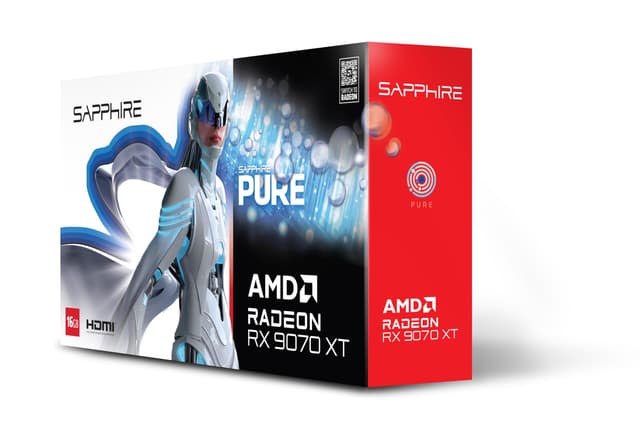
The XFX Mercury RX 9070 XT is, quite simply, the best graphics card for esports players who want a card that handles competitive titles effortlessly today and has genuine headroom for years to come. Built on AMD's RDNA 4 architecture, it delivers outstanding 1440p performance, which matters if you are running a high-refresh 1440p monitor for titles like Valorant, CS2, or Apex Legends.
The 16GB of GDDR6 is a big deal here. Most esports titles will not touch that VRAM ceiling, but it means you are not going to hit a wall if you also play modern AAA games or start streaming your sessions. The magnetic air cooling system keeps thermals in check without the fans spinning up aggressively, so you can actually hear your teammates in voice chat.
For esports specifically, the RX 9070 XT will push well above 200fps in CS2 and Valorant at 1440p on high settings. Drop to 1080p and you are looking at framerates that will saturate even a 360Hz panel. AMD's FidelityFX Super Resolution (FSR) is supported across a wide range of competitive titles, giving you extra fps headroom when you need it.
The RGB lighting is tasteful rather than garish, and the build quality feels premium. At its price point, nothing else in this roundup comes close for the combination of performance, VRAM, and future-proofing. It is the clear top pick among the best graphics cards for esports players in 2026.
Pros
- Exceptional 1440p esports performance
- 16GB GDDR6 is future-proof for years
- Quiet magnetic air cooling
- FSR support across competitive titles
- Strong value versus the competition
Cons
- No NVIDIA Reflex support (AMD platform)
- RDNA 4 driver maturity still catching up
- Overkill for pure 1080p esports use
Buy on Amazon£798.00
Best for Beginners
Here is the honest truth about esports: you do not need a £700 GPU to compete. The MSI RTX 3050 VENTUS 2X XS WHITE proves that point perfectly. At its price, it is the most sensible entry point for anyone getting into competitive PC gaming for the first time.
In CS2 at 1080p on medium-high settings, the RTX 3050 comfortably hits 144fps and beyond. Valorant, Rocket League, and League of Legends all run beautifully. These are the titles most esports beginners are actually playing, and this card handles all of them without breaking a sweat.
The VENTUS 2X cooler is compact and quiet. The white colourway is a nice touch for anyone building a clean white-themed rig. It is a small card physically, which means it fits in tighter cases without any drama. NVIDIA's DLSS 2 support is present, though you will not need it much in esports titles at 1080p since native performance is already strong.
The 128-bit memory bus is the main limitation here. It is fine for 1080p esports, but if you ever want to push to 1440p or play more demanding AAA titles alongside your competitive games, you will feel the constraint. For a pure esports beginner build though, this is sorted.
Pros
- Excellent value for 1080p esports
- Compact and easy to fit in any case
- Quiet VENTUS 2X cooling
- NVIDIA Reflex support for lower input latency
- Attractive white aesthetic
Cons
- 128-bit bus limits 1440p potential
- Not suited for demanding AAA titles
- DLSS 2, not the newer DLSS 4
Buy on Amazon
Best Build Quality
The Gigabyte RTX 5070 Ti GAMING OC is the most technically impressive card in this roundup. GDDR7 memory, PCIe 5.0, a 2588MHz boost clock, and DLSS 4 with Multi Frame Generation make this a genuinely next-generation product. For esports players who also want to play the latest AAA titles at maximum settings, this card does it all.
In competitive titles, DLSS 4 with Frame Generation can push framerates to extraordinary levels. We are talking 300fps-plus in CS2 at 1440p with DLSS quality mode enabled. The GAMING OC triple-fan cooler is well-built and keeps the card cool under sustained load, which matters during long tournament sessions.
The build quality here is genuinely excellent. Gigabyte's GAMING OC line uses solid capacitors, a reinforced PCIe slot, and a metal backplate. It feels like a card built to last. That said, the price is very high for an esports-focused purchase. You are paying for 4K AAA capability that most competitive players will never use. If esports is your primary focus, the RX 9070 XT offers 90% of the competitive performance for considerably less money.
But if you want the absolute best build quality in this roundup and plan to use the card for everything, this is it.
Pros
- GDDR7 and PCIe 5.0 are genuinely future-proof
- DLSS 4 with Multi Frame Generation is impressive
- Excellent build quality and cooling
- Handles 4K AAA and esports equally well
Cons
- Very expensive for esports-only use
- Large card, needs a spacious case
- Overkill for 1080p competitive gaming
Buy on Amazon
Best Under £100 (Compact Category)
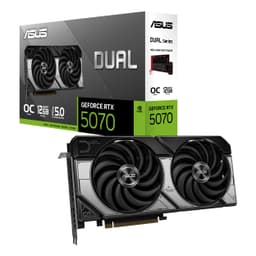
Small-form-factor esports rigs are genuinely popular, especially for LAN events and tournament travel. The ASUS DUAL RTX5070 OC is built with exactly that use case in mind. It is compact, SFF-ready, and packs 12GB of GDDR7 memory alongside a 2572MHz boost clock. That is serious performance in a small package.
For esports players running mini-ITX or mATX builds, this card is a proper find. It delivers RTX 5070 performance, which means 1440p esports at very high framerates and solid 4K capability if you ever want it. The dual-fan ASUS cooler is efficient for the card's size, and thermals stay reasonable even under extended gaming sessions.
NVIDIA Reflex is supported, which is a meaningful advantage for competitive players. Reflex reduces system latency in supported titles like Valorant and Apex Legends, and the difference is noticeable on a 240Hz monitor. DLSS 4 is also on board, giving you frame rate headroom in titles that support it.
The main compromise is that the dual-fan cooler runs slightly louder than the triple-fan options in this roundup. Not a dealbreaker, but worth knowing if you are sensitive to fan noise during long sessions.
Pros
- Compact SFF-ready design
- 12GB GDDR7 is excellent for the size
- NVIDIA Reflex and DLSS 4 support
- Strong 1440p esports performance
Cons
- Dual-fan cooler is louder than triple-fan alternatives
- Premium price for a compact card
Buy on Amazon
Best Under £50 (Low-Profile Category)
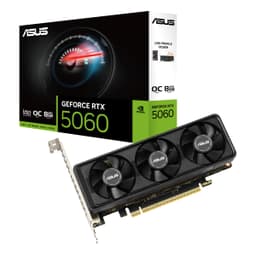
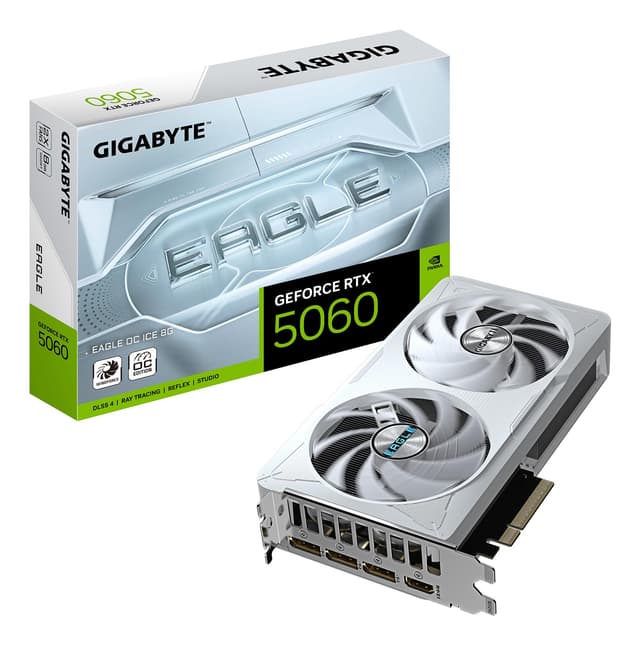
Low-profile graphics cards are a niche but genuinely useful category. If you are building an esports PC in a slim desktop case, a standard GPU simply will not fit. The ASUS RTX 5060 LP solves that problem while still delivering respectable performance for competitive gaming.
The 8GB of GDDR7 is a step up from the GDDR6 you get in older budget cards, and the RTX 5060 chip handles 1080p esports titles with ease. CS2, Valorant, and Fortnite all run well above 144fps at 1080p. The IP5X dust resistance rating is a practical bonus for LAN environments where dust is a real concern.
DLSS 4 and NVIDIA Reflex are both present, which is impressive for a low-profile card. The single-fan design keeps the footprint minimal, though it does mean thermals run a bit warmer than dual-fan alternatives. In a well-ventilated slim case, it is fine. In a poorly ventilated one, you might see some throttling under extended load.
This is a very specific card for a very specific use case. If you need low-profile, it is the best option here. If your case accepts a standard GPU, the RTX 3050 VENTUS offers better value.
Pros
- Only low-profile option with GDDR7
- IP5X dust resistance is genuinely useful
- DLSS 4 and Reflex support
- Fits slim desktop and HTPC cases
Cons
- Single fan runs warm in poor airflow
- 8GB VRAM limits future-proofing
- Not competitive value versus standard-form cards
Buy on Amazon£429.98
Top-End Pick
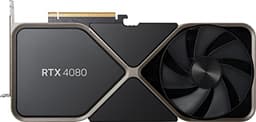
The RTX 4080 Founders Edition is a technically excellent GPU. There is no question about that. But for esports players specifically, it is a very hard sell at its current asking price. You are paying for 4K ultra gaming capability that competitive players simply do not need.
In esports titles, the RTX 4080 will absolutely max out any monitor you throw at it. 360Hz at 1080p? Sorted. 240Hz at 1440p? No problem. The Founders Edition design is genuinely beautiful, compact for a high-end card, and runs impressively quiet. NVIDIA Reflex and DLSS 3 are both supported, and the card's Ada Lovelace architecture handles frame generation well.
The honest assessment: if you are an esports player who also plays demanding AAA titles and wants a single card to do everything brilliantly, the RTX 4080 FE delivers. But if esports is your primary focus, you are spending roughly two to three times more than you need to. The RX 9070 XT handles competitive titles just as effectively for far less money.
Pros
- Exceptional performance across all use cases
- Beautiful, compact Founders Edition design
- Runs quiet under esports workloads
- DLSS 3 and Reflex support
Cons
- Massively overpriced for esports-only use
- Superseded by RTX 5000 series in 2026
- Poor value versus the RX 9070 XT
Buy on Amazon£1875.56
Legacy High-End
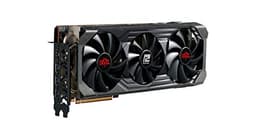
The Powercolor Red Devil RX 6800 XT was a brilliant card when it launched. The 16GB of GDDR6 and AMD Infinity Cache made it a genuine high-end option for 1440p gaming. For esports, it still delivers strong framerates in competitive titles. CS2, Valorant, and Apex Legends all run well above 144fps at 1440p.
The Red Devil cooler is one of the best triple-fan designs Powercolor has ever made. It runs cool and quiet, and the build quality is solid. The card also supports AMD FreeSync, which pairs well with AMD-compatible monitors.
Here is the problem though. The current asking price is very difficult to justify in 2026. The RX 9070 XT offers better performance, newer architecture, and more modern feature support for less money. The RX 6800 XT is an RDNA 2 card in a world that has moved to RDNA 4. Ray tracing performance was never its strong suit, and the lack of FSR 3 Frame Generation support limits its longevity.
If you find one at a significantly reduced price, it is still a capable esports card. At current retail pricing, it is hard to recommend over newer alternatives.
Pros
- 16GB GDDR6 is generous
- Excellent Red Devil triple-fan cooler
- Strong 1440p esports framerates
Cons
- Badly overpriced versus newer alternatives
- RDNA 2 architecture is two generations old
- No FSR 3 Frame Generation support
- Weak ray tracing performance
Buy on Amazon£1377.32
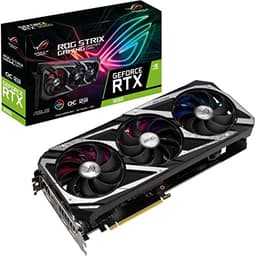
Premium Mid-Range
The ASUS ROG Strix RTX 3060 V2 OC is a card with a genuine hidden strength: 12GB of GDDR6 on a mid-range chip. Most RTX 3060 competitors shipped with 8GB. That extra VRAM means the card handles texture-heavy games and streaming workloads better than you might expect from the underlying GPU.
For esports, the RTX 3060 is more than capable at 1080p. It will push 144fps comfortably in CS2, Valorant, and Apex Legends. The ROG Strix Axial-tech fan design keeps it cool and quiet, and the 2.7-slot build feels premium in hand. NVIDIA Reflex is supported, which is a real plus for competitive play.
The issue is pricing. At current retail, you are paying a significant premium for the ROG Strix branding and the 12GB VRAM on a chip that is now two generations old. The RTX 3050 VENTUS offers better value for pure esports use, and the RX 9070 XT offers far better performance for not much more money. The ROG Strix RTX 3060 sits in an awkward middle ground in 2026.
Pros
- 12GB VRAM is unusually generous for this tier
- Excellent ROG Strix build quality
- Quiet Axial-tech cooling
- NVIDIA Reflex support
Cons
- Overpriced for an Ampere-generation chip in 2026
- Better value alternatives exist at similar prices
Buy on Amazon£817.36
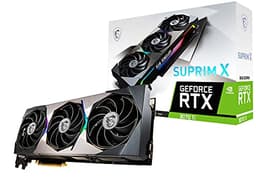
1440p Esports
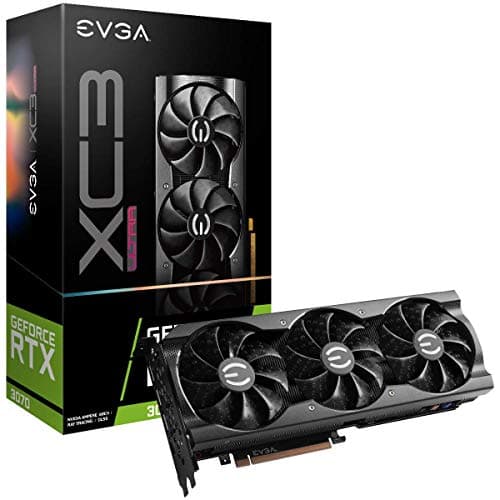
The MSI RTX 3070 Ti Suprim X is a card that punches above its chip's weight thanks to one of the best coolers MSI has ever made. The Suprim X triple-fan design keeps the GPU running cool and quiet even under sustained load, which matters for long esports sessions. The card handles 1440p competitive gaming well, pushing strong framerates in CS2 and Valorant.
For esports players who game at 1440p on a 144Hz or 165Hz monitor, the RTX 3070 Ti is still a capable choice. GDDR6X memory gives it slightly more bandwidth than the standard RTX 3070, which helps in more demanding scenarios. NVIDIA Reflex is supported across competitive titles.
The 8GB VRAM is starting to feel tight in 2026, particularly if you play any modern AAA titles alongside your competitive games. And the current pricing is the real sticking point. At these prices, the RTX 3070 Ti Suprim X is competing directly with newer-generation cards that offer better performance and more modern features. It is a good card being let down by its price tag.
Pros
- Suprim X cooler is genuinely excellent
- Strong 1440p esports performance
- GDDR6X bandwidth advantage
- NVIDIA Reflex support
Cons
- 8GB VRAM is limiting in 2026
- Overpriced versus newer alternatives
- Ampere architecture lacks DLSS 3 and 4
Buy on Amazon£803.38
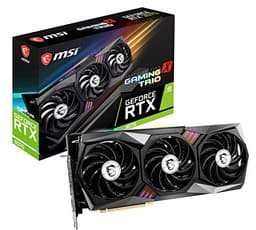
Reliable Mid-Range
The MSI RTX 3070 Gaming X Trio was one of the most popular mid-range cards of its generation, and it is easy to see why. The Tri-Frozr 2 cooler with TORX Fan 4.0 is excellent, the RGB implementation is tasteful, and the card handles 1440p esports gaming without any drama.
In competitive titles at 1440p, the RTX 3070 delivers solid framerates. It is not going to saturate a 360Hz monitor, but for 144Hz to 165Hz gaming it is perfectly capable. The 256-bit memory bus gives it decent bandwidth, and NVIDIA Reflex support means you get the input latency benefits in supported esports titles.
Like the RTX 3070 Ti above it, the main issue is value. The RTX 3070 Gaming X Trio is an Ampere card in a market that has moved to Ada Lovelace and Blackwell. No DLSS 3 or 4, no Frame Generation. For pure esports at 1440p it is still functional, but the pricing needs to reflect its age. If you find one significantly discounted, it is worth considering. At current prices, newer options are more sensible.
Pros
- Tri-Frozr 2 cooler is very effective
- Solid 1440p esports performance
- NVIDIA Reflex support
- Reliable, well-proven platform
Cons
- Ampere lacks DLSS 3 and 4
- 8GB VRAM is tight for modern AAA titles
- Needs a price drop to be competitive in 2026
Buy on Amazon£835.14
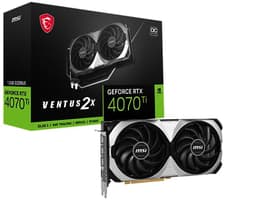
High-End Ada
The MSI RTX 4070 Ti Ventus 2X is an Ada Lovelace card with 12GB of GDDR6X and DLSS 3 support. For esports, it is more than capable. Framerates in competitive titles are excellent, and the Ada architecture brings proper DLSS 3 Frame Generation support, which can push framerates even higher in supported games.
The Ventus 2X cooler is the budget end of MSI's lineup, which means it runs a bit warmer and louder than the Suprim or Gaming X Trio alternatives. For esports workloads, which are not particularly GPU-intensive, this is not a major issue. But under sustained AAA gaming loads, you will notice the fans working harder.
The honest problem here is the asking price. At over £1,600, this card is being sold at a significant premium over its actual market value. The RTX 5070 Ti and RX 9070 XT both offer comparable or better performance for less money in 2026. The RTX 4070 Ti was a great card in 2023. In 2026, it is overpriced. Hard to recommend at this price point for anyone focused on the best graphics cards for esports players.
Pros
- 12GB GDDR6X is solid for esports and AAA
- DLSS 3 and Reflex support
- Ada Lovelace efficiency
Cons
- Massively overpriced in 2026
- Ventus 2X cooler is mediocre for the price
- Superseded by RTX 5000 series
Check availability
Legacy Option
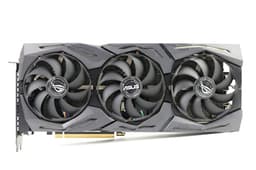
Look, the ASUS ROG Strix RTX 2070 Super is a beautiful piece of hardware. The ROG Strix triple-fan cooler is genuinely one of the best designs ASUS has ever produced, and the build quality is exceptional. The USB Type-C output is a nice touch for VR headsets. But none of that changes the fundamental problem: this is a Turing-generation card from 2019 being sold at a price that makes no sense in 2026.
For esports at 1080p, the RTX 2070 Super can still hit 144fps in less demanding titles like CS2 and Valorant. But it lacks DLSS 2 (it has DLSS 1, which is significantly worse), has no Reflex support in many titles, and the Turing architecture is showing its age in driver optimisation and feature support.
The asking price is the dealbreaker. You can buy the MSI RTX 3050 VENTUS for less money and get better esports performance, newer features, and NVIDIA Reflex support. The RTX 2070 Super at current pricing is a collector's item, not a sensible purchase. It sits at the bottom of this roundup for good reason. Avoid unless you find one at a dramatically reduced price.
Pros
- Excellent ROG Strix build quality
- USB Type-C output for VR
- Still functional for light 1080p esports
Cons
- Wildly overpriced for a 2019 GPU
- No proper DLSS support (DLSS 1 only)
- Limited Reflex support
- Turing architecture is very dated in 2026
- Better options available for less money
Buy on Amazon£988.51