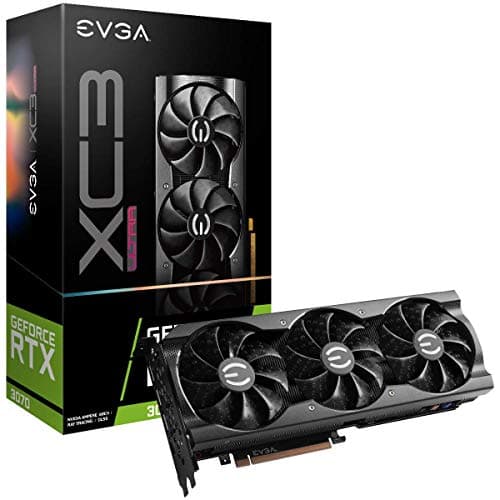
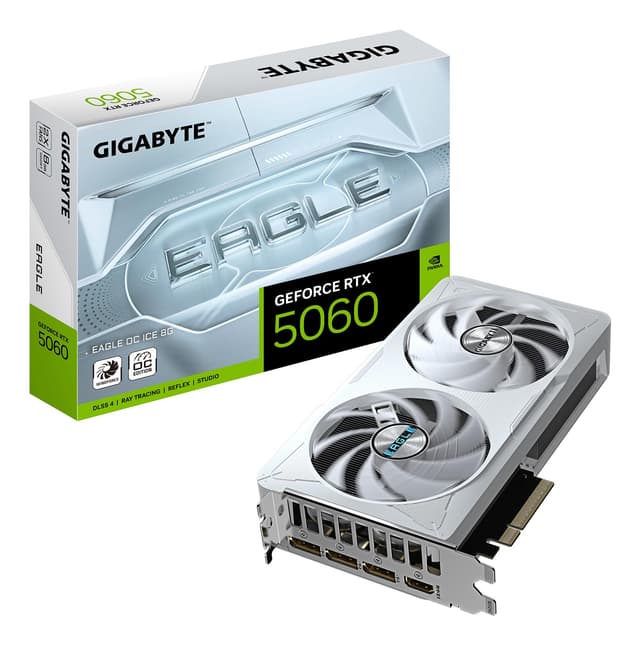
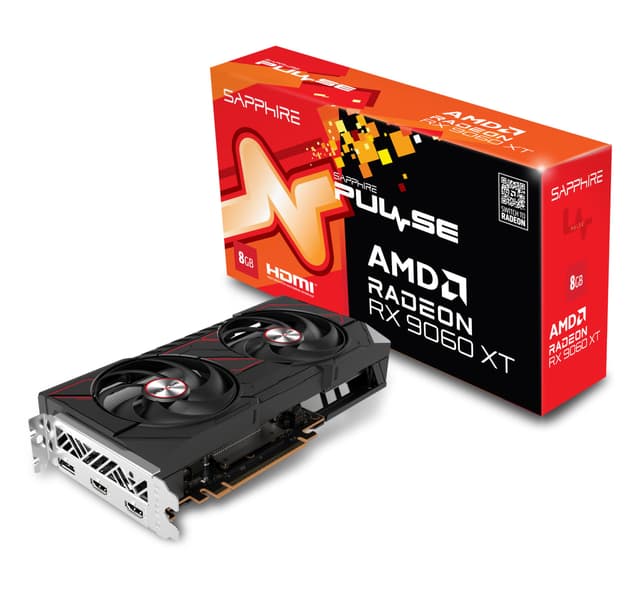
Esports players and competitive gamers have a very specific set of demands from a graphics card: sky-high, stable frame rates at 1080p, low input lag, and the best possible performance per pound. Whether you are grinding ranked matches in Valorant, Counter-Strike 2, Apex Legends or Fortnite, raw resolution-pushing power matters far less than consistent triple-digit frame rates. The good news is that the sub-£300 market has improved dramatically since late 2024. AMD's new RDNA 4 architecture has arrived in the form of the RX 9060 XT, Nvidia has refreshed its entry-level Blackwell line with the RTX 5060 and RTX 5050, and last-generation cards such as the RX 6600 and GTX 1660 Super remain compelling value options for anyone on a tighter budget. This guide is aimed at 1080p esports players who want the most frames per pound, with a secondary eye on 1440p capability for those who want a little future-proofing without breaking the bank.
Quick Verdict
Best Overall: Gigabyte Radeon RX 9060 XT GAMING OC 16GAMD's newest RDNA 4 card delivers outstanding 1080p esports performance, a class-leading 16 GB VRAM buffer, and a 3320 MHz boost clock that keeps frame rates sky-high in every competitive title. At £399.95 it sits right at the top of the budget but offers unrivalled value for the performance delivered.
Best Value: XFX RX 6600 8GB SWIFT210 SPEEDSTERFor players who want reliable high-FPS 1080p gaming without stretching to £300, the RX 6600 at £258.00 hits a sweet spot of performance, efficiency and price that is hard to beat in the mid-budget bracket.
1. Gigabyte Radeon RX 9060 XT GAMING OC 16G
The Gigabyte RX 9060 XT GAMING OC is the card that redefines what you can get for under £300 in 2025. Built on AMD's brand-new RDNA 4 architecture using the Navi 44 die, it brings a host of generational improvements over RDNA 3: improved shader efficiency, a reworked media engine with AV1 encode and decode, and AMD's new FSR 4 upscaling support. For esports players, the headline numbers are what matter most, and they are genuinely impressive. The 3320 MHz boost clock is the highest of any card in this price bracket, and paired with 16 GB of GDDR6 memory on a 128-bit bus, it has more than enough headroom to handle every competitive title at 1080p with all settings cranked.
In practice, the RX 9060 XT delivers over 200 fps in Valorant, Counter-Strike 2, Apex Legends and Fortnite at 1080p on high settings, which is exactly what you need to take full advantage of a 144 Hz or 240 Hz monitor. The 128-bit memory bus is narrower than some rivals, but AMD has compensated with a large 32 MB Infinity Cache on-die, which keeps effective bandwidth high and latency low. The result is that real-world gaming performance far exceeds what the bus width alone would suggest.
The Gigabyte GAMING OC cooler uses a triple-fan design with semi-passive operation, meaning the fans stop entirely at idle and light loads, keeping your system near-silent during desktop use. Connectivity covers two DisplayPort 2.1 outputs and one HDMI 2.1 port, so you can run a high-refresh-rate monitor alongside a secondary display without any compromise. Power draw is modest for a card of this performance level, sitting around 150 W, which means it will work comfortably with any 550 W or larger power supply.
The 16 GB VRAM is overkill for esports at 1080p today, but it future-proofs the card considerably. If you later decide to move to 1440p or experiment with higher-fidelity games, you will not hit a VRAM wall for years. It is also worth noting that AMD's driver situation has matured significantly, and anti-cheat compatibility with popular esports titles is no longer an issue.
Verdict: The best sub-£300 graphics card for high-FPS esports gaming in 2025. The combination of RDNA 4 efficiency, a blistering boost clock, and 16 GB VRAM makes it the obvious Best Overall pick.
Pros
- 3320 MHz boost clock delivers the highest frame rates in class at 1080p esports titles
- 16 GB GDDR6 VRAM is class-leading and future-proofs the card well beyond 1080p
- RDNA 4 architecture brings improved efficiency and FSR 4 upscaling support
- Semi-passive triple-fan cooler runs near-silently at idle and light loads
Cons
- 128-bit memory bus is narrower than competing cards at this price, limiting raw bandwidth in bandwidth-heavy workloads
- Sits at the very top of the £300 budget, leaving no room for accessories or upgrades
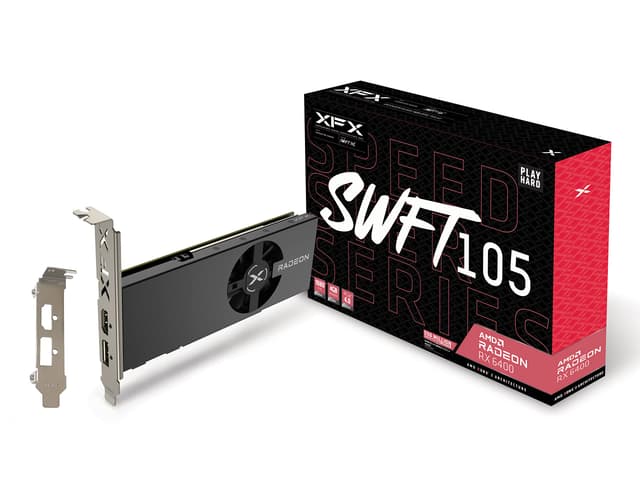
The XFX RX 6600 SWIFT210 SPEEDSTER is the value champion of this comparison. Based on AMD's RDNA 2 Navi 23 die, it is a generation behind the RX 9060 XT, but it remains a genuinely strong 1080p esports card in 2025. The 8 GB of GDDR6 memory is ample for every competitive title at 1080p, and the 2491 MHz boost clock means it keeps frame rates high in fast-paced games. At £258.00, it costs significantly less than the top picks, making it the most sensible choice for players who want high-FPS gaming without stretching their budget.
In esports titles, the RX 6600 consistently delivers over 144 fps in Valorant, CS2, Apex Legends and Rocket League at 1080p on high settings. It is not going to push 240 fps in every title the way the RX 9060 XT can, but for players on a 144 Hz monitor it more than holds its own. The Navi 23 die features AMD's Infinity Cache technology, which compensates for the relatively narrow 128-bit memory bus and keeps effective bandwidth competitive with wider-bus rivals.
The SWIFT210 cooler uses a dual-fan design that is quiet under typical gaming loads. Power consumption sits at around 132 W, which is efficient for the performance on offer and means it will work with budget power supplies of 450 W or more. The card uses a standard PCIe 4.0 x8 interface, which is fully compatible with any modern motherboard.
Where the RX 6600 shows its age is in ray tracing performance, which is noticeably weaker than Nvidia's competing cards, and in upscaling quality, where FSR 2 and 3 trail DLSS 3 in image quality. For esports players who game natively at 1080p without ray tracing, neither of these limitations matters at all. The card also lacks AV1 hardware encoding, which may matter to streamers who want to use the GPU encoder.
If you are upgrading from a GTX 1060, GTX 1650 or RX 580 and want a meaningful step up in frame rates without spending close to £300, the RX 6600 is the most sensible choice in this guide. It is also a strong option for anyone building a secondary gaming PC or a LAN party rig on a strict budget.
Verdict: The Best Value pick for 1080p esports gaming. Reliable, efficient, and significantly cheaper than the top-tier options while still delivering the frame rates competitive players need.
Pros
- Consistently delivers 144+ fps in all major esports titles at 1080p on high settings
- Efficient 132 W TDP works with budget 450 W power supplies
- 8 GB GDDR6 VRAM is sufficient for every competitive title at 1080p
Cons
- RDNA 2 architecture trails RDNA 4 and Blackwell in ray tracing and upscaling quality
- No AV1 hardware encode limits appeal for streamers who use GPU encoding
Buying Guide
What frame rate do you actually need?
For competitive esports, the standard minimum is 144 fps on a 144 Hz monitor. If you are playing on a 240 Hz or 360 Hz panel, you will want to target 240 fps or above in your primary title. The cards at the top of this guide, particularly the RX 9060 XT, are capable of sustaining 200+ fps in most esports titles at 1080p. Cards lower down the list may struggle to maintain 144 fps consistently in more demanding games at high settings, though dropping to medium settings typically recovers the headroom needed.
What is a good GPU for high FPS?
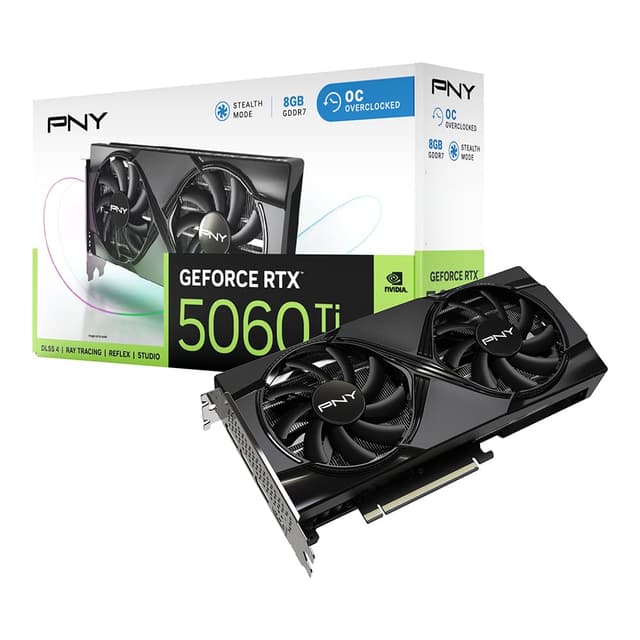
For high FPS at 1080p in 2025, the RX 9060 XT is the strongest sub-£300 option. Its 3320 MHz boost clock and RDNA 4 architecture deliver the highest frame rates in class. The RTX 5060 LP and RX 6600 are also strong choices depending on your form factor requirements and budget. For 1440p high FPS gaming, you would typically need to spend more than £300, though the RX 9060 XT can handle 1440p esports titles at high settings with good frame rates.
Is 32 GB of VRAM overkill?
For esports gaming at 1080p or 1440p, 32 GB of VRAM is entirely unnecessary. Even 16 GB, as found on the RX 9060 XT, is more than you will ever use in a competitive title. 8 GB is the practical minimum for future-proofed 1080p gaming, and 16 GB provides a comfortable buffer for 1440p and beyond. 32 GB VRAM cards are aimed at AI workloads, professional visualisation, and extreme 4K gaming, not esports.
VRAM: how much do you need?
For 1080p esports in 2025, 8 GB is the comfortable minimum. The 6 GB cards in this guide (GTX 1660 Super, RTX 3050 LP) are functional today but will become limiting sooner. If you are planning to keep your card for three or more years, 8 GB is the sensible minimum and 16 GB, as on the RX 9060 XT, provides genuine future-proofing.
AMD vs Nvidia for esports
Both manufacturers produce excellent esports cards in this price range. Nvidia's advantages include DLSS 4 upscaling (which is higher quality than AMD's FSR 3 at equivalent settings), Nvidia Reflex for system latency reduction, and a historically stronger reputation for driver stability. AMD's advantages include better raw performance per pound at the top of this budget range, larger VRAM buffers, and the new FSR 4 on RDNA 4 cards, which closes the upscaling quality gap significantly. For pure frame rates at 1080p native, the RX 9060 XT leads this comparison.
Power supply requirements
Most cards in this guide will work with a 550 W power supply, and the lower-power options (RTX 3050 LP, RTX 5050) are comfortable with 450 W. Always check the manufacturer's recommended PSU wattage and ensure your system's PSU has the appropriate power connectors. A quality 80+ Bronze or better PSU from a reputable brand is strongly recommended over budget no-name units, regardless of the rated wattage.
PCIe generation: does it matter?
For gaming performance in 2025, PCIe 4.0 x8 and PCIe 5.0 x16 make no meaningful difference to frame rates. The bandwidth provided by PCIe 3.0 x16 is still sufficient for all current gaming workloads. Do not prioritise PCIe generation when choosing a card for esports.
The Gigabyte Radeon RX 9060 XT GAMING OC 16G is the clear overall winner for high-FPS esports gaming under £300. Its 3320 MHz boost clock is the fastest in this comparison, its RDNA 4 architecture delivers the highest frame rates per pound at 1080p, and the 16 GB VRAM buffer is a class-leading feature that no competing card at this price can match. Whether you are targeting 144 fps on a standard gaming monitor or pushing for 240 fps on a high-refresh-rate panel, the RX 9060 XT has the headroom to deliver. For players who cannot stretch to the full budget, the XFX RX 6600 SWIFT210 SPEEDSTER is the Best Value pick, offering reliable 144+ fps performance at a significantly lower price. The ASUS RTX 5060 LP is the standout choice for compact and low-profile builds, while the GTX 1660 Super serves as the entry point for the most budget-conscious buyers.