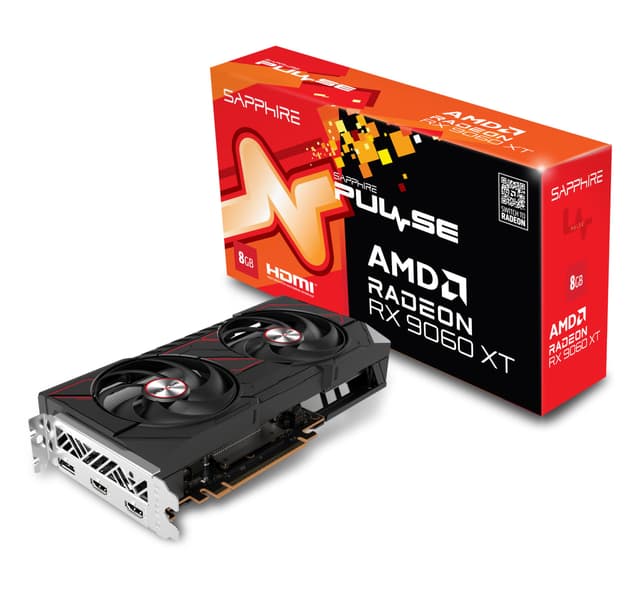
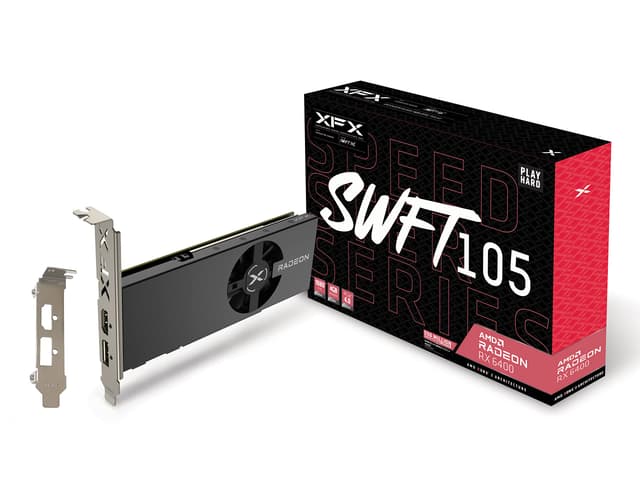
AMD's Radeon RX lineup has never been more competitive. Whether you're building a budget 1080p rig or pushing pixels at 4K with ray tracing enabled, there is now a Radeon card to match almost every use case and price point. The arrival of the RX 9070 and RX 9070 XT in early 2025 marked a significant generational leap, bringing RDNA 4 architecture to mainstream and enthusiast buyers alike, with improved ray tracing performance and a new media engine that finally closes the gap with Nvidia on AV1 encoding. Meanwhile, older RDNA 3 cards like the RX 7600 and RX 7900 GRE have dropped in price, making them outstanding value picks. This guide is aimed at PC gamers, content creators and anyone upgrading from a card that is two or more generations old. Each card below is assessed on published benchmarks, weighing up real-world performance, driver stability and software features to give you a clear picture of where each card sits in 2025.
Quick Verdict
Best Overall: AMD Radeon RX 9070 XT, offering class-leading 1440p and strong 4K performance at a price that undercuts comparable Nvidia options.
Best Value: AMD Radeon RX 7600, delivering smooth 1080p gaming and solid 1440p capability for well under £250.
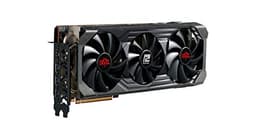
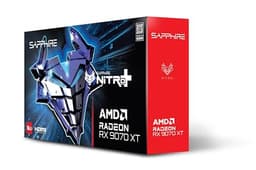
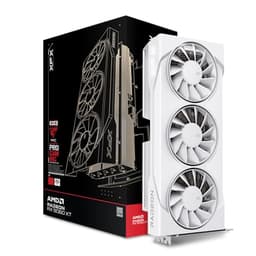
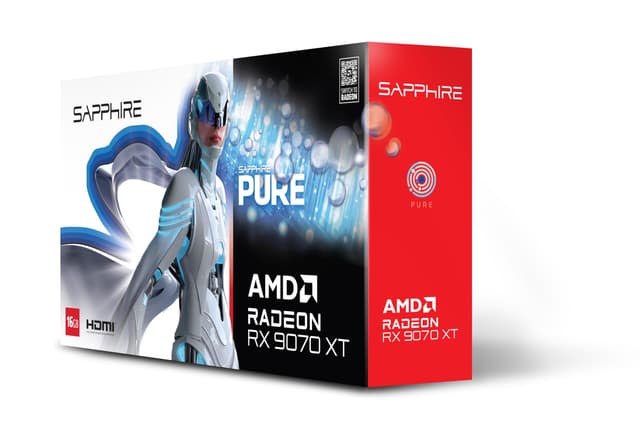
The RX 9070 XT is AMD's most important launch in several years, and it arrives at a time when GPU prices have been notoriously inflated. Built on the new RDNA 4 architecture and manufactured on TSMC's 4 nm node, this card is aimed squarely at the enthusiast 1440p gamer who also wants credible 4K performance without spending flagship money. It replaces the RX 7900 GRE as the go-to mid-to-high-end AMD recommendation and surpasses it in nearly every benchmark.
The headline specification is 16 GB of GDDR6 memory on a 256-bit bus, which is generous enough to handle modern open-world titles, texture packs and even some content creation workflows. The Navi 48 GPU underneath features 64 compute units running at boost clocks around 2,970 MHz on most partner cards, and AMD has substantially improved its ray tracing hardware with second-generation RT accelerators that deliver roughly double the ray tracing throughput of RDNA 3 at the same price point. In Cyberpunk 2077 at 1440p with ultra settings and ray tracing enabled, expect frame rates comfortably above 80 fps, rising to well over 100 fps with FSR 4 engaged.
FSR 4 is a significant upgrade over FSR 3. Using a machine-learning model that runs natively on RDNA 4's AI accelerators, it produces noticeably sharper upscaled images than FSR 3.1, closing the gap with Nvidia's DLSS 3 in a meaningful way. The new media engine also adds AV1 hardware encode and decode, which is a welcome addition for streamers and video editors. AMD Software: Adrenalin Edition remains the most feature-rich GPU control panel on the market, with Radeon Boost, Anti-Lag 2 and a solid overlay built in.
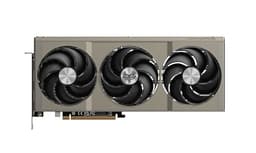
Power consumption sits at a rated 304 W TDP on reference designs, though most partner cards run slightly lower in practice. You will need a quality 750 W PSU as a minimum. Thermals are well managed on third-party coolers from Sapphire, PowerColor and XFX, with most triple-fan designs staying below 75°C under sustained load. The card is available in dual-slot and triple-slot variants depending on the AIB partner.
At its launch price, the RX 9070 XT represents exceptional value against the competition. It is the card we would recommend to anyone building or upgrading a system in 2025 who wants to game at 1440p or higher without compromise.
Pros
- RDNA 4 ray tracing is a massive step up from RDNA 3, competitive with Nvidia at this price tier
- 16 GB GDDR6 is future-proof for 1440p and capable at 4K
- FSR 4 machine-learning upscaling delivers noticeably sharper results than FSR 3.1
- Competitive launch pricing undercuts Nvidia's equivalent RTX 5070
Cons
- 304 W TDP means you need a quality 750 W or higher PSU
- Stock availability was constrained at launch, pushing prices above MSRP initially
The non-XT RX 9070 sits just below the 9070 XT in AMD's 2025 lineup, sharing the same RDNA 4 Navi 48 die but with a slightly reduced compute unit count and lower power target. It is the card that makes the most sense for buyers who want the new architecture's benefits, particularly the improved ray tracing and FSR 4 support, without paying the premium for the full-fat XT variant.
With 56 active compute units versus 64 on the XT, the performance gap between the two cards is roughly 12 to 15 per cent in rasterisation workloads at 1440p. That is a meaningful difference but not a catastrophic one, especially given that the RX 9070 typically retails for noticeably less. Both cards carry 16 GB of GDDR6 on the same 256-bit bus, so memory bandwidth and VRAM capacity are identical. In practice, the RX 9070 handles 1440p ultra settings in virtually every current title at well above 60 fps, and it pushes into 4K territory comfortably with FSR 4 Quality mode engaged.
The power story is where the RX 9070 really differentiates itself. Its 220 W TDP is substantially lower than the XT's 304 W, which means it runs cooler, quieter and is compatible with a wider range of PSUs. A quality 650 W unit is sufficient, making it a better fit for compact mid-tower builds or anyone who has not yet upgraded their power supply. Thermal performance on partner cards is excellent, with most dual-fan designs staying under 70°C at load.
Ray tracing performance is strong for the price, leveraging the same second-generation RT accelerators as the XT. FSR 4 is fully supported, and the new AV1 media engine is present. For streamers, the improved encode quality is a genuine upgrade over what RDNA 3 offered. AMD's Anti-Lag 2 feature also reduces system latency in supported titles, which is a useful bonus for competitive gamers.
The RX 9070 is the card for buyers who want a sensible, efficient 1440p GPU that will remain relevant for several years. It is not quite the outright performance leader, but its combination of efficiency, VRAM and modern feature set makes it one of the most well-rounded AMD cards available in 2025.
Pros
- 220 W TDP is significantly lower than the XT, compatible with 650 W PSUs
- Full 16 GB GDDR6 VRAM matches the XT, ensuring future-proofing at 1440p
- FSR 4 and second-gen RT accelerators bring next-gen features at a mid-range price
Cons
- Around 12-15% slower than the RX 9070 XT in rasterisation, which matters at 4K
- Partner card selection was limited at launch compared to the XT
The RX 7900 XTX remains AMD's fastest RDNA 3 card and, despite being superseded by the new RDNA 4 generation in the mid-range, it still holds its own as a high-end 4K gaming GPU, particularly now that its price has dropped since the RX 9000 series arrived. For buyers who specifically want the most powerful AMD card available and are willing to pay for it, the 7900 XTX remains a credible option, though the calculus has shifted somewhat in 2025.
The headline specification is 24 GB of GDDR6 on a wide 384-bit memory bus, which gives it the highest memory bandwidth of any card in this list and makes it particularly well-suited to 4K gaming with high-resolution texture packs, as well as creative workloads such as video editing and AI image generation at high resolutions. The Navi 31 GPU features 96 compute units and a chiplet design that AMD introduced with RDNA 3, combining a Graphics Compute Die with Memory Cache Dies.
In rasterisation performance at 4K, the RX 7900 XTX trades blows with the RTX 4080 Super and generally comes out slightly ahead in AMD-optimised titles while falling behind in Nvidia-optimised ones. It delivers smooth 4K gaming in virtually every title at ultra settings, and its 24 GB frame buffer means you are unlikely to encounter VRAM-related stuttering even in the most demanding games. Frame rates in Cyberpunk 2077 at 4K ultra without ray tracing sit around 75 to 80 fps, rising to well over 100 fps with FSR 3.1 Quality mode.
Ray tracing remains the card's relative weakness. RDNA 3's ray tracing hardware, while improved over RDNA 2, still trails Nvidia at equivalent price points, and the arrival of RDNA 4 has made this gap more apparent. If ray tracing is a priority, the RX 9070 XT is a better choice at a lower price. The 355 W TDP also demands a high-quality 850 W PSU and good case airflow.
The RX 7900 XTX makes most sense for buyers who want maximum rasterisation performance, need a large VRAM buffer for creative work, or are picking up a discounted unit. It is a powerful card that has aged well, even if the new generation has moved the goalposts.
Pros
- 24 GB GDDR6 on a 384-bit bus is unmatched in this list for memory bandwidth and capacity
- Excellent 4K rasterisation performance that remains competitive in 2025
- Strong price drops since RDNA 4 launched make it better value than at release
Cons
- 355 W TDP requires an 850 W PSU and excellent case airflow
- Ray tracing performance is noticeably behind RDNA 4 cards at similar price points
- No FSR 4 support, limited to FSR 3.1
The RX 7900 GRE, originally launched as a China-exclusive card before AMD made it globally available, has quietly become one of the best value propositions in AMD's RDNA 3 lineup. It occupies a sweet spot between the mainstream RX 7800 XT and the premium RX 7900 XT, offering a substantial performance uplift over the former at a price that is considerably lower than the latter. In 2025, with prices having settled and the RDNA 4 launch pushing RDNA 3 cards down further, it represents outstanding value.
The GRE is built on the same Navi 31 chiplet die as the full 7900 series, but with 80 of the 96 compute units enabled and a narrower 256-bit memory bus carrying 16 GB of GDDR6. That memory bus reduction versus the 7900 XT does limit peak memory bandwidth, which shows up at 4K in memory-bandwidth-sensitive titles. However, at 1440p the impact is minimal, and the GRE is one of the fastest cards available at that resolution for its price.
In benchmarks, the RX 7900 GRE sits roughly 10 per cent behind the RX 7900 XT in rasterisation and around 15 per cent ahead of the RX 7800 XT. At 1440p it comfortably exceeds 90 fps in demanding titles like Cyberpunk 2077, Hogwarts Legacy and Alan Wake 2 at ultra settings. At 4K it is capable but benefits more from FSR upscaling to maintain consistently smooth frame rates. The 260 W TDP is reasonable for the performance level, and most partner cards run cool and quiet.
The GRE supports DisplayPort 2.1 outputs, which future-proofs it for high-refresh-rate 1440p and 4K displays. AMD's Adrenalin software suite is fully supported, including Radeon Boost, Anti-Lag and the Radeon overlay. Ray tracing performance is on par with the rest of the RDNA 3 family, meaning it is functional but not a strong suit compared to Nvidia at equivalent prices.
For buyers who want a capable 1440p card with headroom for 4K and are not fussed about ray tracing or FSR 4, the RX 7900 GRE is a compelling buy, especially when found on sale.
Pros
- Navi 31 chiplet die delivers strong 1440p performance at a mid-range price
- 16 GB GDDR6 is generous for the price tier, avoiding VRAM bottlenecks
- DP 2.1 outputs support high-refresh 4K displays
Cons
- 256-bit memory bus limits 4K performance compared to the wider-bus 7900 XT
- Ray tracing lags behind Nvidia equivalents at this price point
The RX 7800 XT was AMD's mainstream 1440p champion when it launched in late 2023, and it has held that position well into 2025. Built on the Navi 32 die with 60 compute units and 16 GB of GDDR6 on a 256-bit bus, it offers a well-balanced specification for the resolution it targets. With prices having fallen since launch, it now represents one of the best pounds-per-frame deals in AMD's lineup for 1440p gaming.
Performance at 1440p is consistently strong. In titles like Forza Horizon 5, Assassin's Creed Mirage and Starfield, the RX 7800 XT delivers frame rates well above 60 fps at ultra settings, and it frequently pushes beyond 90 fps in less demanding titles. It is not a 4K card in the traditional sense, but with FSR 3.1 Quality mode it can produce acceptable 4K output in less demanding games. The 16 GB VRAM buffer is a genuine advantage over competing cards at this price, particularly as modern titles increasingly push beyond 8 GB at high texture settings.
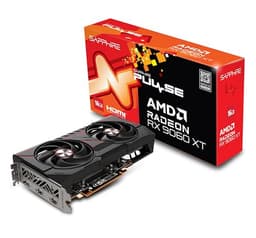
The 263 W TDP is on the higher side for a mainstream card, and you will want a 750 W PSU to be safe. Cooling on most partner cards is handled well, with Sapphire's Pulse and PowerColor's Fighter variants both offering quiet operation under load. The card uses a single 8-pin or 16-pin power connector depending on the AIB partner's design.
Connectivity is solid, with three DisplayPort 2.1 outputs and one HDMI 2.1 port, supporting up to four simultaneous displays. AMD's Radeon Chill and Radeon Boost features are particularly useful on this card, as they help manage power consumption during less demanding scenes, extending the effective performance envelope.
Ray tracing is functional but not a highlight, consistent with RDNA 3's overall RT story. If you primarily play rasterised games and want a reliable 1440p card with a generous VRAM buffer, the RX 7800 XT remains a very sensible choice, especially at its current discounted pricing.
Pros
- 16 GB GDDR6 is unusually generous for a mainstream 1440p card, future-proofing texture-heavy titles
- Consistent high-fps 1440p performance in a wide range of titles
- DP 2.1 outputs support high-refresh-rate 1440p and 4K monitors
Cons
- 263 W TDP is higher than expected for a mainstream card, requiring a 750 W PSU
- Ray tracing performance is mediocre relative to Nvidia cards at the same price
The RX 7700 XT sits between the RX 7600 XT and the RX 7800 XT in AMD's RDNA 3 stack, offering a meaningful step up from the entry-level cards while remaining accessible to buyers on tighter budgets. It is built on the same Navi 32 die as the 7800 XT but with fewer active compute units, specifically 54 versus 60, and a reduced 192-bit memory bus carrying 12 GB of GDDR6. That memory bus reduction is the key trade-off versus the 7800 XT, and it does show up in memory-bandwidth-intensive scenarios at 1440p.
In everyday 1440p gaming, the RX 7700 XT performs admirably. Titles like Call of Duty: Modern Warfare III, Baldur's Gate 3 and Counter-Strike 2 run at well above 100 fps at high settings, and even demanding open-world titles like Cyberpunk 2077 stay above 60 fps at ultra settings without upscaling. The 12 GB VRAM is sufficient for 1440p in most current titles, though it is worth noting that some newer games are beginning to approach or exceed 10 GB at maximum settings, so the headroom is more limited than the 7800 XT's 16 GB.
The 245 W TDP is manageable, and a good 650 W PSU is sufficient. Cooling solutions on partner cards are generally compact and quiet, making this a good option for mid-tower builds where space is at a premium. The card outputs via three DisplayPort 2.1 and one HDMI 2.1 port, matching the connectivity of its bigger siblings.
AMD's full software suite is supported, including FSR 3.1, Radeon Boost, Anti-Lag and the Adrenalin overlay. The card is a solid choice for 1080p gamers who want headroom to spare, or for 1440p gamers who are willing to dial back settings slightly in the most demanding titles. It is not the most exciting card in the lineup, but it is a reliable, well-priced performer.
Pros
- Navi 32 die delivers solid 1440p gaming performance at a competitive price
- 245 W TDP works with a 650 W PSU, reducing system build costs
- DP 2.1 connectivity supports high-refresh 1440p displays
Cons
- 12 GB VRAM on a 192-bit bus is tighter than the 7800 XT's 16 GB for future titles
- Performance uplift over the RX 7600 XT is modest relative to the price difference
The RX 7600 XT launched in January 2025 as AMD's response to criticism that the original RX 7600 was hamstrung by its 8 GB VRAM buffer. By doubling the memory to 16 GB, AMD addressed the most common complaint about the base model while keeping the same Navi 33 GPU and similar performance profile. The result is a card that is better positioned for longevity at 1080p and more capable at 1440p than its predecessor, though the performance uplift over the standard 7600 is modest in most scenarios today.
The Navi 33 GPU features 32 compute units running at boost clocks around 2,755 MHz. Raw performance sits roughly 10 per cent above the standard RX 7600 in most benchmarks, partly due to the higher memory bandwidth afforded by the wider 128-bit bus and the additional VRAM. At 1080p ultra settings, the RX 7600 XT is one of the fastest cards available at its price point, consistently delivering over 100 fps in demanding titles and well above 144 fps in less demanding ones. At 1440p it is capable with some settings adjustments, though it is not the natural home for this card.
The 16 GB VRAM is the headline feature and the main reason to choose this over the standard 7600. As games increasingly exceed 8 GB at high settings, particularly with high-resolution texture packs, the extra headroom prevents the stuttering and frame time spikes that have begun to affect 8 GB cards in some titles. For a card at this price, 16 GB is genuinely impressive and sets it apart from many competing options.
Power consumption is sensible at 190 W, and a quality 550 W PSU is sufficient. The card is compact and fits in virtually any case. AMD's full Adrenalin software suite is supported, including FSR 3.1 and Anti-Lag. For 1080p gamers who want a card that will remain relevant as VRAM requirements increase, the RX 7600 XT is a well-considered choice.
Pros
- 16 GB GDDR6 at this price tier is exceptional and future-proofs 1080p gaming
- 190 W TDP is compatible with a 550 W PSU, ideal for budget builds
- Compact form factor fits in virtually any case configuration
Cons
- Raw performance uplift over the standard RX 7600 is modest in current titles
- 1440p performance requires settings compromises in demanding games
The RX 7600 remains the entry point to AMD's RDNA 3 lineup and, despite the arrival of newer cards above it, it continues to be one of the most sensible budget GPU purchases available in 2025. Built on the Navi 33 GPU with 32 compute units and 8 GB of GDDR6 on a 128-bit bus, it is designed primarily for 1080p gaming, and at that resolution it excels. For anyone building a budget PC or upgrading from a very old card, the RX 7600 offers a compelling combination of performance, efficiency and price.
At 1080p with high or ultra settings, the RX 7600 consistently delivers over 60 fps in demanding titles and frequently exceeds 100 fps in less demanding ones. In esports titles like Valorant, CS2 and Apex Legends, it pushes well beyond 144 fps at 1080p, making it a strong choice for competitive gamers on a budget. Even in demanding open-world titles like Cyberpunk 2077 at 1080p high settings, it maintains smooth frame rates with FSR 3.1 Quality mode engaged.
The 8 GB VRAM is the card's most significant limitation in 2025. While it is sufficient for the vast majority of 1080p gaming today, some newer titles with high-resolution texture packs are beginning to approach or exceed 8 GB at maximum settings, causing occasional stuttering. This is not a widespread issue yet, but it is worth bearing in mind if you plan to keep the card for three or more years. The RX 7600 XT addresses this with 16 GB at a modest price premium.
The 165 W TDP is the lowest of any card in this list, making it compatible with a 550 W PSU and ideal for compact or budget builds. Cooling solutions are typically dual-fan and compact. AMD's Adrenalin software is fully supported, including FSR 3.1, Radeon Boost and Anti-Lag. DisplayPort 2.1 outputs future-proof the card for high-refresh monitors.
For budget-conscious buyers who primarily game at 1080p and are not planning to keep the card beyond two or three years, the RX 7600 is a smart, efficient and well-priced choice.
Pros
- 165 W TDP is the lowest in this list, compatible with 550 W PSUs and compact builds
- Excellent 1080p performance for the price, including strong esports frame rates
- DP 2.1 outputs support high-refresh 1080p and 1440p monitors
Cons
- 8 GB VRAM is beginning to show limitations in some newer titles at maximum settings
- 1440p performance requires significant settings reductions in demanding games
Buying Guide
What resolution are you gaming at?
Resolution is the single most important factor when choosing a GPU. At 1080p, cards like the RX 7600 and RX 7600 XT are more than sufficient for high frame rates in virtually every current title, and spending more on a higher-tier card will not translate into a meaningfully better experience on a 1080p monitor. At 1440p, the RX 7800 XT, RX 7900 GRE and RX 9070 are the natural choices, offering smooth performance at ultra settings without requiring upscaling in most titles. At 4K, you need the RX 9070 XT, RX 7900 XT or RX 7900 XTX to achieve consistently smooth frame rates at high settings, and even then FSR upscaling will be useful in the most demanding games.
How much VRAM do you need?
VRAM requirements have been climbing steadily. In 2025, 8 GB is the minimum for 1080p gaming, but some newer titles are beginning to push beyond this at maximum settings with high-resolution texture packs. For 1440p gaming, 12 GB is a comfortable minimum and 16 GB is preferable for future-proofing. At 4K, 16 GB is the minimum and 24 GB is ideal for the highest texture settings. AMD has done well to offer 16 GB on cards like the RX 7600 XT, RX 7800 XT and RX 9070, making them better long-term investments than some competing options at similar prices.
Does ray tracing matter?
Ray tracing performance has historically been a weakness for AMD relative to Nvidia, but RDNA 4 has changed this significantly. The RX 9070 and RX 9070 XT now offer ray tracing performance that is competitive with Nvidia's offerings at similar price points. If you are buying an RDNA 3 card, ray tracing is functional but not a strong suit, and you should not prioritise it when choosing between RDNA 3 options. If ray tracing is important to your gaming experience, the RX 9070 or RX 9070 XT are the AMD cards to consider.
What about FSR and upscaling?
AMD's FidelityFX Super Resolution is supported across all cards in this list, but the version matters. RDNA 4 cards support FSR 4, which uses machine-learning acceleration to produce noticeably sharper results than the spatial upscaling of FSR 3.1. RDNA 3 cards are limited to FSR 3.1, which is still a solid upscaler but does not match the image quality of FSR 4 or Nvidia's DLSS 3. FSR is also open-source and works across AMD, Nvidia and Intel GPUs, so it is widely supported in games. If image quality from upscaling is important to you, the RX 9070 or RX 9070 XT are the cards to choose.
Power supply and system compatibility
Always check that your PSU can handle the card you are buying. As a rough guide: 550 W for the RX 7600 and RX 7600 XT, 650 W for the RX 7700 XT and RX 7800 XT, 750 W for the RX 7900 GRE and RX 9070, 750 W to 800 W for the RX 9070 XT, and 850 W or higher for the RX 7900 XTX. Also check your case has sufficient clearance for the card's length and slot width, as many high-end AIB coolers are triple-slot and over 320 mm long. Ensure your motherboard has a PCIe 4.0 or 5.0 x16 slot for best performance, though all these cards will work in PCIe 3.0 slots with a modest performance penalty.
New versus last-gen
With RDNA 4 now available, RDNA 3 cards have dropped in price and offer strong value. However, if you are buying a card you intend to keep for three or more years, the RX 9070 or RX 9070 XT are worth the premium for FSR 4 support, improved ray tracing and the newer media engine. RDNA 3 cards are excellent value for buyers on tighter budgets or those who upgrade more frequently.
The AMD Radeon RX 9070 XT is our overall winner. It combines the best of RDNA 4's architectural improvements, including genuinely competitive ray tracing, FSR 4 machine-learning upscaling and an improved media engine, with a price that undercuts comparable Nvidia hardware. At 1440p it is the fastest AMD card for the money, and it is capable enough at 4K to satisfy most enthusiast gamers. The 16 GB GDDR6 buffer ensures it will remain relevant for years to come. If budget is a concern, the RX 7600 is our best value pick, offering smooth 1080p gaming at an accessible price with a sensible power draw. For those who want the new generation without the full XT premium, the RX 9070 is an excellent alternative, offering most of the 9070 XT's benefits at a lower price and with a significantly reduced power draw. Whatever your budget or target resolution, there is an AMD card in this list that will serve you well in 2025.