UK tech experts · info@vividrepairs.co.uk
Vivid Repairs
VIVID·REPAIRS/THE FIELD GUIDE/DESKTOPPublished 1 September 2026Prices live from Amazon UK

Best of · UK · Field of 7

Best Desktops for music production

Find the best desktops for music production in the UK. From budget DAW rigs to pro-grade powerhouses, we compare specs, performance and value.

As an Amazon Associate we may earn from qualifying purchases. We have not handled these products. Everything below is judged on published specifications, the owner ratings on the UK listings and our own product reviews, and the ranking stays independent of what any of them pay.

As an Amazon Associate, we may earn from qualifying purchases. Our ranking is independent.
FIG. 01
Best Desktops for music production: hero illustration

Illustration · Vivid RepairsDesktop / 2026

Field7 ranked
Cheapest£689.99
Under £15003 of 7
Owner ratings read353
VIVID·REPAIRSThe verdict · desktops for music production · UK · Desktop PCs

Our pick

Apple iMac All-in-One Desktop Computer with M4 chip with

Apple iMac All-in-One Desktop Computer with M4 chip with 10-core CPU and 10-core GPU: Built for Apple Intelligence, 24-inch Retina Display, 16GB Unified Memory, 512GB SSD storage; Silver

Why it’s our pick

  • CPU: Apple M4 with 10‑core CPU (4 performance cores, 6 efficiency cores)
  • Rated 4.7 by 63 owners on the UK listing
  • £1599.00 today, in a field that runs £689.99 to £5479.95
  • Editorial score8.5 / 10
  • Owners4.7 from 63 ratings
£1599.00Live price · checked today
Buy on Amazon£1599.00

Amazon confirms the live price, seller, stock and delivery. Prices here are read from the live listing daily and dead stock is dropped overnight.

Read the full review of this pick →

vividrepairs.co.uk / best-desktops-for-music-productionPublished 1 September 2026 · Prices from the live Amazon UK listing
Not sure yet?The shortlist, argued pick by pick, starts here
§ Shortlist

The three worth arguing about

01

01 / Our pick

Apple iMac All-in-One Desktop Computer with M4 chip with

  • The M4 chip delivers genuinely fast performance for productivity and creative workloads, with thermal throttling essentially a non-issue in normal use
  • The 24-inch 4.5K Retina display is outstanding, with 500 nits of brightness and one billion colour support that rivals dedicated professional monitors
  • The 12MP Center Stage camera and six-speaker audio system set a standard that competing all-in-ones cannot match, making it exceptional for video calls

Where it gives up

Zero upgrade potential: the unified memory and SSD are soldered permanently, so the configuration you buy is the configuration you keep forever. The 512GB base storage fills up quickly for users working with large video or photo libraries, making external storage essential from day one.

Rated 4.7 by 63 owners. Our review scores it 8.5.

£1599.00★★★★½ 4.7 · 63 ratingsBuy on Amazon£1599.00

Amazon confirms the live price, seller, stock and delivery. · Read the full Apple iMac All-in-One Desktop Computer with M4 chip with review

02
01 / 06

02 / Best Premium

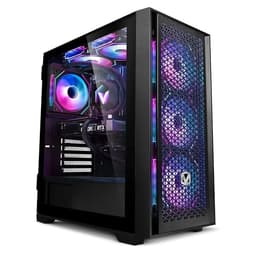
CyberPowerPC Luxe Gaming PC

  • RTX 5070 Ti with DLSS 4 is genuinely capable at 4K
  • 360mm AIO and 7-fan airflow case are proper thermal kit
  • Z890 platform offers real upgrade headroom

Where it gives up

Wi-Fi 5 is dated for a premium-tier machine in 2026. PSU brand and SSD model not disclosed.

Rated 4.6 by 3 owners, which is thin. Our review scores it 7.5.

£2149.00★★★★½ 4.6 · 3 ratingsBuy on Amazon£2149.00

Amazon confirms the live price, seller, stock and delivery. · Read the full CyberPowerPC Luxe Gaming PC review

03
01 / 08

03 / Best Build Quality

GMKtec AMD Ryzen 7 Mini Gaming PC 8845HS(8C/16T

  • The Radeon 780M is the strongest integrated GPU available in a mini PC right now, handling 1080p gaming and emulation credibly
  • OCuLink eGPU support offers a genuine upgrade path to discrete GPU performance that no competing mini PC at this price provides
  • Dual Intel 2.5G Ethernet makes this a compelling option for home lab, NAS, and small network deployments

Where it gives up

RAM is soldered onto the board with no upgrade path, which is a significant long-term limitation at this price point. Fan noise under sustained load reaches 45 to 48dB, which is noticeable from across a desk.

Rated 4.7 by 51 owners. Our review scores it 8.5.

£739.96★★★★½ 4.7 · 51 ratingsBuy on Amazon£739.96

Amazon confirms the live price, seller, stock and delivery. · Read the full GMKtec AMD Ryzen 7 Mini Gaming PC 8845HS(8C/16T review

§ Also strong

Four that suit a different buyer

04ADMI Gaming PC
Best Budget · Under £700

ADMI Gaming PC

  • CPU: AMD Ryzen 5 5500
  • GPU: NVIDIA RTX 3050 6GB GDDR6
  • RAM: 16GB 3200MHz DDR4
£689.99★★★★½ 4.6 · 3 ratingsBuy on Amazon£689.99

Live price, checked today. Amazon confirms stock and delivery.

05Vibox V-196 Gaming PC Bundle • AMD Ryzen 5 5500 4.2GHz •

Best Value

Vibox V-196 Gaming PC Bundle • AMD Ryzen 5 5500 4.2GHz •

  • CPU: AMD Ryzen 5 5500
  • GPU: NVIDIA GeForce RTX 4060 8GB
  • RAM: 16GB DDR4 3200MHz
£789.95★★★★★ 5.0 · 1 ratingsBuy on Amazon£789.95

Live price, checked today. Amazon confirms stock and delivery.

06Vibox VIII-75 Gaming PC • Intel Core i9 12900KF 5.2GHz •

Runner-up

Vibox VIII-75 Gaming PC • Intel Core i9 12900KF 5.2GHz •

  • RTX 5090 delivers class-leading 4K gaming performance
  • 32GB DDR5 and 2TB NVMe are appropriate for the price tier
  • Ready to use out of the box with Windows 11 pre-installed

Where it gives upi9-12900KF is previous-gen and creates a CPU bottleneck in CPU-sensitive titles. PSU and motherboard brands unspecified, raising reliability concerns.

£5479.95★★★★☆ 4.1 · 198 ratingsBuy on Amazon£5479.95

Live price, checked today. Amazon confirms stock and delivery.

07MSI Aegis R (Tower) Gaming Desktop, Intel Core i7-10700F

Runner-up

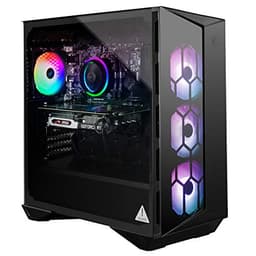
MSI Aegis R (Tower) Gaming Desktop, Intel Core i7-10700F

  • RTX 3060 with 12GB GDDR6 VRAM offers more headroom than 8GB alternatives at the same tier, holding up well at 1440p and in VR workloads
  • Wi-Fi 6 is a genuine inclusion rather than an afterthought, delivering consistent low-latency wireless performance in real-world gaming sessions
  • Dual-channel 16GB DDR4 configuration is correct out of the box, and two free DIMM slots make future RAM expansion straightforward

Where it gives upThe i7-10700F is 10th-generation Intel on a B460 board, meaning the platform is now two generations behind competing machines at similar prices. Storage is a SATA SSD rather than NVMe, resulting in sequential read speeds around 500 to 550MB/s when NVMe should be standard at this price tier.

£2858.03★★★★½ 4.7 · 34 ratingsBuy on Amazon£2858.03

Live price, checked today. Amazon confirms stock and delivery.

§ Method

How we chose

The rules this ranking ran under, in plain sight: what we read, what we weighed and what no merchant can move.

How we picked

Our editors evaluated 7 Desktop options against the criteria readers actually weigh up: price, real-world performance, build quality, warranty, and UK availability. Picks lean toward what we'd recommend to a friend buying today, not specs-on-paper winners.

  • Editorial contextEditor notes from individual reviews, not press releases.
  • Live UK pricingRefreshed from Amazon UK twice daily.
  • No paid placementsAffiliate commission doesn't change what wins.
The full guideEverything behind the shortlist above: the spec sheet, the write-ups in full, our method and the verdict.

§ Editorial · The full guide · three proofs, nothing hidden

The Doubt Index.

The shortlist told you what we picked; this zone shows the working. Come in through whichever doubt you’re carrying, or read straight down; we’d rather you checked us than trusted us.

Proof A · What the numbers mean

↑ All doubts

I can read a spec sheet myself.

What the numbers mean

You can, and you should. What follows is the part a sheet can’t do: the working between what these products have and what your desk actually needs, kept word for word.

Music production places unique demands on a desktop computer. Unlike gaming, where the GPU does the heavy lifting, audio work leans hard on CPU single-core speed, RAM headroom for large sample libraries, fast NVMe storage for streaming multi-gigabyte orchestral patches, and a low-noise chassis that won't bleed into your microphone. In 2024 and into 2025, the shift towards AI-assisted mixing tools and increasingly complex plugin stacks has pushed the minimum viable spec upward. A machine that felt adequate for a 64-track session two years ago can now struggle with a single instance of a neural amp simulator. Whether you are a bedroom producer running Ableton Live with a handful of soft synths, a professional composer juggling Kontakt libraries and a 200-track orchestral template, or a podcaster who needs reliable performance without a steep learning curve, there is a desktop here that fits your workflow and your budget.

Quick Verdict

Best Overall: Apple iMac M4 (B0DL7M1FJ3). Apple Silicon's efficiency architecture delivers class-leading audio performance per watt, near-silent operation, and a polished macOS ecosystem that the majority of professional studios still rely on. For Windows users who need more headroom, the CyberPowerPC Luxe (B0FL7J799C) with its Intel Core Ultra 7 and 32 GB of RAM is the top pick.

Best Value: ADMI Gaming PC Ryzen 5 5500 (B0F3JVWCBY). It delivers a capable six-core CPU, 16 GB of DDR4, and a 1 TB NVMe SSD at a price that leaves plenty of budget for audio interfaces, monitors, and plugins.

Spec Comparison

Product Price CPU RAM Storage GPU OS
Apple iMac M4 £1,811.17 Apple M4 10-core 16 GB unified 512 GB SSD M4 10-core integrated macOS
CyberPowerPC Luxe £2,149.00 Intel Core Ultra 7 265KF 32 GB 2 TB NVMe SSD Nvidia RTX 5070 Ti Windows 11
GMKtec K8 Plus £739.96 AMD Ryzen 7 8845HS 32 GB DDR5 1 TB PCIe 4.0 NVMe AMD Radeon 780M (integrated) Windows 11
ADMI Ryzen 5 5500 £674.99 AMD Ryzen 5 5500 16 GB DDR4 3200MHz 1 TB NVMe SSD NVIDIA RTX 3050 6 GB Windows 11
Vibox V-196 Bundle £1,039.95 AMD Ryzen 5 5500 16 GB DDR4 3200MHz 1 TB NVMe SSD NVIDIA RTX 4060 8 GB Windows 11
Vibox VIII-75 £1,214.95 Intel Core i9 12900KF 32 GB 2 TB NVMe SSD Nvidia RTX 5090 32 GB Windows 11
MSI Aegis R £2,858.03 Intel Core i7-10700F 16 GB 1 TB NVMe SSD NVIDIA RTX 3060 Windows 10 Home

1. Apple iMac All-in-One Desktop with M4 Chip

The Apple iMac M4 is the machine that most professional music producers in the UK are quietly switching to, and for good reason. Apple Silicon has fundamentally changed what a desktop computer can do for audio work. The M4 chip pairs four high-performance cores with six efficiency cores, and the entire design prioritises sustained, consistent throughput rather than short burst performance. In a DAW context, this matters enormously: Logic Pro, Pro Tools, Ableton Live, and Cubase all benefit from a CPU that can maintain low-latency buffer sizes for hours without thermal throttling.

The 16 GB of unified memory is shared between the CPU and the integrated 10-core GPU, meaning the system does not waste bandwidth shuttling data between discrete chips. In practice, producers running 64-track sessions with heavy plugin loads report lower CPU meter readings on the iMac M4 than on Windows machines with nominally faster clock speeds. The 512 GB SSD is the one area where you may want to budget for external storage if you use large Kontakt or Spitfire libraries, but the SSD itself is extremely fast and silent.

macOS is still the preferred operating system in professional recording studios. Core Audio, Apple's audio subsystem, is more stable at low buffer sizes than Windows Audio Session API for many users, and the driver ecosystem for audio interfaces is generally better maintained. Logic Pro, which is exclusive to Mac, is one of the best-value DAWs available and comes with an enormous stock library of loops, instruments, and effects.

The all-in-one form factor means the iMac is near-silent in operation, which is a genuine practical advantage in a home studio where fan noise can bleed into sensitive microphones. The 24-inch Retina display is also genuinely excellent for reading dense plugin UIs and mixing session arrangements. This is the pick for producers who want a polished, integrated experience with minimal setup friction.

Pros

  • Near-silent operation thanks to efficient M4 chip and optimised thermal design
  • macOS Core Audio delivers excellent low-latency stability for demanding plugin sessions
  • Unified memory architecture reduces bottlenecks in large sample-library workflows

Cons

  • 512 GB SSD fills quickly with large orchestral or drum sample libraries
  • RAM is not upgradeable after purchase, so choose your configuration carefully

2. CyberPowerPC Luxe Gaming PC, Intel Core Ultra 7 265KF, Nvidia RTX 5070 Ti, 32 GB

For producers who are committed to Windows and want the most capable machine in this list for demanding audio work, the CyberPowerPC Luxe is the standout option. The Intel Core Ultra 7 265KF is a modern hybrid architecture processor with a strong single-core performance profile, which is exactly what most DAWs prioritise when distributing plugin load. With 32 GB of RAM and a 2 TB NVMe SSD, this machine handles the largest orchestral templates, dense mixing sessions, and simultaneous audio recording without complaint.

The Nvidia RTX 5070 Ti GPU is overkill for pure audio work, but it opens the door to GPU-accelerated tasks that are becoming increasingly relevant in modern production: AI-powered noise removal tools, video scoring workflows where you are rendering high-resolution footage alongside your audio session, and real-time neural processing in plugins such as iZotope RX or Slate Digital's ML-based tools. If you produce music for sync licensing or create content alongside your music, having a powerful GPU is a genuine advantage rather than wasted expenditure.

The 2 TB NVMe SSD is a significant practical benefit. Most producers accumulate sample libraries rapidly, and having 2 TB of fast internal storage means you can keep your most-used libraries on the primary drive without constantly managing space or relying on slower external drives. Windows 11 is pre-installed, and the system ships ready to use with minimal setup.

At this price point, the CyberPowerPC Luxe represents a serious investment, but it is genuinely future-proofed for several years of increasingly demanding production software. The 32 GB of RAM is particularly important as AI-assisted mixing and mastering tools begin to require more headroom. This is the pick for professional composers, film scorers, and producers who run complex multi-instrument templates.

Pros

  • 32 GB RAM and 2 TB NVMe SSD handle the largest orchestral templates without compromise
  • Intel Core Ultra 7 265KF delivers strong single-core DAW performance on Windows
  • RTX 5070 Ti enables GPU-accelerated AI plugin processing and video scoring workflows

Cons

  • Premium price puts it out of reach for hobbyist or entry-level producers
  • RTX 5070 Ti is unnecessary for audio-only workflows, so you are partly paying for unused capability

3. GMKtec AMD Ryzen 7 Mini Gaming PC K8 Plus

The GMKtec K8 Plus is the most unusual pick in this list, and deliberately so. Mini PCs have become a serious option for music producers who work in small home studios, travel between locations, or want a machine that can sit quietly on a desk without dominating the space. The AMD Ryzen 7 8845HS is a mobile-class processor, but it is a genuinely powerful one: eight cores running up to 5.1 GHz, with strong single-core performance that translates directly into low-latency DAW use.

The 32 GB of DDR5 RAM is a standout specification at this price. Most desktop competitors at a similar cost ship with 16 GB of DDR4, so the GMKtec K8 Plus offers a meaningful advantage for producers who run large virtual instrument stacks. Kontakt, Omnisphere, and Spitfire Audio libraries all benefit from having more RAM available, and 32 GB gives you genuine headroom for complex sessions without resorting to disk streaming workarounds.

The 1 TB PCIe 4.0 NVMe SSD is fast enough to stream large sample libraries without dropouts, which is a real-world requirement that cheaper machines with SATA SSDs can struggle to meet. The integrated AMD Radeon 780M GPU is not intended for gaming at high settings, but it handles display output, video playback, and the light GPU tasks that arise in audio software without any issues.

The compact form factor does come with thermal considerations. Under sustained heavy loads, the Ryzen 7 8845HS will throttle more aggressively than a desktop CPU in a full tower, so producers running extremely dense sessions at very low buffer sizes may occasionally notice higher CPU meter readings than they would on a full-sized desktop. For most home studio workflows, however, this machine punches well above its weight and its price.

Pros

  • 32 GB DDR5 RAM is exceptional value and handles large virtual instrument libraries comfortably
  • Compact form factor suits small home studios or producers who move between locations
  • PCIe 4.0 NVMe SSD streams large sample libraries reliably without audio dropouts

Cons

  • Mobile CPU may throttle under sustained maximum load at very low buffer sizes
  • No discrete GPU limits future-proofing for GPU-accelerated AI plugin tools

4. ADMI Gaming PC, AMD Ryzen 5 5500, NVIDIA RTX 3050 6 GB

The ADMI Ryzen 5 5500 is the best-value option in this list for producers who are starting out or working on a tight budget. The Ryzen 5 5500 is a six-core, twelve-thread processor based on AMD's Zen 3 architecture, which offers solid single-core performance for DAW use. It is not the fastest chip available, but it handles typical home studio workloads, including 32 to 48 track sessions with moderate plugin use, without breaking a sweat.

The 16 GB of DDR4 at 3200 MHz is the current minimum recommended specification for music production, and it is adequate for most genres and session sizes. Producers working with very large orchestral libraries or running 100-plus track templates will want more, but for electronic music, hip-hop, singer-songwriter, and podcast production, 16 GB is entirely workable. The 1 TB NVMe SSD provides fast storage for your DAW, projects, and a moderate sample library collection.

The NVIDIA RTX 3050 6 GB GPU is included primarily because this is a gaming PC chassis, but it does offer a useful bonus for music producers: it can accelerate certain AI-powered audio tools, and it gives you the option to add a second monitor or run a high-resolution display without any strain. The discrete GPU also means the CPU does not share its resources with display rendering, which can marginally improve DAW performance compared to integrated graphics solutions.

Windows 11 is pre-installed, and the system is ready to use out of the box. For producers who want to spend their remaining budget on an audio interface, studio monitors, or plugin licences rather than on computer hardware, the ADMI is a sensible and honest choice. It is not glamorous, but it gets the job done reliably.

Pros

  • Ryzen 5 5500 handles typical home studio sessions competently at a budget-friendly price
  • Discrete RTX 3050 frees the CPU from display rendering duties, marginally improving DAW performance
  • 1 TB NVMe SSD offers fast project and sample library storage

Cons

  • 16 GB RAM limits headroom for large orchestral templates or very dense plugin sessions
  • RTX 3050 6 GB is a modest GPU that will age quickly if GPU-accelerated audio tools become mainstream

5. Vibox V-196 Gaming PC Bundle, AMD Ryzen 5 5500, Nvidia RTX 4060 8 GB

The Vibox V-196 occupies an interesting position in this list. It shares the same AMD Ryzen 5 5500 CPU as the ADMI above, but it pairs it with a more capable Nvidia RTX 4060 8 GB GPU and comes as a bundle that includes a monitor, keyboard, and mouse. For producers who are setting up a studio from scratch and do not already own peripherals, the bundle format can represent genuine savings compared to buying components separately.

The Ryzen 5 5500 with 16 GB of DDR4 at 3200 MHz is a capable foundation for music production. The six-core Zen 3 architecture handles plugin-heavy sessions well, and the 1 TB NVMe SSD is fast enough for streaming sample libraries. Where the V-196 differentiates itself from the ADMI is in the GPU: the RTX 4060 8 GB is a meaningfully more capable card, with DLSS 3 support and a larger VRAM buffer that will serve producers who also use their machine for video work, GPU-accelerated AI tools, or occasional gaming.

The included monitor is worth noting. Vibox bundles typically include a 1080p display, which is perfectly adequate for DAW use. Having a second screen is one of the most impactful upgrades you can make to a music production setup, as it allows you to keep your mixer on one screen and your arrangement view on another. Starting with a bundle that already includes a monitor removes one purchasing decision and one cable-management headache.

The main caveat is that the CPU is the same as the ADMI, so if your workflow is CPU-bound rather than GPU-bound, you will not see a performance difference in the DAW itself. The V-196 makes most sense for producers who want a complete, ready-to-use setup and who anticipate using the machine for tasks beyond pure audio production.

Pros

  • Bundle format includes monitor, keyboard, and mouse, reducing total setup cost for new studio builds
  • RTX 4060 8 GB is a step up from entry-level GPUs and handles video and AI-accelerated audio tools
  • 1 TB NVMe SSD and Windows 11 provide a solid, ready-to-use foundation

Cons

  • Ryzen 5 5500 CPU is shared with cheaper options, so DAW performance is not improved over the ADMI
  • 16 GB RAM is the minimum recommended for music production and may need upgrading for complex sessions

6. MSI Aegis R Tower Gaming Desktop, Intel Core i7-10700F, RTX 3060

The MSI Aegis R is the oldest machine in this list, built around Intel's 10th-generation Core i7-10700F processor. At first glance, a 10th-gen Intel chip might seem like a reason to look elsewhere, but the i7-10700F is an eight-core, sixteen-thread processor with a boost clock that remains competitive for DAW use. Many professional producers still run sessions on older hardware without issue, and the i7-10700F handles 64-track sessions with moderate plugin loads reliably.

The NVIDIA RTX 3060 is a capable mid-range GPU that supports hardware ray tracing and DLSS, and its 12 GB of VRAM is actually more than the RTX 3050 and competitive with newer mid-range cards. For music producers who also work with video, the RTX 3060 handles 4K timeline playback in DaVinci Resolve or Premiere Pro without strain. The 1 TB NVMe SSD provides fast storage for projects and a moderate sample library.

The 16 GB of RAM is the main limitation for complex production work, though the Aegis R's standard DDR4 slots mean upgrading to 32 GB is straightforward and relatively inexpensive. The MSI Aegis R ships with Windows 10 Home rather than Windows 11, which is worth noting: Windows 11 is the current standard and offers improved audio stack performance in some scenarios, though an upgrade path is available.

The Aegis R's price is its most challenging aspect. At over £3,000, it is priced above several newer and more capable machines in this list. The MSI brand and build quality are well regarded, and the machine is solidly constructed, but value-conscious buyers will find better specifications per pound elsewhere. It suits producers who specifically want a known, established brand with a proven track record and do not mind paying a premium for that reassurance.

Pros

  • Core i7-10700F eight-core processor handles typical DAW sessions reliably and consistently
  • RTX 3060 with 12 GB VRAM is well suited to video scoring and GPU-accelerated audio tools

Cons

  • Significantly overpriced relative to newer machines with better specifications at lower cost
  • Ships with Windows 10 Home rather than Windows 11, requiring an upgrade for optimal audio stack performance
  • 10th-gen Intel platform limits future upgrade options compared to current-generation motherboards

Buying Guide

CPU: The Most Important Specification for Music Production

The central processing unit is the single most important component in a music production desktop. DAWs distribute audio processing across CPU cores, and the speed of each individual core determines how many plugin instances you can run before the audio engine clips or stutters. Modern DAWs including Ableton Live, Logic Pro, Cubase, and Pro Tools all benefit from high single-core clock speeds as well as a healthy core count. For most home studio producers, a six-core CPU with a boost clock above 4.0 GHz is the minimum comfortable specification. Professional composers running large orchestral templates should target eight or more cores with boost clocks above 4.5 GHz.

RAM: How Much Do You Actually Need?

RAM requirements in music production are driven primarily by sample libraries. A modest setup with software synthesisers and a few drum kits can work comfortably with 16 GB. However, producers using Kontakt-based orchestral libraries, Spitfire Audio instruments, or large drum replacement tools will find that 32 GB is a much more comfortable working specification. If you plan to run full orchestral templates with 100 or more tracks of streamed samples, 64 GB is not excessive. When buying a desktop, check whether the RAM slots are accessible and whether the motherboard supports upgrades, as this is one of the most cost-effective ways to extend a machine's useful life.

Storage: Speed and Capacity Both Matter

Music production is one of the most storage-intensive computing tasks outside of video editing. A single orchestral library can occupy 50 to 200 GB, and producers accumulate dozens of libraries over time. NVMe SSD storage is strongly preferred over SATA SSD for sample streaming, as the higher sequential read speeds reduce the risk of audio dropouts when streaming many simultaneous instruments. A 1 TB primary drive is the practical minimum; 2 TB is more comfortable. Most producers also add external drives for library storage, so checking the available USB ports and their speeds is worthwhile.

Operating System: macOS vs Windows for Audio

Both macOS and Windows are viable platforms for music production in 2025. macOS has historically offered more stable low-latency audio performance through Core Audio, and the majority of professional recording studios still run Mac. Logic Pro, exclusive to macOS, is one of the best-value DAWs available. Windows has improved significantly with Windows 11's WASAPI and ASIO driver support, and the wider hardware choice at every price point is a genuine advantage. The choice often comes down to which DAW and plugins you already own licences for.

GPU: When Does It Matter?

For pure audio production, the GPU is largely irrelevant beyond driving your display. However, AI-powered audio tools are increasingly GPU-accelerated, and producers who score to picture or create video content alongside their music will benefit from a capable discrete GPU. If your workflow is exclusively audio, do not pay a premium for a high-end GPU: invest that money in RAM or storage instead.

Chassis Noise

Fan noise is a practical concern in home studios. A loud computer can bleed into sensitive condenser microphones, particularly in untreated rooms. All-in-one designs like the Apple iMac and compact mini PCs like the GMKtec K8 Plus tend to run quieter than full tower gaming PCs under load. If you record acoustic instruments or vocals in the same room as your computer, prioritise machines with efficient cooling designs.

The Apple iMac M4 is the overall winner for music production. Its near-silent operation, macOS Core Audio stability, unified memory architecture, and integration with Logic Pro make it the most practical and polished choice for the majority of producers, from bedroom beatmakers to professional studio engineers. The M4 chip's efficiency means you can run demanding sessions without fan noise intruding on recordings, and the all-in-one form factor keeps the desk tidy and cable-free.

For Windows users who need maximum headroom, the CyberPowerPC Luxe with its Intel Core Ultra 7 265KF and 32 GB of RAM is the top pick: it handles the most demanding orchestral templates and AI-accelerated audio tools without compromise. On a tighter budget, the ADMI Ryzen 5 5500 delivers honest, capable performance for typical home studio work and leaves money in the budget for the audio interface, monitors, and plugins that will have a far greater impact on your sound than incremental CPU upgrades.
Proof B · Method & disclosure

↑ All doubts

You’re paid to say this.

Method & disclosure

This page carries affiliate links; they never set the order. We don’t lab-test: rankings come from published specifications, the owner ratings on the UK listings and our own reviews.

How We Picked

We evaluated each machine against the specific demands of music production rather than general computing or gaming benchmarks. Our primary criteria were CPU single-core performance (which determines how many plugin instances a DAW can run at low buffer sizes), total RAM (which governs how many samples and virtual instruments can be loaded simultaneously), and storage speed (which affects sample library streaming and project load times). We also considered operating system stability for audio work, the availability of driver support for common audio interfaces, chassis noise levels where information was available, and overall value relative to the specifications on offer. Machines were ranked according to how well they serve the needs of producers at different budget levels, from bedroom hobbyists to professional composers. GPU performance was considered as a secondary factor, relevant primarily for video scoring workflows and AI-accelerated audio tools.

Motives inspected? Settled.Next · Proof CThe verdict

Proof C · The verdict

↑ All doubts

Every guide crowns something.

The verdict, cross-examined

A crown that can’t be argued with isn’t proof of quality; it’s proof nobody checked. So rather than restate the winner’s virtues, we defend the crown against the strongest cases to take it.

Apple iMac All-in-One Desktop Computer with M4 chip with

Cross-examination · Three challengers, taken seriously

The owners’ argumentCyberPowerPC Luxe Gaming PC

It’s £2149.00 on the live listing today. Owners rate it 4.6 from 3 ratings. Our review scores it 7.5 against the winner’s 8.5. The crown holds on the ranking rules: the order above was set before any link was attached, and its case is argued in full in the write-up above.

The £859 argumentGMKtec AMD Ryzen 7 Mini Gaming PC 8845HS(8C/16T

At £739.96 today against the winner’s £1599.00, its strongest case is the £859 it hands back. Owners rate it 4.7 from 51 ratings. Our review scores it 8.5 against the winner’s 8.5. If the cheaper pick covers the job you actually do, take the saving with a clear conscience. The crown stays where it is because rank follows fit for the job in the title, not the receipt, and its full argument is in the write-up above.

The £909 argumentADMI Gaming PC

At £689.99 today against the winner’s £1599.00, its strongest case is the £909 it hands back. Owners rate it 4.6 from 3 ratings. If the cheaper pick covers the job you actually do, take the saving with a clear conscience. The crown stays where it is because rank follows fit for the job in the title, not the receipt, and its full argument is in the write-up above.

The original verdict, preserved in full

Final Verdict

We read everything, we hide nothing, and we sign what we publish. Corrections are welcome and printed when we’re wrong.

The Vivid Repairs desk

Vivid Repairs · 1 September 2026

End of the full guide · Back to the doubt index ↑ · The FAQ is next ↓

§ Questions

Questions people actually ask

Frequently Asked Questions

For most home studio workflows, 16 GB of RAM is the practical minimum and will handle sessions with software synthesisers, drum machines, and a moderate number of audio tracks. If you use large sample libraries such as Kontakt orchestral instruments or Spitfire Audio collections, 32 GB is a much more comfortable working specification. Professional composers running full orchestral templates with 100 or more tracks should consider 64 GB where the motherboard supports it.

Both platforms are viable in 2025, and the best choice depends on your existing software licences and preferred DAW. macOS has historically offered more stable low-latency audio through Core Audio, and Logic Pro, which is exclusive to Mac, is exceptional value. Windows offers more hardware choice at every price point and is required for certain DAWs and plugins. If you are starting fresh, macOS with Logic Pro is a strong recommendation; if you already own a Windows DAW licence, a well-specified Windows desktop is entirely capable.

For pure audio work, a dedicated GPU is not strictly necessary. The CPU handles all real-time audio processing in a DAW, and integrated graphics are sufficient to drive one or two monitors. However, a discrete GPU becomes useful if you use AI-powered audio tools that offload processing to the GPU, if you score music to video and need smooth high-resolution playback, or if you create video content alongside your music. In those cases, a mid-range GPU such as the RTX 3060 or RTX 4060 is a sensible addition.

Yes, for most home studio workflows a capable mini PC is a legitimate choice. The GMKtec K8 Plus with its Ryzen 7 8845HS and 32 GB of DDR5 RAM handles 64-track sessions with moderate plugin loads comfortably. The main caveat is that mobile-class CPUs can throttle more aggressively under sustained maximum load than desktop CPUs, so producers running extremely dense sessions at very low buffer sizes may occasionally notice higher CPU meter readings. For most genres and session sizes, the performance is more than adequate.

Buffer size determines the latency between playing a note and hearing it through your monitors. For recording live instruments or vocals, a buffer of 64 to 128 samples is typically the target, which corresponds to roughly 1.5 to 3 milliseconds at 44.1 kHz. For mixing and playback without live input, 256 to 512 samples is more common and places less strain on the CPU. The desktop's CPU speed and the quality of your audio interface's drivers both affect how low you can set the buffer without dropouts. Faster CPUs with better single-core performance allow lower buffer sizes with more plugins active.

§ Sign-off

That’s the field: seven desktops for music production, ranked for the job in the title and nothing else. We read the published specifications, the owner ratings and our own reviews; we haven’t handled these products, and no maker moves the order. Figures checked against the live Amazon UK listings, page updated 1 September 2026.

The Vivid Repairs desk