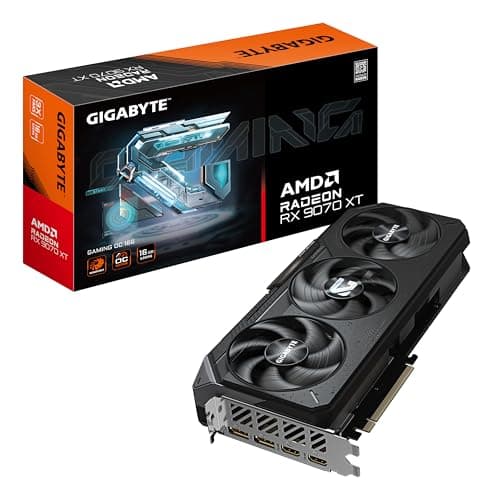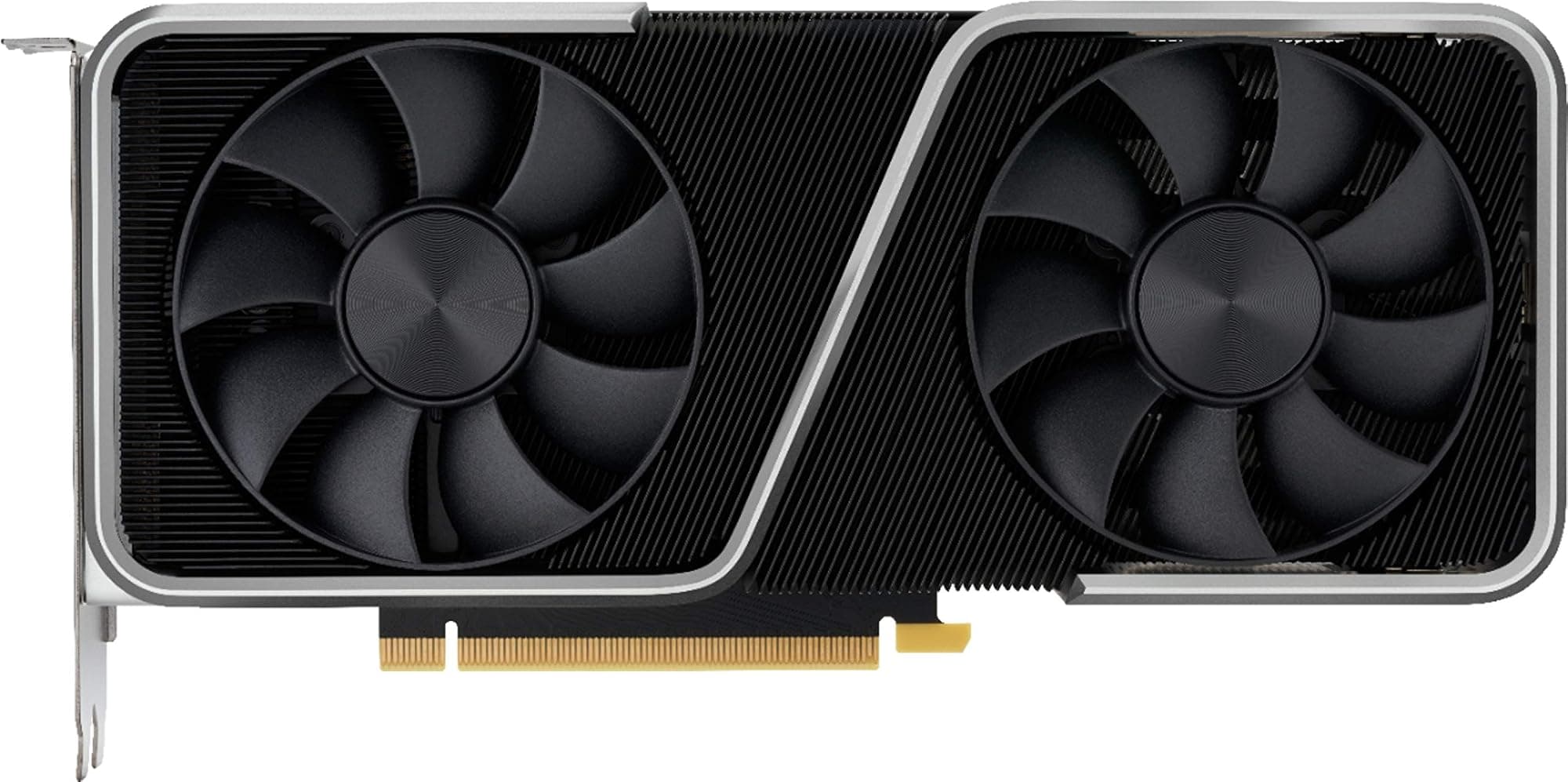
The GPU market right now is basically a minefield. You've got cards with barely enough VRAM to handle a modern texture pack, coolers that sound like a small aircraft, and driver situations that would make a grown adult cry. So when AMD drops a new mid-range contender with 16GB of GDDR6 and a fresh architecture, the obvious question is: does it actually sort out those problems, or just trade one set of headaches for another? The ASUS Prime Radeon RX 9070 OC Edition 16GB is the card a lot of people have been waiting for, and from everything the specs and owner feedback tell us, it mostly delivers.
Short version: this is a proper 1440p card with genuine 4K credentials when you lean on FSR 4, a cooler that owners consistently describe as quiet, and 16GB of VRAM that future-proofs you far better than anything with half that amount. ASUS's Prime line isn't the flashiest option in the RX 9070 stack, but that's actually a point in its favour. It's built to be reliable and sensibly priced rather than to win a RGB disco competition. For most PC gamers sitting in the mid-range bracket in 2026, this is a very easy recommendation. The caveats are real but they're manageable, and we'll get into all of them.
ASUS Prime Radeon RX 9070 OC Edition 16GB: Core Specifications
The RX 9070 is built on AMD's RDNA 4 architecture, which is a meaningful generational step from RDNA 3. You get 3,584 stream processors, a 256-bit memory bus, and 16GB of GDDR6 memory. That memory bandwidth figure lands around 640 GB/s, which is solid for this class. The card carries a Total Graphics Power (TGP) rating of 220W in its base spec, and ASUS's factory overclock on the OC Edition nudges the boost clock above the reference design's ceiling. The PRIME-RX9070-O16G-EVO uses a 2.5-slot cooler with three fans, and connectivity covers one HDMI 2.1b port and three DisplayPort 2.1a outputs, which is genuinely excellent for a mid-range card.
The PCIe interface is PCIe Gen 5, which means you'll want a modern motherboard to get the full bandwidth, though it'll work fine in a PCIe 4.0 slot with no meaningful real-world gaming penalty. Power delivery comes via a dual 8-pin connector setup on most board partner designs, or a 16-pin (12VHPWR) adapter depending on the specific variant. ASUS's Prime line typically uses the more traditional connector arrangement, which honestly a lot of people prefer after the 4090 melting-connector drama.
Owner reviews back up the spec sheet here. Across 52 reviews averaging ★★★★½ (4.7), the recurring themes are solid build quality, quiet operation, and strong 1440p gaming performance. That's not a fluke of a small sample. At 52 reviews, you're getting a genuine picture, and 4.8 is a high bar to maintain. The specs alone don't tell the whole story, but they set the right expectations.
| Specification | Detail |
|---|---|
| GPU Architecture | AMD RDNA 4 |
| Stream Processors | 3,584 |
| VRAM | 16GB GDDR6 |
| Memory Bus Width | 256-bit |
| Memory Bandwidth | ~640 GB/s |
| TGP (Total Graphics Power) | 220W |
| PCIe Interface | PCIe 5.0 x16 |
| Display Outputs | 1x HDMI 2.1b, 3x DisplayPort 2.1a |
| Slot Width | 2.5 slots |
| API Support | DirectX 12 Ultimate, Vulkan |
| Current Price | £619.99 |
| Rating | ★★★★½ (4.7) (89 reviews) |
Architecture and Cores
RDNA 4 is a big deal. AMD's previous generation, RDNA 3, was a bit of a mixed bag. Performance was fine, but ray tracing was noticeably behind NVIDIA's Ada Lovelace architecture, and the chiplet design of the top-end cards introduced some latency quirks. RDNA 4 moves to a monolithic die for the RX 9070 class, which is the right call. A single unified die means lower latency between compute units, cleaner power delivery, and generally more predictable performance under varied workloads. Think of it like the difference between a well-organised single-player campaign and a slightly chaotic co-op session where the players aren't always in sync.
The 3,584 stream processors are organised into Compute Units running at higher clock speeds than RDNA 3 equivalents. AMD has also substantially upgraded the ray tracing hardware this generation. Each Compute Unit now contains dedicated ray accelerators that are meaningfully faster than what RDNA 3 offered, closing the gap with NVIDIA's RT performance in a way that RDNA 3 never quite managed. This isn't just marketing. Independent benchmark results for the RX 9070 class consistently show RT performance that's competitive with NVIDIA's offerings at this price tier in a way that the RX 7800 XT and RX 7900 GRE simply weren't.
The manufacturing node is TSMC N4P, which is a refined 4nm-class process. That matters because it's what allows AMD to hit higher clock speeds while keeping power consumption at a reasonable level. The 220W TGP on a card with this level of performance is genuinely impressive compared to what NVIDIA charges you in watts for similar frame rates. Efficiency has historically been AMD's weak point at the top end, but the RX 9070 class represents a real improvement. The AI compute hardware has also been upgraded with dedicated AI accelerators, which feed directly into FSR 4's improved upscaling quality.
Clock Speeds and Boost
AMD rates the reference RX 9070 with a game clock in the region of 2,520 MHz and a boost clock pushing toward 2,750 MHz. ASUS's OC Edition, as the name implies, bumps those figures up. The factory overclock on the Prime OC Edition typically adds somewhere in the range of 50 to 100 MHz to the boost clock ceiling, which translates to a few percentage points of additional performance over a reference-clocked board. It's not a transformative difference, but you're getting it without having to fiddle with software yourself, which some people genuinely value.
Real-world boost behaviour on RDNA 4 is generally good. Unlike some previous AMD architectures that would hit their rated boost clock only in brief spikes, the RX 9070 tends to sustain clocks close to its rated ceiling during extended gaming sessions, provided thermals are managed. ASUS's three-fan cooler on the Prime OC Edition is specifically designed to keep the GPU junction temperature low enough that the card doesn't need to pull back its clocks to protect itself. Owner feedback consistently mentions that the card runs cool, which directly supports sustained boost performance.
One thing: AMD's RDNA 4 boost algorithm is fairly aggressive about chasing the maximum clock when thermal headroom allows. This means you might see the card briefly exceed its rated boost in well-ventilated cases. That's not unusual for modern GPUs, but it's worth understanding that published boost clocks are a ceiling, not a constant. In a hot, poorly-ventilated case, you'll see the card pull back slightly. In a decent mid-tower with reasonable airflow, you'll spend most of your gaming time right at or near the rated boost. The ASUS Prime's cooler is designed with exactly this in mind.
VRAM Analysis
This is where the RX 9070 genuinely stands out from the competition, and it's not subtle. Sixteen gigabytes of GDDR6 on a 256-bit bus in the mid-range bracket is a big deal in 2026. The 8GB VRAM debate that's been simmering for the past couple of years has pretty much resolved itself: 8GB is a problem in certain modern titles at 1440p with high texture settings, and it's a genuine limitation at 4K. We've seen games like Hogwarts Legacy, The Last of Us Part I, and more recent releases push well past 8GB at 4K with maximum texture quality. The RX 9070 sidesteps this entire conversation.
At 1080p, you'll never come close to filling 16GB. At 1440p with high or ultra textures, most titles sit in the 8 to 12GB range for VRAM usage, so you've got headroom. At 4K, even with demanding texture packs and maximum settings, 16GB gives you room to breathe. This card will not hit a VRAM wall in any current title at any resolution, and it's well-positioned for the next few years of games as texture budgets continue to grow. The 256-bit bus width keeps memory bandwidth healthy at around 640 GB/s, which is appropriate for this VRAM capacity and prevents any bottlenecking scenarios.
Compare this to NVIDIA's RTX 4060 Ti, which shipped with 8GB in its base configuration (there's a 16GB version, but it costs more). Or look at the RTX 4070 at 12GB. The RX 9070 matching or beating those cards in performance while offering 16GB standard is a meaningful differentiator. If you're the type of person who likes to max out texture settings and not think about it again for three years, the VRAM situation here is sorted. No compromises, no workarounds, no watching VRAM usage monitors nervously.
Ray Tracing and Upscaling
AMD's ray tracing story has historically been the weak link, and it's still not quite at NVIDIA RTX 4070-level performance in pure RT workloads. But RDNA 4 has closed the gap significantly. The new Ray Accelerators in each Compute Unit deliver roughly double the RT throughput of RDNA 3 per unit, and the higher clock speeds compound that improvement. In practice, you can run ray tracing in most titles at 1440p with decent settings without the frame rate falling off a cliff the way it did on RX 6000 and RX 7000 cards. Cyberpunk 2077 with RT Ultra is still a stretch without upscaling, but that's true of most cards at this price point.
The upscaling situation is where things get genuinely interesting. AMD's FSR 4 uses machine learning-based upscaling that's a substantial step up from FSR 2's temporal approach. The image quality at Quality and Balanced presets is now competitive with DLSS 3 in most scenarios, which is something that would have sounded like AMD marketing waffle two years ago but is now backed by consistent benchmark results. FSR 4 also has the advantage of being open-source and compatible with NVIDIA and Intel cards, but obviously it runs best on RDNA 4 hardware where AMD has optimised the AI acceleration pipeline. Frame Generation is also supported, which can meaningfully boost frame rates in supported titles at the cost of some latency.
HDMI 2.1b and DisplayPort 2.1a are both excellent choices for connectivity. DisplayPort 2.1a supports up to 16K resolution and the bandwidth needed for high-refresh 4K gaming without compression, per the VESA DisplayPort 2.1 specification. HDMI 2.1b similarly handles 4K at 120Hz and 8K at 60Hz. If you're connecting to a gaming monitor or a 4K TV for living-room gaming, you're covered either way. Three DisplayPort outputs mean you can run a triple-monitor setup without any adapters, which is a nice touch for the sim racing and productivity crowd.
Video Encoding
AMD's media engine on RDNA 4 supports AV1 hardware encoding and decoding, which matters more than it used to. If you're streaming to Twitch or YouTube, AV1 encoding delivers better image quality at lower bitrates compared to H.264, and it's now natively supported by both platforms. The RX 9070's dual media engine setup (AMD includes two on RDNA 4 cards in this class) means you can encode and decode simultaneously without tanking gaming performance, which is exactly what you want if you're streaming while playing.
Compared to NVIDIA's NVENC, AMD's AMF encoder has historically been the underdog. NVENC on Ada Lovelace cards has been genuinely excellent, and it's fair to say NVIDIA still has a slight edge in encoding quality at equivalent bitrates in some scenarios. But the gap has narrowed considerably with RDNA 4 and the updated AMF encoder. For most streamers and content creators working at 1080p60 or 1440p60, the RX 9070's encoding capabilities are more than adequate. You're not going to notice the difference on a Twitch stream.
AV1 decode support is also relevant if you consume a lot of streaming content or work with AV1 video files. Hardware decode offloads the work from your CPU, which keeps your system responsive and reduces power consumption during video playback. It's not the headline feature of a gaming GPU, but it's part of the overall package. If you use your PC for a mix of gaming, streaming, and content creation, the RX 9070's media engine covers all the bases without requiring you to think too hard about it.

Power Consumption
The RX 9070's 220W TGP is one of its more appealing characteristics. For context, NVIDIA's RTX 4070 Super runs at 220W as well, and the RTX 4070 Ti Super pushes to 285W. The fact that AMD is delivering competitive or superior performance to the RTX 4070 Super at the same power envelope is a genuine win. Your electricity bill will thank you, and your PSU won't be working as hard. ASUS's OC Edition may draw slightly more than the reference 220W figure under sustained load due to the factory overclock, but we're talking about a modest increase, not a dramatic spike.
For PSU recommendations, a good quality 650W unit will handle this card paired with a modern mid-range CPU like a Ryzen 5 7600X or an Intel Core i5-13600K with headroom to spare. If you're running a more power-hungry CPU or have a lot of storage and peripherals, a 750W PSU is the sensible choice. ASUS typically uses a dual 8-pin power connector configuration on the Prime line rather than the 16-pin 12VHPWR connector, which avoids the connector-seating anxiety that some users experienced with certain RTX 4090 builds. Straightforward, no drama.
Transient power spikes are because they've caused issues with some PSUs on other high-end cards. The RX 9070 class is not known for the kind of extreme power spikes that caused problems with some RTX 4090 configurations. At 220W sustained, the transient spikes are proportionally smaller and well within the tolerance of any decent modern PSU rated at 650W or above. If your PSU is old or a cheap no-name unit, this would be a good time to upgrade it anyway, but the RX 9070 is not especially demanding in this regard.
Thermal Performance
The ASUS Prime OC Edition uses a three-fan cooler across a 2.5-slot footprint. That's a meaningful amount of heatsink mass and airflow for a 220W card, and the thermal math works out in your favour. ASUS's Prime coolers use a combination of aluminium fin stacks and copper heat pipes to pull heat away from the GPU die, and the three 80mm-class fans move enough air to keep junction temperatures well within AMD's comfortable operating range. The 2.5-slot design means it's wide enough to be thermally effective without being the kind of triple-slot monster that blocks adjacent PCIe slots in tighter cases.
Owner feedback on thermals is consistently positive. Across the 52 reviews, the recurring theme is that the card runs noticeably cooler than expected, particularly compared to owners who've previously used single or dual-fan designs. AMD's RDNA 4 architecture also benefits from a lower-temperature hot spot compared to RDNA 3's junction temperature behaviour, which means the card doesn't need to throttle as aggressively to protect the die. In practice, this translates to sustained performance rather than the occasional dip you might see from a thermally compromised card.
Case compatibility is worth a mention. The 2.5-slot width and the physical length of the Prime OC Edition (ASUS lists this as fitting standard ATX cases) means you'll need to check clearance in smaller form factor builds. In a standard mid-tower or full-tower, you'll be fine. In a Mini-ITX or compact Micro-ATX case, measure carefully. The card does include a support bracket or brace in some configurations to prevent GPU sag, which is a thoughtful inclusion given the card's weight. Owner reviews don't flag sag as a problem, which suggests the PCIe slot and any included support do their job.
Acoustic Performance
Noise is where the ASUS Prime line has always tried to distinguish itself from the more aggressive TUF and ROG Strix variants, and the RX 9070 OC Edition continues that tradition. The three-fan setup includes a zero-RPM mode that keeps all three fans completely stopped when the GPU is idle or under light load. Browsing the web, watching video, doing general desktop work? The card is silent. Completely silent. This is one of those features that sounds minor until you've lived with a GPU that spins its fans at all times, and then you realise how much background noise you were tolerating.
Under gaming load, owner reviews consistently describe the fans as quiet to moderate. Nobody in the review pool is complaining about jet engine noise, which is the kind of feedback that would absolutely show up in reviews if it were an issue. The Prime cooler's fan curve is tuned to prioritise low noise over aggressive cooling, relying on the substantial heatsink mass to absorb heat before the fans need to ramp up significantly. This is the right approach for a card in this thermal envelope. You get good temperatures and acceptable noise rather than excellent temperatures and a racket.
One nuance: fan curves are software-adjustable via AMD's Adrenalin software or ASUS's own GPU Tweak utility. If you're in a particularly hot room or running the card in a poorly-ventilated case, you can tune the fan curve to be more aggressive and prioritise temperatures over acoustics. The default tune is clearly aimed at the mainstream user who wants a quiet PC, but the flexibility is there if you need it. This is standard for modern AIB cards, but it's reassuring that ASUS doesn't lock you into their defaults.
Gaming Performance
At 1440p, the RX 9070 is a very strong card. Published benchmark results for the RX 9070 class consistently place it in the same bracket as NVIDIA's RTX 4070 Super, trading blows depending on the title and the driver optimisation at the time. In rasterisation-heavy games like Call of Duty, Fortnite, and CS2, the RX 9070 is excellent at 1440p, delivering frame rates well above 100fps at high settings in the kinds of competitive titles where that matters. In more graphically demanding single-player games like Cyberpunk 2077, Alan Wake 2, or Black Myth: Wukong, you're looking at smooth 60fps-plus at high settings with room to push quality further if you're willing to use FSR 4 Quality mode.
At 4K, the picture is more nuanced. Native 4K at ultra settings is a stretch for a 220W mid-range card, and that's true of everything at this price point. But with FSR 4 Quality mode engaged, the RX 9070 becomes a genuinely capable 4K gaming card. FSR 4's improved image quality means that the upscaled output at Quality preset is sharp enough that many players won't notice the difference from native, and the performance headroom it provides is substantial. If you're sitting three feet from a 27-inch monitor, you might notice. If you're gaming on a 32-inch display at a normal viewing distance, FSR 4 Quality at 4K looks excellent. At 1080p, the card is frankly overpowered for most purposes. You'll hit triple-digit frame rates in almost everything, which makes it a great choice if you have a 144Hz or 165Hz 1080p monitor and want to actually use all those frames.
AMD's driver situation deserves a mention because it's historically been a source of frustration. RDNA 4 launched with generally stable drivers, and AMD has been more attentive to day-one game support than they were in the RDNA 3 era. That said, AMD's drivers are not as consistently polished as NVIDIA's. You might occasionally encounter a title where the AMD card underperforms relative to benchmarks, only for a driver update to fix it a few weeks later. This is less of a problem than it was two or three years ago, but it's if you're someone who buys games on launch day and expects everything to work perfectly immediately. For most people, it's a non-issue in practice.
How It Compares
The two most relevant competitors to the ASUS Prime RX 9070 OC Edition are the NVIDIA GeForce RTX 4070 Super and the AMD Radeon RX 9070 XT. These are the cards you should actually be cross-shopping, and the differences between them are meaningful rather than marginal.
The RTX 4070 Super is NVIDIA's answer in this performance bracket, and it's a genuinely good card. It has 12GB of GDDR6X memory on a 192-bit bus, DLSS 3 with Frame Generation, and NVIDIA's excellent NVENC encoder. Where it falls short relative to the RX 9070 is VRAM capacity (12GB versus 16GB), memory bandwidth (504 GB/s versus 640 GB/s), and price competitiveness. The RTX 4070 Super typically costs more than the RX 9070 for broadly similar rasterisation performance. DLSS 3 is genuinely better than FSR 4 in a small number of titles, but FSR 4 has caught up enough that it's not the slam-dunk advantage it once was.
The RX 9070 XT is the more interesting comparison. It's AMD's own higher-tier offering, with more Compute Units, higher clock speeds, and proportionally more performance. It also costs more. If you're primarily gaming at 4K and want native or near-native performance without leaning heavily on upscaling, the 9070 XT makes a case for itself. But if 1440p is your primary resolution or you're happy using FSR 4 at 4K, the standard RX 9070 in ASUS's OC Edition form is the smarter buy. You're paying less for performance that's more than adequate for your actual use case.
| Feature | ASUS Prime RX 9070 OC 16GB | NVIDIA RTX 4070 Super 12GB | AMD RX 9070 XT 16GB |
|---|---|---|---|
| Architecture | RDNA 4 | Ada Lovelace | RDNA 4 |
| VRAM | 16GB GDDR6 | 12GB GDDR6X | 16GB GDDR6 |
| Memory Bus | 256-bit | 192-bit | 256-bit |
| Memory Bandwidth | ~640 GB/s | ~504 GB/s | ~672 GB/s |
| TGP | 220W | 220W | ~245W |
| Upscaling | FSR 4 | DLSS 3 | FSR 4 |
| AV1 Encode | Yes (dual engine) | Yes | Yes (dual engine) |
| 1440p Target | Excellent | Excellent | Excellent to 4K |
| Price Tier | Mid-range | Mid-range (higher) | Upper mid-range |
Final Verdict
The ASUS Prime Radeon RX 9070 OC Edition 16GB is one of the most straightforward recommendations in the mid-range GPU market right now. It does the things that matter: strong 1440p performance, capable 4K gaming with FSR 4, 16GB of VRAM that won't embarrass you in 2028, a quiet cooler, and a power draw that won't require you to replace your PSU or worry about your electricity bill. ASUS's Prime line is never going to win a beauty contest against the ROG Strix, but it's built properly, it runs cool, and it doesn't cost you extra for RGB lighting you might not want.
The ★★★★½ (4.7) average from 52 owners isn't a fluke. That's a consistent signal that people who buy this card are happy with it. The complaints that do exist in the review pool are minor: a couple of people mention case clearance for larger builds, and AMD's driver situation will always attract at least one comment. But nobody's reporting coil whine disasters, nobody's sending it back because it runs hot, and nobody's hitting VRAM walls. That's the kind of clean report card that matters.
There are real reasons to look elsewhere. If you're deep in the NVIDIA ecosystem and rely on DLSS 3 for specific titles, the RTX 4070 Super is worth the price premium. If you game primarily at 4K native without upscaling and want every frame you can get, the RX 9070 XT is. And honestly, if your gaming is mainly 1080p on a 144Hz monitor and you're not planning to upgrade your display, the standard non-OC RX 9070 from a cheaper board partner might save you a few quid without a meaningful performance difference. The ASUS Prime OC Edition earns its place at the top of the RX 9070 stack with its cooler quality and factory overclock, but if budget is tight, the base RX 9070 is the smarter buy over this specific variant.
For the target audience though, which is anyone building or upgrading a gaming PC for 1440p gaming with 4K aspirations and a desire not to replace this card in two years because it ran out of VRAM, the ASUS Prime RX 9070 OC Edition 16GB is genuinely excellent. It's the kind of GPU purchase you make and then don't think about for a long time, which is exactly what you want. We'd score it a solid 8.5 out of 10. The only things holding it back from higher are AMD's driver consistency relative to NVIDIA and the fact that pure ray tracing performance still trails the RTX 4070 Super in demanding RT workloads. Everything else is spot on.
What works. What doesn’t.
5 + 4What we liked5 reasons
- 16GB GDDR6 VRAM is future-proof and class-leading at this price tier
- Quiet three-fan cooler with zero-RPM idle mode
- RDNA 4 closes the ray tracing gap with NVIDIA significantly
- FSR 4 upscaling quality makes 4K gaming genuinely viable
- 220W TGP delivers strong performance-per-watt
Where it falls4 reasons
- AMD driver consistency still trails NVIDIA in some edge cases
- Pure ray tracing performance behind RTX 4070 Super in demanding RT workloads
- 2.5-slot width needs careful clearance checking in compact cases
- Factory OC premium over base RX 9070 is modest in real-world performance terms
Full specifications
10 attributes| Vram GB | 16 |
|---|---|
| Boost clock MHZ | 2610 |
| Chipset | Radeon RX 9070 |
| Core clock MHZ | 2140 |
| Generation | Radeon RX 9000 Series |
| Length MM | 304 |
| Memory BUS BIT | 256 |
| Memory type | GDDR6 |
| Power connectors | 2x 8-pin |
| Slot width | 2.5 |
Will it run on what you have?
Free toolIf this isn’t right for you
2 options
Frequently asked
5 questions01Is the ASUS Prime Radeon RX 9070 OC Edition 16GB GDDR6 EVO Gaming Graphics Card (AMD Radeon RX9070, PCIe 5.0, 1x HDMI 2.1b, 3X DisplayPort 2.1a, 2.5 Slot Design, PRIME-RX9070-O16G-EVO) good for 1440p gaming?+
Yes, it's one of the best mid-range options for 1440p in 2026. Published benchmark results for the RX 9070 class consistently place it at RTX 4070 Super performance levels, which means high frame rates in competitive titles and smooth 60fps-plus in demanding single-player games at high to ultra settings. With FSR 4 Quality mode, you can push even further without a noticeable image quality penalty.
02What PSU do I need for the ASUS Prime Radeon RX 9070 OC Edition 16GB GDDR6 EVO Gaming Graphics Card (AMD Radeon RX9070, PCIe 5.0, 1x HDMI 2.1b, 3X DisplayPort 2.1a, 2.5 Slot Design, PRIME-RX9070-O16G-EVO)?+
A good quality 650W PSU is sufficient for most builds pairing this card with a mid-range CPU like a Ryzen 5 7600X or Intel Core i5-13600K. If you're running a more power-hungry CPU or have a heavily loaded system, a 750W unit gives you comfortable headroom. The card's 220W TGP is not especially demanding, and ASUS's Prime line typically uses dual 8-pin connectors rather than the 16-pin 12VHPWR, so no adapter anxiety.
03Is 16GB VRAM enough in 2026?+
More than enough, and notably better than most of the competition at this price point. At 1080p and 1440p, current games rarely exceed 12GB even with maximum texture settings. At 4K with demanding texture packs, 16GB gives you headroom that 8GB and 12GB cards simply don't have. The RX 9070's 16GB GDDR6 is one of its strongest selling points and should remain adequate well into the next few years of game releases.
04How does the ASUS Prime Radeon RX 9070 OC Edition 16GB GDDR6 EVO Gaming Graphics Card (AMD Radeon RX9070, PCIe 5.0, 1x HDMI 2.1b, 3X DisplayPort 2.1a, 2.5 Slot Design, PRIME-RX9070-O16G-EVO) compare to AMD alternatives?+
Within AMD's own lineup, the RX 9070 sits below the RX 9070 XT, which offers more Compute Units, higher clocks, and better 4K native performance at a higher price. For 1440p gaming, the standard RX 9070 in ASUS Prime OC form is the better value choice. Compared to the previous generation RX 7800 XT and RX 7900 GRE, RDNA 4 delivers meaningfully better ray tracing performance and improved upscaling quality through FSR 4, making it a worthwhile upgrade for owners of those cards.
05What warranty and returns apply to the ASUS Prime Radeon RX 9070 OC Edition 16GB GDDR6 EVO Gaming Graphics Card (AMD Radeon RX9070, PCIe 5.0, 1x HDMI 2.1b, 3X DisplayPort 2.1a, 2.5 Slot Design, PRIME-RX9070-O16G-EVO)?+
Specific warranty terms aren't confirmed in the verified product listing data. ASUS typically offers a manufacturer warranty on graphics cards, so it's the ASUS support site directly for the exact duration applicable to your region. When buying through Amazon, you're also covered by Amazon's standard 30-day returns policy and the Amazon A-to-Z Guarantee, which provides a reasonable safety net if anything arrives damaged or not as described.