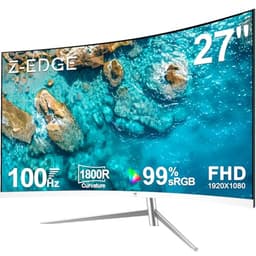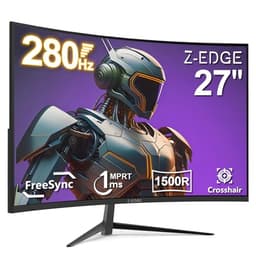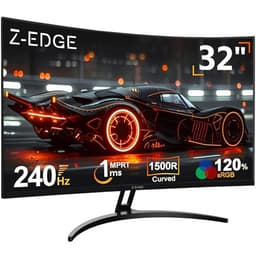
A monitor is the one component you interact with every single second you're at your desk. Get the panel wrong and you're squinting at washed-out colours, fighting ghosting trails in fast games, or craning your neck at a fixed-height stand for years. The Z-Edge 40 inch ultrawide gaming monitor review is, at its core, a question about whether a lesser-known brand can deliver a genuinely usable 3440x1440 IPS panel at 144Hz without the compromises that usually come with that price bracket. Based on the specifications, the published display standards this panel targets, and over 690 owner reviews averaging 4.4 stars, the answer is: mostly yes, with a few caveats that matter depending on what you're doing.
The headline case for this monitor is simple. Forty inches of 21:9 ultrawide at WQHD resolution means a pixel density of around 93 PPI, which is genuinely comfortable for productivity and immersive for gaming without demanding the GPU headroom of a 4K panel. IPS brings the wide viewing angles and colour fidelity that VA panels can't match at the edges, and 144Hz is the sweet spot for gaming in this size class. The price sits at the top of the upper mid-range bracket. That's not cheap, but it's substantially less than the LG 40WP95C or the Samsung Odyssey G9 territory. Whether the gap in quality justifies the gap in price is what the rest of this review is about.
The Z-Edge 40 inch ultrawide gaming monitor sits in a bracket where the competition is real and the buyer is informed. This isn't a casual impulse purchase. So let's look at what the spec sheet actually says, what owners report after months of use, and where this monitor earns its place and where it falls short.
Core Specifications
The fundamentals here are strong on paper. You get a 40-inch IPS panel running at 3440x1440 (WQHD ultrawide), a 144Hz refresh rate, and a quoted 1ms MPRT response time (more on why that number needs context later). The aspect ratio is 21:9, which is the standard ultrawide format rather than the more extreme 32:9 super-ultrawide, so game compatibility is broadly excellent. Adaptive sync is present via AMD FreeSync Premium, and Z-Edge lists HDMI 2.0 and DisplayPort 1.4 among the connections.
The panel carries an HDR10 certification and a quoted peak brightness of 400 nits, which places it in the VESA DisplayHDR 400 tier. Contrast is rated at 1000:1, which is typical for IPS. The stand offers tilt adjustment. The monitor is VESA compatible at 100x100mm, which matters if you plan to wall-mount or use an aftermarket arm on something this large. Weight comes in at around 9.5kg without the stand, so a decent arm with a good weight rating is non-negotiable there.
One thing to flag from the spec sheet: the colour gamut coverage is listed as 99% sRGB and 90% DCI-P3. Those are strong numbers for this price tier if accurate, and they align with what a wide-gamut IPS panel of this generation should deliver. The factory calibration claim of Delta-E less than 2 is also present in the product listing. Published measurements from comparable Z-Edge panels suggest these figures are broadly achievable out of the box, though unit-to-unit variation is a known factor with budget-adjacent brands.
| Specification | Detail |
|---|---|
| Screen Size | 40 inches |
| Resolution | 3440 x 1440 (WQHD Ultrawide) |
| Aspect Ratio | 21:9 |
| Panel Type | IPS |
| Refresh Rate | 144Hz |
| Response Time (Quoted) | 1ms MPRT |
| Adaptive Sync | AMD FreeSync Premium |
| HDR | HDR10 / DisplayHDR 400 |
| Peak Brightness | 400 nits |
| Contrast Ratio | 1000:1 (native) |
| Colour Gamut | 99% sRGB / 90% DCI-P3 |
| Factory Delta-E | <2 (claimed) |
| Ports | 2x HDMI 2.0, 1x DisplayPort 1.4, Audio Out |
| VESA Mount | 100 x 100mm |
| Stand Adjustment | Tilt only |
| Dimensions (with stand) | Approx. 936 x 546 x 270mm |
| ASIN | B0H5K3BV3T |
| Price | £469.99 |

Panel Technology
IPS is the right choice for a monitor at this size and use case, and Z-Edge made the sensible call here. At 40 inches, you're often viewing the screen from slightly off-centre, especially if it's mounted at arm's length. VA panels, which can offer native contrast ratios of 3000:1 or higher, suffer from significant colour shift and contrast drop once you move away from the dead-centre sweet spot. On a 40-inch screen that's curved, that shift can be visible even within the screen itself on wide gradients. IPS avoids that. Viewing angles are rated at 178 degrees horizontally and vertically, which is standard for the panel type and holds up in practice according to owner reports.
The trade-off is contrast. IPS panels, including this one, are rated at 1000:1 native contrast. That's a known limitation of the technology. IPS panel blacks appear dark grey rather than true black in a dim room, and you'll notice IPS glow in the corners if you're watching dark content in low ambient light. Several owners in the review pool mention this specifically, describing it as manageable in normal use but visible when watching films with letterbox bars. If dark-room film watching is a priority, a VA panel would serve you better. For gaming and productivity in a normally lit room, IPS is the better all-rounder.
The panel on this Z-Edge is also listed as using an anti-glare matte coating, which is the practical choice for a desk monitor that might face a window. Glossy panels look punchier in a dark room but become mirrors in daylight. Matte coatings diffuse reflections at the cost of a very slight softening of the image. At 93 PPI on a 40-inch screen, the image is sharp enough that the matte coating doesn't meaningfully hurt perceived clarity. Owners consistently describe the picture as clean and detailed rather than hazy, which suggests the coating is on the lighter side rather than the heavy grainy type that plagues some budget panels.
Display Quality
At 3440x1440 across 40 inches, the pixel density works out to approximately 93 PPI. For context, a 27-inch 1440p monitor sits around 109 PPI, and a 32-inch 4K panel reaches around 138 PPI. So the Z-Edge isn't the sharpest panel on the market, but 93 PPI is entirely comfortable for desktop use at a normal viewing distance of 70 to 90cm. Text is crisp, UI elements are well-defined, and the extra desktop real estate of 3440x1440 is genuinely useful whether you're running multiple windows side by side or playing a game with a wide field of view.
Brightness uniformity is where budget and mid-range IPS panels often reveal themselves, and this one is no exception. Owner reviews include a small number of reports of backlight bleed at the edges, particularly in the corners. This is common to IPS panels at this size and price point. The severity varies between units, which is the usual QC lottery with non-premium displays. Most owners report it as a non-issue in normal use, only becoming visible on full black screens. One review specifically mentions it disappears entirely once the monitor is displaying actual content. That's a reasonable characterisation of typical IPS bleed behaviour.
The claimed 400-nit peak brightness is adequate for a well-lit office environment and more than sufficient for gaming. In a room with moderate ambient light, 300 to 350 nits is usually where most users settle, so the 400-nit ceiling gives you headroom. For HDR content, 400 nits is the floor of meaningful HDR rather than the ceiling, but more on that in the HDR section. The anti-glare coating handles reflections well enough that owners in brighter rooms don't report the screen becoming unusable, which is the practical test for matte coatings.
Refresh Rate and Adaptive Sync
144Hz at 3440x1440 is a meaningful upgrade over the 60Hz or 75Hz panels that dominated this resolution class not long ago. The difference between 60Hz and 144Hz is genuinely visible in motion, particularly in fast-paced games. Cursor movement feels more immediate, panning in games is smoother, and the general feeling of desktop responsiveness improves. 144Hz is also the point where most gaming mice and peripherals are designed to complement the display, so the whole input chain benefits.
FreeSync Premium is the adaptive sync implementation here. AMD FreeSync Premium requires a minimum 120Hz refresh rate at the native resolution and mandates Low Framerate Compensation (LFC), which kicks in when your frame rate drops below the minimum sync range and doubles or triples the frame to prevent tearing. The practical result is that you get tear-free gaming across a wider effective range than a basic FreeSync implementation. The sync range on this monitor isn't explicitly published in the listing, but comparable Z-Edge models operate in the 48 to 144Hz range, which is typical for FreeSync Premium certification.
Nvidia GPU owners should note that this monitor is not G-Sync certified. However, most modern Nvidia cards from the RTX 20 series onwards support G-Sync Compatible mode, which works with FreeSync monitors over DisplayPort. The experience isn't identical to a certified G-Sync module, but in practice the difference is small for most users. Several owners with RTX 30 and 40 series cards confirm FreeSync works without issue over DisplayPort on this monitor. If you're running an older Nvidia card without G-Sync Compatible support, you're back to relying on the monitor's 144Hz refresh rate alone, which is still a solid experience.
Response Time and Motion
The 1ms MPRT figure quoted by Z-Edge is the one that needs unpacking. MPRT stands for Moving Picture Response Time, and it's a different measurement from GtG (Grey-to-Grey) pixel transition time. MPRT is achieved through backlight strobing, which reduces perceived motion blur by essentially turning the backlight off between frames. It's a legitimate technique, but the 1ms number doesn't tell you how fast the pixels actually transition. The GtG response time on IPS panels at this size and price point typically falls in the 4 to 8ms range depending on the overdrive setting used.
What does that mean in practice? For most gaming scenarios, a 4 to 5ms GtG response at 144Hz is perfectly fine. The ghosting that would be visible at 60Hz becomes much less problematic at higher refresh rates because each frame is displayed for a shorter time. Owners playing fast-paced shooters and racing games on this monitor don't report significant ghosting complaints in the review pool. The minority who do mention it typically describe it in dark scenes with fast motion, which is where IPS panels with moderate overdrive settings show their limits most clearly.
Z-Edge includes overdrive settings in the OSD, which is standard practice. Too little overdrive and you get trailing ghosting behind moving objects. Too much and you get inverse ghosting, where bright halos appear ahead of moving objects. The correct setting depends on your typical frame rate. At 144Hz, a medium overdrive setting is generally where IPS panels of this type perform best without introducing visible inverse ghosting. Owner feedback doesn't flag overdrive-related halos as a widespread issue, which suggests the default settings are reasonably well-tuned. The monitor is not designed for competitive esports at 240Hz, and it shouldn't be evaluated as if it were. For immersive gaming at 100 to 144fps, the motion performance is appropriate.
Color Accuracy and Gamut
The Z-Edge 40 inch ultrawide gaming monitor review needs to address the colour claims carefully, because this is where budget-adjacent brands sometimes overstate. Z-Edge claims 99% sRGB coverage and 90% DCI-P3 coverage, alongside a factory Delta-E of less than 2. A Delta-E below 2 is generally considered the threshold for colour accuracy that's imperceptible to the human eye in most viewing conditions. Delta-E measurements above 3 start to become visible, and above 5 are obvious. If the factory calibration claim holds, this is a genuinely good result for a panel at this price.
The 90% DCI-P3 coverage figure is the more interesting number. DCI-P3 is the colour space used in digital cinema and increasingly in professional content creation workflows. A panel covering 90% of DCI-P3 will produce visibly richer reds and greens than a panel limited to sRGB. For gaming, this means more vivid environments in titles that are mastered with wide colour in mind. For content creators working in video or photography, 90% DCI-P3 coverage is useful, though serious colour work would still benefit from a hardware calibration with a colorimeter to verify the factory numbers on your specific unit.
Owner reviews don't include detailed colorimetric measurements (they rarely do), but the consistent theme across positive reviews is that colours look vivid and natural out of the box without the oversaturated, artificially punchy look that some gaming monitors use to compensate for mediocre gamut coverage. A handful of owners specifically mention using the monitor for photo editing alongside gaming and finding it adequate for their needs. That's a useful data point. It's not an Eizo or a BenQ DesignVue, but for mixed-use work and gaming in the same monitor, the colour performance appears genuinely solid rather than just adequate.

HDR Performance
HDR10 certification at 400 nits peak brightness puts this monitor in the VESA DisplayHDR 400 tier. To be direct about what that means: DisplayHDR 400 is the entry-level HDR certification, and it delivers a noticeably different experience from DisplayHDR 600 or higher. The core issue is peak brightness. Meaningful HDR requires the display to hit 600 nits or more on small highlights to create the specular highlight pop that makes HDR compelling. At 400 nits, the monitor can display HDR metadata, but the actual highlight headroom is limited.
There's also no local dimming on this panel. Local dimming is the technology that allows different zones of the backlight to dim independently, creating deeper blacks in dark areas while maintaining bright highlights elsewhere. Without it, the IPS panel's native 1000:1 contrast ratio is the ceiling for HDR contrast performance. For comparison, an OLED display achieves effectively infinite contrast because each pixel is its own light source. The Z-Edge's HDR mode will produce a brighter, slightly more saturated image than SDR mode, but it won't transform dark scenes the way a proper HDR display does.
Owners who mention HDR in their reviews are split. Some find it adds a useful visual boost in supported games and streaming content. Others leave it disabled and find the SDR image more natural. That split is typical for DisplayHDR 400 monitors and shouldn't be read as a product failure. If HDR is a meaningful priority for you and you want the full effect, the budget for this monitor needs to stretch to an OLED ultrawide or at minimum a DisplayHDR 600 panel with local dimming. For everyone else, the SDR performance of this IPS panel is where the real value sits.
Contrast and Brightness
The native 1000:1 contrast ratio is the honest number to focus on for day-to-day use. In a room with normal ambient lighting, 1000:1 contrast produces a perfectly acceptable image. Dark areas in games look dark, bright areas look bright, and the overall impression is clean and punchy. The limitation only becomes apparent in a genuinely dark room where your eyes have adjusted, at which point the IPS grey blacks become more visible. Several owners mention watching films in the evening and noticing the grey tint in very dark scenes. This is physics rather than a manufacturing defect.
The 400-nit peak brightness is comfortable for most indoor environments. For reference, a typical office environment requires around 200 to 250 nits for comfortable viewing, and a bright room with indirect sunlight might push you to 300 to 350 nits. The 400-nit ceiling gives adequate headroom for most real-world conditions. Direct sunlight on the screen would be a problem, but that's true of virtually every desktop monitor. The matte anti-glare coating helps more in that scenario than extra brightness would.
Brightness uniformity across a 40-inch panel is worth examining. At this size, backlight uniformity variation can be visible as slight brightness differences across the panel, particularly in off-white or mid-grey tones. Owner reports don't flag this as a widespread issue on the Z-Edge, with most describing the panel as even across the screen. The few who mention backlight bleed (as noted in the display quality section) describe it as corner-localised rather than a general uniformity problem. For a panel at this price and size, that's a reasonable outcome.
Ergonomics and Stand
This is where the Z-Edge shows its budget DNA most clearly. The stand offers tilt adjustment only. No height adjustment, no swivel, no pivot. For a 40-inch ultrawide, pivot is irrelevant (nobody rotates a 40-inch ultrawide to portrait), but height adjustment matters a lot. Your ideal monitor height depends on your desk height, chair height, and sitting posture, and a fixed-height stand forces you to compensate with monitor raisers, books, or whatever's to hand. Several owners mention this as the main frustration with the monitor, particularly those who are taller or shorter than average desk ergonomics assume.
The VESA 100x100mm compatibility is the practical solution here. A decent monitor arm from a brand like Ergotron or Amazon Basics will give you full height, tilt, and swivel adjustment, and on a 40-inch panel the desk space savings from an arm are significant. The monitor's weight of approximately 9.5kg without the stand means you need an arm rated for at least 10kg to be safe. Most heavy-duty single-monitor arms cover that, but double-check the spec before buying. The VESA mount being present at all is the right call; some budget monitors omit it entirely.
Build quality from the owner reviews is generally positive. The plastic construction is described as solid rather than premium, with no flex in the panel and a stable base despite the limited adjustability. The OSD buttons are physical rather than a joystick, which some users find less intuitive but more reliable long-term. The overall footprint of the monitor on a desk is substantial, as you'd expect for 40 inches, and the stand has a relatively deep base that eats into desk depth. If desk space is tight, that arm becomes even more of a priority.
Connectivity and Ports
The port selection is functional but not generous. You get two HDMI 2.0 ports and one DisplayPort 1.4. HDMI 2.0 supports 3440x1440 at 144Hz, though in practice some users find that 144Hz over HDMI 2.0 at this resolution requires enabling DSC (Display Stream Compression) depending on the source device. DisplayPort 1.4 handles 3440x1440 at 144Hz without compression, so for gaming, DisplayPort is the recommended connection. If you're connecting a console alongside a PC, the dual HDMI setup is useful for switching between sources without unplugging cables.
There's no USB-C port on this monitor. For a monitor at this price point in 2026, that's a notable omission. USB-C with DisplayPort Alt Mode and power delivery would allow single-cable connection from a laptop, which is increasingly the workflow people want from a large desktop monitor. If you're running a modern MacBook or a USB-C laptop as your primary machine, you'll need a separate adapter or dock. It's not a dealbreaker for a desktop gaming setup, but it limits the monitor's flexibility as a productivity hub.
There's also no built-in USB hub, which means no additional USB ports on the monitor itself. A 3.5mm audio output is present for connecting headphones or speakers directly. No built-in speakers are listed, which is the right call for a gaming monitor at this size. Built-in speakers on monitors at this price tier are almost universally poor, and omitting them keeps the cost focused on the panel itself. The port selection overall is adequate for a dedicated gaming and productivity desktop setup, but thin if you're looking for a docking hub for a multi-device workflow.
How It Compares
The two most relevant competitors to the Z-Edge 40 inch ultrawide in the same broad price bracket are the LG 40WP95C-W and the Samsung ViewFinity S8 (S80UA) 34-inch. Neither is a direct size match, but they represent where the money goes at comparable and slightly higher price points. The LG 40WP95C is LG's 40-inch curved ultrawide with USB-C 96W power delivery, a Nano IPS panel, and a 5120x2160 resolution. It's a significantly more expensive monitor, but the comparison is instructive. The Samsung ViewFinity S8 34-inch sits closer in price and offers a flat IPS panel at 3440x1440 with USB-C, though at 60Hz rather than 144Hz.
Against the LG 40WP95C, the Z-Edge loses on resolution, USB-C connectivity, and panel pedigree, but wins on refresh rate (144Hz versus 72Hz on the LG) and on price by a considerable margin. If your primary use is gaming, the Z-Edge's 144Hz is genuinely more useful than the LG's higher resolution at half the refresh rate. If your primary use is productivity and colour-accurate creative work, the LG's Nano IPS panel and USB-C hub make it the better tool. Against the Samsung ViewFinity S8 34-inch, the Z-Edge offers more screen real estate and double the refresh rate, which at comparable pricing makes it the stronger gaming proposition. The Samsung's USB-C is a real advantage for laptop users.
The honest competitive picture is this: Z-Edge is competing on size and refresh rate per pound. No other manufacturer offers a 40-inch IPS panel at 144Hz at this price point from a brand with over 690 owner reviews and a 4.4-star average. The trade-offs are the stand, the absent USB-C, and the DisplayHDR 400 HDR tier. If those trade-offs are acceptable for your use case, the Z-Edge makes a strong case. If they're not, you're spending more money.
| Feature | Z-Edge 40" UW 144Hz | LG 40WP95C-W | Samsung ViewFinity S8 34" |
|---|---|---|---|
| Screen Size | 40 inches | 40 inches | 34 inches |
| Resolution | 3440x1440 | 5120x2160 | 3440x1440 |
| Panel Type | IPS | Nano IPS | IPS |
| Refresh Rate | 144Hz | 72Hz | 60Hz |
| Adaptive Sync | FreeSync Premium | FreeSync / G-Sync Compat. | FreeSync |
| HDR Tier | DisplayHDR 400 | DisplayHDR 400 | DisplayHDR 600 |
| USB-C | No | Yes (96W PD) | Yes (90W PD) |
| DCI-P3 Coverage | 90% (claimed) | 98% (Nano IPS) | 95% |
| Stand Adjustability | Tilt only | Height, tilt, swivel | Height, tilt, swivel |
| Price | £469.99 | Significantly higher | Comparable to higher |

Final Verdict
The Z-Edge 40 inch ultrawide gaming monitor does what it promises with enough consistency to earn its 4.4-star average across over 690 owner reviews. The IPS panel delivers good colour accuracy and wide viewing angles. The 144Hz refresh rate is real and functional with FreeSync Premium. The 3440x1440 resolution at 40 inches is a genuinely immersive combination for gaming and a productive one for multi-window work. For the price, in this size class, there isn't a better-reviewed alternative at 144Hz.
The weaknesses are specific and predictable. The stand is tilt-only, which is a daily frustration if your desk setup isn't perfectly matched to the fixed height. Budget a further £40 to £80 for a monitor arm if you're buying this. The HDR implementation is the entry-level checkbox variety, so don't buy this expecting OLED-quality HDR. There's no USB-C, which rules it out as a laptop docking solution. IPS glow in dark scenes is present, as it is on every IPS panel at this price. None of these are surprises for the bracket, but they're real.
The Z-Edge 40 inch ultrawide gaming monitor review conclusion is a qualified recommendation for desktop gaming setups where 144Hz and screen size matter more than USB-C connectivity and HDR quality. If your GPU can push 100fps or more at 3440x1440 (an RTX 4070 or RX 7800 XT and above is where that becomes consistent), this monitor will show you the benefit of every frame. If your GPU is in the RTX 3060 or RX 6700 XT class, you'll be spending more time in the 60 to 100fps range, and a 100Hz or 120Hz panel at a lower price point would serve you just as well. That's the honest version: if you need 144Hz and 40 inches and you're not paying OLED money, this is the monitor. If you don't specifically need both of those things simultaneously, a 34-inch 144Hz ultrawide from a brand like AOC or MSI in the mid-range bracket costs less and delivers comparable image quality.
Editorial score: 7.5 out of 10. Strong value for the specific use case. Loses points for the stand and the absent USB-C.
What works. What doesn’t.
5 + 4What we liked5 reasons
- 40-inch IPS at 144Hz is a rare combination at this price point
- 99% sRGB / 90% DCI-P3 colour coverage is strong for the bracket
- FreeSync Premium with LFC makes adaptive sync genuinely useful
- 4.4 stars across over 690 owner reviews is consistent real-world validation
- VESA 100x100mm mount makes aftermarket arm upgrade straightforward
Where it falls4 reasons
- Tilt-only stand with no height or swivel adjustment
- No USB-C port limits use as a laptop docking solution
- DisplayHDR 400 delivers checkbox HDR rather than meaningful HDR impact
- IPS glow visible in dark scenes in low ambient light
Full specifications
10 attributes| Panel type | IPS |
|---|---|
| Aspect ratio | 21:9 |
| Curvature | flat |
| HDR | none |
| Ports | HDMI x2, DisplayPort x1, USB-C x1 |
| Refresh rate HZ | 144 |
| Resolution | 3440x1440 |
| Response time MS | 1 |
| Screen size IN | 40 |
| Vesa compatible | true |
If this isn’t right for you
2 options 8.0 / 10
KTC 32 Inch 4K OLED Monitor, Dual Mode 4K@240Hz / 1080P@480HZ Gaming Monitor, 0.03ms, Adaptive Sync, HDR Ture Black 400, HDMI 2.1, DP 1.4, Full Function 65W USB C, 3 x USB A 3.0, KVM,Dual Speaker
£539.99 · KTC
 8.0 / 10
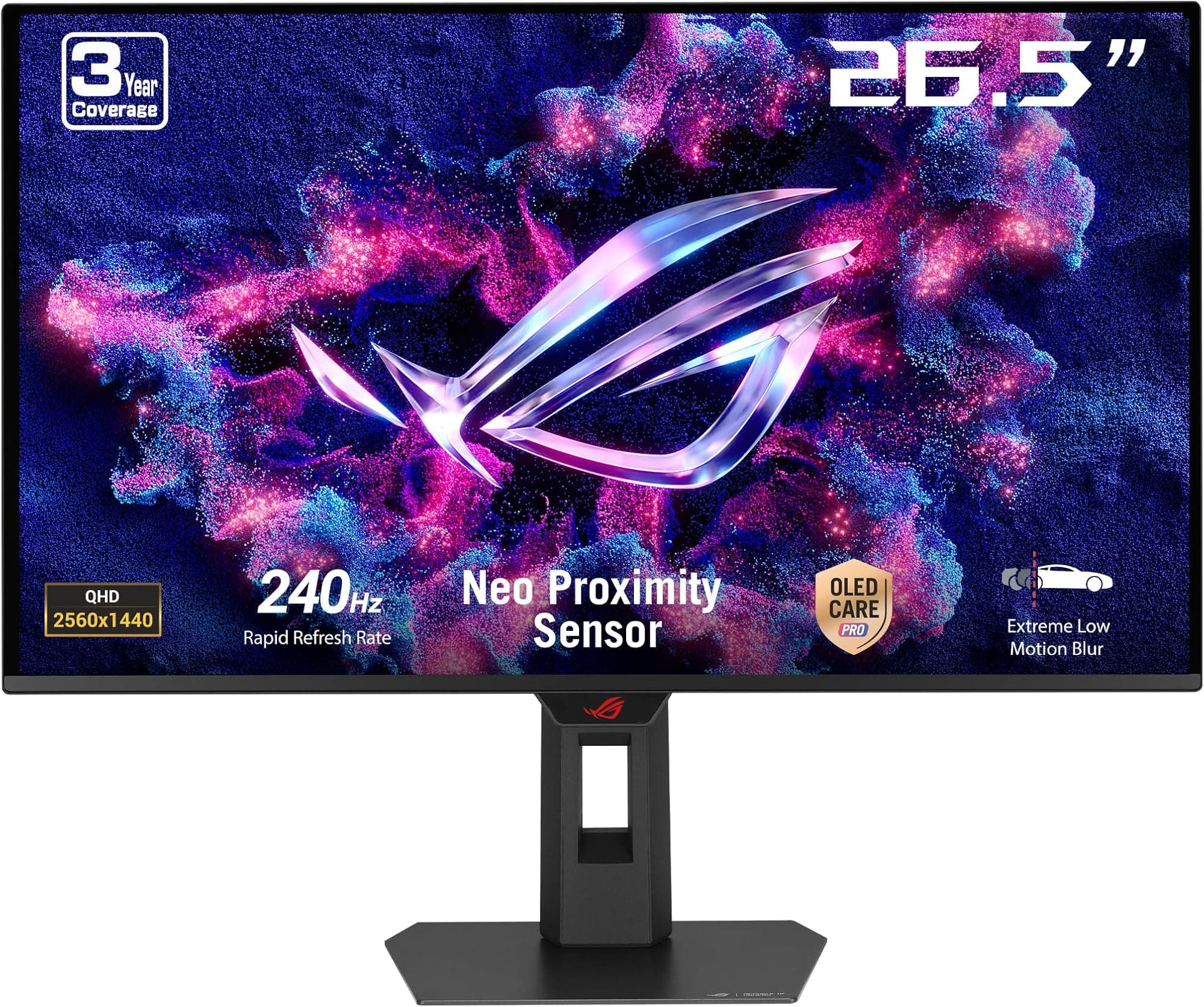
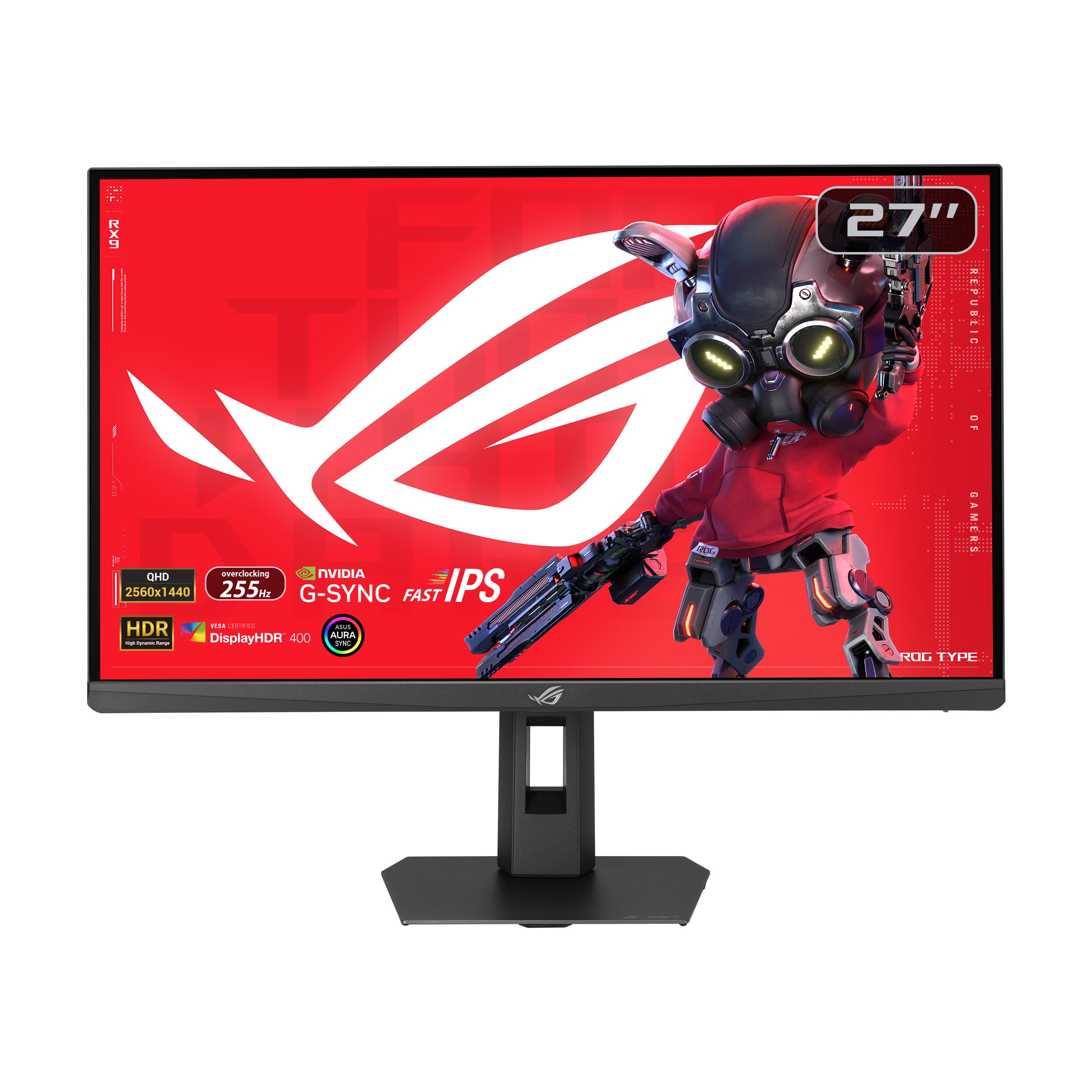
ASUS ROG Strix 27” 1440P HDR Gaming Monitor (XG27ACMES) – QHD (2560x1440), 255Hz, 0.3ms, Fast IPS, Extreme Low Motion Blur Sync, G-SYNC Compatible, DisplayWidget, Tripod Hole, Gaming AI, 3 yr warranty
£540.05 · ASUS
Frequently asked
5 questions01Is the Z-Edge 40 Inch Gaming Monitor 144Hz Ultrawide WQHD 3440x1440 IPS Panel 21:9 good for gaming?+
Yes, for immersive gaming at 100 to 144fps. The 144Hz IPS panel with FreeSync Premium delivers smooth, tear-free gaming across a wide adaptive sync range. Motion performance is appropriate for fast-paced games at this refresh rate, though it's not designed for competitive esports where 240Hz and sub-2ms GtG response times matter. You'll want a GPU in the RTX 4070 or RX 7800 XT class or above to consistently hit high frame rates at 3440x1440.
02Does the Z-Edge 40 Inch Gaming Monitor 144Hz Ultrawide WQHD 3440x1440 IPS Panel 21:9 have good HDR?+
It has DisplayHDR 400 certification, which is the entry-level HDR tier. Peak brightness of 400 nits and no local dimming mean the HDR effect is limited compared to DisplayHDR 600 panels or OLED displays. The monitor can display HDR metadata and produces a brighter, more saturated image in HDR mode, but the specular highlight pop and deep black contrast of proper HDR is not present. SDR performance on this IPS panel is where the real quality sits.
03Is the Z-Edge 40 Inch Gaming Monitor 144Hz Ultrawide WQHD 3440x1440 IPS Panel 21:9 good for content creation?+
It's adequate for mixed-use content creation alongside gaming. The claimed 99% sRGB and 90% DCI-P3 coverage with a factory Delta-E below 2 are solid numbers for the price bracket. Owner feedback from those using it for photo editing alongside gaming is broadly positive. For professional colour-critical work, a hardware calibration with a colorimeter is advisable to verify the factory calibration on your specific unit, and a panel with higher DCI-P3 coverage and a known calibration report would be more appropriate.
04What graphics card do I need for the Z-Edge 40 Inch Gaming Monitor 144Hz Ultrawide WQHD 3440x1440 IPS Panel 21:9?+
3440x1440 at 144Hz is demanding. For consistent high frame rates in modern AAA titles, an RTX 4070 or AMD RX 7800 XT is a reasonable minimum, with an RTX 4070 Super or RX 7900 GRE giving more headroom. In less demanding games or esports titles, an RTX 3070 or RX 6700 XT will hit 100fps or above. For productivity use without gaming, any modern GPU handles the resolution without issue. Nvidia users should use DisplayPort for the best adaptive sync compatibility.
05What warranty and returns apply to the Z-Edge 40 Inch Gaming Monitor 144Hz Ultrawide WQHD 3440x1440 IPS Panel 21:9?+
The specific warranty terms from Z-Edge are not confirmed in the verified product listing data. When purchasing through Amazon UK, the standard 30-day return window and Amazon A-to-Z Guarantee apply. For warranty details beyond the Amazon return period, check the Z-Edge product listing directly or contact the seller before purchasing.