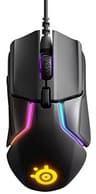
Three things decide whether a gaming mouse is worth your money: how it fits your hand, how the sensor actually behaves, and whether it weighs enough to feel planted or light enough to flick without thinking. Everything else, the RGB, the software, the box art, is noise. The SteelSeries Rival 600 is interesting because it tries to let you decide on the weight question, rather than just shipping you a fixed lump of plastic and hoping for the best. That's either a genuinely useful feature or a gimmick depending on your perspective, and 4,559 owners have had a fair bit to say about which one it is.
At the price point where the Rival 600 sits, you're in a crowded and honestly pretty brutal market. The Logitech G502 X is right there fighting for the same buyer. The Razer DeathAdder V3 is nearby. The Glorious Model O and Model D have been eating lunch in this segment for a while. So the Rival 600 can't just be "pretty good" to justify a recommendation. It needs to do something that earns its place. The dual-sensor setup and the weight system are the headline acts, so let's see if they hold up under scrutiny.
The 4.6 average across 4,583 is genuinely encouraging. That's not a sample of fifty enthusiasts who received early units. That's a real crowd of people who bought this mouse, used it, and came back to say something about it. Patterns in that data matter more than any single opinion, and the patterns here are telling.
Core Specifications
The Rival 600 runs a TrueMove3+ dual optical sensor system, which is SteelSeries' own branding for a PixArt-based setup with a secondary depth sensor added specifically to improve lift-off detection. The primary sensor tops out at 12,000 CPI, which is a number you will almost certainly never use in actual play. Most competitive players sit somewhere between 400 and 1,600 CPI. The 12,000 figure is on the box because marketing departments exist. What actually matters is that the underlying sensor is flawless at the settings you'll realistically use, and the TrueMove3 family has a solid reputation for doing exactly that.
Weight is listed at 96g without the included weights, which puts it in the medium category. But the mouse ships with eight removable 4g weights, giving you a tuning range that goes up to 128g if you slot the lot in. The shell is right-handed ergonomic, which immediately narrows the audience, and it measures 131mm long, 68mm wide, and 42mm tall. That's a medium-to-large footprint, suited to hands roughly 18cm to 20cm in length. Connection is wired only, via a braided USB cable, with a polling rate of 1,000Hz. It has six buttons total: two main clicks, a scroll wheel click, a DPI cycle button, and two side buttons on the left.
One thing worth flagging upfront: this is a wired-only mouse. No 2.4GHz wireless, no Bluetooth. In 2018 when it launched, that was fine. In the current market where the Logitech G502 X Plus ships with LIGHTSPEED wireless and a charging dock, the wired-only design is something you need to factor in depending on your setup preferences. It's not a dealbreaker for everyone, but it's worth knowing before you buy.
| Specification | Detail |
|---|---|
| Sensor | TrueMove3+ Dual Optical (PixArt-based, primary + depth sensor) |
| Max CPI | 12,000 CPI |
| Lift-off Distance | 0.05mm (adjustable) |
| Polling Rate | 1,000Hz (1ms) |
| Weight (base) | 96g |
| Weight (max with weights) | 128g |
| Weight System | 8 x 4g removable weights |
| Shape | Right-handed ergonomic |
| Dimensions | 131mm x 68mm x 42mm |
| Buttons | 6 (2 main, scroll click, DPI, 2 side) |
| Main Switches | SteelSeries mechanical (Omron-spec) |
| Connectivity | Wired USB, braided cable |
| Software | SteelSeries GG (formerly SteelSeries Engine) |
| RGB | Yes, two zones |
| Colour | Black |
| Price | £34.95 |

Shape & Ergonomics
The Rival 600 is a right-handed ergonomic shell with a pronounced thumb shelf on the left side and a hump that sits fairly central, maybe just slightly rear-biased. If you have medium to large hands (18cm to 20cm measured from wrist to middle fingertip), this shape is going to feel natural pretty quickly. The 131mm length and 42mm height give you enough mouse to grip without feeling like you're palming a bar of soap, and the thumb shelf keeps your hand from sliding around during lateral flicks.
For grip style, palm and claw are the sweet spots here. Palm grippers with medium to large hands will find the hump position sits nicely under the arch of the hand, and the side contours do a decent job of keeping things stable. Claw grippers get a slightly different experience because the rear hump works as a natural anchor point for the palm heel while your fingers arch over the buttons. Fingertip grip is possible but the mouse is probably a touch too large and heavy for pure fingertip use, especially once you start adding weights. Small hands are going to struggle. This isn't a mouse for someone with hands under 17cm; the shell will feel oversized and the side buttons will be awkward to reach without shifting your grip.
Owner reviews consistently mention the comfort over long sessions, which is a good sign for the ergonomic design. A shape that causes fatigue tends to generate complaints quickly, and the Rival 600's owner feedback doesn't show that pattern. What does come up occasionally is the rubber side grips losing their texture over extended use, which is something to factor in if you're a sweaty-handed gamer (no judgement, it happens to everyone). The thumb shelf rubber in particular seems to be the first area to show wear, but the structural ergonomics underneath remain sound. The shape itself is genuinely well thought out for its target grip styles, and SteelSeries clearly put real work into the contours rather than just copying a competitor's silhouette.
Sensor Performance
The TrueMove3+ is the headline spec and it's the thing SteelSeries built the Rival 600's identity around. The primary sensor is a PixArt PMW3360-class unit (SteelSeries brands it as TrueMove3), which is a known-good, flawless sensor by the standards that matter in actual play. No angle snapping by default, no prediction, no spin-outs at realistic speeds. The secondary sensor is a depth-detection unit positioned just behind the primary, and its job is to measure the actual distance between the mouse feet and the surface so the firmware can nail the lift-off distance with much more precision than a single-sensor setup allows.
The 0.05mm lift-off distance claim is the selling point of the dual-sensor approach. In practice, what this means is that when you lift the mouse to reposition, tracking stops almost immediately rather than registering phantom movement as the cursor drifts. For FPS players who lift and reposition frequently, especially those using low sensitivity, this is genuinely useful. The adjustability via SteelSeries GG software means you can dial it in for your specific mousepad surface, which matters because lift-off behaviour can vary quite a bit between cloth and hard pads. Owners who play on hard pads report the system working particularly well, and the depth sensor seems to handle the calibration more reliably than firmware-only lift-off adjustment on single-sensor mice.
To be clear about the 12,000 CPI ceiling: don't let it impress you. The number exists for the same reason car manufacturers advertise top speeds that nobody ever uses on public roads. Competitive players at any level are not using 12,000 CPI. If you're playing at 1080p or 1440p, 800 to 1,600 CPI covers virtually every scenario. What matters is that the sensor performs accurately at your chosen sensitivity, with consistent tracking across your mousepad, and the TrueMove3+ delivers on that without any of the jitter or smoothing that plagued older sensors. The optical tracking mechanism here is solid, and the dual-sensor depth detection is a genuinely clever bit of engineering rather than a spec-sheet flourish.
Weight & Glide
At 96g base weight, the Rival 600 sits in the medium category. It's not going to feel like nothing in your hand the way an ultralight does, but it's not the brick that the original Rival 700 could feel like either. The weight system is the interesting part: eight removable 4g weights that slot into a compartment on the underside, accessible via a sliding panel. You can add any combination up to all eight, taking the mouse from 96g up to 128g. The weights are distributed across two rows, which means you can shift the balance front-to-back as well as just adding overall mass.
Who actually uses this? More people than you'd expect, based on owner feedback. A fair number of reviewers specifically mention experimenting with the weights and settling on a configuration that felt right for their grip and sensitivity setup. The ability to add a bit of rear weight is particularly mentioned by palm grippers who want the mouse to feel more planted during large sweeping movements. Fingertip players tend to prefer the base weight or close to it. The weight system isn't unique to SteelSeries (Logitech's G502 line has done this for years), but the implementation here is clean and the weights don't rattle, which is something the G502 was occasionally criticised for in earlier versions.
The mouse feet are PTFE skates, pre-installed from the factory. Owner reports on glide are generally positive, with the feet described as smooth on both cloth and hard surfaces. The edges of the skates are rounded rather than sharp, which matters for longevity and for avoiding the scratchy-start feel that badly finished skates can cause. If you're running a rough cloth pad and the feet wear down over a year or two of heavy use, replacement skates are widely available for this shape. The 1,000Hz polling rate is standard and correct for a wired mouse at this price. There's no 4,000Hz or 8,000Hz option here, but those are largely irrelevant for most players and the 1ms response at 1,000Hz is as good as you need it to be.
Buttons & Switches
The main switches are SteelSeries mechanical, built to Omron specifications. Omron switches in this class are well established: crisp actuation, reasonably short pre-travel, and a tactile click that doesn't feel mushy or vague. The Rival 600 uses the D2FC-F-K series equivalent, which has a rated lifespan of 60 million clicks. Whether you'll ever hit that number is another question entirely, but the point is the switches are not going to feel worn and soft after a year of normal use. Owner reviews don't flag premature switch degradation as a common complaint, which is reassuring.
Click feel is described consistently as crisp and satisfying in owner feedback. There's a clear tactile break with decent audible feedback without being obnoxiously loud. The left and right main buttons are separated by a small gap that helps with accidental misclicks, and the button surface area is large enough that you don't have to be precise about finger placement. Pre-travel is minimal, which matters for rapid-fire clicking in games where click speed is a factor. Double-click reliability over time is where some mechanical switches fall apart, and the Omron units here have a solid track record on that front.
The two side buttons sit on the left thumb shelf in a stacked vertical arrangement. They're large enough to hit reliably without looking, and their placement works well for medium to large hands in a palm or claw grip. Small-handed users may find the lower button a stretch. The scroll wheel has a textured rubber grip and a notched encoder with decent tactile steps. It's not the smoothest wheel you'll find at this price, and a handful of owner reviews mention the scroll wheel feeling slightly stiff compared to Logitech equivalents, but it's accurate and consistent. The DPI cycle button sits just behind the scroll wheel, easy to reach during play without being so close that you hit it by accident. Overall the button layout is sensible and clearly designed by someone who actually thought about how people hold mice.
Build Quality
The shell is matte plastic with rubber side grip panels. It doesn't flex under normal grip pressure, and there's no creaking reported in the majority of owner reviews. The build feels solid for a mouse in this price category, which isn't a given. Some budget gaming mice have shells that feel like they'd crack if you gripped them too firmly during a tense moment. The Rival 600 doesn't have that problem. The plastic quality is good, the seams are tight, and the overall construction feels deliberate rather than cost-cut.
The RGB implementation uses two lighting zones: one on the scroll wheel and one on the SteelSeries logo on the base. It's not the most elaborate lighting setup on the market, but it's not trying to be. The lighting is visible, customisable through SteelSeries GG, and it doesn't bleed through the shell in ugly ways. If you care about RGB, it's functional. If you don't, it's easy enough to turn off and the mouse doesn't look weird without it.
The area where build quality concerns do surface in owner reviews is the rubber side grip durability over extended use. The thumb shelf grip in particular shows wear after heavy use, and a few long-term owners note that the texture becomes slicker over time. This is a known issue with rubber grip coatings generally, not specific to SteelSeries, but it's worth mentioning because it does affect the tactile experience of using the mouse after a year or more of daily play. The structural shell underneath holds up fine. It's the surface texture that ages rather than the mouse becoming loose or developing rattle. Button wobble isn't flagged as an issue in the review data, which is a good sign. The main buttons feel firm and consistent without excessive side-to-side play.
Connectivity
Wired only. Full stop. There is no wireless version of the Rival 600. The cable is a braided USB-A cable, which is the standard setup for wired gaming mice at this price point. Braided cables are more durable than plain rubber cables and they resist tangling better, but they do have more drag than a thin paracord-style cable. The Rival 600's cable is on the stiffer side compared to something like a Glorious Ascended cord, and a handful of owners mention the cable drag being noticeable on larger mousepads or when doing big sweeping movements.
The practical fix for cable drag, if it bothers you, is a cable bungee. They cost a few pounds and they completely eliminate the issue by keeping the cable elevated and out of the way. It's a minor annoyance rather than a fundamental flaw, but it's the kind of thing that separates a truly polished wired experience from a good one. The USB-A connector is standard and compatible with any desktop or laptop USB port without adapters. There's no USB-C here, which is fine for a mouse of this generation.
At 1,000Hz polling rate, the Rival 600 reports its position to the system 1,000 times per second, giving you a 1ms response window. That's the standard for competitive wired gaming mice and it's entirely adequate. The higher polling rates (4,000Hz and 8,000Hz) that some newer mice offer are largely irrelevant at this stage of monitor and system technology for most players. The wired connection eliminates any wireless latency concerns entirely, and the sensor is fast enough that the cable is genuinely the only variable in the response chain. If you're running a clean desk setup with a bungee, the wired experience here is as responsive as gaming mice get.
Battery Life
There is no battery. The Rival 600 is a wired mouse. You plug it in and it works. No charging, no battery percentage anxiety mid-game, no hunting for the USB-C cable at 2am because you forgot to dock it before bed. For players who actively prefer wired, this is a non-issue and arguably a feature. You will never pick this mouse up and find it dead.
The flip side is that you are permanently tethered to your desk. If you move your setup around, game from the sofa occasionally, or just hate cables on your desk, the wired-only design is a genuine limitation. The current market has some excellent wireless options at comparable prices, including the Logitech G Pro X Superlight 2 and the Razer Viper V3 HyperSpeed, both of which have solved the latency question that used to make wireless mice a competitive compromise.
So the battery life question for the Rival 600 is really a question about whether you mind being wired at all. If you're fine with cables, this is a non-issue and you can move on. If you're specifically looking for wireless, this mouse simply isn't for you and no amount of good sensor performance changes that. It's not a design failing for its intended audience; it's just a different product category to what wireless buyers need.
Software & Customisation
The Rival 600 is managed through SteelSeries GG, which is SteelSeries' current software platform (it replaced the older SteelSeries Engine). GG handles DPI stage configuration, polling rate selection, lift-off distance calibration for the dual sensor system, RGB customisation, and button remapping. The software is reasonably clean by gaming peripheral software standards, which is admittedly a low bar, but it doesn't feel like navigating a badly translated settings menu the way some competitor software does.
DPI stages are fully configurable, and you can set up to five stages that cycle through with the DPI button. The lift-off calibration tool is specific to the Rival 600's dual-sensor setup and it's genuinely worth using. You input your mousepad surface type and the software adjusts the depth sensor parameters accordingly, which is how the 0.05mm lift-off claim translates into real-world behaviour rather than just a spec sheet number. Skipping this step and leaving the defaults in place means you're not getting the full benefit of the dual-sensor system.
On-board profile storage means your settings travel with the mouse if you take it to a friend's setup or a LAN event, without needing to install software on the host machine. That's a practical feature that not every mouse at this price includes. Firmware updates run through SteelSeries GG and the process is straightforward. The software does require a SteelSeries account for full functionality, which is mildly annoying but not unusual for the category. Macro support is present for the remappable buttons, and the RGB sync works with other SteelSeries peripherals if you have a matching keyboard or headset. Nothing here is groundbreaking, but the software does what it needs to do without getting in the way.

Gaming Experience
For FPS play, the Rival 600 is well set up. The TrueMove3+ sensor handles fast flicks without spin-outs, the lift-off distance calibration means repositioning is clean, and the crisp main switches give you confident click registration during rapid fire. The ergonomic shape supports the kind of wrist-and-arm aiming style that most FPS players use at lower sensitivities, and the thumb shelf keeps your grip stable during lateral tracking. Owners who play titles like CS2, Valorant, and Apex Legends specifically mention the sensor consistency as a highlight, which aligns with what the TrueMove3 family is known for.
The weight system adds an interesting dimension for FPS players specifically. Lower sensitivity players who do big sweeping arm movements often prefer a slightly heavier mouse because it feels more controlled and less prone to overshooting. Higher sensitivity players who use wrist movements tend to prefer lighter. The Rival 600 lets you experiment rather than forcing a fixed weight on you, which is genuinely useful if you're still working out your sensitivity and movement style. The base 96g is a reasonable starting point for most people.
For MMO or MOBA play, six buttons is on the low end. If you need a numpad's worth of bindings on your mouse, the Rival 600 isn't the right tool. But for games where you just need reliable main clicks, a couple of side buttons for push-to-talk or ability binds, and a scroll wheel for zoom or weapon switching, it covers the bases without overcomplicating things. Long session comfort is consistently mentioned positively in owner reviews, which matters for MMO players who might be at their desk for four or five hours at a stretch. The shape doesn't fatigue the hand, and the weight, even at the upper end of the tuning range, is distributed well enough that it doesn't cause wrist strain over extended play.
How It Compares
The Rival 600's two most direct competitors at similar pricing are the Logitech G502 X and the Razer DeathAdder V3. All three are right-handed ergonomic mice with strong sensor pedigrees. The differences are meaningful enough to push buyers in different directions depending on what they prioritise.
The Logitech G502 X uses the HERO 25K sensor, which is Logitech's own silicon and genuinely excellent. It also has a weight system, but the G502 X base weight is heavier than the Rival 600 at around 89g (wired version), and the shape is chunkier. The G502 X Plus adds LIGHTSPEED wireless if that matters to you. The G502 line has optical switches on the main buttons in the newer X generation, which gives a different click feel to the Rival 600's mechanical Omron-spec setup. Some players prefer optical for the faster actuation; others find the feel less satisfying. It's a genuine difference rather than one being objectively better.
The Razer DeathAdder V3 is a different proposition entirely. It's lighter (64g), simpler (no weight system), and uses Razer's Focus Pro optical sensor alongside their optical switches. The DeathAdder V3's shape is widely considered one of the best ergonomic mouse shapes available right now, and the lighter weight suits players who want to flick fast without the mouse feeling planted. If weight is the primary factor for you and you want to go lighter rather than heavier, the DeathAdder V3 is the more relevant comparison. The Rival 600's weight system doesn't go down to 64g; its floor is 96g.
| Feature | SteelSeries Rival 600 | Logitech G502 X | Razer DeathAdder V3 |
|---|---|---|---|
| Sensor | TrueMove3+ Dual Optical | HERO 25K | Focus Pro 30K |
| Base Weight | 96g | 89g | 64g |
| Weight System | Yes (8 x 4g) | Yes (removable) | No |
| Main Switches | Mechanical (Omron-spec) | Optical (LightForce) | Optical (Gen-3) |
| Shape | Right-handed ergonomic | Right-handed ergonomic | Right-handed ergonomic |
| Wireless Option | No | Yes (G502 X Plus) | Yes (V3 Pro) |
| Polling Rate | 1,000Hz | 1,000Hz | 1,000Hz (8,000Hz with HyperPolling) |
| Lift-off Adjustment | Yes (dual sensor) | Yes (software) | Yes (software) |
| RGB | Yes (2 zones) | Yes | Yes |
What Buyers Say
With 4,583 averaging ★★★★½ (4.6), the Rival 600 has a strong owner satisfaction record. The praise that comes up most consistently centres on three things: the sensor accuracy and low lift-off distance, the comfort during long sessions, and the weight customisation working as advertised. FPS players in particular seem to appreciate the lift-off behaviour, with multiple owners specifically mentioning that repositioning feels cleaner than previous mice they've used. The shape gets consistent positive mentions from medium to large-handed palm and claw grippers.
The complaints that surface repeatedly are worth taking seriously rather than dismissing. Cable stiffness and drag is the most common gripe, with several owners noting it's noticeable on larger mousepads. The rubber side grip wear over time is the second most common concern, specifically the thumb shelf area becoming slicker after extended use. A smaller number of owners mention the scroll wheel feeling stiffer than expected compared to Logitech equivalents. None of these are catastrophic issues, but they're consistent enough across the review base that they're real patterns rather than isolated bad luck.
There are also a handful of owners who mention the software setup for the dual-sensor lift-off calibration being slightly fiddly to get right the first time. The default settings work fine, but getting the full benefit of the depth sensor requires going into SteelSeries GG and running the calibration for your specific pad, which isn't immediately obvious from the out-of-box experience. Once it's set up it stays set up, but the initial configuration step is a friction point that a few buyers found frustrating. Worth knowing going in so you're not surprised by it.
Value Analysis
The Rival 600 launched at a premium price point and has settled into a more accessible range as the product has aged. At its current street price, the value equation is considerably more favourable than it was at launch. The dual-sensor system is a genuinely differentiated feature that you don't get on most competitors, and the TrueMove3+ tracking performance is still competitive with current-generation sensors for the sensitivity ranges most players actually use.
Where the value calculation gets complicated is the wireless question. For the same money or close to it, you can now buy wireless mice with comparable sensor performance. The Rival 600's wired-only design was less of a compromise in 2018 than it is now, and if wireless is important to you, the current market offers better options at similar prices. But if you're specifically a wired-mouse person (and plenty of competitive players still are, deliberately), the Rival 600's price-to-performance ratio for a wired ergonomic mouse with a weight system and a premium sensor is solid.
The 4.6 average across nearly 4,583 is the most honest value signal available. That many people spending their own money and coming back to rate it highly suggests the mouse delivers on its promises in real-world use, not just in spec comparisons. The consistent praise for sensor behaviour and comfort, combined with complaints that are mostly minor and fixable (cable bungee for drag, replacement grips if the rubber wears), paints a picture of a mouse that does its core job well and whose flaws are manageable rather than fundamental.
Connectivity
Wired only, as covered above. The USB-A braided cable is functional and durable, but stiffer than ideal for low-drag glide on large pads. A cable bungee solves this for a few quid. The 1,000Hz polling rate is the standard for competitive wired gaming and is entirely adequate. No receiver to lose, no battery to manage, no wireless interference to worry about in crowded environments. For LAN events or setups where you want zero variables in the connection chain, wired has a certain appeal that wireless has not entirely eliminated.
Software & Customisation
SteelSeries GG handles everything cleanly. The lift-off calibration tool is the most important feature to use on first setup. On-board profile storage means your settings stay with the mouse. Account required for full functionality, which is mildly tedious but standard practice across the category now.
Final Verdict
The SteelSeries Rival 600 is a genuinely good ergonomic gaming mouse that does a few things better than most of its competition and nothing badly enough to be a dealbreaker for its intended audience. The dual-sensor TrueMove3+ system delivers on its lift-off distance promises when properly calibrated, the weight system is a real feature rather than a gimmick, and the shape works well for medium to large-handed palm and claw grippers. The 4.6 average across 4,559 owners is earned rather than inflated.
The caveats are real though. It's wired only, which in the current market is a genuine limitation if wireless matters to you. The cable has drag that you'll want to manage with a bungee. The rubber side grips age over heavy use. And if you have small hands or prefer fingertip grip, the shape and base weight work against you. These aren't invented criticisms; they're patterns in the owner data.
Who should buy this? Right-handed palm or claw grippers with medium to large hands who want a premium wired ergonomic mouse with a proper weight system and a sensor that handles lift-off cleanly. FPS players who reposition frequently and care about consistent lift-off behaviour will get specific value from the dual-sensor setup that single-sensor mice don't replicate as precisely. Who should skip it? Left-handed players (obviously), small-handed users, anyone who wants wireless, and fingertip grippers who want something lighter and smaller.
Score: 8 out of 10. The dual-sensor system is clever engineering, the shape is comfortable for its target audience, and the owner satisfaction data backs it up. The wired-only design and cable drag keep it from a higher mark in a market where wireless has genuinely caught up.
Not Right For You?
If the Rival 600 doesn't quite fit what you need, here's where to look instead. Left-handed players should look at the Razer DeathAdder V3 in its left-handed variant or the ambidextrous Razer Viper V3 line. Small-handed players wanting an ergonomic right-handed shape should consider the Razer DeathAdder V3 (shorter, lighter) or the Endgame Gear XM1r. Anyone who wants wireless at a similar price point should seriously look at the Logitech G Pro X Superlight 2 or the Razer DeathAdder V3 Pro. Fingertip grippers wanting something genuinely light should look at the Glorious Model O Minus or the Pulsar X2 Mini, both of which are significantly lighter and sized for smaller, more precise movements.
The Rival 600 occupies a specific niche: wired, ergonomic, medium-to-heavy weight range with tuning flexibility, and a sensor system genuinely built around lift-off precision. If that description matches what you're looking for, it's a strong buy. If any of those parameters don't fit, the alternatives above are worth your time.

Specifications
| Specification | Detail |
|---|---|
| Model | SteelSeries Rival 600 |
| ASIN | B078W926JQ |
| Sensor | TrueMove3+ Dual Optical |
| Primary Sensor Base | PixArt PMW3360-class |
| Secondary Sensor | Depth detection for lift-off calibration |
| CPI Range | 100 to 12,000 CPI |
| Lift-off Distance | 0.05mm (adjustable via software) |
| Polling Rate | 1,000Hz |
| Base Weight | 96g |
| Maximum Weight | 128g (with all 8 weights installed) |
| Weight Increments | 8 x 4g removable weights |
| Dimensions | 131 x 68 x 42mm |
| Shape | Right-handed ergonomic |
| Main Switches | SteelSeries mechanical (Omron D2FC-F-K spec) |
| Switch Rated Lifespan | 60 million clicks |
| Buttons | 6 total |
| Scroll Wheel | Notched encoder, rubber grip |
| Mouse Feet | PTFE skates (pre-installed) |
| Cable | Braided USB-A, wired only |
| RGB | 2 zones (scroll wheel, logo) |
| Software | SteelSeries GG |
| On-board Profiles | Yes |
| Colour | Black |
| Reviews | 4,583 (★★★★½ (4.6)) |
| Price | £34.95 |
What works. What doesn’t.
6 + 6What we liked6 reasons
- TrueMove3+ dual sensor system delivers genuinely precise lift-off control that single-sensor mice do not replicate as accurately, particularly useful for FPS players who reposition frequently
- Eight removable 4g weights allow meaningful balance and mass tuning between 96g and 128g, with front-to-back distribution adjustment rather than just adding bulk
- Ergonomic shape is well suited to medium and large-handed palm and claw grippers, with a comfortable thumb shelf and a hump position that supports long sessions without hand fatigue
- Omron-spec mechanical main switches feel crisp with clear tactile feedback and are rated to 60 million clicks, with no reports of premature degradation in the owner review base
- On-board profile storage means settings travel with the mouse without requiring software on the host machine, useful for LAN events or shared setups
- Strong owner satisfaction record with 4,559 reviews averaging 4.6 out of 5, indicating the mouse delivers on its core promises in real-world daily use
Where it falls6 reasons
- Wired only with no wireless option, which is a meaningful limitation in a current market where competing mice at similar prices offer low-latency 2.4GHz wireless
- Braided cable is stiffer than ideal and generates noticeable drag on larger mousepads, requiring a cable bungee to manage properly
- Rubber side grip panels, particularly the thumb shelf area, become slicker over extended heavy use as the texture wears down
- Right-handed ergonomic shape excludes left-handed players entirely and is poorly suited to small hands or fingertip grip styles
- Scroll wheel feels slightly stiffer than Logitech equivalents according to a consistent pattern in owner feedback
- Dual-sensor lift-off calibration requires manual configuration in SteelSeries GG software to achieve the advertised 0.05mm lift-off distance; default settings do not fully utilise the depth sensor
Full specifications
7 attributes| Buttons | 7 |
|---|---|
| Connectivity | wired USB |
| DPI MAX | 12000 |
| Polling rate HZ | 1000 |
| RGB | true |
| Sensor | TrueMove3+ dual optical sensor |
| Weight G | 96 |
If this isn’t right for you
2 options
Frequently asked
7 questions01Does the SteelSeries Rival 600 work without installing SteelSeries GG software?+
Yes, the mouse works as a plug-and-play device without software. However, to get the full benefit of the dual-sensor lift-off calibration and to configure DPI stages, RGB settings, and button remapping, you need to install SteelSeries GG. The on-board profile storage means that once configured, settings are retained on the mouse itself even when used on a machine without the software installed.
02What is the difference between the TrueMove3 and TrueMove3+ sensors?+
The TrueMove3 is SteelSeries' branding for a PixArt PMW3360-class primary optical sensor. The TrueMove3+ adds a secondary depth-detection sensor positioned just behind the primary. The depth sensor measures the actual distance between the mouse feet and the surface in real time, allowing the firmware to set lift-off distance with much greater precision than a software-only approach on a single-sensor mouse. The Rival 600 uses the TrueMove3+ dual-sensor system.
03Can the weight system on the Rival 600 make the mouse lighter than 96g?+
No. The 96g base weight is the minimum. The eight removable 4g weights can only be added to increase the total mass up to 128g. If you specifically want a lighter mouse, the Rival 600 is not the right choice. Mice such as the Razer DeathAdder V3 at 64g or ultralight options like the Glorious Model O Minus are better suited to players who want to go below 96g.
04Is the SteelSeries Rival 600 suitable for left-handed users?+
No. The Rival 600 has a right-handed ergonomic shell with a pronounced thumb shelf on the left side and contours designed specifically for right-handed grip. Left-handed players should look at ambidextrous options such as the Razer Viper V3 line or left-handed specific mice such as the Razer DeathAdder V3 in its left-handed variant.
05How do I stop the Rival 600 cable from dragging on my mousepad?+
The braided USB cable on the Rival 600 is stiffer than a paracord-style cable and can create noticeable drag, particularly on larger mousepads. The standard solution is a cable bungee, which attaches to your desk and holds the cable elevated above the mousepad surface, effectively eliminating drag. Cable bungees are widely available for a few pounds and are considered standard equipment for wired gaming mice by many competitive players.
06What grip styles does the Rival 600 shape work best with?+
Palm and claw grip are the natural fits for the Rival 600. Palm grippers with medium to large hands will find the rear-biased hump sits comfortably under the arch of the hand. Claw grippers benefit from the hump as an anchor for the palm heel while fingers arch over the buttons. Fingertip grip is possible but the mouse is on the large and heavy side for that style, and the base weight of 96g will feel substantial for pure fingertip movement.
07Does the Rival 600 have a wireless version?+
No. There is no wireless version of the SteelSeries Rival 600. The mouse is wired only via a braided USB-A cable. If you need wireless functionality, you would need to look at a different product entirely. Options worth considering at similar price points include the Logitech G Pro X Superlight 2 and the Razer DeathAdder V3 Pro.