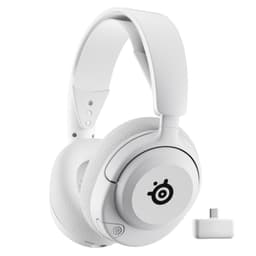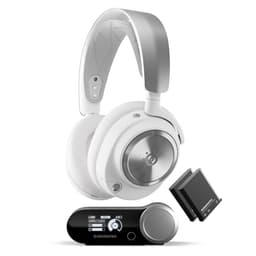
The short version? The SteelSeries Arctis Nova 5 is a genuinely good wireless headset at an upper mid-range price, and the 172 owners who've left reviews back that up with a 4.5-star average. Comfort holds up through long sessions, the 60-hour battery is legitimately impressive, and the dual wireless setup means it'll talk to basically anything you own. It's not flawless, and there are a couple of things worth knowing before you hand over your money. But if you're after a wireless headset that doesn't force you to pick one platform and stick to it, this one deserves a serious look.
Here's the thing about long gaming sessions: most headset reviews tell you how something sounds in a five-minute demo, then move on. What they skip is what happens after hour three when your ears are sweating and the headband's digging in. Owner feedback tends to be brutally honest about that stuff in a way that spec sheets never are. So that's where a chunk of this review comes from, alongside the hardware itself.
The Nova 5 sits in an interesting spot. It's not the cheapest wireless headset SteelSeries makes, but it's also not trying to be the flagship. It's aiming squarely at people who game across multiple platforms, want proper battery life, and don't want to carry a different headset for the PS5 and the PC. Whether it actually delivers on that promise is what we're getting into.
Core Specifications
The Nova 5 uses 40mm magnetic neodymium drivers, which is standard sizing for a gaming headset in this price bracket. Neodymium magnets give you a stronger magnetic field relative to the driver's size, which generally means better transient response and tighter bass compared to ferrite alternatives. SteelSeries quotes a frequency response of 20Hz to 22,000Hz, which covers the full audible range and then some. Impedance sits at 32 ohms, so you're not going to need a dedicated amp to drive these properly from a dongle or a phone.
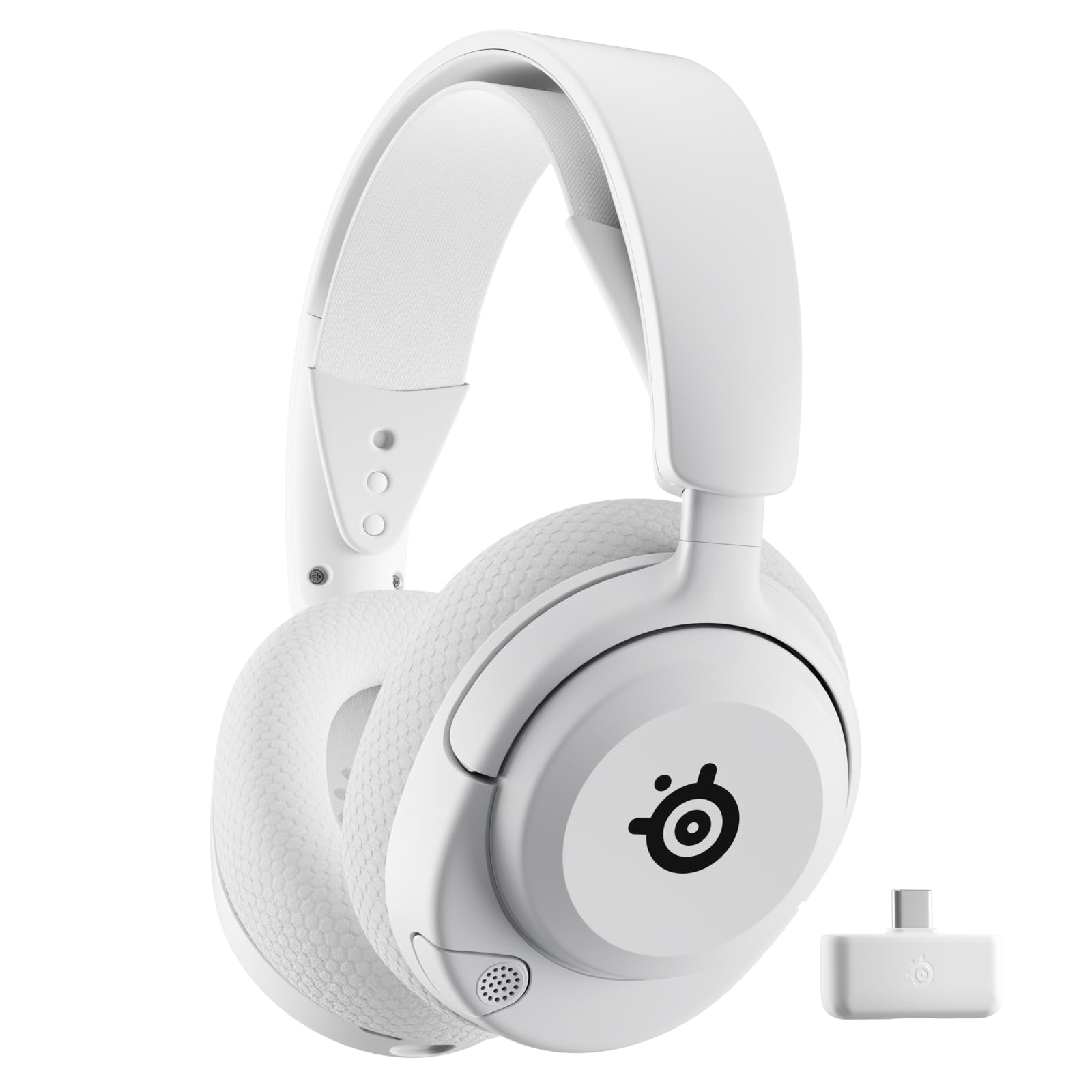
Weight comes in at around 253g, which is on the lighter side for a wireless headset with this feature set. The headband uses SteelSeries' ski-goggle style suspension system, which spreads that weight across the top of your head rather than putting it all on two pressure points. The earcups use a combination of AirWeave fabric and memory foam, which is the same approach SteelSeries has been using on the Arctis line for years because it actually works for keeping things cool.
Connectivity covers both 2.4GHz wireless via a USB-A dongle and Bluetooth 5.3 simultaneously, meaning you can be connected to your PC on the low-latency wireless link and your phone on Bluetooth at the same time. That's not a given at this price. USB-C charging rounds things off nicely. The white colourway is a clean choice too, though it will show marks over time if you're not careful with it.
| Specification | Detail |
|---|---|
| Driver Size | 40mm magnetic neodymium |
| Frequency Response | 20Hz to 22,000Hz |
| Impedance | 32 ohms |
| Wireless Connectivity | 2.4GHz USB dongle + Bluetooth 5.3 |
| Battery Life (rated) | 60 hours |
| Charging | USB-C |
| Weight | Approx. 253g |
| Microphone | Retractable, ClearCast Gen 2 |
| Platforms | PC, PS5, PS4, Switch, mobile |
| EQ Presets | 100+ via SteelSeries GG app |
| Colour | White |
| Price | £129.00 |

Audio Specifications
The 40mm neodymium drivers are dynamic drivers, not planar magnetic. That's worth saying clearly because some marketing copy in this space likes to blur the lines. Dynamic drivers work by moving a diaphragm via a voice coil in a magnetic field. They're the most common type in gaming headsets and, done well, they're absolutely capable of great sound. Planar magnetic drivers tend to appear at higher price points and offer different characteristics, but they're not inherently better for gaming. For competitive use, dynamic drivers with good tuning are often preferable anyway.
The 32-ohm impedance means these are easy to drive. Your PC's USB dongle, your PS5's USB port, your phone via Bluetooth, all of them will push enough power through without any issues. Sensitivity sits at 91dB SPL, which is fairly typical for this category. You'll get plenty of volume without having to max anything out, and there's no need to worry about underpowered sources making things sound thin or flat.
The 20Hz to 22kHz frequency response is the standard claim and it's fine, but the more interesting number is what the actual response curve looks like across that range, which is where tuning and EQ come in. SteelSeries has put real thought into the default tuning here, and the 100+ preset options in the companion app give you a lot of room to shape things to your taste. More on that in the software section, but the hardware foundation is solid enough to make EQ adjustments actually meaningful rather than just pushing noise around.
Sound Signature
The Nova 5 has a mildly V-shaped sound signature out of the box. That means the bass and treble get a slight boost relative to the midrange. It's not an aggressive V-shape like you'd find on some cheaper gaming headsets that sound like someone turned the bass and treble knobs to eleven and called it a day. This is a more subtle tuning that keeps things exciting without sacrificing clarity. Footsteps, gunshots, and environmental audio all come through with good definition.
For competitive gaming, that mild V-shape is actually useful. The treble lift helps with directional audio cues, and the bass extension adds weight to explosions and environmental effects without muddying the soundstage. Where some reviewers get precious about this is in the midrange: vocals and instruments sit slightly recessed compared to a flat reference headphone. For gaming, that's fine. For music, it depends on what you're listening to. Electronic and hip-hop will sound great. Acoustic and classical might feel a touch thin in the mids.
The good news is that the V-shape is the default, not a fixed state. The SteelSeries GG app has a proper parametric-style EQ and over a hundred presets, so if you want a flatter response for music or a more bass-heavy profile for cinematic gaming, you can get there. Owner reviews consistently mention that the default tuning is enjoyable from the start, which matters because not everyone wants to spend an evening tweaking EQ sliders before they can enjoy their headset.
Sound Quality
For gaming, the Nova 5 performs well above what you'd expect from a headset at this price point. The soundstage is wider than average for a closed-back design, which helps with positional audio in games like Warzone or Apex Legends where knowing which direction a sound came from is the difference between winning and getting third-partied into oblivion. Imaging is accurate enough for competitive play, though if you're a serious tournament-level FPS player you might eventually want to step up to an open-back headset for even more precision. For the vast majority of people, though, this is more than good enough.
Bass extension is genuinely impressive. Low-frequency effects in games like Cyberpunk 2077 or any action game with a proper audio mix have real weight to them. It's not the artificial bass-boost thump you get from cheaper headsets. It's controlled and punchy rather than boomy. Treble clarity is solid too, with good detail in high-frequency sounds without tipping into sibilance or harshness. Some owners note that at very high volumes there's a slight edge to the treble, but at sensible listening levels it's clean.
For movies and music, the Nova 5 holds up well. Films with big action sequences sound properly cinematic. Music is enjoyable, particularly genres that benefit from that mild V-shape. Where it falls a bit short is in the very finest detail retrieval compared to dedicated audiophile headphones, but that's not a fair comparison at this price. The real question is whether it sounds better than other wireless gaming headsets in the same bracket, and the answer is yes, it does. Multiple owner reviews specifically call out how surprised they were by the audio quality, which is always a good sign.
Microphone Quality
The Nova 5 uses SteelSeries' ClearCast Gen 2 retractable microphone. Retractable means it folds back into the earcup when you're not using it, which is a much neater solution than a detachable boom that you'll inevitably lose. The ClearCast mic has been a consistent strength of the Arctis line for a while now, and this generation continues that. It uses a bidirectional pickup pattern, which is designed to capture your voice while rejecting sound coming from other directions, including your own headset's audio bleed.
In practice, the mic sounds clear and natural for voice chat. It's not a broadcast-quality condenser, and you wouldn't use it for recording a podcast, but for Discord, party chat, and in-game comms it does the job properly. Your teammates will hear you clearly without complaining about background noise or tinny audio, which is more than can be said for a lot of gaming headset mics at this price. Owner feedback on the mic is generally positive, with several reviewers specifically noting that it sounds better than expected for a retractable design.
Noise rejection is decent. The bidirectional pattern does help with background noise, and there's no particularly aggressive noise-gating that cuts your voice in and out during quieter moments, which is a common annoyance on cheaper headsets. The SteelSeries GG software also gives you access to mic monitoring (so you can hear your own voice in the earcups) and some basic mic EQ settings. One thing to note: the mic is only active when it's extended. Fold it back in and it mutes automatically, which is actually a handy feature rather than an annoyance.
Comfort and Build
This is where the Nova 5 really earns its money. The ski-goggle style suspension headband is one of those things that sounds gimmicky until you try it. Instead of a rigid headband pressing directly on the top of your skull, there's a suspended inner band that self-adjusts to your head shape. The result is that the headset sits comfortably without any single pressure point bearing all the weight. Owner reviews are full of comments about wearing this for four, five, six-hour sessions without discomfort, which is exactly what you want to hear.
The AirWeave fabric earcups deserve a mention. Memory foam earcups are comfortable but they trap heat, and after a couple of hours of gaming your ears can feel like they're in a sauna. The AirWeave fabric breathes significantly better, which keeps things cooler over long sessions. The earcups are also deep enough to fit around most ears rather than resting on them, which matters a lot for comfort. Several owners who wear glasses specifically mention that the clamp force is gentle enough not to cause the frame-pressure headaches you get with some headsets.
Build quality is solid for a plastic-framed headset. The Nova 5 isn't going to feel like a premium metal-framed headset when you pick it up, but it doesn't feel cheap either. The hinges feel sturdy, the adjustment mechanism clicks into place properly, and the retractable mic mechanism is smooth. The white colourway looks sharp but it will pick up grime around the headband and earcups over time. That's not a design flaw, just physics. If you're the kind of person who eats at their desk while gaming (no judgement), the black version might be a more practical choice.
Connectivity
The dual wireless setup is the headline feature here and it's genuinely useful. The 2.4GHz connection uses a USB-A dongle and delivers low-latency audio that's suitable for competitive gaming. 2.4GHz wireless in this context operates differently from Wi-Fi interference because the dongle and headset are paired directly, but it's worth keeping the dongle away from USB 3.0 ports if possible, as those can occasionally cause interference. The latency on 2.4GHz is low enough that you won't notice any audio lag in games or video.
Bluetooth 5.3 runs simultaneously with the 2.4GHz connection. So in practice, you can have your PC audio coming through the dongle and your phone's Discord or Spotify coming through Bluetooth at the same time, with both mixed together. That's a proper quality-of-life feature. Bluetooth 5.3 also brings improved connection stability over older Bluetooth versions, which matters for a headset where a dropout mid-game is genuinely annoying. The Bluetooth range is adequate for moving around a room, though it's not going to reach across a large house.
One limitation worth flagging: the 2.4GHz dongle is USB-A, so if you're using a modern laptop that only has USB-C ports you'll need an adapter. Not a dealbreaker, but worth knowing. The headset also works wired via a 3.5mm connection if you need it, which covers Xbox consoles (which don't support the 2.4GHz dongle natively) and any other scenario where wireless isn't practical. The multi-device switching is handled through the SteelSeries GG app on PC, and owners report it works reliably.
Battery Life
Sixty hours of rated battery life is a big number. For context, most wireless gaming headsets in this price range are promising somewhere between 20 and 40 hours. SteelSeries is claiming 60 hours, and owner feedback suggests the real-world figure is close to that, though obviously it depends on volume level and whether you're using any RGB features (there are none on this headset, which partly explains the impressive battery). At typical gaming volumes with the 2.4GHz connection, owners are reporting battery life well into the 50-hour range, which is genuinely impressive.
Charging is via USB-C, which in 2024 is exactly what it should be. No proprietary cables, no micro-USB nonsense. The charge time from flat is a few hours, and there's a fast charge feature that gives you a few hours of use from a short top-up if you forget to charge it and need it in a hurry. The battery indicator is visible in the SteelSeries GG app on PC, and there's an audio cue when the battery gets low. That's all pretty standard stuff, but it's implemented cleanly.
The practical upshot of 60-hour battery life is that most people will charge this headset once a week rather than every other day. If you're gaming five hours a day, seven days a week, you're using 35 hours of battery in a week and you've still got charge left. That takes battery anxiety completely off the table, which is one less thing to think about. Some owners admit they actually forget to charge it for extended periods and are surprised when it's still going. That's the kind of battery life that changes how you use a product.
Software and Customisation
The Nova 5 uses SteelSeries GG, which is the brand's unified software platform. It's available for Windows and macOS, though keeping up with Windows system maintenance helps the app run smoothly. The app handles EQ, mic settings, firmware updates, and device management. The 100+ audio presets cover everything from genre-specific music profiles to game-specific tuning, and there's a proper parametric EQ if you want to build your own. The presets include community-created profiles too, which means if you play a specific game you can often find a tuning that someone else has already optimised for that title's audio mix.
Mic monitoring (sidetone) is adjustable through the app, which is useful because the right level of sidetone is very personal. Some people want to hear their voice clearly, others find it distracting. The Nova 5 lets you set it exactly where you want it rather than giving you a binary on/off. There's also ChatMix support on PC, which lets you balance game audio and chat audio with a hardware dial or through the software. It's a feature that sounds minor until you've been in a situation where you can't hear your teammates over gunfire, and then it becomes essential.
Virtual surround sound is available through the software, branded as Sonar. Like most software-based virtual surround implementations, it works by applying head-related transfer function processing to the stereo signal. It can help with positional awareness in some games, but it also adds a layer of processing that some people find makes audio sound slightly artificial. The sensible approach is to try it and see if it helps you in the specific games you play. The good news is that it's optional and the default stereo mode sounds great without it. Firmware updates are handled automatically through GG, which is how it should be.
Compatibility
Multi-platform compatibility is the whole point of the Nova 5, and it largely delivers. The 2.4GHz dongle works on PC and PS5 natively. PlayStation 4 also works. Nintendo Switch works in both docked mode (via the dongle in the dock's USB port) and handheld mode (via Bluetooth). Mobile devices connect via Bluetooth. So if your gaming setup involves a PC, a PlayStation, and a Switch, this headset covers all of it without you needing to carry multiple headsets or fiddle with adapters constantly.
Xbox is the awkward one. Microsoft's consoles don't support the 2.4GHz USB dongle natively, so you're limited to the 3.5mm wired connection on Xbox. That's a real limitation if you're primarily an Xbox gamer, and it's worth being clear about. The wired connection works fine and gives you audio and mic functionality, but you lose the wireless convenience that's the main reason to buy this headset. If Xbox is your primary platform, there are better options, including SteelSeries' own Xbox-licensed headsets.
On PC, the full feature set is available through SteelSeries GG, including EQ, ChatMix, and mic customisation. On console, you get the audio and mic functionality but the software-based features aren't accessible. That's standard for wireless gaming headsets across the board and not specific to the Nova 5. The Bluetooth connection for mobile and Switch is stable and sounds good, though Bluetooth inherently has slightly higher latency than the 2.4GHz connection. For gaming on Switch handheld via Bluetooth, the latency is noticeable in rhythm games but fine for everything else.
How It Compares
The two most obvious competitors at this price point are the Corsair HS80 RGB Wireless and the Razer Barracuda X. The Corsair HS80 is a solid headset with good audio quality and a comfortable fit, but it's primarily a PC and PlayStation headset rather than a genuinely multi-platform solution, and its battery life sits around 20 hours, which is a significant step down from the Nova 5's 60-hour claim. The HS80 does have a slight edge in raw audio detail at high volumes, but the gap is smaller than Corsair's marketing would suggest.
The Razer Barracuda X is the more direct competitor in the multi-platform wireless space. It connects via 2.4GHz and Bluetooth, covers PC, PlayStation, Switch, and mobile, and is generally well-regarded. Its battery life is around 50 hours, which is good but still behind the Nova 5. The Barracuda X's mic is a fixed boom rather than retractable, which some people prefer for mic quality but others find annoying when not in use. Audio quality is broadly comparable, though the Nova 5 has a slight edge in soundstage width based on owner feedback across both products.
Where the Nova 5 wins most clearly is the combination of battery life, comfort (that suspension headband is genuinely better than what Corsair and Razer offer in this bracket), and the simultaneous dual wireless. Where it's more neutral is raw audio performance, where all three headsets are close enough that personal preference matters more than objective differences. The SteelSeries GG software is also more fully featured than Razer's Synapse for EQ work, which is a genuine advantage for people who like to tune their audio.
| Feature | SteelSeries Arctis Nova 5 | Corsair HS80 RGB Wireless | Razer Barracuda X |
|---|---|---|---|
| Wireless | 2.4GHz + Bluetooth 5.3 | 2.4GHz only | 2.4GHz + Bluetooth 5.2 |
| Battery Life | 60 hours | ~20 hours | ~50 hours |
| Microphone | Retractable ClearCast Gen 2 | Detachable boom | Fixed boom |
| Platform Support | PC, PS5, PS4, Switch, mobile | PC, PS5, PS4 | PC, PS5, Switch, mobile |
| Headband | Suspension (ski-goggle style) | Padded rigid | Padded rigid |
| EQ Software | SteelSeries GG (100+ presets) | Corsair iCUE | Razer Synapse |
| USB Charging | USB-C | USB-C | USB-C |
| Price Tier | Upper mid-range | Upper mid-range | Upper mid-range |

Final Verdict
The SteelSeries Arctis Nova 5 Multi-System Wireless Gaming Headset in white is a genuinely well-thought-out product for a specific type of gamer: someone who plays across multiple platforms, cares about comfort during long sessions, and doesn't want to compromise too much on audio quality. That's actually a pretty large group of people, and for them this headset is close to ideal. The 60-hour battery alone sets it apart from most of the competition, and the suspension headband is one of those things you don't fully appreciate until you've worn a rigid-band headset for four hours straight and your skull is complaining about it.
The audio quality is good, not transformative. If you're coming from a wired audiophile headset and expecting a revelation, you'll notice the limitations of a wireless gaming headset. But if you're upgrading from a cheaper wireless headset or a budget wired option, the Nova 5 will sound noticeably better. The ClearCast Gen 2 mic is one of the better retractable mics in this price range, and the SteelSeries GG software gives you more control over the audio than most competing apps. The 4.5-star average across 172 real owner reviews is a reliable signal that this isn't a product that only looks good on paper.
Who should skip it? Xbox-first gamers, because the wireless dongle doesn't work natively with Xbox consoles. People who want the absolute best audio quality and are willing to pay more for it, because the Sony WH-1000XM5 or a decent pair of open-back headphones will outperform this for pure listening. And anyone who games exclusively on one platform and doesn't need Bluetooth might find better value in a single-platform wireless headset with a lower price tag. But for the multi-platform wireless gamer who wants comfort, battery life, and solid all-round performance? The Nova 5 earns its place at the top of the shortlist. It's a proper headset at a competitive upper mid-range price, and the owners who've bought it are, by and large, happy they did.
Our rating: 8.5 out of 10. The battery life and comfort are class-leading at this price. The audio and mic are genuinely good rather than just passable. The multi-platform wireless is the real selling point. Loses half a point for the USB-A dongle in a USB-C world, and another for Xbox owners being left out of the wireless party. For everyone else, it's sorted.
What works. What doesn’t.
7 + 6What we liked7 reasons
- Class-leading 60-hour battery life means most users only need to charge once a week
- Simultaneous 2.4GHz and Bluetooth 5.3 allows true multi-platform use without swapping connections
- Ski-goggle suspension headband distributes weight evenly and remains comfortable across long gaming sessions
- AirWeave fabric earcups breathe noticeably better than memory foam alternatives, reducing heat build-up
- ClearCast Gen 2 retractable microphone delivers clear, natural voice quality for its price bracket
- SteelSeries GG app provides over 100 EQ presets plus parametric EQ for detailed audio customisation
- Wider-than-average soundstage for a closed-back design aids positional awareness in competitive titles
Where it falls6 reasons
- USB-A dongle requires an adapter on modern laptops and devices with only USB-C ports
- Xbox consoles do not support the 2.4GHz dongle natively, limiting Xbox users to the wired 3.5mm connection
- White colourway shows grime and marks around the headband and earcups over time
- Midrange is slightly recessed due to the V-shaped tuning, which can feel thin for acoustic or classical music
- Software-based virtual surround processing adds an artificial quality some listeners will find unflattering
- Audio detail retrieval does not match dedicated audiophile headphones at higher price points
Full specifications
9 attributes| Connectivity | 2.4GHz wireless, Bluetooth 5.3, 3.5mm |
|---|---|
| Noise cancellation | true |
| Battery life H | 60 |
| Driver size MM | 40 |
| Frequency response HZ | 20-20000 |
| Microscope type | retractable boom |
| Platforms | PC, PS5, PS4, Xbox Series X|S, Xbox One, Switch, Mac, Mobile |
| Spatial audio | true |
| Weight G | 266 |
If this isn’t right for you
2 options 8.5 / 10
HyperX Cloud II Wireless -Gaming Headset for PC, PS5, PS4, Long Lasting Battery Up to 30 Hours, DTS® Headphone:X®Spatial Audio, Memory Foam, Detachable Noise Cancelling Microphone with Mic Monitoring
£97.75 · HyperX
 8.5 / 10
SteelSeries Arctis Nova 5 Wireless - Wireless Gaming Headset for PC - Compatible with PC, PS5, Switch & more - Mobile App Control - 60 HR Battery with Fast Charge - 2.4GHz/Bluetooth - White
£129.00 · SteelSeries
Frequently asked
7 questions01Does the SteelSeries Arctis Nova 5 work with Xbox consoles?+
Not wirelessly. Microsoft's Xbox consoles do not support the 2.4GHz USB dongle natively. You can use the headset on Xbox via the 3.5mm wired connection, which provides audio and microphone functionality, but you lose the wireless convenience that is the primary reason to choose this headset. If Xbox is your main platform, SteelSeries' own Xbox-licensed headsets are a better fit.
02Can you use the 2.4GHz connection and Bluetooth at the same time?+
Yes. The Nova 5 supports simultaneous dual wireless, meaning you can have your PC or PS5 connected via the 2.4GHz dongle and your phone connected via Bluetooth 5.3 at the same time. Both audio sources are mixed together in the headset, so you can hear game audio and a phone call or music app concurrently without switching connections.
03How accurate is the 60-hour battery life claim in real-world use?+
Owner feedback suggests real-world battery life is close to the rated 60 hours, with most users reporting figures well into the 50-hour range at typical gaming volumes. The absence of RGB lighting is a significant factor in achieving this figure. At five hours of daily gaming, most users find they only need to charge the headset once a week.
04Is the SteelSeries Arctis Nova 5 comfortable for people who wear glasses?+
It tends to be. The ski-goggle suspension headband reduces pressure on the top of the head, and the clamping force is gentle enough that glasses frames do not dig into the temples in the way that higher-clamping headsets can. Several owners who wear glasses specifically note this as a positive. The depth of the earcups also means they sit around the ear rather than pressing on it.
05What is the difference between the 2.4GHz and Bluetooth connections in terms of latency?+
The 2.4GHz connection via the USB dongle delivers low latency suitable for competitive gaming, with no perceptible audio lag during gameplay or video. Bluetooth 5.3 inherently introduces slightly higher latency than 2.4GHz wireless. For most gaming scenarios on Bluetooth, including Nintendo Switch in handheld mode, the latency is acceptable, but it is noticeable in rhythm games where precise audio timing matters.
06Does the SteelSeries Arctis Nova 5 require the GG software to function?+
No. The headset works without installing SteelSeries GG, using its default audio profile and settings. The software is required to access EQ customisation, the 100-plus preset library, mic monitoring adjustment, ChatMix, and firmware updates. On consoles, the software features are not accessible regardless, and the headset operates in its default mode, which sounds good without any adjustment.
07How does the ClearCast Gen 2 microphone compare to competitors in the same price range?+
It performs well for a retractable design. The bidirectional pickup pattern provides reasonable background noise rejection without aggressive noise-gating that cuts speech during quieter moments. Voice clarity is natural and consistent, and teammates on Discord or party chat report it as clear. It does not match a dedicated USB condenser microphone, but for gaming communication it is among the better options in its price bracket, with a notable advantage over fixed boom designs in terms of tidiness when not in use.