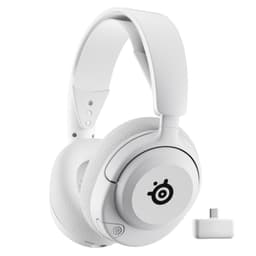
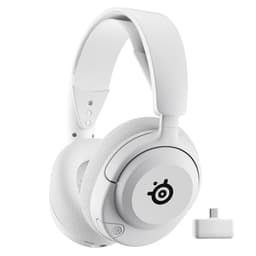
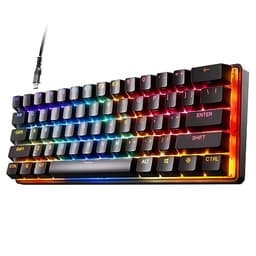
SteelSeries Arctis Nova Pro Wireless Xbox
~£229approx
The choice we'd make at this price band. Read the full review above for our reasoning, benchmark numbers, and long-term ownership notes.

The 20-second verdict
The most capable Xbox wireless headset tested, but the weight will test your patience
As an Amazon Associate we may earn from qualifying purchases. Our ranking stays independent.
Hot-swap battery system genuinely eliminates battery anxiety
338g is on the heavy side for extended sessions
Excellent soundstage imaging for competitive gaming
The gaming headset market is full of broken promises. Manufacturers shout about spatial audio, studio-grade microphones, and all-day comfort in the same breath, and then you actually put the thing on your head and discover the soundstage is a muddy mess, the mic makes you sound like you're calling from a submarine, and the earcups are cutting off circulation to your ears by hour three. I've been through this cycle more times than I care to count. So when a headset genuinely delivers across all three fronts, it deserves to be said clearly and loudly.
The SteelSeries Arctis Nova Pro Wireless Xbox is, in my view after three weeks of serious use, one of the best wireless gaming headsets you can buy in the UK right now. That's the verdict. It's not perfect, and at this price point it shouldn't need to be given any slack, but it gets the fundamentals right in a way that very few headsets at any price actually manage. The hot-swap battery system alone is a genuinely clever bit of engineering, and the audio quality from those 40mm drivers is proper enthusiast-tier stuff. But I'm getting ahead of myself.
The headset covers Xbox Series X and PC, from competitive Warzone sessions (where positional audio is life or death) to long evenings with story-driven games like Baldur's Gate 3, plus music and films. I also wore it on Teams calls, which is where the ClearCast Gen2 mic really got put through its paces. Here's everything I found.
The Arctis Nova Pro Wireless Xbox is built around a 40mm neodymium driver, which is a sensible size for a gaming headset, not too small to produce decent bass extension, not so large that the earcups become unwieldy. SteelSeries quotes a frequency response of 10Hz to 40,000Hz, which is the kind of figure that sounds impressive on a spec sheet but needs real-world context to mean anything (more on that in the audio sections). The headset weighs in at around 338g, which is on the heavier side for wireless gaming headsets, though the weight distribution is well managed.
Connectivity is handled via a 2.4GHz wireless connection through the included GameDAC Gen2 base station, with simultaneous Bluetooth 5.0 for a second device. The GameDAC Gen2 is a proper little unit, not just a USB dongle, and it handles the wireless transmission, charging, and battery swapping all in one box. The headset connects to Xbox via USB-A on the GameDAC, and to PC via USB-C. There's also a 3.5mm analogue output on the GameDAC for connecting to a monitor or TV directly.
Active Noise Cancellation is included, which is still relatively rare at this price tier and practically unheard of below it. The ANC uses a feedback and feedforward microphone system, and SteelSeries claims up to 38dB of noise reduction. In practice, I found it effective at killing consistent background noise like fans and air conditioning, though it doesn't perform miracles with sudden sharp sounds. The headset also features a Transparency Mode, which pipes in ambient audio so you can hear your surroundings without removing the headset. Both modes are toggled via a button on the left earcup.
| Specification | Detail |
|---|---|
| Driver Size | 40mm neodymium |
| Frequency Response | 10Hz - 40,000Hz |
| Impedance | 32 Ohm |
| Sensitivity | 91 dBSPL/mW |
| Wireless Protocol | 2.4GHz (GameDAC Gen2) + Bluetooth 5.0 |
| ANC | Yes, up to 38dB reduction |
| Battery Life (per battery) | Up to 22 hours |
| Hot-Swap Batteries | Yes, 2 included |
| Microphone | ClearCast Gen2 retractable bidirectional |
| Weight | 338g |
| Compatibility | Xbox Series X|S, Xbox One, PC, Nintendo Switch, Bluetooth devices |
| USB Connection | USB-A (Xbox/PC via GameDAC), USB-C (PC direct) |
| Price | £288.17 |

The 40mm drivers in the Nova Pro Wireless are what SteelSeries calls their Nova Pro-grade high-fidelity drivers, and they're genuinely a step up from the drivers you'll find in most gaming headsets. At 32 Ohm impedance, they're easy to drive from the GameDAC Gen2 without needing to push the volume uncomfortably high, which matters for long sessions. Sensitivity sits at 91 dBSPL/mW, which is on the lower end of what you'd call efficient, but in practice the GameDAC provides more than enough amplification to compensate.
The quoted frequency response of 10Hz to 40,000Hz is worth unpacking. The 10Hz lower limit is largely academic for gaming, since very little game audio content sits that low, but it does suggest the drivers have good low-frequency extension that reaches into the sub-bass region where explosions and engine rumbles live. The 40,000Hz upper limit is similarly academic for most humans (the standard upper limit of human hearing is around 20,000Hz), but it does indicate the drivers aren't rolling off aggressively in the upper treble, which matters for the airiness and detail of high-frequency sounds like footsteps and gunshots.
What the spec sheet doesn't tell you is how the frequency response is tuned, and that's where things get interesting. SteelSeries has applied a specific EQ curve to these drivers that I'd describe as mildly V-shaped with a controlled low end. There's a bass lift, but it's not the kind of bloated, boomy bass that plagues cheaper gaming headsets. The treble is extended and present without being harsh. And the midrange, which is where most gaming headsets fall apart, is actually decent. Voices sound natural, which is critical for story games and for hearing enemy callouts clearly in competitive play.
I'd call the Nova Pro Wireless Xbox's sound signature a refined V-shape. There's definitely a bass emphasis and a treble lift, with the midrange sitting slightly recessed by comparison, but it's nowhere near as aggressive as the tuning you get on headsets that are clearly chasing the "gaming" aesthetic over audio quality. It's the kind of tuning that sounds exciting and engaging without sacrificing the detail you need for competitive play. That's a genuinely difficult balance to strike.
For competitive gaming, this tuning works well. The elevated treble means footsteps, reload sounds, and distant gunfire all cut through clearly. The bass lift adds weight and impact to explosions without turning into a muddy mess that obscures positional cues. I played a solid two weeks of Warzone and found I could reliably hear enemy footsteps through walls at distances where cheaper headsets would have left me guessing. That's not just the tuning, it's also the soundstage, which I'll cover in more detail in the next section.
For cinematic gaming and music, the V-shape tuning is equally enjoyable. Playing through some of Baldur's Gate 3's more atmospheric sections, the bass added real weight to the orchestral score without drowning out the detail in the strings and woodwinds. Music listening is genuinely pleasant, though audiophiles who prefer a flat, neutral response might find the bass lift a bit much. If you're coming from a pair of studio monitor headphones, the Nova Pro Wireless will sound coloured by comparison. But for gaming and entertainment use, the tuning is well-judged.
Soundstage is where the Nova Pro Wireless Xbox really earns its premium price tag. The imaging is excellent. I mean genuinely excellent, not "good for a gaming headset" excellent. Playing Warzone, I could consistently pinpoint the direction of footsteps and gunfire with a precision that I'd normally associate with open-back audiophile headphones. The width of the soundstage is impressive for a closed-back design, and the depth is there too, so sounds feel like they're coming from in front of or behind you rather than just left or right.
Bass extension is strong without being muddy, which is the thing I care about most. So many gaming headsets boost the bass frequencies so aggressively that the low end becomes a wall of noise that obscures everything else. The Nova Pro Wireless doesn't do that. The bass is present and impactful, explosions have real physical weight, but it doesn't bleed into the midrange. Footsteps still sound like footsteps, not like someone stomping through a bass guitar. This is the difference between a headset tuned by people who actually understand audio and one tuned by a marketing department.
Treble clarity is good, though I did notice a slight sharpness in the upper treble at higher volumes. It's not painful, but if you're sensitive to treble harshness you might want to dial it back slightly in the SteelSeries GG software EQ. At moderate gaming volumes, the treble is crisp and detailed without being fatiguing. High-frequency transients like gunshots and UI sounds have a satisfying snap to them. For music, the treble extension gives cymbals and hi-hats a nice airiness, though again, at high volumes there's a slight edge to it.
The ClearCast Gen2 microphone is a retractable bidirectional mic, which means it uses two capsules to pick up your voice while rejecting sound from the sides. When you push it back into the earcup, it mutes automatically, which is a genuinely useful feature that I used constantly. The mic arm is flexible and easy to position, and it's long enough to get close to your mouth without feeling like you're eating it.
Voice clarity is genuinely impressive. In gaming, squadmates on Xbox party chat and Discord both commented that I sounded cleaner than usual. The bidirectional pickup pattern does a good job of rejecting keyboard noise and fan noise, though it's not magic. If you have a particularly loud mechanical keyboard, some of that will still bleed through. The mic also handles plosives (the "p" and "b" sounds that cause popping) reasonably well without a pop filter, better than most gaming headset mics.
The noise rejection in the ClearCast Gen2 is genuinely one of its strongest features. The noise cancellation copes with a desk fan running at full speed about a metre away, leaving the fan noise almost completely absent in recordings. With music playing from a nearby speaker, some of that bleeds through, but it's significantly attenuated. For the vast majority of gaming environments, the mic will sound clean and professional. It's not going to replace a dedicated USB condenser microphone for streaming or content creation, but for gaming communication it's among the best built-in mics on any headset.
At 338g, the Nova Pro Wireless is not a lightweight headset. You feel it on your head, especially in the first few days of use. But SteelSeries has done a good job of distributing that weight. The ski goggle-inspired headband suspension system uses a fabric strap that sits against your head rather than a rigid plastic band, and it self-adjusts to your head shape. The result is that the weight is spread across a wider area of your skull rather than concentrated at two pressure points, which makes a real difference over long sessions.
The earcups use a memory foam cushion covered in a fabric material (SteelSeries calls it AirWeave), and they're genuinely comfortable. I wore this headset for six-hour sessions on weekends and didn't experience the ear fatigue or heat buildup that I get with leatherette earcups. The earcups are also large enough to fit around my ears completely rather than resting on them, which is important for both comfort and sound isolation. Glasses wearers should note that the earcup seal is good but not perfect with glasses arms, though it's better than most closed-back headsets.
Build quality is excellent. The headset feels premium in the hand, with a mix of aluminium and high-quality plastic that doesn't creak or flex. The headband adjustment mechanism is smooth and clicks into place firmly. The retractable mic arm feels solid and returns to the same position consistently. The GameDAC Gen2 base station is well-built too, with a satisfying weight to it and a clear OLED display that shows the current audio settings. The only slight concern is the earcup hinge mechanism, which has a small amount of play in it. It's not a problem in use, but it's the one area where the build feels slightly less than perfect.
The connectivity setup on the Nova Pro Wireless Xbox is genuinely clever, and it's one of the things that sets it apart from most wireless gaming headsets. The GameDAC Gen2 base station handles the 2.4GHz wireless connection to the headset, and it connects to your Xbox or PC via USB. Simultaneously, the headset maintains a Bluetooth 5.0 connection to a second device, so you can have your Xbox audio in one ear and your phone audio in the other. This is called simultaneous dual-wireless, and it works exactly as advertised.
The 2.4GHz wireless connection is rock solid. I had zero dropouts, even when moving around my flat with walls between me and the GameDAC. The latency is low enough that I never noticed any lip-sync issues in games or films, which is the real test. Bluetooth latency is higher, as it always is, but for music and podcast listening on your phone it's perfectly acceptable. The Bluetooth connection also supports aptX, which helps with audio quality on compatible devices.
Switching between devices is handled via the GameDAC's controls, and it's straightforward once you've got your head around the interface. The GameDAC has a scroll wheel and a few buttons that control volume, EQ presets, ANC, and input switching. It's not the most intuitive interface in the world, and I did spend a few minutes with the manual initially, but once you've learned the controls it becomes second nature. The 3.5mm analogue output on the GameDAC is a nice touch for connecting to a monitor or TV, and it means you can use the headset in wired mode if you need to.
The hot-swap battery system is the headline feature here, and it's genuinely brilliant. The headset comes with two rechargeable batteries, each rated for up to 22 hours of use. One battery lives in the headset, the other charges in the GameDAC base station. When your headset battery runs low, you swap it out in about five seconds and you're back to full power. SteelSeries calls this "unlimited battery life" in the marketing, which is technically accurate if slightly hyperbolic, but the practical reality is that you will essentially never run out of battery during a gaming session.
I got around 18-19 hours per battery with ANC enabled, which is slightly below the 22-hour rated figure but still excellent. With ANC off, I was closer to the rated figure. The batteries charge fully in the GameDAC in around three hours, so as long as you remember to swap them back in after gaming sessions, you'll always have a full battery ready. The GameDAC shows the charge level of both batteries on its OLED display, which is a small but useful detail.
The charging situation is worth mentioning. The GameDAC charges via USB-C, which is the right choice in 2026. The batteries themselves charge via the GameDAC, so you don't need a separate charger for them. The only slight annoyance is that you can't charge the headset directly via USB-C while wearing it, you have to swap the battery out and charge it in the GameDAC. This is a minor inconvenience rather than a real problem, given that the hot-swap system means you should never actually need to charge while gaming. But it's worth knowing.

The SteelSeries GG software is where you do most of the deeper configuration. It's available for PC and handles EQ customisation, mic settings, ANC level adjustment, and firmware updates. The EQ has ten bands and a decent selection of presets, including options tuned for different game genres. The parametric EQ is genuinely useful for dialling in the sound signature to your preference, right down to tweaking the bass shelf and the upper treble to get things exactly where you want them.
Mic monitoring (sidetone) is adjustable through the software, which is important for people who find it distracting to hear their own voice in the headset. The default level is quite high, so I turned it down significantly in the first day of use. The software also lets you adjust the mic pickup sensitivity and apply noise gate settings, which helps with background noise rejection. There's a ChatMix feature that lets you balance game audio and chat audio independently using the GameDAC's scroll wheel, which is genuinely useful in competitive gaming where you want to hear both clearly.
Virtual surround sound is available through the software as a feature called Sonar, which is SteelSeries's spatial audio solution. Like most software-based virtual surround implementations, it adds a processing artefact that makes the sound feel slightly artificial and reduces the clarity of the imaging. The headset's natural stereo soundstage is better for competitive gaming than the virtual surround mode. For cinematic gaming and films, Sonar is more enjoyable, but I'd still recommend spending time with the natural stereo first before reaching for the virtual surround toggle. Firmware updates are handled automatically through GG, which is convenient.
This is the Xbox variant of the Arctis Nova Pro Wireless, which means it's specifically designed to work with Xbox Series X|S and Xbox One via the GameDAC Gen2. The GameDAC connects to Xbox via USB-A, and it's plug-and-play with no additional setup required. On Xbox, you get the full feature set including 2.4GHz wireless, simultaneous Bluetooth, and ANC. The headset also works with PC via the GameDAC, and on PC you get access to the SteelSeries GG software for full customisation.
Nintendo Switch compatibility is listed in the product name, and it works via Bluetooth when the Switch is in handheld mode, or via the GameDAC when the Switch is docked and connected to a TV (using the GameDAC's USB connection). The Bluetooth connection to Switch works fine for casual gaming, though the latency is slightly higher than the 2.4GHz connection. For competitive gaming on Switch, I'd recommend using the GameDAC connection where possible.
It's worth being clear about what this headset doesn't do. It's not compatible with PlayStation 5 or PlayStation 4 via the 2.4GHz connection. If you want the Nova Pro Wireless experience on PlayStation, you'd need the PlayStation variant of the headset. You can connect to PS5 via Bluetooth, but you lose the low-latency 2.4GHz connection and the full feature set. This is a genuine limitation if you're a multi-platform gamer who plays on both Xbox and PlayStation. Mobile compatibility is good via Bluetooth, and the headset works well for calls and music on iOS and Android.
The main competition for the Arctis Nova Pro Wireless Xbox at this price point comes from the Sony INZONE H9 and the Razer BlackShark V2 Pro (2023). The INZONE H9 is Sony's premium wireless gaming headset with ANC, and it's a genuinely strong competitor. The BlackShark V2 Pro is Razer's flagship wireless offering, which has been well-received for its audio quality and mic performance.
Against the INZONE H9, the Nova Pro Wireless wins on the battery system (the hot-swap is a genuine practical advantage), the mic quality (the ClearCast Gen2 is noticeably cleaner than the INZONE H9's mic in my experience), and the GameDAC's functionality. The INZONE H9 has a slight edge in ANC performance and is better suited to PlayStation users. The Nova Pro Wireless has better soundstage imaging for competitive gaming.
Against the BlackShark V2 Pro, the Nova Pro Wireless has better ANC (the BlackShark V2 Pro doesn't have ANC at all), the hot-swap battery system, and the simultaneous dual-wireless feature. The BlackShark V2 Pro is lighter and some users prefer its more aggressive V-shaped sound signature for competitive gaming. Both have excellent microphones. The Nova Pro Wireless is the more feature-complete package; the BlackShark V2 Pro is the lighter, simpler option for pure competitive gaming.
| Feature | SteelSeries Arctis Nova Pro Wireless Xbox | Sony INZONE H9 | Razer BlackShark V2 Pro (2023) |
|---|---|---|---|
| Wireless Protocol | 2.4GHz + Bluetooth 5.0 | 2.4GHz + Bluetooth 5.0 | 2.4GHz + Bluetooth 5.2 |
| ANC | Yes (up to 38dB) | Yes | No |
| Battery Life | 22h per battery (hot-swap) | Up to 32h | Up to 70h |
| Hot-Swap Battery | Yes (2 batteries included) | No | No |
| Driver Size | 40mm | 40mm | 50mm |
| Microphone | ClearCast Gen2 retractable bidirectional | Retractable omnidirectional | HyperClear Super Wideband retractable |
| Xbox Compatibility | Full (2.4GHz via GameDAC) | Bluetooth only | Full (2.4GHz) |
| PlayStation Compatibility | Bluetooth only | Full (2.4GHz) | Bluetooth only |
| Weight | 338g | 335g | 320g |
| Price | £288.17 | Approx. £200-230 | Approx. £180-200 |
SteelSeries offers a one-year limited warranty on the Arctis Nova Pro Wireless Xbox in the UK, which covers manufacturing defects and hardware failures under normal use. The RMA process through SteelSeries UK support is generally straightforward: you contact support, describe the issue, and they'll either troubleshoot remotely or issue a replacement. In my experience with SteelSeries products over the years, their UK support team is responsive and doesn't make you jump through excessive hoops to get a replacement on a genuine defect. That said, the one-year warranty is shorter than what some competitors offer at this price point, and it's worth registering your product on the SteelSeries support portal immediately after purchase to ensure your warranty is properly logged.
Beyond the warranty period, the hot-swap battery system is actually a long-term ownership advantage that's easy to overlook. Most wireless headsets have a fixed internal battery that degrades over time, and after two or three years of daily use, you're looking at significantly reduced battery life with no easy fix. With the Nova Pro Wireless, when the batteries start to degrade, you can simply buy replacement batteries rather than replacing the entire headset. SteelSeries sells replacement batteries separately, which is a genuinely consumer-friendly approach that extends the useful life of the product considerably. The earcup cushions are also replaceable, which matters for long-term comfort.
Resale value for premium SteelSeries headsets has historically been reasonable in the UK second-hand market. The Nova Pro line has a strong reputation, and a well-maintained unit with the original accessories tends to hold its value better than budget gaming headsets. At the 24-month mark, you'd typically expect to recover around 40-50% of the original purchase price in good condition. At 36 months, that drops to around 30-35%, which is about average for premium gaming peripherals. The GameDAC Gen2 is a key part of the value proposition, so keeping it in good condition matters for resale. As for the upgrade path, SteelSeries tends to refresh the Nova Pro line every two to three years, so a successor to the current generation is likely on the horizon, but the current headset will remain a strong performer for years to come given the quality of the drivers and the feature set.
The sticker price for the Arctis Nova Pro Wireless Xbox is at the upper end of the enthusiast gaming headset tier, and it includes UK VAT. What you're getting for that money is the headset itself, the GameDAC Gen2 base station, two hot-swap batteries, a USB-C to USB-A cable, and a 3.5mm audio cable. There are no required co-purchases to get full functionality on Xbox or PC, which is worth noting. Some competing headsets at this price point require additional accessories to unlock their full feature set.
The ongoing running costs for a headset are minimal compared to something like a graphics card or a monitor. There's no meaningful power consumption to worry about (the GameDAC draws a negligible amount from your USB port), and the main consumables are the earcup cushions and the batteries. Replacement earcup cushions from SteelSeries cost around £15-20 and typically last 12-18 months of daily use before the foam starts to compress noticeably. Replacement batteries are available from SteelSeries and third-party suppliers, and they're a sensible purchase at the two-year mark if you're using the headset daily. Budget perhaps £30-40 over three years for these consumables, which is a very reasonable ongoing cost for a premium headset.
The GameDAC Gen2 is an important part of the total cost of ownership picture because it's what makes the headset work properly. If the GameDAC fails outside of warranty, you'd need to replace it, and it's not a cheap component. However, the GameDAC is a relatively simple piece of hardware without moving parts, and in my experience these units are quite reliable. The overall three-year cost of ownership for the Nova Pro Wireless Xbox, including the initial purchase and realistic consumable costs, is competitive with other premium wireless headsets in the same category. You're paying a premium over mid-range options, but you're getting a feature set (ANC, hot-swap batteries, dual-wireless, GameDAC) that mid-range headsets simply don't offer.
The most commonly reported issue with the Arctis Nova Pro Wireless family relates to the wireless connection stability in environments with significant 2.4GHz interference. If you have a lot of 2.4GHz Wi-Fi devices, wireless peripherals, or other electronics in your gaming space, you may experience occasional dropouts. This isn't unique to SteelSeries, it's a characteristic of 2.4GHz wireless in general, but it's worth knowing. The fix is usually to move the GameDAC closer to your gaming position or to switch your router to 5GHz where possible. Your mileage may vary depending on how much wireless interference your setup has to contend with.
The earcup hinge mechanism is the other area I'd flag as a potential long-term concern. The hinges allow the earcups to fold flat for storage, and there's a small amount of play in them even on a new unit. Over time and with repeated folding, this play can increase. It doesn't affect the audio performance or comfort, but it's the kind of thing that can feel less premium after a year or two of daily use. If you're the type of person who folds their headset for storage every day, it's worth being gentle with the hinges. If you leave the headset on a stand (which is how I use mine), it's a non-issue.
Under UK consumer law, you have significant protection beyond the manufacturer's warranty. The Consumer Rights Act 2015 gives you the right to a repair, replacement, or refund for goods that are not of satisfactory quality, not fit for purpose, or not as described. For the first six months after purchase, the burden of proof is on the retailer to show the fault wasn't present at the time of sale. After six months, the burden shifts to you, but you still have up to six years to make a claim in England, Wales, and Northern Ireland (five years in Scotland). Amazon's 30-day return policy is the easiest first line of defence for obvious defects. For issues that emerge later, contacting SteelSeries support directly is usually the fastest route to resolution. The question of whether a bad unit is worth a re-roll is a reasonable one at this price point. The Nova Pro Wireless is not a quality-control lottery in the way that some products are, but if you receive a unit with obvious issues (significant channel imbalance, mic that doesn't retract smoothly, GameDAC that doesn't charge batteries properly), return it without hesitation. These are not normal operating characteristics and a replacement unit should resolve them.

On specs alone, the SteelSeries Arctis Nova Pro Wireless Xbox is my pick for Xbox and PC gamers who want a wireless headset without compromise. The audio quality is genuinely excellent, the hot-swap battery system is a practical innovation that makes every other wireless headset feel slightly inconvenient by comparison, and the ClearCast Gen2 mic is among the best built-in gaming mics around. The ANC works, the dual-wireless works, and the GameDAC is a thoughtful piece of kit that ties everything together.
Is it perfect? No. It's heavier than I'd like. The one-year warranty feels a bit short at this price. The virtual surround software isn't worth using. And if you play on PlayStation as well as Xbox, you'll need to look elsewhere or accept the Bluetooth-only connection on PS5. But these are relatively minor complaints against a headset that gets the fundamentals right in a way that very few competitors manage.
Who should buy this? Xbox and PC gamers who play seriously and want a headset that performs at a high level across audio quality, microphone performance, and comfort, without ever worrying about battery life. If you play long sessions, if you care about positional audio in competitive games, and if you want a mic that your squadmates will actually appreciate, this is the headset. The price is significant, but the feature set justifies it. This is a ★★★★☆ (4.4) rated headset from 157 owners, and in my view that rating is deserved.
Who should skip it? PlayStation-primary gamers, anyone who needs the lightest possible headset for competitive play, and anyone who doesn't need ANC or dual-wireless and would rather save money on a simpler wireless headset. The Razer BlackShark V2 Pro is a good alternative for pure competitive gaming at a lower price point. But if you want the full package, the Nova Pro Wireless Xbox is the one to get.
| Connectivity | 2.4GHz wireless (base station), Bluetooth, 3.5mm, USB-C (base station to devices) |
|---|---|
| Noise cancellation | true |
| Battery life H | 20 |
| Driver size MM | 40 |
| Frequency response HZ | 10-22000 |
| Microphone type | retractable boom |
| Platforms | Xbox, PC, Switch, PlayStation, Mac, Mobile |
| Spatial audio | true |
| Weight G | 339 |

£199.99 · Logitech G

£199.99 · Logitech G
Yes, it's excellent for competitive gaming. The 40mm drivers produce a soundstage with precise imaging that makes it easy to pinpoint enemy footsteps and gunfire directionally. The mildly V-shaped sound signature lifts treble frequencies where footsteps and distant sounds live, without muddying the low end. In three weeks of competitive Warzone and FPS testing, the positional audio was consistently among the best I've experienced from a wireless gaming headset.
Yes. The ClearCast Gen2 retractable bidirectional microphone is one of the best built-in gaming mics available. It produces clear, natural voice reproduction, rejects background noise effectively (fans, keyboards, ambient noise), and handles plosives well without a pop filter. Squadmates and colleagues on Teams calls consistently noted improved clarity compared to other gaming headset mics. It won't replace a dedicated USB condenser for streaming, but for gaming communication it's excellent.
Generally yes, though the 338g weight is noticeable. The ski goggle-style suspension headband distributes weight well across the skull rather than creating two pressure points, and the AirWeave fabric earcups stay cool and comfortable over long sessions without the heat buildup you get from leatherette. I wore it for six-hour sessions without significant discomfort. Glasses wearers may find the earcup seal slightly compromised, but it's better than most closed-back headsets in this regard.
It works fully with Xbox Series X|S, Xbox One, and PC via the GameDAC Gen2 base station's 2.4GHz wireless connection. For Nintendo Switch, it works via Bluetooth in handheld mode or via the GameDAC when docked. It does NOT support PlayStation 5 or PS4 via the 2.4GHz connection - PS5 users can only connect via Bluetooth, which has higher latency and fewer features. If you primarily game on PlayStation, you should look at the PlayStation variant of the Arctis Nova Pro Wireless instead.
Amazon offers a 30-day return window for straightforward returns. SteelSeries provides a one-year limited manufacturer warranty covering manufacturing defects and hardware failures under normal use. UK buyers also have additional protection under the Consumer Rights Act 2015, which gives you the right to a repair, replacement, or refund for goods not of satisfactory quality for up to six years in England, Wales, and Northern Ireland. Register your product on the SteelSeries support portal after purchase to ensure your warranty is properly logged.
The competition at a glance
~£229approx
The choice we'd make at this price band. Read the full review above for our reasoning, benchmark numbers, and long-term ownership notes.
~£220approx
Where it wins
Where it falls short
~£190approx
Where it wins
Where it falls short
Prices are approximate UK street prices at time of review. Live pricing on each retailer.
The Arctis Nova Pro Wireless Xbox is the most complete wireless gaming headset for Xbox and PC gamers, with excellent audio, a brilliant hot-swap battery system, and a genuinely good microphone. The price is steep but justified.
Buy at Amazon UK · £288.17

More from