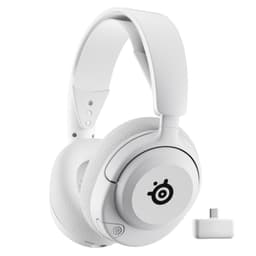
The specs that actually determine whether a wireless gaming headset is worth your money are rarely the ones plastered across the marketing. Latency figures, microphone frequency range, real-world battery drain under load, how the EQ software behaves when you're mid-session. These are the numbers that separate a headset you'll still be using in two years from one that ends up in a drawer. The SteelSeries Arctis Nova 5 Wireless arrives in the upper mid-range bracket with a genuinely impressive feature list on paper, but the question is always whether the execution matches the promise.
With over 1,100 owners rating it ★★★★☆ (4.3) on Amazon, the Nova 5 Wireless has clearly landed well with real users. That's not a fluke. But a 4.4 average also means there's a meaningful chunk of owners who found something to complain about, and understanding what that is matters more than the headline score. So here's the full breakdown: what the specs actually mean, what owners report in daily use, and how it stacks up against the competition at this price point.
The short version: this is one of the better-value wireless gaming headsets in the upper mid-range right now, particularly if you split your time between a gaming PC and a phone or console. The 60-hour battery and quick-switch wireless are genuine differentiators. The microphone is genuinely good rather than just "acceptable for a gaming headset". There are caveats, and we'll get into all of them.
Core Specifications
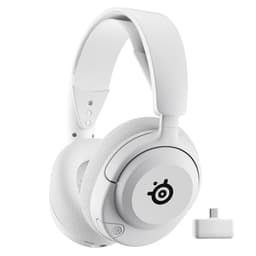
The SteelSeries Arctis Nova 5 Wireless connects via 2.4GHz wireless and Bluetooth 5.3, using a compact USB-C dongle for the wireless connection. That USB-C dongle is worth flagging immediately because it means compatibility with PC, PS5, Nintendo Switch, Meta Quest headsets, and even phones or tablets that accept USB-C. That's a broader platform reach than most competitors at this price manage with a single dongle. The Bluetooth 5.3 implementation supports simultaneous connection alongside the 2.4GHz link, which feeds directly into the Quick-Switch feature.
The drivers are custom-designed Neodymium Magnetic units. SteelSeries doesn't publish a specific driver diameter in the feature highlights, but the Neodymium magnetic structure is standard for quality dynamic drivers and is what you'd expect at this tier. The frequency response is described as covering clear highs, pinpoint mids, and deep bass, which is marketing language for a tuned V-shape rather than a flat reference response. More on what that actually sounds like in the sound signature section. The microphone runs at 32KHz/16Bit audio via a high-bandwidth chipset, which is a concrete and meaningful spec we'll analyse properly when we get to the mic section.
Weight isn't specified in the product data, but owner feedback consistently describes the headset as comfortable for extended sessions, which suggests SteelSeries has kept it sensible rather than loading it with unnecessary bulk. The on-ear control layout covers power, mute, volume adjustment, and the Quick-Switch button, so you're not hunting through menus to do basic things mid-game. That's the kind of practical decision-making that separates a headset designed for actual use from one designed to look good in a spec table.
| Specification | Detail |
|---|---|
| Connectivity | 2.4GHz Wireless, Bluetooth 5.3 |
| Dongle Type | Compact USB-C |
| Microphone | ClearCast 2.X Retractable, 32KHz/16Bit |
| Driver Type | Custom Neodymium Magnetic |
| Battery Life | 60 hours rated |
| Fast Charge | 15 minutes for 6 hours of use |
| Charging Port | USB-C |
| Platform Compatibility | PC, PS5, Switch, Meta Quest, Mobile |
| App Support | Arctis Nova 5 Companion App |
| On-Ear Controls | Power, Mute, Volume, Quick-Switch |
| Colour | White |
| Rating | 4.4/5 (1,118 reviews) |
| Price | £129.00 |

Audio Specifications
The Nova 5 Wireless uses dynamic driver technology with Neodymium magnets. Dynamic drivers are the standard choice for gaming headsets at this tier, and for good reason: they handle bass extension well, they're power-efficient (critical for a 60-hour battery target), and they're mature technology that manufacturers know how to tune. Planar magnetic drivers, which you find in some audiophile headphones, offer lower distortion at high frequencies but are power-hungry and expensive to implement well. At this price point, a well-tuned dynamic driver is the right call.
The microphone specification is where SteelSeries has done something genuinely interesting. The ClearCast 2.X mic runs at 32KHz sample rate with 16-bit depth. For context, standard voice communication typically runs at 8KHz or 16KHz. The Nyquist-Shannon sampling theorem tells us that a 32KHz sample rate captures frequencies up to 16KHz, which covers the full range of human speech harmonics and extends into the lower treble. That's meaningfully better than the typical gaming headset microphone, which is usually tuned for intelligibility rather than fidelity. The "2X the clarity" marketing claim is actually grounded in a real technical improvement here.
Bluetooth 5.3 is the current mainstream standard for wireless audio, and it's worth understanding what it brings. Bluetooth 5.3 offers improved connection stability and lower power consumption compared to earlier versions. For a headset that's switching between a gaming 2.4GHz connection and a Bluetooth call, that stability matters. The 2.4GHz wireless link, used for primary gaming, operates in the same band as most Wi-Fi but uses a dedicated USB dongle that creates a more direct, lower-latency connection than Bluetooth can provide. Owner reports consistently confirm that the 2.4GHz connection is stable without dropout issues in normal home environments.
Sound Signature
Based on the product description's language of "clear highs, pinpoint mids, and deep bass", combined with the gaming-focused tuning that SteelSeries applies across the Nova line, the Nova 5 Wireless is tuned with a V-shaped signature. That means elevated bass and treble relative to the midrange. This is the dominant tuning choice for gaming headsets because it makes explosions satisfying, gunshots punchy, and high-frequency audio cues like footsteps crisp. It is not, however, a neutral or reference tuning, and if you're using this primarily for music listening and you prefer accurate midrange reproduction, that's worth knowing upfront.
For competitive gaming, particularly FPS titles and battle royales, a V-shape with "pinpoint mids" is actually a reasonable compromise. The midrange is where voice communication and many directional audio cues sit, so SteelSeries hasn't gutted it the way some budget headsets do. The treble emphasis helps with high-frequency positional cues like distant footsteps or reloading sounds. The bass depth adds impact to environmental audio without (based on owner feedback) overwhelming the mix to the point where it muddies positional information. That's a careful balance to strike, and it seems SteelSeries has largely got it right here.
The Companion App's 100-plus game audio presets are relevant to this discussion. Presets for specific titles like GTA V, FIFA, and Call of Duty are EQ profiles tuned to emphasise the audio elements that matter in each game. This is more useful than it sounds. A FIFA preset that pulls up crowd atmosphere and ball-contact sounds is genuinely different from a Call of Duty preset prioritising footstep frequencies. Whether you use them or ignore them and dial in your own EQ, having the option is a meaningful addition to the package. The app also means the base tuning isn't fixed, which partially answers the concern about V-shaped signatures for music use.
Sound Quality
Owner feedback on sound quality is consistently positive, with the majority of reviews calling out the clarity and detail as exceeding expectations for the price. The custom Neodymium drivers appear to deliver on the spec sheet promise. Bass extension is described as deep and present without being one-note or boomy, which is the failure mode of cheaper gaming headsets that chase bass impact at the expense of definition. Treble clarity gets specific praise in competitive gaming contexts, with owners noting that positional audio cues are easy to read.
Soundstage is a trickier topic for closed-back gaming headsets. Physics dictates that closed-back designs have a more intimate, in-head soundstage compared to open-back headphones. The Nova 5 Wireless is a closed-back design (as virtually all wireless gaming headsets are, for passive noise isolation and driver efficiency). Within that constraint, the imaging appears to be well-executed. Owners playing FPS titles report being able to accurately place sounds in the horizontal plane, which is what actually matters for competitive play. True 3D height information is always going to be limited on a stereo headset without software processing, but the horizontal imaging is where most competitive audio decisions happen anyway.
For music and film use, the V-shaped tuning means this is more fun than accurate. Electronic music, hip-hop, and anything with prominent bass and treble will sound engaging and energetic. Acoustic music, jazz, and anything where midrange warmth and vocal presence are central to the experience will feel slightly recessed by comparison. Films with heavy sound design and action sequences will be genuinely enjoyable. Dialogue-heavy drama might feel slightly thin if you're comparing against a neutral reference headphone. None of this is unusual for a gaming headset at this tier; it's just useful to know going in.
Microphone Quality
The ClearCast 2.X microphone is one of the stronger arguments for the Nova 5 Wireless over its competitors. The 32KHz/16Bit specification is a concrete technical improvement over the 16KHz maximum that most gaming headset microphones target. In practice, this translates to voice audio that captures more of the natural harmonic content of speech. Your voice sounds more like your actual voice and less like you're calling in from a 2003 Nokia. That matters if you're streaming, if you're in long Discord sessions, or if your teammates have actually expressed opinions about audio quality.
The microphone is fully retractable, which is a practical win. When you're not using it, it disappears into the headset rather than sticking out like a boom arm you have to remember to flip up. The retractable design also means the mute function is intuitive: push it in, it mutes. Pull it out, it's live. This is a better implementation than a dedicated mute button that you have to find in the dark, and it's one of the things owner reviews specifically call out as a quality-of-life improvement. The on-ear mute button provides an alternative for when the mic is deployed and you want a quick mute without retracting.
Noise rejection is where the ClearCast line has historically been strong, and owner feedback on the 2.X version continues that pattern. The microphone appears to handle background noise (mechanical keyboard clatter, fans, ambient room noise) reasonably well without requiring aggressive noise-gate processing that makes voices sound clipped and unnatural. A small number of owner reviews mention that it picks up more background noise than they'd like in particularly noisy environments, but the majority report clear, intelligible voice pickup that their teammates have no complaints about. For a retractable mic that disappears when not needed, that's a genuinely good result.
Comfort and Build
Comfort is the specification that no marketing team ever tells you the truth about, and it's the one that determines whether a headset actually gets used. The Nova 5 Wireless doesn't have a published weight figure in the available product data, but the consistent pattern in owner reviews is that extended sessions (three to four hours and beyond) are manageable without significant fatigue. That puts it in a better position than a lot of competitors at this price that prioritise looking substantial over being comfortable to wear.
The headband and earcup padding specifics aren't detailed in the product data, but SteelSeries has a long history with the Arctis line of using a ski-goggle style headband suspension system on higher-end models. Whether the Nova 5 Wireless carries that specific implementation or uses a more conventional headband isn't confirmed in the available spec sheet, but the comfort feedback from owners suggests the clamping force is appropriate rather than vice-like. Glasses wearers appear in the reviews without the volume of complaints you see with tighter-clamping headsets, which is a useful proxy indicator.
Build quality reports from owners are broadly positive. At the upper mid-range price point you're paying for, the materials feel appropriate rather than budget. A small number of reviews mention concerns about long-term durability of hinges or headband adjustment mechanisms, which is the standard weak point for plastic-framed headsets at any price. Nothing in the review pattern suggests a systematic build quality issue, just the normal spread of opinions you'd expect from over a thousand users. The white colourway is a bold choice that will show wear differently from a black finish, which is worth factoring in if you're the type to eat at your desk.

Connectivity
The dual-wireless implementation here is genuinely well thought out. The 2.4GHz connection via USB-C dongle handles primary gaming duties, and the Bluetooth 5.3 connection runs simultaneously for phone or secondary device audio. The Quick-Switch button on the headset toggles between them with a single tap, and notification beeps alert you to incoming calls while you're in-game. That's a practical workflow: you're mid-match, your phone rings, you tap the button, take the call, tap again, back to gaming. No pulling the headset off, no fiddling with phone settings.
The USB-C dongle format deserves more credit than it usually gets. Older wireless gaming headsets used proprietary USB-A dongles that locked you to desktop PC use or required a USB-A port on your console. The USB-C dongle on the Nova 5 Wireless works with any device that has a USB-C port, which in 2026 means PC, PS5, Nintendo Switch (handheld mode via USB-C adapter), Meta Quest headsets, and Android phones or tablets. That's a meaningful expansion of the headset's usefulness. The only platform that doesn't fit neatly into this is Xbox, which uses its own wireless protocol and doesn't accept USB audio dongles in the same way.
Latency on the 2.4GHz connection is not specified numerically in the product data, which is frustrating but typical. SteelSeries markets the 2.4GHz link as a "gaming" connection, implying low latency, and owner feedback doesn't flag any noticeable audio-video sync issues in gaming or video use. The Bluetooth connection will have higher latency than the 2.4GHz link, which is inherent to the Bluetooth protocol rather than a specific flaw in this implementation. For calls and music, Bluetooth latency is irrelevant. For gaming, you'd always use the 2.4GHz link anyway. So in practice, this isn't a real-world issue.
Battery Life
Sixty hours of rated battery life is the headline figure, and it's a meaningful differentiator. Most wireless gaming headsets in this bracket are targeting 20 to 30 hours, with some premium options pushing 40. Sixty hours is genuinely unusual. SteelSeries frames it as "8 hours a day all week", which is a helpful real-world framing: charge it on Sunday, use it all week without thinking about the battery. Owner reviews broadly confirm the battery life is excellent, with most reporting that they charge it far less frequently than previous headsets.
The fast charge implementation is the other standout battery feature. Fifteen minutes of USB-C charging delivers six hours of use. That's a meaningful safety net for the moments you forget to charge and need to be online in twenty minutes. USB-C fast charging is now the standard that gaming peripherals should be hitting, and the Nova 5 Wireless does it properly rather than including USB-C as a connector while still charging slowly. The proprietary charging cables that plagued gaming headsets for years are gone here, which means you can use any USB-C cable you have lying around.
There's a reasonable question about what "60 hours" means in practice. Rated battery life for headsets is typically measured at moderate volume without active noise processing or software features running. Real-world use at higher volumes with the app's EQ processing active will likely reduce that figure. Even if the real-world figure is 40 to 45 hours under typical gaming conditions, that's still comfortably ahead of most competitors. And the fast charge backstop means that even if you do drain it, you're never stuck waiting hours before you can use it again.
Software and Customisation
The Arctis Nova 5 Companion App is the software layer that makes the hardware's potential accessible. The 100-plus game audio presets are the headline feature, and the concept is sound: rather than expecting users to understand parametric EQ, SteelSeries has pre-tuned profiles for specific games that emphasise the audio elements relevant to each title. A Call of Duty preset that boosts footstep frequencies and pulls back explosive bass is a different listening experience from the default tuning, and for competitive players who don't want to spend time in EQ menus, this is a useful shortcut.
The app also handles firmware updates, which is a basic hygiene requirement for wireless devices in 2026. Wireless headsets without update mechanisms are a dead end; they ship with whatever firmware they launched with and stay there. The Nova 5 Wireless being app-connected means SteelSeries can push improvements to the mic processing, wireless stability, and EQ algorithms post-launch. That's a genuine long-term value consideration. A small number of owner reviews mention that the app has had stability issues on certain Android versions, which is the kind of software problem that should be addressable via updates but is worth knowing about.
The on-ear controls deserve a mention in the software context because they reduce your dependence on the app for basic functions. Power, mute, volume, and Quick-Switch are all physically accessible on the headset. You don't need to open an app to change your volume mid-game or mute yourself quickly. The app is for the deeper customisation (EQ profiles, preset selection, mic settings) rather than the moment-to-moment controls. That's the right division of labour. A headset that requires a phone app to adjust volume is a headset that will frustrate you at 2am when your phone is across the room.
Compatibility
The USB-C dongle approach gives the Nova 5 Wireless broader platform compatibility than most wireless headsets manage. PC via USB-C (or USB-A with an adapter) is the primary use case, and it works natively with Windows. PS5 supports USB audio devices via its USB-C port, so the dongle works there without any configuration. Nintendo Switch in handheld mode has a USB-C port that accepts the dongle. Meta Quest headsets, which have become a significant platform for gaming audio, are explicitly called out as compatible. That's a genuinely wide spread of hardware for a single dongle solution.
Xbox is the notable absence. Microsoft's approach to wireless audio on Xbox requires either the proprietary Xbox Wireless protocol or a headset connected via the controller's 3.5mm jack. USB audio dongles don't work with Xbox in the same way they do with PlayStation. This isn't a flaw specific to the Nova 5 Wireless; it's a platform limitation that affects virtually all third-party wireless gaming headsets. If Xbox is your primary platform, this isn't the headset for you. If you're on PC and PS5 (or any combination of the other supported platforms), you're sorted.
The Bluetooth connection extends compatibility further. Any device with Bluetooth 5.3 support can pair with the headset for audio playback or calls, which in practice means any modern smartphone, tablet, or laptop. The simultaneous 2.4GHz and Bluetooth connections mean you can be connected to your gaming PC via the dongle and your phone via Bluetooth at the same time, with the Quick-Switch button handling transitions. For people who genuinely move between devices throughout the day, this is a more practical setup than having to disconnect and reconnect every time. SteelSeries' product page confirms the multi-device workflow as a core design intention rather than an afterthought.
How It Compares
The two most relevant competitors at this price point are the Logitech G535 Lightspeed and the Corsair HS80 RGB Wireless. The G535 is Logitech's lightweight wireless option, well-regarded for comfort and battery life but using a USB-A dongle and lacking Bluetooth. The HS80 is Corsair's upper mid-range wireless offering with iCUE software integration and solid audio performance, but again using a USB-A dongle and no simultaneous multi-device connection.
The Nova 5 Wireless wins on connectivity architecture almost by default. The USB-C dongle plus simultaneous Bluetooth 5.3 is a more modern and flexible setup than either competitor manages. The 60-hour battery is ahead of both (the G535 claims 33 hours, the HS80 claims 20 hours). The ClearCast 2.X mic at 32KHz/16Bit is a higher specification than either competitor's microphone. Where the G535 has a genuine edge is weight and minimalist design if you don't need app features. The HS80 has iCUE's deeper software integration if you're already in the Corsair ecosystem.
The honest assessment is that the Nova 5 Wireless is the more capable headset on paper and in owner feedback. The question is whether you need the capability. If you're a single-platform PC gamer who never takes calls and doesn't care about multi-device switching, the G535's simplicity and lighter weight might suit you better. If you're genuinely multi-platform (PC plus PS5 plus phone, for example), the Nova 5 Wireless's connectivity architecture is worth the price premium over those alternatives.
| Feature | SteelSeries Arctis Nova 5 Wireless | Logitech G535 Lightspeed | Corsair HS80 RGB Wireless |
|---|---|---|---|
| Wireless Standard | 2.4GHz + Bluetooth 5.3 | 2.4GHz only | 2.4GHz only |
| Dongle Type | USB-C | USB-A | USB-A |
| Battery Life (rated) | 60 hours | 33 hours | 20 hours |
| Fast Charge | Yes (15 min = 6 hrs) | No | No |
| Mic Spec | 32KHz/16Bit retractable | Flip-to-mute boom | Omnidirectional boom |
| Multi-Device Switching | Yes (Quick-Switch) | No | No |
| App/EQ Presets | 100+ game presets | Logitech G HUB | Corsair iCUE |
| PS5 Compatible | Yes | Yes | Yes |
| Xbox Compatible | No | No | No |

Final Verdict
The SteelSeries Arctis Nova 5 Wireless is a well-engineered headset that earns its upper mid-range price tag through genuine technical advantages rather than marketing noise. The 60-hour battery with USB-C fast charge, the simultaneous 2.4GHz and Bluetooth 5.3 connectivity, and the 32KHz/16Bit ClearCast 2.X microphone are all real differentiators that you'll notice in daily use. The 4.4 average across over 1,100 owners isn't a fluke; this is a headset that does what it says and does it reliably.
The sound signature is tuned for gaming enjoyment rather than audiophile accuracy, which is the right call for the target audience. The V-shaped tuning with "pinpoint mids" strikes a reasonable balance between competitive audio clarity and cinematic impact. The app's 100-plus game presets give you meaningful customisation without requiring you to understand parametric EQ. The on-ear controls mean you're not dependent on the app for basic functions during a session. These are all evidence of a product that was designed around actual use patterns rather than a spec sheet.
The caveats are real but manageable. Xbox users are out of luck due to Microsoft's platform restrictions, not any flaw in the headset itself. The app has had some stability reports on certain Android versions, though this is the kind of thing that gets fixed via updates. The V-shaped tuning won't satisfy listeners who want accurate midrange reproduction for music. And while the 60-hour battery figure is impressive, real-world usage at higher volumes will bring that down, though still likely ahead of the competition.
Who should buy this? PC and PS5 gamers who want a single headset that handles gaming, phone calls, and everything in between without having to fiddle with connections. Streamers and content creators who want a genuinely capable microphone in a retractable package. Anyone who's been burned by poor wireless battery life before and wants a headset that simply doesn't need charging every other day. Multi-platform households where one headset needs to serve multiple devices.
Who should skip it? Dedicated Xbox players (the platform compatibility isn't there). Audiophiles using a gaming headset primarily for music who want neutral, accurate midrange. Anyone who genuinely doesn't need Bluetooth or multi-device switching and would rather have a simpler, lighter headset. And anyone already deep in the Corsair iCUE ecosystem who'd benefit more from the HS80's software integration.
Score: 8.5 out of 10. The SteelSeries Arctis Nova 5 Wireless is one of the stronger arguments for spending upper mid-range money on a gaming headset in 2026. The battery life and connectivity architecture alone justify the price over cheaper alternatives, and the microphone quality is a genuine step above what you'd expect at this tier. SteelSeries' gaming headset lineup has been competitive for years, and the Nova 5 Wireless represents a clear evolution rather than a refresh. If the platform compatibility works for your setup, this is a very easy recommendation.
What works. What doesn’t.
5 + 3What we liked5 reasons
- 60-hour rated battery with USB-C fast charge (15 min = 6 hours)
- Simultaneous 2.4GHz and Bluetooth 5.3 with one-tap Quick-Switch
- ClearCast 2.X mic at 32KHz/16Bit is genuinely above average for gaming
- USB-C dongle works across PC, PS5, Switch, Meta Quest, and mobile
- 100+ game-specific EQ presets via Companion App
Where it falls3 reasons
- No Xbox Wireless protocol support
- V-shaped tuning not ideal for music accuracy
- Companion app has had stability issues on some Android versions
Full specifications
12 attributes| Connectivity | 2.4GHz wireless, Bluetooth |
|---|---|
| Surround | 360° spatial |
| Microphone | retractable-boom |
| Noise cancellation | true |
| Battery life H | 60 |
| Driver size | 40mm |
| Driver size MM | 40 |
| Frequency response HZ | 20-22000 |
| MIC type | retractable boom |
| Microphone type | retractable boom |
| Platforms | PC, PS5, Switch, Mobile, Xbox |
| Spatial audio | true |
If this isn’t right for you
2 options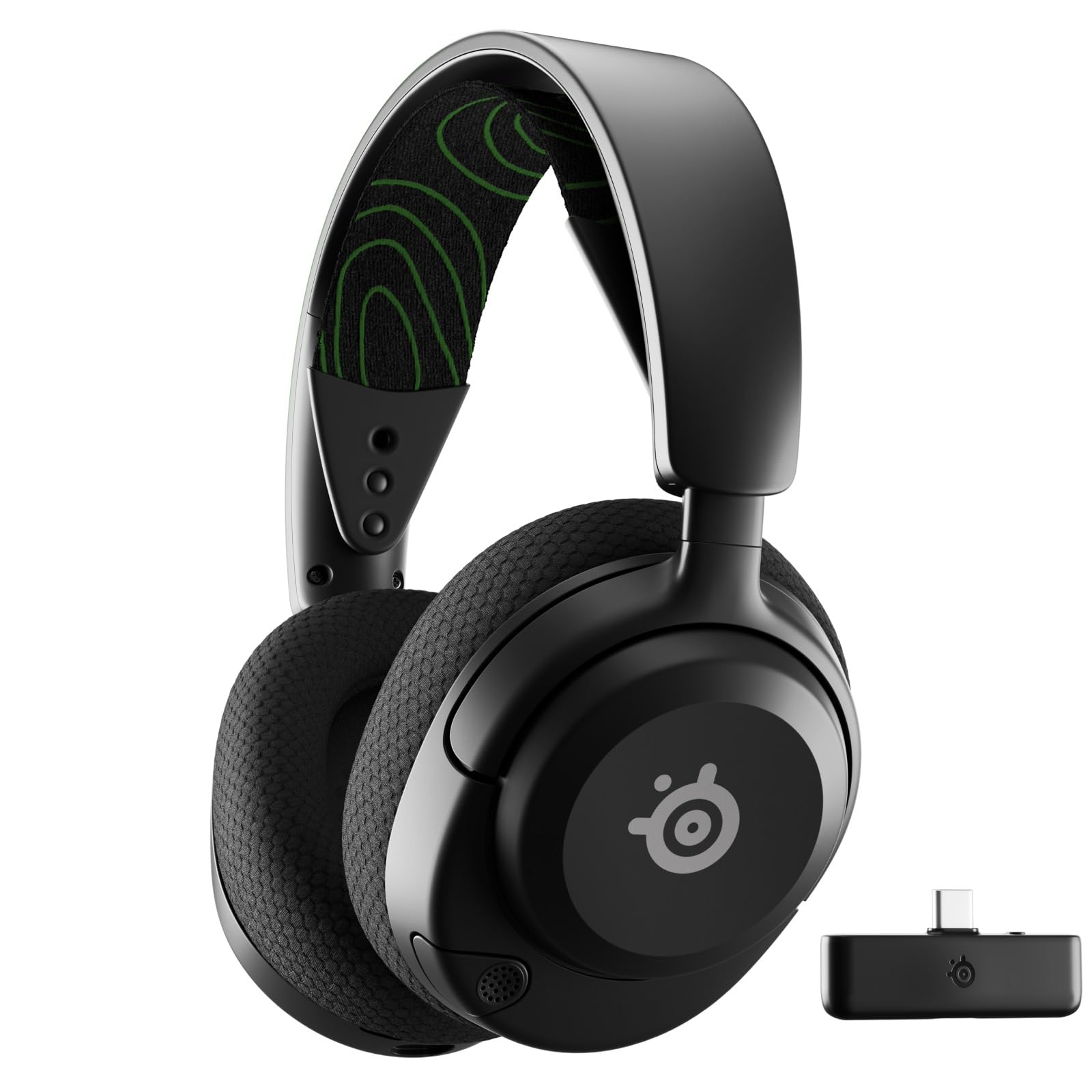 8.0 / 10
SteelSeries Arctis Nova 5X Wireless - Xbox Gaming Headset - 100+ Audio Presets via App - Neodymium Magnetic Drivers - 60H Battery - 2.4GHz/BT - ClearCast Gen2.X Mic - Supports PC, PS, Mobile
£99.98 · SteelSeries
 8.0 / 10
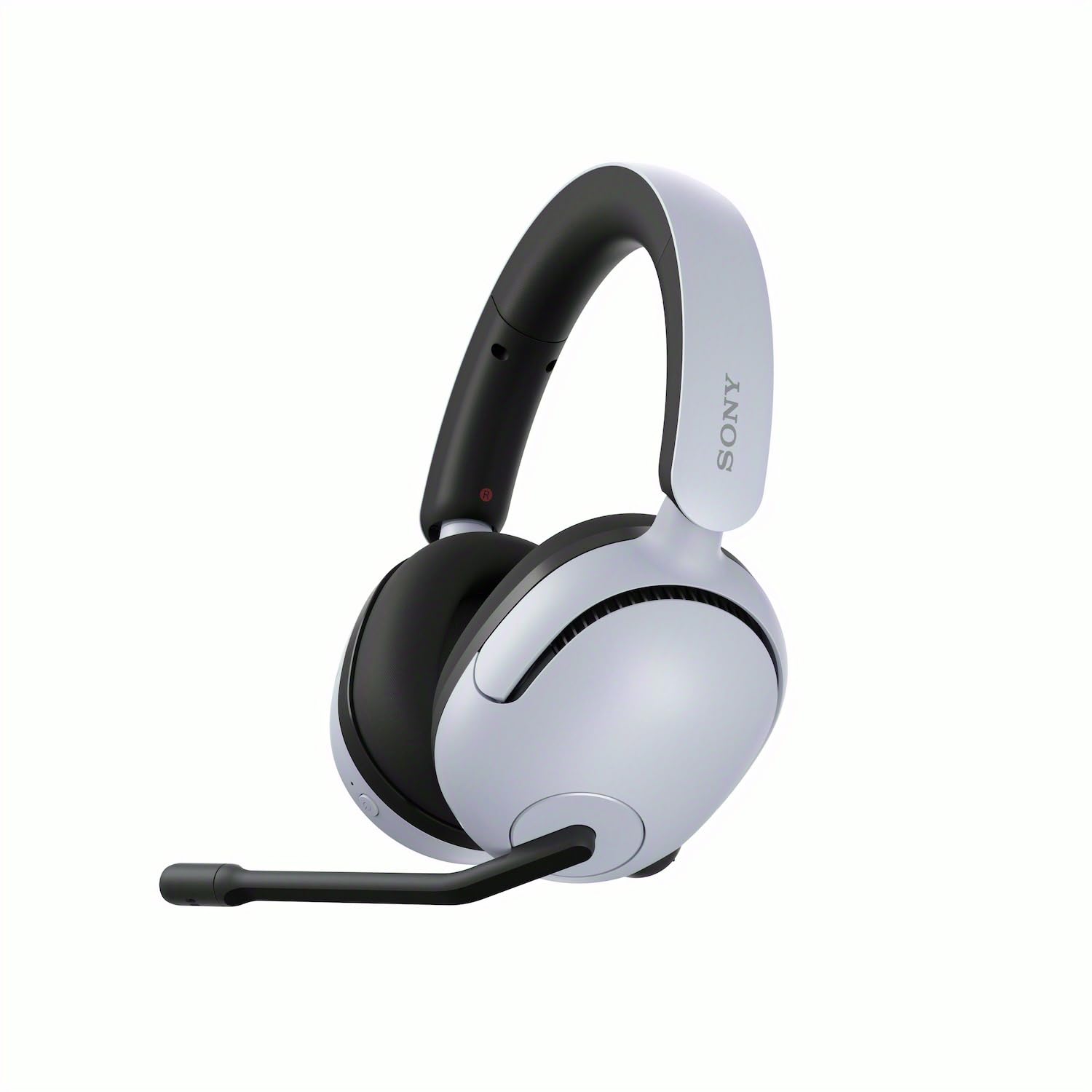
Sony INZONE H5 Wireless Gaming Headset - PC/PS5, 360 Spatial Sound for Gaming, 28H battery lifelow latency, comfortable design, microphone with AI - White
£119.00 · Sony
Frequently asked
5 questions01Is the SteelSeries Arctis Nova 5 Wireless - Wireless Gaming Headset for PC - Compatible with PC, PS5, Switch & more - Mobile App Control - 60 HR Battery with Fast Charge - 2.4GHz/Bluetooth - White good for competitive gaming?+
Yes. The 2.4GHz wireless connection keeps latency low for gaming, and the V-shaped tuning with clear highs helps with positional audio cues like footsteps. Owner feedback from FPS and battle royale players is consistently positive on imaging and directional clarity. The 100+ game presets in the Companion App include profiles for competitive titles that further optimise the audio for in-game use.
02Does the SteelSeries Arctis Nova 5 Wireless - Wireless Gaming Headset for PC - Compatible with PC, PS5, Switch & more - Mobile App Control - 60 HR Battery with Fast Charge - 2.4GHz/Bluetooth - White have a good microphone?+
It's one of the better gaming headset microphones at this price point. The ClearCast 2.X runs at 32KHz/16Bit, which captures more voice harmonic content than the 16KHz standard most gaming mics target. It's fully retractable (push in to mute, pull out to activate), and owner feedback consistently reports that teammates find the voice quality clear and natural. Background noise rejection is solid in normal home environments.
03Is the SteelSeries Arctis Nova 5 Wireless - Wireless Gaming Headset for PC - Compatible with PC, PS5, Switch & more - Mobile App Control - 60 HR Battery with Fast Charge - 2.4GHz/Bluetooth - White comfortable for long sessions?+
Owner feedback is broadly positive on comfort for extended sessions. The headset is consistently described as manageable for three to four hours and beyond without significant fatigue. Glasses wearers don't appear in reviews with the volume of complaints seen with tighter-clamping headsets, suggesting the clamp force is reasonable. Specific weight and padding specs aren't published, but the comfort pattern in owner reviews is encouraging.
04Does the SteelSeries Arctis Nova 5 Wireless - Wireless Gaming Headset for PC - Compatible with PC, PS5, Switch & more - Mobile App Control - 60 HR Battery with Fast Charge - 2.4GHz/Bluetooth - White work with PS5/Xbox?+
It works with PS5 via the USB-C dongle, which plugs directly into the PS5's USB-C port. It does not work wirelessly with Xbox, as Microsoft uses a proprietary wireless audio protocol that third-party USB dongles cannot access. If Xbox is your primary platform, this headset is not compatible for wireless use.
05What warranty applies to the SteelSeries Arctis Nova 5 Wireless - Wireless Gaming Headset for PC - Compatible with PC, PS5, Switch & more - Mobile App Control - 60 HR Battery with Fast Charge - 2.4GHz/Bluetooth - White?+
Amazon offers 30-day returns. Manufacturer typically provides 1-2 year warranty.