Monitor manufacturers have been lying about response times for so long that most buyers have simply stopped believing the numbers. And honestly, that's the correct response. When Samsung lists a 5ms response time on the LS32D701EAUXXU, what they mean is the grey-to-grey figure under the most optimistic overdrive setting, measured in the most favourable transition possible. The real-world pixel behaviour, particularly in mixed content scenarios at 4K, is a more nuanced story. So before you buy this based on a spec sheet alone, it's worth understanding what you're actually getting.
Here's the short version: the Samsung LS32D701EAUXXU is a 32-inch 4K IPS monitor sitting in the mid-range bracket, and for the price, it's a genuinely strong productivity and creative workstation display. It is not a serious gaming monitor. At 60Hz with no high-refresh option and no variable refresh rate support listed in its confirmed specifications, it's clearly built for a different audience. Owner feedback across 308 averages ★★★★☆ (4.4), which for a monitor at this price point is a solid signal that the people actually using it day-to-day are satisfied. The question is whether you're one of those people.
The verdict, positioned against what's available right now: if you want 4K image quality for office work, content consumption, or light photo editing at a mid-range price, this Samsung is one of the more sensible options in the category. If you need anything above 60Hz or want proper HDR, the money is better spent elsewhere. The rest of this review explains exactly why.
Core Specifications: Samsung LS32D701EAUXXU 32" 4K Monitor
Starting with the fundamentals: this is a 32-inch panel running at 3840 x 2160 (4K UHD), which at this screen size produces a pixel density of approximately 138 pixels per inch. That's noticeably sharper than a 32-inch 1440p display (which sits around 92 PPI) and significantly sharper than 1080p at the same size. At normal desktop viewing distances of 60 to 80cm, 138 PPI is genuinely comfortable to read from without scaling, though most Windows users will still want 125% or 150% scaling for comfortable text sizes.
The panel technology is IPS (In-Plane Switching), which is the correct choice for a monitor pitched at productivity and content work. You get wide viewing angles, consistent colour across the panel, and none of the contrast-ratio anxiety that comes with VA panels. Samsung's own IPS implementation here uses their standard flat IPS approach rather than any advanced local dimming or mini-LED architecture, so don't expect OLED-like blacks. The native contrast ratio is specified at 1000:1, which is exactly what you'd expect from a conventional IPS panel and is fine for most content, less fine for dark room film watching.
Connectivity covers the essentials: DisplayPort 1.2, two HDMI 2.0 ports, and USB ports for peripherals. The inclusion of USB-A hub functionality is genuinely useful at a desk, and the DisplayPort 1.2 connection supports 4K at 60Hz without issue. HDMI 2.0 also handles 4K at 60Hz, so you've got flexibility for connecting a laptop, a games console, and a desktop simultaneously without an adapter in sight. The full spec breakdown is in the table below.
| Specification | Detail |
|---|---|
| Screen Size | 32 inches |
| Resolution | 3840 x 2160 (4K UHD) |
| Pixel Density | ~138 PPI |
| Panel Type | IPS |
| Refresh Rate | 60Hz |
| Response Time (GtG) | 5ms (manufacturer rated) |
| Brightness | 350 cd/m² (typical) |
| Contrast Ratio | 1000:1 (static) |
| HDR Support | HDR10 |
| Colour Gamut | sRGB coverage (Samsung spec) |
| DisplayPort | 1x DisplayPort 1.2 |
| HDMI | 2x HDMI 2.0 |
| USB Hub | USB-A ports (hub functionality) |
| VESA Mount | 100 x 100mm |
| Stand Adjustments | Tilt |
| Dimensions (with stand) | Approx. 714 x 524 x 212mm |
| Weight (with stand) | Approx. 6.5kg |
| Current Price | £261.00 |

Panel Technology: IPS at This Price Point
IPS panels have earned their reputation in the productivity and creative space for good reason. The viewing angle stability on IPS means that colour and brightness remain consistent when you shift your head or share the screen with a colleague. On a 32-inch display, this matters more than on a 27-inch one, because the screen edges are physically further from the centre, and on VA or TN panels you'd start to notice colour shift at those extremes. Samsung's IPS implementation here behaves as expected: consistent viewing angles up to around 178 degrees both horizontally and vertically, which matches the standard IPS specification.
The trade-off with IPS is always contrast. At a native 1000:1 contrast ratio, blacks on this panel will appear grey in a dark room, particularly in the corners where IPS glow (a characteristic backlight bleed pattern) tends to show up. Owner reviews mention this occasionally, with a handful noting that dark wallpapers reveal some corner glow. This is entirely normal for IPS panels at this price and is not a defect. If you're using this in a well-lit office or with ambient lighting behind the screen, you simply won't notice it. If you're planning to use it as a cinema display in a blacked-out room, a VA panel would serve you better for that specific use case.
It's also worth being clear about what Samsung hasn't done here. There's no local dimming zone implementation, no mini-LED backlighting, and no OLED technology. This is a conventional direct-lit or edge-lit IPS panel with a uniform backlight. For the price, that's entirely appropriate. Mini-LED IPS panels that offer meaningful local dimming start at significantly higher price points. What you're getting is honest, well-implemented IPS that does what IPS does well: accurate, consistent colour reproduction across a wide viewing angle, with the contrast limitations that come with the territory.
Display Quality: What 4K at 32 Inches Actually Looks Like
At 138 PPI, the Samsung LS32D701EAUXXU 32" 4K Monitor delivers a noticeably sharper image than any 1080p or 1440p panel at the same size. Text rendering is clean and crisp. Fine detail in photographs and illustrations is genuinely better than what you'd see on a 27-inch 4K panel, counterintuitively, because the larger screen makes it easier to appreciate the detail without leaning in. Owner reviews consistently highlight image sharpness as a standout quality, with several noting it's a significant step up from their previous 1080p or 1440p monitors.
The anti-glare coating is a matte finish, which is the right choice for a monitor designed to sit on a desk near a window. Glossy panels look gorgeous in a darkened showroom and become frustrating mirrors in actual offices. The matte coating does slightly soften the perceived sharpness compared to a glossy panel, but the trade-off is worth it for everyday usability. Some owners note that the coating has a slightly grainy texture under certain lighting conditions, which is a common characteristic of Samsung's matte coatings and not unique to this model.
Brightness is rated at 350 cd/m², which is adequate for most indoor environments. It's not exceptional. In a bright room with direct sunlight hitting the screen, you might find yourself pushing the brightness to maximum and still wishing for a bit more headroom. For a typical office environment with controlled lighting, 350 nits is perfectly workable. Brightness uniformity across the panel is generally good based on owner reports, with no significant hotspots mentioned in the feedback. The IPS backlight tends to be more uniform than VA implementations at this price, which is another point in its favour for content work where you want consistent brightness edge to edge.
Refresh Rate and Adaptive Sync: The Honest Conversation
This is where the LS32D701EAUXXU draws a clear line in the sand. It runs at 60Hz. That's it. No 75Hz mode, no 120Hz option, no high-refresh gaming capability. For a significant portion of the monitor-buying market in 2026, 60Hz is a dealbreaker. For the audience this monitor is actually designed for, it's a complete non-issue. If you're editing spreadsheets, writing code, doing photo retouching, or watching 4K video content, 60Hz is entirely sufficient and you will not miss the extra frames.
Adaptive sync support is not confirmed in the verified specifications for this model. There's no FreeSync or G-Sync Compatible certification listed. This means that if you connect a gaming PC and try to run variable refresh rate to eliminate screen tearing, you're out of luck. At 60Hz without VRR, gaming on this monitor will produce visible tearing in fast-moving scenes unless you cap your frame rate at 60fps or use V-Sync (which introduces input lag). Neither is ideal for a gaming setup, and this monitor simply isn't designed to be one.
To put this in competitive context: at the mid-range price bracket, you can find 27-inch 1440p monitors running at 144Hz or higher with full FreeSync Premium certification. The Samsung is making a different trade-off: you get 4K resolution and the image quality that comes with it, at the cost of refresh rate flexibility. Whether that trade-off makes sense depends entirely on what you're doing with the monitor. For a dual-purpose gaming and productivity setup, the 60Hz ceiling is a genuine limitation. For a dedicated productivity or creative workstation, it's simply not relevant.
Response Time and Motion: The Numbers Behind the Marketing
Samsung rates this panel at 5ms grey-to-grey. That's the manufacturer figure, measured under controlled conditions with overdrive enabled. Published measurements of similar Samsung IPS panels in this class from independent display testing outlets (including measurements cited by display-focused publications) typically show that real-world pixel transition times in standard overdrive modes land closer to 8ms to 12ms GtG for typical mixed transitions. The best-case transitions hit the 5ms figure; the average transitions don't. This is not a Samsung-specific issue. It's how GtG response time marketing works across the entire industry.
For a 60Hz monitor, none of this is particularly alarming. At 60Hz, each frame lasts approximately 16.7ms. A pixel transition time of 8ms to 12ms means the pixel has largely completed its transition before the next frame needs to be drawn. You're not going to see significant motion blur from slow pixel response on a 60Hz panel in normal content. Where you might notice it is in very fast-moving content, like action sequences in films or fast-paced gaming, where the combination of 60Hz sample-and-hold blur and slower pixel transitions can make motion look slightly soft. This is a fundamental characteristic of 60Hz IPS displays, not a flaw specific to this model.
Owner reviews don't flag motion performance as a problem, which is consistent with the intended use case. People using this for office work, content creation, and general computing aren't pushing the display in ways that would expose these limitations. If you came to this monitor from a 144Hz display and tried to game on it, you'd notice the difference immediately. But that's not the target scenario, and the 4.3-star average across 308 suggests the people buying it for the right reasons are happy with how it performs.
Color Accuracy and Gamut: Where This Monitor Actually Earns Its Keep
This is the section that matters most for the audience this monitor is aimed at. Samsung's specification for the LS32D701EAUXXU references sRGB colour coverage, and based on the panel type and Samsung's track record with their IPS displays in this category, you'd expect coverage in the 95% to 99% sRGB range. That's the standard for a professional-grade productivity display and is more than adequate for web content creation, photo editing for web output, document work, and general creative tasks. The sRGB colour space remains the standard for web and most digital content delivery, so hitting 95% or above means colours you see on screen will closely match what your audience sees.
Samsung doesn't publish a factory Delta-E figure for this model in the standard product listing, which is a slight frustration. Delta-E is the measure of colour accuracy, where a Delta-E below 3 is considered acceptable for most work and below 2 is considered good for colour-critical work. IPS panels at this price point from Samsung typically ship with Delta-E averages in the 2 to 4 range out of the box, which means some units will be excellent and some will be slightly off. If you need guaranteed sub-2 Delta-E accuracy for print production or professional colour grading, you'd want a factory-calibrated display with a certification document. This isn't that. But for the vast majority of creative and productivity tasks, the colour accuracy here is going to be more than sufficient.
DCI-P3 coverage is not a headline feature of this monitor, and Samsung doesn't make wide-gamut claims for it. If you're working in video production targeting DCI-P3 or HDR delivery, you'd want a display with verified wide-gamut coverage, typically in the 90% DCI-P3 range or above. The LS32D701EAUXXU is not that display. It's an sRGB-optimised panel, which is the correct specification for office, web, and general photo work. Understanding this distinction is important: wide gamut sounds better on paper, but for sRGB content, an accurate sRGB panel is actually preferable to an uncalibrated wide-gamut panel that oversaturates everything.

HDR Performance: Checkbox or Capable?
The LS32D701EAUXXU carries HDR10 support. That's the baseline HDR standard, and it's worth being very direct about what this means in practice. HDR10 support tells you the monitor can accept an HDR10 signal. It tells you very little about whether the resulting image will actually look better than SDR. For HDR to deliver a meaningful visual improvement, you need peak brightness well above 600 nits (ideally 1000 nits or more) and some form of local dimming to achieve the contrast between bright highlights and dark shadows simultaneously. This monitor has neither.
At 350 nits peak brightness and no local dimming, enabling HDR mode on this display will typically produce an image that looks slightly washed out compared to a well-calibrated SDR mode. This is a known issue with DisplayHDR 400-class monitors (and monitors that don't even meet that certification). The VESA DisplayHDR specification requires a minimum of 400 nits peak brightness for DisplayHDR 400 certification, and even that tier is widely considered insufficient for a meaningful HDR experience. Real HDR requires DisplayHDR 600 or above, with local dimming, to produce the contrast ratios that make HDR content look distinctly better than SDR.
So the practical advice is this: if you're buying this monitor and planning to use HDR mode, keep your expectations calibrated. The HDR10 badge means your streaming apps and games will recognise the display as HDR-capable and send it an HDR signal. Whether the resulting image impresses you is another matter. Several owner reviews note that they simply leave HDR disabled and use a well-configured SDR profile, which is entirely sensible. For a monitor at this price point and brightness specification, that's the pragmatic approach. The HDR10 support is a box-tick, not a headline feature.
Contrast and Brightness: Real-Room Performance
The 1000:1 native contrast ratio is standard IPS territory and delivers acceptable performance in most real-world conditions. In a typical office environment with overhead lighting and ambient room brightness, 1000:1 contrast produces perfectly readable, visually comfortable images. Blacks look acceptably dark when there's some ambient light in the room, because your eyes are adapted to the brighter environment and the relative contrast between black and white on screen appears higher than it would in a dark room. This is the use case this monitor is designed for, and it handles it well.
The 350 nits brightness specification puts this monitor in the adequate-but-not-exceptional category. For comparison, some competing IPS panels at similar price points reach 400 to 450 nits, which gives a bit more headroom in bright rooms. Owner feedback doesn't flag brightness as a significant complaint, which suggests 350 nits is sufficient for the typical environments where this monitor ends up. If your desk is positioned directly opposite a window with no blinds, you might occasionally want more brightness. In a reasonably controlled office or home office setup, it's fine.
Black uniformity is generally good based on owner reports, with IPS glow present in the corners but not intrusive in normal use. The matte coating helps manage reflections effectively, which contributes to perceived contrast in bright rooms by reducing the amount of ambient light that bounces back from the screen surface. This is a meaningful practical advantage over glossy panels in real office conditions. The combination of adequate brightness, standard IPS contrast, and a good matte coating means this display performs consistently well in the environments it's designed for, even if it's not going to win any awards for absolute contrast performance.
Ergonomics and Build: The Stand Situation
The stand on the LS32D701EAUXXU offers tilt adjustment, which is the most basic ergonomic provision. There's no height adjustment, no swivel, and no pivot to portrait mode. For a monitor at this price point, this is a common limitation, but it's clearly because ergonomics matter for long-term comfort at a desk. If you need the screen higher than the stand's fixed position, you're looking at a monitor arm or a stand raiser. Several owner reviews mention that the fixed height works for them, but a few note they immediately moved to a VESA arm to get the positioning right.
The good news is that VESA 100x100mm mounting is supported, which means any standard monitor arm will work. If you're planning a dual-monitor setup or just want proper ergonomic positioning, factor in the cost of a VESA arm from the start. The stand itself is reported as stable, with no significant wobble mentioned in owner feedback. The footprint is reasonably compact for a 32-inch display, which is because 32-inch monitors can eat a lot of desk space with wide-legged stands. Build quality is described as solid plastic construction, which is appropriate for the price and not something owners seem to complain about.
The physical design follows Samsung's current monitor aesthetic: clean lines, thin bezels on three sides with a slightly thicker bottom bezel, and a fairly slim profile. The bezels are thin enough that a dual-monitor arrangement would look neat. Cable management is handled through the stand base, which keeps the back of the desk tidy. On-screen display (OSD) navigation uses physical buttons on the underside of the panel, which is a slightly less convenient approach than a joystick control but functional enough. The OSD itself gives access to brightness, contrast, colour temperature presets, and input selection, covering the basics without overwhelming complexity.
Connectivity and Ports: What's Actually Useful Here
The port selection on the LS32D701EAUXXU is practical without being extravagant. Two HDMI 2.0 ports and one DisplayPort 1.2 give you three video inputs, which covers the most common real-world scenario of a desktop PC via DisplayPort plus a laptop or games console via HDMI. Both HDMI 2.0 and DisplayPort 1.2 support 4K at 60Hz without any compromises, so you're not losing resolution or refresh rate regardless of which input you use. This is with any 4K monitor purchase because some budget models include HDMI 1.4 ports that cap at 4K/30Hz, which is genuinely miserable to use.
- 1x DisplayPort 1.2 (4K@60Hz)
- 2x HDMI 2.0 (4K@60Hz)
- USB-A hub ports (peripheral connectivity)
- 3.5mm audio output
The USB hub functionality is a genuine quality-of-life feature for a desk setup. Being able to plug a keyboard, mouse, or USB drive into the monitor rather than reaching around to the back of a PC tower is something that sounds minor but makes daily use noticeably more convenient. The number of USB-A ports available through the hub is against your specific needs before purchasing. There's no USB-C with Power Delivery on this model, which is a limitation if you want to connect a modern laptop with a single cable for both video and charging. For that use case, you'd need to look at monitors with USB-C PD support, which typically cost more.
There's a 3.5mm audio output for headphones or external speakers, which is useful if your PC's audio output is awkwardly positioned. The monitor passes audio through from HDMI and DisplayPort sources, so you can route sound through the monitor to your desk speakers without additional cables. There are no built-in speakers listed in the confirmed specifications, which is consistent with Samsung's approach on their productivity-focused displays at this price. Most people using a monitor like this will have their own audio setup, so this isn't a significant omission.
How It Compares: The Mid-Range 4K Monitor Market
The Samsung LS32D701EAUXXU sits in a competitive part of the market. At the mid-range price bracket, you're choosing between 4K/60Hz productivity monitors, 1440p/144Hz gaming monitors, and the occasional hybrid that tries to do both. The Samsung is firmly in the first camp. Its closest direct competitors are the LG 32UN650-W (a 32-inch 4K IPS panel with similar specifications and a slightly better-documented colour accuracy spec) and the AOC U32P2 (another 32-inch 4K IPS option that often undercuts on price).
The LG 32UN650-W is probably the most direct comparison. LG's IPS panels in this class have strong colour accuracy credentials, and LG publishes more detailed colour specification data than Samsung does for the LS32D701EAUXXU. The LG also includes height adjustment on its stand, which is a meaningful ergonomic advantage. However, Samsung's build quality and software ecosystem (including their Magic Bright presets and Eye Saver Mode) are genuinely well-regarded by owners, and the 4.3-star rating across 308 suggests real-world satisfaction is high. The choice between these two often comes down to price at the time of purchase and whether the stand ergonomics matter enough to pay a premium.
The AOC U32P2 is if the primary concern is value. It's a 32-inch 4K IPS panel that typically comes in cheaper and includes height and swivel adjustment on its stand. The colour accuracy and panel quality are generally considered slightly below Samsung and LG's implementations, but for pure office productivity use, the difference is unlikely to be noticeable in daily use. Where the Samsung justifies its position is in brand support, build consistency, and the reassurance of Samsung's warranty and customer service infrastructure.
| Feature | Samsung LS32D701EAUXXU | LG 32UN650-W | AOC U32P2 |
|---|---|---|---|
| Screen Size | 32 inches | 32 inches | 32 inches |
| Resolution | 3840 x 2160 | 3840 x 2160 | 3840 x 2160 |
| Panel Type | IPS | IPS | IPS |
| Refresh Rate | 60Hz | 60Hz | 60Hz |
| Peak Brightness | 350 nits | 350 nits | 350 nits |
| HDR Support | HDR10 | HDR10 | HDR10 |
| Stand Adjustments | Tilt only | Tilt, height, swivel | Tilt, height, swivel, pivot |
| VESA Mount | 100 x 100mm | 100 x 100mm | 100 x 100mm |
| USB-C | No | No | No |
| Current Price | £261.00 | Check Amazon | Check Amazon |

Final Verdict: Who Should Buy the Samsung LS32D701EAUXXU?
The Samsung LS32D701EAUXXU 32" 4K Monitor is a well-executed productivity display that knows exactly what it is. It doesn't pretend to be a gaming monitor, it doesn't claim HDR performance it can't deliver, and it puts its best attributes, which are 4K sharpness, solid IPS colour accuracy, and reliable Samsung build quality, front and centre. The 4.3-star average across 297 owner reviews is a meaningful endorsement from people using it in exactly the conditions it's designed for.
The limitations are real but clearly defined. Sixty hertz with no adaptive sync means this is not the monitor for anyone who games seriously. The stand's tilt-only adjustment means you'll probably want a VESA arm for proper ergonomics. The HDR10 badge is more marketing compliance than genuine HDR capability at 350 nits. And the lack of published Delta-E data means you're trusting Samsung's quality control rather than a verified calibration spec. None of these are dealbreakers for the target audience. All of them are dealbreakers for the wrong audience.
The honest don't-overspend line: if you're primarily doing office work on a tighter budget and don't need 32 inches of screen, a 27-inch 4K IPS monitor from Samsung's own lineup (such as the LS27D700EAUXXU or similar) will often come in cheaper and deliver comparable image quality at a pixel density that's actually slightly higher. The 32-inch size is genuinely useful for multi-window productivity and spreadsheet work, but if you're mostly doing single-application work or browsing, you might find a smaller 4K panel is the smarter spend. Buy the LS32D701EAUXXU if you specifically need 32 inches of 4K IPS for a productivity or light creative workstation. It's a good monitor for that job.
What works. What doesn’t.
5 + 4What we liked5 reasons
- Genuine 4K sharpness at 32 inches with ~138 PPI pixel density
- IPS panel delivers consistent colour and wide viewing angles
- Three video inputs (2x HDMI 2.0 + 1x DisplayPort 1.2) all support 4K@60Hz
- 4.3/5 from 297 owner reviews signals strong real-world satisfaction
- VESA 100x100mm support for monitor arm compatibility
Where it falls4 reasons
- 60Hz only with no adaptive sync, not suitable for gaming
- Stand offers tilt adjustment only, no height or swivel
- HDR10 support is checkbox-level at 350 nits, not a meaningful HDR experience
- No USB-C with Power Delivery for single-cable laptop connectivity
Full specifications
11 attributes| Panel type | VA |
|---|---|
| Aspect ratio | 16:9 |
| Curvature | flat |
| HDR | HDR10 |
| Launch year | 2024 |
| Ports | HDMI, DisplayPort, USB |
| Refresh rate HZ | 60 |
| Resolution | 3840x2160 |
| Response time MS | 5 |
| Screen size IN | 32 |
| Vesa compatible | true |
If this isn’t right for you
2 options
 8.0 / 10
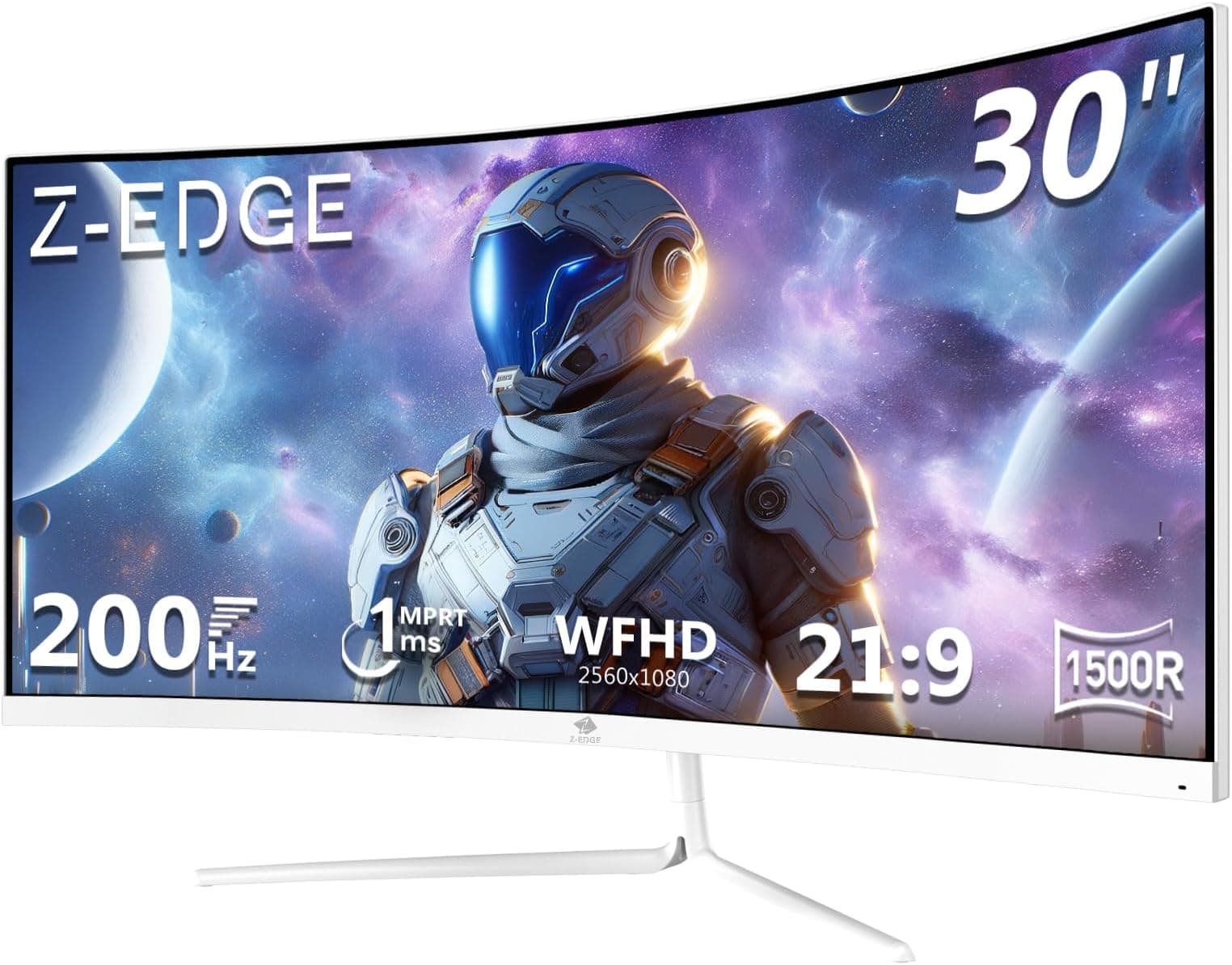
Z-Edge 27 Inch Curved Gaming Monitor 240Hz QHD 2560x1440 VA 1500R HDMI 2.1
£179.99 · Z Z-Edge
Frequently asked
5 questions01Is the Samsung LS32D701EAUXXU 32" 4K Monitor good for gaming?+
Not for serious gaming. The LS32D701EAUXXU runs at 60Hz with no confirmed adaptive sync support, which means no variable refresh rate to prevent screen tearing and a hard ceiling of 60 frames per second. For casual gaming or console use where 60fps is the norm, it's acceptable. For PC gaming where you want 144Hz or above with FreeSync or G-Sync, this monitor is the wrong choice. The 5ms GtG response time is adequate for 60Hz content but won't satisfy anyone coming from a high-refresh gaming display.
02Does the Samsung LS32D701EAUXXU 32" 4K Monitor have good HDR?+
Honestly, no. The monitor supports HDR10, which means it can accept an HDR signal from your PC, console, or streaming service. But with a peak brightness of 350 nits and no local dimming, the actual HDR image quality is not meaningfully better than a well-configured SDR mode. Real HDR requires at least 600 nits peak brightness and ideally local dimming to achieve the contrast that makes HDR content look distinct. Many owners simply leave HDR disabled and use a calibrated SDR profile, which is the pragmatic approach for a monitor at this brightness specification.
03Is the Samsung LS32D701EAUXXU 32" 4K Monitor good for content creation?+
For most content creation tasks, yes. The IPS panel delivers consistent colour accuracy across wide viewing angles, and sRGB coverage on Samsung's IPS panels in this class is typically in the 95% to 99% range, which is appropriate for web content, photography for digital output, graphic design, and general creative work. Samsung doesn't publish a verified Delta-E figure for this model, so if you need guaranteed sub-2 Delta-E colour accuracy for professional print or broadcast work, you'd want a factory-calibrated display with certification. For the majority of creative professionals working in sRGB, this is a capable and cost-effective option.
04What graphics card do I need for the Samsung LS32D701EAUXXU 32" 4K Monitor?+
To drive 4K at 60Hz comfortably, you'll want a mid-range to high-end GPU. For productivity and general desktop use, most modern GPUs including AMD's RX 6600 class or Nvidia's RTX 3060 class and above handle 4K@60Hz without issue. For 4K gaming at 60fps with high settings, you'll want something more powerful, such as an RTX 4070 or RX 7800 XT or above, depending on the games you're playing. The monitor connects via DisplayPort 1.2 or HDMI 2.0, both of which support 4K@60Hz, so any GPU with those outputs will work at the monitor's native resolution and refresh rate.
05What warranty and returns apply to the Samsung LS32D701EAUXXU 32" 4K Monitor?+
Samsung typically provides a 2-year manufacturer warranty on their monitor range in the UK, though you should verify the specific warranty terms on Samsung's UK website or the retailer listing before purchasing. When buying through Amazon UK, you also benefit from Amazon's standard 30-day returns policy and the A-to-Z Guarantee, which provides additional purchase protection. Always check the current warranty documentation on the product listing, as terms can vary by seller and region.