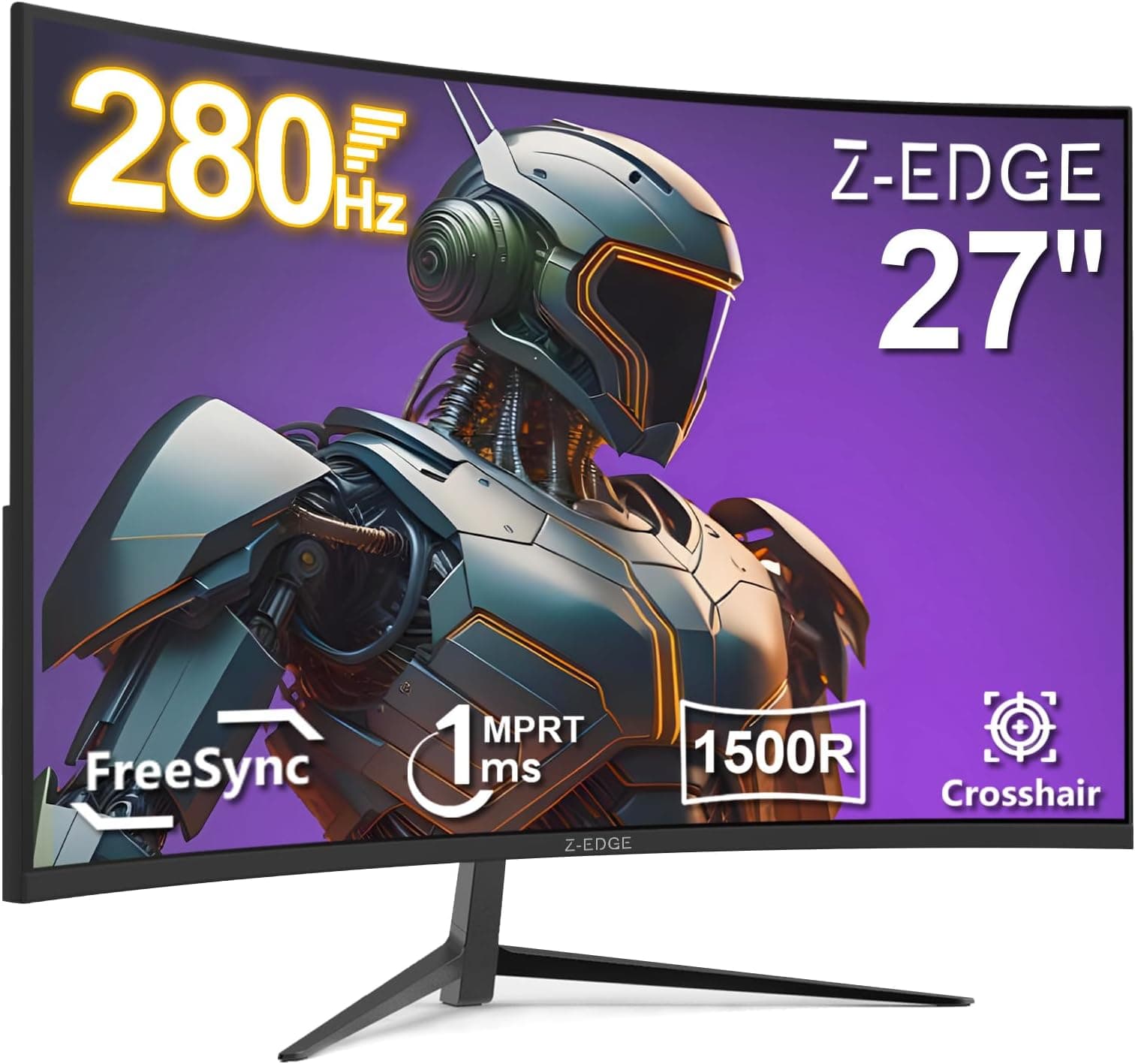
There's a particular kind of monitor buyer who cares about exactly one thing above all else: how fast is it? Not "fast enough" fast. Actually fast. The kind of fast where your crosshair is where you put it, where the frame you rendered is the frame you see, where motion blur isn't something you just accept as part of PC gaming. If that's you, the KTC 27 inch 280Hz gaming monitor is trying very hard to get your attention. And honestly? It mostly deserves it, with some caveats before you hand over your money.
The verdict up front: this is a genuinely capable high-refresh VA panel at an upper mid-range price, and it punches reasonably hard for competitive FPS gaming. But you need to know what "Fast VA" actually means in practice, because the 1ms GTG claim on the box and the real-world motion behaviour of a VA panel are two different conversations. The 280Hz headline is real and useful. The HDR is checkbox stuff. The 126% sRGB coverage is legitimately good for a budget-adjacent gaming panel. Over 1,872 owner reviews averaging 4.4 stars suggests most buyers are happy, and that's not a small sample size to dismiss. But there are smarter buys if you need something different, and I'll tell you what those are as we go.
KTC isn't a household name in the UK the way AOC or BenQ are, but they've been quietly producing decent-value panels for a few years now. This particular model sits in a genuinely interesting spot: it's targeting the competitive gaming crowd who want refresh rates that'd make a 144Hz owner weep with envy, but who can't or won't stretch to an OLED. So. Is it worth it?
Core Specifications
The headline numbers are 27 inches, 1080p (1920x1080), and 280Hz. Panel type is VA, specifically what KTC calls "Fast VA", which is their way of saying the pixel response has been tuned for higher refresh rates compared to traditional VA panels. The response time is quoted as 1ms GTG, adaptive sync is supported (FreeSync compatible, and Nvidia G-Sync Compatible in practice according to owner reports), and the contrast ratio is rated at 4000:1 native, which is the one area where VA genuinely beats IPS outright. Brightness is rated at 350 nits typical, which is reasonable for SDR gaming but nothing spectacular.
Connectivity is handled by one DisplayPort 1.4 and two HDMI 2.0 ports. That DisplayPort 1.4 connection is what you'll need to actually hit 280Hz, since HDMI 2.0's bandwidth caps out well below that at 1080p with full colour. The stand offers tilt adjustment only, which is the main ergonomic limitation here. VESA 100x100mm mounting is supported, so if the stand bothers you, a third-party arm sorts it out. HDR10 is listed, though I'll deal with what that actually means in the HDR section (spoiler: temper expectations).
The 27-inch size at 1080p gives you a pixel density of around 81 PPI, which is noticeably lower than a 27-inch 1440p panel at around 109 PPI. That's a real trade-off and one you need to make peace with before buying. Competitive players often prefer it because individual pixels being slightly larger can, in some edge cases, make targets slightly easier to spot at distance, and the GPU load is significantly lower, meaning higher sustained frame rates. But for anyone doing anything other than gaming on this screen, 1080p at 27 inches can look a bit soft up close.
| Specification | Detail |
|---|---|
| Screen Size | 27 inches |
| Resolution | 1920 x 1080 (Full HD) |
| Panel Type | Fast VA |
| Refresh Rate | 280Hz (max) |
| Response Time | 1ms GTG (manufacturer rated) |
| Adaptive Sync | AMD FreeSync / G-Sync Compatible |
| Brightness | 350 nits typical |
| Contrast Ratio | 4000:1 native |
| Colour Coverage | 126% sRGB |
| HDR | HDR10 |
| Ports | 1x DisplayPort 1.4, 2x HDMI 2.0 |
| Stand Adjustment | Tilt only |
| VESA Mount | 100 x 100mm |
| Price | £306.94 |

Panel Technology
VA panels have always occupied a strange middle ground in the monitor world. They're not as fast as TN, not as colour-accurate out of the box as IPS, but they have something neither of those can touch: native contrast. A 4000:1 contrast ratio on this KTC is not a marketing exaggeration in the way that "1ms" often is. VA panels genuinely deliver black levels that make IPS glow look embarrassing. If you play games in a darker room, or you watch films on your monitor, that 4000:1 figure translates to visibly deeper blacks and a more cinematic image. IPS panels typically land around 1000:1 to 1200:1 native contrast, which means VA is roughly three to four times better at producing true black.
The "Fast VA" designation matters here. Traditional VA panels had a well-documented problem with dark-level pixel transitions being sluggish, causing what's known as black smearing or dark ghosting, where objects moving against dark backgrounds leave a visible trail. Fast VA technology addresses this through improved panel response and overdrive tuning. It's not a complete fix, and VA will never quite match the best IPS panels for dark-scene motion clarity, but modern Fast VA is considerably better than the VA panels of five years ago. Published measurements from independent display reviewers on comparable Fast VA panels at this refresh rate suggest dark-level response times in the 3ms to 5ms range at optimal overdrive settings, rather than the 1ms GTG figure which represents ideal grey-to-grey transitions.
Viewing angles are the other VA trade-off. VA panels offer better viewing angles than TN but narrower than IPS. The spec sheet doesn't list viewing angle numbers, which is typical for budget-adjacent VA panels. From owner reviews, the consensus is that the image looks great dead-on and starts to shift noticeably if you're sitting at more than about 30 degrees off-axis. For a single-user gaming setup where you're sitting directly in front of the screen, this is a non-issue. If you've got people watching alongside you, or if you use the monitor in a shared space, IPS would serve better.
Display Quality
At 27 inches and 1080p, pixel density is 81.59 PPI. That's noticeably lower than what you'd get from a 24-inch 1080p panel (which sits around 91 PPI) or a 27-inch 1440p panel. Whether that bothers you depends entirely on your use case and how close you sit. Competitive FPS players running at 280Hz are typically sitting closer to their screens and prioritising frame rate over image sharpness, so this is a deliberate trade-off rather than a flaw. But if you're doing any creative work, web browsing, or document editing on this monitor, individual pixels will be visible at normal viewing distances and text won't look as crisp as it would on a higher-density panel.
The anti-glare coating is a matte finish, which is standard for gaming monitors and sensible for most room lighting situations. Owner reviews don't flag any unusual graininess from the coating, which is a good sign. Some cheaper matte coatings introduce a visible texture that makes the image look slightly fuzzy, but the feedback here suggests the coating is clean. Brightness uniformity at 350 nits is hard to assess without published measurements for this specific unit, but VA panels can sometimes show brightness variation across the panel, particularly at the edges. Owner reviews don't flag this as a significant issue, which suggests it's within normal tolerances.
The 126% sRGB coverage figure is worth paying attention to. This means the panel covers a wider colour gamut than the standard sRGB space, which is actually the norm for modern VA panels. In practice, this means colours can appear slightly oversaturated in sRGB content unless you use the monitor's colour management settings or your operating system's colour profile to bring it back into line. For gaming, slightly punchy colours are often preferred. For colour-sensitive work, you'd want to calibrate or use an sRGB-limited mode if the monitor offers one. The KTC's OSD options for colour modes aren't extensively documented in the listing, but owner reviews suggest the default image is vivid rather than neutral.
Refresh Rate and Adaptive Sync
280Hz is the headline and it's a genuinely impressive number. To put it in context: 144Hz was considered the gold standard for competitive gaming just a few years ago, and 240Hz was the domain of esports professionals with serious hardware budgets. 280Hz puts this monitor in the top tier of refresh rates currently available, sitting alongside 240Hz and 360Hz panels as the fastest category of gaming displays you can buy. The practical difference between 240Hz and 280Hz is smaller than the jump from 144Hz to 240Hz, but it's real, and if you're consistently hitting high frame rates in titles like CS2, Valorant, or Apex Legends, you'll see the benefit in reduced perceived motion blur.
The adaptive sync implementation covers both AMD FreeSync and, according to owner reports, functions as G-Sync Compatible with Nvidia GPUs. AMD FreeSync is the manufacturer's stated spec. G-Sync Compatible status means Nvidia has verified (or owners have found) that the monitor works with G-Sync without significant issues, though it won't carry the full G-Sync certification. The VRR range isn't explicitly detailed in the listing, which is a minor frustration. For Low Framerate Compensation (LFC) to work properly, the minimum VRR range needs to be less than half the maximum, so ideally you'd want a minimum of 48Hz or lower for a 280Hz panel. Owner reviews don't flag tearing or sync issues at lower frame rates, which suggests the VRR range is sensible.
Running at 280Hz requires DisplayPort 1.4. The two HDMI 2.0 ports will cap you at lower refresh rates depending on the connected device. HDMI 2.0 has a bandwidth ceiling of 18 Gbps, which limits 1080p to around 240Hz at 8-bit colour, so you're leaving 40Hz on the table if you use HDMI. PC gamers will want to use DisplayPort. Console players connecting via HDMI are capped at 120Hz on current-generation consoles anyway, so the HDMI 2.0 ports are fine for that use case. The DisplayPort 1.4 standard supports up to 32.4 Gbps, which is more than enough headroom for 1080p at 280Hz with HDR.
Response Time and Motion
The 1ms GTG claim needs unpacking, because it's doing a lot of heavy lifting on the box and it deserves honest scrutiny. GTG stands for grey-to-grey, and it measures how fast a pixel can transition between two mid-range grey values. It's the most optimistic possible measurement of pixel response, taken under ideal conditions with maximum overdrive applied. In real gaming, pixels transition between all kinds of colours and luminance levels, including dark-to-dark transitions which are historically where VA panels struggle. The 1ms GTG figure is best understood as a marketing ceiling rather than a typical operating figure.
What does this mean practically? On comparable Fast VA panels at 240Hz to 280Hz, published measurements from display-focused reviewers typically find that average grey-to-grey response times land somewhere between 3ms and 6ms across the full range of transitions, with dark-level transitions sometimes running higher. That's still fast enough for 280Hz gaming, where each frame lasts roughly 3.57ms, but it means some frames will have residual pixel transitions carrying over. The result is a small amount of dark ghosting in high-contrast scenes, particularly where bright objects move against dark backgrounds. Owner reviews on this monitor don't flag severe ghosting, which suggests KTC's overdrive tuning is reasonably well calibrated, but it's this is a VA characteristic rather than something firmware can fully eliminate.
For the target audience, competitive FPS players, this is an acceptable trade-off. The games these players run (CS2, Valorant, Apex, Overwatch 2) tend to have relatively bright environments and high-contrast visuals where dark ghosting is less apparent. The 280Hz refresh rate and the resulting reduction in motion blur from shorter frame display times are more impactful for competitive play than the residual VA ghosting. MPRT (Moving Picture Response Time) isn't quoted in the spec sheet, which is common for monitors without backlight strobing. If KTC has included a backlight strobing mode (sometimes called ELMB, 1ms MPRT, or similar), that would help motion clarity further, but the listing doesn't confirm this feature.
Color Accuracy and Gamut
The 126% sRGB coverage figure tells you the panel's colour gamut extends beyond the standard sRGB space. To give that a DCI-P3 equivalent, 126% sRGB maps to roughly 89% to 92% DCI-P3 coverage, which is a reasonable estimate based on typical VA panel gamut shapes. That puts it in decent territory for a gaming monitor, better than most budget IPS panels and comparable to mid-range options. It won't satisfy a professional photographer who needs Adobe RGB coverage or precise DCI-P3 for video work, but for gaming and general use, it's genuinely good.
Factory calibration and Delta-E figures aren't published for this monitor, which is standard practice at this price point. Most gaming monitors in this bracket ship with a Delta-E average somewhere between 2 and 4 out of the box, where Delta-E below 2 is considered accurate enough that most people can't see the difference, and below 1 is considered reference-grade. The vivid default image that owner reviews describe suggests the factory calibration prioritises saturation over accuracy, which is typical for gaming-oriented panels. If colour accuracy matters to you, a hardware calibrator would let you bring Delta-E down significantly, but that's an additional cost and effort that most gaming monitor buyers won't bother with.
The colour modes in the OSD (on-screen display) are worth exploring when you set the monitor up. Most VA gaming panels at this level include preset modes like sRGB, Standard, Game, and Movie. The sRGB mode, if present and properly implemented, should constrain the wider gamut to the sRGB colour space, giving you more accurate colours for web browsing and productivity. Owner reviews don't specifically call out the colour mode options in detail, but the general feedback on image quality is positive, with several reviewers commenting on the vibrant, punchy colours as a highlight. For pure gaming use, the default vivid tuning is likely to look great.

HDR Performance
HDR10 support is listed, and I want to be direct with you: this is checkbox HDR. At 350 nits peak brightness with no mention of local dimming, the KTC's HDR mode will technically accept an HDR10 signal and display it, but the result won't look like what you've seen on a proper HDR display. Real HDR requires peak brightness of at least 600 nits to start looking meaningfully different from SDR, and ideally 1000 nits or more for the highlights that make HDR genuinely impressive. VESA's DisplayHDR certification tiers start at DisplayHDR 400, which requires 400 nits peak brightness. This monitor's 350 nits doesn't even reach that entry-level certification.
Without local dimming, the monitor can't selectively darken parts of the image while brightening others, which is the mechanism that makes HDR look dramatic on high-end displays. Every backlight zone (in this case, the entire panel as one zone) has to find a compromise brightness level for the whole image. Enable HDR mode on a monitor like this and you'll often get a slightly washed-out image that looks worse than a well-tuned SDR image. This isn't unique to KTC. The vast majority of gaming monitors under a certain price point have the same issue. It's an industry-wide problem with how HDR certification and marketing work.
The practical advice: leave HDR disabled in Windows and in game settings, and let the monitor do what it does well in SDR. The 4000:1 native contrast ratio of the VA panel will give you better-looking dark scenes in SDR than most IPS monitors can achieve even with HDR enabled. That's not a consolation prize. That's genuinely the better viewing experience on this hardware. Several owner reviews confirm this, with users noting the image looks excellent in standard mode and recommending against enabling the HDR setting.
Contrast and Brightness
The 4000:1 native contrast ratio is where this monitor earns serious credit. To understand why this matters, consider that a typical IPS panel delivers around 1000:1 to 1200:1 native contrast. That means the KTC's VA panel produces blacks that are roughly three to four times darker relative to white. In a darkened gaming room, this translates to shadow detail that actually looks like shadow rather than dark grey, and an overall image depth that IPS simply can't match without sophisticated local dimming technology. For horror games, space games, or anything with dramatic lighting, this is a meaningful advantage.
The 350 nits typical brightness is adequate for most indoor gaming environments. It's not going to fight sunlight in a bright conservatory, and it's not going to deliver the eye-searing highlights of a high-end mini-LED panel, but for a room with controlled lighting, 350 nits is comfortable for extended sessions. Owner reviews don't flag brightness as a limitation for typical use, which suggests the 350 nits figure is honest rather than a peak-burst number that drops in sustained use. Some monitors quote peak brightness figures that are only achievable for a few seconds before thermal throttling kicks in. The fact that KTC quotes this as a typical figure rather than a peak is actually a more honest approach.
The combination of 4000:1 contrast and 350 nits brightness means the monitor's black level sits at around 0.0875 nits (350 divided by 4000), which is genuinely dark. Compare that to a 350-nit IPS panel at 1000:1 contrast, where the black level would be 0.35 nits. That's four times brighter blacks on the IPS, which is why dark scenes look more washed out on IPS panels. In a dark room, the VA's contrast advantage is visible and significant. In a bright room, both panels' blacks look grey because ambient light reflecting off the screen overwhelms the difference.
Ergonomics and Stand
The stand is the weakest part of the package, and it's worth being upfront about this. Tilt-only adjustment means you can angle the screen slightly towards or away from you, but there's no height adjustment, no swivel, and no pivot for portrait mode. For a monitor at this price point, that's a bit disappointing. Most competing panels in this bracket offer at least height adjustment, and many offer full ergonomic adjustments. The fixed height means you'll need to shim the monitor up on a book or box if the default height doesn't suit your setup, or invest in a VESA arm.
The VESA 100x100mm compatibility is the saving grace here. A decent monitor arm costs between £20 and £306.94 and transforms the ergonomic situation entirely, giving you full height, tilt, swivel, and reach adjustment. If you're buying this monitor, I'd budget for a VESA arm alongside it. Owner reviews mention the stand being stable enough (no wobble issues flagged), and the build quality of the chassis itself is described positively, with a few reviewers noting it feels more premium than the price suggests. The bezels are slim on three sides, which is standard for modern gaming monitors and looks clean in a multi-monitor setup.
The physical footprint of the stand is relatively compact, which is useful if desk space is limited. The power supply is internal (no external brick to deal with), which several owner reviews specifically mention as a positive. Cable management is basic, as it is on most monitors at this level, but the port placement at the rear is described as accessible. The OSD controls are physical buttons rather than a joystick, which some people find fiddlier to navigate, but owner reviews don't flag this as a significant frustration. Overall, the build quality seems solid for the price, even if the stand's limited adjustability is a genuine shortcoming.
Connectivity and Ports
The port selection is straightforward and functional for gaming, if a little sparse for anyone wanting to use this as a productivity hub. You get one DisplayPort 1.4 and two HDMI 2.0 ports. That's it. No USB hub, no USB-C, no audio passthrough beyond a headphone jack (which the listing implies is present but doesn't prominently feature). For a pure gaming monitor connected to a single PC, this is fine. For anyone wanting to connect a PC and a console simultaneously and switch between them, the two HDMI ports plus one DisplayPort gives you three source inputs, which is actually quite useful.
- 1x DisplayPort 1.4 (required for 280Hz at 1080p)
- 2x HDMI 2.0 (suitable for consoles at up to 120Hz, PC at up to approximately 240Hz)
- Headphone jack (3.5mm audio output)
- VESA 100x100mm (for third-party monitor arms)
The absence of USB-C is notable at this price point. Many competing monitors now include USB-C with DisplayPort Alt Mode, which is useful for laptop users who want a single-cable connection. If you're primarily connecting a desktop PC, USB-C isn't a necessity, but it's a feature that's becoming increasingly common and its absence does limit the monitor's versatility. Similarly, no USB hub means you can't route USB devices through the monitor, which is a convenience feature some users rely on for keyboard, mouse, and headset connections.
The HDMI 2.0 specification supports 4K at 60Hz or 1080p at up to 240Hz with 8-bit colour, so you're leaving a small amount of refresh rate on the table if you use HDMI for PC gaming. The DisplayPort 1.4 connection handles 280Hz at 1080p comfortably with bandwidth to spare. For PS5 or Xbox Series X users, HDMI 2.0 delivers 1080p at 120Hz, which is the maximum those consoles support at 1080p anyway. The port selection makes sense for the target audience of PC and console gamers, even if it won't satisfy power users wanting a more feature-rich connectivity hub.
How It Compares
The KTC's most direct competition at this price tier comes from two directions: established brands offering 240Hz IPS panels, and the growing number of budget-adjacent 1440p monitors that sacrifice refresh rate for resolution. Understanding where the KTC sits requires being honest about what you're giving up and what you're gaining versus each alternative.
Take the AOC 24G2SP or similar 24-inch 165Hz IPS panels, which sit well below this price point. They offer better pixel density (91 PPI at 24 inches), faster IPS pixel response for dark scenes, and better viewing angles, but cap out at 165Hz and lack the VA contrast advantage. If 165Hz is enough for your games, those panels represent better value. On the other side, 27-inch 1440p 165Hz IPS monitors from brands like LG, MSI, or AOC land in a similar price bracket and offer significantly better image quality for productivity and content consumption, trading the KTC's extreme refresh rate for resolution that makes 27 inches actually look sharp. The KTC's 280Hz is its unique selling point, and it only makes sense if you genuinely need that refresh rate.
The other comparison worth making is against the KTC's own VA panel competitors at 240Hz. Several Chinese monitor brands (Pixio, Dough/Eve, and KTC's own range) offer 240Hz VA panels at lower price points. The jump from 240Hz to 280Hz is real but modest, and if you can find a well-reviewed 240Hz VA panel for meaningfully less money, the 40Hz difference may not justify the premium. That said, at the current market price, the KTC 280Hz isn't dramatically more expensive than good 240Hz alternatives, which makes the value proposition reasonable.
| Feature | KTC 27 inch 280Hz | 27 inch 1440p 165Hz IPS (e.g. LG 27GP850) | 24 inch 1080p 165Hz IPS (e.g. AOC 24G2SP) |
|---|---|---|---|
| Panel Type | Fast VA | IPS / Nano IPS | IPS |
| Resolution | 1920x1080 | 2560x1440 | 1920x1080 |
| Refresh Rate | 280Hz | 165Hz (some up to 180Hz) | 165Hz |
| Contrast Ratio | 4000:1 | 1000:1 to 1200:1 | 1000:1 |
| Colour Coverage | 126% sRGB | 98% DCI-P3 (Nano IPS) | 102% sRGB |
| Pixel Density | 81 PPI | 109 PPI | 91 PPI |
| Stand Adjustability | Tilt only | Full ergonomic | Tilt, height |
| HDR | HDR10 (checkbox) | HDR400 / HDR600 | None / HDR10 |
| Price | £306.94 | Upper mid-range | Budget to mid-range |

Final Verdict
The KTC 27 inch 280Hz gaming monitor is a focused product that does its main job well. If you play competitive FPS games, you have a GPU capable of pushing frame rates that actually benefit from 280Hz, and you prioritise motion clarity and response over pixel density or image versatility, this monitor makes a strong case for itself. The 4000:1 contrast ratio is the hidden star of the spec sheet, delivering black levels that make IPS panels look washed out in comparison. The 280Hz is real, the adaptive sync works, and over 1,872 owner reviews averaging 4.4 stars tells you that people who've bought this are, by and large, happy with it.
The compromises are real too, and they're worth naming clearly. The 1080p resolution at 27 inches is a genuine sacrifice in image sharpness that affects everything outside of gaming. The tilt-only stand is below what you'd expect at this price point. The HDR is essentially decorative. Dark-scene motion on VA panels will never be quite as clean as the best IPS options, regardless of what the 1ms GTG claim implies. And the lack of USB-C or a USB hub limits the monitor's usefulness as a productivity tool. None of these are dealbreakers for the target buyer, but they're dealbreakers for the wrong buyer.
Who should buy this? Competitive FPS players with mid-range to high-end Nvidia or AMD GPUs who are regularly hitting 200+ fps in their games and want to see every frame. People upgrading from a 144Hz panel who want to feel the difference a high refresh rate makes. Gamers who play in darker rooms and will appreciate the VA contrast advantage. Anyone who values raw gaming performance over all-round versatility.
Who should skip it? Anyone who uses their monitor for creative work, colour-sensitive tasks, or document editing will find 1080p at 27 inches too soft and the colour accuracy too unpredictable without calibration. If you're a casual gamer who doesn't consistently hit 200+ fps, a 27-inch 1440p 165Hz IPS panel at a similar price gives you a noticeably better image for everything except the most competitive gaming scenarios. And if your budget stretches further, the OLED gaming monitor market has become increasingly competitive. Panels like the LG 27GS95QE or the Asus ROG Swift OLED deliver contrast that makes even a 4000:1 VA look modest, with response times that are genuinely instantaneous. They cost significantly more, but if you can manage it, they're in a different league.
If you genuinely don't need 280Hz and just want a good gaming monitor, look at 27-inch 1440p 165Hz IPS options in the mid-range bracket. They're sharper, more versatile, and often ergonomically superior. But if 280Hz is specifically what you came for, the KTC delivers it honestly, at a price that doesn't require selling anything important. It's a proper gaming panel for people who know exactly what they want.
What works. What doesn’t.
6 + 6What we liked6 reasons
- Genuine 280Hz refresh rate that benefits competitive FPS players pushing high frame rates
- Outstanding 4000:1 native contrast ratio produces visibly deeper blacks than IPS panels, particularly in darker rooms
- 126% sRGB colour coverage delivers punchy, vibrant colours well suited to gaming
- Adaptive sync works with both AMD FreeSync and Nvidia G-Sync Compatible GPUs
- VESA 100x100mm support means a monitor arm fully resolves the ergonomic limitations
- Internal power supply avoids the annoyance of an external brick
Where it falls6 reasons
- 1080p resolution at 27 inches gives only 81 PPI, making text and fine detail noticeably soft outside of gaming
- Tilt-only stand is below what competitors at this price typically offer
- HDR10 support is effectively decorative at 350 nits with no local dimming
- Dark-scene motion retains some VA ghosting that cannot be fully resolved by overdrive tuning
- No USB-C, no USB hub, and no meaningful productivity features beyond basic display connectivity
- Factory calibration prioritises saturation over accuracy, requiring calibration for colour-sensitive work
Full specifications
11 attributes| Panel type | VA |
|---|---|
| Aspect ratio | 16:9 |
| Curvature | flat |
| HDR | HDR10 |
| Launch year | 2022 |
| Ports | 2x HDMI 2.0, 1x DisplayPort 1.4, 1x audio out |
| Refresh rate HZ | 280 |
| Resolution | 1920x1080 |
| Response time MS | 1 |
| Screen size IN | 27 |
| Vesa compatible | true |
If this isn’t right for you
2 options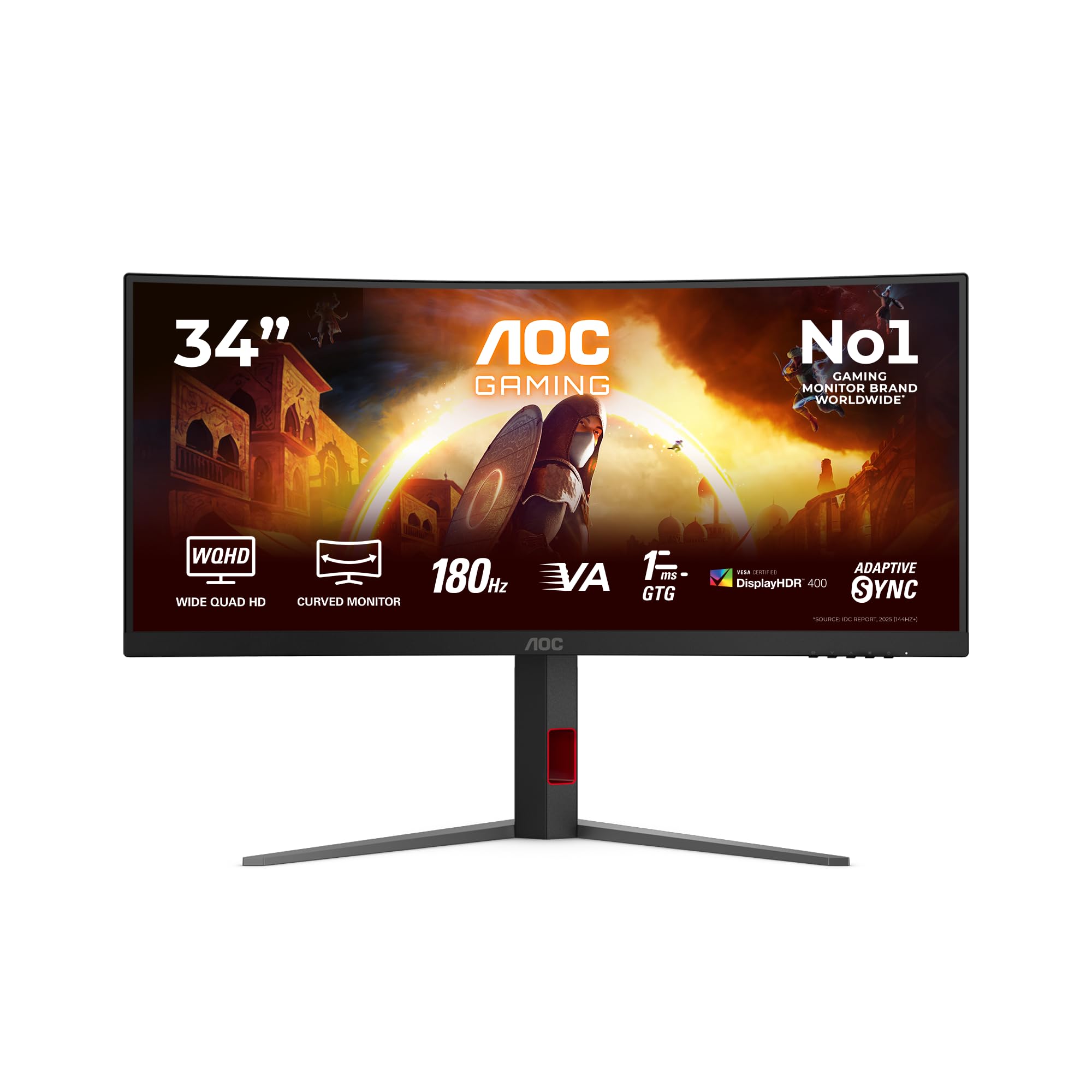 8.0 / 10
AOC CU34G4CA 34 inch UW-QHD Monitor Curved, 180Hz, Fast VA Panel, 1ms GtG, Adaptive Sync, HDR400, FreeSync, Height Adjustment, (3440x1440 HDMI 2x 2.0 DP 1x 1.4 USB Hub) Black
£288.97 · AOC
 7.5 / 10
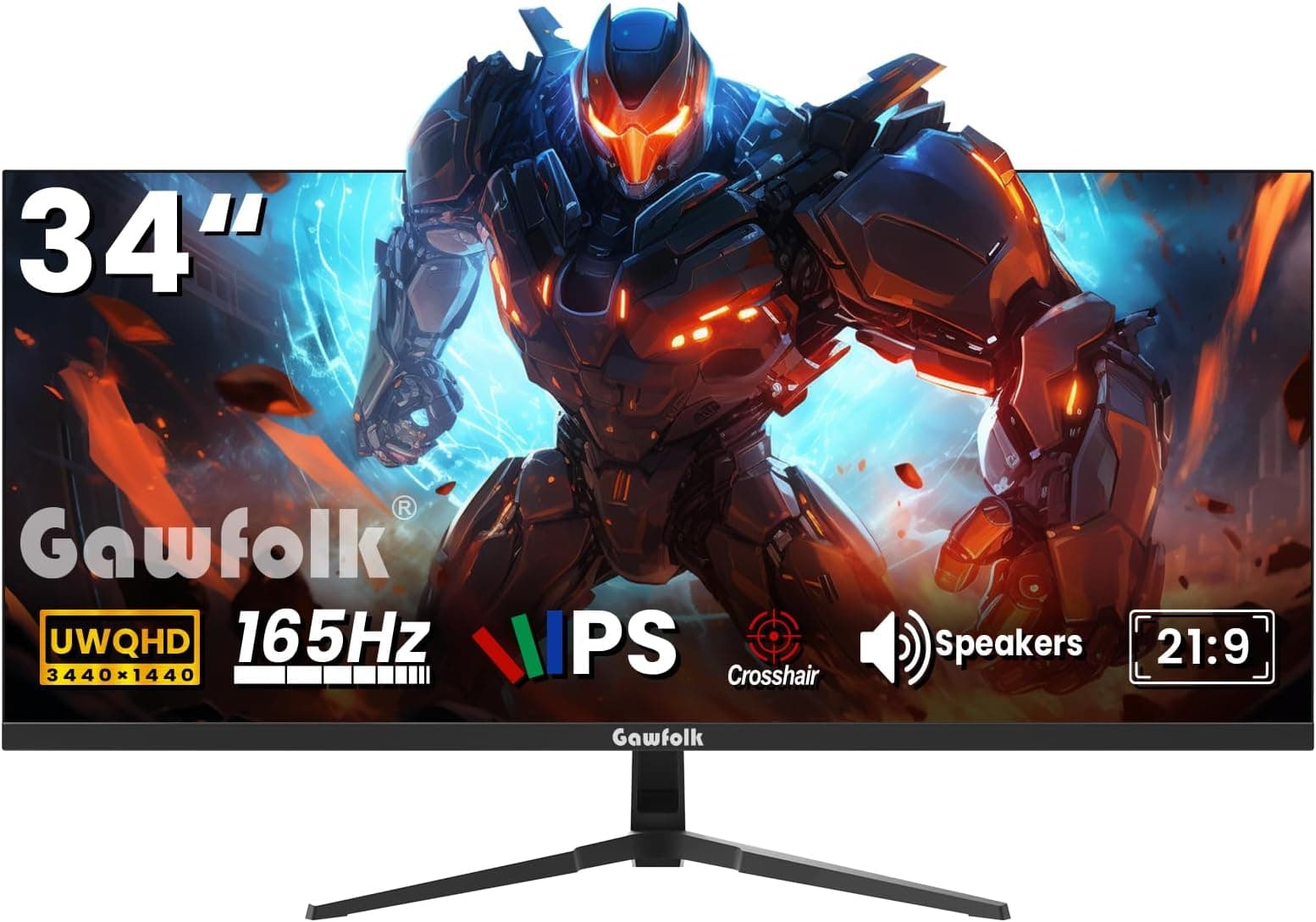
Gawfolk 34 Inch UltraWide Gaming Monitor with Speakers 165hz WQHD 3440x1440p | 21:9 IPS Screen Display FreeSync & G-Sync Compatible,PIP/PBP, Dual HDMI 2.0 & DP 1.4, VESA, Gameplay Assist Crosshair
£199.99 · Gawfolk
Frequently asked
7 questions01Does the KTC 27 inch 280Hz monitor work with Nvidia graphics cards?+
Yes. While the monitor is officially certified for AMD FreeSync, owner reports confirm it functions as G-Sync Compatible with Nvidia GPUs. This means adaptive sync works without significant issues, though it does not carry full G-Sync certification. You will need a DisplayPort 1.4 connection to reach 280Hz from an Nvidia card.
02Why does the monitor need DisplayPort rather than HDMI to run at 280Hz?+
HDMI 2.0, which this monitor uses on its two HDMI ports, has a bandwidth ceiling of 18 Gbps. At 1080p resolution, that limits the maximum refresh rate to approximately 240Hz with 8-bit colour. DisplayPort 1.4 supports up to 32.4 Gbps, providing ample bandwidth for 1080p at 280Hz. To get the full 280Hz, connect via the DisplayPort 1.4 port from your PC.
03Is the HDR mode worth enabling on this monitor?+
No, not in practice. The monitor's 350 nits typical brightness falls below even the entry-level DisplayHDR 400 certification, and there is no local dimming to selectively brighten highlights while darkening shadows. Enabling HDR typically produces a slightly washed-out image compared to a well-tuned SDR picture. The advice from owner reviews and the panel's specifications is consistent: leave HDR disabled and let the 4000:1 native contrast do its work in standard mode.
04How bad is the dark ghosting on this Fast VA panel?+
Modern Fast VA panels are considerably better than the VA technology of five or six years ago, and owner reviews on this monitor do not flag severe ghosting as a problem. However, VA panels inherently have slower dark-to-dark pixel transitions compared to IPS. Independent measurements on comparable Fast VA panels suggest average response times of around 3ms to 6ms across the full transition range, with some dark-level transitions running higher. In bright, fast-paced competitive games such as Valorant or CS2, this is largely unnoticeable. In darker games with objects moving against near-black backgrounds, a small trail may occasionally be visible.
05Can I use this monitor with a PS5 or Xbox Series X?+
Yes, via the HDMI 2.0 ports. Current-generation consoles output a maximum of 1080p at 120Hz over HDMI, which is well within what HDMI 2.0 can handle. You will not reach 280Hz from a console, but 120Hz at 1080p is the console maximum regardless of the monitor used. The monitor's resolution and contrast ratio make it a reasonable console gaming display, though competitive console players may prefer a 24-inch 1080p panel for higher pixel density.
06Is the stand good enough or do I need a monitor arm?+
The stand provides tilt adjustment only, with no height, swivel, or pivot adjustment. For most users, the default height may not be ergonomically ideal. If desk space and budget allow, a VESA 100x100mm monitor arm costing between £20 and £50 is strongly recommended. It resolves the ergonomic limitations entirely and frees up desk space. The stand itself is reportedly stable with no wobble issues, so it functions adequately if a fixed height happens to suit your setup.
07How does this monitor compare to a 27-inch 1440p 165Hz IPS panel?+
The KTC offers a higher refresh rate (280Hz versus 165Hz), significantly better native contrast (4000:1 versus approximately 1000:1 to 1200:1), and lower GPU demands due to the 1080p resolution. The 1440p IPS alternative offers sharper image quality (109 PPI versus 81 PPI), better viewing angles, cleaner dark-scene motion, and typically a more ergonomic stand. For pure competitive gaming with a high-end GPU, the KTC has an edge. For a more versatile monitor that also handles productivity and content consumption well, the 1440p IPS option is the stronger choice.