Good RAM is invisible. You install it, enable XMP, and never think about it again. Bad RAM is the opposite: random crashes, failed boots, hours of forum-diving, and the creeping suspicion that something is fundamentally wrong with your build when actually it's just a timing conflict or a dodgy profile. That's the whole game with memory, and it's why picking a kit with a track record matters more than chasing the highest MHz on the box.
The Corsair Vengeance LPX DDR4 32GB kit (2x16GB, 3200MHz, CL16-20-20-38, 1.35V) sits in a peculiar spot in 2026. DDR4 is the old guard, but it's still the right choice for a huge number of builds on LGA1700, AM4, and even some AM5 boards that support it. This specific kit, the CMK32GX4M2E3200C16, has nearly 20,000 owner reviews on Amazon averaging 4.7 stars. That's not a fluke. So the question isn't really "is this RAM any good" but rather "is this the right RAM for your build right now, and is it worth what they're asking for it." Those are different questions, and this review answers both.
The short answer: for most DDR4 builds, this is a solid, low-drama 32GB kit at a speed that actually makes sense. The longer answer is below.
Core Specifications
The CMK32GX4M2E3200C16 is a dual-channel DDR4 kit: two 16GB sticks running at a rated 3200MHz with primary timings of CL16-20-20-38 and a voltage of 1.35V. That voltage is slightly above the JEDEC standard of 1.2V for DDR4, which is normal for a kit with an XMP profile. The form factor is standard DIMM (288-pin), so it fits any desktop DDR4 motherboard. It carries both Intel XMP 2.0 and AMD EXPO profiles, meaning it should auto-configure at rated speed on both platforms without manual fiddling, assuming your board supports it.
The low-profile heatspreader is a genuine design consideration, not just a marketing line. Corsair built the Vengeance LPX specifically to clear large tower coolers, and the reduced module height is useful if you're running something like a Noctua NH-D15 or a big Thermalright tower that overhangs the DIMM slots. The heatspreader is pure aluminium, which handles heat dissipation adequately for a kit running at 1.35V. Corsair also mentions that each IC is individually screened for performance potential, which is standard language for a binned kit, though the specific ICs used aren't publicly disclosed for this model.
One thing to flag before the specs table: Corsair's own product page notes that reaching the rated 3200MHz requires enabling XMP or EXPO in your BIOS. Without that step, the kit defaults to JEDEC speeds (likely 2133MHz or 2400MHz), which is slower and not what you're paying for. That's true of virtually every overclocked DDR4 kit, but it catches people out more often than it should.
| Specification | Detail |
|---|---|
| Capacity | 32GB (2x16GB) |
| DDR Generation | DDR4 |
| Rated Speed | 3200MHz |
| Primary Timings | CL16-20-20-38 |
| Voltage | 1.35V |
| Profile | Intel XMP 2.0 / AMD EXPO |
| Form Factor | 288-pin DIMM |
| Heatspreader | Low-profile aluminium |
| Colour | Black |
| Model Number | CMK32GX4M2E3200C16 |
| Current Price | £239.99 |
| Owner Rating | ★★★★½ (4.7) (19,983 reviews) |
CORSAIR VENGEANCE LPX Speed, Timings and Real Latency
The headline number is 3200MHz. That sounds fast, and relative to JEDEC baseline DDR4 it is. But MHz alone tells you almost nothing about actual memory latency. What matters is the combination of speed and CAS latency, and you need to calculate true latency in nanoseconds to make a fair comparison between kits.
The formula is straightforward: true latency (ns) = (CAS latency / memory clock) x 2000. For this kit, that's (16 / 3200) x 2000, which gives you 10 nanoseconds. That's a reasonable result for DDR4. Compare it to a cheaper 3200MHz CL18 kit: (18 / 3200) x 2000 = 11.25ns. So this kit is genuinely quicker in absolute latency terms, not just on paper. Now compare to a 3600MHz CL18 kit: (18 / 3600) x 2000 = 10ns exactly. Same true latency, higher bandwidth. That's the kind of nuance that matters when you're deciding whether to spend more on a faster kit.
The secondary timings of 20-20-38 are reasonable for 3200MHz DDR4. They're not tight enough to get excited about, but they're not embarrassingly loose either. For gaming, the difference between this kit and a 3200MHz CL14 kit (which would be tighter and pricier) is genuinely marginal, typically a few frames per second at most in CPU-limited scenarios. For productivity tasks that actually stress memory bandwidth, like video encoding or running large datasets, tighter timings and higher frequencies make a more noticeable difference. But for the average gamer or general-purpose user, 3200MHz CL16 is a sensible, well-balanced point on the DDR4 curve.
XMP / EXPO Stability and Compatibility
This is where a lot of RAM reviews gloss over the important stuff, so pay attention. The CMK32GX4M2E3200C16 carries both Intel XMP 2.0 and AMD EXPO profiles. On paper, that means you enable the profile in BIOS, save, reboot, and you're running at 3200MHz CL16. In practice, that's exactly what the vast majority of the nearly 20,000 owners report. First-boot XMP activation with no drama is the consistent pattern in the review pool. That's genuinely reassuring for a kit at this price point.
On Intel platforms (LGA1200, LGA1700), XMP 2.0 is well-supported and this kit has been on QVL lists for a wide range of boards from Asus, MSI, Gigabyte and ASRock. On AM4 (Ryzen 3000, 5000 series), 3200MHz is also a sweet spot because it typically runs the Infinity Fabric at 1600MHz in a 1:1 ratio, which is the optimal configuration for Ryzen performance. AMD's memory controller on AM4 is generally happy at 3200MHz, happier than it is at 3600MHz where some chips need a nudge. So this kit is arguably better matched to AM4 than a faster 3600MHz kit would be for buyers who don't want to fiddle.
There are some no-post reports in the owner reviews, as there are with any XMP kit. The pattern there tends to be older boards, budget chipsets, or cases where the BIOS needed updating before XMP would take. A handful of owners report having to manually enter the timings rather than relying on the profile. That's not a Corsair-specific problem; it's a DDR4 XMP problem that affects every brand. The key point is that the failure rate in this review pool is low relative to the volume, and Corsair's compatibility testing for Intel DDR4 boards is well-documented. If you're on a supported board with a current BIOS, the odds of a smooth first boot are high.
Capacity and Use Case
32GB in a 2x16GB configuration is the right amount for a lot of people right now, but it's worth being honest about who actually needs it. If your workload is purely gaming, 16GB is still sufficient for the majority of titles in 2026. Most games don't use more than 12GB of system RAM, and the ones that do are edge cases. That said, 32GB gives you real headroom: you can have Chrome open with 40 tabs, a game running, Discord, Spotify, and a stream in the background without your system starting to swap. For that kind of multitasking, 32GB is genuinely useful rather than just aspirational.
The 2x16GB configuration is the right way to do 32GB. Two sticks means you're running in dual channel, which nearly doubles your memory bandwidth compared to a single stick. It also leaves two DIMM slots free if you ever want to expand to 64GB, though mixing kits always carries some compatibility risk and you'd be better off buying a 4x16GB kit from the start if 64GB is your actual target. For content creators doing photo editing, light video work, or running a few virtual machines, 32GB is a comfortable floor. For heavy video editing at 4K or above, or for serious VM workloads, 64GB starts to make more sense.
One thing the 2x16GB config does well is keeping things simple. Four-stick configurations can be harder to run at rated XMP speeds because memory controllers have to work harder to stabilise four modules. Two sticks at 3200MHz is a well-trodden path that most motherboards handle without complaint. If you're building a clean, no-fuss system and 32GB is your target, this configuration is the sensible choice.
DDR5 vs DDR4 Value
The elephant in the room for any DDR4 kit in 2026 is DDR5. If you're building on Intel's 13th or 14th generation (LGA1700) or AMD's AM4, you're locked into DDR4 and this conversation is moot. But if you're on Intel's 12th gen with a board that supports both, or you're considering AM5, you have a genuine choice to make.
DDR5 offers higher bandwidth and runs at much higher clock speeds, but the early DDR5 kits had genuinely worse latency than DDR4 at equivalent price points because the CAS latencies were so high. That gap has narrowed as DDR5 has matured, and good DDR5 kits now offer both better bandwidth and competitive latency. For gaming, the real-world difference between a solid DDR4 setup and a solid DDR5 setup is still marginal, typically within the margin of run-to-run variance in most benchmarks. For memory-bandwidth-intensive workloads, DDR5 has a clearer advantage.
The honest verdict: if your platform supports DDR4 and you're not planning to upgrade soon, a well-priced 32GB DDR4 kit like this one is a sensible buy. Spending significantly more on DDR5 for a DDR4 platform makes no sense at all. If you're building fresh on AM5 or a DDR5-only Intel board, skip DDR4 entirely and invest in a decent DDR5 kit instead. The Vengeance LPX is not a DDR5 product, and it shouldn't be compared on that basis. It's a DDR4 kit, and within DDR4 it's a good one.
Build Quality and CORSAIR VENGEANCE LPX Heat Spreaders
The Vengeance LPX heatspreader is aluminium, low-profile, and functional. Corsair's product listing emphasises that the module height is specifically designed to fit smaller spaces and clear large air coolers, and owner reports back this up. People building with Noctua, DeepCool, and Thermalright tower coolers consistently report no clearance issues, which is the main practical reason to choose a low-profile design over something taller with RGB fins.
The custom performance PCB that Corsair mentions is a real design element, not just marketing. PCB quality affects signal integrity at higher frequencies and plays a role in how much overclocking headroom a kit has beyond its rated speed. Whether you'll ever push this kit beyond 3200MHz is another question, but the PCB isn't a budget afterthought. The individual IC screening that Corsair mentions means the chips on these sticks have been selected for consistency, which contributes to the stable XMP behaviour most owners report.
Physically, the sticks feel solid. Owner reviews don't flag any issues with the heatspreader coming loose, the PCB flexing, or any of the cosmetic problems that occasionally show up with cheaper kits. The black colourway is clean and neutral, which is worth something if you care about your build looking tidy without committing to a specific aesthetic. Corsair also makes the Vengeance LPX in other colours (white, red, blue), so if your build has a theme, you can match it. That's a minor point, but it's a real differentiator over plain-label sticks.

RGB and Aesthetics
The Vengeance LPX has no RGB. That's the whole section, really, but it's actually worth talking about because it's a genuine design choice with practical consequences. No RGB means no software to install, no iCUE conflicts, no per-stick lighting that refuses to sync with your motherboard's ecosystem. It also means no RGB tax on the price. You're paying for memory, not for lighting.
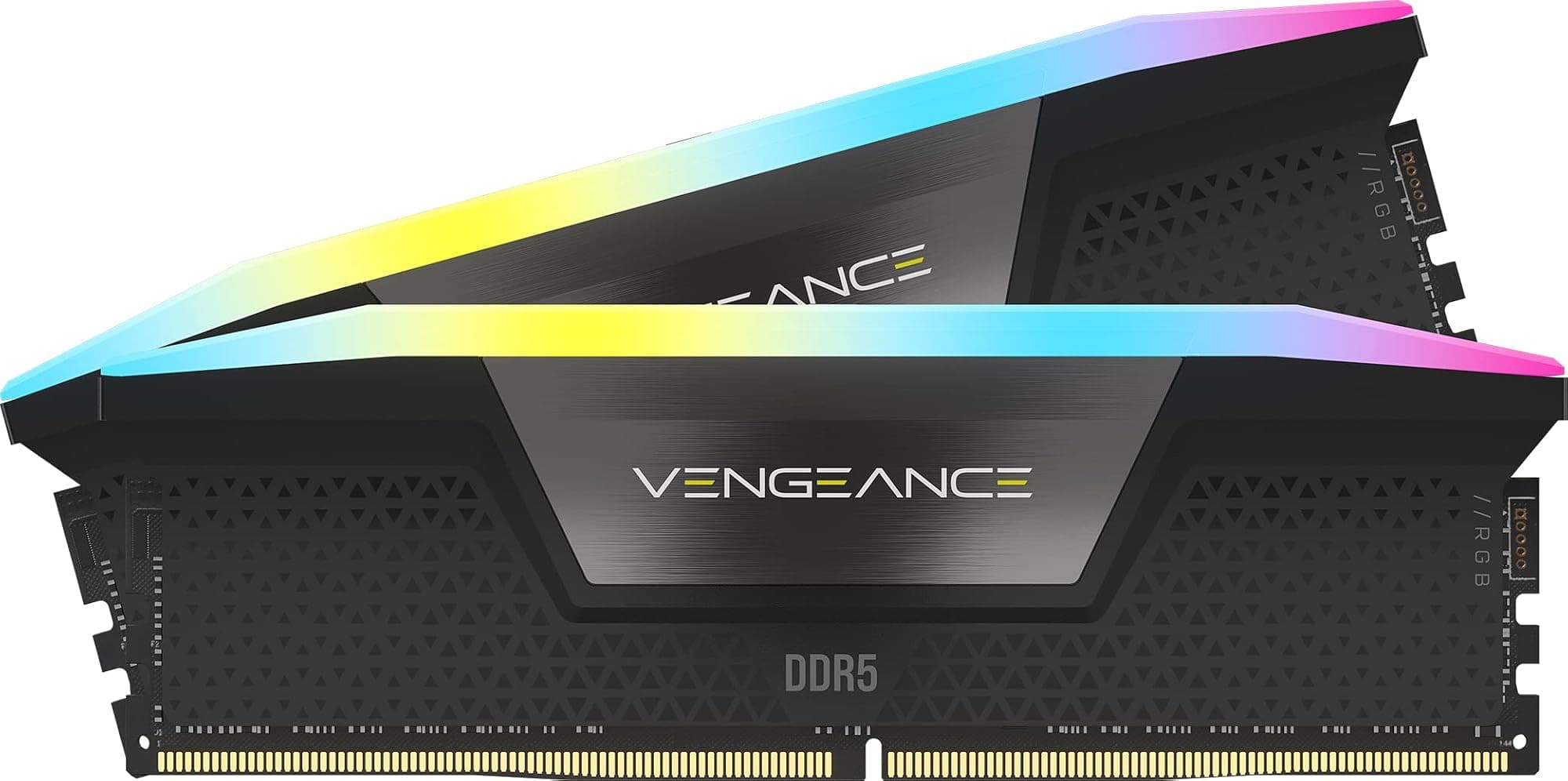
If RGB matters to you, Corsair makes the Vengeance RGB Pro and the Dominator Platinum RGB, both of which add lighting at a premium. But those kits are taller, which brings clearance back into the conversation. The LPX's entire design philosophy is low-profile and no-fuss, and the absence of RGB is part of that. For anyone building in a case with a side panel window who wants the inside to look nice, this kit is fine but unremarkable. The black aluminium heatspreader is tidy, not exciting.
For the majority of buyers, this is a non-issue. Most people aren't staring at their RAM through a glass panel while gaming. If you are, and RGB matters to you, the LPX isn't the kit to buy. But if you want the lowest-profile DDR4 kit that doesn't add unnecessary complexity to your build, the absence of RGB is a feature, not a flaw. You're also not paying the RGB premium, which is the more important point from a value-per-GB perspective.
Reliability and Warranty
Nearly 20,000 owner reviews averaging 4.7 stars is a meaningful data set. At that volume, you'd expect the rating to regress toward the mean if there were systematic reliability problems, and it doesn't. The consistent themes in positive reviews are: installed cleanly, XMP enabled without issues, running stably months later. That's exactly what you want from RAM. It should be boring.
Dead-on-arrival reports exist in the review pool, as they do for any product at this volume. The frequency appears low relative to the total. When owners do report failures, the pattern in reviews suggests Corsair's RMA process is functional, if not always fast. A few owners mention having to push through the process, but outright refusals or stonewalling aren't a common complaint. That's a reasonable baseline for warranty support.
The verified product data doesn't explicitly state the warranty terms for this kit, so we won't invent a number. What we can say is that Corsair is a large, established memory brand with a real support infrastructure, and the owner review pool doesn't flag warranty handling as a significant pain point. For peace of mind on a purchase like this, Amazon's own 30-day returns and A-to-Z guarantee also apply, which covers the early failure window regardless of what the manufacturer offers.
Value and Price Per GB
32GB of DDR4 3200MHz CL16 is not expensive territory in absolute terms, but the current price of this specific kit puts it in a tier that deserves scrutiny. DDR4 prices have been falling as DDR5 adoption grows, and 32GB kits from reputable brands are now available at prices that would have seemed unrealistic a few years ago. The question is whether the Corsair name, the XMP/EXPO dual-profile support, the low-profile design, and the track record justify any premium over a generic or lesser-known alternative.
For most buyers, the answer is yes, but with a caveat. The Vengeance LPX's combination of broad compatibility, stable XMP behaviour, and the sheer volume of owner evidence behind it makes it a lower-risk purchase than a cheaper kit with fewer reviews. In memory, compatibility risk is real money: if a cheaper kit won't post at rated speed on your board, you're losing time and potentially paying return shipping. The Corsair kit's track record reduces that risk. Whether that risk reduction is worth the specific price premium depends on what the alternatives cost at the time you're buying.
If budget is tight, it's whether the 16GB version of this kit (or a similar 2x8GB 3200MHz CL16 kit from Corsair or Kingston) is meaningfully cheaper and whether 16GB actually covers your workload. For a pure gaming build without heavy multitasking, 16GB might be enough and the saving could go toward a better GPU or storage. Don't buy 32GB out of anxiety if 16GB genuinely covers what you do.
Platform Compatibility
The Vengeance LPX CMK32GX4M2E3200C16 is a DDR4 kit. It is physically incompatible with DDR5 motherboards; the notch position on the PCB is different and it will not seat in a DDR5 slot. This sounds obvious but it's worth stating plainly because people do get confused, especially when buying for a new build where they haven't confirmed their board's memory type. Check your motherboard specification before purchasing.
On the DDR4 side, compatibility is broad. Intel platforms from 8th generation onward through LGA1700 (12th, 13th, 14th gen) support DDR4, and Corsair has tested this kit against a wide range of Intel DDR4 motherboards. AMD AM4 (Ryzen 1000 through 5000 series) is also fully supported. Corsair's compatibility testing for Intel DDR4 is particularly thorough, and the product listing specifically calls out optimisation for Intel DDR4 motherboards. AM5 is a DDR5-only platform, so this kit is not compatible there.
If you're mixing this kit with existing RAM, don't. Mixing kits from different manufacturers, different speeds, or even different batches of the same kit is one of the most reliable ways to create instability. Buy the RAM you need in a single kit. If you need 64GB, buy a 2x32GB or 4x16GB kit from the start. And always check your specific motherboard's QVL (qualified vendor list) if you want certainty, though in practice a well-supported kit like this one works on the vast majority of DDR4 boards without needing to be on the list.
How It Compares
The two most relevant alternatives at 32GB DDR4 are the Kingston Fury Beast DDR4 3200MHz CL16 (32GB, 2x16GB) and the G.Skill Ripjaws V DDR4 3200MHz CL16 (32GB, 2x16GB). Both are in the same speed and timing class, both carry XMP profiles, and both have strong compatibility track records. The comparison below covers the key differentiators.
The Kingston Fury Beast is typically the cheapest of the three and has a slightly higher profile than the LPX, though still lower than RGB-equipped alternatives. It's a strong budget pick if clearance isn't a concern. The G.Skill Ripjaws V is arguably the closest competitor to the Vengeance LPX in terms of design philosophy: low-ish profile, no RGB, aluminium heatspreader, solid compatibility. G.Skill's QVL coverage is also extensive. Both are on price at the time of purchase because the DDR4 market moves around a lot and the cheapest option changes regularly.
Where the Vengeance LPX has a specific edge is the dual XMP/EXPO profile support and the sheer depth of owner evidence. Nearly 19,983 is a lot of real-world compatibility data. If you're nervous about compatibility and want the kit with the longest track record, that matters. If you're confident in your board choice and just want the cheapest 32GB DDR4 3200MHz CL16 kit from a reputable brand, the Kingston or G.Skill might save you a few pounds.
| Feature | Corsair Vengeance LPX (CMK32GX4M2E3200C16) | Kingston Fury Beast DDR4 3200 CL16 32GB | G.Skill Ripjaws V DDR4 3200 CL16 32GB |
|---|---|---|---|
| Capacity | 32GB (2x16GB) | 32GB (2x16GB) | 32GB (2x16GB) |
| Speed | 3200MHz | 3200MHz | 3200MHz |
| CAS Latency | CL16-20-20-38 | CL16 | CL16 |
| Voltage | 1.35V | 1.35V | 1.35V |
| XMP / EXPO | XMP 2.0 + EXPO | XMP 2.0 | XMP 2.0 |
| Heatspreader | Low-profile aluminium | Standard aluminium | Low-profile aluminium |
| RGB | No | No | No |
| Owner Reviews (Amazon) | ~20,000 at 4.7 stars | Large pool, strong rating | Large pool, strong rating |
| Price | £239.99 | Check Amazon | Check Amazon |
Final Verdict
The Corsair Vengeance LPX 32GB DDR4 3200MHz CL16 is a well-executed, no-drama memory kit that does exactly what it says. The 10ns true latency is a sensible result for DDR4. The low-profile aluminium heatspreader solves a real problem for builds with large air coolers. The dual XMP/EXPO profile support means it should auto-configure correctly on both Intel and AM4 platforms without manual intervention. And the owner review pool, nearly 20,000 strong at 4.7 stars, is about as good a compatibility endorsement as you'll find for any DDR4 kit.
The case for buying it is straightforward if you're on a DDR4 platform and need 32GB. The case against is equally simple: if you're building new on AM5 or a DDR5 Intel board, this kit isn't compatible and you should be looking at DDR5 options instead. And if you're on a DDR4 platform but your budget is tight, the Kingston Fury Beast DDR4 3200MHz CL16 32GB kit is on price. It's a direct competitor at the same spec point, often slightly cheaper, and it's a solid kit in its own right. Don't pay a premium for the Corsair name if the Kingston is meaningfully cheaper and your board supports it.
For gaming alone, 32GB at 3200MHz CL16 is more than enough and the speed gains from going faster are marginal, not the kind of thing you'd notice in a session. For content creation, light video work, and heavy multitasking, 32GB is a comfortable working capacity. The Vengeance LPX earns its 4.7-star average honestly. It's not flashy, it doesn't pretend to be something it's not, and it works. That's the whole job.
What works. What doesn’t.
5 + 3What we liked5 reasons
- Low-profile heatspreader clears large air coolers without compromise
- Dual XMP 2.0 and EXPO profiles for clean first-boot configuration on Intel and AM4
- Nearly 20,000 owner reviews at 4.7 stars: one of the most proven DDR4 kits available
- No RGB means no software overhead and no RGB tax on the price
- 10ns true latency is a sensible, well-balanced result for DDR4
Where it falls3 reasons
- DDR4 only: incompatible with AM5 and DDR5 Intel platforms
- Specific IC information not publicly disclosed, limiting overclocking predictability
- Some no-post reports on older or budget boards with outdated BIOS
Full specifications
12 attributes| Capacity | 32GB |
|---|---|
| Capacity GB | 32 |
| CAS latency | 16 |
| ECC | false |
| Form factor | DIMM |
| KIT config | 2x16GB |
| Latency | CL16 |
| Module count | 2 |
| RGB | false |
| Speed | 3200 |
| Speed MHZ | 3200 |
| Type | DDR4 |
If this isn’t right for you
1 options
Frequently asked
5 questions01How much RAM do I actually need for the CORSAIR VENGEANCE LPX DDR4 RAM 32GB (2x16GB) 3200MHz CL16-20-20-38 1.35V Intel XMP AMD EXPO Computer Memory, Black (CMK32GX4M2E3200C16)'s use case?+
For pure gaming, 16GB is still sufficient for most titles in 2026. 32GB becomes genuinely useful when you're multitasking heavily alongside gaming (browser tabs, streaming, Discord), doing light content creation, or running multiple applications simultaneously. If you're doing serious video editing at 4K or running virtual machines, 32GB is a comfortable minimum and 64GB starts to make sense. This 2x16GB kit is the right configuration for 32GB as it runs in dual channel and leaves two slots free for future expansion.
02Will the CORSAIR VENGEANCE LPX DDR4 RAM 32GB (2x16GB) 3200MHz CL16-20-20-38 1.35V Intel XMP AMD EXPO Computer Memory, Black (CMK32GX4M2E3200C16) run at its rated speed with XMP or EXPO?+
In most cases, yes. You need to enable XMP (on Intel boards) or EXPO (on AMD AM4 boards) in your BIOS after installation. Without that step, the kit defaults to JEDEC speeds, typically 2133MHz or 2400MHz. The vast majority of the nearly 20,000 owner reviews report clean first-boot XMP activation. A small number of owners report needing a BIOS update first, or having to enter timings manually on older or budget boards. Keeping your motherboard BIOS up to date before installing new RAM is always good practice.
03Is the CORSAIR VENGEANCE LPX DDR4 RAM 32GB (2x16GB) 3200MHz CL16-20-20-38 1.35V Intel XMP AMD EXPO Computer Memory, Black (CMK32GX4M2E3200C16) compatible with my motherboard?+
This is a DDR4 kit and is only compatible with DDR4 motherboards. It works on Intel platforms from 8th generation through 14th generation (LGA1700) and on AMD AM4 (Ryzen 1000 through 5000 series). It is not compatible with AM5 or with DDR5 Intel boards. Check your motherboard's memory specification before purchasing. Corsair's compatibility checker and your board's QVL are the most reliable references. Do not mix this kit with existing RAM from a different kit, as this can cause instability.
04Does faster RAM like the CORSAIR VENGEANCE LPX DDR4 RAM 32GB (2x16GB) 3200MHz CL16-20-20-38 1.35V Intel XMP AMD EXPO Computer Memory, Black (CMK32GX4M2E3200C16) actually improve gaming performance?+
Marginally, and only in CPU-limited scenarios. Real memory latency depends on both the clock speed and the CAS latency together, not just the MHz figure. This kit's 3200MHz CL16 works out to 10 nanoseconds of true latency, which is a sensible DDR4 result. Going from 2133MHz JEDEC to 3200MHz XMP does produce a noticeable improvement. But going from 3200MHz to 3600MHz or 4000MHz typically yields only a few extra frames per second in gaming benchmarks, well within run-to-run variance for most users. For gaming, capacity and stability matter more than chasing the highest clock speed.
05What warranty and returns apply to the CORSAIR VENGEANCE LPX DDR4 RAM 32GB (2x16GB) 3200MHz CL16-20-20-38 1.35V Intel XMP AMD EXPO Computer Memory, Black (CMK32GX4M2E3200C16)?+
The verified product data does not specify warranty terms for this kit. Amazon's standard 30-day return policy and A-to-Z guarantee apply to purchases made through Amazon UK, which covers the early failure window. For warranty claims beyond that period, contact Corsair directly through their UK support channels. Owner reviews suggest Corsair's RMA process is functional, though response times can vary.