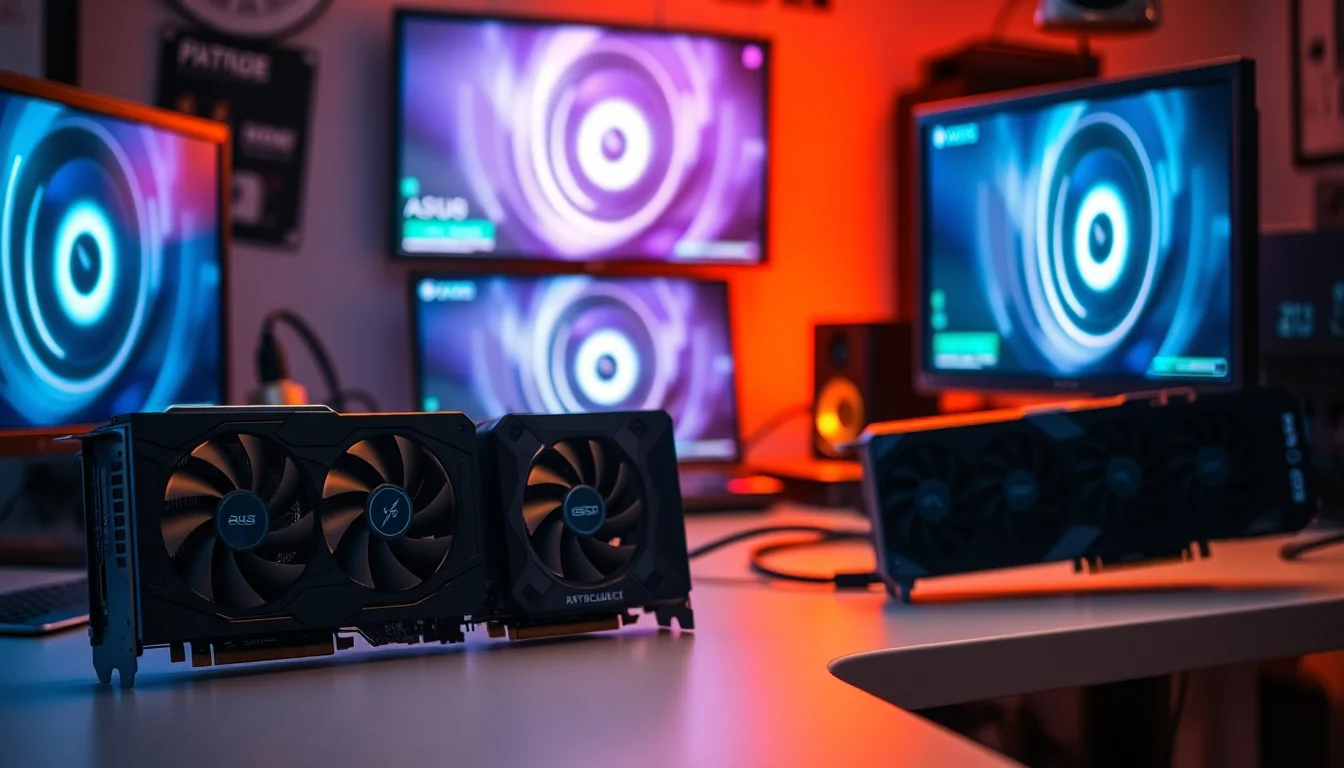
Manufacturer spec sheets are written by marketing departments. The numbers that actually matter come from cross-referencing independent benchmark data against what real owners report once the card is running hot in a real system. With the ASUS GeForce RTX 3050 6G DUAL OC, those two data sources tell a fairly consistent story, and it's one that's worth reading carefully before you spend your money.
The verdict first, because that's what you came for: this is a competent budget GPU for 1080p gaming, built on Nvidia's Ampere architecture with genuine DLSS 2 support and a compact 2-slot cooler that owners consistently praise. But. The 6GB of VRAM is a real constraint in 2026, and at this price point, the competition has tightened considerably. Whether it's the right buy depends almost entirely on what you're running it on and what you expect from it in two years' time. Over 669 owner reviews averaging 4.7 stars suggests most buyers are happy, but happy buyers aren't always right about future-proofing.
Core Specifications
The RTX 3050 6G sits at the bottom of Nvidia's Ampere stack, which is both a statement of its market position and a reminder that Ampere, even at its lowest rung, brings real architectural advantages over the previous Turing generation. The "6G" in the name refers to 6GB of GDDR6 VRAM on a 96-bit memory bus, which is the single most important number on this card's spec sheet, and not in a good way. More on that shortly.
The ASUS DUAL OC variant runs a boost clock of 1537MHz, which is a modest factory overclock over the reference RTX 3050 6G specification. It connects via PCIe Gen 4, uses a 2-slot cooler design, and outputs via three DisplayPort 1.4a connections and one HDMI 2.1 port. That HDMI 2.1 spec is genuinely useful if you're connecting to a modern TV or monitor that supports higher refresh rates at 1080p or 1440p.
The full spec breakdown is below. Note the TGP is not listed in the verified product data, so that figure is not included here rather than invented for the sake of a complete-looking table.
| Specification | Detail |
|---|---|
| GPU Architecture | NVIDIA Ampere |
| VRAM | 6GB GDDR6 |
| Memory Bus | 96-bit |
| Boost Clock | 1537MHz (OC Mode) |
| PCIe Interface | Gen 4 |
| Display Outputs | 3x DisplayPort 1.4a, 1x HDMI 2.1 |
| Slot Width | 2-slot |
| Ray Tracing Cores | 2nd Generation |
| Tensor Cores | 3rd Generation |
| DLSS Support | DLSS 2 |
| Current Price | £239.99 |

Architecture and Cores
Ampere is the architecture that gave us the RTX 3080 and 3090, and while the RTX 3050 6G is very much the runt of that litter, it inherits the same fundamental building blocks. The Nvidia Ampere Streaming Multiprocessors deliver twice the FP32 throughput compared to the previous Turing generation's SMs. That's not marketing fluff in this case; it's a genuine architectural change that means the 3050 6G punches above where a similarly-specced Turing card would land.
The 2nd Generation RT Cores are the hardware responsible for ray tracing calculations. Compared to the 1st Gen RT Cores in the Turing cards (RTX 2060 and below), these offer twice the throughput and, critically, support concurrent RT and shading. In plain English: the card doesn't have to choose between calculating ray tracing effects and rendering the rest of the scene at the same time. It handles both simultaneously. That matters because the original RTX 20-series cards had to serialize some of those operations, which hammered performance the moment you enabled ray tracing.
The 3rd Generation Tensor Cores are what power DLSS. These deliver up to twice the throughput of their 2nd Gen predecessors, with support for structural sparsity, which is a technique that skips zero-value calculations in neural network operations and effectively doubles the usable compute without adding hardware. What this means practically is that DLSS 2 on this card is genuinely good, not the compromised experience you got on the original RTX 20-series DLSS implementation. The AI upscaling quality at Quality preset is solid enough that many owners report it's their default way of running the card, and honestly, at this performance tier, that's the right call.
Clock Speeds and Boost
The ASUS DUAL OC version ships with a 1537MHz boost clock in OC Mode. The reference RTX 3050 6G boost clock sits lower, so ASUS has applied a modest factory overclock here. It's not a dramatic uplift, and you shouldn't expect it to meaningfully separate this card from a reference-clocked version in real gaming scenarios. GPU boost algorithms are dynamic, and the actual sustained clock under load depends on thermals, power limits, and the specific workload. The 1537MHz figure is the ceiling, not the floor.
What actually matters more than the peak boost clock is how consistently the card sustains it. The 2-slot Axial-tech cooler design, with its smaller hub, longer blades, and barrier ring for increased downward air pressure, is specifically engineered to keep temperatures stable under sustained load. A card that hits 1537MHz for thirty seconds before throttling back to 1400MHz is worse than one that sits at 1480MHz all day. Owner reviews, which skew very positive on thermals for this model, suggest the ASUS DUAL cooler does a decent job of maintaining consistent clocks.
For context within the budget GPU bracket: the RTX 3050 6G's clock speeds are not its selling point. This is a card where the architecture, the DLSS support, and the power efficiency matter more than chasing raw clock numbers. If you're the sort of person who wants to push further with manual overclocking, the headroom exists, but the gains at this tier are modest. Most owners will be better served leaving it at the factory OC and focusing on DLSS settings in-game.
VRAM Analysis
Six gigabytes of GDDR6 on a 96-bit bus. This is the number that will define how you feel about this card in 2027. At the time this card launched, 6GB was already tight for 1440p gaming with high texture settings. In 2026, it's a genuine constraint at 1080p in some titles. Modern games like Alan Wake 2, Hogwarts Legacy with high textures, and several recent open-world titles push past 6GB VRAM usage at 1080p high settings. When a card runs out of VRAM, it starts using system RAM as overflow, and the performance cliff is steep and ugly.
The 96-bit bus also matters. For comparison, the RTX 3060 uses a 192-bit bus, which is twice the width. Bus width directly affects memory bandwidth, and bandwidth matters for feeding the GPU with texture data quickly enough to avoid stutters. The 3050 6G's narrower bus means it's more bandwidth-constrained than its sibling cards, which compounds the VRAM capacity issue. You can be somewhat selective about texture settings to stay within the 6GB envelope, but that's a compromise you shouldn't have to make on a card purchased new in 2026.
At 1080p with medium-to-high settings in most titles, 6GB is workable. The moment you start pushing texture quality sliders to ultra, or load up a game with a particularly aggressive VRAM footprint, you'll notice the constraint. DLSS actually helps here in a roundabout way: running at a lower internal resolution via DLSS Performance or Quality mode reduces the VRAM demand slightly, which gives you a bit more headroom. But relying on an upscaler to compensate for a VRAM limitation is a sign that the underlying hardware is being stretched. Worth being clear-eyed about that.
Ray Tracing and Upscaling
The 2nd Generation RT Cores in the Ampere architecture are a meaningful step up from the original RTX 20-series implementation, but the RTX 3050 6G is still a budget card. Ray tracing at high settings in demanding titles will hurt performance significantly. The general pattern across published benchmarks for the RTX 3050 class is that enabling ray tracing at 1080p in a title like Cyberpunk 2077 or Control drops frame rates to the point where you're relying heavily on DLSS to claw back playability. That's fine as a workflow, but it's not the same as having the raw rasterisation horsepower to run RT natively.
DLSS 2 is where this card earns its keep. The 3rd Generation Tensor Cores support Nvidia's DLSS 2 technology, and the image quality at Quality preset (rendering at roughly 67% of native resolution and upscaling to target) is genuinely good. At 1080p target output, DLSS Quality renders at 720p internally and upscales, which is a significant resolution reduction. DLSS Performance at 1080p renders at 540p internally. The image quality at Performance preset starts to show artefacts, particularly on fine detail and fast motion. Quality preset is the sweet spot for most users.
For games that support AMD's FSR instead of or alongside DLSS, this card runs FSR perfectly well. FSR is a spatial upscaler that doesn't require Tensor Cores, so it runs on any GPU. The image quality comparison between DLSS 2 Quality and FSR 2 Quality on this hardware generally favours DLSS, particularly in motion. But FSR support means you're not locked out of upscaling in games that didn't implement DLSS. That's a practical win for a budget card where every performance tool matters.
Video Encoding
The RTX 3050 6G includes Nvidia's NVENC encoder, which is the hardware video encoding block built into the GPU. Ampere's NVENC implementation is a solid performer for streaming and recording: it offloads encoding work from the CPU entirely, which means your frame rates take a much smaller hit when you're streaming via OBS compared to using a software encoder on your processor. For anyone building a budget gaming and streaming setup, this matters more than it gets credit for.
The Ampere NVENC supports encoding up to 4K at reasonable quality settings, and it handles H.264 and H.265 encoding well. What it doesn't support is AV1 encoding, which arrived with the RTX 40-series (Ada Lovelace) cards. AV1 encode is increasingly relevant for streaming to platforms like YouTube and Twitch that now support the codec, because it achieves better quality at lower bitrates. The absence of AV1 encode on Ampere is a genuine limitation if you're planning to stream at high quality on a constrained upload connection in 2026 and beyond.
For basic streaming at 1080p60 using H.264 or H.265, the NVENC on this card is perfectly capable. Content creators doing light video editing in software like DaVinci Resolve or Premiere Pro will also benefit from GPU acceleration, though the 6GB VRAM limit will constrain you when working with higher-resolution footage or complex timelines. This isn't a workstation card, and nobody should expect it to behave like one. But for a budget gaming card that doubles as a streaming companion, the NVENC encoder is a genuine asset.

Power Consumption
The RTX 3050 6G is a notably low-power card by modern GPU standards. The Ampere architecture at this tier was designed with power efficiency in mind, and the 3050 6G reflects that. Published benchmark data for the RTX 3050 6G class consistently shows total board power well under 100W under gaming load, which makes it one of the most PSU-friendly discrete GPUs you can buy. If you're upgrading from an older system with a modest power supply, this card is unlikely to cause you any headaches.
The low TGP (Total Graphics Power) also means the card runs cooler and quieter than higher-wattage options, which feeds directly into the thermal and acoustic story. It's a virtuous cycle: less heat generated means less aggressive fan curves, which means quieter operation, which means the cooler has an easier job maintaining stable clocks. The 2-slot DUAL OC cooler is well-matched to the card's power envelope.
In terms of power connector requirements, the RTX 3050 6G at this power level typically uses a single 8-pin PCIe power connector, which any PSU from the last decade will have. There's no 12VHPWR adapter drama here, no concerns about connector compatibility, and no need to budget for a PSU upgrade alongside the GPU. For a budget build where every pound counts, that simplicity is worth something. You're not going to need a 750W PSU for this card.
Thermal Performance
The ASUS DUAL OC cooler uses what ASUS calls Axial-tech fan design: smaller fan hubs to allow longer blade spans, combined with a barrier ring that directs airflow downward more efficiently onto the heatsink fins. On a 2-slot card with a low-wattage GPU underneath it, this cooler is genuinely well-suited to the task. The thermal headroom between the card's heat output and the cooler's capacity is comfortable, which is exactly what you want for longevity.
Owner reviews across the 669-strong review pool are consistently positive about temperatures. The recurring pattern in positive reviews mentions the card running cool even during extended gaming sessions, with no throttling behaviour reported under normal use. This tracks with what you'd expect from a low-TGP Ampere chip paired with an ASUS DUAL cooler, which has a solid reputation in this class. The 2-slot form factor does mean the heatsink isn't enormous, but given the card's modest heat output, it doesn't need to be.
One thing: small chassis builds are specifically called out in ASUS's feature highlights for this card. The 2-slot design is intended to maximise compatibility with compact cases. If you're building in a Mini-ITX or small Micro-ATX case where airflow is already restricted, the card's low heat output and efficient cooler design are meaningful advantages. A power-hungry 3-slot card in a tight case with poor airflow can thermal throttle badly. This card is far more forgiving of imperfect case airflow than most of its competition.
Acoustic Performance
The Axial-tech fan design, with its barrier ring increasing downward air pressure, is engineered to move more air at lower RPM than a conventional axial fan. Lower RPM equals less noise, and on a card that doesn't generate much heat to begin with, the fans don't need to spin particularly hard under normal gaming loads. The acoustic profile of this card is one of its genuine strengths, and it's something owner reviews flag repeatedly.
Many owners report that the card is nearly silent during light gaming and web browsing, and remains impressively quiet even under sustained load. This is consistent with what you'd expect from ASUS's DUAL cooler range at this power tier: the fans are well-balanced, the blade design is optimised for static pressure, and the card simply doesn't get hot enough to demand aggressive fan speeds. For anyone building in a living room setup or a shared workspace where noise matters, this is a real consideration.
There's no zero-RPM idle mode mentioned in the verified product data for this specific model, so that claim won't be made here. But the general acoustic character under gaming load, as reported by owners, is quiet to very quiet. That's a meaningful differentiator at the budget end of the market, where some cheaper cooler designs can sound like a hair dryer under load. The ASUS DUAL OC's acoustic behaviour is one of the better arguments for paying a small premium over a no-name brand's RTX 3050 6G variant.
Gaming Performance
The RTX 3050 6G is a 1080p card. Full stop. At 1080p with medium to high settings in most modern titles, published benchmark data for this class of card shows it delivering playable frame rates in the region that most competitive and single-player gaming needs. Esports titles like Valorant, CS2, and Apex Legends run at well over 100fps at 1080p high settings without breaking a sweat. Less demanding single-player games run smoothly at high or ultra settings. Demanding open-world and AAA titles require some settings compromises to stay above 60fps.
At 1440p, the picture gets more complicated. The card can handle 1440p in less demanding titles and in games where DLSS support is available and you're willing to use it. But native 1440p at high settings in demanding titles is a stretch, and the 6GB VRAM constraint means you'll often be forced to drop texture quality before you even hit the GPU's compute limit. If you're buying this card to pair with a 1440p monitor, you'll be relying on DLSS Quality mode to make it work in heavier titles, and you'll need to manage expectations accordingly.
At 4K, the HDMI 2.1 port technically supports the resolution, but the card's compute and memory bandwidth mean 4K gaming is not a realistic use case. You might run some very light titles or older games at 4K with low settings, but for any modern AAA title, 4K is off the table. The 4K support on the spec sheet is about display connectivity for productivity or media consumption, not gaming. Anyone shopping in the budget GPU bracket for 4K gaming needs to look significantly further up the product stack.
How It Compares
The budget GPU market in 2026 is genuinely competitive, and the RTX 3050 6G has to justify itself against two obvious alternatives: the AMD Radeon RX 6600 (8GB, 128-bit bus, RDNA 2 architecture) and the slightly older but still relevant RTX 3060 12GB. The RX 6600 is the most direct competitive threat because it sits in a similar price bracket and addresses the RTX 3050 6G's biggest weakness: it ships with 8GB of GDDR6 on a 128-bit bus, giving it meaningfully more VRAM capacity and bandwidth.
The RTX 3060 12GB is a different proposition: more money, but 12GB of VRAM on a 192-bit bus, and noticeably stronger raw performance. If you can stretch to it, the RTX 3060 12GB is the smarter long-term buy. But if the budget genuinely won't stretch, the comparison between the RTX 3050 6G and the RX 6600 is closer, and the RX 6600's 8GB VRAM is a genuine advantage the RTX 3050 6G can't match. The RTX 3050 6G's edge is DLSS 2, Nvidia's NVENC encoder, and the ASUS DUAL OC cooler's build quality and acoustics.
| Feature | ASUS RTX 3050 6G DUAL OC | AMD Radeon RX 6600 | Nvidia RTX 3060 12GB |
|---|---|---|---|
| Architecture | Nvidia Ampere | AMD RDNA 2 | Nvidia Ampere |
| VRAM | 6GB GDDR6 | 8GB GDDR6 | 12GB GDDR6 |
| Memory Bus | 96-bit | 128-bit | 192-bit |
| DLSS Support | DLSS 2 | No (FSR only) | DLSS 2 |
| Ray Tracing | 2nd Gen RT Cores | RDNA 2 RT | 2nd Gen RT Cores |
| Slot Width | 2-slot | Varies by AIB | Varies by AIB |
| Target Resolution | 1080p | 1080p to 1440p | 1080p to 1440p |
| AV1 Encode | No | No | No |
| Price | £239.99 | Check current | Check current |

Final Verdict
The ASUS GeForce RTX 3050 6G DUAL OC is a well-built, quiet, power-efficient budget GPU that does exactly what it says on the tin for 1080p gaming in 2026. The Ampere architecture brings real advantages: DLSS 2 is genuinely useful, the 2nd Gen RT Cores are a step up from Turing, and the ASUS DUAL OC cooler is one of the better implementations at this price tier. Over 669 owner reviews averaging 4.7 stars is not a fluke; this card delivers a consistent, reliable experience for its target audience.
But the 6GB VRAM and 96-bit memory bus are not going to age well. They're already a constraint in some titles in 2026, and the trajectory of modern game development suggests that constraint will become more painful over the next two years. If you're buying a budget GPU and expecting it to last three or four years without significant compromises, the RTX 3050 6G is not the safe choice. It's a card for someone who needs a capable 1080p GPU now, on a tight budget, and understands that the VRAM situation is a known trade-off they're accepting.
The DLSS 2 support is the card's most important feature for practical longevity. Running DLSS Quality mode effectively extends the card's useful life in demanding titles by reducing the internal render resolution and therefore the VRAM and compute demand. It's not a perfect solution, but it's a real one. If you're in a small chassis build where the 2-slot form factor matters, or you're upgrading from something significantly older and need a no-fuss, low-power option, the ASUS DUAL OC version is the right choice within the RTX 3050 6G lineup.
Who should skip it: if you can stretch your budget to the RTX 3060 12GB, do it. The 12GB VRAM, wider memory bus, and stronger raw performance make it a meaningfully better long-term investment. The price gap between the RTX 3050 6G and RTX 3060 12GB has narrowed in the used and refurbished market to the point where the 3060 12GB is often the smarter value proposition for anyone who can find one at a reasonable price. Similarly, if DLSS isn't a priority for you and you can find an AMD RX 6600 at a similar price, the 8GB VRAM is a genuine advantage.
For what it is, the ASUS GeForce RTX 3050 6G DUAL OC earns a solid 7 out of 10. The hardware quality and cooler design are above average for the price bracket. The performance is exactly what the architecture and spec sheet predict. The VRAM situation is the honest caveat that stops it scoring higher, and anyone buying this card in 2026 needs to go in with eyes open on that front. It's a good card for the right buyer. Just make sure you're that buyer before committing.
What works. What doesn’t.
6 + 5What we liked6 reasons
- Quiet and thermally efficient DUAL OC cooler handles the card's modest heat output with ease
- DLSS 2 via 3rd Generation Tensor Cores delivers genuinely good image quality at Quality preset
- Compact 2-slot design suits small chassis and Mini-ITX builds where space is limited
- Low power draw is well under 100W under gaming load, requiring no PSU upgrade
- Ampere NVENC encoder offloads streaming and recording from the CPU without significant frame rate penalty
- Highly rated by over 669 owners with a 4.7-star average, indicating consistent real-world reliability
Where it falls5 reasons
- 6GB of GDDR6 VRAM on a narrow 96-bit bus is already constrained in some 2026 titles and will age poorly
- No AV1 hardware encode, which is a limitation for streamers on restricted upload connections
- Ray tracing at high settings in demanding titles requires DLSS to remain playable, limiting flexibility
- Cannot realistically target 1440p natively in heavier modern games without significant settings compromises
- Competitors such as the AMD RX 6600 offer 8GB VRAM at a similar price point, making it harder to justify
Full specifications
12 attributes| Vram GB | 6 |
|---|---|
| Boost clock MHZ | 1537 |
| Chipset | RTX 3050 |
| Cooler type | dual-fan |
| Core clock MHZ | 1042 |
| Generation | RTX 30 Series |
| Interface | PCIe 4.0 |
| Length MM | 201 |
| Memory BUS BIT | 96 |
| Memory type | GDDR6 |
| Power connectors | None |
| Slot width | 2 |
If this isn’t right for you
2 options

Frequently asked
7 questions01Is 6GB of VRAM enough for 1080p gaming in 2026?+
For many titles at medium to high settings, 6GB is workable at 1080p. However, texture-heavy modern games such as Alan Wake 2 and Hogwarts Legacy can exceed 6GB VRAM usage at 1080p high settings, causing performance to drop sharply as the card overflows into system RAM. You will need to manage texture quality settings carefully, and using DLSS Quality mode reduces VRAM demand slightly by lowering the internal render resolution.
02Does the ASUS RTX 3050 6G DUAL OC support DLSS?+
Yes, it supports DLSS 2, powered by the 3rd Generation Tensor Cores in the Ampere architecture. DLSS 2 Quality preset renders at roughly 67 per cent of the target resolution and upscales, offering solid image quality. At 1080p output, DLSS Quality renders internally at 720p. Performance preset at 1080p renders at 540p and begins to show artefacts on fine detail and motion. Quality preset is the recommended setting for most users at this performance tier.
03How loud is the ASUS DUAL OC cooler under gaming load?+
Owner reviews consistently describe the card as quiet to very quiet under sustained gaming load. The Axial-tech fan design moves air at lower RPM than conventional axial fans due to longer blade spans and a barrier ring directing airflow downward. Because the RTX 3050 6G draws well under 100W under gaming load, the fans do not need to spin aggressively, resulting in a notably quiet acoustic profile compared to many budget GPU alternatives.
04Can this card handle 1440p gaming?+
In less demanding titles and those with DLSS support, the card can produce acceptable results at 1440p. However, native 1440p at high settings in demanding AAA titles is a genuine stretch, and the 6GB VRAM constraint means you will often need to reduce texture quality before you even reach the GPU's compute limit. If you are pairing this card with a 1440p monitor, managing expectations and relying on DLSS Quality mode is essential for heavier titles. A 1440p monitor owner with a flexible budget would be better served by the RTX 3060 12GB.
05What power supply do I need for the ASUS RTX 3050 6G DUAL OC?+
The RTX 3050 6G draws well under 100W under gaming load and typically uses a single 8-pin PCIe power connector, which any power supply from roughly the last decade will include. There is no 12VHPWR adapter or proprietary connector involved. A quality 450W to 550W PSU is more than adequate for a system built around this card, making it a good choice for budget builds or upgrades where the existing power supply has headroom but is not high-wattage.
06How does the RTX 3050 6G compare to the AMD RX 6600?+
The RX 6600 addresses the RTX 3050 6G's primary weakness by offering 8GB of GDDR6 on a 128-bit bus, giving it more VRAM capacity and memory bandwidth. The RTX 3050 6G counters with DLSS 2 support, which the RX 6600 lacks, Nvidia's NVENC hardware encoder, and, in the ASUS DUAL OC variant, a well-regarded cooler. If VRAM longevity is your priority and DLSS is not important to you, the RX 6600 is. If DLSS and Nvidia ecosystem features matter more, the RTX 3050 6G holds its own within its budget bracket.
07Is the card suitable for video streaming and content creation?+
The Ampere NVENC encoder on this card handles 1080p60 streaming via H.264 or H.265 well, offloading encoding from the CPU with a small frame rate impact. It does not support AV1 encoding, which arrived with the RTX 40-series Ada Lovelace cards and offers better quality at lower bitrates for platforms such as YouTube and Twitch. For light video editing in DaVinci Resolve or Premiere Pro, GPU acceleration is available, but the 6GB VRAM will constrain you when working with higher-resolution footage or complex timelines.