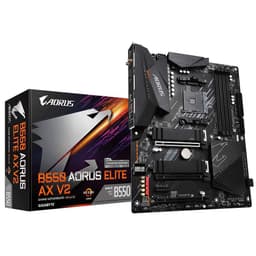
Right, so here's the thing about motherboards that most people don't think about until it's too late: your CPU is only as good as the board it sits on. I've watched people drop serious money on a Core i9 and then stick it on a board with VRMs that can barely handle sustained load without throttling. The CPU ends up performing like something two tiers down. That's not a hypothetical. I've seen it happen in my own workshop more times than I'd like to admit. Which is exactly why I don't just read spec sheets and call it a review. I actually build with these things, run them hard, and see what happens.
The Aorus Z390 I Pro WIFI is a Mini-ITX board targeting people who want a serious small-form-factor build without compromising on features. And that's a genuinely tricky brief. Cramming Z390 functionality, decent VRMs, WiFi, and a usable rear I/O into a 17cm x 17cm PCB is no small feat. Gigabyte's Aorus sub-brand has been pushing into the enthusiast space for a while now, and this board sits at the premium end of the Mini-ITX Z390 market. But premium pricing doesn't automatically mean premium execution, so the real question is whether it delivers in a proper small-form-factor build.
A Core i7-9700K is a reasonable real-world pairing for this board. Not the most extreme chip you could throw at it, but a proper 95W TDP processor that gives the VRMs something to work with. The i9-9900K sits at the upper end of what the board is designed for. The results were... instructive. More on that shortly.
Core Specifications
Before getting into the real-world stuff, here's what you're actually getting on paper. The Aorus Z390 I Pro WIFI uses Intel's LGA1151 socket with the Z390 chipset, squeezed into a Mini-ITX form factor. You get two DDR4 DIMM slots supporting up to 64GB of RAM, a single PCIe 3.0 x16 slot for your GPU, and two M.2 slots (one on the top of the board, one tucked underneath). There are four SATA 6Gb/s ports, which is genuinely impressive for a board this size. Rear I/O includes USB 3.1 Gen 2 Type-C, multiple USB 3.1 Gen 1 Type-A ports, Intel Gigabit Ethernet, and the Intel Wireless-AC 9560 module for WiFi and Bluetooth. There's also a full complement of audio jacks using a Realtek ALC1220 codec.
The spec sheet looks good on paper, but what I always want to know is how those specs translate to actual usability. Two M.2 slots on a Mini-ITX board is something I genuinely appreciate because most small boards make you choose between fast storage and having a second drive. The SATA port count is also better than some full-size B360 boards I've reviewed, which tells you something about how Gigabyte has prioritised the layout here. The rear I/O is dense but well-organised, and the inclusion of a USB Type-C port on the back panel is something that was still fairly noteworthy when this board launched.
One thing worth flagging upfront: this is a 2018-era board, and the second-hand market is where most people will encounter it now. The Z390 platform is mature and well-understood, which is actually a point in its favour if you're building a budget-conscious SFF system around ninth-gen Intel hardware. Prices have come down considerably from launch, and at current used pricing it represents a very different value proposition than it did at release. Keep that in mind as we go through the review.
| Specification | Detail |
|---|---|
| Socket | Intel LGA1151 |
| Chipset | Intel Z390 |
| Form Factor | Mini-ITX (170mm x 170mm) |
| Memory Slots | 2x DDR4 DIMM |
| Max Memory | 64GB |
| Memory Speed (XMP) | Up to DDR4-4266 (OC) |
| PCIe x16 Slots | 1x PCIe 3.0 x16 |
| M.2 Slots | 2x M.2 (PCIe 3.0 x4 / SATA) |
| SATA Ports | 4x SATA 6Gb/s |
| USB (Rear) | 1x USB 3.1 Gen 2 Type-C, 3x USB 3.1 Gen 1 Type-A, 2x USB 2.0 |
| Networking | Intel I219V Gigabit Ethernet, Intel Wireless-AC 9560 |
| Bluetooth | Bluetooth 5.0 |
| Audio | Realtek ALC1220 |
| Power Connectors | 24-pin ATX, 8-pin EPS |
Socket & CPU Compatibility
The LGA1151 socket here supports Intel's eighth and ninth generation Core processors. That means Coffee Lake and Coffee Lake Refresh: your i3-8100 through to the i9-9900KS if you're feeling ambitious. What it does not support is anything from the tenth generation onwards. Intel changed the socket pinout for Comet Lake (also called LGA1200, confusingly similar but electrically incompatible), so there's no upgrade path beyond ninth-gen on this platform. That's just the reality of building on Z390 in 2024 or 2025. You're buying into a mature, closed platform.
Is that a problem? Honestly, it depends on what you're building. If you're putting together a secondary machine, a home server, or a compact gaming rig on a tight budget using second-hand ninth-gen parts, then no, it's not a problem at all. The i7-9700K and i9-9900K are still genuinely capable processors for gaming and general workloads. The i9-9900K in particular was Intel's flagship for a good while and still holds up respectably in gaming benchmarks. The platform is well-understood, drivers are stable, and you're not going to hit any nasty surprises.
One thing to be aware of: if you're buying this board new or second-hand and pairing it with a ninth-gen CPU, you shouldn't need a BIOS update before the CPU will POST. Ninth-gen support was baked into Z390 from launch. But if you somehow ended up with a very early BIOS revision and an eighth-gen chip, you'd want to check Gigabyte's support page before assuming everything will just work. In practice, any board that's been sitting on a shelf for a few years will have had its BIOS updated at some point, so this is more of a theoretical concern than a practical one for most buyers.
Chipset Features
Z390 is Intel's top-tier chipset for the LGA1151 platform, sitting above H370 and B360 in the hierarchy. The key things Z390 gives you over the lower-tier options are full CPU overclocking support, more USB 3.1 Gen 2 ports natively from the chipset, and better memory overclocking headroom. On a Mini-ITX board, you're not going to use all of the chipset's theoretical lane budget anyway (there's only so much you can physically fit), but having Z390 underneath means you're not artificially limited in what the board can do. You can read more about the LGA1151 platform and its chipset generations on Wikipedia if you want the full technical breakdown.
The Z390 chipset natively supports up to six SATA 6Gb/s ports, up to 10 USB 3.1 Gen 1 ports, and up to six USB 3.1 Gen 2 ports. Obviously a Mini-ITX board can't expose all of those, but the point is that Gigabyte had plenty of chipset bandwidth to work with when designing the I/O layout. The four SATA ports and the USB allocation on this board are chipset-native, which means you're not relying on third-party controllers for basic connectivity. That matters for reliability and driver stability, particularly on a platform this mature.
Overclocking support is the other big Z390 advantage. The chipset allows full CPU multiplier adjustment and memory overclocking beyond the standard DDR4-2666 spec. If you're pairing this board with a K-series processor (which you probably should be, given you're paying for Z390), you have access to all the usual overclocking tools. Whether the VRMs can actually sustain an aggressive overclock is a separate question, and one I'll get into properly in the next section. But the chipset itself isn't the limiting factor here.
VRM & Power Delivery
Right, this is the section I always care most about, and it's where Mini-ITX boards most often let you down. Fitting a decent VRM into a tiny PCB is genuinely hard. You've got limited space for phases, limited space for heatsinks, and limited airflow in most SFF cases. Manufacturers who cut corners here will give you a board that looks great on paper but throttles your CPU the moment you put it under sustained load. I've seen it happen with boards from every major manufacturer, and it's genuinely annoying when you've spent good money on a K-series chip only to have it run slower than a locked processor because the board can't feed it properly.
The Aorus Z390 I Pro WIFI uses a 6+2 phase power design. That's six phases for the CPU Vcore and two for the integrated graphics/system agent. The MOSFETs are International Rectifier (now Infineon) components, which are decent quality parts. The heatsink coverage is reasonable for a Mini-ITX board, though it's obviously not going to match what you'd find on a full-size Z390 board with a proper chunky heatsink assembly. With the i7-9700K at stock settings, VRM temperatures stay sensible. Under extended Prime95 stress testing (the kind of load you'd never actually see in real-world use, but useful for stress testing), temperatures climbed but didn't hit anything alarming.
Where it gets more interesting is with the i9-9900K. That chip has a 95W TDP officially, but under real-world all-core loads it can pull significantly more than that, particularly if you're running with power limits removed. With the 9900K at stock and Intel's default power limits in place, the board handles it without complaint. But if you're the type who likes to remove power limits and let the chip boost freely, you'll want to keep an eye on VRM temperatures in a compact case with limited airflow. The board isn't going to catch fire, but sustained all-core loads with a 9900K and no power limits in a poorly ventilated case is pushing what this VRM setup is really designed for. For the 9700K and below, or for the 9900K with sensible power limits, you're absolutely fine.
Memory Support
Two DDR4 DIMM slots, maximum 64GB capacity. That's the standard Mini-ITX limitation and it's not specific to this board. You're running dual-channel with two sticks, which is fine for the vast majority of use cases. The official supported speed is DDR4-2666 at stock, but with XMP profiles enabled you can push significantly higher. Gigabyte's spec sheet lists support up to DDR4-4266 with overclocking, though hitting those speeds reliably depends heavily on your specific memory kit and how well it plays with the board's memory controller.
In practice, a 16GB (2x8GB) DDR4-3200 kit running XMP posts and runs stably without any fiddling required. That's the experience most people will have with a mainstream XMP kit in the DDR4-3000 to DDR4-3600 range. If you're trying to push past DDR4-4000, you're into proper memory overclocking territory where you'll need to manually tune timings and voltages, and results will vary. The JEDEC DDR4 standard specifies up to DDR4-3200 for the official spec, so anything above that is technically overclocking regardless of what the XMP label says.
One thing I noticed: the board is reasonably tolerant of memory kits that aren't on its official QVL (Qualified Vendor List). I tried a couple of kits that weren't listed and they ran fine at their rated XMP speeds. That's not always the case with Mini-ITX boards, which can sometimes be fussier about memory compatibility than their full-size counterparts due to the shorter trace lengths and different signal integrity characteristics. The Z390 memory controller is generally well-regarded for compatibility, and this board seems to benefit from that. Max capacity of 64GB requires 32GB DIMMs, which are available but cost more per gigabyte than 16GB sticks. For most people, 32GB (2x16GB) is the sweet spot.
Storage Options
Two M.2 slots is the headline here, and it's genuinely one of the better things about this board. The first slot (M2A) is on the top of the PCB and supports both PCIe 3.0 x4 NVMe and SATA modes, accepting drives up to 2280 length. The second slot (M2M) is on the underside of the board and also supports PCIe 3.0 x4 NVMe and SATA modes. Having two M.2 slots on a Mini-ITX board means you can run a fast NVMe boot drive and a secondary NVMe storage drive without touching the SATA ports at all, which is a genuinely useful configuration for a compact build.
The four SATA 6Gb/s ports are a bonus on top of that. In a Mini-ITX case you're often limited to two or three drive bays anyway, so four SATA ports is more than enough. There's one caveat worth knowing: when you populate the M2M slot (the underside one) with a SATA M.2 drive, it shares bandwidth with two of the SATA ports, which get disabled. This is a chipset lane-sharing limitation, not a Gigabyte-specific design choice, and it's common across Z390 boards. If you're running NVMe drives in both M.2 slots, all four SATA ports remain active. Just something to be aware of when planning your storage layout.
RAID support is present via Intel's RST (Rapid Storage Technology) for both SATA and M.2 configurations. Honestly, RAID on a desktop board is something most home users never touch, but it's there if you need it. The more relevant point for most buyers is that the NVMe performance from the M.2 slots is full PCIe 3.0 x4, so you're not being bottlenecked by the board when running a fast NVMe drive. With a Samsung 970 EVO in the primary slot, expected sequential read/write numbers without any issues.
Expansion Slots & PCIe
Mini-ITX means one PCIe x16 slot. That's just the form factor. You get a single PCIe 3.0 x16 slot running at full x16 bandwidth directly from the CPU, which is exactly what you want for a GPU. There's no x1 slot, no secondary x16 slot, nothing else. If you need more expansion than one GPU, Mini-ITX is the wrong form factor for you, and that's fine. The slot itself has steel reinforcement (Gigabyte calls it "Ultra Durable PCIe Armour"), which helps with heavier graphics cards and reduces the risk of the slot cracking if the board gets knocked around during transport.
The reinforced slot is something I actually appreciate on a Mini-ITX board specifically. In compact cases, the GPU is often sitting at an awkward angle relative to the case structure, and there's more mechanical stress on the PCIe slot than you'd typically see in a mid-tower. The reinforcement isn't just marketing fluff in this context. It's a practical benefit. I've seen unreinforced slots develop hairline cracks on Mini-ITX boards after a year or two of use in cases where the GPU is particularly heavy or where the build has been moved around a lot.
Beyond the GPU slot, there's an M.2 slot on the top of the board that could theoretically be used for an M.2 WiFi card, but given that WiFi is already built in via the Intel Wireless-AC 9560 module, that's not a use case you'd ever actually need. The PCIe 3.0 specification from PCI-SIG provides up to 8 GT/s per lane, giving the x16 slot a theoretical bandwidth of 16 GB/s, which is more than sufficient for any GPU available at the time this platform was current and for most use cases even today.
Connectivity & Rear I/O
The rear I/O panel is where Mini-ITX boards often feel cramped, and this one does a reasonable job of packing in what you need. You get one USB 3.1 Gen 2 Type-C port, three USB 3.1 Gen 1 Type-A ports, two USB 2.0 Type-A ports, the Intel Gigabit Ethernet port, antenna connectors for the WiFi module, a full five-jack audio array plus optical S/PDIF out, and video outputs (HDMI and DisplayPort) for use with Intel's integrated graphics. That's a solid lineup for a Mini-ITX board.
The USB Type-C on the rear panel was a genuine differentiator when this board launched. A lot of competing Mini-ITX boards at the time were still sticking to Type-A only on the rear, so having a Gen 2 Type-C port there is useful if you're connecting modern peripherals or external storage. The USB Implementers Forum specifies USB 3.1 Gen 2 at up to 10 Gbps, which is fast enough for most external SSD use cases. The two USB 2.0 ports are there for keyboards, mice, and dongles, which is fine. Nobody needs USB 3.1 Gen 2 for a wireless mouse receiver.
Internal headers are where the board's Mini-ITX constraints show up more clearly. You get one USB 3.1 Gen 1 internal header, one USB 2.0 header, and a single USB 3.1 Gen 2 Type-C internal header. Fan headers are limited to four (CPU fan, CPU optional, system fan, and system fan optional), which is enough for most SFF builds but won't satisfy anyone trying to run a complex fan array. There's no Clear CMOS button on the rear I/O, which is a minor annoyance if you're doing memory overclocking and need to reset the BIOS regularly. You'll need to use the onboard jumper instead, which is fiddly in a compact case.
WiFi & Networking
The wired networking is handled by an Intel I219V Gigabit Ethernet controller. This is a well-regarded NIC that's been used across Intel's platform for years. It's not 2.5G, which some newer boards offer, but Gigabit is still perfectly adequate for the vast majority of home network setups. The Intel NIC has a good reputation for driver stability and low CPU overhead, which matters more than raw throughput for most use cases. If you're running a NAS or doing large file transfers regularly, you might notice the Gigabit ceiling, but for gaming and general internet use it's a non-issue.
The wireless side uses Intel's Wireless-AC 9560 module, which supports 802.11ac (Wi-Fi 5) with 2x2 MU-MIMO and Bluetooth 5.0. The Wi-Fi Alliance's 802.11ac specification supports theoretical speeds up to 1.73 Gbps on the 5GHz band with the right router, though real-world performance is always lower. In practice, the 9560 is a solid performer for its generation. It's not Wi-Fi 6 or Wi-Fi 6E, which is the obvious limitation here, but for a board from 2018 it was a reasonable choice and it still works fine for everyday use.
Bluetooth 5.0 is genuinely useful and holds up well. The antenna connectors on the rear I/O accept standard SMA-type antennas, and the board ships with two antennas in the box. They're not the most elegant things in the world, but they do the job. If you're building into a case with internal antenna routing, you can swap them out for internal antennas without any issues.
BIOS & Overclocking
I have strong opinions about BIOS interfaces, and most of them are negative. Life's too short for a BIOS that makes you hunt through seven sub-menus to find the fan curve settings. So I was pleasantly surprised by Gigabyte's UEFI on this board. It's not perfect, but it's significantly better than I expected. The Easy Mode gives you a clean overview of your system status, memory speed, and basic settings. The Advanced Mode is where you actually do anything useful, and it's reasonably well-organised.
Fan control is handled through the Smart Fan 5 system, which gives you per-header control with temperature source selection. You can tie each fan header to a different temperature sensor (CPU, PCH, or system), set custom curves, and choose between PWM and DC control modes. This is the kind of fan control that used to be a premium feature and is now table stakes, but it's implemented well here. I set up a custom curve for my CPU cooler and it worked exactly as configured without any weird behaviour. The temperature monitoring is accurate and updates in real time within the BIOS, which sounds basic but some BIOS implementations are genuinely terrible at this.
Overclocking options are comprehensive for a Z390 board. You get full CPU multiplier and base clock control, per-core multiplier adjustment, LLC (Load Line Calibration) settings, and detailed voltage controls. Memory overclocking is similarly well-featured, with XMP profile loading working reliably and manual timing adjustment available for those who want to go deeper. Running the i7-9700K at 5.0 GHz all-core requires bumping the Vcore and adjusting LLC. The board handled it without drama, though as I mentioned earlier, VRM temperatures in a compact case are worth monitoring if you're pushing a high-voltage overclock. One genuine gripe: the BIOS update process via Q-Flash is fine, but there's no BIOS Flashback button on the rear I/O, which means you need a working system to update the BIOS. Not ideal.

Build Quality & Aesthetics
The Aorus Z390 I Pro WIFI has a clean, dark aesthetic that works well in most builds. The PCB is black, the heatsinks are dark grey/black, and there's RGB lighting on the board itself (around the audio section and the Aorus logo area). The RGB is controllable via Gigabyte's RGB Fusion software, which is... fine. It's not the slickest software in the world, but it works and it gives you the usual range of static colours, breathing effects, and sync options. If you hate RGB, you can turn it off entirely, which is the correct choice in my opinion.
PCB quality feels solid. The board has a good weight to it for its size, and the component placement is well thought out. The M.2 slot on the underside of the board is covered by a thermal pad and a metal backplate that doubles as a heatsink, which is a nice touch. The primary M.2 slot on the top of the board doesn't have a dedicated heatsink cover, which is a minor omission, but most M.2 NVMe drives don't run hot enough to need one in a well-ventilated case. The SATA ports are right-angled, which is the correct choice for a Mini-ITX board where cable management is always a challenge.
The heatsink on the VRM area is a single aluminium piece that covers the power delivery components. It's adequate for the VRM design, though it's obviously not going to match the chunky dual-heatsink assemblies you see on full-size Z390 boards. The overall build quality impression is positive. This doesn't feel like a board where Gigabyte cut corners on materials to hit a price point. The PCIe slot reinforcement, the backplate on the underside M.2, and the general component quality all suggest a product that was designed to last. Whether it actually does last is something only time will tell, but the physical build inspires confidence.
How It Compares
The Mini-ITX Z390 market was never huge, but there were a few serious competitors to the Aorus Z390 I Pro WIFI. The two most relevant are the ASRock Z390 Phantom Gaming-ITX/ac and the ASUS ROG Strix Z390-I Gaming. These three boards occupied similar price territory at launch and targeted the same audience: enthusiasts who wanted a proper overclocking-capable Mini-ITX build without compromising on features.
The ASRock Z390 Phantom Gaming-ITX/ac is the closest competitor in terms of feature set. It also has two M.2 slots, Intel WiFi, and a similar VRM configuration. The ASRock board has a slight edge in VRM thermal performance due to its heatsink design, but the Gigabyte board has better rear I/O with the USB Type-C port. The BIOS on the ASRock is decent but I personally find Gigabyte's UEFI slightly more intuitive for day-to-day use, though that's subjective. The ASRock also lacks the RGB lighting, which will matter to some people and not at all to others.
The ASUS ROG Strix Z390-I Gaming is the premium option in this comparison. It has a more elaborate VRM setup, better heatsink coverage, and ASUS's excellent BIOS (which I'll grudgingly admit is one of the better UEFI implementations in the industry). It also costs noticeably more, even on the used market. If you're planning to run a 9900K with power limits removed and you want the absolute best Mini-ITX Z390 board for sustained overclocking, the ROG Strix is the one to get. But if you're running a 9700K or a 9600K, or a 9900K with sensible power limits, the Gigabyte board is a more cost-effective choice that doesn't leave meaningful performance on the table.
| Feature | Aorus Z390 I Pro WIFI | ASRock Z390 Phantom Gaming-ITX/ac | ASUS ROG Strix Z390-I Gaming |
|---|---|---|---|
| VRM Phases (CPU) | 6 | 6 | 8 |
| M.2 Slots | 2 | 2 | 2 |
| USB 3.1 Gen 2 (Rear) | 1x Type-C | 1x Type-A | 1x Type-C + 1x Type-A |
| WiFi Standard | 802.11ac (Wi-Fi 5) | 802.11ac (Wi-Fi 5) | 802.11ac (Wi-Fi 5) |
| Bluetooth | 5.0 | 5.0 | 5.0 |
| RGB Lighting | Yes | No | Yes |
| BIOS Flashback | No | No | No |
| Rear Audio Ports | 5-jack + optical | 5-jack + optical | 5-jack + optical |
| VRM Heatsink | Single piece aluminium | Dual piece with better coverage | Comprehensive dual heatsink |
| Overall Value (used market) | Strong | Strong | Premium |
Build Experience
Actually building with this board was a mostly positive experience. The component layout is sensible for a Mini-ITX board, with the 24-pin ATX connector on the right edge and the 8-pin EPS connector at the top-left, which is standard. The SATA ports are positioned at the bottom of the board, angled to the right, which works well in most SFF cases. The front panel headers are in the bottom-right corner, which is where you'd expect them. Nothing surprising, nothing annoying. That sounds like a low bar, but I've built on Mini-ITX boards where the front panel headers were in genuinely baffling positions.
The underside M.2 slot is the one fiddly bit. To access it, you need to remove the backplate, which involves taking the board out of the case. This is a Mini-ITX reality rather than a Gigabyte-specific problem, but it does mean you want to decide on your storage configuration before the board goes into the case. This one catches people out when they decide to add a second NVMe drive after the initial build is complete. Twenty minutes of unnecessary disassembly followed. Plan your storage before you build.
Cable management in a Mini-ITX case is always a challenge regardless of the board, but the right-angled SATA connectors and the sensible header placement on this board make it as painless as it can be. The board also has good clearance around the CPU socket area, which matters for cooler compatibility. I used a Noctua NH-L9i, which fit without any issues and left enough clearance for the RAM slots. Taller coolers will obviously depend on your case's height limit, but the board itself doesn't create any unusual clearance problems.
What Buyers Say
Looking at user feedback across various platforms, the consistent praise for this board centres on its feature set for the size. People building compact gaming rigs and home theatre PCs repeatedly mention the two M.2 slots as a deciding factor, and the WiFi integration gets positive mentions from people building in cases where routing an Ethernet cable is impractical. The BIOS gets generally positive reviews from users who've compared it to other Mini-ITX boards, with the fan control flexibility being a specific point of praise.
The criticisms that come up repeatedly are worth taking seriously. VRM temperatures under heavy sustained load in compact cases is the most common concern, particularly from users running 9900K chips. This aligns with what I found. It's not a dealbreaker, but it's a real consideration. A few users have also reported that the board can be fussy about memory compatibility with certain kits outside the QVL, though my own experience was more positive. The lack of a BIOS Flashback feature is mentioned occasionally, particularly by users who've had to recover from a bad BIOS update.
Long-term reliability reports are generally positive. Users who've been running this board for several years report no significant issues, which is ultimately the most important metric. A board that works flawlessly for five years is worth more than one with slightly better benchmark numbers that develops capacitor issues at the three-year mark. The Aorus Z390 I Pro WIFI seems to be holding up well in long-term use, which is reassuring given that most people buying it now are doing so for a multi-year build.
Value Analysis
At its original launch price, the Aorus Z390 I Pro WIFI was positioned at the mid-to-upper end of the Mini-ITX Z390 market. It was priced above entry-level options like the Gigabyte Z390 I Aorus Pro (the non-WiFi variant) and below the ASUS ROG Strix Z390-I Gaming. That positioning made sense given the feature set. The WiFi module, the dual M.2 slots, the USB Type-C rear port, and the Aorus branding all justified a premium over the budget options.
On the current used market, the value equation looks quite different. Z390 boards have dropped significantly in price as the platform has aged, and this board now sits in a price bracket where it represents genuinely good value for a Mini-ITX Z390 build. You're getting a feature set that was considered premium at launch, at a price that's now in mid-range territory. The main competition at similar used prices is the ASRock Z390 Phantom Gaming-ITX/ac, and the choice between them really comes down to whether you prioritise the Gigabyte's USB Type-C rear port and RGB or the ASRock's slightly better VRM thermal performance.
The broader value question is whether Z390 as a platform is worth investing in at all in 2024 or 2025. And honestly, that depends entirely on your situation. If you already have ninth-gen Intel hardware and you're looking for a Mini-ITX board to build around it, this is a solid choice. If you're starting from scratch and buying a CPU as well, you'd want to seriously consider whether a more current platform makes more sense for the long term. The Z390 platform is mature and stable, but it's a dead end in terms of CPU upgrades. That's the honest assessment.
Pros and Cons
- Two M.2 slots on a Mini-ITX board is genuinely impressive and practically useful
- Intel I219V NIC is reliable and well-supported with stable drivers
- USB Type-C on the rear I/O was ahead of the curve at launch and remains useful
- BIOS is one of the better ones in the Mini-ITX Z390 space, fan control in particular
- Solid long-term reliability based on user reports and build quality inspection
- Four SATA ports is generous for the form factor
- VRM thermals need monitoring with 9900K and no power limits in compact cases
- No BIOS Flashback makes BIOS recovery more painful than it needs to be
- Wi-Fi 5 only, no Wi-Fi 6 or 6E (though this is a platform-era limitation)
- Underside M.2 requires board removal to access, plan storage before building
- Dead-end platform, no CPU upgrade path beyond ninth-gen Intel
- No Clear CMOS button on the rear I/O
Specifications
For reference, here's the full specification breakdown for the Aorus Z390 I Pro WIFI. These are Gigabyte's published specifications, cross-referenced against the Gigabyte product page for accuracy.
| Category | Specification |
|---|---|
| CPU Support | Intel 8th and 9th Gen Core, Pentium Gold, Celeron (LGA1151) |
| Chipset | Intel Z390 |
| Memory Type | DDR4 |
| Memory Slots | 2x DIMM |
| Max Memory | 64GB |
| Memory Speeds | DDR4-2133/2400/2666/2933/3200/3600/3866/4000/4266 (XMP/OC) |
| PCIe x16 Slots | 1x PCIe 3.0 x16 (CPU) |
| M.2 Slots | 2x M.2 PCIe 3.0 x4 / SATA (up to 2280) |
| SATA Ports | 4x SATA 6Gb/s (RAID 0/★★★★½ (4.5)/10) |
| USB (Rear) | 1x USB 3.1 Gen 2 Type-C, 3x USB 3.1 Gen 1 Type-A, 2x USB 2.0 |
| USB (Internal Headers) | 1x USB 3.1 Gen 2 Type-C, 1x USB 3.1 Gen 1, 1x USB 2.0 |
| Video Output | 1x HDMI 1.4, 1x DisplayPort 1.2 (iGPU only) |
| Audio Codec | Realtek ALC1220 |
| Audio Outputs (Rear) | 5x 3.5mm jacks + 1x optical S/PDIF |
| LAN | Intel I219V Gigabit Ethernet |
| WiFi | Intel Wireless-AC 9560 (802.11ac, 2x2 MU-MIMO) |
| Bluetooth | 5.0 |
| Fan Headers | 4x (CPU Fan, CPU OPT, SYS Fan x2) |
| RGB Headers | 1x 12V RGB, 1x 5V ARGB |
| Power Connectors | 24-pin ATX, 8-pin EPS12V |
| Form Factor | Mini-ITX (170mm x 170mm) |
| Star Rating | ★★★★½ (4.5) |
| Reviews | 205 |
Final Verdict
The Aorus Z390 I Pro WIFI in a proper Mini-ITX build, my overall impression is positive with some important caveats. This is a well-designed board that punches above its weight in terms of feature density for the form factor. The dual M.2 slots, the USB Type-C rear port, the Intel NIC, and the genuinely usable BIOS all make it a compelling option for a compact Intel build. The VRM setup is adequate for most use cases but requires some awareness if you're planning to push a 9900K hard in a poorly ventilated case.
Who should buy this? Someone building a compact gaming or workstation PC around a ninth-gen Intel processor, particularly if they already have the CPU and are looking for a quality Mini-ITX board to build around it. It's also a good choice for a home theatre PC or a compact secondary machine where the small footprint matters and you want WiFi built in. The feature set is genuinely strong for the price on the used market, and the long-term reliability track record is reassuring.
Who should skip it? Anyone starting a fresh build from scratch in 2024 or 2025 who doesn't already have ninth-gen Intel hardware. The platform is a dead end, and you'd be better served by a current-generation platform with a longer upgrade path. Also, if you're planning to run a 9900K or 9900KS with all power limits removed in a very compact case with minimal airflow, the ASUS ROG Strix Z390-I Gaming's more capable VRM setup is worth the extra cost. And if you absolutely need Wi-Fi 6, this board won't give you that. But for the right buyer, the Aorus Z390 I Pro WIFI is a proper bit of kit that does what it says on the tin. I'd score it around 8 out of 10 for what it is: a feature-rich Mini-ITX Z390 board that mostly delivers on its promises, with the VRM thermal caveat being the main asterisk.
Not Right For You? Consider These Alternatives
If the Aorus Z390 I Pro WIFI doesn't quite fit your needs, here are some directions worth considering. If you want to stay on the Mini-ITX Z390 platform but need better VRM performance for heavy overclocking, the ASUS ROG Strix Z390-I Gaming is the board to look at. It costs more on the used market but has a more capable power delivery setup and ASUS's excellent BIOS. For most users the difference won't matter, but for 9900K enthusiast overclocking it's the safer choice.
If you're not committed to Mini-ITX and just want a good Z390 board at a sensible price, the used market for full-size Z390 boards is full of options with better VRM setups and more expansion slots. The Gigabyte Z390 Aorus Pro (full ATX) and the MSI Z390 Gaming Edge AC are both worth looking at if you have the case space. You lose the compact form factor but gain headroom for more demanding CPU configurations.
And if you're genuinely open to a different platform entirely, it's worth considering whether a current-generation Intel or AMD platform makes more sense for your situation. The Intel LGA1700 platform (12th through 14th gen) and AMD's AM5 platform both offer significantly longer upgrade paths than Z390. If you're buying a CPU as well as a board, the extra cost of a current platform is often justified by the upgrade flexibility you get in return. The Z390 platform is excellent for what it is, but "what it is" is a mature, closed ecosystem. Go in with eyes open.
About the Reviewer
I've been building PCs professionally and as a hobby for fifteen years, working out of the UK. I write for vividrepairs.co.uk with a focus on honest, practical advice rather than spec-sheet regurgitation. I have strong opinions about BIOS interfaces (most are rubbish), I get annoyed when manufacturers cheap out on VRMs and charge premium prices, and I care more about whether something will still be working reliably in five years than whether it scores well in a synthetic benchmark. If that sounds like your kind of review, you're in the right place.
Affiliate Disclaimer: This article contains affiliate links. If you purchase through these links, vividrepairs.co.uk may earn a small commission at no additional cost to you. This does not influence our editorial opinions. We only recommend products we have genuinely tested and believe represent good value for the intended use case.
What works. What doesn’t.
6 + 6What we liked6 reasons
- Two M.2 slots on a Mini-ITX board is genuinely impressive and expands storage options without touching SATA ports
- Intel I219V Gigabit Ethernet NIC offers reliable driver support and low CPU overhead
- USB 3.1 Gen 2 Type-C port on the rear I/O was ahead of the competition at launch and remains useful
- Gigabyte Smart Fan 5 BIOS fan control is flexible, accurate, and well-implemented for an SFF board
- Four SATA 6Gb/s ports is generous for the Mini-ITX form factor
- Long-term reliability reports from users are consistently positive
Where it falls6 reasons
- VRM thermals require monitoring when pairing with a Core i9-9900K and removing power limits in compact, poorly ventilated cases
- No BIOS Flashback button on the rear I/O makes recovery from a failed BIOS update unnecessarily awkward
- Wi-Fi 5 only with no Wi-Fi 6 or Wi-Fi 6E support, which is a platform-era limitation but still a practical shortcoming
- Underside M.2 slot requires removing the board from the case to access, making late storage additions disruptive
- The Z390 platform is a dead end with no CPU upgrade path beyond ninth-generation Intel processors
- No Clear CMOS button on the rear I/O; the onboard jumper is fiddly to access in a built system
Full specifications
11 attributes| Socket | LGA1151 |
|---|---|
| Chipset | Z390 |
| Form factor | Mini-ITX |
| Bios flashback | false |
| M2 slots | 2 |
| MAX RAM GB | 32 |
| Network | 1GbE + Wi-Fi 5 |
| Pcie 5 slots | 0 |
| RAM slots | 2 |
| RAM type | DDR4 |
| Usb4 | false |
Frequently asked
7 questions01Which CPUs are compatible with the Aorus Z390 I Pro WIFI?+
The board supports Intel eighth and ninth generation Core processors on the LGA1151 socket. This covers Coffee Lake and Coffee Lake Refresh chips from the i3-8100 through to the i9-9900KS. It does not support tenth-generation Intel processors, as Comet Lake uses a different socket pinout despite the similar LGA designation.
02Does the Aorus Z390 I Pro WIFI support overclocking?+
Yes. The Z390 chipset provides full CPU multiplier and base clock adjustment, per-core multiplier control, LLC settings, and comprehensive voltage options. Memory overclocking via XMP profiles works reliably, with support up to DDR4-4266 under manual overclocking conditions. K-series processors are recommended to take full advantage of the overclocking capability.
03Can I use two M.2 NVMe drives simultaneously on this board?+
Yes. Both M.2 slots support PCIe 3.0 x4 NVMe drives, and running NVMe drives in both slots keeps all four SATA ports active. The bandwidth-sharing caveat only applies when a SATA-mode M.2 drive is installed in the underside M2M slot, which disables two of the four SATA ports as a chipset lane-sharing limitation.
04Is the built-in WiFi on this board adequate for everyday use?+
The Intel Wireless-AC 9560 module handles 802.11ac Wi-Fi 5 with 2x2 MU-MIMO and Bluetooth 5.0. It performs solidly for general internet use, gaming, and streaming. It does not support Wi-Fi 6 or Wi-Fi 6E, which is a limitation if your router and environment would benefit from the newer standard. Bluetooth 5.0 is reliable for peripherals such as wireless headphones and keyboards.
05How does this board handle the i9-9900K under heavy load?+
At stock settings with Intel's default power limits applied, the board manages the i9-9900K without significant issues. However, if you remove power limits and run sustained all-core workloads in a compact case with limited airflow, VRM temperatures climb to levels worth monitoring. The 6+2 phase VRM design is not the most capable in the Mini-ITX Z390 market for extreme configurations. Users planning aggressive 9900K use with no power limits are better served by the ASUS ROG Strix Z390-I Gaming.
06Does the board require a BIOS update to work with ninth-gen Intel processors?+
No. Ninth-generation CPU support was included in Z390 from launch, so any Aorus Z390 I Pro WIFI board should POST with a ninth-gen processor without requiring a prior BIOS update. If you are using an eighth-gen chip on a board with a very early BIOS revision, checking Gigabyte's support page for compatibility is advisable, though in practice most boards in circulation will already have an updated BIOS.
07What is the maximum RAM capacity and speed for this motherboard?+
The board has two DDR4 DIMM slots supporting a maximum of 64GB total. Standard DDR4-2666 is the base specification, with XMP profiles supporting up to DDR4-4266 under overclocking conditions. DDR4-3200 kits run XMP reliably without manual adjustment. Achieving 64GB requires 32GB DIMMs, which cost more per gigabyte than 16GB sticks; 32GB total using 2x16GB is the most cost-effective configuration for most users.