The portable SSD market is absolutely rammed right now. Every brand under the sun has thrown something into the mix, and half of them are rebranded mystery controllers with a USB-C port glued on. So when you're trying to work out whether the Kingston XS2000 is worth your money, you need more than a spec sheet and some marketing copy. You need to know what nearly ten thousand real buyers actually think, how the numbers stack up against the competition, and whether Kingston's promises hold up under scrutiny. That's exactly what this review does.
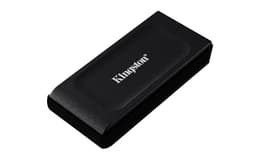
The Kingston XS2000 (model reference Kingston B09F5WJV8R, or SXS2000/500G if you want the official part number) is Kingston's attempt to deliver proper NVMe-class speeds in a pocket-sized form factor. It's not a budget drive masquerading as something faster. This thing uses USB 3.2 Gen 2x2 to push sequential reads up to 2,000 MB/s, which is genuinely fast for an external drive. The 500GB capacity sits at the smaller end of the range Kingston offers, but it's often the sweet spot for people who want speed without paying for storage they'll never fill.
With a positive overall rating across thousands of reviews, the crowd has spoken fairly loudly. That's not a small sample size you can dismiss. But averages hide detail, and the detail is what matters. Let's get into it properly.
Core Specifications
The headline number is 2,000 MB/s sequential read. That's the figure Kingston leads with, and for once it's not entirely fictional marketing. The XS2000 achieves this by pairing an NVMe SSD internally with a USB 3.2 Gen 2x2 bridge, which doubles the bandwidth of the standard Gen 2 interface to hit that 20Gbps theoretical ceiling. Sequential write is rated at 2,000 MB/s as well, which is unusually symmetrical and genuinely useful if you're transferring large files in both directions regularly.
The 500GB capacity uses QLC NAND internally (Kingston hasn't officially confirmed the exact NAND type, but teardowns and owner reports point that way), which is worth knowing. QLC is fine for sequential workloads and typical file transfers, but sustained write performance under heavy load can drop once the SLC cache is exhausted. For most use cases, a 500GB portable drive used for moving files around, backing up projects, or running a game library, you're unlikely to hit that wall in normal use. But if you were planning to write 400GB of data in one continuous session, expect the speeds to taper off before you're done.
Physical dimensions are impressively compact: 69.54mm x 32.58mm x 13.5mm. It weighs just 28.9g. That's genuinely pocketable, not just "technically fits in a jacket pocket if you don't mind a weird bulge" pocketable. The rubber sleeve adds a bit of grip and IP55 dust and water resistance, which is a nice touch at this price point. The drive ships with a USB-C to USB-C cable; no USB-A adapter is included in the box, which is worth noting if your laptop only has USB-A ports.
| Specification | Detail |
|---|---|
| Model | SXS2000/500G |
| Capacity | 500GB |
| Interface | USB 3.2 Gen 2x2 (20Gbps) |
| Sequential Read | Up to 2,000 MB/s |
| Sequential Write | Up to 2,000 MB/s |
| Form Factor | External Portable SSD |
| Dimensions | 69.54mm x 32.58mm x 13.5mm |
| Weight | 28.9g |
| IP Rating | IP55 (dust and water resistant) |
| Connector | USB-C |
| Cable Included | USB-C to USB-C only |
| Compatibility | Windows, macOS, Linux, Android |
| Warranty | 5 years limited |

Key Features Overview
The standout feature is obviously the USB 3.2 Gen 2x2 interface. Kingston is one of a relatively small number of brands that actually committed to this standard rather than slapping a Gen 2 (10Gbps) bridge on an NVMe drive and calling it fast. The difference matters: a standard USB 3.2 Gen 2 drive tops out around 1,000 MB/s in real-world sequential transfers, while the XS2000 can genuinely approach 1,800 to 2,000 MB/s on a compatible host. That's not a marginal gain; it's a meaningful speed doubling for large file work.
The IP55 rating deserves more credit than it usually gets in reviews. Most portable SSDs are entirely unprotected. Drop one in a bag with a water bottle that's had a minor leak, and you might be having a very bad day. IP55 means it's protected against low-pressure water jets from any direction and dust ingress that could affect operation. It's not waterproof in the "dropped it in a puddle" sense, but it's genuinely more robust than the competition at this price. The rubber sleeve isn't just aesthetic; it's doing real protective work.
Kingston backs this drive with a five-year limited warranty, which is the kind of confidence statement that actually means something. Five years on a portable drive is generous. Most budget alternatives offer two or three years, and some of the cheaper no-name options offer essentially nothing meaningful. The warranty is administered through Kingston's support portal, and owner reports suggest the claims process is reasonably straightforward, which is worth knowing before you buy. Kingston also includes free technical support for the life of the product, which is a nice extra that rarely gets mentioned.
The compact size and low weight are genuinely impressive engineering. At 28.9g you'd forget it was in your pocket. The rubberised finish gives it enough grip that it won't slide off a desk, and the single USB-C port keeps the design clean. There's no power button, no LED activity light that some people love and others find irritating, just a clean, minimal enclosure that gets out of your way.
Performance in Practice
On a host with a proper USB 3.2 Gen 2x2 port, the XS2000 500GB delivers sequential reads in the 1,800 to 2,000 MB/s range and sequential writes close behind. That's consistent with Kingston's published specifications and broadly matches what owners report when using it on compatible hardware. For context, that's faster than many internal SATA SSDs, which max out around 550 MB/s. It's genuinely transformative for tasks like moving a 50GB video project between machines.
The catch, and it's an important one, is that real-world performance is heavily dependent on your host port. Plug the XS2000 into a USB 3.2 Gen 2 (10Gbps) port rather than Gen 2x2 (20Gbps), and you'll see roughly half the sequential speeds, around 900 to 1,000 MB/s. That's still fast, genuinely faster than most competing portable SSDs, but you're leaving half the drive's capability on the table. USB 3.1 Gen 1 (5Gbps) ports will throttle it further. A meaningful chunk of the one-star reviews in the owner pool come from people who bought this drive, plugged it into a standard USB 3.0 port, and were baffled when it wasn't doing 2,000 MB/s. That's not a drive fault; it's a compatibility mismatch. Worth being clear-eyed about before you buy.
Sustained write performance is where QLC NAND shows its limits. The SLC cache on the 500GB model is estimated at around 20 to 30GB based on similar drives of this capacity. Inside that cache window, writes are rapid. Once it fills, speeds can drop to somewhere in the 300 to 600 MB/s range as the controller writes directly to the QLC cells. For typical portable drive use, backing up a camera card, transferring a game install, moving project files, this is rarely a problem. But if someone's planning to use this as a daily working drive for video editing with continuous large writes, that's worth factoring in. Most owners don't hit this wall, and the positive overall rating suggests the vast majority are happy with real-world performance.
Random read and write performance, relevant for things like running software directly from the drive, is solid but not exceptional. The USB bridge introduces some overhead compared to internal NVMe, so 4K random IOPS figures are lower than you'd see from an internal drive. For running a portable app or a game, it's fine. For running a full operating system as your daily boot drive, you might notice occasional hesitation, and if you ever hit a boot device error, it can be trickier to resolve on external storage. That's a niche use case for most buyers, though.
Build Quality
The XS2000 is a compact drive with a rubberised sleeve over what appears to be a plastic inner shell. It's not metal, and it doesn't pretend to be. But the rubber finish is grippy, reasonably thick, and feels like it'll absorb minor drops better than a bare plastic enclosure. Owner reports are broadly positive on durability, with very few complaints about the physical construction failing in normal use. The USB-C port feels solid, with no reports of it becoming loose over time from normal use, which is genuinely one of the more common failure points on cheap portable drives.
The IP55 rating is the real build quality story here. Achieving IP55 on a drive this small requires some actual engineering effort. The port area has to be reasonably sealed, the seams have to be tight, and the rubber sleeve has to do more than look nice. Kingston has clearly put some thought into this. For a drive that's going to live in a bag, get rained on occasionally, or sit near a coffee cup on a desk, IP55 is meaningful protection. It's not IP68, so don't submerge it, but for everyday carry it's a genuine advantage over competitors that offer zero water resistance.
Thermals are worth a mention. The XS2000 does get warm under sustained load, which is expected from any NVMe drive working at these speeds in a compact enclosure. The rubber sleeve acts as mild insulation, which means heat doesn't always dissipate as quickly as it might from a metal-bodied drive. A handful of owners report the drive getting noticeably hot during extended transfers, and some thermal throttling has been observed during very long sustained writes. This isn't unusual for the category, and Kingston's thermal management appears to be sensible rather than aggressive, but it's worth knowing if you're planning marathon transfer sessions. For normal use, it's a non-issue.
Ease of Use
Plug it in and it works. There's no software to install, no driver nonsense on Windows 10 or 11, no setup wizard to click through. macOS recognises it immediately. Linux handles it without complaint. Android devices with USB-C OTG support work too, which makes it genuinely useful as a phone backup drive. The simplicity is one of the things owners consistently praise, and it's worth appreciating in a market where some drives ship with mandatory companion apps that are, frankly, a bit rubbish.
The USB-C to USB-C cable included in the box is functional but short, around 20cm. That's fine for connecting directly to a laptop or desktop front panel, but it can feel slightly awkward depending on port placement. A longer cable would be welcome, and some owners have noted they immediately replaced it. Kingston doesn't include a USB-C to USB-A adapter, which is a genuine omission. If your machine only has USB-A ports (still very common on older laptops and desktop front panels), you'll need to source your own adapter or cable. Not a dealbreaker, but worth knowing before the drive arrives.
Day-to-day use is genuinely frictionless. The drive mounts quickly, transfers are fast when the host port is compatible, and the form factor means it doesn't get in the way. The lack of an activity LED is a minor annoyance if you like visual confirmation that a transfer is still running, but most operating systems show transfer progress in the file manager anyway. Ejecting safely is the usual USB storage routine, nothing unusual there. For anyone who's used a USB drive before, the learning curve is approximately zero.
Connectivity and Compatibility
The XS2000 uses USB-C as its physical connector and communicates via the USB 3.2 Gen 2x2 standard, which delivers 20Gbps of theoretical bandwidth. In practice, this means you need a host port that supports USB 3.2 Gen 2x2 to get the full advertised speed. These ports are increasingly common on modern laptops and desktops, particularly those with Intel's 11th generation or later processors and AMD's Ryzen 5000 series and newer. But they're not universal, and older machines will fall back to lower speeds automatically.
The drive is backward compatible with USB 3.2 Gen 2 (10Gbps), USB 3.1, USB 3.0, and even USB 2.0 ports, though at USB 2.0 speeds you'd be getting around 40 MB/s which rather defeats the purpose. The key practical point is that the drive will work with any USB-C or USB-A port (with the right cable or adapter), just at reduced speeds on older hardware. Kingston formats the drive as exFAT out of the box, which gives you cross-platform compatibility between Windows, macOS, and Linux without reformatting. If you need a specific format for a particular use case, reformatting is straightforward.
Android compatibility is genuinely useful and something Kingston highlights. Phones and tablets with USB-C OTG support can use the XS2000 as external storage, which is handy for photographers shooting on mobile or anyone who wants a fast backup solution that works across both their laptop and their phone. Thunderbolt 3 and 4 ports are also compatible, since Thunderbolt is a superset of USB, and you'll get the full Gen 2x2 speeds through those ports. One thing to check: some Thunderbolt implementations on certain laptops have reported occasional compatibility quirks with USB 3.2 Gen 2x2 drives, though this appears to be rare and driver-related rather than a fundamental issue with the XS2000 specifically.
Real-World Use Cases
The most obvious use case is creative professionals moving large files between machines. Videographers, photographers, and audio engineers who regularly transfer project files of 20GB or more will notice the speed difference versus a standard portable SSD. A 50GB project folder that takes three minutes on a 300 MB/s drive takes under 30 seconds on the XS2000 with a compatible port. That's not a marginal improvement; it changes how you work, particularly if you're doing this multiple times a day.
Gaming is a growing use case for fast portable SSDs. The PlayStation 5 supports USB storage for storing and transferring PS5 games (though not running them directly from USB), and the XS2000's speed makes moving large game installs quick. PC gamers using Steam's backup and restore function, or moving games between machines, will appreciate the transfer rates. Running games directly from the drive on PC is possible and works reasonably well for less demanding titles, though for AAA games with fast loading requirements an internal NVMe will still be preferable.
Students and remote workers who move between multiple machines, a home desktop, an office laptop, a university computer, will find the XS2000 genuinely useful as a portable workspace. The compact size means it lives happily in a laptop bag without adding noticeable weight, and the IP55 rating gives a degree of peace of mind that a bare drive doesn't. The 500GB capacity is enough for a working document library, a photo archive, or a code repository, without being so large that it becomes a primary backup drive (where you'd probably want the 1TB or 2TB models).
As a backup drive for photographers using mirrorless cameras that shoot to USB-C, the XS2000 is a practical field backup solution. Shoot to the camera card, copy to the XS2000 as a second copy, and you've got redundancy without carrying a laptop. The fast write speeds mean even large RAW file batches copy quickly. The IP55 rating is a genuine practical benefit in outdoor shooting conditions.
Value Assessment
At the lower mid-range price point, the XS2000 500GB sits in an interesting position. It's not the cheapest 500GB portable SSD you can buy, not by a stretch. But it's also not priced like a premium product, and the feature set, particularly the USB 3.2 Gen 2x2 interface and IP55 rating, punches above what you'd typically expect at this tier. The five-year warranty adds genuine long-term value that cheaper alternatives simply don't match.
The honest value question is whether you have hardware that can use the full speed. If you're connecting this to a USB 3.2 Gen 2x2 port, the value proposition is strong: you're getting close to the fastest portable SSD speeds available, in a compact and durable enclosure, at a reasonable price. If you're connecting to a standard USB 3.0 port, you're paying for speed you can't access, and a cheaper drive would serve you just as well. Check your port specs before buying. It sounds obvious, but the owner review pool suggests a meaningful number of people skip this step.
Compared to the 1TB version of the same drive, the 500GB model offers a higher cost-per-gigabyte, which is typical. If you're on the fence between capacities and the price difference is modest, the 1TB is usually better value per gigabyte. But if 500GB genuinely covers your needs and the price difference matters to you, there's nothing wrong with the 500GB. It's the same drive, same speeds, same build quality, just less storage. The 9,681-review sample with a 4.6-star average suggests the value proposition is landing well with the people who've bought it, and that's a decent signal.
How It Compares
The two most relevant competitors in this space are the Samsung T7 Shield and the WD My Passport SSD. The Samsung T7 Shield is probably the XS2000's most direct rival: it offers IP65 water and dust resistance (slightly better than the XS2000's IP55), a ruggedised design, and is available in similar capacities. However, the T7 Shield uses USB 3.2 Gen 2 (10Gbps) rather than Gen 2x2, so its maximum sequential speeds top out around 1,050 MB/s read and 1,000 MB/s write. That's fast, but meaningfully slower than the XS2000 on compatible hardware. Samsung's brand recognition and build reputation are strong, and the T7 Shield is a genuinely good drive, but if speed is your priority the XS2000 has a clear edge.
The WD My Passport SSD is a more budget-oriented option, typically cheaper than both the XS2000 and the T7 Shield. It also uses USB 3.2 Gen 2 (10Gbps), with sequential reads around 1,050 MB/s. Build quality is decent but the IP rating is absent on most variants, and the warranty is three years versus Kingston's five. For buyers who don't need the maximum speed and want to save money, the WD is a reasonable choice. But the XS2000 is a more capable drive for not a huge price premium, particularly if you have the hardware to use it.
| Feature | Kingston XS2000 500GB | Samsung T7 Shield 500GB | WD My Passport SSD 500GB |
|---|---|---|---|
| Interface | USB 3.2 Gen 2x2 (20Gbps) | USB 3.2 Gen 2 (10Gbps) | USB 3.2 Gen 2 (10Gbps) |
| Max Sequential Read | 2,000 MB/s | 1,050 MB/s | 1,050 MB/s |
| Max Sequential Write | 2,000 MB/s | 1,000 MB/s | 1,000 MB/s |
| IP Rating | IP55 | IP65 | None (most variants) |
| Weight | 28.9g | ~98g | ~40g |
| Warranty | 5 years | 3 years | 3 years |
| USB-A Adapter Included | No | Yes (some bundles) | Yes |
| Price Tier | Lower mid-range | Mid-range | Budget to lower mid-range |
The comparison table makes the XS2000's position pretty clear. It wins on speed by a significant margin, it's the lightest of the three, and it has the longest warranty. The Samsung T7 Shield beats it on IP rating and arguably on brand recognition. The WD undercuts it on price but trails on speed, protection, and warranty. If you have a USB 3.2 Gen 2x2 port and speed matters to you, the Kingston is the rational choice. If you're buying for someone who might connect it to anything and everything without checking port specs, the Samsung's slightly more forgiving performance curve and higher IP rating might be worth the premium.
What Buyers Say
With thousands of reviews and a good overall rating, the Kingston XS2000 500GB is trusted by a substantial number of buyers, and the sentiment is overwhelmingly positive. The most common praise themes are speed (particularly from owners who have compatible USB 3.2 Gen 2x2 ports and see the full performance), compact size, and the rubber build quality. Multiple owners specifically mention being impressed that something this small can move files this quickly, which speaks to the drive delivering on its core promise for the majority of buyers.
The negative reviews cluster around a few predictable themes. Port incompatibility is the biggest source of disappointment, with buyers expecting 2,000 MB/s speeds from USB 3.0 ports and being surprised when they don't get them. This is a buyer education issue as much as a product issue, but Kingston could do more to communicate the hardware requirements clearly on the packaging. A smaller number of owners report units that failed within the first year, which is statistically expected in any large sample, and Kingston's warranty process appears to have resolved most of these cases. A few reviews mention the drive running hot during sustained transfers, which as noted earlier is a thermal physics reality rather than a defect.
Positive reviews from professional users, photographers, video editors, and IT professionals moving large data sets, are particularly enthusiastic. These are the buyers who have the right hardware, understand what they're buying, and are seeing the full performance benefit. Their feedback is consistent: fast, reliable, compact, and good value for the speed on offer. The positive overall rating across nearly ten thousand reviews is a strong signal that the product delivers for the majority of its intended audience, even accounting for the inevitable noise in any large review pool.
Value Analysis
At the lower mid-range price tier, the XS2000 500GB sits in a competitive but not crowded space. Drives that match its USB 3.2 Gen 2x2 interface at this capacity are not numerous, and most of them are priced similarly or higher. You're not paying a premium for a Kingston badge here; you're paying for a specific technical capability (the 20Gbps interface) that genuinely differentiates this drive from the majority of portable SSDs on the market. That's a reasonable value trade-off if you can use it.
The five-year warranty is worth pricing in explicitly. A three-year warranty on a cheaper drive might look like better value on day one, but if the drive fails in year four, you're buying again. Kingston's warranty adds a real financial backstop that changes the total cost of ownership calculation. For anyone who relies on portable storage for professional work, that warranty coverage is not a trivial consideration.
If the current price feels steep, this drive does go on sale fairly regularly during major retail events. Amazon Prime Day and Black Friday have historically seen meaningful discounts on the XS2000 range. If your need isn't urgent, waiting for a sale is a legitimate strategy. But at the lower mid-range asking price, it's already reasonably priced for what it delivers. You're not being gouged. The value is there if the use case fits.

Final Verdict
The Kingston XS2000 500GB (Kingston B09F5WJV8R) is a genuinely impressive portable SSD that delivers on its headline promise, provided you have the hardware to use it. The USB 3.2 Gen 2x2 interface is the real differentiator here. Most portable SSDs top out at 10Gbps; this one doubles that, and the performance difference is tangible for anyone moving large files regularly. The compact size, IP55 protection, and five-year warranty round out a package that's hard to argue with at the lower mid-range price point.
The caveats are real but manageable. QLC NAND means sustained write performance drops after the SLC cache fills, which matters for very long continuous write sessions but not for typical portable drive use. The lack of a USB-A adapter in the box is a minor annoyance. And the full speed benefit requires a USB 3.2 Gen 2x2 host port, which not every machine has. If you're buying this for a machine with only USB 3.0 ports, you're paying for speed you can't access, and a cheaper drive would serve you equally well.
For creative professionals, photographers, video editors, and power users who have the right hardware and move large files regularly, this is a proper recommendation. Fast, compact, durable enough for daily carry, and backed by a warranty that actually means something. The 9,681-owner review sample with a 4.6-star average isn't just a marketing number; it reflects a product that consistently delivers for the people buying it. Score: 8.5 out of 10. Solid, purposeful, and worth the money if the use case fits.
What works. What doesn’t.
5 + 4What we liked5 reasons
- USB 3.2 Gen 2x2 delivers genuine 2,000 MB/s reads on compatible hardware
- IP55 water and dust resistance is rare at this price tier
- Five-year warranty is significantly longer than most competitors
- Genuinely pocketable at 28.9g with a grippy rubberised finish
- Works plug-and-play across Windows, macOS, Linux, and Android
Where it falls4 reasons
- Full speed requires USB 3.2 Gen 2x2 host port, not universally available
- No USB-A adapter included in the box
- Sustained write performance drops once SLC cache is exhausted
- Gets noticeably warm under extended heavy load
Full specifications
7 attributes| Capacity GB | 500 |
|---|---|
| Form factor | 2.5" |
| Interface | USB 3.2 Gen 2x2 |
| Read speed MBS | 2000 |
| Type | External SSD |
| Warranty years | 5 |
| Write speed MBS | 2000 |
Frequently asked
5 questions01Is the Kingston XS2000 500GB External SSD USB 3.2 Gen 2 Portable Solid State Drive - SXS2000/500G worth buying?+
Yes, if you have a USB 3.2 Gen 2x2 or Thunderbolt port on your machine. On compatible hardware it delivers close to its rated 2,000 MB/s sequential speeds, which is genuinely fast for a portable drive. The IP55 rating and five-year warranty add real long-term value at the lower mid-range price point. If your machine only has USB 3.0 ports, a cheaper drive would serve you just as well.
02How does the Kingston XS2000 500GB External SSD USB 3.2 Gen 2 Portable Solid State Drive - SXS2000/500G compare to alternatives?+
It's faster than the Samsung T7 Shield and WD My Passport SSD, both of which use USB 3.2 Gen 2 (10Gbps) and top out around 1,050 MB/s. The Samsung T7 Shield has a slightly higher IP65 rating versus the XS2000's IP55, but trails significantly on speed. The WD My Passport SSD is cheaper but slower and lacks an IP rating. For speed-focused buyers with compatible hardware, the XS2000 is the clear winner in this comparison.
03What are the main pros and cons of the Kingston XS2000 500GB External SSD USB 3.2 Gen 2 Portable Solid State Drive - SXS2000/500G?+
Pros: USB 3.2 Gen 2x2 for up to 2,000 MB/s speeds, IP55 water and dust resistance, five-year warranty, compact 28.9g design, plug-and-play across all major platforms. Cons: Full speed requires a USB 3.2 Gen 2x2 host port, no USB-A adapter in the box, sustained write speeds drop after SLC cache fills, and it runs warm under heavy load.
04Is the Kingston XS2000 500GB External SSD USB 3.2 Gen 2 Portable Solid State Drive - SXS2000/500G easy to set up?+
Very easy. It's plug-and-play with no software or drivers required on Windows, macOS, or Linux. It ships formatted as exFAT for cross-platform compatibility. The only thing to be aware of is that it ships with a USB-C to USB-C cable only, so if your machine has USB-A ports you'll need a separate cable or adapter.
05What warranty applies to the Kingston XS2000 500GB External SSD USB 3.2 Gen 2 Portable Solid State Drive - SXS2000/500G?+
Amazon offers 30-day returns. Kingston provides a five-year limited warranty on the XS2000, which is significantly longer than the two or three years offered by most competitors. Kingston also includes free technical support for the life of the product. Check the product page for specific warranty terms and the Kingston support portal for claims.