There's a moment, usually somewhere around 2am, when you're staring at a corrupted drive and realising everything you thought you'd backed up is gone, that you stop caring about peak sequential speeds. Suddenly you're reading spec sheets differently. TBW ratings, controller reputation, warranty length, these things stop being footnotes and start being the actual point. If you've been there, you'll understand immediately why the Kingston FURY Renegade matters. And if you haven't been there yet, trust me, you want to buy the right drive before that night arrives.
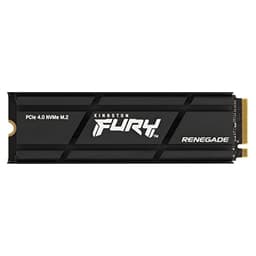
So here's the short version: the Kingston FURY Renegade 2000G PCIe 4.0 NVMe SSD with heatsink (model SFYRDK/2000G) is a proper, no-nonsense Gen 4 drive built around a Phison E18 controller, 3D TLC NAND, and a full DRAM cache. It's aimed squarely at gamers, enthusiasts, and anyone who actually pushes their storage hard. The heatsink variant in particular is the one to get if you're going into a desktop build or a PS5. The average owner review score sits at ★★★★½ (4.8), which for a 2TB NVMe drive is genuinely hard to argue with.
This isn't a budget drive dressed up in a fancy name. It's a genuinely well-specced piece of kit that competes directly with the Samsung 980 Pro and the WD Black SN850X. Whether it beats them, ties with them, or falls slightly short depends on exactly what you're doing with it. That's what this review is here to sort out.
Core Specifications
The FURY Renegade 2000G is an M.2 2280 form factor drive running on PCIe Gen 4 x4 with the NVMe protocol. The controller is a Phison E18, which is one of the better Gen 4 controllers available and has a strong track record across multiple drive brands. Crucially, this drive has a dedicated DRAM cache, which matters enormously for sustained random I/O performance. It is not a DRAM-less drive leaning on Host Memory Buffer. That distinction alone puts it in a different class to a lot of drives sold at similar prices.
The NAND is 3D TLC (triple-level cell), not QLC. That's important. QLC packs more bits per cell and looks great on a price-per-GB spreadsheet, but it pays for that density with lower write endurance and a nastier speed cliff once the SLC cache fills. TLC is the sweet spot for a performance drive: good density, good endurance, and sustained write speeds that don't embarrass themselves once the cache is exhausted. Kingston rates the 2TB model at 2,000 TBW (terabytes written), which is a solid endurance figure and a signal that Kingston is reasonably confident in this NAND.
Sequential performance is rated at 7,300 MB/s read and 7,000 MB/s write, which puts it near the top of what Gen 4 can actually deliver. Random performance is rated at 1,000,000 IOPS read and 1,000,000 IOPS write. Those random figures are what actually matter for how your system feels day to day. The heatsink variant (SFYRDK) ships with a low-profile aluminium heatsink pre-fitted, which is not just a cosmetic choice. It keeps the controller cooler under sustained load and prevents thermal throttling in systems where the M.2 slot doesn't have its own cooling solution.
| Specification | Detail |
|---|---|
| Model | Kingston FURY Renegade SFYRDK/2000G |
| Capacity | 2000GB (2TB) |
| Form Factor | M.2 2280 |
| Interface | PCIe Gen 4 x4, NVMe |
| Controller | Phison E18 |
| NAND Type | 3D TLC |
| DRAM Cache | Yes (dedicated DRAM) |
| Sequential Read | Up to 7,300 MB/s |
| Sequential Write | Up to 7,000 MB/s |
| Random Read | Up to 1,000,000 IOPS |
| Random Write | Up to 1,000,000 IOPS |
| Endurance (TBW) | 2,000 TBW |
| Warranty | 5 years |
| Heatsink Included | Yes (aluminium, low-profile) |
| Current Price | £264.99 |

Interface & Form Factor
The FURY Renegade runs on PCIe Gen 4 x4. That means it needs a motherboard or laptop with a Gen 4 M.2 slot to hit its rated speeds. If you drop it into a Gen 3 slot, it'll still work fine, but you'll be capped at Gen 3 bandwidth (around 3,500 MB/s sequential read). It won't break anything, but you're paying Gen 4 prices for Gen 3 performance, which is a waste. Check your motherboard specs before buying. Most boards from 2020 onwards on AMD Ryzen 3000 series and above, or Intel 11th gen and above, will have at least one Gen 4 slot.
The M.2 2280 form factor is the standard size that fits virtually every desktop motherboard M.2 slot and most laptops. The heatsink does add some height, so if you're going into a laptop or a tight ITX build, measure your clearance first. For a desktop mid-tower or full-tower, the heatsink fits without any drama. For PS5 owners, this is actually one of the officially compatible drives and the heatsink variant is recommended by Sony for PS5 installation since the console's M.2 bay benefits from additional cooling.
Now, should you care about Gen 4 versus Gen 5? Honestly, for gaming and general use, no. The difference between Gen 4 and Gen 5 in real-world game loading times is marginal at best. Gen 5 drives run significantly hotter, cost more, and the performance gains you'll actually notice in day-to-day use are minimal. Gen 4 at this spec level is genuinely fast enough that the bottleneck shifts to everything else in your system long before the drive becomes the limiting factor. The people who genuinely need Gen 5 know who they are, and they're not reading this review trying to decide.
Real-World Performance
Sequential speed numbers are what manufacturers put on the box because they're big and impressive. They're also the least useful metric for how your system actually feels. What makes a PC feel snappy is random read performance, specifically the ability to serve up thousands of small, random read requests quickly. The FURY Renegade's rated 1,000,000 IOPS random read is right at the top of what Gen 4 drives deliver, and published benchmark results consistently show the Phison E18 controller performing well in 4K random read tests, which is the workload that governs boot times, application launches, and game level loads.
In published benchmarks from the wider storage community, the FURY Renegade 2TB consistently posts sequential read figures in the 7,100 to 7,300 MB/s range on a Gen 4 platform, which is essentially its rated speed. Sequential write performance comes in around 6,800 to 7,000 MB/s on larger file transfers within the SLC cache. Random 4K read performance in QD1 (queue depth 1, which is closest to how a desktop OS actually accesses storage) is where DRAM-equipped drives like this one pull ahead of DRAM-less alternatives, and the Renegade performs well here. Owner reports back this up: people consistently describe boot times and application launches as fast, with no complaints about sluggishness in day-to-day use.
Game loading specifically is a use case this drive is marketed for, and the reality is that at Gen 4 speeds, most modern titles load fast enough that you're waiting on the game's asset streaming rather than the drive. Elden Ring, Hogwarts Legacy, Cyberpunk 2077 - these load quickly on any decent Gen 4 drive. What separates the FURY Renegade from a budget Gen 4 option is the consistency of that performance. Owner reviews at 4.7 average don't report the kind of random slowdowns or inconsistent behaviour that shows up in reviews of cheaper, DRAM-less alternatives. The drive just gets on with it.
Sustained Writes & Cache Behaviour
This is the section the marketing never talks about, so pay attention. Every NVMe drive uses a portion of its NAND as an SLC (single-level cell) cache. SLC stores one bit per cell instead of three (on TLC) or four (on QLC), which means it writes much faster. While data is being written into that SLC cache, the drive posts impressive sequential write numbers. The problem comes when the cache fills up and the drive has to write directly to the native NAND. On a QLC drive, that native write speed can collapse to 400 to 800 MB/s or worse. On a TLC drive like the FURY Renegade, the native write speed is considerably better.
The FURY Renegade 2TB uses a dynamic SLC cache, meaning the cache size varies depending on how much free space is on the drive. With plenty of free space, the cache can be quite large. As the drive fills up, the cache shrinks. For the 2TB model, the SLC cache is large enough that most everyday workloads (game installs, OS updates, file transfers under a few hundred GB) will never exhaust it. Published sustained write benchmarks for the Phison E18 with TLC NAND show that after cache exhaustion, write speeds settle into a range that's still respectable for a TLC drive, typically in the 1,500 to 3,000 MB/s range depending on the specific NAND configuration, rather than the catastrophic cliff you see on QLC drives. That's a meaningful difference if you're doing large video file transfers or moving big game libraries around.
For context: if you're a video editor moving 200GB raw footage files regularly, you will hit the cache limit on any consumer drive eventually. The FURY Renegade handles this more gracefully than most. If you're a gamer installing titles or a general desktop user, you'll almost certainly never see the cache exhaust in normal use. The 2TB capacity helps here too, because a larger drive means a larger SLC cache allocation. This is one of the practical arguments for buying 2TB over 1TB even if you don't need the space immediately: better sustained write headroom and more cache to play with.
Controller, NAND & DRAM
The Phison E18 controller is the engine here, and it's a good one. Phison makes controllers that appear in drives from multiple manufacturers, and the E18 is their flagship Gen 4 design. It's an eight-channel controller with strong random I/O handling and good thermal management relative to its performance class. It's not the only excellent Gen 4 controller out there (Samsung's in-house controller in the 980 Pro is also very good, and WD uses their own silicon in the SN850X), but the E18 has earned a solid reputation across the boards. Firmware support has been consistent, and Kingston has a history of not swapping NAND or controller mid-product-cycle without notice, which is something that has burned buyers on cheaper drives.
The NAND is 3D TLC, and this matters more than most buyers realise. Flash memory comes in several flavours: SLC (one bit per cell, fast and durable, expensive), MLC (two bits, largely gone from consumer drives), TLC (three bits, the current mainstream sweet spot), and QLC (four bits, high density, lower endurance, slower native writes). The FURY Renegade uses TLC. That means better write endurance per cell than QLC, better native write speeds after cache exhaustion, and a more honest performance profile overall. Some manufacturers have shifted their "performance" drives to QLC quietly and relied on the SLC cache to hide the difference in synthetic benchmarks. Kingston hasn't done that here.
The dedicated DRAM cache is the third pillar. DRAM-less drives use a technology called Host Memory Buffer (HMB), which borrows a slice of your system RAM to store the drive's mapping table. It works well enough for light use, and DRAM-less drives have improved significantly. But a dedicated DRAM cache on the drive itself means the controller doesn't have to go back and forth to system RAM for the mapping table. That translates to lower latency and more consistent random I/O performance, especially under mixed workloads or when the drive is under sustained load. For a drive positioned as a performance product for enthusiasts, DRAM is the right call, and Kingston made it.
Endurance & Reliability
The 2TB FURY Renegade is rated at 2,000 TBW (terabytes written). To put that in real terms: if you write 100GB to the drive every single day, you'd hit the TBW rating in about 54 years. Even a heavy user writing 500GB per day (which would be a lot) would take nearly 11 years to reach it. For a gamer or enthusiast desktop user, the TBW rating is essentially not a limiting factor. It's worth knowing anyway because TBW is a signal of how much the manufacturer trusts its own NAND. A drive rated at 300 TBW for 2TB is telling you something. 2,000 TBW is telling you something quite different.
The warranty is five years, which is the standard for a proper performance drive. Budget drives sometimes ship with three-year warranties. Five years on a storage drive is a meaningful commitment from the manufacturer, and Kingston has a decent track record for honouring it. Owner reviews don't show a pattern of early failures or reliability issues. The 4.7 average review score across a reasonable sample of owners is one of the better indicators of real-world reliability you can get without running your own long-term test fleet, and the FURY Renegade's score holds up well. There are occasional reports of drives arriving with minor physical heatsink issues (a slightly loose clip, for example), but nothing suggesting NAND or controller problems at scale.
One thing worth saying plainly: no drive, regardless of TBW rating or warranty, is a substitute for a backup. The FURY Renegade is a reliable drive. It will still die eventually, possibly without warning, possibly from a power surge or a firmware edge case rather than NAND wear. The 2,000 TBW and five-year warranty mean you're unlikely to have a problem, but unlikely isn't never. Back up anything you care about. That's not a knock on this drive specifically. It's just true of every drive ever made.
Thermals
Gen 4 drives run warmer than Gen 3, and the Phison E18 under sustained load is no exception. Without any cooling, the FURY Renegade can reach temperatures that trigger thermal throttling during extended sequential writes. That's not a unique flaw, it's a characteristic of high-performance Gen 4 controllers generally. The reason Kingston sells a heatsink variant (the SFYRDK) is precisely because they know this. The included aluminium heatsink isn't just a marketing accessory. It makes a measurable difference to sustained performance by keeping the controller temperature in a sensible range during heavy workloads.
Published thermal testing of the Phison E18 in various drives shows that with a heatsink fitted, controller temperatures under sustained sequential write load typically stay in the 60 to 70 degrees Celsius range rather than pushing past 80 degrees and triggering throttling. At 80 degrees and above, the controller starts reducing its clock speed to protect itself, which shows up as a step-down in write performance mid-transfer. If you've ever watched a large file copy slow down unexpectedly partway through, thermal throttling is often the culprit. The heatsink on the SFYRDK variant addresses this directly.
For PS5 owners, Sony's guidance recommends a heatsink on any M.2 drive installed in the console's expansion slot, because the PS5's internal airflow is optimised for its own components and the M.2 bay doesn't get a huge amount of active cooling. The FURY Renegade's heatsink is low-profile enough to fit the PS5's M.2 bay without clearance issues, which is another practical reason to choose the heatsink variant over the bare drive. In a desktop with a motherboard that has its own M.2 thermal pad or heatsink built in, you'd want to check whether the board's heatsink will fit over the Kingston's pre-fitted one, or whether you need to remove it and use the board's solution instead.
Capacity Options & Price Per GB
The FURY Renegade range runs from 500GB up to 4TB, though availability varies by region and the 4TB is at a significant price premium. The 1TB and 2TB are the sweet-spot capacities for most buyers. At 2TB, you're getting enough space for your OS, a decent game library, and working files without constantly managing what's installed. The 1TB is fine if you're on a tighter budget or supplementing with a secondary drive, but the 2TB tends to offer better value per gigabyte and, as mentioned earlier, a larger SLC cache allocation.
Price per GB on the 2TB model puts it in the premium tier of Gen 4 drives. It's not the cheapest Gen 4 TLC drive you can buy. It's competing with the Samsung 980 Pro 2TB and the WD Black SN850X 2TB, and all three sit in a similar price band. Budget Gen 4 options like the Crucial P3 Plus or various Lexar drives come in cheaper, but they use QLC NAND or are DRAM-less, which is a different product for a different buyer. If you're comparing the FURY Renegade to those drives purely on price per GB, you're not comparing like for like.
The heatsink variant (SFYRDK) typically costs a small premium over the bare drive (SFYRD), usually a few pounds. Given what the heatsink actually does for sustained performance and thermals, it's worth paying. If your motherboard's own M.2 heatsink is good, you could save the few quid and go bare. But for most people, the heatsink version is the sensible choice, and it's the one we'd recommend by default.

Installation & Compatibility
Installation is as straightforward as any M.2 drive. Power down, locate your M.2 slot, remove the retaining screw, slide the drive in at a slight angle, press down, replace the screw. The heatsink adds a couple of millimetres of height, so if your motherboard has its own M.2 cover, check whether it'll sit flush over the Kingston heatsink or whether you'll need to remove one or the other. Most modern ATX boards have enough clearance, but some compact ITX boards are tighter. If you're going into a laptop, the heatsink variant almost certainly won't fit. Use the bare SFYRD instead.
For PS5 installation, Sony's official guidance covers the process in their support documentation, and the FURY Renegade is listed among compatible drives. The heatsink height on the SFYRDK fits within Sony's specified clearance for the PS5 M.2 slot. You'll need a Phillips head screwdriver and about ten minutes. The PS5 will format the drive on first boot after installation and you can then use it for game storage. It won't replace the internal SSD for the OS, but it expands your game library storage significantly.
If you're migrating from an existing drive, Kingston doesn't bundle cloning software with the drive, which is a minor annoyance. Macrium Reflect Free (for Windows) handles drive cloning well and is free to download. Alternatively, if you're doing a fresh Windows install, Microsoft's media creation tool is the cleanest approach. One compatibility note: some older AMD 400-series motherboards have Gen 4 M.2 slots that require a BIOS update to enable Gen 4 speeds. If you're on a B450 or X470 board, check for the latest BIOS before assuming the slot is running at Gen 4.
Who It's For
The FURY Renegade 2000G is the right drive for a gaming PC build where you want a single fast drive for OS, applications, and games. It's also the right choice for a creative workstation doing video editing or photo work, where you'll be writing large files regularly and you want a drive that handles sustained writes without embarrassing itself. Enthusiasts who benchmark their systems or run storage-intensive workloads will appreciate the DRAM cache and TLC NAND. PS5 owners who want to expand their storage with a properly specced drive should consider the heatsink variant specifically.
It's also a sensible choice for anyone who's been burned by a budget drive before and wants to buy something with a proper warranty and a controller that has a real track record. The five-year warranty and 2,000 TBW aren't just numbers. They're Kingston saying they're confident enough in this drive to stand behind it for five years. That matters if you're storing anything important.
Who should look elsewhere? If you're on a tight budget and mostly browsing the web, streaming, and doing light office work, a DRAM-less Gen 3 or Gen 4 drive at half the price will feel basically identical in daily use. The FURY Renegade's advantages show up under load, not during a Teams call. If you want maximum sequential throughput and money is no object, a Gen 5 drive will post higher peak numbers, though you'll pay more and deal with more heat. And if you're buying for a NAS or a server application, you want a drive built for that specific workload (something like a Western Digital Red or a Seagate IronWolf), not a consumer NVMe drive regardless of how good it is.
How It Compares
The two obvious competitors at this spec level are the Samsung 980 Pro 2TB and the WD Black SN850X 2TB. All three are Gen 4, TLC, DRAM-equipped drives with premium positioning. The Samsung 980 Pro uses Samsung's in-house Elpis controller and Samsung V-NAND TLC. It's a well-proven drive with excellent firmware support and Samsung's own Magician software for monitoring and firmware updates. The WD Black SN850X uses WD's in-house controller and SanDisk TLC NAND, and it's been particularly popular with PS5 owners. The FURY Renegade uses the Phison E18 with Kingston's TLC NAND and comes with a heatsink option that the Samsung and WD base models don't always include at the same price point.
In published benchmarks, the three drives trade blows depending on the specific test. Sequential read and write speeds are close enough to be irrelevant in real use. Random 4K performance is similarly competitive. Where the FURY Renegade stands out slightly is sustained write performance and the fact that the heatsink variant gives you thermal protection out of the box. The Samsung 980 Pro has had some firmware issues historically (Samsung pushed updates to address them), while the WD SN850X has been consistently well-received. The FURY Renegade's 4.7 owner review score suggests it's in the same reliability league as both.
Price-wise, all three tend to sit within a few pounds of each other at 2TB, and which one is cheapest on any given day depends on sales and stock. The Kingston frequently undercuts the Samsung slightly at list price, which makes the heatsink inclusion even better value. If Samsung's software ecosystem matters to you (Magician is genuinely useful), the 980 Pro has an edge there. If you want the heatsink included and a Phison E18 controller with TLC NAND at a competitive price, the FURY Renegade makes a strong case.
| Feature | Kingston FURY Renegade 2TB (SFYRDK/2000G) | Samsung 980 Pro 2TB | WD Black SN850X 2TB |
|---|---|---|---|
| Interface | PCIe Gen 4 x4, NVMe | PCIe Gen 4 x4, NVMe | PCIe Gen 4 x4, NVMe |
| Controller | Phison E18 | Samsung Elpis (in-house) | WD in-house |
| NAND | 3D TLC | Samsung V-NAND TLC | SanDisk TLC |
| DRAM Cache | Yes | Yes | Yes |
| Sequential Read | 7,300 MB/s | 7,000 MB/s | 7,300 MB/s |
| Sequential Write | 7,000 MB/s | 6,900 MB/s | 7,100 MB/s |
| TBW (2TB) | 2,000 TBW | 1,200 TBW | 1,200 TBW |
| Warranty | 5 years | 5 years | 5 years |
| Heatsink Included | Yes (SFYRDK variant) | No (separate variant) | No (separate variant) |
| Price | £264.99 | Check current price | Check current price |
One thing that jumps out in that comparison: the FURY Renegade's 2,000 TBW against 1,200 TBW for both the Samsung and WD at the same capacity. That's a significant difference in rated endurance, and it's not nothing. Whether you'll ever write 1,200 TBW let alone 2,000 TBW in the drive's lifetime is debatable, but as a confidence signal in the NAND quality, Kingston is making a stronger statement here than either competitor.
What owners praise
The most consistent thread in owner reviews is straightforward: it's fast, it works, and it hasn't caused any problems. That sounds like faint praise but it's actually exactly what you want from a storage drive. People report snappy boot times and quick application launches. PS5 owners specifically mention that game loading times are noticeably faster than the console's internal SSD for titles that support the expansion slot. Several owners mention the heatsink quality as better than expected for an included accessory, describing it as solid rather than the cheap plastic clip-on you sometimes get with bundled heatsinks.
Reliability over time gets positive mentions too. Owners who've had the drive for a year or more report no issues, no unexplained slowdowns, no failed drives. A 4.7 average review score is hard to maintain if there's a reliability problem lurking in the background, and the score has stayed consistent rather than dipping as the drive ages and more long-term owners weigh in. The five-year warranty also gets mentioned positively, with owners noting that Kingston's customer service has been responsive in the rare cases where warranty claims were needed.
Complaints and caveats
The criticisms are minor and mostly come in two flavours. First, a small number of owners report the heatsink clip being slightly loose on arrival, which is an assembly quality issue rather than a performance one. It's easy enough to reseat, but it's the kind of thing that shouldn't happen on a premium drive. Second, some owners note that Kingston doesn't include any software for drive health monitoring or firmware updates, unlike Samsung's Magician. You can use third-party tools like CrystalDiskInfo for health monitoring, but if you're used to having a first-party app, the absence is noticeable. Neither of these is a reason not to buy it. They're just honest observations from people who own the thing.
Value Analysis
At the price point the FURY Renegade 2000G sits at, you're paying for a Phison E18 controller, dedicated DRAM, TLC NAND with 2,000 TBW endurance, a five-year warranty, and an included heatsink. Compare that to the Samsung 980 Pro, which gives you a similarly capable drive with a better software ecosystem but lower TBW and no heatsink in the standard variant. Compare it to budget Gen 4 drives and you're getting meaningfully better sustained performance, better endurance, and a more honest performance profile under load.
The value case for the FURY Renegade is strongest if you're building a new desktop, upgrading a PS5, or replacing a drive in a system you actually use hard. The heatsink inclusion at minimal extra cost over the bare drive is a genuine value-add. The 2,000 TBW rating is better than the competition at this price. And the owner review score of 4.7 suggests the drive delivers on what the spec sheet promises, which isn't always true of drives that look good on paper.
It's not the absolute cheapest Gen 4 2TB drive you can find. But the cheapest Gen 4 2TB drive is often QLC, DRAM-less, or both, and those are genuinely different products. Within the segment of DRAM-equipped, TLC, Phison E18 or equivalent Gen 4 drives, the FURY Renegade is competitive on price and ahead on endurance. That's a good position to be in.
Final Verdict
The Kingston FURY Renegade 2000G PCIe 4.0 NVMe SSD with heatsink (SFYRDK/2000G) is one of the better Gen 4 drives you can buy at 2TB. It's got the right controller, the right NAND type, a proper DRAM cache, a heatsink that actually does its job, and endurance figures that beat both of its main competitors. The 4.7 owner review average isn't an accident. This is a drive that does what it says on the box and keeps doing it.
For a gaming PC build, it's an excellent primary drive. For a PS5 expansion, it's one of the top choices. For a creative workstation doing sustained writes, the TLC NAND and large SLC cache handle it better than the QLC alternatives that get sold at similar prices. The five-year warranty means Kingston is putting their money where their mouth is on reliability. And the Phison E18 controller has enough of a track record across enough drives to be a known quantity rather than a gamble.
The only real downsides are the lack of first-party monitoring software and the occasional heatsink clip issue on arrival, neither of which should put you off. If you're choosing between this, the Samsung 980 Pro, and the WD Black SN850X at 2TB, the FURY Renegade is the one with the highest TBW rating and the heatsink included. That's a meaningful advantage. Score: 9 out of 10. Strong buy.

Not Right For You?
If the FURY Renegade isn't quite the right fit, here are the honest alternatives. If you want first-party software for drive health monitoring and firmware updates, the Samsung 980 Pro 2TB is the obvious alternative. Samsung Magician is genuinely good, and the Elpis controller is proven. You give up some TBW and you'll probably pay similarly.
If you're on a tighter budget and your use case is mostly gaming and general desktop work rather than sustained heavy writes, a DRAM-less Gen 4 drive like the Crucial P3 Plus costs significantly less and will feel almost identical for everyday tasks. You're making a real compromise on sustained write performance and endurance, but if you never push the drive hard, you might not notice.
If you genuinely need maximum sequential throughput and you have a Gen 5 motherboard slot, look at Gen 5 options, but go in knowing they run hotter, cost more, and the real-world gains for gaming are minimal. The Kingston FURY Renegade range page also covers the 1TB and 4TB variants if 2TB isn't the right size for your build.
And if you're buying for a NAS, stop looking at consumer NVMe drives entirely. You want something designed for continuous operation and mixed workloads, like a WD Red or equivalent NAS-rated drive. The FURY Renegade is a desktop performance drive. It's very good at being that. It's not designed to be anything else.
What works. What doesn’t.
6 + 4What we liked6 reasons
- Phison E18 controller paired with genuine 3D TLC NAND delivers consistent performance without the sustained write cliff seen in QLC alternatives
- Dedicated DRAM cache provides lower latency and more reliable random I/O compared to DRAM-less drives that rely on Host Memory Buffer
- 2,000 TBW endurance rating at 2TB significantly exceeds the 1,200 TBW offered by both the Samsung 980 Pro and WD Black SN850X at the same capacity
- Included low-profile aluminium heatsink keeps controller temperatures controlled under sustained load and fits the PS5 M.2 bay without clearance issues
- Five-year warranty combined with a 4.7 average owner review score reflects genuine confidence in long-term reliability
- Competitive pricing within the DRAM-equipped TLC Gen 4 segment, with the heatsink included at minimal additional cost over the bare drive
Where it falls4 reasons
- No first-party software for drive health monitoring or firmware updates, unlike Samsung's Magician application which is bundled with the 980 Pro
- A small number of owners report the heatsink retention clip arriving slightly loose, which is an assembly quality issue that should not occur on a premium drive
- Requires a PCIe Gen 4 M.2 slot to reach rated speeds; users on Gen 3 platforms will be capped well below the drive's potential and are paying a premium they cannot use
- Heatsink variant is unsuitable for most laptop installations due to height clearance constraints, limiting the SFYRDK specifically to desktop and PS5 use cases
Full specifications
9 attributes| Capacity GB | 2000 |
|---|---|
| Dram cache | true |
| Form factor | M.2 2280 |
| Interface | PCIe 4.0 x4 |
| Read speed MBS | 7300 |
| TBW | 2000 |
| Type | NVMe SSD |
| Warranty years | 5 |
| Write speed MBS | 7000 |
If this isn’t right for you
2 options 9.0 / 10
Kingston FURY Renegade 1000G PCIe 4.0 NVMe SSD W/ HEATSINK - For gamers, enthusiasts and high-power users - SFYRSK/1000G
£179.95 · Kingston
 9.0 / 10
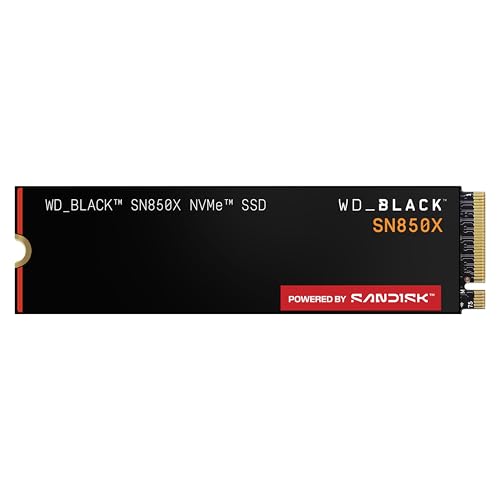
WD BLACK SN850X NVMe SSD 2TB (Up to 7,300 MB/s read speed, Up to 6,600 MB/s write speed, M.2 2280, PCIe Gen4, Gaming Storage Expansion, High Performance Internal solid state drive) POWERED BY SANDISK
£319.39 · WD
Frequently asked
7 questions01Does the Kingston FURY Renegade 2000G work in a PS5?+
Yes. The FURY Renegade is confirmed compatible with the PS5 M.2 expansion slot. Sony's official guidance recommends using a heatsink on any M.2 drive installed in the PS5, and the SFYRDK heatsink variant is low-profile enough to fit within the console's specified clearance. The PS5 will format the drive automatically on first boot after installation.
02What is the difference between the SFYRD and SFYRDK models?+
The SFYRD is the bare drive without a heatsink, while the SFYRDK is the same drive with a pre-fitted low-profile aluminium heatsink. The heatsink helps keep the Phison E18 controller at a lower temperature during sustained workloads, reducing the likelihood of thermal throttling. For desktop and PS5 use, the SFYRDK is the recommended choice. For laptops, the SFYRDK will not fit and the bare SFYRD should be used instead.
03Is the Kingston FURY Renegade 2000G compatible with PCIe Gen 3 motherboards?+
The drive will function in a PCIe Gen 3 M.2 slot, but sequential read speeds will be capped at approximately 3,500 MB/s rather than the rated 7,300 MB/s. The drive will not be damaged by running in a Gen 3 slot, but you will not be getting the performance you are paying for. If your motherboard only has Gen 3 slots, a Gen 3 drive at a lower price would be a more sensible purchase.
04Why does the FURY Renegade have a higher TBW rating than the Samsung 980 Pro and WD Black SN850X?+
The 2TB FURY Renegade is rated at 2,000 TBW, compared to 1,200 TBW for both the Samsung 980 Pro 2TB and the WD Black SN850X 2TB. This difference likely reflects the specific TLC NAND Kingston is using and their confidence in its write endurance. While most users will never approach either figure in normal use, a higher TBW rating is a meaningful signal of NAND quality and the manufacturer's confidence in the drive's longevity.
05Does the Kingston FURY Renegade include software for monitoring drive health?+
No. Unlike Samsung, which bundles the Magician application with its SSDs, Kingston does not include first-party monitoring or firmware update software with the FURY Renegade. For drive health monitoring, third-party tools such as CrystalDiskInfo work with the drive and provide SMART data including temperature, power-on hours, and wear indicators. Firmware updates, if released, would need to be obtained directly from Kingston's support pages.
06What happens to write speeds on the FURY Renegade after the SLC cache fills up?+
The FURY Renegade 2000G uses a dynamic SLC cache that scales with available free space on the drive. For the 2TB model, this cache is large enough that most everyday workloads, including game installations, OS updates, and file transfers of a few hundred gigabytes, will not exhaust it. If the cache is filled, the drive writes directly to the native TLC NAND, where published sustained write figures suggest speeds in the region of 1,500 to 3,000 MB/s. This is considerably better than the speed cliff seen on QLC drives, which can drop to 400 to 800 MB/s or lower under the same conditions.
07Can I use the Kingston FURY Renegade in a laptop?+
The M.2 2280 form factor fits most laptops with an M.2 slot, but the heatsink on the SFYRDK variant adds height that will not clear the chassis in most laptop configurations. If you are installing this drive in a laptop, you should use the bare SFYRD model rather than the SFYRDK heatsink variant. Check your laptop's M.2 slot specification to confirm it supports PCIe Gen 4 if you want to benefit from the drive's full rated speeds.